Energy Save - Scalable growth in the energy transition?

Vallalla oleva energiamurros luo mahdollisuuksia erilaisille toimaloille ja toimintamalleille. Yksi näistä on ilmavesilämpöpumput. Ruotsalainen Energy Save on yksi alalla toimivista. Se julkaisi viimeisimmän osavuosikatsauksensa 9.12. ja luvut olivat vakuuttavia. (Vinkki muille pakkoruotsin traumoista kärsiville, Google Translator vääntää nuo rapsat ihan luettavaan muotoon dokumenttikäännös-ominaisuudellaan)

Yhtiön liikevaihto kasvoi hurjat 272 % YoY ja yli 100% QoQ ollen 110 msek. Yhtiön julkaisi ensimmäisen voitollisen tuloksensa vuosi sitten, nyt liikevoittomarginaali lähenteli jo 20%:a. Tästä varmaan suurin kiitos kuuluu niille 21 ihmiselle, jotka yhtiössä työskentelevät! Yhtiö oli antanut liikevaihdon osalta jo posarin. Tällaiseen tietoon törmääminen luonnollisesti herätti oman mielenkiintoni perehtyä yritykseen enemmän ja avasin sitä myöten myös position firmassa. Kaikesta tästä informaatiosta innostuneena, päätin nyt myös avata foorumille ketjun yrityksestä. Kyseessä on kuitenkin suomalaisille tuttu tuote sekä tälle yhteisölle sopivanoloinen pieni firma.

Yhtiön tavoite on päästä 15 % ebit-marginaaliin. Tässä kvartaalissa se ylitettiin, joten kovasta kurssinoususta huolimatta yhtiön arvostus ei ole päätä huimaava. Yritysarvo on tällä hetkellä ~1200 msek ja kuluvan tilikauden tuloksella EV/EBIT voisi hyvinkin olla jotain viidentoista luokkaa, jos uskaltaa rohkeasti ekstrapoloida tämän kvartaalin tuloksen. Yhtiö kyllä mainitsi viimeisimmässä osarissaan, että se joutuu nyt investoimaan resursseihin, jotka tulkitsen työntekijöiksi ja sillä on lyhyellä tähtäimellä marginaaleja pienentävä vaikutus. Kannattaa muuten huomioida numeroihin perehtyessä, että yrityksellä on erikoinen tilikausi toukokuulta huhtikuulle.

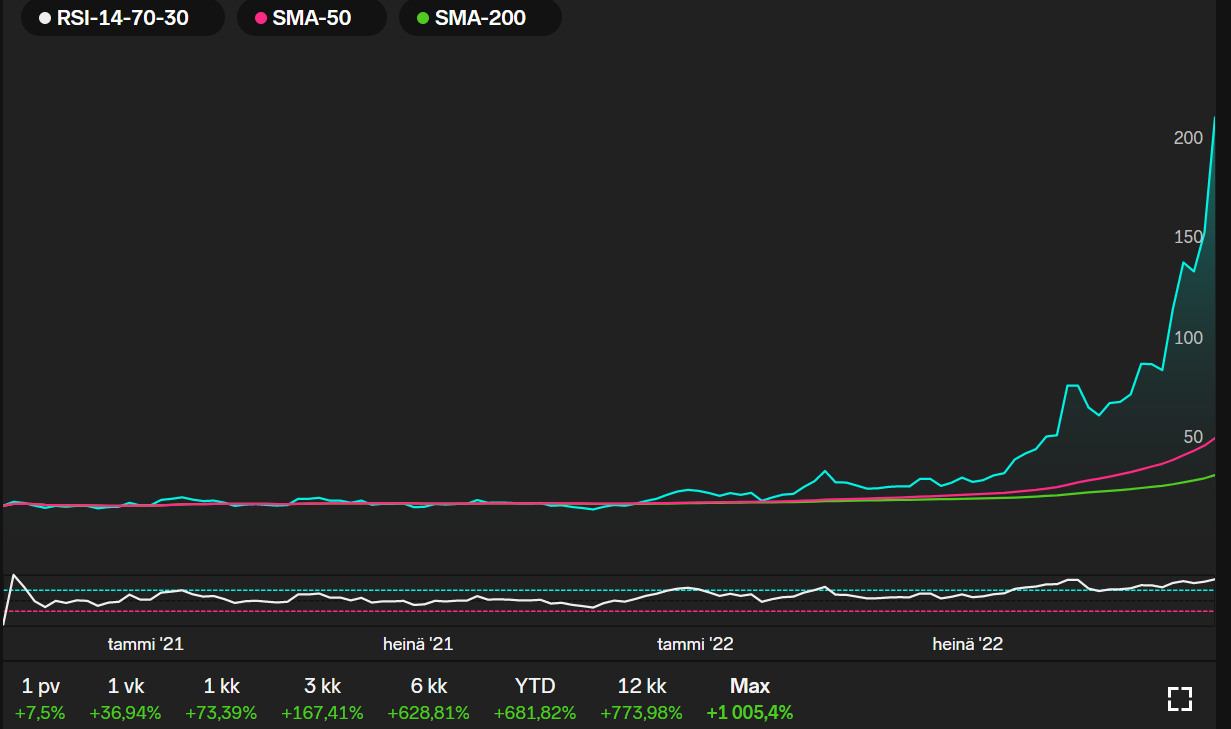
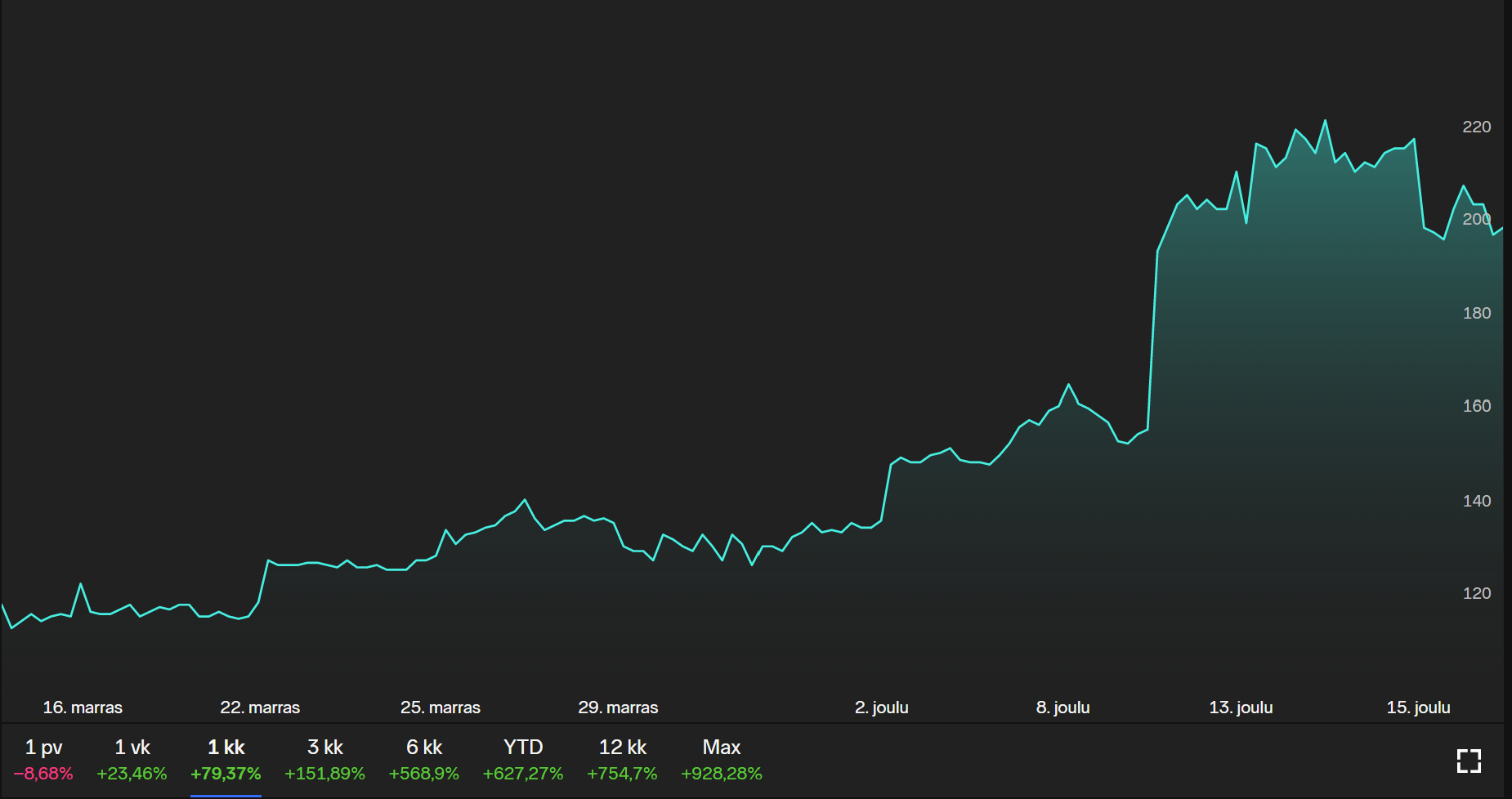
Laitetaan tähän kurssigraafi elävöittämään tekstiä. Redeye on täräyttäny tässä hurmoksessa yhtiölle 255sekin tavoitehinnan.
Mitä yritys tekee?

Yritys myy ilmavesilämpöpumppuja sekä
suunnittelee teknologiaan perustuvia ratkaisuja yksittäisiin taloihin, isompiin rakennuksiin sekä kokonaisuuksiin. Menetelmä siis eroaa normaalista ilmalämpöpumpusta siten, että pumppu ei puhalla suoraa lämmintä ilmaa huoneistoon vaan se lämmittää veden, joka kiertää pattereissa. Tällä teknologialla voi korvata käsittääkseni kaikki vesikiertoiset lämmitysmuodot kuten öljyn ja kaasun. Miksei maalämmön sekä kaukolämmönkin, jos jostain syystä haluaa. Yhtiö ei valmista laitteitaan itse, vaan valmistus teetätetään Kiinassa Amitimen toimesta. Myös myynti tapahtuu partnereiden avulla. Yhtiö itse suunnittelee erilaisa moduleja sekä niihin liittyviä digitaalisia ratkaisuja. Toimitusjohtaja onkin verrannut yritystä nöyrästi Appleen. He siis luovat alustan ja alihankkijat valmistavat tuotteen. Suomessa myyjänä toimii Onninen. Näiden yhteistyökumppanien takia ES:llä itsellään on tällä hetkellä siis vain 21 työntekijää. Tämä onkin varmaan yhtiön skaalautuvan toimintamallin perusta vaikkakin henkilöstöresurssien kasvulle on tilausta.

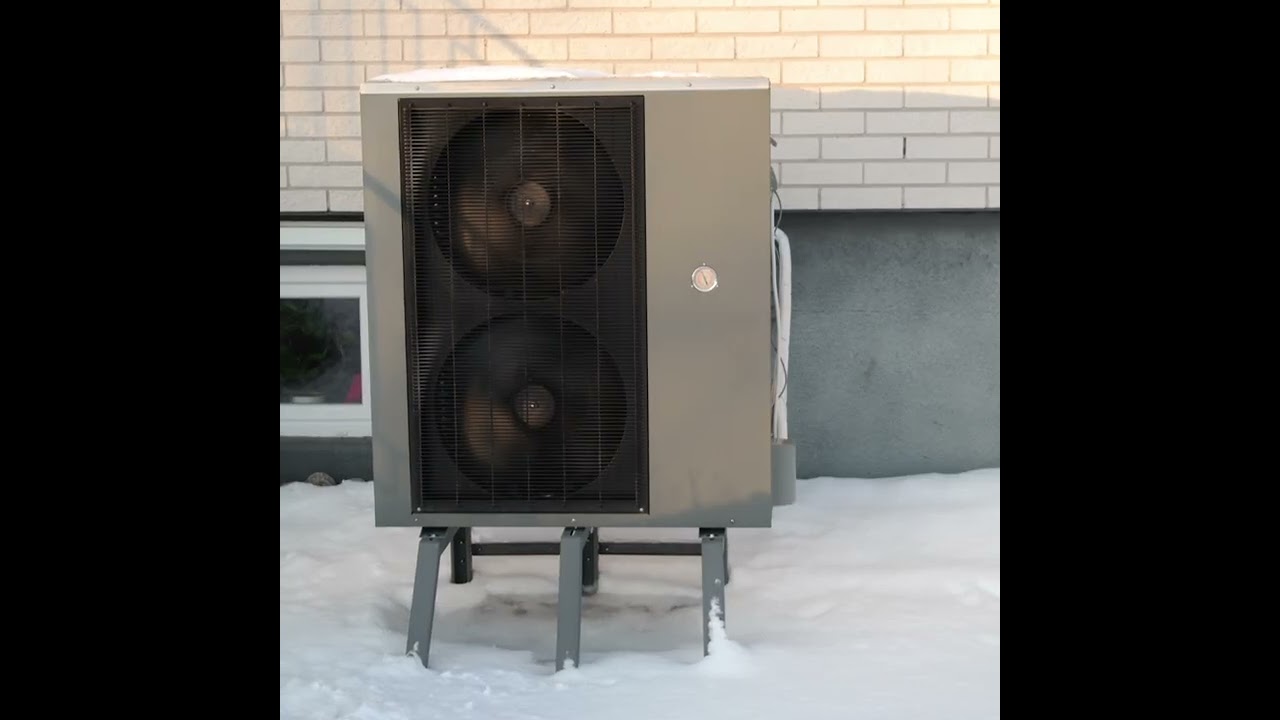
ES siis suunnittelee ja myy pumppuja sekä pienempiin että isompiin rakennuksiin. Käsitykseni mukaan yksityiskäyttöön tulevat pumput ovat suht edullisia, joskaan eivät välttämättä kovin tehokkaita. Tehon riittävyys kovilla pakkasilla on kyseenalainen, mutta teknologiaa voidaan käyttää myös muiden vesikattilaan perustuvien lämmitysmuotojen rinnalla. Täältä kuitenkin löytyy viestiketju ihan positiivisen oloisesta käyttökokemuksesta Oulusta.
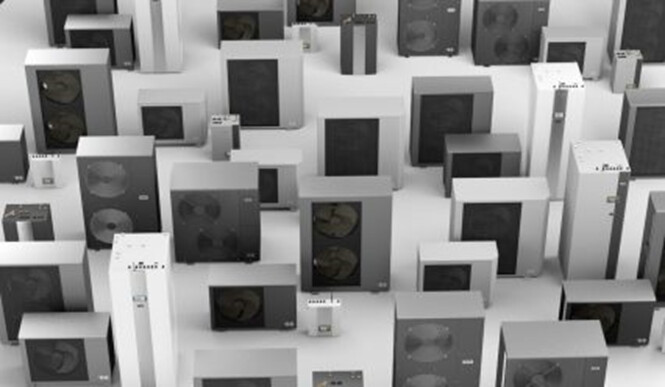

Video näistä pömpeleistä:
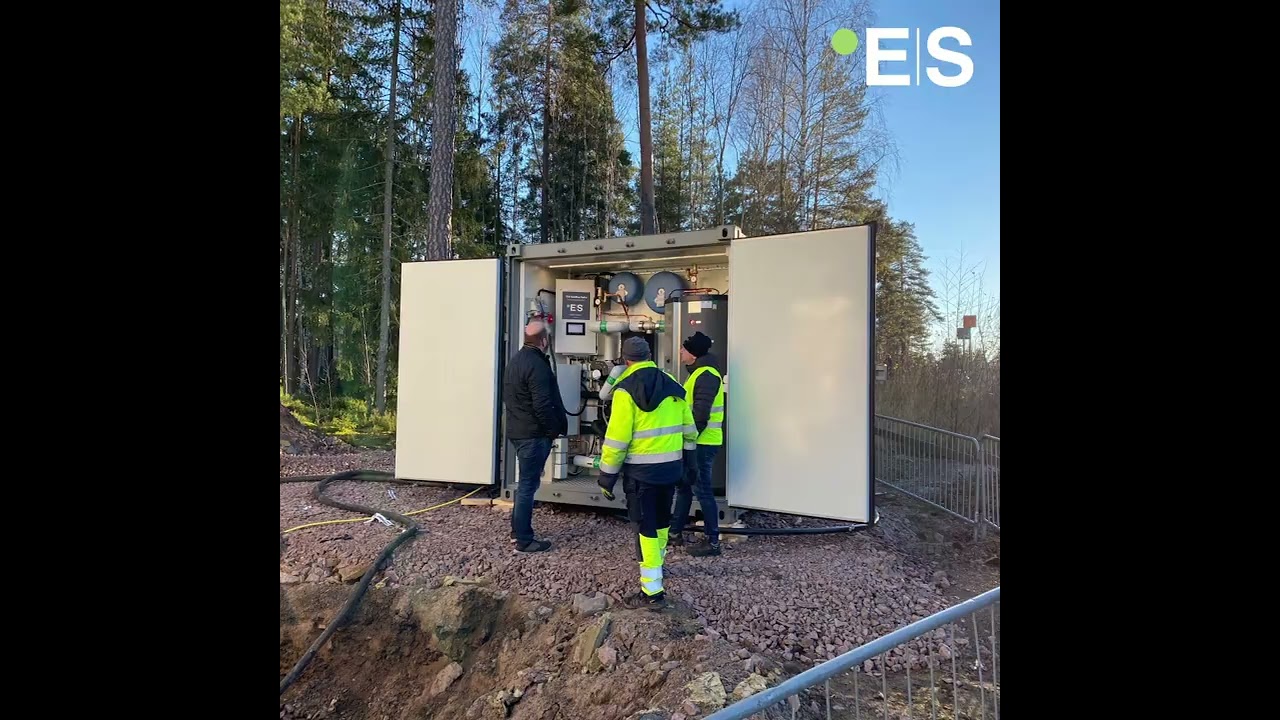
ES rakentaa myös systeemejä suurempiin rakennuksiin, joista lupaavimmalta vaikuttaa Plug-in module. Tämän tuotteen pitäisi olla erittäin nopea asentaa ja liikuttaa, joten se toimii hyvin myös väliaikaisissa kohteissa. Tuote on saanut patentin myös USA:ssa.
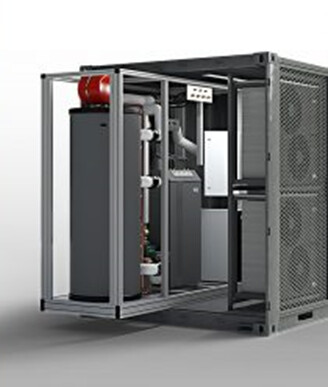

Video tästä teknologiasta:
Lisäksi yhtiön on luonut Energy Save Configurator (Vai onkohan se NordFlex+) älytuotteen, jonka ideana on optimoida sähkön kulutusta esim sähkön hinnan mukaan.

Missä yritys toimii?

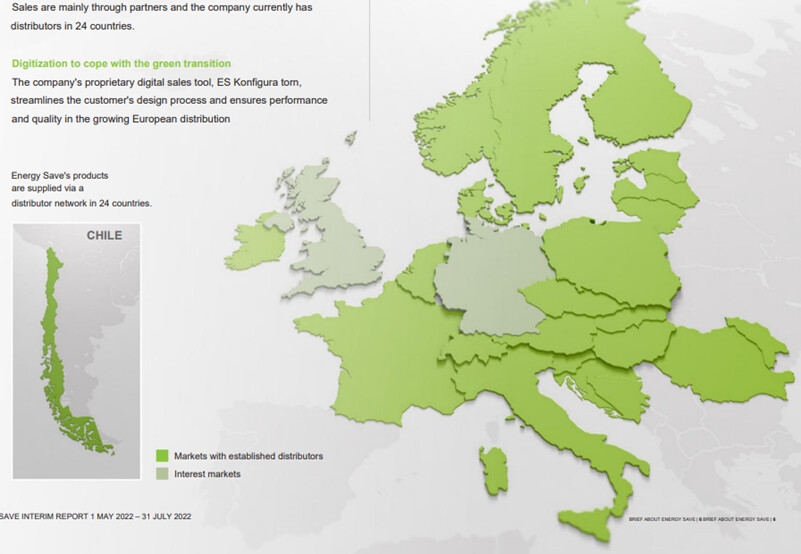
Energy Save toimii 25 eri maassa. Yhtiö julkaisi juuri laajentuneensa Isoon-Britanniaan. Saksan markkinaan on vielä penetroitumatta. Siellä taitaa Viessman hallita markkinaa sekà asennus ja huoltotoimintaa. Yhtiöllä on varasto Ruotsissa, mutta osa tuotteista toimitetaan suoraan tehtaalta kohteisiin.
Missä yritys toimii?

Energy Save toimii 25 eri maassa. Yhtiö julkaisi juuri laajentuneensa Isoon-Britanniaan. Saksan markkinaan on vielä penetroitumatta. Siellä Viessman hallita markkinaa sekà asennus ja huoltotoimintaa. Yhtiöllä on varasto Ruotsissa, mutta osa tuotteista toimitetaan suoraan tehtaalta kohteisiin.

Kuka yhtiön omistaa?

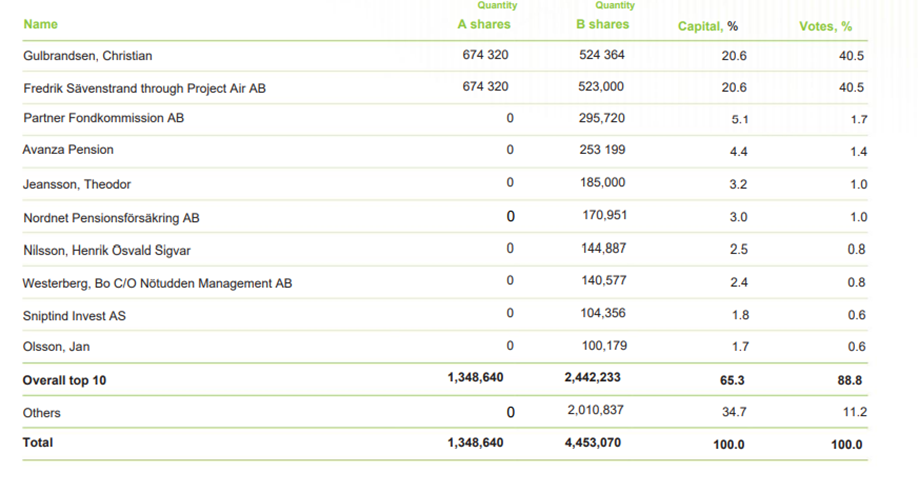
Yhtiön omistajarakenne on hyvin keskittynyttä. Toimitusjohtaja sekä tuotepäällikkö omistavat keskenään yli 40 % yhtiön osakkeista ja 81 % äänivallasta. Institutionaaliset sijoittavat eivät ole vielä löytäneet tätä puljua isossa mittakaavassa. Huomion arvoista on, että viimeisimmän vuosineljänneksen aikana Nordnetin eläkerahasto oli kasvattanut osuuttaan tuntuvasti. Myös toimarin osakemäärä oli lisääntynyt hieman. Oli siellä myyjiäkin.
Millainen on markkinatilanne?

Energiamurroksen myötä vanhoja kaasu- ja öljykattiloita ollaan päivittämässä ja ilmavesilämpöpumppu tarjoaa tähän ratkaisun. Euroopan lämpöpumppuyhdistyksen (EHPA) mukaan markkina kasvoi Euroopassa 31 % vuonna 2021. Käsitykseni mukaan ilmavesilämpöpumpputeknologioiden käyttö on kasvanut tätäkin nopeampaa. EHPA ennustaa, että lämpöpumppujen määrä tulee kasvamaan vuoteen 2026 mennessä nykyisestä 17 miljoonasta 37 miljoonaan yksikköön ja luvun ennakoidaan saavuttavan 60 miljoonan rajapyykin vuoteen 2030 mennessä.

Mitkä ovat yrityksen kilpailuedut ja riskit?

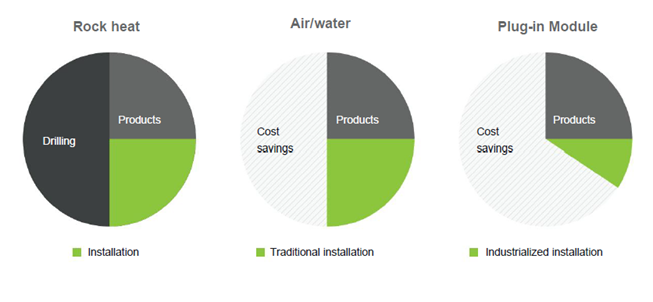
ES mainostaa kilpailuetunaan edullista hintaa, energia tehokkuutta sekä säästöä asennuksissa. (Rock heat pitäisi olla ground heat :blush:. Käännätin osarirapsat googlella.)

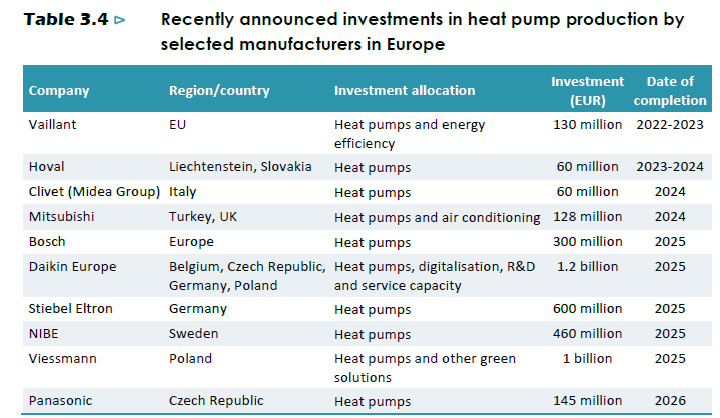
Tuotannon tapahtuminen Kiinassa on uhka ja mahdollisuus. Käsittääkseni yhteistyö valmistajan kanssa on toiminut hyvin ja pitkään. Se on käsittääkseni antanut kilpailuedun muita kilpailijoita (Esim. Nibe ja Daikin) vastaan. Muut valmistajat ovat investoimassa uusia tuotantolaitoksia Eurooppaan, mutta niiden valmistuminen ottaa vielä aikaa. Suurimmat laitokset valmistuu käsittääkseni 2024-2025. Energy Saven kummpanilla sen sijaan on laajennusporjekti jo käynnissä ja sen on tarkoitus valmistua ensi vuoden lopulla. Yhtiö kuitenkin varoittelee komponenttipulasta ja toimitusketjujen (kuten asentajien) riskeistä, mutta toistaiseksi ne ovat kuitenkin toimineet, Q1 21/22 lukuunottamatta.

Millainen on kilpailutilanne?

Kuten yllä mainittua, kilpailijoista Nibe ja Daikun ovat ilmoittaneet tuotanto haasteista. Nibe on korkealle arvostettu Ev/ebit ~35 ja lv-kasvu ehkä 15 %. Daikin (Ev/ebit ~15) kertoi h2 liikevaihdon olevan pienempi kuin h1. Se on kyllä ollut yhtiön trendissä muinakin vuosina, mutta voisi olettaa, että tänä vuonna tulisi markkinoilta tulitukea. Viessman on iso kilpailija, myös Suomessa. Esim LämpöYkkösen verkkomyyntisivulla on listattuna ainoastaan heidän tuotteitaan. Kun tiedustelin, niin sanoivat Viessmanin olevan suosituin tuote. Viessman ei kuitenkaan ole julkisesti listattu, joten heidän luvuistansa on vähemmän tietoa tarjolla.

Miltä yhtiön luvut näyttävät?
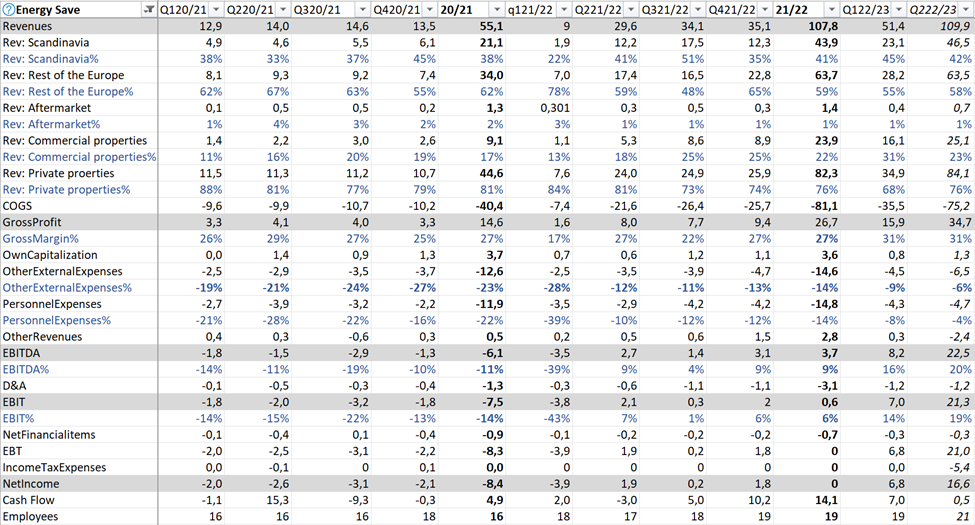

Skaalautuvuus tule hienosti esille, kun seuraa yhtiön liikevaihdon kasvua ja vertaa sitä esim. henkilöstökulujen kasvuun. Hienoa on se, että Rest of Europe-osuus kasvaa. Itse toivoisin myös Commercial properties-osuuden kasvua, mutta pakko myöntää, etten ole aivan varma mikä näistä on tuottavin.
Käteistä firmalla taitaa olla 28msek ja velkoja 12msek. Hieman huolestuttavaa on viimeisen huipputuloksen pieni kassavirta, mutta tulkitsen sen johtuvan varastojen kasvattamisesta. Ainakin kassavirtalaskelmassa kohdassa ” Decrease (-) /increase (+) of accounts payable” oli iso negatiivinen luku.
Hox. Taulukon luvut ovat itse näpyteltyjä, joten niissä saattaa olla vihreitä.

Energy Savesta muualla

Yhtiön kotisivut

Yhtiön sijoittajasivut (Hox, näitä on ollut kaksi, joista toisessa on vähemmän infoa)

Redeyen analyysi (vaatinee kirjautumisen)

Redeyen kommentti posarista (vaatinee kirjautumisen)

Stockpickerin juttu

Affars Världenin juttu

Yhtiöesittely - Redeye

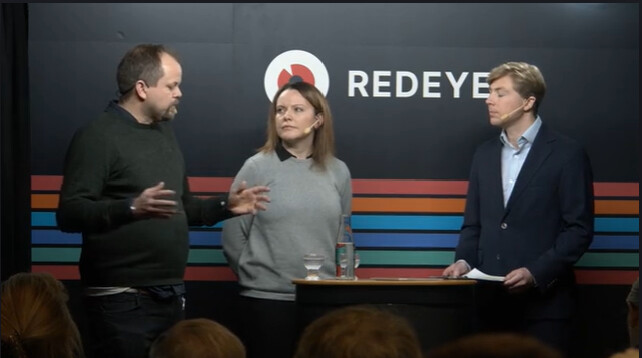
Yhtiö esiintyi Redeyen Teknologiapäivässä keskiviikkona 30/11/2022

Yhtiö löytyy Ruotsin Spotlight-listalta tickerillä ESGR.

Mites, löytyykö foorumilta muita yhtiöön perehtyneitä tai muuten vain ilmavesilämpöpumpputeknologian asiantuntijoita?

Muistutan siis vielä, että omistan yhtiön osakkeita, joten saatan olla biased vaikka kovasti sitä vastaan yritän taistella. Tehkää siis omat tutkimuksenne ja päätöksenne.
37 Likes

Just a few quick comments. I’ve had a Daikin AWHP (air-to-water heat pump) at home for seven years now, and I also have to analyze and research heat pumps a bit at work. I’m sure there is even deeper expertise to be found on this forum, and of course, there are dedicated heat pump forums with incredibly passionate discussions.

But to the point, first regarding the technology:

  • AWHP is a great technology for locations where geothermal heat isn’t feasible (e.g., cities, pressurized groundwater areas).
  • Geothermal is usually always better than AWHP in terms of life-cycle costs if it can be used.
  • The COP promise looked normal, but you have to be particularly careful when comparing these. I didn’t look into the assumptions under which the presented 4.7 is achieved (it means that by inputting 1 unit of electricity, you get back 4.7 units of heat).
  • At a quick glance, the company doesn’t have anything special to offer.
  • Personally, I have steered clear of Chinese equipment. Quality-conscious buyers quickly gravitate toward Nibe, Daikin, Mitsubishi, etc. AWHP as a home heating method is a security-of-supply critical investment on a personal level, and the cheapest possible compressor is not what I want heating my family during winter frosts. I wonder how long these units have been in use?
  • For reliability, these usually have an electric immersion heater as a backup (the COP of an electric heater is pretty much exactly 1).

Regarding the business:

  • I didn’t look at the figures, but without their own IP and actual R&D, this smells like low-margin “pass-through billing.”
  • The table does show quite decent margin percentages, but is it a matter of genuine scalability or the effect of inflation? In other words, demand has been high as people wanted to get rid of oil and gas quickly, especially this and last year (I know of cases where it became quite urgent when piped gas became outrageously expensive and then simply stopped), but production costs hadn’t risen yet?
  • On top of that, there is the positive impact of economies of scale, as revenue covers salaries more comfortably, which is to some extent genuine scalability.
10 Likes

Is there any information on where those Nibe, Daikin, and Mitsubishi pumps are manufactured? I’ve looked into Jäspi’s air-to-water heat pumps (VILP) a bit, but even on their site, it’s really hard to find information on where they are manufactured. Are they even designed by them, or have they just slapped their own logos on some Chinese product? Could they perhaps be from the same subcontractor as Energy Save? I don’t know. Probably not the exact same pumps, but the subcontractor might be the same. I personally got the impression that Energy Save designed those pumps themselves but has them manufactured in China. It could be that I misunderstood, or it’s misleading marketing.

Yeah, you should be careful with those COP and SCOP figures when comparing different pumps.

I would also add the dual share classes to the cons. Personally, I stay away from these dual-class companies, as I don’t think this kind of thing belongs to good corporate governance. Otherwise, it did look fairly interesting. We’ll see how the pumps sell once the hype dies down a bit.

I already put this on my buy watchlist, but it’s definitely coming off because of that idiotic ownership structure.

2 Likes

Not offhand, but I suspect that every device contains parts made in China. What matters is the quality of the critical active components, such as the compressor. I once had the chance to ask whose pumps are suitable for nuclear power plants, even for safety-classified applications, and the answer then was, if I recall correctly, Mitsu and Daikin, which is why I have a Daikin. At least back then, you could get proper documentation etc. from them. This was a few years ago, and situations may have changed.

The heat pump business, at least in the larger industrial heat pump scale, works such that the selling company configures a heat pump application suited to the customer’s needs (power/size dimensioning, required temperature, and operating profile —> compressor selection) and then orders the parts from its partners. Some then have the actual assembly even in Finland; among the domestic companies, Oilon probably has the most in-house R&D. There is actually a quite limited number of compressor manufacturers in the world, so the same “heart” can be found under several different brands.

5 Likes

For how large-scale projects are heat pumps customized right down to the compressor?
In my understanding, Oilon’s equipment and other similar or smaller units are designed to fit as many applications as possible within certain limits. On the refrigeration side, there are indeed all sorts of custom setups, but not so much for heating purposes. It’s not exactly a trivial task to design functional technology around the compressor—that is, after successfully selecting a suitable compressor for the desired refrigerant and operating conditions that meet the requirements. Not to mention inverter drives, where the level of complexity increases exponentially. Additionally, the device still needs to be competitively priced.

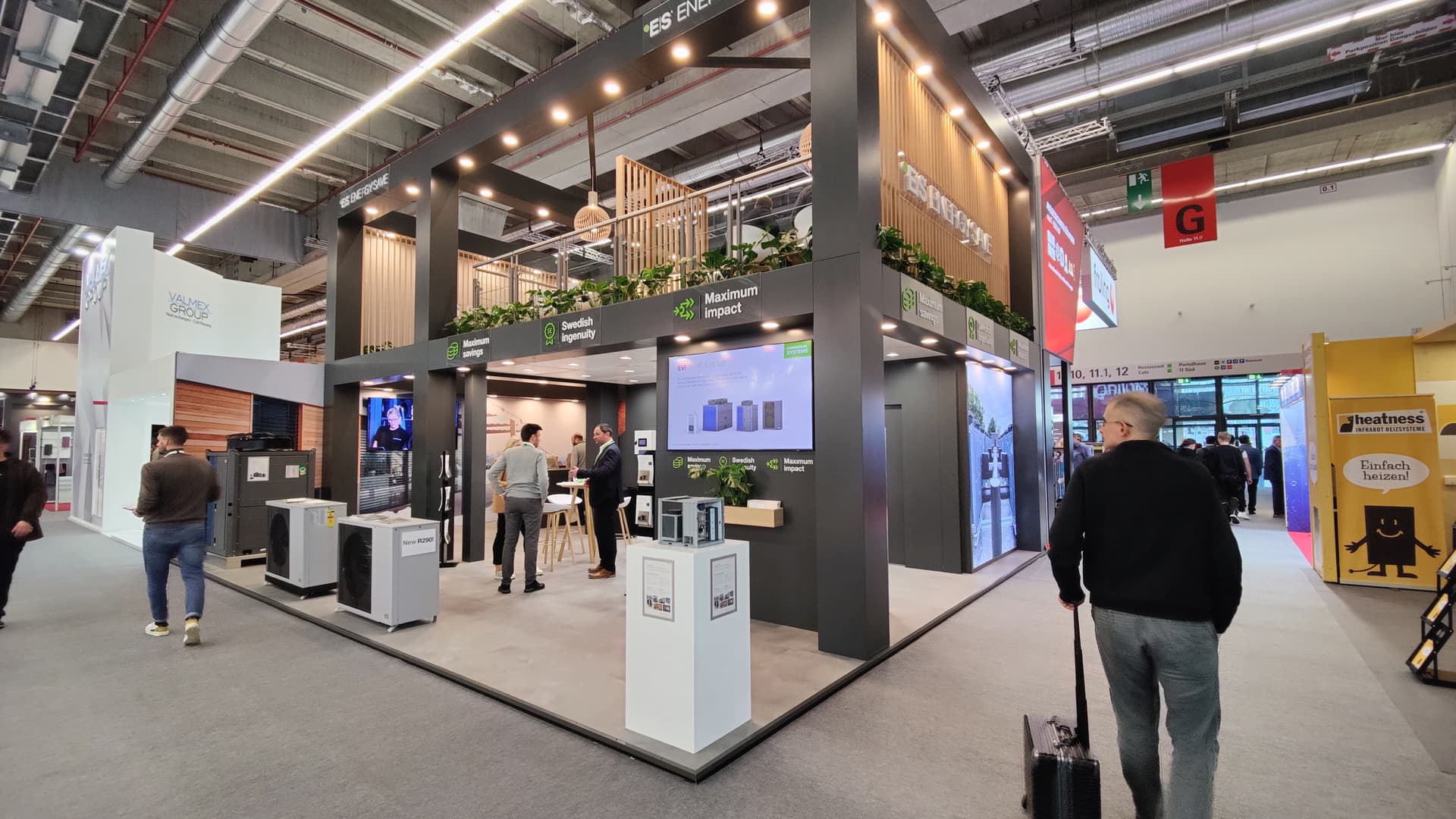
At the trade fair, I had the chance to see those Energy Save pumps. In terms of components and workmanship, they don’t fall behind the more well-known brands at all. There is, however, significant risk here due to the company’s small size and strong ties to China.

4 Likes

Pleasantly expert comments. I appreciate it! I’ll throw in a few comments to the best of my ability.

Personally, I had thought that the easy installability of that modular model could be something special. Even compared to ground source heating. Of course, I understand the life-cycle factor of ground source heat. Furthermore, business-wise, I’m under the impression that Energy Save could have an advantage over competitors regarding production for another couple of years. Both Daikin and Nibe have talked about production challenges in their reports.
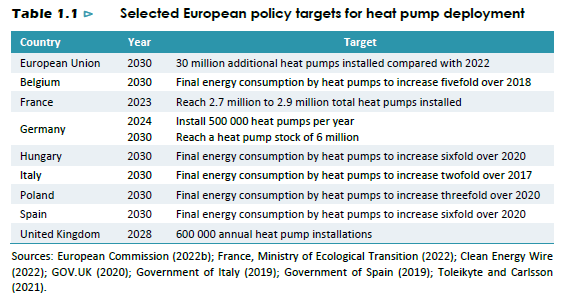
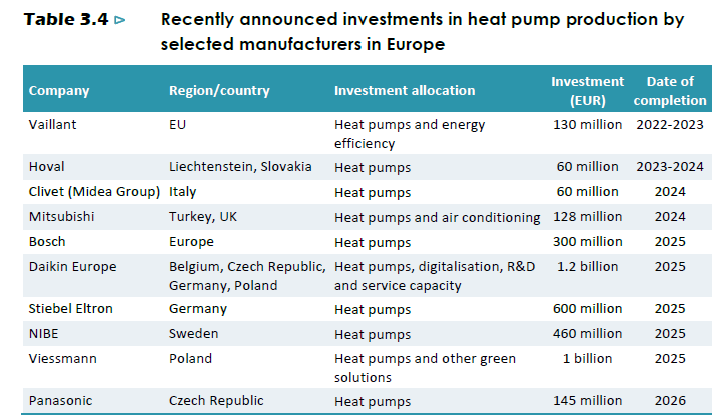
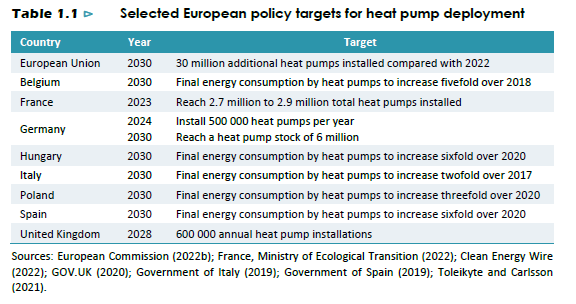
I’m currently looking into the IEA document The Future of Heat Pumps (link at the end), and it contains a table like this, for example. According to it, investments are being made in production, but completing these investments takes time.

After a quick search, it seems that Nibe has production in China, but also elsewhere. Daikin, on the other hand, apparently doesn’t.

In my opinion, this is the second biggest risk alongside China. One could easily build a scenario similar to what Harvia had during Covid. However, I believe there are stronger drivers behind this. Will energy prices return to lower levels for a long time? Additionally, the trend toward producing lower-emission energy is strong. Energy Save is also a small player with market share to gain.

Document:
https://www.iea.org/reports/the-future-of-heat-pumps
Video:
https://www.iea.org/events/the-future-of-heat-pumps

4 Likes

I’m thinking of the megawatt class, which usually seems to mean several pumps of a couple hundred kW each. And indeed, the compressor is selected from a catalog; I don’t think manufacturers start redesigning it for anyone other than themselves!

The smaller ones look like the exact same outdoor unit + indoor unit (with or without a tank) packages that all sets are, my own included.
And the larger equipment for almost everyone is starting to be on some kind of skid (usually a steel frame or container or a combination), which is put together at the workshop and hauled to the site. Then those skids can be combined to achieve the desired overall system.

Have you been able to compare ES’s growth figures to its competitors? Of course, the larger companies can’t have the same percentages, and you did mention the challenges of Nibe and Daikin, but it would definitely be good to get a sense of whether ES’s growth is in line with the market or clearly ahead of it. One could then consider if they really have some advantage—at least the best salespeople, if nothing else!

I’m convinced myself that heat pumps will have even more momentum in the future, and I probably would have bought Nibe already if it didn’t feel so expensive. In the US, Hudson Technologies (HDSN) in a similar sector has been on my radar since it caught my eye in screeners. They are in the refrigerant service business, and the increasing number of heat pumps would be the bull case there, in my mind..

3 Likes

I wonder what will happen once the most acute crisis is over :thinking:

2 Likes

I haven’t found any figures other than those for Nibe and Daikin. For larger companies like Mitsu and Panasonic, they are not broken down in detail. Or at least I didn’t find any. Then many companies are not listed, so no information is available.

2 Likes

You seem to have expertise in the field!
Do you mean that others also use products similar to these Energy Save Plug-in modules?

Would you happen to have any sources for similar products from other manufacturers? I haven’t found any myself. It would be interesting to look into this further.

3 Likes

A nicely critical view of Energy Save was posted in the Coeus thread. I’m copying it here in case not everyone follows that thread, and so it remains here for the record if someone gets interested in the company later.

2 Likes

Arimatti also wrote his own views on it:

1 Like

I thought I’d also contribute my two cents to this discussion.

I could pick up on this as well. The argument about expensive water circulation systems in new builds is quite good, but I believe there are many old buildings in the world where people want to update the energy source of their water circulation systems. As I understand it, there is quite a lot of political will for this in several countries.
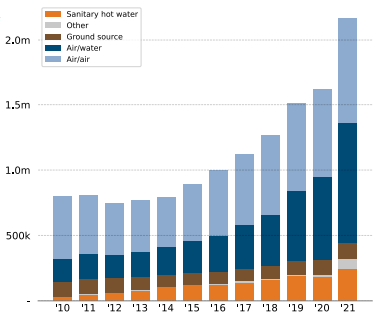
Let’s use this image I previously posted as a source from this source.

The EHPA report, however, shows that the demand for air-to-water pumps has been quite good in recent years.

I am personally wondering about the impact of gas prices on pump demand, at least in the short term. Additionally, pump replacements are certainly seasonal. The previous quarter’s figures were surely supported by the upcoming winter combined with rising energy prices. Those following Energy Save may get a small advantage from their atypical reporting method. Energy Save will publish its November-January results on March 17th. Before that, Nibe’s October-December results will be released on February 15th, which should give an indication of demand.

China is opening up, however, which will likely increase their fossil fuel consumption and raise prices, which in turn would favor alternative solutions again.

In the medium term, I see a competitive advantage in production. Reports from Nibe and Daikin have mentioned production difficulties, and the previously published image from the source mentioned earlier could support the claim that the competitors’ solutions might take a while. As far as I know, Energy Save’s manufacturer, Amitime, has had no problems producing the required number of pumps for the world, and they also have expansion investments underway.

This is also an interesting comment that deserves more study. In Redeye’s report (likely requires a login again; I don’t dare post a screenshot in case it’s not appropriate), the 2023 median EV/S for peers is 1.7x vs. Energy Save’s 2.2x, and EV/EBIT is 15.4 vs. Energy Save’s 11.7. In the “Key peers” category, the corresponding figures are 2.2 and 22.9. Nibe raises the latter significantly, and Mutu_sijoituja wouldn’t want to count them as a peer since they are also a manufacturer. In my opinion, there could also be a lot of uncertainty in those Energy Save figures.

And finally, a little lightheartedness:

I was thinking the same thing, and in my opinion, in this Redeye video (may require login), you can see bags under the eyes of the CFO and CEO at the end of a busy quarter. :slight_smile:

From the Christmas party photo on LinkedIn, I count a headcount of 20, whereas in the last report it was stated as 21. However, my understanding is that a few more people have been hired.

3 Likes

Directed share issue from Energy Save to institutional investors at a price of 205 SEK.

151.2 MSEK of new capital is being raised. The main owners are selling for 127.5 MSEK.

New owners include, among others, Nordea Småbolagsfond Norden, Handelsbanken Fonder, Didner & Gerge Fonder AB, Fondita, Ålandsbanken Fonder, Swedbank Robur, Carnegie Fonder, and Sniptind.

The proceeds are intended to:

-strengthen the current supply chain to ensure expansion capacity,

-accelerate growth organically and potentially also through acquisitions,

-expand and modernize existing test laboratories and R&D facilities, and

-speed up international expansion, initially primarily in the UK and Germany.

The main owners have committed not to sell shares for the next 18 months.

CEO Comments
“The European energy transition towards a green electrification of the heating sector is now accelerating with full force. Heat pump technology will be the workhorse of the changeover, and our technology discipline with air/water heat pumps is growing the fastest. Our strong focus on hybrid technology, prefabrication and digitization as well as our central role and position as a Swedish partnership-based heat pump developer with a strong supply chain are currently opening up many exciting and potent collaboration opportunities in the growing European market. The market is expected to increase sixfold by 2030, and our developed capabilities are relevant to be able to take market shares. Our goal is to profitably grow faster than the market and we now see great opportunities to further utilize the position and scalability we have already built up. To be able to take on new collaborations and opportunities, the company’s supply chain, technology and project management capacity needs to be further strengthened quickly and proactively. By broadening the owner base with institutional owners, the company is strengthened in the long term in order to contribute in the best way to us being able to realize the growth opportunities that we now face with continued scalability.”

2 Likes

Now that my professional work has paused, it’s a good time to continue the monologue in this thread.

Energy Save, which operates with a reporting schedule different from others, released its Q3 22/23 report for November–January this morning.
The top line shows revenue of 87.4 MSEK and growth of 156%. A more impulsive reader might stop there and go about their day smiling. However, this figure doesn’t please me, and clearly not the market either regarding this investment case, as the company’s revenue in the previous quarter was 109.9 million. Redeye commented amusingly that Energy Save missed expectations “slightly.” A 25% miss is an interesting definition for the word “slightly.”

Market signals suggested that sales of air-to-water heat pumps had remained strong. The CEO mentioned seasonal variations in the report, but for example, Nibe reported good growth figures for Q4 in February. In the case of Energy Save, my investment case is based on the fact that, unlike other players, Energy Save has been able to deliver products to the market well. They have items in stock, while others have delivery times in the range of 6–12 months.

I received confirmation of this last Wednesday when I was doing some “Lynching” (scouting the market like Peter Lynch) at the ISH fair. I might write more about that in another thread.

The only place where Energy Save seemed to have maintained its market share is Denmark, where it grew at pretty much the same rate as the market. Previously, however, they had gained market share there as well. Denmark accounts for half of Energy Save’s revenue and 90% of Scandinavia. So, according to this, Energy Save has not kept up with the growth of the Swedish market. Elsewhere in Europe, revenue fell 40% from the previous quarter, which is alarming because, in my opinion, Energy Save’s growth investments have been focused on Europe. Granted, the investments there are still ongoing. Sales in Germany and the UK only started recently. Regardless, in the largest single country, Hungary, revenue decreased from the previous quarter.

My investment case has been that Energy Save now has an opportunity to gain market share while competitors suffer from supply chain bottlenecks and Energy Save does not. They said as much themselves at the fair. They could have a competitive advantage in this for the next two years. Otherwise, it feels like competitive advantage isn’t really achievable through the products themselves in this industry; it must be acquired through other means, such as sales channels. I had thought this quarter would still follow the pace of the previous one, and that potential seasonality might only become apparent this spring.

The general atmosphere at the fair was that the market is moving at a fast pace. This is also reflected in the entry of new players into the industry, especially from China. The drop in gas prices has had a small impact, but not a significant one. The energy transformation is a major driver. Especially in Germany, where the installation of new gas and oil burners is being banned. Read more about them in the travel report elsewhere.

The stock took a real hit in the market today and closed at 157.5 SEK. I wonder what the new institutional investors are thinking, having participated in the share issue just a month ago at a price of 205 SEK.

Now I need to think over the weekend about what to do with this. Whether to take a small profit while I can or cross my fingers and wait. Either way, this story took a blow.

14 Likes

The company’s market cap is €20,000 / delivered device / year.

The company’s business is to order these devices, with retail prices ranging from €8,000 to €20,000, from China and sell them to European wholesalers.

spoiler

6 Likes

The company cleverly managed to carry out a share issue while the share price was high; it’s a pity the business isn’t really big enough for the stock exchange.

2 Likes

@mutu_sijoittaja feel free to come here and discuss!

I agree with this, and it would be particularly interesting to know how much the investing parties were aware of the Q3 results.

Quite an interesting way to outline the company’s valuation, but why not also use normal multiples? The previous quarter’s revenue was a disappointment for me, but it was still larger than the entire previous financial year. In Denmark, development continued well, but the rest of Europe slumped, which is a bad thing for the investment case because investments have been made there and the company was supposed to have an advantage over other markets regarding pump availability.

Now it’s interesting to see what happens in Q4. The company has continued growth investments and recruited more people. This quarter may be seasonally weak. However, some larger commercial contract could save the situation. Personally, I see quite good chances for an EBIT of 50 MSEK. In this case, the EV/EBIT for the 22/23 financial year would be around 15, which I don’t think is quite absurd if the company just continues to grow.

There have been some comments about Energy Save as a wholesaler. They do that too, but I would describe them more as a brand selling air-to-water heat pumps that uses a contract manufacturer. Of course, there has been some wondering about how Amitime markets its products. Energy Save does, however, have its own R&D, especially on the software and larger projects side. The pumps themselves don’t differ much from each other technically. Their Project & Business Development Manager said at a trade fair that they are focusing quite a lot on, for example, fine-tuning decibel levels at the moment.

Additionally, they currently have R290 technology pumps in testing, which should go on sale at the end of the year.

In a few messages, it’s apparent that ES’s pumps evoke quite emotional reactions for some reason. The chains of thought behind it aren’t really clear to me. I have remained a shareholder since the Q3 results, but I am trying to observe the company’s development very critically at the moment, and I have no problem letting go of the position if the story doesn’t take off.

2 Likes

I consider ES to be quite a fine company in itself, as it has been able to capitalize so well on the market turbulence caused by the energy crisis. Usually, the ability to capture market share in a changing competitive landscape is a sign of quality.

But I still believe that this quality doesn’t make the company a good investment at these prices and at this point in the cycle. When the energy market likely stabilizes, it will also be difficult for ES to maintain similar figures. We might have seen a preview of this in Q1.

In my view, that ratio of mine illustrates the company’s incomprehensible overvaluation well, but in the end, it is nothing more than a variation of the P/S ratio. If you look at that, ES’s TTM ratio is 3.2. Most firms in the buy-sell business trade on the HEX below one.

2 Likes

I wrote in another thread earlier because I wanted to hear answers from an investment professional. But since those get deleted, maybe I can post a message or two here.

In my and the market’s opinion, this outfit is overpriced. Reasons as a free stream of consciousness:

The temporary increase in product demand due to the Russian invasion and shipping challenges isn’t something I think you can use to draw conclusions about continued growth. The company’s management and board, in my view, brilliantly created new “guidance” based on these so they can a) sell off their own shares and b) use the temporary valuation error for a share issue. I’d be willing to bend down too if I saw a winning lottery ticket on the ground. In my opinion, the stock should be looked at through a structure where this benefit brought by luck has been cleaned out, and this insane revenue growth should be valued at 1 times operating profit. I see it as a one-off, which is good of course, but nothing more.

I am a former heating equipment installer by trade, so I have installed ES’s competitors. When I asked former colleagues about the matter, they felt ES quality corresponds to wholesalers’ own private label brands. And there isn’t really a brand of its own. I base the assumption of non-existent pricing power on this, as well as the company’s past pricing power and small size.

Another thing that really bugged me in an analysis by an unnamed investment firm was the assumption that costs don’t grow even in the long run if revenue grows. This has never happened before for an importer selling physical goods. For this reason, we used our own valuation metric to observe how small the installed base is out there. From this, it can be noted that when the installed base grows at a significant rate and it’s fresh, the company hasn’t had to build maintenance and spare parts operations in every country where they operate. Ramping these up is not exactly easy or cheap.

Then I’ve commented on the air-to-water heat pump market, which I consider weak as a whole. For the reasons that the sites where they are good are quite limited; you can’t produce domestic hot water with them. For new builds, they work just as well as basic air-to-air heat pumps (ILP), with the difference that a basic air-to-air heat pump is cheaper since you don’t need to build a heating network. So they are suitable for renovations in sites with water-circulated floor heating. And sites with floor heating and an oil burner—there are simply very few of those. In addition to these, the sites must have a large electrical supply to the property, the renewal of which quickly becomes more expensive than installing ground source heat. Air-to-water heat pumps are a transitional stage that will already be over after a few years.

Just to clarify, I have no shares nor a short position; I don’t benefit in any way even if the share price does somersaults. I started writing about this because I wanted to learn. It’s always nice to hear other people’s opinions.

4 Likes