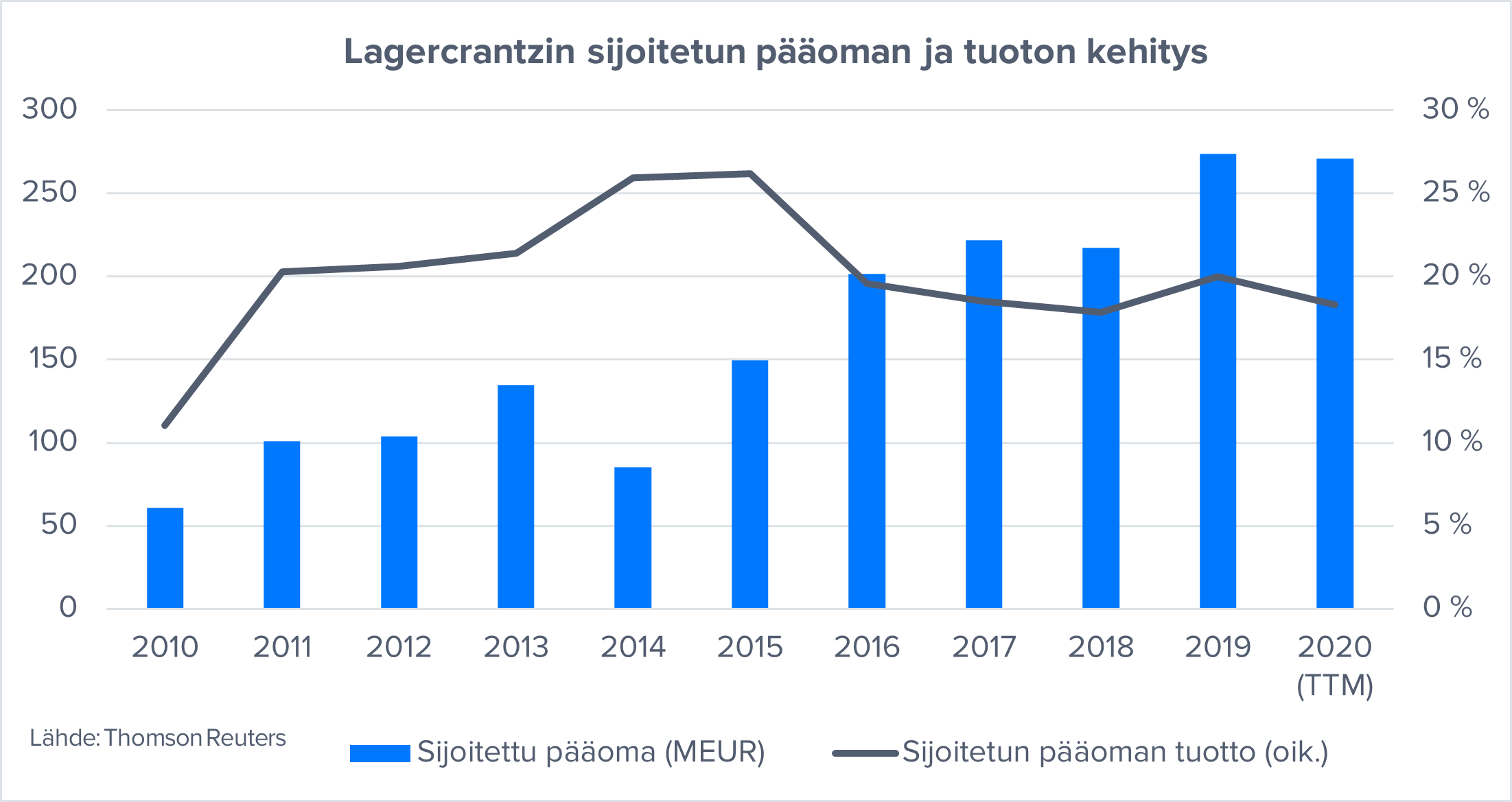
Yleiselektroniikka’s Swedish peer company, Lagercrantz Group, announced today that it has acquired the Norwegian company VP Metall AS. According to Lagercrantz, VP Metall is a market leader in electrical connectors suitable for high-voltage applications. VP Metall’s operations appear very stable, as, according to the Orbis database, its turnover has been around €4 million in 2015-2019, excluding minor peaks. As a niche player, profitability has been excellent, and return on capital employed has averaged over 45%.
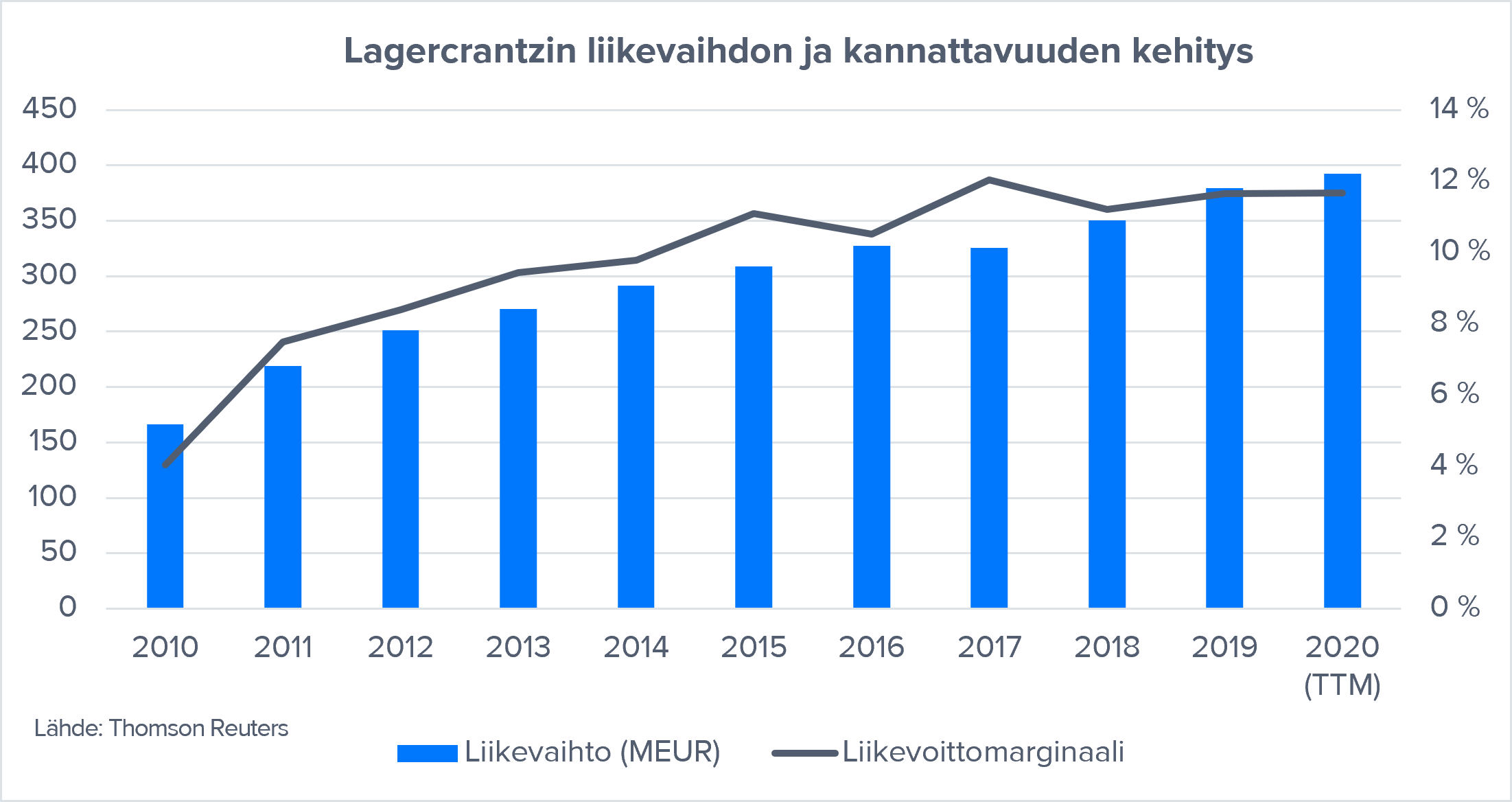
Lagercrantz itself, perhaps most simply put, is an industrial owner of companies in niche segments that hold leading positions within those segments. This makes corporate arrangements a central part of Lagercrantz’s DNA, and the company has executed over 40 such arrangements since 2010. The group has also been active in Finland, which suggests that Lagercrantz could, at least to some extent, be competing for acquisition targets with Yleiselektroniikka. In total, Lagercrantz’s portfolio includes over 50 companies. The companies below are mainly operators in the electronics industry and its various value chain parts. Thus, it includes both manufacturing companies and wholesale trade. Roughly 50% of the group’s turnover comes from wholesale trade and 50% from manufacturing. In recent years, however, the group has gradually shifted its focus towards manufacturing. This has also been reflected in the development of the gross margin.
Like Yleiselektroniikka, Lagercrantz grants its units complete autonomy. Accordingly, operational decision-making is not guided from the group level. Corporate arrangements do not aim to find significant operational synergies; instead, the acquired target must already be in good condition both financially and in terms of market position. Organic successes also have their place in the growth strategy. The financial targets are at least 15% annual earnings growth and over 25% return on equity. These at least ambitious targets have also been met, as the operating profit growth has averaged 22% and adjusted return on equity 23% in 2010-2020 (TTM). In terms of corporate arrangements, the goal is to complete 3-5 arrangements annually. It goes without saying that the operational development mentioned above has also led to a massive amount of shareholder value creation.