Auroora Yhtiöt - A Finnish Serial Acquirer

AUROORA PLANS AN INITIAL PUBLIC OFFERING AND LISTING ON THE OFFICIAL LIST OF NASDAQ HELSINKI LTD

The offering is expected to consist of a share issue (“Share Issue”), in which the Company will issue new Shares. The Company aims to raise gross proceeds of approximately EUR 35 million through the Share Issue by offering new Shares for subscription. The Company expects to use the net proceeds from the Share Issue for potential future acquisitions, to support the development and growth of Auroora’s subsidiaries (“Group Companies”), including capital expenditures, and for general corporate purposes. In addition, certain shareholders of the Company may sell their Shares in connection with the Listing based on a later decision.

Antti Rauhala, CEO of Auroora, comments:

The Finnish economy largely relies on small and medium-sized enterprises. A significant portion of these companies is expected to undergo ownership changes in the coming years. It is a moment when it is decided whether the company’s growth continues domestically or whether ownership moves abroad. Auroora is a Finnish serial acquirer that originated from a desire to develop domestic ownership for the long term. We want to be a long-term owner of good companies and develop companies over the long term and sustainably across economic cycles and decades. As a serial acquirer, our goal is not to centralize operations, but to strengthen our companies. The planned initial public offering and listing would enable the implementation of Auroora’s strategy and the pursuit of growth through new acquisitions as well as by supporting the development and growth of our group companies. We want to be the best home for companies, a reliable partner for entrepreneurs, and an attractive investment for investors.

As of the date of this release, Auroora covers 25 businesses. Auroora has three business segments:

  • Electrification and Automation business segment, which comprises energy-efficient electrical and automation products and solutions,
  • Clean Water and Environmental Technology business segment, which comprises water purification and wastewater treatment technologies and services, circular economy solutions, and environmental engineering, and
  • Industrial Products and Services business segment, which comprises specialized industrial products, maintenance, and technical services for manufacturing, energy, and infrastructure customers striving for responsible supply chains and solutions that improve industrial efficiency and sustainability.
Release:

Auroora Companies will hold a press conference today, Monday, March 16, 2026, at 10:00 a.m.

33 Likes

Everyone is naturally interested in Auroora’s dividend outlook :thinking:

Below are CEO Antti Rauhala’s comments regarding profit distribution. Ideally, of course, no dividend would be paid at all, but time will tell. A promising comment overall, however!

”Serial acquirers are typically not dividend companies; instead, it’s a compound interest model. We aim to achieve at least a 15 percent return on capital from the reinvestments enabled by the cash flow of the companies we own,” Rauhala says.

”We do not aim for large dividends. Investors get a return from the combination of the company’s value appreciation and dividends,” Rauhala summarizes the benefits for the investor.

37 Likes

A company in an interesting industry, and at least at first glance, the company’s figures are impressive. I was just wondering—while it’s good in itself that anchor investors have been found for 22 million out of a 35 million euro gross fundraise, in practice, only 13 million euros worth of shares remain for others. What puzzles me is that I can’t find any mention of how many shares are intended to be offered in the issue and what impact that will have on the per-share financial figures. And is the offering intended to be carried out as unfortunately many offerings have been, where the coffers are first completely emptied into the old owners’ pockets and only then filled with new owners’ money? I look forward with interest to seeing what kind of views @Karo_Hamalainen, among others, presents about the company :slight_smile:

25 Likes

Here is CEO Antti Rauhala’s interview regarding the listing!

Right at the start, the most important questions, and then the business itself. :smiley:

00:00 Antti Rauhala

00:56 Auroora Companies as a serial acquirer

03:03 Planning the listing

03:44 Investment philosophy

05:10 Organic growth

06:10 Segments

07:52 Capital lightness

08:36 Why Auroora

11:55 Company performance

14:18 Management

15:56 Quality of growth

17:10 Targets

It was a special pleasure to do this interview, as serial acquirers are my favorite sector and naturally Antti shared the same feeling. :smiley:

51 Likes

@Karo_Hamalainen also interviewed Antti Rauhala :slight_smile:

Advertisement: Auroora Yhtiöt Oyj Auroora Yhtiöt Oyj has announced that it is planning an initial public offering as well as a listing on the Nasdaq Helsinki official list in the first half of 2026. A press release on the subject has been published at: https://auroora.com/fi/julkaisut The video was filmed in Helsinki on March 3, 2026.

18 Likes

Auroora is a great company. However, I’m slightly bothered by the company’s profitability %, which would suggest that the products are not truly niche and the businesses are not of particularly high quality. It seems more like commodity margins.

Of course, ROCE is what you should be looking at here, but in a bad cycle, a low-margin entity can be risky, especially in the industrial sector. I’m somewhat familiar with the company myself and have met Auroora’s management a few times. The management style and the team are indeed very impressive, and the pace of operations is fast.

19 Likes

A nice surprise that Auroora is planning an IPO. There is a lot of positive here and I look forward to the prospectus to dig deeper. It’s refreshing that the insiders have a significant ownership in the company and that they see it best to channel cash flow into acquiring new companies instead of a significant dividend. It even sounds a bit like international operations. More of this, please!

Kudos to Verner for the interview, excellent questions. You can tell that serial acquirers are his favorite area :slight_smile: CEO Rauhala answered many questions in a way that pleased me and gave the impression that the company considers criteria and things that are important to me as an investor.

To avoid it being just praise, there are a few things I would like to get answers to, for example, from the upcoming prospectus.

Organic growth of 13% sounds really strong. Is the business more cyclical than other acquirers, as larger acquirers have barely achieved 1-5% organic growth in the past year. Often they have one segment rocking while another is slumping, which smooths out the journey. Now it sounded like all of Auroora’s segments are rocking at the same time.

The CEO emphasized that they primarily look for asset-light companies. Therefore, I assume they focus on value-added distributors?

In my opinion, the company’s competitive advantage vs. Swedish peers remained a bit open. Of course, there are enough SMEs (PK-yhtiöitä) that for some, a domestic buyer might be a strong preference, but Lifco, Lagercrantz, and others have quite a strong track record of ownership, so if these are on the table as options, I don’t know if being domestic is enough. I didn’t really buy the argument that domestic board work would be somehow exceptionally brilliant compared to international board work.

The most important thing remained a bit unclear: what are the criteria for buying companies – ROCE 15% and good companies? But what is a good company? The company has a history of acquisitions, but at the same time, Auroora’s EBITA margin is quite low for my taste. Have they already tried to raise the margins of the companies they buy, or will this happen by buying even better companies in the future? Or will they perhaps settle for lower profitability? Combined with the fact that individual goals are tailored for each company, which are linked to Auroora’s strategy (I assume this refers to ROCE +15%), it sounds a bit confusing. Personally, I prefer the Swedish P/WC (Profit/Working Capital), which is a clear metric for all stakeholders. Perhaps this is followed at Auroora too, but it just wasn’t mentioned now.

The CEO name-dropped quite a few familiar things from Swedish peers, such as management training and rotation. Incentives were brought up, but it remained unclear to me how the company, for example, tries to commit entrepreneurs to stay with the companies. As I understand it, this has been important for many Swedish peers. Another thing is how acquisitions are generally carried out. Are they cash purchases with a potential earn-out (bonushinta) if the set targets are met in x years?

I’m sure we’ll get answers to these and many other questions as the IPO progresses :slight_smile:
It also remains interesting to see how domestic investors will receive a serial acquirer. Finns are a dividend-hungry people…

30 Likes

It will be interesting to see what kind of ROCE Auroora has, given that such a clear threshold has been set for the companies being acquired. For me, the biggest issue with serial acquirers is the potential need to constantly finance deals by arranging share issues. Additionally, the seller should usually have a significant information advantage and be able to execute the deal at an inflated price. Investing in organic growth in such high-quality companies should always be the priority, and then if there is excess cash, buy other companies.

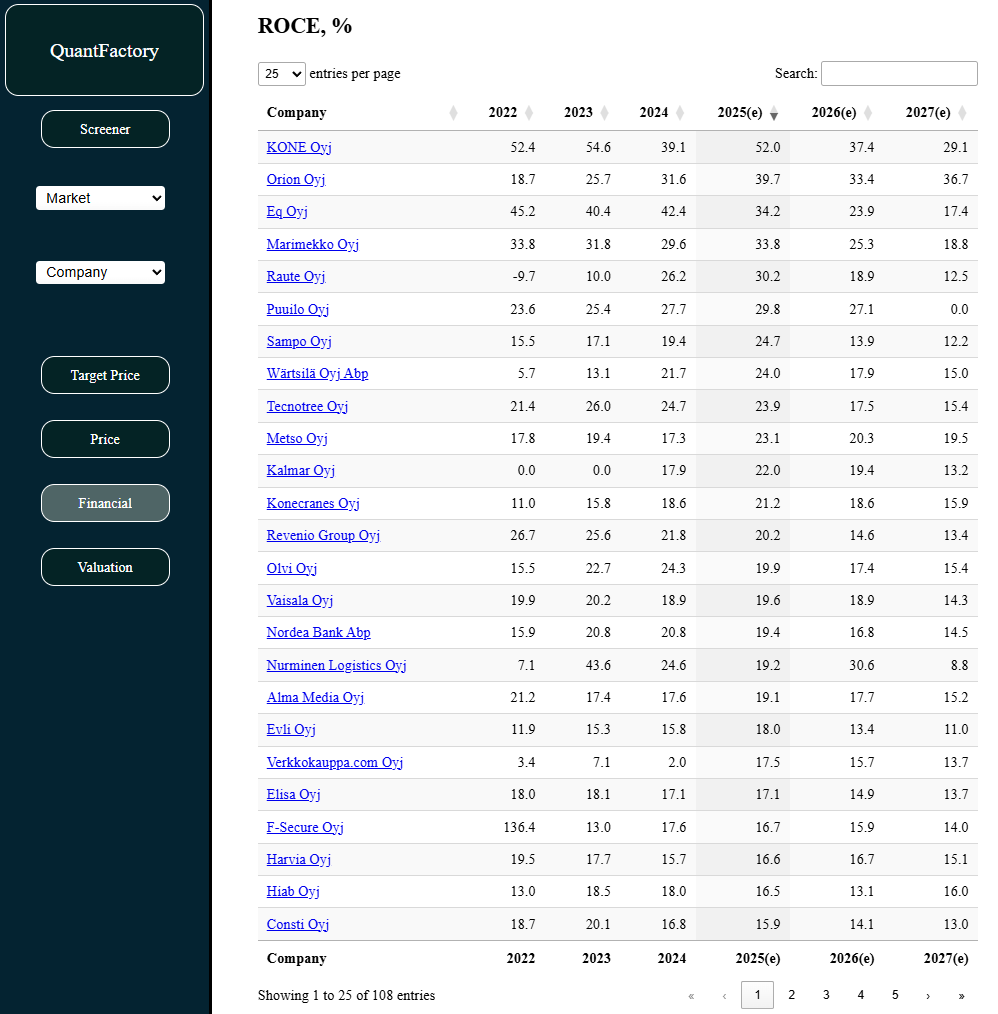
ROCE hasn’t been on my list of tracked metrics, so a bit of research into it is quite advisable. Below are some of the best ROCE percentages among the main list companies I follow.


QuantFactory - Helsinki OMXH Financial comparison

6 Likes

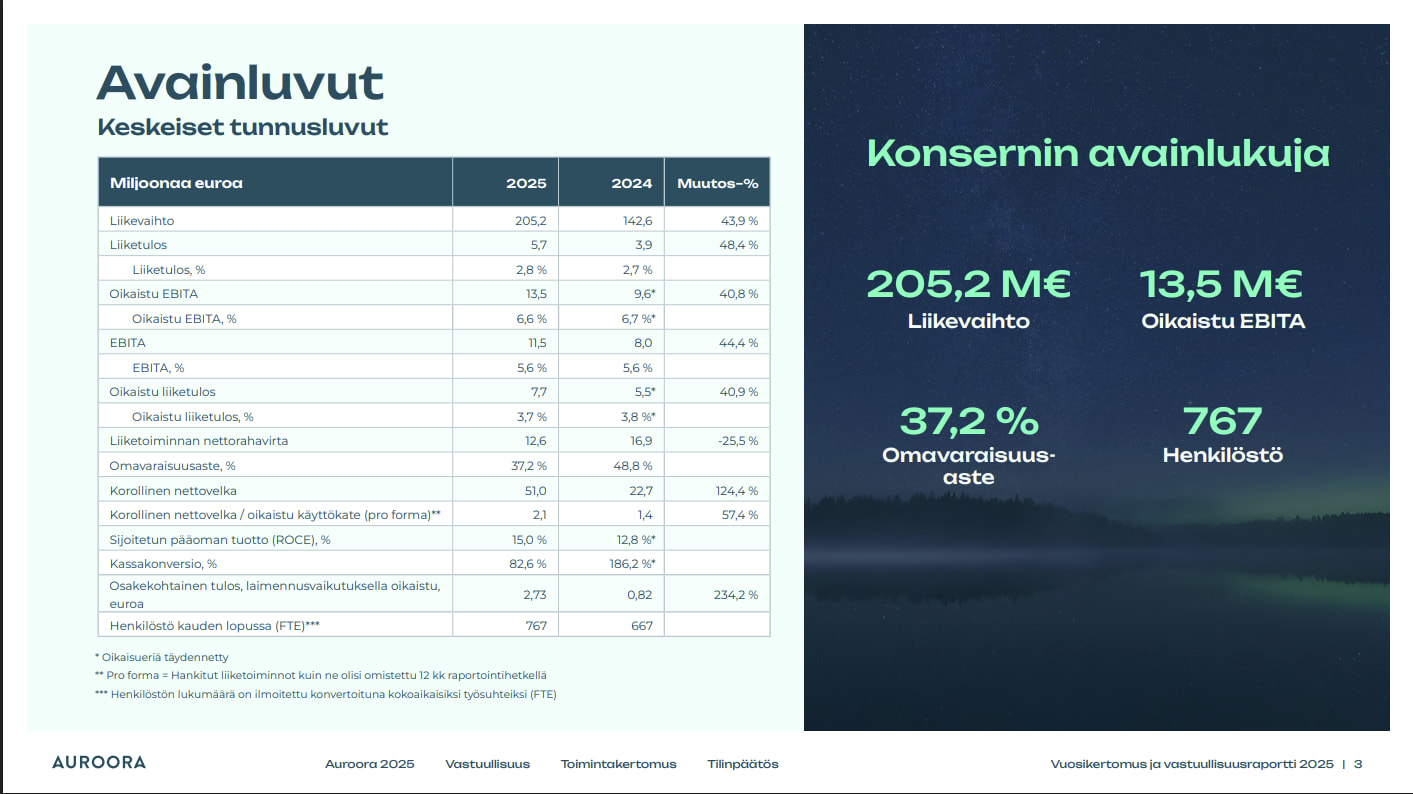
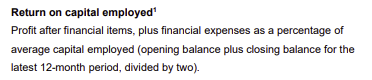
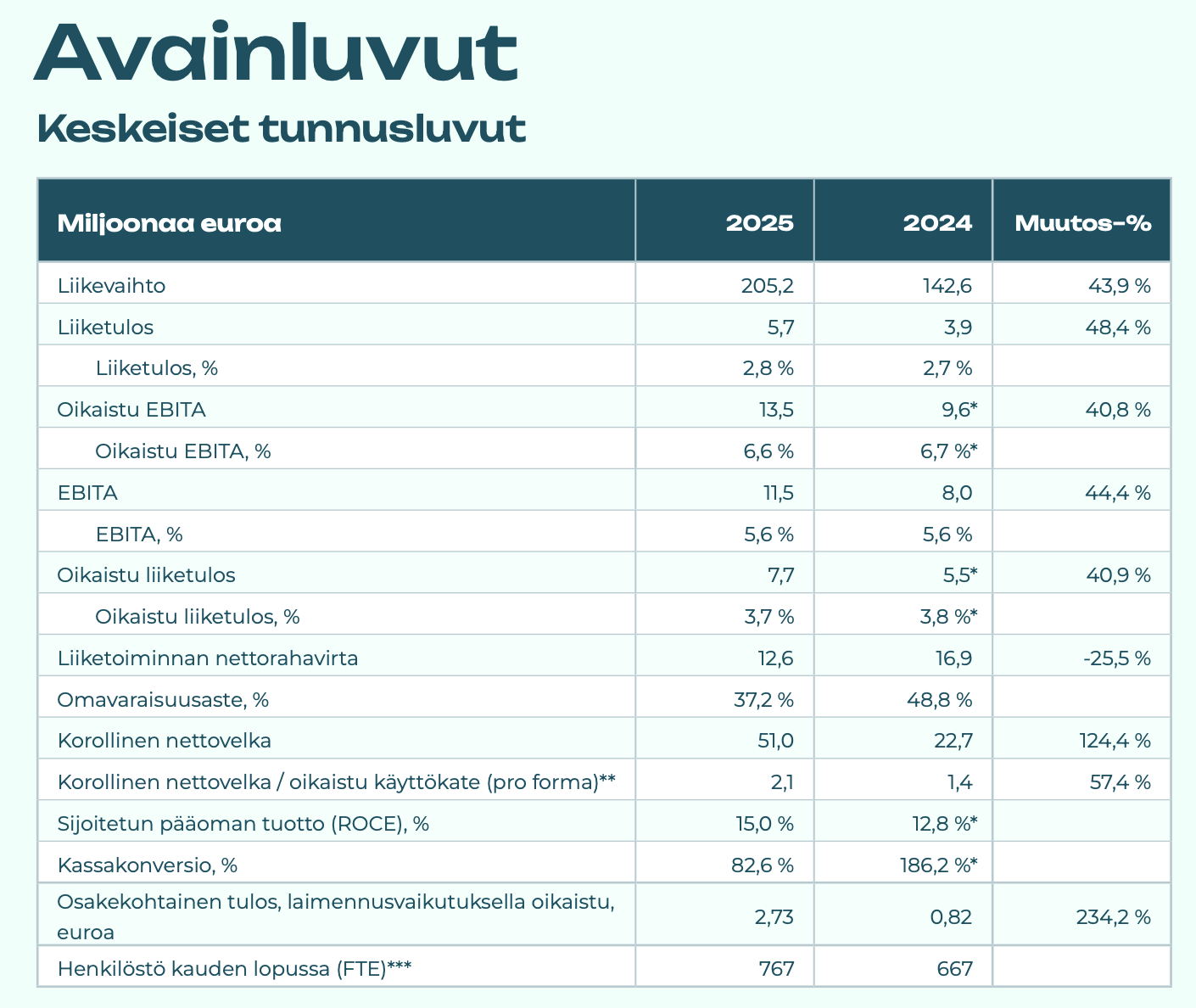
In 2025, Auroora’s ROCE was exactly 15%


And the company defines ROCE in the following way
image

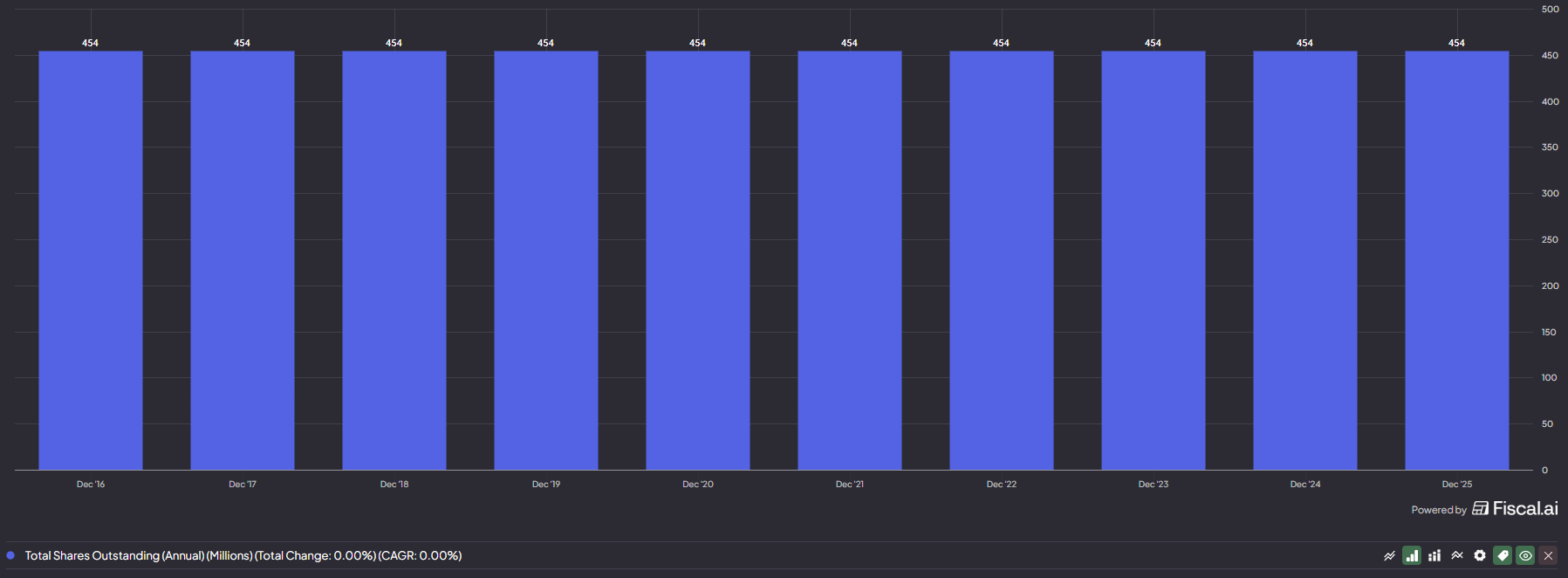
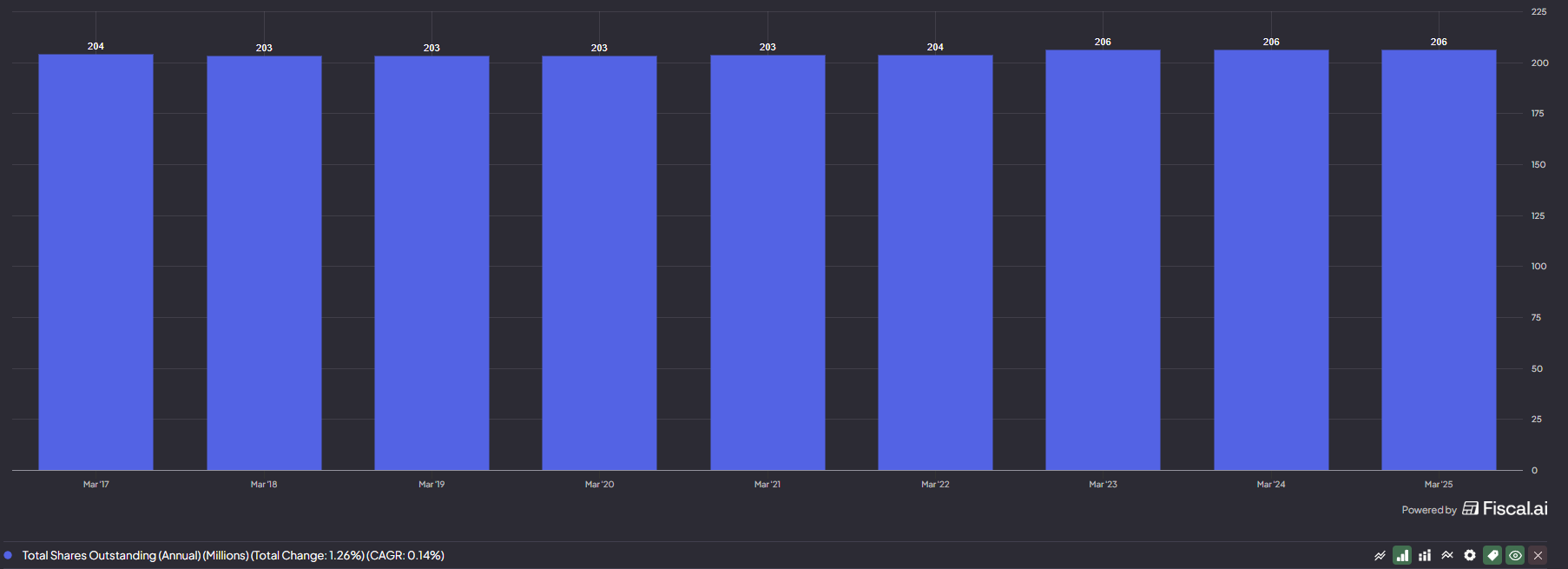
My opinion is that there are serial acquirers and company buyers. Good serial acquirers primarily finance acquisitions with cash flow and thus do not dilute owners.
For example, below is the share capital development of Lifco and Lagercrantz over the last 10 years.


In my opinion, these companies have a fairly routine and simple way of making small acquisitions on an assembly line. One reason for this is that deal-making is not centralized; others besides the CEO can make deals. Thus, the process needs to be clear.

Then there is the group of “company buyers” who buy various companies at high valuations, rationalizing that synergies and cross-selling potential seemingly justify the high valuation. The acquisition is financed with an ingenious financial model prepared by a consultant, using their own shares and cash. The shares are, of course, obtained through a small share issue. Later, loans are taken out to still be able to remember shareholders with dividends.
Some time passes, it is found that the previous deal was not so successful, and some balance sheet values are written down, until a new acquisition target comes into sight and the same process is repeated. Since the previous deal has not increased free cash flow, and the company’s own core has not really developed because management’s focus shifted to cleaning up the acquisition mess, the financial model is the same again, and perhaps the same consultant gets a call.

Good serial acquirers have very strict frameworks for the valuations at which companies are acquired. The seller always has an information advantage, but many sellers are also looking for an eternal home for their life’s work. They may have a certain reputation in their hometown and want to maintain it. Thus, they do not want to sell their company to the highest bidder who will likely start efficiency measures and lay off half the employees. In such cases, a serial acquirer can be an attractive buyer, even if the offered price may be lower.

24 Likes

Part of the reason for the high organic growth may be the previously mentioned cyclicality. The occurrence of larger one-off deals during the period could also explain this, especially since Auroora currently owns a modest number of companies (compared to its Swedish peers), which is immediately reflected in the top line if a company temporarily overperforms.

The financial figures for Auroora’s companies can be easily found for previous years (‘25 are hardly available yet), so one could dig into the companies’ backgrounds if they had the time.

An interesting company in any case, and I look forward to seeing at what valuation it will be listed.

5 Likes

In ROCE/ROIC-% calculations, one indeed sees very diverse practices and definitions between different companies. In presentations and interviews, all of these might be discussed generally as return on invested capital, even if there are significant differences in calculation methods.

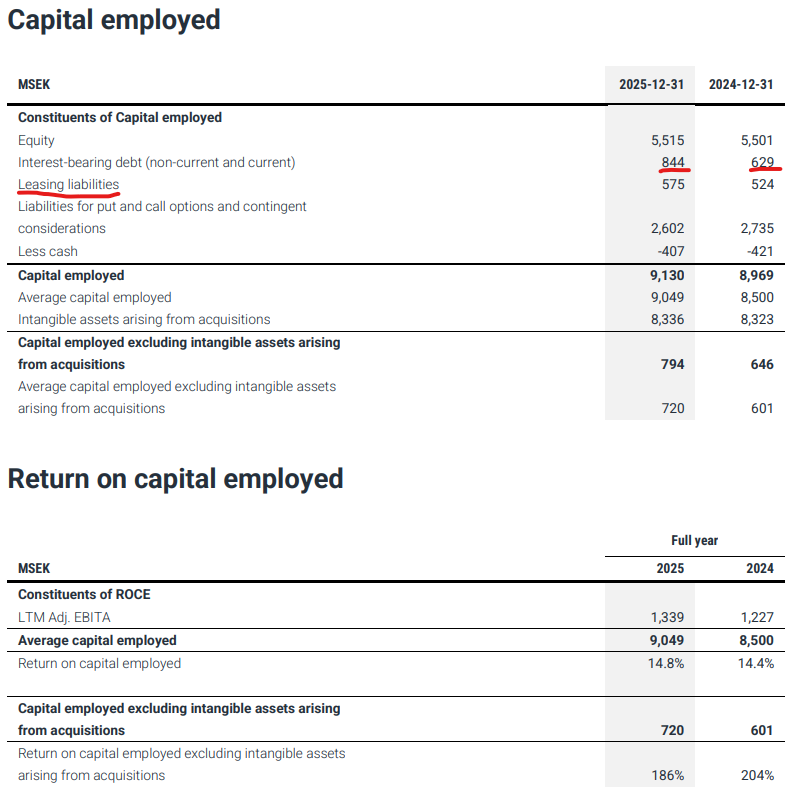
Auroora (Auroora Group) apparently completely adjusts lease liabilities out of committed capital. Should then, all lease-related expenses also be adjusted out of EBITA, as they are operational expenses? Depreciation of right-of-use assets has been deducted from EBITA, but some leasing costs are deducted from revenue only as interest expenses in IFRS accounting. Of course, a larger part probably always goes through depreciation, but is there a slight inconsistency in this calculation method? Why should lease liabilities be adjusted out of the return on invested capital at all?

I admit that I have not yet familiarized myself sufficiently with the company’s figures, and this might have been a completely unwarranted comment, but it just caught my eye in your message!

8 Likes

The same caught my eye, which is why I added this :joy:

And by no means an unwarranted comment! I think it’s good that we also talk about nuances, because as you said, not all ROIC/ROCE is the same.
For example, Lagercrantz defines ROCE as follows
image

I am not the right person to comment on which calculation method best reflects the company’s return on capital. As you said, many companies calculate it differently and make adjustments. Generally, not related to Auroora, I always start with the assumption that adjustments are made to make the figure look as good as possible, unless proven otherwise. Perhaps the company can comment on the chosen calculation method itself?

4 Likes

Yep, last time I crunched the numbers for serial acquirers, I looked at Rökko’s figures, and they definitely didn’t deduct lease liabilities. However, they calculate it from rolling adjusted 12-month EBITA, just like Auroora.


and the definitions:

I’ve been struggling with the same issue with a domestic market serial acquirer peer, Relais. Lease liabilities play a significant role at Relais, amounting to over €100 million, mostly in their repair shop operations :smiley:

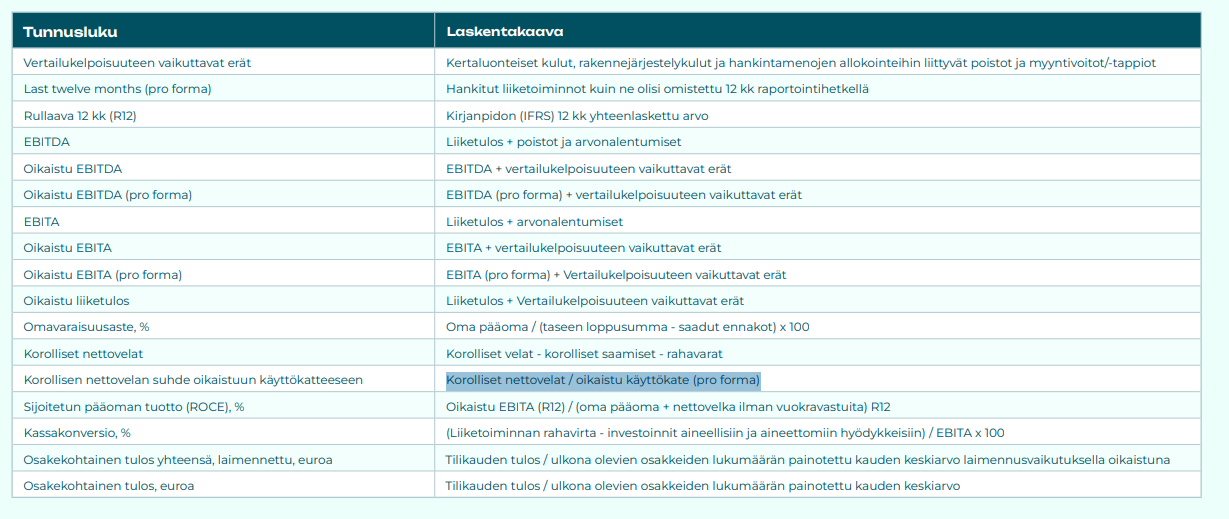
Adjusting for these would already move the needle in Relais’s case, but as far as I understand, the company doesn’t do it, with the formula being:
image

I need to take the time sometime to calculate comparable figures between the companies and compare the results. Of course, there are many differences between the companies as well; one has massive lease liabilities + hybrid and the other has many obligations related to minorities, etc.

EDIT:

This is absolutely true :smiley: That’s why one has to peek under the hood a bit with these alternative key figures.

7 Likes

Now that I’ve started looking through Auroora’s (Auroora) numbers, it seems that the net debt to EBITDA (käyttökäte) ratio is also defined a bit more aggressively than many other serial acquirer (sarjayhdistelijä) peers do.

The 2.1x net debt/EBITDA (nettovelka/käyttökäte) presented on the key figures slide is calculated with adjusted pro forma EBITDA (oikaistu pro forma käyttökäte). Typically, serial acquirers calculate this with LTM EBITDA (käyttökäte). Again, there’s nothing wrong with this, but it’s good to keep in mind when comparing companies’ reported figures.

7 Likes

A significant portion of Auroora’s current revenue still comes from one company: Arnon Oy. In 2024, it generated just under 80 million in revenue. Arnon’s share of Auroora’s 2024 revenue was just under 55%, meaning the company’s importance to Auroora is substantial. Of course, its share in the group will decrease with this pace of acquisitions, assuming Arnon itself doesn’t grow as rapidly.

Arnon dates back to the Pikespo era when private equity investing was still being carried out. Arnon is to Auroora somewhat like Yleiselektroniikka is to Boreo: both are a large part of the group from the time before the serial acquirer strategy, and with their low margins, they are perhaps not the highest quality businesses today.

Arnon is, to my understanding, an electronics contract manufacturer/subcontractor. Due to its industry, the margins are not very fat, and this may be reflected in Auroora’s overall performance. You are right that some of Auroora’s businesses are commodity-type operations with low margins.

8 Likes

The offering begins tomorrow.

The company aims to raise approximately 35 million euros with a maximum of 6.74 million new shares to be issued.

The subscription price for the IPO is 5.20 euros per share.

The public and personnel offering will be held from March 25–30. The institutional offering will be held from March 25–31.

Trading in the shares on the Helsinki Stock Exchange is expected to begin on April 2 under the ticker symbol AUROORA.

6 Likes

The offer can be suspended as early as Friday, so it seems they want to act quickly.

The prospectus might not be public yet, but has anyone already crunched the numbers on the valuation, now that the subscription price is known?

2 Likes

Here’s a bit more information than in the KL article.

3 Likes

At a quick glance, it seems inexpensive when comparing the EV/EBITA multiple to other peers.

1 Like

I own shares in Boreo, a serial acquirer already listed on the stock exchange, and I’m very surprised by the market valuation given to Auroora in this offering.

The companies are very similar in size when comparing their business models, debt, and EBITDA. But:

  • The current market value of Boreo’s listed share capital is approximately 44 million euros.

  • Auroora’s total share capital (=old and new shares (*)) market value in the offering is 155 million (29.9 million x 5.20 euros).

(*) According to Auroora’s announcement, “The Company will initially issue a maximum of 6,741,453 New Shares, and as a result of the IPO, the number of Shares may initially increase to a maximum of 28,897,182 Shares if all New Shares offered in the IPO are fully subscribed (assuming a maximum of 106,837 employee shares are initially offered in the Personnel Offering) and assuming the Overallotment Option is not exercised, the number of Shares may initially increase to a maximum of 29,908,399.”

So, there’s quite a bit of premium for Auroora in the offering price, or perhaps it’s the allure of a new listing.

I wrote in the Boreo thread in mid-March: “So I’m closely watching how Auroora performs, because the valuations of such similar serial acquirers simply cannot diverge so much in the long run. The difference in the market value of the share capital between the companies cannot, in my estimation, persist for long; either Auroora will correct downwards, or Boreo upwards. Or, most likely, they will converge from both directions.”

Inderes’ target price for Boreo (19 euros per share * 2.7 million shares) is 51 million, and while I’ve debated with the Inderes analyst that I believe it’s severely underestimated, Inderes has maintained it as justified. It will be interesting to see what Inderes recommends for Auroora based on this and its offering price!

15 Likes