43. EMMI BERLIN
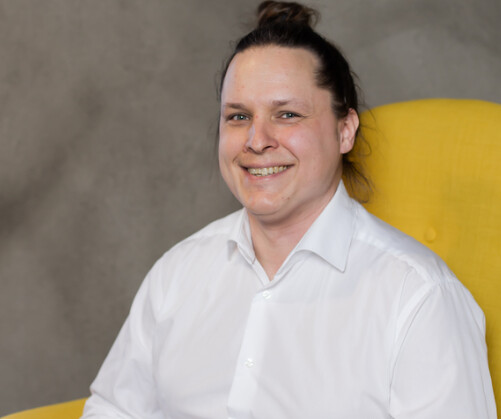
When thinking about familiar figures in investor relations across different companies, the first ones that immediately come to mind for me are @Mirko_Sampo_IR and, of course, Emmi Berlin. Numerous people have praised Emmi to me in private messages (and she is certainly praised elsewhere too!), and I am not surprised at all. Thanks to Emmi and Mirko, the companies they represent become more familiar, a stronger bond of trust is formed with these companies, and such individuals create an even better overall image of the companies.
Gofore is one of my favorite companies, and that is largely based on what I have heard and read about it as an employer. I must say that Emmi and Gofore are a great match in my opinion—both in a way represent certain long-term and sustainable values, the implementation of which is rewarding, especially in the long run. Role models are always needed, for example, Gofore as an employer and Emmi in charge of communications; Emmi also excels at bringing up important matters in a human and understandable way rather than distantly and suspiciously hiding things, meaning many companies could take a cue from Emmi.
The investment world needs more positive optimists like Emmi, who sustainably move things forward with kindness. Emmi listens to others and discusses matters with investors and other parties, communicating in a way that allows everyone to feel on equal ground. It is easy to think that what Emmi and Gofore do and communicate are obvious, easy things, but that does not seem to be the case when looking at how things are generally done.
Others besides investors and companies would certainly also find useful food for thought in Emmi’s thoughts and answers.

1. Describe who you are in thirty words.
I am Emmi, 46, mother of two teens, enthusiastic communicator, locally rooted from Tampere, a traveler who has seen the world, Ilves fan, history nerd, book lover, food enthusiast. At work early, last at parties, sometimes at the gym. At a furious pace, with a great vibe, with dry humor.
2. Name three things that forum members do not know about you.
Many know that I have been a communicator and IRO for Spinnova, which develops ecological textile fiber, but hardly anyone remembers that about 13 years ago I was in the same role at Neo Industrial (now Reka), which tried to start the production of ecological viscose fiber in its Avilon business at Valkeakoski’s Säteri. It was a great disappointment when the project collapsed as the viscose market overheated just as former employees of the previously closed factory were being hired back. I have always appreciated being the underdog, rising from there to a winner, and the courage to try to do something significant in general. I don’t even think success is what decides it—the main thing is that an attempt is made.
At the turn of the millennium, in my early twenties, I was a beginner working at a communications agency focused on financial and investor relations. At that time, my clients included the Helsinki Stock Exchange and the Finnish Foundation for Share Promotion (Pörssisäätiö), and financial sector players and market laws became familiar. I edited the foundation’s web magazine, which included the monthly “Seppo’s List,” meaning stocks recommended by Seppo Saario. I learned a lot about stock picking from that. Other favorite people of mine in the industry from that time were finance professor Vesa Puttonen, whom I regularly interviewed, the late Russia expert Pekka Sutela, and portfolio managers Mika Heikkilä and Tomas Hildebrandt.
An even more ancient funny fact is that as the 90s tech bubble was building, I was at the other end of the famous Evli IPO queues, namely in the bank’s customer service, where we churned out contracts for retail investors. My career in communications also began at Evli, where in '99 I ran their first intranet project. Before that, the internal communication of the rapidly growing organization of about 500 people was mostly handled through company-wide emails, so the need for new structures was clear.
Even now, 24 years later, there are still companies that have not understood the importance of internal communication. I admire Evli’s founders anyway, and building an intranet at such an early stage was particularly far-sighted—meaning very typical of their thinking.
3. What interests and hobbies do you have? You are not allowed to mention anything related to investing.
I wish I could list something interesting as a hobby, but besides being a mother of two children and having a challenging full-time job, I haven’t felt I have time for any regular hobbies. Next, as bandwidth starts to free up when the kids are in their teens, I would like to do volunteer work. I exercise somehow every day; I jog, do yoga to calm down, or grind at the gym depending on my mood. Travel, good food, and wine are among my interests 
When traveling, I usually want to go somewhere where I can both relax and explore historical sights. I can stand in museums for hours. Shopping is no longer among my hobbies; instead, I prefer recycled fashion. Effort must be put into ecological consumption, finding things out, and being committed to conserving natural resources, so I suppose that is some kind of hobby too.
**4. What is a normal weekday like for you?**I wake up around 7:30 a.m. and, depending on the day’s schedule, either stay home to work or walk/take the tram to the office if it’s raining—at least if someone asked “Are you coming in tomorrow?” the day before. My colleagues are so amazing that it’s always nice to go to the workplace. Although an IRO is sort of always on standby, I relatively rarely work overtime, so I trudge back home between four and five, make food for the teenagers, and usually head out for the gym or a run. If the kids are not with me, I will likely see a friend or have a long phone call with a friend who lives far away. My friends are very important to me, and some of them also live in my former hometowns of Helsinki and Jyväskylä. You can even do chores while on the phone. I’m a bad sleeper, so in the evenings I prefer to read rather than binge streaming series, with varying success.
5. Could you tell us about your work history?
I started my communications career at Evli in the late 90s, and at the turn of the 2000s, I moved to an agency specializing in financial and investor communications. Our clients were large listed companies and financial sector operators, and typical for the spirit of the time, we produced a lot of print publications, but online magazines and investor pages were also making their way in back then. I was independently responsible for large client accounts and learned, as a managing editor and producer, to juggle multiple time-critical projects at the same time. Work that builds stress tolerance was good training for future roles.
I love not only producing text, but also editing and translating texts written by others. However, I don’t feel like an expert huddled in a corner; rather, I am an extrovert and often the person in the company I represent who knows almost everyone and knows a little bit about everything. I have a jovial personality, which I think suits this kind of people-centric service profession.
I got my first IR job in 2005 when my client Glaston chose me as their Communications and Investor Relations Manager. I got both this and several future jobs because I had convinced someone in the company with my previous work. I left Glaston with mixed feelings after getting married and moving to Jyväskylä. An interesting cleantech career opened up for me there; I was responsible for the communications of wind power company Moventas for about five years.
In 2010, the daughters of Moventas saved from the parent company’s bankruptcy had just been sold for a euro apiece to a stingy industrial investor, and they were being restructured for almost the entire time I worked there. As a communicator during those years, I experienced probably every change that can happen in a company and learned to do a lot with a very small budget. Renewable energy was also a very meaningful cause to work for. After a few other turns, such as being responsible for the current Reka’s group communications and IR, I ended up at Spinnova in 2017. The 4.5-year journey that started from there was a great achievement. In my work at Gofore, I am focusing solely on investor communications for the first time, and the company couldn’t be better in terms of its reputation, performance, and culture.
6. Could you describe what kind of investor you are?
Although I have been involved in the financial sector for almost my entire career, I haven’t been systematic enough to invest myself. It’s embarrassing to admit this at this age, but there’s no use crying over spilled milk, rather you should change things. My most important investments currently are my first (and only) home in Tampere and—surprise, surprise—Spinnova and Gofore shares found in my stock portfolio. Two very different, but in my opinion, good investment targets. I also think my former employer Glaston has been an undervalued stock for a long time. I feel that an IRO has almost an obligation to own the company they represent, even though I also understand if someone, specifically for hygiene reasons, does not want to do this.
If I choose individual stocks in the future, I will do so based on both historical return and, even more so, on gut feeling, and very likely with an ESG angle. I regret not participating in the IPOs of Kempower or Betolar, for example. Climate change is, in my view, (unfortunately) the megatrend of megatrends, and all business focused on combating climate change has growth potential—you just have to separate the wheat from the chaff. I understand industrial and commercial scaling to some extent, which is what I would pay attention to in these.
7. We talked a bit beforehand, and you mentioned that you invest on behalf of your children. What can be found in their investment portfolios? On what basis have you chosen the contents of their portfolios?
The children’s fund investments are in moderate funds. Back in the day, me and the children’s father followed Seppo Saario’s advice, meaning we have invested child benefits.
8. What do you want to teach your children about financial management, saving, and investing?
I want both of them to understand the value of a good education and work. Teenagers nowadays seem to have a lot of role models among people who have gotten rich through something other than long-term work or, for example, honest entrepreneurship.
Quick wins happen very rarely or never in life, but if I myself had saved even a euro a day since my children’s age, I would be a rich woman. I also want to give both of them the advice that even when getting married, it’s good to maintain your own finances and security for the future, and preferably make a prenuptial agreement.
9. What have your jobs at Gofore and Spinnova taught you about investing?
At Gofore, I have seen how open a company can be if it wants to—on the other hand, this has made me realize how little some companies provide information about their operations. Therefore, I would probably pay very close attention to both the company’s reporting and all other communications, because thanks to my modest portfolio, I would be able and want to monitor the affairs of the company I own very closely. I think communication is an underestimated asset overall. When done right, it can be a competitive advantage, especially for an investment target.
**10. Well, tell us investors, what kind of employer was Spinnova?**Back in 2017, I was only the 10th employee, and even then, it was very important for Spinnova to be a good employer and take care of its people. Although rapid growth always brings growing pains, the company has had a remarkably low turnover rate. All Spinnovateurs are inspired by their meaningful mission and proud of their achievements, as they should be. Few investors know or remember that, for example, the massive project for the factory that started in spring was pulled off by the company with a very small organization, meaning they are capable of incredible feats.
Among the oldest Spinnovateurs, everyone, right down to the founders, consists of former researchers. Going from a researcher to an ultra-agile industrial developer must have been an incredible personal transformation journey for each of them. For the rest of my life, I will be proud to have been a part of executing that great climate mission. As I described earlier in the Neo Industrial context as well, I truly respect all brave entrepreneurs and founders.
11. Well, how have you liked working at Gofore, what is the best part about working there?
For me, the best part has been the amazing colleagues who have become my friends. It’s telling that, for example, last autumn I spent my delayed summer vacation with a group of colleagues, and this year’s winter vacation trip was made with my boss. In the work itself, the best part is that while there is familiarity, there is also constant challenge. Gofore never rests on its laurels, not even in IR. The spirit of continuous learning and a questioning pioneer mindset is in Gofore’s DNA.
Gofore has two values: to be the best possible workplace and to succeed through the success of its customers. The word count granted by this interview wouldn’t be enough to tell of Gofore’s workplace deeds, but they are quite exceptional things—and like our company-specific collective agreement (TES), also things that others copy. It is a privilege and a pride to work in such a company.
12. What do you think are Gofore’s best aspects? What things do you think an investor should especially monitor at Gofore?
Gofore has performed well even in a somewhat sluggish market during the past year or so that I have represented the company. Therefore, the most common investor question is what our secret is. Even though we are otherwise such a fun and interesting company, this can only be answered with a somewhat boring response. Gofore has done long-term work in accordance with the previously mentioned values for 20 years and has been very consistent in executing its strategy. Because we sell our experts’ know-how, the experts are genuinely our most precious treasure, and a lot of effort has been and is being spent on nurturing them. Customer relationships are also built long-term and consistently, and the number of customers paying over one million euros a year is steadily growing all the time.
If you look at a longer timeline, Gofore’s commitment to public sector expertise has paid off and carried us through even challenging years. Alongside it, the private sector’s approx. 40% share of net sales is growing as, among other things, the digitalization needs of industry and machinery manufacturing increase. Gofore has consistently built the necessary expertise for this for several years now. Although we constantly seek and achieve growth, we do not take excessive risks in, for example, corporate acquisitions or internationalization.
There are no safe havens in the stock market, but stable, predictable operations combined with frequent reporting borders on being as safely unsurprising as a direct stock investment can be.
Of Gofore’s key figures, I would at a minimum monitor organic growth and EBITDA, because we seek both growth and profitability, as well as personnel-related key figures. If I do say so myself, our interim reports are versatile and worth reading with their appendices; they provide, among other things, examples of our customer implementations, as well as our near-term risk assessment and longer-term market outlooks, meticulously prepared on a quarterly basis.
13. What is good investor relations (IR) communication like in your opinion?
In my opinion, Gofore’s investor communication is exemplarily open, and I am proud of it, even though it’s not my own doing. At our company, people genuinely and constantly think about how we could improve transparency even further and, of course, be consistent in it. Gofore has generally made many open-minded decisions in the spirit that if we think they are good and there are no obstacles, they are implemented, even if no one else has done it first.
Monthly reporting has been a fantastic choice, and I am surprised that more companies haven’t copied it. Many IR teams would probably shy away from public monthly reporting, but producing the report isn’t even a big hassle and removes the need for earnings guidance and profit warnings. That is valuable for the investor and for the steady value formation of the share.
IR doesn’t have to be rocket science, and regulations don’t prevent a personal touch. I found it heartwarming when Inderes announced last winter that they would start reporting monthly key figures precisely inspired by us. So what pleased me here was both that Gofore was able to inspire another listed company to equally up-to-date reporting, and also that Inderes publicly stated they took a cue from us. I don’t know if anything like this has ever happened
One thing that probably all IR teams have faced in recent years is that sometimes even in IR, you have to admit that you don’t know or that you cannot assess or forecast. I think it’s important to articulate that as well. Investors certainly understand how much the corona pandemic or foreign and domestic political turmoil has challenged and continues to challenge all actors in society.
IR can also be, besides strictly on-topic, as error-free and fully regulatory compliant as possible, also approachable, conversational, and relaxed. A prominent figure in the IR industry recently paid me a great compliment; that I have once again done good, “Emmi-style IR,” meaning just that. The way of working isn’t tactical or the polishing of a personal brand, but simply my way of being and communicating, and I think it also represents Gofore’s culture well.
14. What do you think of Inderes’s communication in general?
I like its relaxed approach. At this year’s Pörssigaala (Stock Exchange Gala), Mikael Rautanen and I praised each other for how we have stood out in this regard. The investment world has traditionally been a bit too mysterious and solemn. Inderes does not take itself too seriously and has strongly transformed the industry’s content by experimenting with different formats without making the content overly entertaining. I also really like how Inderes’ experts put themselves on the line, make appearances, and, for example, make their own portfolios public.
(@Mikael_Rautanen, I pinged you so you’d notice, regards Alokas)
15. Could you tell us in what different ways Gofore has benefited from being an Inderes client company?
I think Inderes is an important, if not the most important, forum for retail investors, and therefore also a valuable platform for the company to monitor their views and attitudes towards the information the company provides. However, a company’s participation on the forum should not be limited to passive listening and “benefiting” from the discussion, but should also involve interaction – it’s good to remember that failing to communicate is also always a message. Organizational communication stopped being one-way broadcasting a long time ago.
Gofore has benefited not only from @Joni_Gronqvist’s good analysis, which forum members use quite diligently, but also from a functioning event concept. We use Flik for all IR events, and things run like clockwork with them. I particularly like Grön’s earnings lives; it’s interesting to hear firsthand how an analyst reads and interprets reports.
16. User @Pohjolan_Eka asked Inderes’ CEO “…can you at Inderes also somehow explain why it’s worth organizing a CMD in the first place?” Could you answer why such events are worth organizing?
A CMD is definitely an important event! It allows you to delve deeper into themes that might otherwise be hard to find a suitable forum or format for. Back in the day, CMDs were the privilege of a smaller circle; nowadays, it’s great that both the live stream and the recording are available to everyone – at least usually.
17. Why do you invest, and moreover, why do you invest for your children?
Investing is an essential part of saving, although as Sirkka-Liisa Roine, the former CEO of the Finnish Foundation for Share Promotion, used to say: you should only invest disposable money. I invest for the children for the future and also so that they would understand the value of saving and investing, and perhaps in the future also become interested in the corporate world and the business behind shares.
18. What has investing and/or the “investment world” brought to your life?
Investing in the shares of the company I represent gives, in my opinion, an extra boost to IR work when you can relate to the investor specifically as an owner of this company. As a communicator, I have tried almost every genre, but IR is in a way the most rewarding of them because only information moves stock prices. You can see the success of a message in the stock price, and you constantly get insight from the investment community on how the message is received, what messages might still be missing, or if a message has even been misunderstood. For example, in PR, measuring and interpreting the reception of a message can be harder because you can never know how the reader has taken the matter. In addition to other professional development, the investment world has of course also given a lot of knowledge and understanding related to this stakeholder group; the ability to look at things through the eyes of an investor and, indeed, an owner oneself.
19. Can you give Alokas a tip on which company materials he should follow in particular in order to better understand the company as an investment target?
Like a delightfully large number of forum members do, I would also follow all of the company’s communication and its interpretations from other sources. Investor relations as a genre is not suitable for everything, and other formats and channels must be found for messages of different levels. I also feel that people are always interesting, but communication is too often faceless. It’s a shame that Finnish business leaders on average don’t want to step into the spotlight or produce content themselves for their own channels. This would be valuable for companies and investors.
20. What do you particularly want to thank the forum members for?
I have followed the discussion on the forums for a few years and both shared and especially received a lot of information and insights. I am truly impressed by how knowledgeable many are about individual companies’ matters, and how many professionals from various fields are among the commenters, bringing perspectives and facts to others. The discussion is also mostly always polite and constructive.
I have also received a lot of wonderful feedback from the forum both for the companies I represent and for myself personally, which is quite a rare treat for a communicator. Thanks, among others, to @KuHa and @Aili for your touching messages.
Thank you Emmi for the really nicely written and content-rich answers!
As I stated at the beginning of the interview, her answers and thoughts give you a lot to think about. I got food for thought regarding investing, but also working life and communication + many other things as well.
Hopefully, various companies and company representatives will read Emmi’s answers and learn from them. Anyway, while reading the answers, I got the feeling that Gofore is a good place to work, and I noticed the fact that there is a lot in common between Gofore & Inderes.
A different kind of interview this time, thanks and have a great weekend everyone! 









 . I am still quite a Japan enthusiast after all the great experiences from that time. That TV incident was mostly an amusing coincidence, but local friends, food culture, and many other things have left an indelible mark and made a deep impression.





 Have a great rest of the summer, regards, Lazyway


