36. NukkeNukuttaja
If I were to write a text describing what makes a good investment forum contributor, that description would fit NukkeNukuttaja very well. He is an excellent writer, well-mannered, very knowledgeable, kindly shares information with others, and possesses traits typical of an educated person; there is no need to show off, he neither provokes nor gets provoked (= well, he is civilized).
I think it’s wonderful when experience and knowledge are combined with openness and inventiveness in the same person… and these qualities are combined in NukkeNukuttaja. He clearly knows and understands a lot, but despite—or precisely because of—that, he knows how to explain things in a very understandable way.
There are many quite smart and relatively knowledgeable investors, but still, quite few of them genuinely know how to see the big picture and the factors influencing it—Nukuttaja seems to see these aspects as well. If you genuinely and truly know and see the big picture in investing, then I would believe you are not such a prejudiced investor driven by emotions.
In short: NukkeNukuttaja’s posts are worth reading. 
1. Describe who you are in thirty words.
A Helsinki resident by way of a train, living in the inner city, 59 years old, a humanist, possibly considered a bit bohemian by some. Work history quite mixed, among other places, I spent a few years at the Bank of Finland. My personal history cannot really be addressed without chess, more on that later.
2. Tell three things that forum members don’t know about you.
I have faced both Anatoly Karpov and Viktor Korchnoi across the chessboard. Jennas and Jonnes might not necessarily remember, but the World Championship matches between these two dominated headlines in the late 1970s and early 1980s, with Karpov as the loyal product and golden boy of the Soviet system, while Korchnoi was known as a critic of the system—in 1976 he defected to the West, eluding his KGB shadow during a tournament in the Netherlands. This confrontation was bound to arouse the interest of more than just the chess audience. Still, I have pleasant memories of both; I had the opportunity to speak with Karpov for quite a bit longer. Korchnoi passed away to the hunting grounds of eternity a few years ago already, but Karpov still serves as a member of the Russian State Duma and, somewhat surprisingly, expressed a desire for peace in Ukraine last autumn, as he has many Ukrainian chess friends as well. @Kale-possu has written wonderful, culturally enriching chess summaries for the forum’s coffee room, thanks to him for raising awareness of the sport  .
On an investment-related note, I could mention that Erkki Sinkko was my high school native-language teacher. If my memory serves me right, back then he wasn’t yet preaching the gospel of popular capitalism to his students; on the other hand, it’s also possible that this just went in one ear and out the other for me, as I didn’t catch any spark from it there. Erkki is definitely to be thanked for the fact that I got a laudatur [highest grade] in the matriculation examination, seeing as he was quite a demanding teacher. His style hasn’t changed at all over the years; he was already fond of making similar, emphatic statements on various topics back then. I laughed out loud a few weeks ago when I bumped into this immortal quote quoted by someone on Twitter: “In our family, you always buy Nokia when you can get it for under 12 euros.” Let this serve as some sort of comfort to you @Lexus , @OldFeki, and other Nokia thread regulars .
During my student days, I worked one summer at the Turku Central Prison, more familiarly known as Kakola. A grim stone building of sad stories, but not everything told about it is necessarily to be believed. Of course, one has followed the lives of these “crooks” later on in crime news as well, although quite a few of the big names of back then have already moved on to other hunting grounds, since the life expectancy of criminals tends to be shorter than that of the average citizen. Nowadays, you can actually stay overnight in Kakola’s prison cells, as some of them have been converted into hotel rooms. If you’re looking for experiences, it’s worth checking out the offerings for your next trip to Turku, instead of a boring chain hotel .
3. What interests and hobbies do you have? You are not allowed to mention anything related to investing .
Before, the answer to this would have been: Chess, chess, and chess. Practically my ages 15–40 were very chess-filled; I played in tournaments on a continuous loop and almost everything else was secondary, even a distraction. Characteristic of chess is its engrossing nature. The endless possibilities to execute different move variations on a board of only 64 squares fascinate people from one era to the next; an old Indian proverb goes, “Chess is like an ocean, a gnat may drink from it and an elephant may drown in it.” Afterwards, I have sometimes thought that even less might have sufficed, but on the other hand, I have gained many lifelong friends and acquaintances over the decades, pleasant memories from tournaments in various countries, and unforgettable encounters. Although nowadays I am mostly “cooling down” regarding the sport, an occasional competition still fits into my schedule from time to time.
To be able to speak of hobbies and interests in the plural, let’s add that nowadays when I travel, I take the opportunity to get acquainted with local museums and churches—so this can definitely be considered a hobby, as it has been consistent behavior for several years now. In literature, I am primarily interested in biographies and crime history; in the autumns, I spend four days intensively at the Helsinki Book Fair. I also take long walks, but I consider this more of a lifestyle, a way to maintain fitness and enjoy the fresh outdoor air.
**4. What is a normal weekday like for you?**My phone rings at 7:30 AM to wake me up, I enjoy a long breakfast and take care of other morning routines, browsing news topics on my phone, while Yle’s morning TV also hums in the background. At 9:00 AM I turn on the computer and immediately open the most important investment sites, Nordnet, Kauppalehti, Inderes, and Investing, to name a few, and potential short positions also get checked on sites like Shortnordic, for example. From my phone’s notes, I check if it’s necessary to make any tactical fine-tuning for portfolio management reasons; strategic considerations are always done on weekends and while walking outdoors. In the mornings, I also make the most important phone calls. I check the market opening and around 11 AM (this is quite fluid) I close the computer and head out to the city center. I return home between 4 PM and 5 PM and, alongside other activities, check the home stock exchange’s final hour. At my age, there aren’t (fortunately) that many evening outings anymore, so often I still do some note-taking and of course browse the Inderes forum. If I really want to let loose, I might even listen to an InderesPod or a company interview Before going to sleep, I dedicate yet another hour to the worship of the television screen.
5. Could you briefly describe what kind of an investor you are?
Slightly enthusiastic, on the other hand very security-seeking. My risk tolerance is probably just about right, though, going with a 95-100% investment rate; I don’t use leverage, I value a good night’s sleep. Some of my investments are purely ideological, meaning it doesn’t always have to be yield-first, but you can just enjoy owning a nice company. A reasonable dividend yield is of course usually among my criteria. I don’t pay much attention to the macro picture in my investments, though it’s fun to follow otherwise, for example from @Marianne_Palmu’s reviews or the “Pörssien suunta” (Direction of the Stock Exchanges) thread.
6. Could you briefly open up what kind of investment history you have?
In my childhood home, investing wasn’t talked about; actually, housing savings was the only way considered sensible, which incidentally seems to be the case for quite a few other forum members regardless of age group. Around the turn of the 1990s, at work I often browsed Kauppalehti, and surely news elsewhere covered various corporate raids that commercial banks, among others, engaged in while competing with each other. As it happened, my first stock was probably SKOP, I suppose it was some share issue that I participated in. The problems of the bank in question were not yet known to the general public, even though CEO Matti Ali-Melkkilä, who had been on sick leave, had shot himself in December 1989. Later I started running into serious-looking, even anxious-seeming savings bank gentlemen in the corridors of my workplace, but little did I know. For entirely different reasons, however, I sold my shares before the truth began to be revealed in tabloid headlines, culminating in the takeover of SKOP by the Bank of Finland on September 19, 1991. When reading about the problems of US regional banks now, it is good to remember that one of the root causes of SKOP’s problems was indebtedness and a misguided interest rate view—meaning people don’t learn much from these . In general, excessive risk-taking is one of the surest ways to destroy a company. By the way, I recommend reading Heikki Hiilamo’s “SKOP, Lyhyt historia” (SKOP, A Short History) and Markku Kuisma and Teemu Keskisarja’s “Erehtymättömät” (The Infallibles), if one is interested in what Finnish banks were up to in the 1980s and 90s. @Sijoittaja-alokas might be interested in the businessman duo “Tiku and Taku” that tormented banks in the 1990s (unrelated to Inderes’ corresponding duo, editor’s note) . It is indeed a pity that I didn’t keep any written evidence of my stock trades; stock trades were made at bank counters back then. We can only nostalgically reminisce about these solemn moments with e.g. @Lyly_ja_Immo and other investors who have reached a more mature age. But my 1990s investing didn’t last long, all sorts of other things came into life.
In the early 2000s, I managed a joint portfolio, by the way with a partner who is currently a Member of Parliament. The portfolio included, among other things, eQ-online (eQ’s predecessor) and Ponsse shares bought at 2-3 euros apiece (yes, you read that right); everything is relative of course, but at some point, this promising arrangement was also dismantled. I’ve also tried fund investing, but I noticed very quickly that it’s not my thing—the value of the low-risk fund kept falling and I couldn’t influence the matter in any way, so it suits a buy-and-forget type of investor extremely well, but clearly, I do not fall into this category.
I actually jumped into the deep end properly only at the end of 2017, when I started following the markets daily, and I’ve been on that path ever since. I do remember examining index performance back then and concluding that it is by no means the best moment to buy stocks; fortunately, however, this was not an insurmountable obstacle for myself. I can largely thank the corona spring of 2020 and the correct-direction moves made during it for the fact that I have been able to beat the index and of course also Inderes’ model portfolio by a wide margin in recent years. In the short term, luck therefore plays a very large part in returns, but surely, as the water keeps flowing in the Vantaanjoki river, it will even out sooner or later. At that point, or actually a little before, might be a good time to switch to index investing .
**7. What does your portfolio look like at the moment? How have you thought about the diversification of your portfolio?**Largest holdings are Tokmanni (30%), Sampo (17%), and Fortum (7%) — proper boomer stocks, then perhaps slightly surprisingly also Inderes (6%). Then there are 4-6% stakes in companies like KH Group, Lassila & Tikanoja, Marimekko, Nordea, Nokian Rinkulat (Nokian Tyres), and Spinnova. I don’t dabble in very small positions; Consti, Fiskars, Lamor, NoHo, and Stockmann are probably the temporarily smallest ones at just around 2% each. These will either be built up or exited completely, as any potential buyout offer for my portfolio company needs to have a significant impact on returns. I’ve had some great hits on those over the past five and a half years: Ramirent, Rovio, and Tikkurila. All three of my portfolios are of course viewable on Nordnet’s Shareville, though I don’t encourage following them, given how many trades I make a month and how much it spams the newsfeed there.
This might be a good point to mention that my biggest losses have come from Kamux and Nokia. Neither were core holdings in my portfolio, but I tried to profit from momentum and God knows what else, with poor results. The biggest loss-making position in my portfolio is Tokmanni, but I can’t bring myself to worry about it; I have a pretty good grasp of the company’s fair value once we get through inflation, and good dividends will heal the wounds over time anyway.
Opinions can be divided regarding the diversification of my portfolio, since I focus solely on domestic stocks. On the other hand, why look further afield when we have plenty of good listed companies right here at home, and the informational advantage is also obvious. It is probably also striking how focused my companies are on the domestic and Nordic markets, with the only exceptions being Fiskars, Lamor, Rinkulat (Tyres), and Spinnova. In addition, several sectors are conspicuously absent, while the consumer sector is notably overweight, even though the worst may only lie ahead in the autumn. In labor-intensive industries, scalability is also a bit hit-or-miss. Fortunately, I hardly need to worry about the Russia risk of my portfolio companies anymore . On the other hand, this is very much a portfolio in my own image, featuring major domestic employers and companies whose products and services are likely to remain in demand. “Keep it Simple” could be my motto.
8. If you weren’t allowed to sell three of your stocks for ten years, which ones would you choose and why?
In principle, all stocks in my portfolio are long-term holds, but of course cracks can appear in the story over years, so let’s pick the foolproof cases . From the large weights per stock in the previous answer, one can already deduce that one of these is Sampo; I believe people will continue to be risk-averse enough to take out insurance, and furthermore, the Nordic insurance market is stable. Tokmanni: discount retail thrives in any economic climate; there are always cost-conscious people who compare prices just for the sake of their own purchasing power and favor cheaper alternatives. In addition, the “Smart shopping” trend is going strong. The third one requires a moment of thought—let’s put down Inderes. Surely @Mikael_Rautanen and the crew will keep the company afloat and in good shape; ten years is a long time, and I consider staff turnover to be a risk of sorts, but @Verneri_Pulkkinen can always do his morning updates from his luxury villa in the Bahamas, or will he settle for a fancy home studio in Lahti !?
9. You never know how long a stock will ultimately stay in your portfolio, but can you say how far out you usually look when taking a stock into your portfolio?
Ownership is the starting point, and in principle the current stocks are meant to be enjoyed into retirement. So I mainly own businesses that can withstand economic cycles, though occasionally I buy “overnight” positions because the morning is often wiser than the evening and the brain does the processing while sleeping. So you notice quite quickly whether an impulse-bought stock fits into the overall portfolio at all. I often make over 50 trades a month; these are mostly lowering the average price by churning sub-positions. If an unmissable opportunity arises for a short holding in some company I know less well, I can jump in—I’ve done this with varying degrees of success. On the other hand, a sharp drop in a stock price should never be the sole reason to buy a stock.
10. How do you monitor the companies already in your portfolio, aside from Inderes’ materials and releases?
Companies’ own websites are excellent sources of information, as is IR (yes, anyone can contact them, contact information can be found on company websites), the financial press, investment-themed websites, and Facebook and Twitter on social media. At general meetings, I mainly try to go and interpret the general atmosphere, management’s choice of words, and body language; by doing this, I have even avoided a couple of landmines . The meetings also provide an opportunity to ask tough questions of management. I always read the texts by Jarkko “Random Walker” Aho and Anders Oldenburg of the Phoebus Fund very carefully, as I own many of the same stocks as they do.
**11. What is your step-by-step stock-picking process?**This is a useful question, especially for myself . So let’s try to clear it up a bit. Everyday life is full of stimuli; a cleaning robot equipped with Lassila & Tikanoja’s amusing advertising slogans might come walking down the shopping center aisle, or Mr. Tokmanni with his red trucks appears on the TV screen, and during an evening walk, a Consti tarp hangs from the facade of a renovation site—the list is endless. Once interest has been sparked and the idea has matured a bit in your head, you start browsing investor materials on the company’s website. In a good case (almost always), you can also find Inderes’ analysis of the company. Business drivers and megatrends need to be figured out, and you try to interpret key figures over a slightly longer period, even though the temptation to stare only at the current or next year’s P/E ratio is great . The management’s CVs, the company’s market areas, and the list of shareholders are things you’re happy to look into, not forgetting peers. It would also be good to perform a risk analysis; geopolitics is hot right now, dependence on one major customer, potential reputational risks, etc., should be taken into account in advance. The buying decision is then sometimes made very quickly, taking a quick glance at the RSI and other technical indicators just in case.
12. What are your three most important valuation multiples and why?
It would be great to answer EV/EBITDA and other fancy combinations, but I must admit that as a value investor and a boomer (born in the USA in 1964 are considered the youngest baby boomer cohort ), the first things that catch my eye are P/E and P/B, and then I examine returns on capital (mainly ROE) over a longer period. I simply don’t want to pay too much for uncertain future expectations. That return on equity is handy when compared to the book value; quite often, companies trading below their book value also have a weak return on capital, whereas conversely, a low P/B company generating a good return on capital is a delicious combination. In cyclical companies, this is of course not so simple. Actually, one should always consider on a company-by-company basis which metrics are relevant at any given time; this can also be found out by asking the analysts if you’re looking for an easy solution . I don’t practice any mechanical sorting; I know quite precisely what kind of business I want to be involved in. Of course, Inderes’ stock comparison gets used to some extent for entertainment purposes. I wouldn’t touch DCF models with a ten-foot pole; I leave those to investors smarter than me .
13. Tell us in thirty words per company what you think of them right now?
A great Finnish corporate story since 1951, it’s just nice to own this. Tiina Alahuhta-Kasko has done a good job, and now we are waiting to see if growth in Asia gets properly underway. I have participated in the domestic effort myself by acquiring Marimekko socks .
The company is personified by the straightforward and plain-spoken CEO Aku Vikström. Could anything worse happen to a business than the pandemic era, and they got through even that. The market is perhaps finally gaining confidence in NoHo’s debt-leveraged business model, and summer is, after all, the best time for restaurants.
Discount retail does well in any conditions; of course, pricing power is weak in an inflationary environment, but nonetheless, profit is generated nicely and dividends are enjoyed. Many expect the current year to be the year of discount retail, and judging by the weather, the spring season—so important to Tokmanni—seems to have gotten off to a nice start.
Among my companies, Aapeli only covers Lamor. The company is not the easiest one to analyze; a lot depends on landing upcoming competitive bidding processes in the company’s basket, but Aapeli definitely produces analysis with the demeanor of a professional and also handles interview situations admirably. By the way, his career at Inderes seems to be coming up on three years already—time flies. In the earnings interview, Aapeli, originally from Tampere, cleverly dodged the question of Ilves or Tappara by wishing both teams good luck .
It was a lottery win for Inderes to get a Life Science analyst like Antti onto their ranks—a molecular biologist by training. When you look at the companies he covers: Nexstim, Bioactive Bone Substitutes, Faron Pharmaceuticals, etc., just remembering how to spell the names is a struggle—did I even get those right —let alone being able to evaluate as a layman the market success chances of the pipeline assets these companies are developing. I’m just wondering here if Antti might also own Duell, as he mentioned in an Inderes interview that he is looking forward to the motorcycle season .
Olli produces his analyses promptly after company events and additionally monitors and shares information in the company threads as well. Rarely, if ever, have you had to wait until Monday morning for the conclusions of a Friday earnings release, for example; instead, the new analysis is already available over the weekend. Possibly, the sudden changes in consumer behavior in recent years’ fluctuating economic environment have also come as a bit of a surprise to him, although this seems to have surprised retail operators too. Olli probably knows whether yoga mats are already being sold at Tokmanni .
**15. What time has been the most stressful time in your investment history and why?**There have been several extremely stressful periods in my life, but I can’t really connect stress to investing. During the banking crisis and recession of the 1990s, there was plenty else to think about; during the dot-com bubble and the financial crisis, I wasn’t in the market. The COVID-19 pandemic was an interesting human experiment, and with hindsight, it’s easy to say that certain overshoots were likely made in the restriction measures. Russia’s attack on Ukraine caused some grey hairs to a certain extent, but even here, there was plenty else to worry about besides investments. Afterwards, it crossed my mind that maybe 2021 was slightly annoying; you could clearly see stock prices starting to take off, yet almost all market participants, analysts included, were caught up in this madness. Well, I didn’t make many sales myself either while Tokmanni was hovering near 27 euros .
While pondering the answer to the question, I came up with a great bridge to generational experiences—how, for example, did the Stockholm stock exchange react to the assassination of Olof Palme on February 28, 1986? Since it was a Friday evening, the markets had time to digest the news until Monday. The sinking of the Estonia on September 28, 1994, probably caused uncertainty in shipping companies and perhaps insurance companies too. To my own generational experiences, I would definitely add the fall of the Berlin Wall on November 9, 1989, the restoration of Estonian independence on August 20, 1991 (I had the opportunity to travel there already during the Soviet era, and the difference in the mental atmosphere right after independence was enormous), and somewhat surprisingly perhaps, the death of Princess Diana in a car crash in Paris on August 31, 1997. So these are events where I still remember quite precisely where I was and what I was doing when I received the news. But stop right there, I’m not going to appropriate millennials’ generational experiences after all; surely I and the older generations have already stolen the pensions from younger generations .
16. You are no longer quite a spring chicken, what has experience brought to your investing?
Perhaps more perseverance and knowing what you want, rather than jumping on every Hyzone and Voxtur bandwagon (apologies to the holders ). Source criticism is also possibly a bit stricter for me nowadays; on the other hand, as you get older, you know how to take things a bit easier—quite often you end up looking at things and phenomena through Pahkasika [a satirical magazine] and Kummeli [a comedy sketch show] glasses. Humor is a good way to cope with temporary setbacks and botched investments (this is a good moment to thank all the meme-thread masterminds ). The idealistic thinking of youth has changed into an understanding that things are rarely black and white. Of course, I still avoid the debt-collection and gambling industries like the plague.
17. What one thing about investing would you teach forum members at the push of a button, if you could?
I don’t really feel I’m in a position to teach smart people anything new in general, but perhaps when looking at the buy/sell thread, there might be room for improvement in perseverance for some forum members. It’s also worth having an investment plan in some form; for me, the notes section on my phone serves this purpose—it doesn’t require anything more than writing down a few core principles with bullet points, and it’s easy to modify them according to the situation if there’s a need for changes. It pays to play the long game; the quick day-trading gains bring momentary pleasure, but usually, it’s even more rewarding to enjoy the growing dividends year after year thanks to successful stock picking. Of course, the markets in a way actively encourage short-termism; quarterly reporting is probably very exhausting for almost all market participants, especially the companies themselves. Analysts’ target prices often aim 12 months ahead, but despite that, the outlook and price can fluctuate several times a year. The news flow is endless; something is always happening somewhere. Try sitting tightly on top of a stock for 10 years or longer after that . In life, everyone can be either an optimist or a pessimist according to their character, but in stock investing, it definitely pays to be an optimist most of the time. It can even be disastrous for returns to see bogies everywhere and maintain an unnecessarily high cash weighting. Everyone ultimately decides on a suitable stock weighting for themselves, of course. I seem to have already pushed quite a few buttons here, to return to the actual question .
18. Why do you invest? Do you aim to enjoy the wealth brought by investing in some concrete way?
I suppose the traditional financial peace of mind is the biggest driver for investing; plus, this is a damn interesting and culturally enriching hobby. Besides, I needed to find a pastime since my chess career has already turned toward the sunset, and after sobering up a good six years ago, money and time seemed to remain in abundance for other things. Philosophically speaking, I also see investing as an opportunity to self-actualize; a successful investment certainly brings a lot of pleasure—I’m not just talking about the return, but about having the right intuition regarding a certain company. Oh, and of course, owning a share of a business, that’s an awesome thing.
It’s not quite time yet to enjoy the dividend stream—meaning the cash flow to my investment accounts is currently one-way. Of course, I’m in a comfortable position in the sense that I no longer feel any great need to add new capital, but by reinvesting dividends, one already gets far. However, in just a few years, the plan is to spend the bleakest winter months in Portugal, and dividend income will be more than enough for that. The investments themselves don’t necessarily ever need to be realized; let those left behind deal with them in the will.
**19. Can you give a tip on how Alokas could manage to get at least the index return from the market?**Investing in an index !? Speaking seriously, I think Alokas has his ducks in a row, and on top of that, an extremely positive attitude towards doing things will guarantee good results before long. If you want to become good, if not the best at something, you have to have passion; success will follow right behind. As general advice to pretty much everyone, I repeat a saying known from chess as well: “remember to sit on your hands.” I haven’t been very good at following this advice myself during my chess career, so if you see what you think is a very promising opportunity, it’s still worth checking one more time to see if there is some gap or downside in the plan. Sometimes it can simply be the wrong time to buy, as I suppose we all have experience with falling knives. Of course, the good thing about investing is that you can always take back a move by selling the position .
20. What would you especially like to thank the forum members for?
This investment forum is quite a melting pot of ideas; a large number of experienced and intelligent investors analyze companies, and I suspect that sometimes the analysis even goes deeper than the management of the company in question has comprehended regarding future prospects. As the cherry on top, Inderes’ analysts and even company representatives, sometimes even at the CEO level, answer questions troubling investors in the company threads. Education and professional experience from various fields combine here into a creative process, bringing new perspectives to everyone regarding the companies they follow. The discussion culture has been maintained quite well as respectful of others, and everyone gets to make their voice heard. So thanks to all fellow forum members and let’s keep up the good work . Finally, I would like to highlight a couple of names, both of whom do a lot of selfless work for the benefit of the forum, persistently answering questions troubling people: @DayTraderXL regarding technical analysis and @Jarnis as a jack-of-all-trades for a bit of everything between heaven and earth. It wouldn’t be a bad idea to hear a bit more from both in this interview thread .
Special thanks also to @Sijoittaja-alokas for the great content creation idea regarding this interview thread; I am not entirely in my own comfort zone as an interviewee, as Alokas perhaps noticed from my long deliberation time. However, the decision to agree to this was supported by the basic thought: Ask not what the forum can do for you, but what you can do for the forum .
Thanks to NukkeNukuttaja for the infinitely interesting answers!
I believe absolutely everyone will get some lessons and good entertainment out of this interview. This is the kind of interview that will surely be read over and over again.
In Nukuttaja and other educated, smart people, a certain healthy humility is often visible, meaning no know-it-all attitude, but rather a readiness to develop and a genuine desire to learn. It is easy to criticize and point fingers at others, but harder to look in the mirror; to admit your mistakes and learn. So it’s worth thinking about what you want in life and acting accordingly to get what you want.
Have a nice Friday!







 . I do hold out hope that the hobby will continue again at some point after the break. Perhaps because of this break, I haven’t bought Duell and when it comes to hobby stocks, I’m only on board with Rapala…

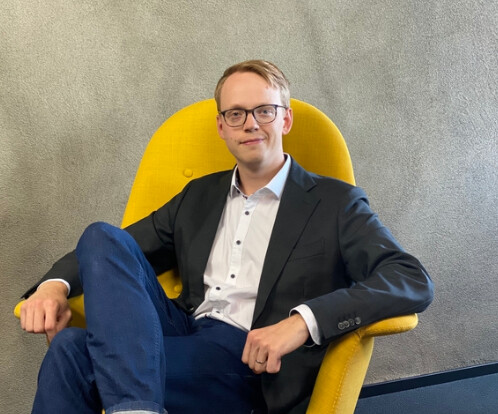
 living in Tapiola with my wife. My career path, spanning about 9 years of Industrial Engineering and Management studies, has gone through oil product transport, SaaS sales, and management consulting to equity analysis of technology companies.


 I strive to own companies whose business I believe will grow with high probability over the next 5-10 years. In the portfolio’s good companies, I sometimes turn a blind eye to the price and trim holdings relatively moderately when valuation levels stretch. As a starting point for new investments, however, I want to see the conditions for a double within 3 years with sufficiently conservative assumptions. Every investment target should also be known so well that there is a clear understanding of fair value so that market fluctuations do not cause unnecessary panic. But we are only human, and I have also strayed from this framework
 timontti digs up targets even more actively than myself from outside Finland & Inderes’ coverage and probably puts together a good portfolio of reasonably priced growth companies. He also seems to time his purchases and sales considerably better than yours truly

 though up to now I have always enjoyed the intellectual challenge brought by my work and don’t think I would even want to do that. Of course, one has to acknowledge here that there has been a lot of luck involved in ending up in work that motivates me


 when looking at the sector’s fundamentals, the demand outlook looks good and there are also negative recommendations (and there were even more recently) in the sector.

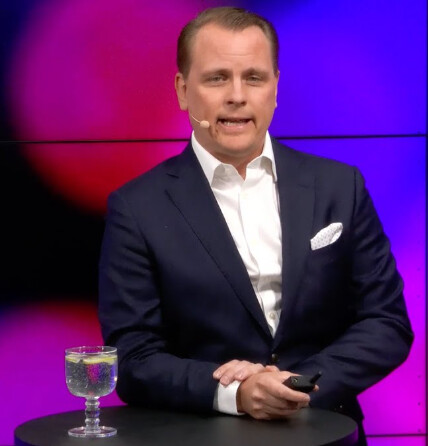

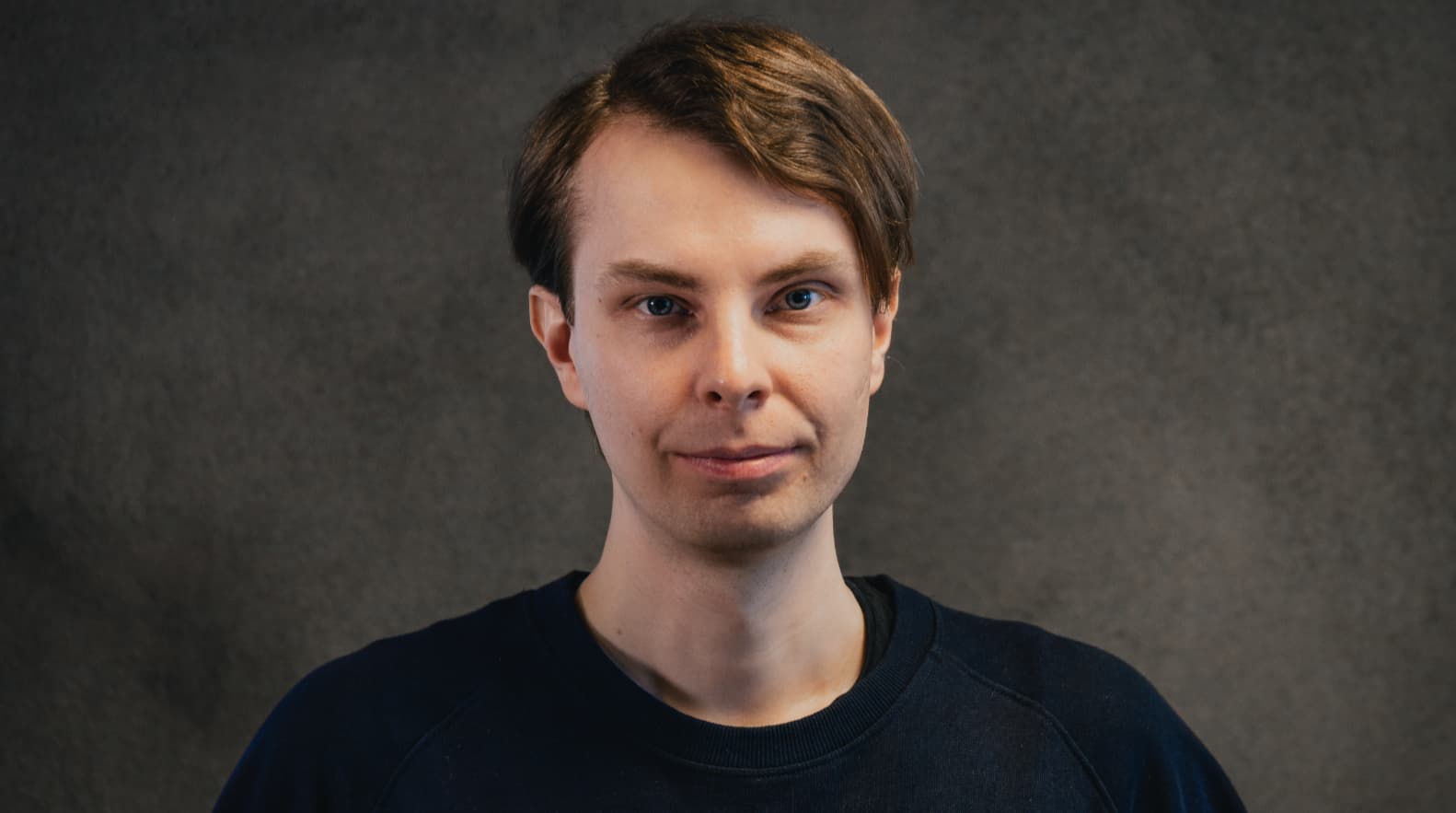


 At the same time, I read the latest messages that have come to the forum during the evening and morning in the threads I follow. Then I head to the bus stop, from where I get to the Ruoholahti office in about fifteen minutes.
 .) Thus, the matter was forgotten for years.

 However, I would imagine that studying always pays off. Emotional control is also an important part of investing to avoid unnecessary hustle. Believe in yourself and strive with determination toward the goals you have set for yourself, and I am sure you will develop into an excellent investor in the long run and create the prerequisites for beating the index.