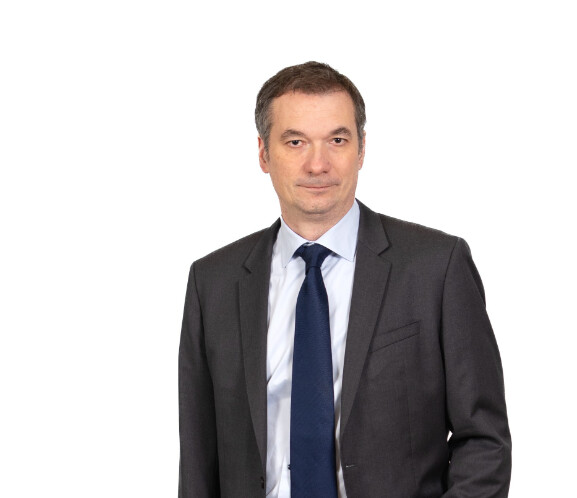
58. Sauli Vilén
Sauli is a damn competent analyst whose enthusiasm is truly contagious; after all, one of the reasons I originally stumbled upon Inderes’ content was the Heikkilä & Vilén Show. What I appreciate about Sale is his knowledge, expertise, and especially how he explains and writes about things—somehow he makes even the most difficult topics sound fascinating and easy to understand. I wonder if Sauli has ever considered a career as a teacher or an author?
Another thing I like about Sauli is his ability to take a bold, well-reasoned stand on things. When needed, he smartly admits what he doesn’t know or what can’t be known, which is the mark of a wise person… whereas I personally often THINK I know, which generally isn’t the mark of a wise person.
Sale is a truly versatile guy, and I’d argue he might be one of the most dynamic people at Inderes in many ways. Among other things, he is the most active analyst writing on the Forum: his tally stands at 1,400 posts—not bad at all, especially considering that Sauli’s posts are often long and packed with solid substance.
Sauli is a great character. 
1. Tell us who you are in thirty words.
A 37-year-old husband and father of two young kids from Espoo. At Inderes, I lead equity research and mainly cover financial sector companies. Education: M.Sc. from Aston University, UK. My entire career has been spent at Inderes.
2. Tell us three things forum members don’t know about you.
Back in the day, I wasn’t really interested in school and only started studying seriously after high school. Ironically, I barely passed the Finnish matriculation exam and ended up in a profession where producing text is a core part of my job.
I’ve always loved fantasy/sci-fi (games, movies, books). I still read a lot of books in these genres (currently Resident Evil 2 is on my nightstand), watch movies, and play video games (most recently I was playing Fallout 2 two nights ago).
I’ve always wanted to live in the United States (hardly likely to happen anytime in the near future, though).
3. What are your interests and hobbies? You’re not allowed to mention anything related to investing.
I’ve always done a lot of sports (including floorball, ice hockey, and running), and hiking has been close to my heart throughout my adult life. In recent years, I’ve combined the two, as a friend and I have started competing more actively in various endurance sports (adventure racing, ultras, rogaining).
Besides sports, I enjoy wine and cooking. I also try to carve out time for gaming amidst the busy family life rush (Heroes 3 is an all-time favorite).
4. What does an ordinary weekday look like for you?
I typically wake up around seven, and we have breakfast together as a family. My wife usually handles dropping the kids off at daycare, so after breakfast I head to the office, usually either by bike or running (I try to maximize daily active commuting). My commuting companion is almost without exception Viljakainen, who lives close by. My workdays differ quite a lot in content compared to other analysts, since I’m also responsible (together with Antti) for the entire Research business. That means things like sales, budgeting, and plenty of development work. In terms of research operations beyond my own coverage, I haven’t had a role for ages; that’s handled by our chief analysts (Antti and Gosse). Because I have plenty of responsibilities outside of analysis, I cover my own companies together with Kasper.
Around four in the afternoon, it’s time to change into sports gear to make it in time to pick up the kids from daycare (a 10 km commute home). Evenings are usually spent at the playground, at the kids’ activities, or doing my own hobbies. Once the kids are asleep in the evening, I usually pull out my work laptop again.
5. How would you describe yourself as an investor?
At my core, I’m a value investor. I buy companies I understand, I play the long game (I trade very little), and I strive to select high-quality companies that create value over time. On top of that, I’m really bad at paying high multiples.
Over the years, I’ve become more passive and diversify more than before (e.g., into funds and across different asset classes). The reason is fairly simple: Inderes represents a substantial share of my total net worth, and there are only so many hours in a day. If I have to choose between spending time on Inderes’ development (which, given my role, I can still actively influence) versus researching an individual stock, the choice almost invariably falls on the former (a higher positive EV for me).
6. Could you tell us about your investment history?
I started investing a few years before the financial crisis, so I have just under 20 years of investing under my belt, and I’ve been a stock picker from the very beginning. When I was younger, I read every piece of investment literature I could get my hands on, and I quickly adopted this Graham/Buffett-style value investing / fundamental approach. I haven’t really ever tried other investing styles (trading, etc.); the core principles are very much the same now as they were nearly 20 years ago. Naturally, there has been evolution, and I pay considerably more attention to business quality than in the early days, when investing was more about hunting for low multiples.
During the first half of my investing career, I was also very cynical (perhaps partly due to the financial crisis, which was quite a traumatic experience for a young investor-Sauli) and kept seeing boogeymen around every corner (China is about to collapse any day, Greece is leaving the eurozone, etc.). Nowadays, I’m a strong optimist, which I think is a much smarter approach in the stock market (as in life generally). The fact is that in economics, things usually have a way of working out, and major crises occur very rarely. Practically all players in the market (central banks, governments, and corporations) do their best to avoid major blow-ups, and constantly betting against these market forces is, in my view, a negative-EV game.
7. How does the current Sauli differ as an analyst from the early-years Sauli? Do you see trading restrictions as a big issue for an analyst?
The short answer is that today’s Sauli is in many ways significantly better than early-career Sauli. One could list endless reasons, but at least the following clear points come to mind first:
Today’s Sauli understands the covered companies and their industries vastly better. That’s purely logical, since there’s plenty of mileage behind me now; some companies I’ve tracked for over a decade, and I’ve been able to focus on a single sector.
Today’s Sauli assesses risks considerably better. That’s a classic pitfall for inexperienced investors (or analysts): a case looks super attractive because the associated risks are underestimated.
Today’s Sauli also knows how to respect the market. Younger Sauli imagined market efficiency was on par with the 19th century and generating alpha was supposed to be easy. The reality is that the stock market is probably among the top 3 most competitive arenas in the world, and every morning millions of sharp market participants step into the arena to fight for the exact same returns. Especially in large-cap companies and major markets, the stock market is overwhelmingly efficient. Fortunately, in small caps, plenty of inefficiencies still exist.
I don’t find the trading restrictions problematic at all.
8. What are your two most recent stock purchases and what was your rationale for them?
Talenom and Admicom. Both are quality companies with solid prerequisites for long-term value creation. Valuations in neither case are through the roof anymore, and you don’t have to pay a massive price tag for future growth.
9. What does your stock-picking process look like step by step?
First, I familiarize myself with the company (lots of things here: reading company materials, research reports, watching interviews and webcasts, skimming through peers).
I try to outline the company’s earnings trajectory over a 3–5 year period. Naturally, if a research report is available, I look at the underlying assumptions and consider whether the forecasts are realistic.
After that, I start estimating the company’s fair value. It’s certainly not rocket science; I map out what an acceptable valuation level would look like under normal conditions and weigh that against earnings expectations. From there, I begin to gauge the expected return (earnings growth, dividends, and multiples). I also reflect on various scenarios to see what happens if earnings fall short of expectations, and what kind of scenario is sufficient to justify the current share price (i.e., in which scenario do I not lose money). Finally, I weigh the expected return against the risks. Naturally, throughout the process, I make heavy use of our own materials and bounce ideas directly off the analysts covering the companies.
10. What kind of “cash policy” do you have in investing? Do you deploy money into the market steadily, or do you try to time the market?
I don’t have any specific cash policy. I invest money into the market regularly, but if I can’t find anything worth buying, I let the money sit in cash waiting for better opportunities (or pay down debt with it). In my investment decisions, I always start from company-specific factors. If I find an exceptionally attractive opportunity with a great expected return, I won’t pass on buying it just because a gut feeling says it’s the wrong time to make moves in the stock market. Usually, there are more opportunities in the market when overall valuation levels are low. In the big picture, I don’t believe I’ve generated any meaningful alpha by market timing other than through pure luck (a couple of apartment purchases luckily coincided with favorable timing relative to the stock market).
11. What are your greatest strengths as an investor? In which area would you especially like to improve?
Good qualities definitely include patience and composure. Naturally, thanks to the experience from my career, I also feel I’m quite good at analyzing companies (e.g., I can relatively quickly assess the realism of forecasts, fair valuations, and risks related to the company). I’d also count optimism here, as it helps see the forest for the trees, especially in difficult market conditions.
The biggest room for improvement would certainly be activity. As I mentioned earlier, I’ve become quite passive in recent years, and for example, I’ve barely been able to spend any time on equity analysis outside of Finland (even though it would be great fun!).
12. In thirty words per company, what are your thoughts on these stocks:
-Alexandria Group: Differs from peers through its large sales engine and structured product focus. Substantial upside if the sales engine is utilized more efficiently. Requires shifting focus toward asset management and continually expanding the product offering. Likely the most misunderstood company we cover in the sector.
-eQ: The brightest star of the previous decade in the sector and across the entire exchange. Operational performance remains top-notch, but the market environment blows strong headwinds, especially in real estate. Long-term earnings growth drivers remain solid; a key piece in wealth management consolidation.
-Mandatum: A quality company only now coming into its own post-listing. Huge amounts of capital will be released from the balance sheet in coming years to be distributed to shareholders and deployed in financial sector consolidation. Unusually, return relies heavily on dividends while earnings stagnate.
-NoHo: A company that never gets boring for an analyst to follow. A highly active dealmaker unafraid of making bold moves. Has managed to build a business model offering clear competitive advantages in a tough industry. International expansion is a key driver ahead.
-Sampo: The transformation journey away from a financial conglomerate is essentially complete, leaving the best insurance company in the Nordics. Operates in an exceptionally attractive industry. High-quality and very well managed. Going forward: steady earnings growth and solid dividend flow, without Wahlroos’ M&A magic.
13. What is the most enjoyable part of an analyst’s job? What is the least enjoyable?
For a competitive person, the most fun part is naturally when you’re ahead of the curve on something. Usually, that means being right in your thesis, but sometimes it can also mean correctly anticipating M&A transactions or strategic shifts.
The most boring/unpleasant part is definitely when you’re flat-out wrong about a view and take (well-deserved) heat from investors for it.
14. Does the public nature of an analyst’s work and the feedback cause you stress? What do you consider the biggest benefits of analyst materials for investors?
Personally, not much, because I have plenty of experience under my belt and generally have high stress tolerance. It would be naive to claim I’m immune to the pressure, though. We are a very visible player in this market, which comes with significant responsibility. When we’re wrong in a big way, we definitely catch our share of flak from investors. Even if the criticism is usually well deserved, it still stings.
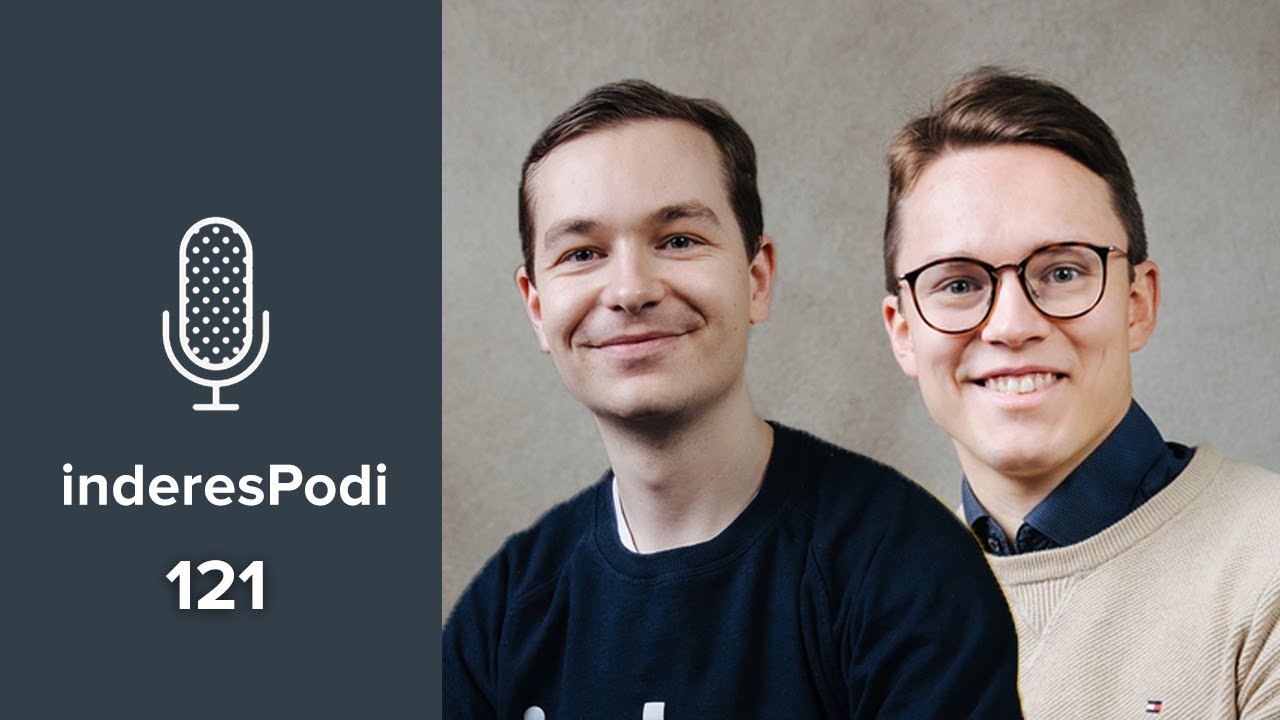
Regarding the biggest benefits, we actually made a dedicated episode with Heikkilä, and I recommend everyone watch it: Heikkilä&Vilén Part 57: How to get the most out of research? | Inderes: Equity research, model portfolio, stock comparisons & morning report
15. How do you track macroeconomic trends? Does an analyst need to stay well on top of the big macro picture?
Every analyst needs to understand the broad economic trends. We aim to ensure this through internal macro reviews led by Marianne. This is important because it provides everyone with a unified macro view and significantly streamlines processes, as not everyone has to dig up the same data. To be clear, we never take a strong, contrarian macro view; instead, we lean more toward the consensus. Our equity research is driven by company fundamentals, and a super-strong macro call would practically override that.
From there, it depends a lot on your sector. For example, an analyst covering construction needs to keep a very close eye on the general economy, as does someone covering cyclical machinery (one being local, the other global). Conversely, for asset management firms like the ones I cover, there is no direct link to general economic development; the link is indirect through capital markets.
Naturally, I read our own macro reports along with macro analysis from our partner, Lombard. Twitter is also a vital source of macro information for me, as are conversations with colleagues and industry insiders. I don’t follow any single indicator; instead, I try to piece together the big picture from multiple sources.
16. How do you benefit from the Forum in your work? What are your favorite threads on the Forum, excluding threads on companies you cover?
The Forum plays a huge role in my work. It’s an essential communication channel for us to interact with investors, and I’d argue it improves the quality of our analysis across the board. The primary drivers are continuous challenge and new perspectives. Our active forum members consistently challenge our views, which inevitably improves research quality by forcing the analyst to consider other perspectives (and write out those explanations).
The discussions on the Forum regularly bring fresh angles to my own analysis as well. Sometimes this comes from the insights born out of the aforementioned pushback (e.g., someone bringing up new angles on how a company should be valued or how robust its competitive advantages are). Other times, someone unearths information that I hadn’t found for one reason or another. In some threads, the level of discussion is so high that it is genuinely useful for an analyst.
The investment memes thread is absolutely brilliant; it always brightens up the day.
Also, despite the grim topic, the thread covering Russia’s war of aggression has immense informational value, providing a great overview of developments and links to relevant articles (reducing the need to doomscroll, especially nowadays with Musk essentially ruining Twitter).
17. If you had to hand over your portfolio for five years to two analysts, two non-analyst Inderes employees, and two forum members, who would you pick and why?
Analysts:
Juha and Atte are easy choices as Model Portfolio colleagues. I share a very similar investment philosophy with both. Both excel at stock picking, and Juha is also extremely skilled in portfolio management matters.
Non-analyst Inderes employees:
Mikael: sticking with the Model Portfolio colleague line here. Even if he claims he’s turned into an average retail bull, I don’t doubt for a second that his old stock-picking instincts are still sharp (especially when it comes to sniffing out major trends, Mikael has always been insanely good).
Marianne: it’s good to have someone keeping an eye on the macro side, even if the primary focus remains on stock picking. 
Forum:
Since Mikko Mäkinen has occasionally posted on the Forum, he is a pretty obvious choice here.
Second, I’ll pick Pohjolan Eka. In the feedback he gives us, Eka usually makes investing sound so easy that you simply can’t pass up this opportunity!
( pinging you guys so you notice: @Juha_Kinnunen, @Atte_Riikola, @Mikael_Rautanen, @Pohjolan_Eka and @Mikko_Makinen - cheers, Alokas )
18. How do you concretely enjoy your wealth?
Last year we realized a long-standing dream and built a cottage/second home on Lake Päijänne with the family. Definitely one of the best decisions of my life.
19. What’s the best part about working at Inderes? Is Inderes genuinely a good employer, and has it become “colder” as the company has grown and gone public?
The absolute best part is my colleagues, many of whom I’ve had the pleasure of working with for a very long time.
I’m certainly biased to answer this given my position and history. We’ve definitely changed quite a bit as a workplace as we’ve grown from a 20-person local research boutique into a Nordic multi-product company. I believe we’re still a great employer, especially if our unconventional organizational model suits you.
20. Do you have a couple of solid tips for Alokas to avoid mega-sized blunders?
Buy what you understand, and don’t overpay. I think that would have kept you from getting run over by the hydrogen truck hype and the proptech boom-shakalaka. Despite everything, remember to stay optimistic!
21. What would you especially like to thank the forum members for?
You are the reason we do this work, and for me personally, a significant part of the meaning in my work comes from knowing who I’m doing the analysis for and having the opportunity to engage in continuous, open dialogue with you.
Thank you, Sauli, for the interesting and thought-provoking answers!
Sauli, like other skilled and knowledgeable people, has the talent to focus on what matters without overcomplicating things—showing that there’s really no need for regular folks like us to overthink it either.
It’s well worth re-reading Sale’s interview with care, as it contains plenty of clear, easily digestible insights that anyone can apply to their own investing.
Thanks, and have a great rest of your Friday, everyone! 



 Actually, I first became familiar with Karo through his children’s books, and I think it’s great that he is such a versatile author.







 :