Alokas interviews

51. Sara Antonacci

Sara seems like a very pleasant, sophisticated, and wise person, but we haven’t really had the chance to chat with her much yet since she’s such a new employee. So, I asked a couple of Inderes team members for their take on her:

@Marianne_Palmu:
“In my opinion, Sara is a fantastic addition to our team because she’s a great combination of a legal mind and an investor: a certain precision, but at the same time a curiosity for new things. I’m really looking forward to working with her :)”

@Tomi_Valkeajarvi:
“Sara is really nice and ready to tackle new challenges right away. She radiates enthusiasm for investing, and she charmed many by mentioning Charlie Munger as her role model in the investment world. The AGM team will also gain a major asset in her.”

I’ve heard praises about her from others as well, so congratulations to Inderes on a great hire! :sunglasses:

1. Tell us who you are in thirty words.

Sara, 28 years old. Originally from Vantaa and still living there. I hold a Master of Laws degree. In my working life, I’ve managed to do a bit of everything, but most recently I started at Inderes on both the community and AGM teams last week on Monday. :smiley:

2. Tell us three things the forum members don’t know about you.

  1. I am 50% Finnish and 50% Italian. I’ve lived in Finland my whole life, but I have some family in Italy. As a child, I used to visit Italy every year. Now as an adult, unfortunately less often, but hopefully I can visit again soon!
  2. When I was little, I took part in a talent show, and my talent was imitating a cat into a microphone. I still hear about it from time to time. :smiley:
  3. I have a kind of curse when it comes to shoes. For example, once I was spending a weekend with friends in Tampere, and on our way back from a restaurant to the hotel, the heels on both of my shoes came off within a few minutes. This was back when masks were still actively worn due to the pandemic, and my wonderful friends temporarily reattached the heels with face masks. However, the mask tactic wasn’t very durable, so part of the journey to the hotel was spent hanging onto my friends’ shoulders. What makes this even funnier is that I hadn’t had a single drop of alcohol that evening, though it certainly wouldn’t have seemed that way to passersby. :smiley: As another example, I once forgot my dress shoes at home when attending a fancy gala. I spent the evening in an evening gown and sneakers. The worst part was that I had to perform on stage during the night. :sweat_smile:

3. What are your interests and hobbies? You’re not allowed to mention anything related to investing. :slight_smile:

Ever since I was little, largely thanks to my dad, I’ve been interested in movies, TV series, and music! I go to the cinema quite frequently and, of course, enjoy them at home too. Because of this, the Oscars are an annual tradition. I always watch them live, which nicely messes up my sleep schedule. :smiley: As for music, my taste is very broad. My playlist includes everything from Lana Del Rey to Megadeth. I took piano lessons when I was younger, but in adulthood, my hobby has remained strictly as a listener.

I’m a very enthusiastic escape room player. I’ve already done around 20 rooms in Finland, and next time I travel, it would be fun to test out the escape room offerings of the destination country!

I try to work out regularly to stay in shape. At home, I have weights for strength training, but now with starting work at Inderes, I can take advantage of the office building’s gym. I switch up my workout routine from time to time to keep things interesting. My favorite right now is Arnie’s Golden Six routine, which I’m currently following. I haven’t managed to grow to Arnold’s size yet, though. Although when it comes to muscle, I focus on organic rather than inorganic growth. :smiley: Besides strength training, I enjoy long walks, and in bad weather, I ride the exercise bike at home.

Fashion has also been close to my heart since childhood. Back then, I used to save several weeks of allowance just so I could go clothes shopping instead of buying candy. I like taking photos of outfits and other style-related things to post on my social media. :slight_smile:

4. What does your typical weekday look like?

I usually like to wake up early for work, around 5:30 AM, which gets me to the office around 7:45 AM. This ensures a quiet moment at the office in the morning to get things done that require deep focus before colleagues arrive and engaging chats take up part of the attention. :wink:

The day goes smoothly at work at Inderes, after which I head home unless I have plans, like meeting up with friends. At home, I work out and spend time with my fiancé. We’re both interested in investing, so in the evenings, we often watch investment-related videos together or look into an interesting company. Depending on energy levels, investing might be swapped for watching a TV show we both enjoy. Currently watching the latest season of Billions!

5. Can you describe what kind of investor you are?

If I had to put myself in a box, I’d say I’m a quality investor. I look for high-quality companies that can be bought at a reasonable price, meaning below their intrinsic value with a good margin of safety. Criteria for quality include, for example, a sustainable competitive advantage, a strong market position, and sustainable profitability. The company should weather different economic cycles well, and my aim is to find companies I could hold in my portfolio for a long time—ideally forever. :slight_smile:

6. Could you tell us about your investment history?

I got my inspiration for investing from my fiancé, who became active with it before me. Watching him sparked my own interest in starting to invest as a way to save. I made my first stock investments about two years ago. Back then, investing was completely new to me, and my investment decisions were mostly based on Inderes materials and a very high-level overview of how the company had been doing recently and why it might be worth investing in. I wouldn’t have known how to do any more thorough research, and I wasn’t even familiar with common financial ratios, let alone any DCF models.

My journey as an investor took a whole new turn a bit over a year ago when, after graduating from university, I started pondering what I really wanted to do with my life. :smiley: A traditional legal career path didn’t feel like the right fit. For some time, an idea had been smoldering in the back of my mind that making a living in the investment world sounded appealing, and I wanted to learn more about the subject. Thanks to my fiancé’s encouragement, I took a leap of faith and started spending most of my time studying investing.

Although I focus on long-term fundamental investing today, I started my journey by studying and trying out trading. I read trading literature; the teachings of William O’Neil, Stan Weinstein, and Mark Minervini, among others, became familiar. While hunting for episodic pivots and high tight flags had its own thrill, I became more interested in the actual companies behind the candlestick patterns. So, I gave up trading and ended up studying fundamental investing, and that’s the path I’ve stayed on.

In terms of fundamental investing, I’ve read investment books, watched relevant videos, and listened to podcasts. In addition, I’ve spent a lot of time researching listed companies by reading their reports and watching virtual events. Alongside my research, I’ve conducted my own analysis of the companies within the limits of my skills and determined their intrinsic value. With fundamental investing, the materials produced by Inderes also came into heavy use!

I’ve learned a lot, and there’s still a lot to learn! Now, as an Inderes employee, I get to work in an absolute dream environment, and I will definitely learn a lot about investing and different companies through my work, which will greatly support my personal investment journey. :slight_smile:

7. Would you like to share in more detail what you’ll be doing at Inderes?

I actually joined Inderes to work on both the community and AGM teams. We managed to tailor this kind of hybrid role for me, which I’m really happy and excited about! On the community team, my tasks involve content creation and publishing on social media. During my first couple of weeks, I’ve had the chance to work on the Stock Investor’s Week, post morning social updates, and try my hand at filming and editing. Next week, I get to do an analyst interview for the first time!

On the AGM team, I get to work with Inderes’ fantastic AGM service that we offer to listed companies. :slight_smile:

8. You hold a Master of Laws degree; does this degree help with investing in any way, and is it useful in your work at Inderes?

I’d say that I’ve definitely learned the most about investing outside of law school! If I had to name one benefit, it might be that when researching companies, I can evaluate their business from a legal perspective as well.

At Inderes, my education is particularly useful for AGM-related work, as those processes are regulated by law. :slight_smile:

9. If you had to pick three stocks to hold for 10 years, which would you choose and why?

  1. Evolution Gaming. Reasons include a strong market position, solid financial standing, and excellent margins.
  2. Remedy. What attracts me to the company includes a strong track record of successful games, the new multi-project model that provides good continuity when games succeed, and a strong position in the value chain.
  3. Harvia. Reasons include a leading market position in core operations, successful acquisitions, and profitability.

I currently hold two out of these three in my portfolio, but hopefully, at some point, I’ll own all of them!

10. What does your stock-picking process look like step-by-step?

When I come across an interesting company, I start an analysis process where I read the company’s annual reports from the past ten years or, if the company is younger, as far back as possible. I examine the company’s historical performance, strategy, financial standing, market position, competitive advantages, and risk profile, among other things. In addition, I study the company’s industry and its competitors. As the result of the analysis, I determine the company’s intrinsic value using the information and figures I’ve gathered. Since nobody has a crystal ball and even forecasting based on factual data involves uncertainties, I factor an adequate margin of safety into the intrinsic value I arrive at. If the company seems exceptional and can be bought below its intrinsic value with the margin of safety accounted for, I add it to my portfolio. :slight_smile:

11. What does your stock-selling process look like step-by-step?

My goal is to find companies that will generate returns for me over the long term, and ideally, I’d never have to sell them. In fact, over my entire investing history, I’ve only sold one stock position! :smiley: In that case, it was a position I had eagerly bought without knowing anything about investing, and I realized it didn’t meet my current criteria.

12. What are your most important sources of information in investing, excluding Inderes or this Forum?

My most important sources have definitely been investment literature, online investment videos, and investment podcasts. Company reports have also been invaluable learning tools!

13. What are your three favorite investment books and why?

  1. Benjamin Graham - The Intelligent Investor. Probably a favorite for quite a few investors. I have to say that the book is simultaneously my favorite and least favorite investment book. Least favorite because, reading it among my very first investment books, it was quite heavy going. Favorite because I picked up several concepts from it that I use in my own investment strategy. For instance, I learned about the margin of safety from that book, and I use it in every stock purchase. The Mr. Market concept also helped me understand the market in general.
  2. Peter Lynch - One Up On Wall Street. Lynch’s book is an extremely interesting read! Lynch’s idea that an investor should look for investment opportunities in industries they are familiar with gave me a new perspective on investing. According to Lynch, an industry can be familiar to an investor, for example, from a consumer perspective or through education. The book helped me observe the world even in everyday matters from an investing perspective. For example, you get inspired to look into a company that manufactures a proven product as a potential investment! Lynch’s criteria for the perfect investment have also stuck in the back of my mind when hunting for opportunities.
  3. Heikki Keskiväli - Tähtäimessä osakkeet. Keskiväli’s book was the first investment book I ever read! It was an absolute gem, suitable even for beginners, providing a broad range of useful investment information.

(Pinged you @Heikki_Keskivali so you see you’ve been mentioned, best regards Alokas :slight_smile: )

14. How do you follow macroeconomic trends? Do you try to time the market?

I mostly consider macro trends in connection with company-specific analysis. I consider whether the company or the sector it operates in is sensitive to various macro phenomena. In principle, I avoid industries that are cyclical. I also don’t try to time the market.

15. In your “New Employee” intro video, you mentioned that your favorite investing guru is Charlie Munger. Could you explain why in more detail, and share one of his lessons that everyone could learn from?

My investment strategy is strongly inspired by Munger, as he specifically favors wonderful companies at a fair price. I like Munger’s investment strategy of putting quality first and being willing to compromise on price rather than quality. According to Munger, great ideas are rare, and the goal isn’t to diversify your portfolio across too many different companies. I also like Munger’s buy-and-hold approach, meaning the idea isn’t to actively sell stocks, but to find such exceptional companies that you can comfortably hold them in your portfolio for as long as possible.

Here are a few lessons from Munger that summarize what I just described very well:

“Over the long term, it’s hard for a stock to earn a much better return than the business which underlies it earns. If the business earns 6% on capital over 40 years and you hold it for that 40 years, you’re not going to make much different than a 6% return - even if you originally buy it at a huge discount. Conversely, if a business earns 18% on capital over 20 or 30 years, even if you pay an expensive-looking price, you’ll end up with one hell of a result.”

"Forget what you know about buying fair businesses at wonderful prices; instead, buy wonderful businesses at fair prices.”

"The big money is not in the buying and the selling, but in the waiting.”

If you’re interested in Munger’s teachings, I recommend watching Berkshire Hathaway’s annual general meetings on YouTube, among other places! Even though Buffett is the more talkative of the pair, Munger still delivers fantastic Mungerisms every year! :smiley:

16. What concrete goals do you have for your investing? How have you enjoyed the wealth gained from investing?

My goals are quite ambitious, as the ultimate aim is that sooner or later, I could support myself through investing if I choose to. The choice of words “if I choose to” is because I’ve now landed my dream job at Inderes, and it might well be that I wouldn’t want to leave for the world, even if given the chance. :wink: It could be that the goal never materializes, but it’s good to strive for!

I haven’t spent returns from investing a single time yet, and that probably won’t happen anytime soon. Good things come to those who wait. :blush:

17. What have been the most important “materials” produced by Inderes for you, and why? Name your three favorite threads on the Inderes Forum.

The most important sources for me have been the comprehensive company reports. They’ve served as fantastic support for my own analysis. I have a ritual where, after finishing my own analysis, I read Inderes’ comprehensive report on that company and compare whether I noted the same things and arrived at a somewhat similar conclusion!

In addition to reports, Inderes videos and podcasts have been in heavy rotation.

Unfortunately, I haven’t been very active on the Forum. I might have checked to see if there’s a thread on a company that interests me, and I’ve read the forum members’ thoughts with interest! My favorite threads have therefore been Remedy Entertainment Oyj, Evolution AB - The King of iGaming, and the Harvia forum aka Haarumi. :slight_smile:

18. Why did you want to work at Inderes, and what is the best part about working there?

The material Inderes produces for investors has been very important on my own investment journey. Quite quickly after starting to actively follow Inderes, the thought occurred to me that Inderes would surely be a fascinating place to work! The absolute best thing about Inderes is working with other people passionate about investing, surrounded by topics that interest me! You could say that working at Inderes is truly an ideal situation for me, where work and hobby come together!

19. How could Alokas get at least the “index return” from the market? (funds must not be mentioned in the answer)

I wouldn’t presume to suggest an investment strategy to anyone. I would recommend that everyone explore different investment styles and choose one they enjoy. Hopefully, investing is fun, and on top of that, you might even beat the index. :wink:

20. What would you like to specifically thank the forum members for?

I want to thank the forum members for creating an environment for investors where investors and like-minded people can share thoughts and encourage each other around a shared passion! :heart:


Thank you for the clear and insightful answers!

Sara seems like a very grounded, logical, and thorough person who definitely has the discipline to study and research, so there’s no doubt she will do well in investing. I’m even a bit jealous of her elegant way of thinking and writing; in my view, this kind of elegant thinking is also represented by the likes of @Kale-possu and @Verneri_Pulkkinen.

Reading her answers left me with the feeling that reading and studying really do pay off and move you forward—certainly better than relying on gut feelings and guesswork.

Thanks, and have a great rest of your Friday, everyone! :slight_smile:

90 Likes

Well, those didn’t turn out to be true, but now I can say that next week I’ll be able to publish the interview with the person familiar from the radio. :smiley:

Sara’s answers received praise. I think mentioning Munger and Arnold’s Golden Six helped. :smiley:

These interviews are fun to do, for example, because many have said they’ve gained a lot of food for thought and things to learn from the interviewees’ answers. I personally find myself returning to previous interviews every week, so I’ve definitely learned a lot from them myself!

Thanks to those who liked, gave feedback, the interviewees, those who shared the interview… have a nice weekend everyone! :slight_smile:

20 Likes

52. MIKKO JYLHÄ

Charismatic, pleasant, and extremely professional journalist… these are the first things that come to mind about Yle’s Pörssipäivä host Mikko Jylhä. One of the first times I listened to Pörssipäivä, I thought to myself that this is truly high-quality and engaging listening—and I still feel the same way today. What I appreciate about Mikko is that he knows his stuff, does his homework on the interviewees, and is genuinely and truly interested in his guests, which enables him to give them the right amount of room while asking fitting follow-up questions. When you combine all of this with journalist Jylhä’s elegant way of speaking, you get what I consider to be the best radio show/podcast in existence.

It genuinely gives me a great feeling when things are done with good taste, substance, professionalism, and respect for others; since he is smart, confident, and warm, I suppose this simply comes naturally to Mikko. I strongly recommend Yle’s Pörssipäivä to everyone—if you haven’t listened before, now is the time…

I’ve wanted to know what kind of guy Mikko is for a long time, and I was thrilled when he agreed to be interviewed by me. I know that the Finnish investment community across the board respects him, and for good reason, which makes me all the happier to share this interview with you. :slightly_smiling_face:

Photo: Yle / Heidi Gabrielsson

1. Tell us who you are in thirty words.

I’m Mikko, a journalist and private investor from Helsinki. I worked in radio for a long time as a current affairs journalist, but nowadays I produce online content. If I followed sports more closely, my home team would be GKS Katowice, commonly known as Gieksa. They play football in the Polish first division.

2. Tell us three things forum members don’t know about you.

I like subways (U-Bahns, Undergrounds, subways), trams, train stations, train travel, and the like. When I was younger, I thought about becoming a subway driver. My idea was to train as a driver in Helsinki and later work in places like Stockholm, London, or Berlin. I asked Helsinki City Transport (HKL) about training, but they didn’t have a driver course coming up at the time. I still remember the subway driver’s base salary back then: 9,200 Finnish markkas. This was around the turn of the millennium.

In my youth, I was an intern at Estonian Public Radio (Eesti Raadio). They used to have a Finnish-language editorial team. It was located near central Tallinn on Gonsiori Street, in the New Radio House. It was the latter half of the 90s, and the studios still had old Telefunken open-reel tape recorders. I have fond memories of the internship, and after that, I traveled to Estonia for about ten years, up until the financial crisis.

I watch old movies and TV shows more than new ones. Recently, while watching 1980s British series, the name ITV came up again. They have a long heritage in the industry. I decided to look into the company more closely, and at the same time, I bought a few shares on a trial basis. ITV is listed in London. Headwinds in the advertising market have hit them too, but the company is profitable. Profitable commercial TV operations are possible, even in a country with high-quality public service broadcasting.

3. What are your interests and hobbies? You’re not allowed to mention anything related to investing.:slight_smile:

Photography, and things related to it. Analog photography. Slide film. Nikon film gear from the late 80s to the early 2000s. The era from the F4 to the F6. Fine-art photography.

Nikon is listed in Tokyo, but since we’re not allowed to mention anything related to investing in this section…

I do some sports, and occasionally travel. I’ve always liked theater, but alongside reading, it has unfortunately taken a back seat in recent years.

4. What does an ordinary weekday look like for you?

My weekdays vary. I don’t work nine-to-five; being a journalist is present a lot of the time. Podcasts require their own background research, and once a week there’s the recording of Pörssipäivä along with post-production. Keeping up with the economy is, of course, essential.

During the Covid era, we produced shows remotely, but now I prefer face-to-face meetings again.

5. Could you tell us about your career path?

I studied journalism in Tampere in the 90s and entered the workforce around the turn of the millennium. At first, I did temporary stints, including at Sveriges Radio’s Finnish-language desk. In the early 2000s, I joined Yle in Pasila on international radio broadcasts. Yle Radio Finland broadcasted Yle’s programs on medium and short waves around the world. When foreign broadcasts ended, I moved to Radio Peili, which later became Yle Puhe. Nowadays, I’m no longer on the radio; instead, we produce audio content for the web. Radio was great, but I think the most interesting content today is online.

6. Could you briefly describe what kind of investor you are?

I am primarily an equity investor. Over the years, it certainly would have been wise to diversify into other asset classes, but stock investing has felt like the right fit for me.

It’s important to me to learn about different industries and different companies, to understand economics and business. That also serves my profession. I wasn’t always very good in school, but learning all sorts of things through the stock market has been enjoyable.

I don’t easily get flustered even by bad economic news, nor am I shaken by market drops. Sentiment in the stock market swings from one extreme to another, and that’s just part of the game.

At the moment, I don’t employ very active strategies. I try to keep my investing manageable so that there is time left for other things.

I am fundamentally long-only, but I don’t shy away from selling. I don’t have a single share left from the early years of my investing journey, from the era before the financial crisis. On the other hand, I can stay with my current holdings for a long time.

7. Could you tell us about your investment history?

As a child, I received some Kansallis-Osake-Pankki (KOP) shares from my parents, which I sold during my student years. After the tech bubble had already burst, I used summer job money to buy JOT Automation based on emotion, which I later sold at a loss. Back then, orders were still placed over the counter at a bank branch. My actual investing began in 2005–2006. I’ve been in the market ever since. During the financial crisis, I used leverage for the first time. I took out a bank loan and bought M-real.

Over the years, there have been successes and failures. I’ve never kept meticulous records of annual returns. Overall, though, I’d say I’m in the black.

Kansallispankki hasn’t existed for decades, but today I own a small batch of Nordea. Perhaps there’s a touch of nostalgia in that.

8. Probably impossible to choose, but give it a try… what have been your three most memorable interviews and why did they stick with you?

Years in radio bring plenty of memories, but here are a few situations related to Pörssipäivä that left an impression:

February 24, 2022. Juha Varis, Sauli Vilén, and I were supposed to record an earnings season podcast in Pasila, but Russia’s full-scale invasion of Ukraine began that morning. I followed the developments overnight via YouTube streams and tried to get a few hours of sleep. In the podcast with Juha and Sauli, we talked about the war that had just broken out and the Russia-related risks facing the Helsinki Stock Exchange.

Doing live radio broadcasts during the Covid era. Pörssipäivä was still a radio show when the pandemic hit. Masks were mandatory in the studio as well. Guiding an hour-long, live discussion while wearing masks was a completely new situation. Before the broadcast, you naturally hoped that none of the guests had fallen ill at the last minute.

On Pörssipäivä, I’ve had the opportunity to meet Finnish investing legends Kim Lindström, Seppo Saario, and Erkki Sinkko. That has been a pleasure.

9. On Pörssipäivä, you’ve interviewed all kinds of people from the investing and finance world. What are the best lessons regarding investing that you’ve picked up from these interviews?

There have been many interesting conversations over the years, but I could mention, for example, meetings with portfolio manager Ernst Grönblom. In the funds he manages, he has invested in many successful, often US-based tech companies. Grönblom’s strategy is built around the “winner takes all” theme. I remember talking to him about Nvidia, among others, many years ago.

Once after a broadcast, Mika Heikkilä and I discussed using a value strategy as part of the overall portfolio. We chatted about it in passing, but it somehow stuck with me. I’m interested in how to combine different components and approaches in equity investing. My stock picks are now more systematic than they used to be.

I’ve had the pleasure of meeting Valtteri Ahti on Pörssipäivä multiple times. Valtteri works as a chief strategist, and it’s always fascinating to hear how he views the markets and economic events.

10. What does your investment portfolio look like right now? Which three stocks do you trust the most and why?

In recent years, I’ve shifted my equity weighting abroad, away from Finland. I don’t want too many ties to the Helsinki exchange because that could complicate my work as a journalist.

Investing abroad is educational. You get to learn about different markets and companies. Naturally, the importance of diversification can’t be overlooked. I currently own shares in about twenty different companies, roughly half of which are foreign.

One that I’ve grown to rely on is Investor AB. If I had to pick one stock to hold for ten years, this would probably be it. Still, you have to remember that even Investor hasn’t always hit the mark. Ericsson’s struggles and Aleris come to mind. Few companies are perfect.

From Helsinki, I’ll pick a mid-cap company that hasn’t been in the spotlight as much lately: Digia. Even though Digia’s share price hasn’t performed particularly well, the company has pushed determinedly forward. In late 2022, the company issued a profit warning, but in my view, it wasn’t fatal. CEO Timo Levoranta’s phrase “Digia is not in the quarterly business” is a familiar line from Inderes’ earnings videos.

The third pick comes from a very high-risk industry. In my view, US-based Green Thumb Industries has progressed in a confidence-inspiring way in the US cannabis sector. Industry regulation remains unresolved and the operating environment is very tough, but GTI has delivered solid performance quarter after quarter for the most part. Unlike most other companies in this space, Green Thumb Industries has been profitable for a long time.

11. What does your stock-picking process look like step by step?

I don’t have a single, rigid process. Market conditions vary widely, and I adapt accordingly.

Typically, I start by taking a small introductory position in a potential target. After that, I continue researching the company. If it develops in the right direction, I buy more. I have no problem adding at higher prices. If the company fails to convince me, however, I sell my position or wait and monitor the situation. This process can sometimes take a long time.

Investment ideas come from all over: conversations with people, financial media, podcasts, discussion boards, my own areas of interest… So far, I haven’t used ready-made screeners or stock-picking tools.

Over the years, individual stock picks have broadened into intra-industry diversification. For example, in forestry stocks, I’ve built a basket of three companies over time. When the time is right, a fourth could be added.

12. Name your two biggest strengths as an investor and also share your two biggest areas for development.

I think I’m reasonably good at admitting my mistakes. If a view turns out to be wrong, take the losses and move on to something new. There have been enough successes over the years that accepting mistakes isn’t an issue for me. I don’t get hung up on losing investments.

I already alluded to my second strength earlier. I feel quite at ease in the stock market. I feel that this world suits me. I enjoy following financial news and occasionally prices, but I don’t chase after them. The stock market is a bit of a crazy place, and being part of it all is fun.

Biggest areas for development? It would do me good to focus more on fundamental analysis and go through potential investment targets more systematically. Alongside that, it would be beneficial to develop my financial literacy further. As a journalist, I deal heavily with words, and in photography, with images. Elevating numbers alongside them isn’t always easy.

Perhaps index investing could also be highlighted as an area for improvement? I’m interested in various indices, but unfortunately, there are none in my holdings at the moment. For example, benchmark market indices like the Hang Seng, Nikkei 225, and similar ones interest me a lot. I’ve had intentions of buying the S&P 500 for a long time, but unfortunately, I just haven’t gotten around to it.

13. What are your most important sources of information as an investor? What are the most important Inderes “materials” for you?

As a journalist, you follow the world broadly and leverage all kinds of sources of information. Conversations with people are important, as well as attending events across various sectors. YouTube deserves a special mention. I’ve watched far too much of it in recent years. It would be nice to revive my reading habits.

From Inderes, I’d highlight the videos, reports, and the forum. Through my work, I’ve had the opportunity to meet people from Inderes, which is very pleasant.

14. You seem very calm and sensible; how do you manage your emotions as an investor, or do you manage them at all…?

My investment activity has indeed been quite calm lately, and I haven’t initiated any major new positions. Because of that, I haven’t had to think particularly hard about emotional control. I’m deliberately in a somewhat calmer phase in the market right now, taking a relaxed look around.

Over the years, I’ve certainly made the exact same mistakes as everyone else. I’ve never feared market downturns, but the enthusiasm of bull markets has occasionally caught up with me as well. Nowadays, I consciously try to avoid that.

Back in the day, I passed on buying Done (Revenio Group) and Neste because I listened to other people’s opinions rather than trusting my own.

Instead of managing emotions, though, I’d speak of recognizing emotions and learning to live with them.

15. Do you have any concrete goals in investing? Do you, for instance, have targets set in euros?

My goal is to learn about the economy and the world. To develop as an investor along the way, and to try to make sensible choices in the stock market. I don’t have targets denominated in euros.

16. Do you have any tips on how Alokas could become an investor on par with Mikko Jylhä?

Haha. I don’t think there’s any reason for you to start copying me. There are much better investors out there. You can find considerably sharper minds on the forum too. My current investment style serves me in my current life situation, but down the road, I might do things differently.

One thing I’ll emphasize is that I think it pays to explore investment ideas and diverse arguments broadly. Venture into spaces where you don’t necessarily know anyone. Discussion forums are fantastic and helpful at their best, but an investor also does well to be mindful of the risks of groupthink.

17. What would you especially like to thank the forum members for?

I thank the forum members for great discussions, and you for the excellent questions. It has been great to see how the Inderes forum has developed into one of the most important investment communities in Finland. I’ve been active on forums since the days of AP Areena, and there have been many fun and useful moments over the years. Wishing you and the forum members a wonderful rest of the autumn.


Thank you, Mikko, for the pleasant and interesting answers!

Pardon me—I’m exaggerating and generalizing—but I’ve felt that in the investing and financial world, perhaps more often than average, people tend to act like know-it-alls and perhaps don’t listen enough to others. I believe that to optimize one’s own investment approach, it pays to focus on listening to others and learning, admitting mistakes, and being aware of what you don’t know. Journalist Jylhä listens to others with genuine interest and, as a confident guy, knows how to take a good look in the mirror when mistakes happen, staying calm amidst the market’s turbulent waters… maybe the rest of us should try doing the same?

Yle’s Pörssipäivä is such great stuff that here’s a link to the program:

Pörssipäivä recaps market events and looks behind share prices. Together with interesting guests, investment strategies are honed. Hosted by Mikko Jylhä. Photos and graphics: Heidi Gabrielsson. Producer: Pertti Ylikojola.

Be sure to give it a listen right away!

Thank you, everyone, and have a great weekend! :slight_smile:

142 Likes

I learned quite a lot from Mikko’s answers and especially from his attitude. It feels like he manages his emotions well, knows himself, and knows what he doesn’t know, which is surprisingly important.

Mikko Jylhä does excellent work that serves a large number of Finns. Pörssipäivä meets all the quality criteria, so go ahead and listen to the latest Pörssipäivä episode, featuring @Karo_Hamalainen as a guest.

Have a nice weekend, everyone! :slight_smile:

34 Likes

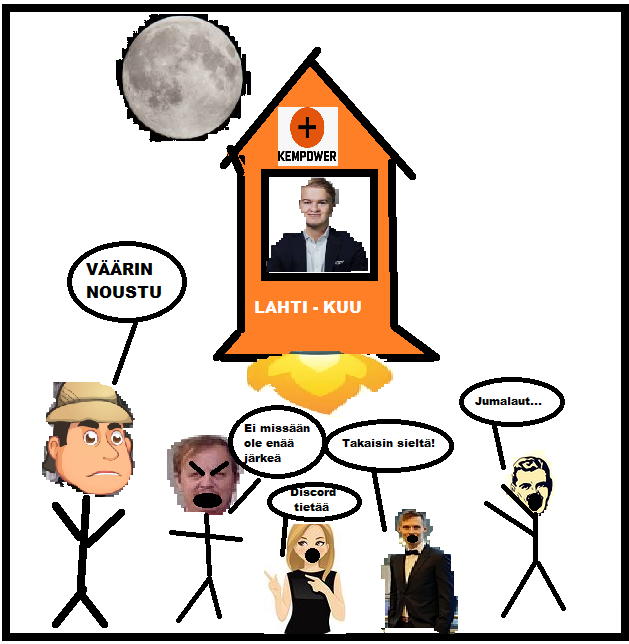
This Friday, it’s the turn of an analyst about whom I made a meme regarding how brilliantly he predicted the rise of a certain rocket, even though the Forum and a large part of the Ruoholahti office saw it differently. I, especially, have been constantly wrong about this company… (surprise, surprise) :cowboy_hat_face:

Rocket GIFs - Get the best gif on GIFER

17 Likes

53. Pauli Lohi

Pauli is a very talented and sharp analyst who possesses a great knack for summarizing complex matters and expressing himself clearly. What I like about Pauli’s analyses is that they are enjoyable and pleasant to read—naturally, the substance, i.e., the content, is the most important part, which is certainly in order in his reports, but it makes reading so much easier when the text flows nicely, as his does.

I’ve also noticed that Pauli covers a wide variety of quite challenging companies across the board, yet he still has everything well under control for each of them… Mr. Lohi must have a great memory and a high capacity for absorbing information.

As a person and an investor, Pauli isn’t perhaps as familiar to me or others as Inderes’s boomer analysts, which is why it was well worth inviting Pauli for an interview.

1. Tell us who you are in thirty words.

  • A thirty-something living in Kalasatama, Helsinki, with my girlfriend. I moved from Siilinjärvi after high school and attended Aalto University School of Business. Nowadays, life is quite well balanced between work, hobbies, and social life.

2. Tell us three things the forum members don’t know about you.

  • I have subscribed to the digital edition of The Economist for years and read it passionately. I am particularly interested in emerging markets and world politics. I don’t read the magazine to become a better investor (though it does help), but because it brings entirely new worlds within reach.
  • I went on an exchange program to Bangkok during business school, and it was one of the greatest experiences of my life. A vibrant city with vibrant people. The quality of education was also good, even if many Westerners might doubt that.
  • I support Tampere’s Tappara, even though I’ve barely lived in Tampere—it was just the first ice hockey team I ever heard of as a kid. I was already regularly reading match results and stats from Savon Sanomat at age 7. KalPa wasn’t even playing in the Liiga back then. Judging by Tappara’s success in retrospect, you could say I made a solid team pick.

3. What interests and hobbies do you have? No mentioning anything related to investing.

  • I do a lot of sports: ice hockey, running, gym, tennis, cycling, swimming, and everything in between. I also like cars (even though I don’t own one) and enjoy playing Gran Turismo with a steering wheel and pedals.

4. What does your typical workday look like?

  • I always start the day with 10 minutes of yoga (there’s plenty of choice on YouTube) and make a healthy smoothie for breakfast. At the office, focusing on deep work is challenging and I end up chatting a lot with colleagues. I try to do tasks requiring deeper concentration from my home office. In the afternoon, I’ll likely go work out and might continue working from home in the evening. I usually think I know the day’s agenda in the morning, but as an equity analyst, you constantly have to react to surprising news flow.

5. Could you briefly describe what kind of investor you are?

  • I think I know how to make successful investments, but I don’t follow this concept with enough discipline. The crux of the whole thing is having an information edge over other investors. That means you have to focus tightly and deeply enough on a limited number of stocks. And you should aim to get the timing right. I don’t believe in generating alpha by chasing every hot tech stock out there, as the competition is brutally fierce. Instead, if you deeply understand one or a few sectors in, say, our remote domestic market, your chances of outperforming are much better. Occasionally, I’ve been guilty of investing in attractive-looking global growth companies after just a couple of hours of research and modeling, and I’m convinced that’s the wrong way to invest.

6. Could you briefly share your investing history?

  • I started about ten years ago with index funds and switched to direct equity investments just over 5 years ago. Business school taught us that beating the market is hard, and based on my relatively short investing history, that seems to hold true. Still, I believe that by specializing and developing as an investor, I can build an edge over the long term.

7. Has working as an analyst made you a noticeably better investor? Why or why not?

  • Of course it has. Here, you learn certain general laws of the stock market much better than you would alone at home or on a forum. Additionally, you get to know specific companies and industries inside out, since you’re required to follow them closely for work anyway.

8. You cover Apetit, Fifax, Fodelia, Kempower, Meriaura, Merus Power, Orion, Raisio, Tamtron, Vaisala, and Valoe. Whew, that’s a lot of companies and quite a diverse bunch—how do you manage such a portfolio? Which is the easiest and which is the hardest to follow?

  • You forgot Atria, as I think it’s missing from my bio on our website. Orion is probably the most complex company in that group—although Antti Siltanen has main responsibility for it nowadays. Kempower is the easiest to follow, because I know it will beat estimates every quarter :wink:.

(ping @Antti_Siltanen cheers, Alokas)

8. What does your portfolio look like? What are your three most recent purchases and why?

  • I haven’t bought many stocks lately. The purchases of Caverion and Harvia in the summer and autumn of 2022 hit absolute bottoms. I knew Caverion well because I followed it for years at Nordea, and an all-time low share price combined with clearly improving earnings felt like an extremely attractive buying opportunity to me, even if the company hadn’t been bought out of the market. With Harvia, I didn’t have quite as strong a personal understanding, but it certainly looked cheap a year ago even under reasonable estimates, so I took the risk. After those two purchases, I’ve only made one small, foolish Amazon buy—the exact kind where I have virtually no information edge whatsoever.

9. What does your stock-picking process look like step by step?

  • Ideally, very lengthy. Once you’ve followed a company for years, modeled it, listened to at least ten quarterly earnings calls, and figured out what the rest of the market thinks about the stock, you’re already well on your way. After that, you just have to keep tracking it and wait for the market to underestimate the company’s earnings trajectory, opening up an opportunity to strike.

10. When buying stocks, do you think at all about whether you’re buying for the long or short term? Personally, for example, I buy with the mindset that I could imagine holding the stock for several years… unless things change fundamentally.

  • I do, but due to our trading restrictions, that’s often not possible. Sometimes, especially in a bear market, it feels like there are clear market inefficiencies. If you have well-founded confidence in a company’s earning power, you can generate nice returns with short-term holdings.

11. Do you analyze potential buy candidates in a similar way to the companies you cover? (I don’t mean writing full reports, of course :D)

  • Yes, I do. I have a lot of my own models. I don’t build DCFs, but I try to map out earnings trends and compare them against market expectations. If there’s no consensus available, you can easily infer market expectations from valuation multiples.

12. Excluding Inderes staff, whose voices in the investing world do you listen to more closely, and why? Mention at least four people.

  • I especially listen to people who have long-term track records in demanding economic roles (such as CEOs, finance ministers, etc.).

13. In thirty words per company, what are your thoughts on these stocks:

  • Fodelia – A difficult operating environment and sprawling growth initiatives have so far somewhat obscured Feelia’s value-creation potential. Looking forward, it will be essential for the company to focus its efforts where genuine competitive advantages exist.
  • Kempower – A rare success story. Benefits from decades of accumulated know-how inherited from Kemppi, as well as its agile organization. For the long term, it will be critical that R&D can match emerging competition.
  • Meriaura – The maritime freight segment is highly cyclical, making it challenging to achieve significant competitive advantages. Renewable energy has had a rocky history, but for the sake of fighting climate change, growing demand for solar thermal would be welcome.
  • Vaisala – A dominant player in a growing market. A long-term value creator that still has room to improve its profitability.

14. Few in Ruoholahti believed it, the Forum pushed back…, but Pauli saw and predicted Kempower’s rocket ride. How and why were you right in your forecast?

  • It seemed obvious to me that the company could grow faster than the market, and there was massive upside potential in the estimates. Evaluating forecasts and earnings momentum is far more important than fine-tuning valuation models. Other analysts were also positive on the company at that point (if I recall correctly, we were the second research house to initiate coverage after Carnegie). My colleagues or the skeptics on the forum hadn’t seemed to look into the company very thoroughly; they were mostly just annoyed by the seemingly expensive valuation. But it’s only a good thing when public sentiment differs from my own if I have solid reason to believe I’m right—that means not all the upside is priced into the stock yet.

15. How much do you rely on help from other analysts with the companies you follow? Or do you manage almost entirely on your own, or does the work involve a lot of sparring with colleagues, etc.?

  • We spar constantly. Sometimes we bounce ideas around regarding recommendations and views. Other times, it’s about how best to communicate a specific point in an analysis.

16. You have to pick two people from the Forum, two analysts, and two other Inderes employees to manage your portfolio for four years. Who would you choose and why?

  • That thought doesn’t appeal to me, because managing my own portfolio is fun and educational. There are definitely great stock pickers in all categories. If forced to choose someone, Yu Gong—he would certainly be an entertaining portfolio manager, and his historical hit rate seems to be strong too.

(@Yu_Gong, pinged you so you’d notice cheers, Alokas)

17. What kinds of goals do you have in investing? Any euro-denominated milestones or a goal to beat the index?

  • I don’t have any specific goals. I try to avoid excessive leverage so I can keep sleeping well at night.

18. What is the best part about working at Inderes?

  • The freedom to organize your own schedule and daily routines fairly independently. People here are also very strict about ensuring you don’t have to work while on vacation.

19. How could Alokas get the same predictive talents as Pauli?

  • I suppose you learn how to forecast by forecasting.

20. What would you especially like to thank the forum members for?

  • For your activity, industry insights, and humor. The hive mind of the Inderes forum is a huge help to an analyst who would otherwise likely ponder certain company-specific issues pretty much alone.

Thanks for the answers, Pauli!

Pauli sounds like an investor who will do very well in the long run. What caught my attention in his answers is that he knows how to focus on what matters, strives to keep an eye on the big picture, and doesn’t rush into things unnecessarily, instead taking a long-term approach. Simple things in a way, but perhaps not really, since very few people actually manage to follow them successfully—sometimes success comes down to fairly simple things.

Thank you, and have a great rest of your Friday! :slightly_smiling_face:

89 Likes

This autumn, we have interviews coming up with an analyst, a large-scale investor, a portfolio manager, and a forum member.

Next week, it’s the turn of an investment author—well, they are much more than that, too. :slight_smile:

I’m spending the weekend at the cabin and in the countryside, so I’ll be around less than usual this weekend. Have a relaxing weekend, everyone!

P.S. You’ll hear a small piece of news on Monday.

34 Likes

54. Esa “Omavaraisuushaaste” Juntunen

An “Investor of the Year” nominee interviews another “Investor of the Year” nominee—neither Esa nor I knew this on Sunday afternoon when we were exchanging private messages here on the Forum. Then later that evening, we congratulated each other after receiving an email from Nordnet listing the other nominees, and I told Esa how glad I was about the perfect timing of asking him for an interview.

Esa is well known for his excellent Omavaraisuushaaste blog, which I warmly recommend reading; it’s a truly high-quality investment blog where topics are explained in a very accessible and engaging way. Nowadays, he is also known for his top-tier book, “Viisas sijoittaja” (The Wise Investor), which every investor should naturally read.

Mr. Omavaraisuushaaste produces such high-quality, insightful investment content that I simply had to interview him. Besides, I always want to learn something new, get some food for thought, and also get to know Esa Juntunen personally.

1. Tell us who you are in thirty words.

A 32-year-old M.Sc. (Econ.) born and raised in a working-class family in Hyvinkää, now living in Helsinki for work. Ever since childhood, I’ve been interested in practically everything, always striving to see the bigger picture rather than black-and-white truths.

2. Tell us three things the forum members don’t know about you.

  • Some people might know, but I’m a genuine Pokémon Champion—a six-time Finnish Champion in the Pokémon Trading Card Game. I never won the World Championship, but my best finish was 5th. My best memory is winning the Tokyo Regional Championships while traveling as a tourist in Japan in 2014—after that tournament, I quit playing because the game mechanics became too luck-based.
  • I delayed completing my Master’s degree by a year so I could do an exchange program. I studied abroad at a South Korean women’s university, which for some reason accepted male exchange students. So the school had 10,000 women and 50 men. It offered a very fascinating perspective on life, seeing the dynamic inside the student dormitory versus outside the school gates. And well, being a single guy at the time, the experience was rewarding in other ways too.
  • I’m an extreme night owl; my natural sleep cycle would be going to bed at 3 a.m. and waking up at noon.

3. What are your interests and hobbies? You’re not allowed to mention anything related to investing.:slight_smile:

  • Long evening walks with my partner
  • Geeking out over veggie burgers
  • Designing card games and board games
  • Writing in general (I also have a novel sitting in my desk drawer)
  • Nintendo video games (I took a week off work for the latest Zelda)
  • Movies
  • New technologies—especially VR and AR
  • I avoid making political statements, but I follow politics very actively

4. What does a typical weekday look like for you?

On weekdays, I wake up at exactly 8:37, brush my teeth, get dressed, and head to the bus stop like a zombie. I don’t like remote work, so I always go to the office, arriving around 9:10. My first morning meeting starts at 9:15, during which I usually eat breakfast.

I’m responsible for my workplace’s IT strategy and IT development projects, so my workdays mostly revolve around making various micro- and macro-level decisions. Sometimes you need to take a longer-term view, and sometimes you just need to prioritize what to tackle next. Often, it involves helping team members move forward when they hit a roadblock. Arguably, my biggest strength is problem-solving across any given situation. The workday usually wraps up between 5:00 and 6:00 p.m., after which I check what my partner has added to the grocery list and head to the Malmi Prisma.

At home, I browse the day’s investment news, write my blog, or work on my next book project. I also try to read every day, getting through 30–40 non-fiction books a year on very diverse topics. Investment books make up a distinct minority.

Depending on my energy levels, I work on various other personal projects completely unrelated to investing or finance—I always have about 10 running simultaneously, though I try to finish them one at a time. Between 11:00 p.m. and midnight, we usually watch whatever series is on the streaming service we happen to be subscribed to at the time. At the moment of writing, we’re watching Lucifer on Netflix. Bedtime is usually pretty precisely at 00:30.

5. How would you describe yourself as an investor?

Above all, I’m a questioner, just like in my personal life. At the same time, I don’t want to overcomplicate things, but I constantly strive to challenge my own thinking and assumptions. I’m not afraid to admit when I’m wrong and act accordingly when the facts prove it. Just as I have evolved and changed tremendously as an investor over 15 years of investing, many investing lessons have spilled over into my everyday life as well.

I’m also purely an equity investor, owning a couple of investment properties only because banks often don’t accept stocks as collateral for loans. Nor have I ruled out the option of switching entirely to index funds if a growing family eventually leaves me short on hours in the day.

This is also why I never invest in more than 10 companies at the same time. I don’t feel I can conduct deep analysis and follow-up on more than 10 companies when there is so much else to life besides investing. And I don’t want to live solely for investing, because life has so many other super-interesting things to offer.

6. Could you walk us through your investment journey?

I started investing in stocks at the age of 17, when I was in upper secondary school and completely lost about what I wanted from life. In 2008, the financial crisis hit Finland and my parents’ workplace hard, which sparked my interest in the economy as a phenomenon. The financial crisis was the exact reason why I ended up getting interested in business school and stock investing. This also led to me convincing my father, who was just over 60 at the time, to invest in stocks—even though, until I started, our family had viewed investing as gambling in the traditional Finnish way.

I’ve followed a pretty classic trajectory as an investor: started as a dividend investor and missed out on the likes of Amazon and Microsoft because they didn’t pay enough—or any—dividends. Even though I genuinely wanted to invest in them. Especially when I was young, I was far too dogmatic, shackling myself with artificial investment rules.

As a result, I’ve changed my investment style many times over the years. I no longer invest according to a rigid strategy; instead, I simply aim to invest with a long-term horizon. Nowadays, I don’t consider myself strictly a value or a growth investor—if the market offers companies I find compelling at an attractive price, I’m buying.

7. What does your portfolio look like? How do you approach diversification?

My portfolio is worth about 300,000 euros. Currently, it holds only five stocks:

  1. Aallon Group (weight approx. 11%)
  2. Talenom (weight approx. 20%)
  3. Medpace (weight approx. 22%)
  4. Qt Group (weight approx. 11%)
  5. The unlisted company of my employer, the British insurance broker Howden Group Holdings, whose best peer in terms of valuation and share price performance is its US-listed competitor Arthur J. Gallagher (weight approx. 36%).

Cash is currently at about 5%.

I aim for geographic diversification primarily between companies listed in the US and Finland. However, the direction of the markets has meant that, especially over the last six months, I’ve practically only been shopping on the Finnish exchange, pushing my Finland allocation unusually high to nearly 50%. This will surely balance out over time, though.

I’d like to find new additions for my portfolio, particularly to increase exposure to the tech sector and global players, but most of the interesting names in the US are still trading at unreasonable valuations right now.

8. What is your stock-picking process, step by step?

Because time constraints mean I currently only invest in the Finnish and US stock markets, I keep a dedicated watchlist of interesting companies across different platforms. For Finland, I keep a list on the Inderes front page; for the US, I use Seeking Alpha. Companies are added and removed from the list organically as new and interesting prospects enter my radar. The latest company to make the list is PayPal.

For every company that lands on the list, I run a couple of different scenario analyses for the next five years, comparing analyst consensus, my own expectations, and best- versus worst-case scenarios. You can find an example in my post on Kempower, for instance.

When companies reach the margin-of-safety price required by my base or worst-case scenarios, I dive deeper. I spend a few hours on thorough analysis: examining past quarterly reports, listening to a few quarterly earnings webcasts along with analyst Q&A sessions from different years, and going through various investor materials. For Finnish stocks, I also often gauge company sentiment on the Inderes forums. The more negative, the better.

If everything looks solid, I often buy with substantial initial stakes and then scale in gradually. That’s how Qt Group, for example, was added to my portfolio late last year. However, that purchase caused me to miss Meta Platforms, which also hit my buy limit and would have been an even better investment over this short time horizon, but my cash reserves were already spent on Qt. Managing cash reserves is one of my biggest personal investing challenges, especially since during my student years, my investment allocation was practically over 100%, as even student loans went straight into investments.

9. How did writing your book “Viisas sijoittaja” change you as an investor?

Writing the book was an exceptionally eye-opening experience because I wrote most of it right in the middle of peak market mania. The book has a chapter on mean reversion and how, in the stock market, it happens almost like a law of nature. In the middle of an exuberant bull market, that was hard to believe, but as I wrote and conducted research for the book, it became clear that a correction always arrives one way or another. And in the end, everything played out exactly as I wrote in the book. Writing it helped me particularly in a few areas:

  1. During the worst of the mania, I gained the courage to cut back on stock purchases when valuations got completely out of hand. I didn’t avoid mistakes entirely, but they decreased significantly.
  2. I’ve also learned to capitalize on market pessimism more effectively. So far, my bottom-fishing has yielded substantially better results than jumping on bandwagons, because spotting widespread, unjustified market panic is easier than analyzing an individual company’s deep-seated problems—even though investing normally works better the other way around.
  3. I also became increasingly aware of my own mortality as an investor, which is why I mentioned index investing earlier. It’s unbelievable how large a share of stock pickers actually underperform the index, and writing the book really made that reality hit home, even though I already knew it on a factual level.

10. You run an excellent blog (https://www.omavaraisuushaaste.com/). What has blogging given to you personally?

I belong to the generation that grew up right during the golden age of internet forums and blogs. Writing a blog gives me much of the same satisfaction that forum posting gives to many. First of all, it’s a way to process my own thoughts. For me, writing is the best way to think. And when you write things down, you also notice how flawed your reasoning can be, even when everything seemed to click in your head.

What blogging and forum writing also share is that the best part is the discussions with readers. My book Viisas sijoittaja also contains many topics that originated directly in the comments sections of blog posts, which sparked my interest and prompted deeper academic research. If blog posts didn’t generate discussion, questioning, and sometimes outright corrections of errors, I probably wouldn’t even write the blog anymore. As a format, a blog also works best for presenting a single perspective rather than delivering exhaustive investment analyses (though I enjoy doing those too, of course).

11. Analyze these four companies in 30 words each.

-Kempower A masterpiece of Finnish engineering that I find impossible to value. The business is backed by so many megatrends that tailwinds will persist for years—yet lacking a margin of safety, I’ll likely remain on the sidelines.

-Kesko In my view, the strongest Finnish consumer brand. Whenever I mention Kesko’s pricing, I receive surprising defensiveness arguing how great their stores are, despite being noticeably more expensive than competitors.

-Qt A spin-off masterclass. From my perspective managing IT development projects, Qt has wider moats than many investors realize. Expectations for distribution licenses get overblown—I primarily track developer license sales.

-Revenio A glorious track record behind them. Patent expirations heighten threats to already stalling growth, and this year showed what happens when markets mature without macro tailwinds. I strongly doubt a return to past glory.

12. What is your greatest strength as an investor? What is your biggest area for improvement?

My greatest strength is definitely capitalizing on overall market sentiment during blatant overreactions.

On the flip side, by far my biggest area for improvement is selling stocks. The aforementioned Revenio is a good example. During peak hype, I should have had the sense to trim the position, and later around the 44-euro mark, I remained so skeptical of its growth that I refrained from buying more. In my view, if you don’t want to buy a stock after a 30% drop, you should sell it, because it means you’ve lost conviction in the company. And well, as a result, I ended up selling Revenio another 50% lower from that level.

13. What do you get from the Inderes Forum that you can’t find anywhere else?

Beyond the Inderes forum serving by far as the best sentiment gauge for overall market mood and individual equities, the discussions held here are the best Finland has ever seen on any investment forum throughout my 15-year investing journey.

Social media and putting your real face out there have made interpersonal communication feel far less genuine. Meanwhile, the rise of financial influencers has gotten people excited about investing—which is wonderful—but it has introduced a certain shallowness, oversimplification, and lack of critical thinking into the discourse, as most content targets absolute beginners and is all too often sponsored.

On the forum, people are still genuinely more themselves—for better or worse. Here, you can discuss any finance-related topic calling things by their real names, behind a screen name. Forums remain the best medium for authentic online conversation.

My favorite thread across the entire forum is the “Living off capital / Early retirement - Experiences?” thread.

14. In what ways do you track macro trends? What do you consider the best Twitter accounts for following macro developments?

Twitter is indeed where I mostly track macroeconomic trends. The accounts I follow most closely are:

  1. @lassecorin
  2. @JuhaVaris
  3. @Reiskanen
  4. @C_Barraud

As for indices, alongside standard inflation and unemployment metrics, I use the US AIA/Deltek Architecture Billings Index, which predicted the financial crisis remarkably well in advance: AIA/Deltek Architecture Billings Index (ABI) - AIA

15. You have produced excellent analyses and deep dives into various companies on your blog… Have you noticed any areas that investors generally underweight or overlook when picking stocks? Conversely, do you think investors place too much emphasis on certain factors?

A lot depends on the individual investor here. Some focus exclusively on dividends and dividend-related ratios. Others make analysis unnecessarily complex with formulas that even I, holding a Master’s degree in actuarial science and risk management, don’t use.

I don’t believe there is a single trait you can generalize; every investor has their own blind spots. The most crucial thing is to pause and reflect on whether you’re dedicating substantially more time to one aspect over another—and how you justify that to yourself.

16. Investment psychology is a vastly underrated area of investing. How do you manage your emotions when investing? Do you actively practice or study investment psychology in any way?

You can’t control your emotions, so the most important thing is finding an outlet for them. An effective strategy for me has been setting up a speculation portfolio, where I allow myself to invest 5–10% of my portfolio assets however I please. My speculation portfolio is kept completely separate on Nordnet and can also be found on Shareville. My core portfolio is held at my primary bank, Danske, and keeping the funds entirely segregated has helped me tremendously.

I’ve noticed that allowing myself to make emotional investing decisions with a small amount of capital relieves the urge to make emotionally driven moves in my main portfolio. The irony, of course, is that my speculation portfolio has returned 274% over five years—vastly outperforming my regular portfolio—but had my entire net worth been in investments carrying that level of risk, I wouldn’t have slept a wink for the past five years.

17. Do you have a financial goal? When will your net worth cross the one-million-euro milestone?

My goal is classic, boring FIRE. Not because I want to retire—I actually enjoy my current job very much—but because there are so many things I want to pursue.

Right now, there simply aren’t enough hours in the day for everything, so I’ve set a target of 2.5 million euros in invested wealth 7.5 years from now. Currently, 10.5 years seems more realistic, but there’s no harm in aiming high.

Either way, my goal is to achieve FIRE by age 42 at the absolute latest. This won’t happen through investing alone, as a quick glance at the numbers reveals; it also requires avoiding excessive spending and continuously growing my career compensation, with my sights set on executive leadership roles.

I aim to hit the one-million milestone by the end of 2026, though that will naturally require stellar investment performance alongside all the factors mentioned above. Increasing your income level cannot be overstated when it comes to hitting this target. But as my favorite cheesy saying goes: shoot for the moon; even if you miss, you’ll land among the stars.

18. You are frugal—what is your average savings rate, and what are your best tips for saving money?

I aim for a 70% savings rate, with this caveat regarding the calculation method: “Housing expenses include maintenance fees, water, electricity, internet, mortgage interest, and other banking fees. Housing expenses do not include loan principal repayments, as they build my net worth.” If principal repayments were counted as an expense, the savings rate would be around 50%.

It’s a fact that most of us spend a great deal on things that add zero value to our lives. My trick for finding genuinely meaningful spending was living as a minimalist for a full year right after graduating. Stripping away everything from life for a year while my income surged significantly helped me realize quite fast what I actually needed versus what I merely thought I needed.

You don’t have to live as a minimalist for a whole year; a couple of months is plenty. The most crucial part is simply becoming conscious and tracking your spending over a set period. Much of our consumption stems from our upbringing, personality, and peer group. In sensible spending, self-awareness is paramount, because so much of consumption is emotional.

19. How could Alokas match index returns over the long run with stock picking?

Do less! Learning always pays off, but even in investing, the marginal utility of learning new things diminishes substantially past a certain point. Personally, I find that the biggest lessons I learn from investing nowadays are things that benefit me in my career—not necessarily in investing itself.

On the other hand, doing less applies equally to buying and selling. Returns are generated by waiting, never by hyperactivity. Excessive trading in the stock market is likely the single greatest sin of retail stock pickers.

20. What would you like to specifically thank the forum members for?

A huge thank you for keeping investment forum culture thriving in Finland. Forums are a dying breed, yet for investing they are SO much better suited than social media or YouTube videos. It’s a pleasure to discuss ideas here, continuously gain new perspectives, and share my own views and analyses with people who are genuinely interested in my perspective.

Special thanks also go out to everyone who provided feedback on my book—it’s been wonderful to see that the book has resonated and sparked thoughts among more experienced investors as well.


Thank you, Esa, for the fantastic answers!

I have to say, once I sent Esa the questions, his responses came back incredibly fast, and as you noticed, quality was never compromised. Esa is a diligent, frugal, and wise investor, so I follow his investing journey with immense interest.

Be sure to follow Esa’s blog and check out his book “Viisas sijoittaja”—that’s all from me. :slight_smile:

Thank you, and have a wonderful rest of your Friday! :slight_smile:

116 Likes

@Omavaraisuushaaste was a truly wonderful interviewee. I have learned a lot from his blog and book. :slight_smile:

But next week it will be the turn of another author, whose thoughts I and many others listen to with great interest. He is, among other things, a brilliant speaker.

The portfolio has been tested quite severely for a couple of years now, but I just keep putting more money into the market aggressively. Perseverance is rewarded, I believe in that very strongly… time is the investor’s friend.

Have a nice and peaceful weekend, friends! :slight_smile:

23 Likes

55. Merja Mähkä

Merja Mähkä certainly needs no introduction, but I will introduce her anyway. In my opinion, she is a versatile person and an investor with a broad perspective, who knows how to write about complex topics in a way that someone like me can understand and learn from.

I appreciate that Merja doesn’t act like a know-it-all; instead, she is an open, honest, and appropriately self-critical investor—perhaps it’s precisely these kinds of investors who succeed in the long run? I see her as a wise person who can look at things from many different angles and think truly independently, which is crucial since the investing world is filled with bubble mentalities and FOMO culture.

Mähkä is a fantastic speaker and writer whose “materials” I strongly recommend reading; they are very accessible and rich in content, offering valuable lessons for every single investor. Her thoughts and insights are extremely practical, easy to grasp, and simple to follow, so I recommend reading this interview carefully. :slight_smile:

1. Tell us who you are in thirty words.

By profession, I am an investment author, Instagram influencer, columnist, and speaker, and occasionally also a communications consultant.

In private life, I am a mother of two, a wife, a friend, and an investor. Once upon a time, I was an avid traveler; I have visited 95 countries.

2. Tell us three things forum members don’t know about you.

About half of my stock portfolio is tied up in US companies, the most significant of which are Apple and Costco. I invest diversely in funds—even in carefully selected actively managed ones! Nowadays, I also own fixed-income investments.

And if those things are already known from my various content productions, I’ll share these:

I was about to invest in Seadrill back when its dividend yield was sky-high and it was considered a screening buy, right before the company—oops—went into debt restructuring. I got a rare, free lesson on dividend traps and deceptive hype.

The smallest holding in my portfolio is Millicom, which is down about 70%. I received the shares from Kinnevik. I don’t know their acquisition price (and it’s not worth the trouble finding out). I keep holding them in my portfolio because selling would mean using the deemed acquisition cost (hankintameno-olettama), and I’d still end up paying tax on them. It’s immensely annoying.

I am one of three crime reporters who attended every single session of the Lake Bodom murder trial, and the only one to whom Nils Gustafsson uttered a word.

3. What interests and hobbies do you have? You cannot mention anything related to investing. :slight_smile:

I enjoy winter swimming, aqua jogging, reading biographies and romance novels, going for walks, and doing homework with my child.
All of my hobbies are calm/soothing. Although, next spring, I want to join a pesäpallo (Finnish baseball) team.

4. What does a typical weekday look like for you?

My youngest wakes up at six; I hang in there until it’s time to take them to daycare. Then I procrastinate starting work by reading the Inderes morning report headlines and interesting topics, check Helsingin Sanomat and Talouselämä, and maybe make an Instagram story about some current investing topic. I often manage to spend so much time on this that the stock market is about to open. Once I see which way the market is heading, I can get to work: I create content for Insta, do office work, and sometimes have meetings, PR events, and the like. The workday goes by like that until my oldest gets home from school, and then we sort out an afternoon snack and homework. After that, I might work a bit more until it’s time to pick up my youngest from daycare. The evening is spent with family, with a hobby squeezed in somewhere along the way.

5. How would you describe yourself as an investor?

Enthusiastic, but humble. I have admitted to myself that I’m not particularly great at stock picking, which is why I invest broadly in funds. For years, my goal was to make my investing more passive, but I always somehow slipped back into stock picking. Now I’m making progress: new incoming money goes into funds. I engage in stock picking within my old portfolio using dividends and proceeds from sales.

6. Could you share your investment history?

I have owned shares since I was a child, but I only started properly learning about investing in 2012 while expecting my first child. I’ve tried all kinds of investment strategies, from dividend investing to growth and value.

7. How has speaking publicly about investing affected you as an investor?

I wonder if it has at all? I started writing a column about investing for Helsingin Sanomat in 2017. I don’t really remember if it had much of an effect. Perhaps one noticeable effect is that I try to keep up with current phenomena. I probably would never have bought crypto if I hadn’t thought I could write a couple of columns about it.

8. What does your investment wealth currently consist of? What does your stock portfolio look like right now?

About 60% of my investments are in direct equities and 40% in mutual funds & ETFs. By far the largest of my direct equity holdings is Apple, followed by Valmet, Costco, and Qt.

9. What is your step-by-step stock picking process?

An investment idea can come from anywhere. I’m a heavy consumer of financial media and investment events, and ideas often originate there. Then I like to dig up the investor presentation or CMD materials and dive a bit deeper. I don’t do valuation modeling myself. If I still like the company after researching it, I check what the analysts think. I rarely work backwards—thinking about what trend is hot right now (e.g., solar energy) and then searching for suitable companies. After that, I make my purchases through dollar-cost averaging / scaling in.

10. What are the most important valuation multiples for you and why?

Among key metrics: P/E, dividend yield, dividend growth, and operating margin. They are easy to grasp and provide a fair idea of the types of companies I usually invest in. Of course, all these multiples have their pitfalls, and they can lead you astray.

11. Analyze these three companies in 50 words per company.

-Inderes: Inderes is a media company that has built an investor relations (IR) service business on top of its community. It holds a strong position in its domestic Finnish market, but growth opportunities here are becoming limited. Future growth must come from abroad. It will be interesting to see how international expansion succeeds. I kept the shares I got from the IPO. They are down, but at least I get to attend annual general meetings.

-Mandatum: Mandatum is an asset manager and life insurer. In the short term, the greatest interest lies in where the share price settles once selling pressure from those who received shares involuntarily in the spin-off subsides. Long term, it will be interesting to see what M&A transactions the company pursues after breaking free from Sampo’s P&C insurance strategy. I’ve bought more, as the price fell below analysts’ fair value estimates and looks quite low relative to Mandatum’s share of Sampo’s 2021 dividend.

-Valmet: Valmet is an engineering and service company serving the pulp, paper, and energy industries. Right now, dismal results across the forest industry are dragging down Valmet’s share price and might continue to do so, as the next capital expenditure cycle will likely take time. An exceptionally strong market position offers investors stability across cycles, even if the share price fluctuates and the order book thins out. A quality company that I like a lot; I buy more on dips if I don’t have better ideas.

12. Which sectors are you currently most interested in as an investment? Which sectors do you view more skeptically?

Can I answer artificial intelligence to both? In hyped sectors, it’s very easy to miss the mark. Traditionally, I’ve liked easy-to-understand or defensive sectors such as consumer goods and pharmaceuticals, and I haven’t felt the need to change that.

13. For many—well, at least for myself—this year and last year have been very difficult. What would you say to investors like me who have suffered massive losses? Do you think it’s turning into a buyer’s market?

Don’t be discouraged, and don’t feel stupid just because your portfolio is deep in the red. In this kind of market, losses happen very easily. You shouldn’t think, “how stupid of me to start”; you should think, “how smart of me to start,” because simply getting started is always the smart move. If the beginning happened to coincide with a rough patch, you just have to push through it as a necessary rite of passage; the market will eventually turn. I can tell you that once you’ve been investing for a long time and your portfolio is comfortably in the green, these downturns are much easier to stomach—green is a lot nicer to look at than red. You usually only achieve that luxury position by investing with a long-term horizon and holding the same great companies for years. As for a buyer’s market, I don’t know—I’ve been investing consistently, lately a bit more than usual, though part of the money has gone into building a fixed-income portfolio.

14. For a beginner investor who specifically wants to become a stock picker, how do you think they should start learning about investing?

First of all, I recommend listening to my latest book Sijoittajaksi noin 5 tunnissa (Become an Investor in About 5 Hours), perhaps the world’s first investment book created directly as an audiobook. Based on that, you can try to determine whether you truly want to become a stock picker. Do you want to make investing a hobby? Do you want to spend hours researching companies? Do you have the time and passion for it? I think the difficulty of stock picking is often downplayed; people talk about the buy-and-hold strategy, but hey, that’s not a great strategy on its own—these days, you really have to stay on top of things. If you still want to pick stocks after that, I think you should go straight to primary sources: study companies’ investor materials, read analyst reports, and listen to podcasts. At Inderes, I find the podcasts diving into specific sectors to be the best—they give you a solid understanding of industry drivers. As for valuation, I’d buy Heikki Keskiväli’s or Svenne Holmström’s online courses.

15. What are your most important sources of information in investing? How do you view the materials provided by Inderes, such as analyses and Marianne’s macro reviews?

I read Talouselämä, Arvopaperi, and Kauppalehti, rotating a bit depending on what I happen to subscribe to at the time. From Inderes, I listen to most of the Inderes podcasts, all the Talouden jäljillä episodes, and all the Heikkilä & Vilén shows. I follow the morning report, reading the sections that interest me (macro, my own holdings, and “fun to watch from the sidelines” companies). I hate when analysts change, and my investment decisions can be influenced by whether a familiar analyst is covering the company.

16. What are your three greatest strengths as an investor? What is your biggest area for improvement?

I don’t panic. I dare to buy even when things look bleak. When a company’s outlook changes, I sell and don’t just hold on to losses. A fourth strength is curiosity! I find it easy to get interested in all sorts of things.

My biggest area for improvement is probably getting better at company valuation, but I’ve realized I don’t have the time for it, so I enjoy relying on the work done by analysts and using funds.

17. What kind of goals do you have in investing? Do you have specific euro or percentage targets?

I reflect on this in my audiobook Sijoittajaksi noin 5 tunnissa, as I’ve noticed my goals have changed significantly over the years. I used to aim for a one-million-euro investment portfolio. Now that the goal isn’t terribly far off, it no longer motivates me. I know that if the world continues roughly on its course, the goal will be reached thanks to compound interest, even if I don’t take on an ounce of extra risk.

I have wondered whether I should raise the target to two million for that reason. Maybe—at this stage, that doesn’t feel very distant either, because moving from one million to two million isn’t that far, unlike going from zero to one million, or even getting to where I am today.

I think the most sensible goals relate to quality of life: being able to spend your time on things that feel meaningful and enjoyable. I like being able to decide for myself what kind of work I do and when. An investment portfolio provides a great safety net for these decisions, allowing you to say yes to projects that don’t pay much and no to those that don’t excite you.

18. What has investing brought to your life? Why do you think people should invest?

If not everything good, then certainly a big part of it. The biggest event for me as “Merja the human” is probably that I received shares as a child. I often get criticized that I only got rich because pappa betalade (daddy paid), but I’ve chosen to be transparent about it because another parent might pick up a great idea from it. Thanks to those childhood shares, I was able to pay the down payment for a studio apartment in Kallio in 1998. Back then, I sold Merita shares for 30,000 Finnish markkas. That studio bought as a student (which cost me my student housing allowance) is the foundation of my wealth, because it later allowed me to upgrade to a one-bedroom apartment. In 2012, when I started investing, I was already mortgage-free. As a result, I was able to invest far more than working thirty-somethings typically can.

Wealth has brought tremendous freedom. I have resigned with nothing lined up and started a business without major drama—when you have wealth, you can make choices that feel right for you. (More on these topics in the audiobook Sijoittajaksi noin 5 tunnissa.)

I’m not particularly interested in material possessions, and I haven’t used wealth to buy fancy things. It’s possible that one day wealth might bring a summer cabin in Lauttasaari’s Länsi-Ulappaniemi into my life.

The freedom to choose how you spend your time is, in my view, the most important reason to invest. Then, of course, you can consider the bleaker side: what will your pension look like, and do you want to prepare for having to purchase private healthcare in old age?

And yes, of course: investing has also brought friends and valuable insights about the world into my life.

19. Do you have any advice for Rookie, who aims to build a net worth of at least a couple of million by age sixty at the latest?

An investor finds their own style over time. What has worked for me is building the portfolio’s foundation with index products. On the side, you can then enjoy the sense of accomplishment that comes from stock picking, and sweep your losses out of sight quickly.

20. What would you especially like to thank the forum members for?

The forum is often where you can find perspectives on breaking news the fastest. The discussion is smart and diverse!


Thank you Merja for these high-quality answers!

She is such a great speaker and writer, and I consider her a truly valuable figure in the Finnish investment world, as thousands—even tens of thousands—of people have received help managing their personal finances through her insights.

I highly recommend checking out Merja’s books and thoughts this coming weekend. :+1:

Thank you, and have a great Friday! :slightly_smiling_face:

89 Likes

I got some food for thought from Merja’s answers for my own investing. :slight_smile:

In the near future, I’m supposed to publish interviews with a forum member with a large portfolio, an analyst, an author, a promising young investor, and a veteran, but there are other types of interviews in the works as well.

Have a great rest of the Friday, everyone! :cowboy_hat_face:

P.S. There are quite a lot of these interviews already. :smiley:

19 Likes

I have just forwarded the questions to two interviewees. I believe about 4-5 people currently have the questions in addition to the two mentioned above. :slight_smile:

The next interviewee is a young, smart, and enthusiastic investor who also has a sense of humor. I have occasionally admired these young guys who, already in their twenties, know the basics well and much more on top of that; what a future as an investor they have ahead of them! :slight_smile:


I am in the red for my entire investment history, but for some strange reason, I feel confident about the future, even though I occasionally stress in a typically “novice” way about what kind of losses… excuse me, returns the future will bring.

I wonder if my “Novice Interviews” (Alokas haastattelee) thread is, in a way, the greatest achievement of my life; I’m not sure, but I am seriously pondering the matter. I am likely, at least partly thanks to @Mauri, in Nordnet’s Investor of the Year competition, which I am proud of.

Mom and Dad, as well as many of you, have said you voted for me; I am very grateful for all the votes and feedback. :pray:

Let’s move forward together diligently and with a long-term view; slow and steady wins the race, even if there are bumps in the road.

Have a great rest of the weekend, everyone! :slight_smile:

35 Likes

Funny coincidence regarding this, but by some strange chance, I ended up on Nordnet’s site today and participated in a vote. I voted for Alokas, of course, because of these interviews and other Inderes content production. Why should the Investor of the Year automatically be an author or a stock chart geek… I think it’s been great that this investment discussion, information, and activity has been brought down to the level of the ”average Joe” by Alokas → if Alokas can do it and puts in the effort, why couldn’t you succeed in the long run too. We have Lepikkös, Viléns, and Alokases → in the end, no one is better than the other, but everyone is equally valuable when gathered around a great thing :+1:

Edit-> move this to the Coffee Room side if it fits better there :slightly_smiling_face:

39 Likes

Thanks for voting for me and thank you for the really nice compliments and justifications! :slight_smile:

It’s great that the Nordnet competition has featured different kinds of investors as candidates year after year, which leads to a wider variety of people potentially getting excited about investing. I appreciate the other candidates and their work a lot. :slight_smile:

I’ve managed to get my own friends to start investing and managing their finances better. Now, here online, I’m trying to inspire different people to keep at it for the long term, because indeed, in the long run, saving and investing almost always pay off by providing security and various opportunities, etc.

I’m in a really good mood now because of your message, thanks, and let’s help each other! :pray: :muscle:

19 Likes

The Alokas interviews thread will continue to be updated with a new interview every Friday, but partly based on an idea from user @KohtiVapautta, I’ve started working on an idea related to the interviews. Let’s see how the idea progresses…

There is another idea brewing that I’m trying to implement with a friend, but let’s see how that goes. :slight_smile:

I’m a bit slow to implement new things and I get quite a lot of suggestions for interviewees, so a suggestion might not necessarily happen within months, but very well could within a year or two. There are so many potential interviewees… I mean, an endless amount.

My own time is also quite limited because I like to work a lot, work out, and read about investing, so maybe I can’t do quite as much as I’d like. :muscle:

I’ve been mistaken for a bot, and many are probably wondering why there’s a “paint-head” like this in the competition. :smiley:

The weather is so beautiful that I think I’ll go for a stroll outside at some point, have a nice rest of your Sunday! :slight_smile:

30 Likes

Just a quick note that I might be getting another CEO of a listed company for an interview in this thread. I feel the company is talked about too little relative to its quality, so I invited a representative from this firm for an interview, and it looks like the CEO will answer my questions when they have the time.

Some of the questions focus only on him personally, but this time there are also questions directly about the company itself. My questions are prepared by me, so they are beginner-level investor questions, but on the other hand, they are a bit different from those of the media or an analyst. Let’s see what I can get out of the CEO and the company they represent.

Perhaps there will be more of these interviews with company representatives in the future, including ones where I ask directly about the company. Let’s see how I do – I have full confidence in the respondents, but not in myself. :slight_smile:

I guess that’s all for now, have a great rest of the week everyone!

EDIT: This CEO interview is coming as early as November. :slight_smile:

46 Likes

56. SuomenBuffet

Finland’s very own Buffett is an active, playful, remarkably quick-learning young investor who consistently makes great points. He possesses a fairly solid knowledge base as well as the kind of insight that serves an investor well. Especially considering his young age, he is an exceptionally solid investor—and even without taking age into account, I would definitely describe him as a smart investor.

In my view, his traits are particularly well-suited for investing, as this pursuit definitely benefits from the ability to learn, boundless enthusiasm, and a good memory. By the way, I’ve noticed that many competent investors have great memories, which certainly speeds up and simplifies decision-making, helping them see the bigger picture.

I also have to mention Mr. Buffett’s diligence. I’m pretty sure I’ve read almost all of his posts, and I’ve gotten the impression that he genuinely tries and keeps grinding forward. Diligence doesn’t always guarantee a university degree, a high salary, or other massive achievements, but almost without exception, it can greatly improve one’s circumstances in life—starting from whatever hand one was dealt. With diligence and the other traits I mentioned, I’m confident Buffett will do exceptionally well in investing, too.

1. Tell us who you are in thirty words.

I’m a 19-year-old former national championship-level soccer player from Uusimaa. My life previously revolved entirely around soccer, and I even “moved” abroad for it. Nowadays, life is much more diverse, and happier because of it.

2. Tell us three things the forum members don’t know about you.

  • I studied and played soccer in the United States for a year.
  • As a child, my dream job was to be a freestyle skier. Those dreams were crushed the very next winter when I realized I lacked the courage/recklessness required for the tricks. Downhill skiing is still great fun, though!

-I’ve studied French for over 5 years, but I really can’t speak or understand the language at all.

3. What are your interests and hobbies? You’re not allowed to mention anything related to investing.

-Sports are still a big part of my life, even if the serious competitive days are in the rearview mirror. I still do sports/exercise daily. It could be running, cycling, the gym, table tennis, regular tennis, badminton, or even outdoor pond hockey. So there’s a lot of variety, as I always go by whatever I feel like doing.

-Sports’ trusty companion, spectator sports, is also “important” to me. I still spend a lot of time watching soccer from the couch these days. Sunday evening Premier League matches watched with my dad and brother are weekly highlights.

-Traveling. I’m lucky in that I’ve been “dragged” abroad since I was little. And the trips haven’t always been your typical Tenerife holidays; I’ve seen quite a few different corners of the world. I’m actually writing this part of the interview at 4:55 AM at Tirana airport in Albania. Seeing new places and meeting new people makes every trip unique. I think I’ve visited a bit over 30 countries so far.

-Math and physics. In high school, I finally found “the” subjects for me. Nowadays, I’m not really interested in other subjects. Entering middle school, I wasn’t anything special in them, nor did I care much, but early in high school, I had a few “aha!” moments. Now I spend a considerable amount of time each day calculating, exploring, reading, and admiring those subjects.

-Video games . I don’t really watch TV series, whereas an hour or two can easily slip away playing video games. Lately, I mostly enjoy CS2 together with friends. I used to grind on PlayStation more, but nowadays I’m a proud PC nerd.

-Coding . This interest has fallen a bit behind the others. The interest is still strong, but I haven’t had the desire/motivation to practice enough. Come spring, I should probably get back to properly learning the ropes of coding. It’s fun stuff in the end, at least at the grassroots level.

4. What does an ordinary weekday look like for you?

My daily routine varies a lot. I’m in my final year of high school, and I might only have a few hours of classes a week now. Sometimes I also work night shifts in retail if I don’t have school the next day. But let’s take a so-called normal school day from recent times.

9:00–9:15 Wake up. Right after getting up, I like to eat a hearty breakfast. Oatmeal, eggs, a smoothie, a glass of water, and milk. A morning shower is naturally always part of the routine. During/after the morning routines, I like to quickly browse the most important threads on the Inderes forum and possibly skim through financial results if any were released.

10:00 School typically starts around this time, usually with math or physics.

11:15 Class ends, and my entire school day might already be over by this point.

11:30–12:30 After school, it’s nice to eat some healthy home-cooked food and simultaneously watch YouTube videos related to either investing or sports.

12:30–14:30 Usually after lunch, I aim to study school or investing topics. I don’t set strict time goals; I just go with the flow. Sometimes I “waste” this time lounging around, and sometimes it’s serious studying with my butt glued to the chair.

14:30–16:00 In the afternoon, I like to work out. I’ve gotten into a good groove this fall. It’s nice to go for a run in the nearby woods in the afternoon. Runs vary from 3 km to 15 km (rarely the upper end). (On days I don’t feel like running, I hit the gym at this point.) After the afternoon workout, I like to have egg sandwiches and a smoothie.

16:00–19:00 Early evenings tend to vary a lot. Sometimes I hit the gym straight after running, sometimes I might read about different topics. At this point, I might also lose myself in the wonderful world of Counter-Strike.

19:00–23:00 We usually have dinner at home before eight, and after that, I enjoy my free time. I might watch sports, scroll through Twitter, play PC games, or read the forum. I try to get to bed before midnight so I can get a full 9 hours of sleep. Doesn’t happen often enough, though.

5. Could you briefly describe what kind of investor you are?

As an investor, I guess I’m a bit of a jack-of-all-trades right now. Probably not a good thing, but that’s how it is. I don’t want to pigeonhole myself into any specific box, so I chase returns like a headless chicken.

Mainly, I try to be a fund investor until I have actual proof that my stock-picking hobby is profitable. Stock picking is fun, and much more entertaining than boring index funds. In terms of building wealth, I see a fund-weighted strategy as the be-all and end-all for me right now. I have sooo much time ahead of me that index returns are more than enough.

With individual stocks, I try to capitalize on market overreactions and play the contrarian a bit. If the construction sector is getting hammered, you’ll probably get above-average returns from it in the coming years. Of course, when investing in beaten-down sectors, the key is finding the gems for whom the tough years are just a minor hiccup in a great overarching story. Lately, I’ve also tried to monitor quality stocks that have taken a severe beating over the past year.

6. Could you briefly tell us about your investing history?

I started investing in the spring of last year. A month after turning 18, I bought three shares of Nokia, which cost me €5 in fees. It wasn’t necessarily the best investment, but at least I got started. The reason for investing was probably that I had too much idle cash sitting in my account, and I’d heard about investing from an acquaintance.

The first 6 months were pure chaos. I did no background research or thinking before buying. Harvia, for instance, ended up in my portfolio, and I kept adding every time the price dropped, assuming it would bounce back near the €50 levels. Needless to say, it never got anywhere near that.

Then in September of last year, I think I stumbled upon this forum. And that’s when the “real” investing started. I was forced to start digging in just to understand the discussions taking place here. The hours spent on investing-related matters grew exponentially, and I definitely learned a thing or two. The fun part about investing is that the learning shouldn’t stop anytime soon, because the scam markets always tend to catch you off guard :slight_smile:

7. What does your portfolio look like right now? Which two holdings do you trust the most and why?

My equity portfolio currently holds only 3 stocks: Qt, Tecnotree, and YIT. I bought YIT holding back vomit, so I’m definitely not mentioning that here.

So I guess the answer has to be Qt and Tecnotree.

With Tecnotree, the appealing factors are the sentiment and the depressed valuation. A major deal announced earlier this week was rewarded by the market with nothing but further drops. It feels like most people abandoned the company after the directed share issue was announced. Granted, I also wonder where that money is being funneled. Right now, however, I see no reason to distrust the company management, who have massive skin in the game with their own money. The valuation has drifted so low that even a small profit warning wouldn’t make this expensive by any means. The stock could rebound quickly to a fair valuation if the company surprises the market even slightly in a positive direction. There are definitely people waiting and watching what Tecnotree is doing.

Even though the last earnings report was a disappointment, Qt is easily one of the highest-quality companies on the Helsinki exchange. Now that the valuation is starting to look reasonable again, I just had to take the plunge. I believe the slowing growth rate will only be a temporary drag on the stock’s valuation. Interest rates will surely come down eventually, allowing these quality stocks to be valued at nicer levels again. With Qt, we could certainly see further drops, so I’m ready with my spare change to add if good opportunities arise.

The portfolio is definitely going to “balloon” over the coming months because there’s so much to buy in Helsinki. All sorts of things are starting to look very reasonably priced, so I’ll need to start digging into all my childhood piggy banks soon.

8. What are your two most recent stock sales and what were your rationales for selling?

I sold Mandatum last week. What started to bug me about Mandatum was that I didn’t understand it well enough. Questions started piling up when I was reading Inderes’ extensive report. Ultimately, I couldn’t convince myself why I should be invested specifically in Mandatum, so I decided to sell. The good thing was that the position was at a 10% profit, but I would have sold it just the same at a loss at that point. It makes no sense to invest in things you don’t truly understand or can’t properly justify holding.

Before that, I think I sold my entire equity portfolio. Talk about going from zero to one hundred real fast…

The last proper position sale before liquidating the portfolio is a bit of a question mark. I did trim Nordea in the early fall when the price had climbed back well above the €10 mark. I had bought those shares in the €9.9x range.

9. You’re a young guy; do you take on more risk in your investing because of your youth? Why or why not?

Earlier this year, I still thought that taking “extra” risk was fine for me, since I have plenty of time and my capital is still quite small. I don’t think like that anymore.

Taking extra risk could certainly give me a nice head start, but I don’t really need it. The rapid growth of a small pile of capital doesn’t outweigh the thought that bad picks could force me to “start from scratch” if I decided to invest in the next Duell or Voxtur. I’d rather let my portfolio do the work in the background while I focus on maximizing the accumulation of fresh capital.

This also keeps me from obsessively staring at stock prices, knowing that if funds collapse, I probably have bigger things to worry about. That, in turn, makes it easier to avoid unnecessary trading and simply sit on my hands with stocks in my portfolio.

10. What is your step-by-step stock-picking process?

I don’t have a rigid process set in stone. Sometimes I might skip certain “steps,” while other times I track a company for a much longer period before buying. I read a lot about investing and economics, and that’s how I come up with my own “ideas” from time to time.

Most of it, however, involves reading the Forum or Twitter regarding a stock or industry that catches my interest. After spotting something, the thorough scrutiny and reflection begin. Why could this stock be a profitable investment? Why this specific stock in this sector? Why invest in this sector at all? If I can answer those, that’s when I start figuring out suitable entry prices for myself. At what point does the upside become too compelling? I usually like to build my positions patiently and in multiple tranches. Because of this, even large single-day price swings don’t affect the holding too much.

Alongside a buy plan, an exit plan is a vital part of my selection process. It’s always good to have an exit plan based on either fundamentals or TA. If the price action looks completely rotten based on the technical picture, I’ve definitely sold stocks for that reason before. There’s no point in holding onto a falling knife when that capital could be working elsewhere.

On the fundamental side, I try to identify what specific trigger would cause me to exit the position. An example might be being invested in a company whose stock price has drifted down with the broader market, only for it to be revealed that the company has severe internal issues—like the growth story grinding to a dead halt. Those are prime moments for me to step to the sidelines and wait for better times.

11. What is your greatest success in investing and what did you learn from it? What is your biggest failure and what did you learn from it?

I suppose I could give the boring answer of simply starting to invest. But nobody wants to hear that, so let’s highlight a specific case. My investing journey is still so short that I don’t have stories of multi-bagger hundred-percent gains to tell.

I wonder if exiting Voxtur counts as a win? Then again, getting involved in that mess in the first place was a pretty big mistake, so taken as a whole, it wasn’t much of a success.

My best success might be “trusting” Nordea. During the “banking crisis,” I correctly sensed that the market was clearly overreacting to the whole debacle. Nordea was getting battered from every angle, even though it was performing brilliantly. Of course, there was a slight chance that the issues at the distressed banks would actually spread everywhere, leaving a more permanent mark on Nordea’s stock price. So I bought quite a bit of Nordea at €9.xx prices, and ultimately the story had a happy ending when I trimmed the shares around the ten-euro mark. Even though the profits weren’t huge in euro terms, you could call it a big mental victory. For the first time, I genuinely saw that you can actually “beat” the market if your head can handle the market swings well enough.

My biggest failure is Witted. Catching a falling knife is never a good idea because it’s painful. First buys were above €4, and I finally got out at €2.xx. A large percentage loss, and in monetary terms, I took a serious beating. Where I failed with this case was that I couldn’t fathom the bear case. I kept assuming the market was simply mispricing the stock. I was too confident that Witted would hit its 2025 targets, and Harri’s typically positive comments certainly didn’t help temper that. This isn’t a dig at Harri, but rather a blow against my own naivety, because I failed to question anything myself.

Red flags had been flying around the investment case for a long time, and the valuation was never cheap once the market vanished completely beneath them. I’m following Harri & Co.'s moves with interest, and maybe I’ll return as a shareholder someday if things start rolling smoothly again. Still, I took away plenty of valuable lessons from this, even though it resulted in a heavy loss!

12. Which investors have you learned the most from and what did you learn? Name at least three.

The forum is full of great investors. I could name so many people here, but I have to highlight a few personal favorites.

Pohjolan Eka is the most legendary “character” on this Forum for me. I remember reading his posts with a furrowed brow right from the start. I certainly don’t understand everything the guy babbles about, but you can still glean something useful from his writings. From Eka, I’ve picked up the idea that returns can be dug up from the most unexpected places. The man has, or has had, money tied up in so many different things that it’s mind-boggling. Sure, he misses the mark sometimes, but that happens to everyone. If I could just develop the same knack for digging up investment cases as our safari tamer, I might even make some money here every now and then.

Secondly, I have to mention everyone’s favorite: Sijoittaja-Alokas (Investor-Rookie). Alokas leads by example, showing everyone that anything is possible in investing. He chugs along like a muskox, even if he occasionally struggles to grasp certain concepts. He also talks openly about all his mistakes as well as his wins, which is great to see here on the forum so people don’t get the illusion that everything always goes smoothly. Alokas puts in more work than 90% of investors, and in the long run, that will show in his returns. A great guy, even though I initially thought he was a chatbot.

Third would be the spokesman of our dividend party, Verneri “Vartti” Pulkkinen. Verneri seems to know how to tackle the most important topics, and with nice depth to boot. He can see the bigger picture and build strong arguments for his views. I’ve read old posts from Verneri in company threads because they really dig deep into the business fundamentals. No fluff, just pure high-signal content. If only Verneri would return to the world of real investing and ditch those boring boomer dividend stocks, I might even like the guy. For now, I’m content playing the role of a hater who secretly admires him.

(pinging you so you notice @Pohjolan_Eka and @Verneri_Pulkkinen cheers, alokas)
13. Tell us in thirty words per company what you think of them right now.

-Harvia is in an interesting spot. The sauna boom didn’t seem to last, and the valuation is back at a reasonably sensible level. The US is performing strongly while Europe stalls. Once Europe starts “opening up,” is it clear skies ahead again?

-Incap has been a harsh example of growth stock valuations adjusting when growth hits a wall. How will the largest customer’s issues be resolved? Strong growth is desperately needed from elsewhere. If the Pukk-party continues in the future, these are delicious buying levels.

-Kemppower is Helsinki’s “the” growth stock right now. The valuation is through the roof, but the company also holds massive potential. While the growth story is fantastic, even the slightest crack in the narrative will leave a major dent in the valuation. We haven’t seen such a crack yet. (Except today’s (Thursday) rather weak earnings report)

14. Analyze a forum member

-DayTraderXL is the forum’s TA wizard. I’ve read every single one of his TA posts from his earliest days multiple times, because you can always learn a lot from the masters. Everyone would benefit from learning at least the basics of technical analysis.

-Lexus is a versatile talent on the forum. You can read Lexus’s excellent thoughts across many different threads, and I always read them carefully. He seems to examine things as broader entities, which helps him make the right calls more often across various cases.

-Telemaster is one of those forum “Big Bosses.” Reading Telemaster post about his buys serves as a good reminder of how different the stages of people’s investing journeys are here. I don’t know if he used to post more previously, but it would be nice to read more of his posts, as he clearly has valuable insight to offer.

(pinging you so you notice @DayTraderXL, @Lexus and @Telemaster cheers, alokas)
15. What are the most important lessons you’ve learned from the Inderes Forum? What is the best thing about the Inderes Forum?

I’ve easily learned 80% of everything I know about investing so far from here. The forum is packed with experienced investors who are worth listening to and whose writings deserve a careful read. Just by listening to others, you will definitely learn new things here on the Forum.

Perhaps the most important thing, though, is that every investor is different, and everyone walks their own path. Some discovered this great (and expensive) hobby only in adulthood, while others here are still in high school. Some can invest €15 a month, while others put away several grand. There are many differences, but everyone here shares the same interest. And that is investing, and building wealth through it. Everyone has their own style here, and no one’s way of investing is inherently better than anyone else’s, as everyone has their own return targets and risk tolerances. You can admire others, but you shouldn’t compare yourself too much to their situation or journey. Taking the first step and starting to invest is the best move you can make!

As for the best thing, I’d say that aforementioned diversity. You get to read posts on so many topics from such diverse writers that it’s mind-blowing. There are knowledgeable people here on the most complex topics imaginable, so it’s definitely worth reading forum posts even if the subject doesn’t immediately interest you. The posts might not always lead to investment ideas, but your knowledge bank will undeniably grow.

16. If you could teach the forum members one thing about investing at the press of a button, what would it be?

Everyone would truly benefit from knowing the absolute basics of technical analysis. It explains a lot of the underlying reasons behind price behavior. Using TA, you can potentially avoid the worst bouts of FOMO, which means buying at the absolute peak won’t happen nearly as often. Not everyone needs to make decisions based on TA, but it can easily support your thinking alongside fundamentals. The basics are also relatively easy to learn, so there’s no reason not to.

17. How do you manage your emotions in investing, or do you manage them at all?

Sometimes I do, sometimes I don’t. More so nowadays, because I only allocate about 10% of my total portfolio as a “speculative pot.” It feels like I don’t have the constant urge to overthink and read about companies non-stop when the bulk of the money is doing its job in index funds anyway. I’ve noticed that patience has definitely increased a bit with experience. Once you’ve pissed away a substantial sum of money into the market during a single day a few times, you slowly start using common sense.

18. What are your goals in investing… and in life?

In investing, building wealth. I don’t know if that’s possible when investing even part of your money in Finland, but let’s hope for the best. My forum bio probably says the goal is to live off the portfolio by age 35.

I’m not quite on that pace, but still making good progress. My goal with investing is to gain freedom and security. If working at age 40 no longer appeals to me, I can leave the workforce or at least cut down my hours without it affecting the rest of my life. There are so many better things to do in the world than work, so achieving my goal would be really sweet.

Life must be enjoyed. That is the most important thing. Even right now, I’m on a trip that could have alternatively bought quite a few shares of Qt. Investing is great, and getting wealthy is too, but you have to be able to enjoy your money. If you love traveling, investing in a trip beats stock market investing a hundred times out of a hundred. You never know what tomorrow brings, so I at least try to get something fun out of every single day. You don’t always succeed, but trying is half the battle.

19. Do you have any tips on how Alokas could learn to FOMO less?

I’ve definitely suffered from FOMO myself, so I might not be the best person to give advice here . This isn’t my own tip, but one copied from someone on the forum: it might be worth sleeping on the decision before hitting the buy button. That way, you don’t make emotionally driven decisions, and you can likely bring at least a little reason into the thought process. And that usually does a world of good.

Then again, you have to indulge in a bit of FOMO from time to time to keep the fun in the hobby :wink:

20. What would you like to specifically thank the forum members for?

This forum makes investing and tracking everything related to it so much easier. You don’t have to scour the depths of the internet for all the information yourself; you can conveniently read it right here in the company threads. A huge thank you is owed to everyone who contributes any kind of content to this Forum (except for the Politics Corner). And we shouldn’t forget Inderes’ work either. You do an awesome job for the Finnish investing scene!! Thanks and out.


Thanks, Buffett, for the smart and interesting answers!

I usually don’t care to dwell on age discussions, but when it comes to young investors like this, you just have to marvel: if someone has already absorbed this much knowledge and carries this much enthusiasm at this stage, how far are these kinds of people going to go…

I must say, Buffett showed high-quality common sense and broad-minded thinking in his answers… I respect that. I should practice that kind of thinking more in my own investing, but it’s so easy to overcomplicate things and view your own companies strictly through rose-tinted glasses.

Thanks everyone, and have a great rest of your Friday! :slight_smile:

92 Likes

Next week, a fun guy from Nordnet will be up for an interview. :slight_smile:

The week after that, we’ll have an excellent analyst.

The interview with this one CEO is coming up sometime in November; plus, there are other scheduled interviews on the way, but I don’t recall any specific dates being set for those yet.


I’m thinking about trimming a couple of positions in the portfolio over the coming months. I might add some speculative hype stocks (bumtsibum) to the portfolio, either from the US or Lahti, for example. :cowboy_hat_face:

Thanks to everyone who voted for me in the Investor of the Year competition, the interviewees, those who gave feedback, the likers, the readers… and everyone else as well! :slight_smile:

29 Likes

57. Tuomas Tuominen

Nordnet’s Verneri Pulkkinen, well at least somewhat along those lines—well, at least that’s roughly what Tuomas said in Nordnet’s 2021 live trading competition, where our Forum’s funda-boomer co-hosted alongside Tuomas… :slight_smile:

Tuomas is a funny, witty, and excellent host-interviewer (I coined this title myself), who is undoubtedly best known in the Finnish investment scene from various Nordnet YouTube videos, and especially from the super-popular Traders’ Club hosted by him and Jukka Lepikkö. Most often in these Nordnet videos, he plays the role of host-interviewer, and he fits that role brilliantly because he brings out the best in his guests with excellent questions and well-aimed follow-ups. In addition, he knows how to inject just the right amount of relaxed vibes and entertainment into these highly educational and content-rich videos.

Tuomas cracks great jokes and roasts himself from time to time, but I’ve noticed, for instance when he interviews others, that he actually possesses deep knowledge and understanding, despite frequently memeing about himself. You can clearly see that he’s sharp and quick to pick up new concepts, which naturally helps in investing (too). It certainly also aids his investing journey that he works at Nordnet, where he’s surrounded by investment topics and collaborates with industry professionals.

It was a pleasure to interview Tuomas, as he is humorous, pleasant, and a bold investor. :slight_smile:

1. Describe who you are in thirty words.

I’m Tuomas Tuominen, and you might have seen me in various investment videos, as I work as a producer at Nordnet. I live in Helsinki with my partner. Our household also includes a cat named Pulla.

2. Tell us three things the forum members don’t know about you.

I’m left-handed.

I’m a member of Mensa.

In middle school, I sold comedy sketches to Yle.

3. What are your interests and hobbies? Nothing related to investing allowed :slight_smile:

I’m into filming and editing, and it was thanks to my own enthusiasm as a hobbyist that I was once able to advance from Nordnet’s customer service to video wizard.

I hit the gym 3–4 times a week. The gym has become like brushing teeth: completely non-negotiable.

I also enjoy gaming in my free time. I’ve got a PlayStation and a Switch at home.

4. What does your typical weekday look like?

I go to the office 2–3 times a week to shoot videos. Editing works just as well from home, so I work remotely on the other days. Once the workday wraps up, I holler at my buddies, boot up Warzone on the PlayStation, and let’s go. When my partner gets home, we often head to the gym, but on rest days, we watch movies or series. I fill all the little breaks throughout the day by checking market quotes on TradingView.

5. How would you describe yourself as an investor?

I’m fine with anything that brings returns. I always try to find some new area of interest to sink all my spare time into. Then I ride along for a while, more or less successfully, and then move on to the next thing. I see investing as a hobby that brings in extra income alongside my day job. The state of the world becomes a degree more interesting when your own money is on the line.

6. Could you elaborate on your investing history?

I’ve pretty much experienced (almost) everything, so to speak. Originally, our parents set aside small pots of traditional Finnish dividend stocks for us kids near the bottom of the financial crisis. I knew nothing about investing when I got my Nordnet login details at 18. My parents weren’t really active investors either, though they saved diligently and taught me how to save from an early age. Then a couple of years later, inspired by a friend, I decided to take a more active approach to investing. That friend was really into dividend stocks at the time, so I jumped on that train too. Over time, I wanted higher and higher returns, which led me to look for all kinds of special situations in the market to make a little extra: IPOs, undervalued plays, growth stories, etc. Mostly fundamental cases, though. At some point, I also added leverage to my index investments via Nordnet’s Super Loan, as it gave my portfolio growth an extra boost. Through colleagues, I got introduced to technical analysis, and through Jukka Lepikkö, to trading. On top of all that, I’ve invested in corporate and peer-to-peer loans, own an investment property, and hold cryptos. I first bought Bitcoin in 2012… and sold it a few months later for around a 100% gain, thinking I was such a hotshot :smiley:

7. How has working at Nordnet helped you develop as an investor?

A whole hell of a lot. I have a BBA (tradenomi), and if I remember correctly, the then-Haaga-Helia had a finance and investment track, which I took. That gave me the basics of the stock market, but the biggest lessons have definitely come from being surrounded by smart people who know way more than I do, including at Nordnet. There are so many different kinds of investors there that you never run out of ideas.

8. Through your work, you get to hang out with capable people. What are the greatest lessons you’ve learned from these individuals:

Each of them is an expert in their own field, which is why I think everyone should check out what they produce, just to broaden their own investing perspective.
- Jukka Lepikkö
Everything related to trading, timing, and reading the markets has come from this Jukka.
- Jukka Oksaharju
This Jukka, on the other hand, has guided me for quite some time on the fundamentals side through his books.
- Martin Paasi
Martin has drilled it deep into my head how “everyone should give their personal finances a boost through cost-effective equity index funds.” I could probably deliver Martin’s compound interest presentation word for word off the top of my head :smiley:

9. What does your portfolio look like right now? If you were forced to hold three stocks for five years, which would you pick and why?

I have an index portfolio where I churn (probably pointlessly) positions in and out depending on my interests and market conditions. I emptied it in September because it felt to me like the market was heading into a deeper slide. I’ll load back up on AI ETFs and basic S&P 500 and European indices once the market feels like it has bottomed out.

My trading/play portfolio (which is perhaps oversized compared to the index portfolio) is on display on Traders’ Club, and those who follow it already know that the ship is loaded with uranium stocks. I fell head over heels for them after Mikko Leivo’s guest appearance on #rahapodi and reinforced my bias during Mikko’s visit to TC :smiley: In my opinion, the uranium case is the most interesting thing the market has to offer right now.

I’m certainly open to new ideas, but there really isn’t much dry powder left in the portfolio at the moment. Most recently, I topped up on Bitcoin in the crypto portfolio around 28k.

Three stocks for five years would be:

  1. Berkshire Hathaway: sort of like an index investment. Yeah, yeah, it’s boring, but a no-brainer in my eyes.
  2. Tesla: even though profits currently come from cars, I believe this outfit will turn into much more.
  3. Bitcoin: yeah, not a stock, but if there’s some Bitcoin stock, then that.

Oh, why were uranium stocks left out? I reckon the uranium bull run will be wrapped up within five years, and I probably won’t hold onto them that long myself anyway.

10. What is your stock-picking process step by step? Do you use a lot of technical analysis in your investing?

I’m lazy, so I rarely start reading a company’s financial metrics and crunching them in Excel. Once upon a time, I bothered with that effort, but I realized others are much better at analyzing them than I am, so I might as well read other people’s company analyses and base my views on those. Once I’ve found an interesting case, I use technical analysis to look for good entry and exit points. For instance, a stock might look undervalued fundamentally, but TA suggests there might still be room to fall before hitting bottom. By combining these two analytical approaches, I feel I achieve better results.

11. How much leverage are you using right now? What is your cash policy**… all incoming money invested immediately or how do you play it?**

(INSERT “don’t try this at home” STYLE DISCLAIMER HERE) Right now, leverage is mostly tied up in properties. Before COVID, I was balls deep in leverage, but fortunately I managed to exit in time (thanks to TA) and escaped with minimal damage. Since then, I’ve been more cautious with leverage, but I try to use it whenever necessary. For example, in the index portfolio, I aim to keep the allocation rate around 120%.

My personal financial setup might sound a bit unconventional: because I got used to utilizing portfolio margin—meaning a negative cash balance—I started sending my paycheck directly into the Nordnet account to minimize interest costs. Then, during the month, I buy everything I need with a Bank Norwegian credit card. Afterwards, I withdraw the appropriate sum from the portfolio to cover the credit card bill and pay it on time, avoiding extra card fees. With this setup, though, you have to ensure you can withdraw funds from the portfolio without being forced to sell anything, as forced selling can hit at the worst times.

All in all, I try to maximize efficiency so money isn’t just idling uselessly in an account, but is instead working to compound returns in investments or mitigate interest expenses on loans. That said, with the current rise in interest rates, I might need to reassess this approach.

12. What are your most important information sources when investing, and why?

My biggest source of information right now is Twitter… excuse me, X, but in my head, it’s still Twitter. It’s packed with good ideas, ready-made analyses, or at least links pointing somewhere you can use to pluck the tastiest cherries for your own portfolio. Of course, through my job, it’s quite easy to hear diverse perspectives on the market and various stocks from different investors.

13. Which sectors interest you the most right now, and why?

Uranium, and specifically the underlying supply/demand dilemma. Uranium is needed, but right now the spot price doesn’t support mining new supply. Consequently, uranium miners themselves are buying previously mined uranium on the open market and selling it forward under existing long-term delivery contracts. Even if you don’t believe the uranium price will skyrocket, it’s definitely an interesting setup that, at least by my logic, will lead to higher uranium prices over time.

Second is artificial intelligence. Everything related to technology, its progress, and the future fascinates me. I believe AI will boost productivity, which in turn will grow the economy. When exactly these major breakthroughs will materialize, I have no clue :smiley:

14. What are your three greatest strengths as an investor? And what is your biggest area for improvement?

  • Omnivorous / open-minded approach. I don’t believe any investment strategy or style is inherently garbage. Each works well over a certain timeframe. Some longer than others, some better than others. I try to pick the most winning strategy suited for any given moment.

  • Risk tolerance. Risk and return go hand in hand. You have no shot at generating alpha if you don’t take on more risk than what a standard equity index offers. Not that I’m pulling off massive alpha or anything, but at least the potential is there :smiley:

  • Optimism. I have a positive attitude and always believe things will turn out well. This exposes me to more investment opportunities, which brings us to the downsides…

  • Optimism. Sometimes optimism can turn into naivety, which doesn’t always lead to good outcomes. I seem to only have an on/off switch; sometimes it might be nice to have a gearbox too, so I could start off slowly.

15. What has been your biggest mistake as an investor, and what did you learn from it?

I allocated way too large a portion of my total investment assets (around 20% back then) into a single corporate bond, and of course, that firm went under and I didn’t get all my capital back. Note to self: do more homework and get that gearbox.

16. You’re famous for your biceps, just like Yu Gong and Atte Riikola. What’s your bicep measurement, and what are your personal bests at the gym?

Since when? :smiley: Hopefully over 40 cm so the workouts haven’t gone to waste. Back when I was younger, I used to lift heavier weights and I don’t test one-rep maxes anymore, but I can say that a plate (100 kg / “markka”) still goes up on all the standard gym-bro compound lifts.

(ping @Atte_Riikola and @Yu_Gong so you notice this, cheers, Alokas :slight_smile: )

17. How do you handle your emotions when investing, like dealing with massive bags/losses?

They’re just part of the game; there’s nothing you can do about them. You just have to keep moving forward with a clear head. Failures always teach you something anyway.

Personally, the concept of money has become a bit blurred, as nowadays it’s just numbers on a screen. If you take enough hits on the chin in any sport, you get numb to it :smiley: If we were still living in a cash-only world and every stock purchase had to be paid in paper bills, maybe the wins and losses would feel a bit different.

18. What concrete goals do you have for your investing?

Investing is a fantastic tool for managing personal finances. At least for me, it has made money matters considerably easier. I’ve been able to buy things that matter to me and travel, because your money works for you while you aren’t grinding away at the job site. That way, you’re earning around the clock. The ultimate goal would be retiring early on the back of investments. Not just to lay around at home, but to be able to focus on things that matter to me without financial obligation. Whatever that might be at any given stage of life.

19. How could Alokas learn to find good growth stocks?

Definitely dig around Twitter for interesting ideas and companies. Then use technical analysis to nail a solid entry and potential exit, and you’re good to go.

20. What would you especially like to thank the forum members for?

Well, first off, thank you to those of you who have taken the time to watch Traders’ Club and other Nordnet content. It’s super cool to see how the Finnish investor community has transformed into something completely different compared to, say, 10 years ago. Let’s make sure that starting out as an investor becomes even easier and more fun for newcomers.


Thank you @Tuomas_Tuominen for the fun and great answers! :slight_smile:

Tuomas demonstrates that investing can be fun and interesting. It doesn’t have to be suffering and self-torture, as Tuomas put it in one of his replies: “Investing is a fantastic tool for managing personal finances. At least for me, it has made money matters considerably easier. I’ve been able to buy things that matter to me and travel…”

Huge thanks also go out to Tuomas for helping produce exceptional investment-related content for us Finnish investors, which has undoubtedly inspired countless people to start investing and take control of their finances. That’s a big deal.

Thank you, and have a relaxing weekend, everyone! :slight_smile:

80 Likes

Only tough guys like @Tuomas_Tuominen tell stories like this. It’s great that the culture has changed, at least in the Finnish investment world, so that people tell investment stories other than just the successful ones, and that is a great thing. (Although Tuomas’s Bitcoin sale can’t really be considered a mistake, as no one could have truly known what was going to happen there.)


I’m not telling whose interview I’ll be publishing next week. No two ways about it.

In the near future, we’ll have a CEO of a listed company, someone from Inderes, then a veteran, then some big-portfolio holders, and also more forum members.


When prices rise, Alokas gets rich; when prices fall, Alokas gets to buy stocks cheaper – Alokas always wins. :cowboy_hat_face:

Thanks to the interviewees, the likers, the readers, and those who voted in the Investor of the Year competition + a great weekend to everyone! :sunglasses:

42 Likes