191. Farseer
Farseer is familiar to many from both the Inderes and Sijoitustieto forums, as well as from his blogs, YouTube channel, and other active content creation. In other words, he produces a lot of versatile material for our enjoyment and benefit. 
I appreciate Farseer’s investment-related texts and videos because they are clear, logical, down-to-earth, and straightforward. For example, his videos are authentic and not based on clickbait; they are substantive without being boring—on the contrary, they are above all interesting.
I am guilty of this myself, as are surely many others, which is making things unnecessarily complicated. In Farseer’s investing, on the other hand, I think what stands out is a focus on the essential basics and calm, consistent execution without emotional panic.
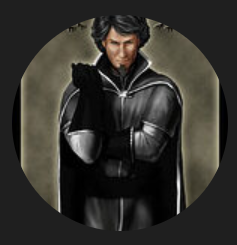
1. Tell us in fifty words who you are.
I’m Esko, a 40-year-old living in Espoo who will celebrate his birthday in September. My daily life goes into gaming and investing, alongside which I travel with varying activity. I hate the cold, so I have a second home in Spain. Although I haven’t had time to visit there yet this year—probably in November then. By nature, I am basically lazy and fond of comfort, so considering that, I’ve accomplished surprisingly much.
2. Tell us three things few people know about you.
When I was 14, I participated with my older brothers in a quiz show called Voitto kotiin. We won the first five quizzes, but our journey ended in the semifinals. The members of the winning team each got a car, while we each got 30 or 40 Ässä scratch cards, and I haven’t bought any Ässä scratch cards since. Nor a car.
When I was 6 years old, I went alone to open my first bank account at Säästöpankki with a piggy bank. Back then they weren’t as strict and the account was opened, but on my second visit I had to take my mom along to get the job done.
When retiring from the Finnish Centre Youth (Suomen Keskustanuoret), they commemorated me with a golden badge of merit. I am likely the only person who has received this recognition and lived in Helsinki the entire time of my membership (I moved to Espoo in 2017).
3. What interests and hobbies do you have besides investing?
Studying history and following society is clearly one long-term interest, as I even hold a Master’s degree in political history from the University of Helsinki. I originally got the spark for studying history as a little boy from Don Rosa’s comic book series The Life and Times of Scrooge McDuck.
Gaming across the board has always taken up a large part of my time. Over the years, this has included poker, board games, collectible card games, chess, computer games, the 8-bit Nintendo, and the 16-bit Sega Mega Drive. My nickname Farseer comes from Warcraft 3, which I still consider the best computer game in the world.
The third one is harder. I suppose long walks could go here as third. I often listen to either music, podcasts, or audiobooks while taking them.
4. What is a normal weekday like for you?
My days vary across the board depending on my sleep schedule and activities, but a normal workday might look like this:
I wake up on average around 12:30 PM, after which I quickly check the day’s main news and the status of my portfolio. After that, I Wolt some sushi home, and while waiting for it, I make a quick video about a current topic and upload it to YouTube.
After that is usually me-time, which I spend, for example, hanging out in the hot tub or playing computer games. I also often browse investment forums during this time. Around seven o’clock it’s good to eat a reasonably sized meal before the workday.
The best time to start poker tournaments is around 8:00 PM. Typically, I finish playing by two in the morning, depending slightly on tournament success and the duration of the final, slower tournaments.
After this, it’s good to go for a short night walk to clear my thoughts. And then to bed, where an episode of some trash TV series usually passes before falling asleep.
5. What are you like as an investor?
I often do things based on vibes and intuition. Like in the rest of my life, I am quite lazy as an investor and player, so sometimes things get left undone.
I am meticulous with numbers and try to focus my attention on raw numerical data instead of hype phrases and empty promises. With varying success.
I also try to find spots that others leave unused.
6. What is your investment history like?
I first followed stock prices in newspapers and teletext as a junior high schooler, inspired by an elective business course. Back then there wasn’t money to play with real money, but I did participate in some Kauppalehti competitions.
I opened a portfolio at Nordnet at the turn of 2008-09, but back then opening a portfolio took weeks and stock prices managed to rise 20 percent. That annoyed me so much that I didn’t go into stock investing at that point. Instead, I later put the money into a ASP account, because a risk-free and tax-free 5% interest rate was attractive.
A new attempt at stock investing came in 2017, when after filling up the ASP account I had a lot of money in my checking account. You can read more details about the journey from the Sijoitustieto blog, but naturally there have been successes and failures along the way.
7. What kind of portfolio do you have? How have you thought about your portfolio’s diversification?
The latest portfolio content update can be found here: Mitä sinulla on salkussa? - #4390 käyttäjältä Farseer . It is also open on Nordnet Social (formerly Shareville) under the username farseerfinland if you are interested in following it. My largest holdings at the moment are Citycon, Anora, and Duell.My geographical diversification is practically nonexistent, with 90% of my investments concentrated in Finland. Sector diversification, on the other hand, is quite good in my opinion. The challenge in recent years has been the poor performance of small-cap companies on the Helsinki Stock Exchange, which has made navigating a portfolio focused on them quite challenging. I have considered starting monthly savings in indexes outside of Finland and thus gradually diversifying my portfolio, but for now, it has remained at the planning stage.
8. Which two stocks did you sell last time? Also, explain your reasons for selling.
These are the two I trimmed most recently:
Vincit - about an hour after I bought this batch, the earnings report came out bad, and I quickly dumped it before it spiraled.
Saga Furs, the price temporarily rose to 16 euros and hit my next planned reduction level.
The most recent complete exits from the portfolio were Auroora (IPO shares bought for a quick profit) and Telia (the price rose to what I considered an expensive level).
9. How do you follow the companies already in your portfolio, excluding “quarterly earnings reports”?
I follow the news on Kauppalehti and Nordnet’s market news. I also follow company threads on the Inderes forum and Sijoitustieto. Around earnings season, I try to find a moment to review the portfolio companies’ latest figures. I also try to read annual reports, but I must admit that lately, that has been quite minimal.
10. What does your stock-picking process normally look like step by step?
I find a company with interesting valuation figures and start researching it more closely. If the overall picture looks good and I have money, I drop it into the portfolio. For example, in the case of Saga Furs last fall, the reason was a really strong balance sheet relative to the valuation; in Deutsche Bank years ago, it was ridiculously low valuation figures (P/E 5 and P/B 0.25); and in many stocks that have turned out to be duds so far, it was faith in a turn in the Finnish economy that would leverage the company’s value to new heights.
11. What are your three biggest strengths as an investor? What do you consider to be your biggest area for improvement as an investor and why?
Clearly, my strongest asset is my basic mathematical competence. I am very good at mental math and have the ability to read numbers quickly.
The second is a cool head. I don’t panic easily and generally dare to walk my own path.
The third strength is that I generally don’t assume things. If I don’t know something and consider it relevant—for example, regarding making an investment decision—I ask. It pays to learn from other people’s mistakes rather than paying for tuition fees yourself.
Biggest area for improvement: I should be more diligent and find new sources of motivation. By nature, I am really lazy, and anything that feels like work and doesn’t automatically come with a reward often gets left undone.
12. Tell us in about 100 words per company what you think of them as investment targets:
- Anora
The underperformer of alcohol companies. Anora was formed when a slightly bloated old Finnish state-owned company merged with another bloated old Norwegian state-owned company. They bought a Danish wine company at an overprice; hopefully, they won’t buy any more. Larsen’s cognacs sold at a high price. Despite this, it makes some positive profit. The valuation is still quite low, especially on a balance sheet basis, partly deservedly.
With proper streamlining and firing unnecessary mouths, the company could make at least double the profit. Probably vastly better. With good management and competent branding, you could certainly squeeze more margin out of Kossu, too. Would the owners wake up from Sleeping Beauty’s slumber and put a fire under the competent management? However, only a small part of the ownership is now held by state owners (about a 20% stake by Solidium).
- Citycon
The Catman’s stomping ground. A radically undervalued real estate investment company that has been driven from crisis to crisis by its main owner, and whose credit rating and stock price have therefore been driven into the dumpster. As a consequence, Citycon’s cost of external capital has risen too high.
Since G City / Katzman (The Catman) now owns almost 87 percent of the company, the question is mainly how well the remaining minority shareholders’ asses can take the seawater. Ilmarinen’s nerve didn’t hold; the pension insurance company surrendered under blackmail and abandoned ship, leaving only retail investors behind.
1.10 euros have been distributed in capital repayments, and there is authorization for 1.09 euros. The company’s financial situation is on shaky ground as a result of these, but the valuation is also extremely low. You won’t be bored riding with this company, but you should be prepared for disappointments. The Catman wants this company, and it may be that the “true” value of Citycon’s share will still be decided in arbitration.
- KH Group
One of the potential turnaround companies on the Helsinki Stock Exchange, where the turnaround for its previously largest holding only turned out for the worse: tens of millions of euros in write-downs were booked from the furniture company Indoor before putting the company into palliative care.
The company now consists of two pieces: KH Koneet, which rents and trades construction industry equipment, and the smaller Nordic Rescue Group, which focuses on the design and manufacture of rescue vehicles. The remaining businesses are on a healthy footing, but NRG apparently couldn’t be sold at a good price.
This company is also waiting big-time for the construction cycle to turn for the better. But as a traditional question, it must be thrown out: are the Swedish operations a blessing or a curse for this company?
13. What have been the most memorable moments in investing, and why?
Perhaps the worst nightmares are represented by Kamux’s negative profit warning issued at around 6:20 PM the day before the earnings release. I didn’t quite manage to dump the whole lot before the auction started, and that alone cost a grand.Perhaps the best thing about investing is the community meetups, well-organized events, and the people you meet there. Investing itself is often such routine basic grinding that it doesn’t easily leave lasting memories.
14. Which sectors and companies are you currently following particularly closely on the Helsinki Stock Exchange, and why? And conversely, which sectors do you avoid?
I don’t particularly monitor any specific sectors, but in principle, construction companies would be interesting here at the bottom of the cycle if sustainable positive news were to emerge.
Among individual companies, I find Lindex and Aallon Group perhaps most attractive outside my portfolio. But since my chips are already in the stock market, I can’t be bothered to actively look for new targets.
Currently, I am avoiding bank stocks. Their valuations on paper look reasonable except for the P/B ratio. But we haven’t seen even the hint of a banking crisis in several years. When the crises and the war in Ukraine eventually end, it will once again be easy to guess that accumulated bills will be pinned on the banks. The current supercycle for banks will not last forever.
15. You play poker (Farseer’s poker blog: 2026), could you tell us about your gaming history and what role it currently plays in your life?
I have been playing poker for over 20 years; I played my first online poker games in 2004 or 2005. Slowly, a profitable hobby became my main source of income, and already by 2009, most of my income came from poker. My volume of play has been quite small, and my main game is tournaments, mostly Texas Hold’em but also Pot Limit Omaha and Omaha Hi-Lo. I play live poker tournaments when I win tournament packages for them, usually 2–5 times a year.
I have accumulated around one million euros in profit from gambling over the years. But of course, it’s not a huge sum when divided by the years played. However, poker has been a good “profession” because it has been flexible with my studies and energy levels. Currently, I’m trying to put in the hours, but it has proven difficult. I am such a strong mood player that when I’m not in the mood to play, nothing really comes of it. And on the other hand, financially, I no longer have the same hunger for the games.
16. You have made good investment-related videos for your YouTube channel (https://www.youtube.com/@FarseerFinland/videos). What motivates you to make videos, and what does making them give you? And what kind of videos can we expect in the future?
I have been blogging about various topics for 20 years: mostly poker, investing, or politics. Writing and recording things have thus sort of come naturally to me. Making YouTube videos started as an experiment a few months ago when I was gripped by second-hand embarrassment and posted my first video at the end of March.
Perhaps the underlying idea here is also that you get more out of reviewing companies when you post your thoughts and get feedback on your views. Previously, I have only made text-based blogs supported by images, so it’s exciting to see if there would be demand for such “low-effort” video material.
Back in the day, I dreaded making YouTube videos for three reasons: I was led to believe that making a good 10-minute video takes 8 hours. Who has time for that? The second reason was second-hand embarrassment and the feeling that these videos wouldn’t contain anything new. And the third reason was that I hated listening to my own recorded voice. I’ve become quite desensitized to the latter two, as the feedback has been overwhelmingly positive.
Here we are still going with the mindset of “throw things at the wall and see what sticks.” Meaning, testing what kind of content works and, on the other hand, what is fun to make.
17. Do you have euro-denominated or percentage targets for investing? And how do you utilize or plan to utilize your accumulated wealth in your life?
Previously, I had a tongue-in-cheek one million euro goal in my blog, which at least didn’t materialize within that timeframe. Nowadays, I have had a goal to achieve a 7 percent return on stock investments after taxes and fees across the cycle. I am currently somewhat behind that for the first 9.5 years.
Financial independence has always been important to me. I don’t want to be in a situation where I am financially dependent on others. I try to spend money in a way that provides good value, an easier life, and nice experiences. I have tried to reduce buying things that accumulate in corners, as I’ve noticed many items haven’t been used in the long run. But it is also important for me to have the financial ability to detach from everyday life for even a longer period if I want to.
18. How do you manage your emotions in investing so you don’t fall prey to FOMO, for example?
You can’t manage emotions themselves, but you can try to manage their impact on your actions. FOMO strikes occasionally, but when you look at a company’s figures and realize that its valuation is completely absurd, it often disappears quickly.
And on the other hand, many things don’t need to be decided immediately. Although Paavo Väyrynen’s political catchphrase “I’ll sleep on it” has been laughed at, I’ve noticed it suits many things.
19. Alokas has noticed that you have a good skill for scanning companies quickly and aptly. You are good at picking out essential observations quickly anyway. How do you succeed in that – could you give a few tips?
Some of it stems from having a good head for numbers. But things can be learned. When doing rapid analysis, it’s worth trying to focus on the essentials and leave out non-essential ESG text and other background noise.
On the other hand, it’s a strength if you are able and willing to analyze companies in depth. And at this point, I’ll point out that if you don’t know something, it’s no shame to ask. You often get an answer quickly from the forum, and most of the time it hits the mark (or gets corrected by others).
**20. Who would you like to thank Inderes and its Forum for?**I would like to thank Inderes for the pleasant past events and the forum for the good content and active users. Of course, there would be room for even more active users. Up-to-date information on corporate events can often be found quickly here.
And see you at the user meetup on July 25th, do come along in numbers at least to Teerenpeli!
Thank you very much Farseer!
I would also like to thank Farseer for his answers as well as his blogs, videos, and activity on investment forums.
The Finnish investor community needs contributors like Farseer who explain investment matters clearly and focus on the essentials without unnecessarily difficult expressions or getting bogged down in minor details.
Thank you and have a great Friday!