173. Aki Pyysing
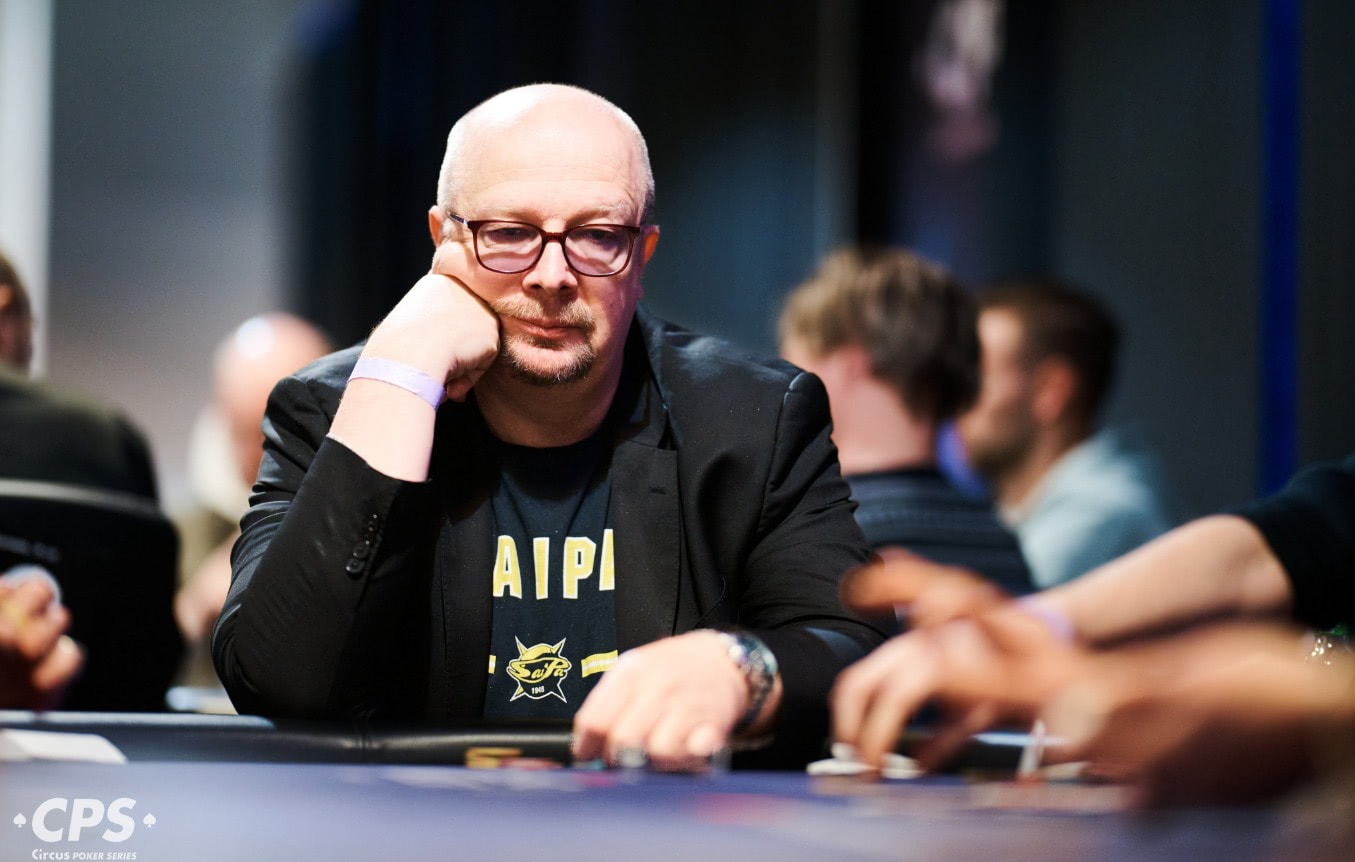
If you don’t know who Aki Pyysing is, you haven’t been following the Finnish investing world very closely. He is a familiar figure to many—first and foremost as an investor, but certainly also as a poker player.
Aki has undoubtedly become familiar to many through Sijoitustieto.fi, where he is a shareholder and founding member. Many of us—including myself—look forward every Sunday evening to his new column, where he discusses current investment-related themes in an engaging and humorous way.
As an investor, he is an independent and courageous thinker who doesn’t easily jump on any hype trains, instead making quick and reasoned decisions—against the grain when necessary. It feels like he handles setbacks with a relaxed attitude and appropriate humor, while definitely learning from his mistakes. His poker skills and lessons are clearly reflected in his investment activities in a very positive way.
1. Tell us in fifty words who you are.
I am a 58-year-old M.Sc. (Econ.), private investor, and winding-down poker professional. Born 400 meters from Kisapuisto, so I support SaiPa until sand treatment, even though I moved from Lappeenranta to Helsinki 40 years ago. Two divorces, yielding two adult children from the A-series and one from the B-series.
Nowadays, a Savonian common-law wife who has taught me to understand Savonia and Savonians a bit more for over a dozen years now.
2. Tell us three things that few people know about you.
I have watched all seasons of Murdoch Mysteries.
I have engaged in buck-fighting (pukkitappelu) on the railing of the 7th floor of Vaasis.
Even though I am a four-time uncle and a simple grandfather, I still support equality.
3. What interests and hobbies do you have besides investing?
Gym, armchair sports, literature (both fact and fiction), TV series, movies, documentaries, museums, art exhibitions, domestic and foreign travel, live and dead music came immediately to mind. People from South Karelia are a curious bunch and interested in almost everything except giving others a chance to speak.
4. What is your typical weekday like?
I wake up around noon. I eat breakfast, check stock prices, other news, and messages. A couple of hours after waking up, I go to the gym. Upon returning, I take care of errands, try to finish reading the papers, and look at the screen a bit. For the night, I go play cards if I have the energy and nothing else is scheduled. Going to sleep by 4:00 a.m. at the latest.
5. What kind of an investor are you?
I diversify a shameful amount nowadays, but I endure the shame by making some trades almost every trading day.
But I’m a fundamental guy at heart, and I use technical analysis mostly as entertainment. I’m not afraid of using debt or selling at a loss.
6. What is your investment history?
I started speculative stock investing in 1986. I worked at HSSP from 1988–1992 and took out as much debt as I possibly could, which was quite a fair amount back then. I nearly went spectacularly broke in the early 1990s. Things have gone better since the floating of the markka. I ran a small independent asset management kiosk from 1992–1995.
7. What kind of portfolio do you have? What are the two largest holdings in your stock portfolio, and why are they the largest holdings in your portfolio?
Lots of different stocks and some debt instruments as well. The largest holding in the portfolio is currently Citycon and the second largest is Ovaro, where I am also on the board. They are my largest holdings because I am so stupid. Furthermore, my interest rate outlook in 2022 was dead wrong.
8. What is your normal stock-picking process step by step?
I buy a little based on some random criteria and then research more. Sometimes I piggyback on friends. Though there aren’t very many people in the world whose picks I take semi-blindly. If any, really. I do at least a five-minute quick analysis of my own first, if at all possible.
9. What are your three best traits as an investor? And what do you see as your biggest area for improvement as an investor?
I don’t FOMO, not at all, and I dare to make quick, even major decisions against the mainstream view. And I don’t cry over spilled milk. Well, not very much or very often anyway  .
I could always do my homework better. Or even glance at some of it. Back in the day, I regularly missed earnings reports of even big companies. Fortunately, nowadays there is staff to monitor both earnings reports and my other endeavors.
10. Tell us in about 100 words per company what you think of them as an investment
- KH Group
@0.47 Good risk.
- Kojamo
@9.55 should meet a 10% return requirement, but not much more.
- Ålandsbanken
@47.40 Surprisingly well-managed bank.
From a hundred words: Too acidic.
11. Mention at least two most memorable moments related to your investment career. And justify why those particular moments have stuck in your mind.
- The bank manager ran after me after we had already agreed on a 500,000 markka investment loan with personal guarantees. “Do you boys want 600K, the authorizations would cover it?” Of course the boys took it.
- I was in Barcelona on a poker trip when I woke up in the morning to Technopolis’ tender offer. I sold everything (= for many megas) because it was a bit higher than an already good buyout offer price and then started walking toward the casino. I certainly didn’t play that year’s main tournament particularly well.
**12. What do you expect from Hesuli [Helsinki Stock Exchange] for this year? What sectors are you following especially this year, if we look outside of Hesuli as well?**A slight rise, which isn’t coming across the board evenly. Now is the time when stock pickers are separated from berry pickers. I have often turned out to be a berry picker myself.
I especially follow small-cap companies in industries that I think I somehow understand.
13. Even if one didn’t know much about poker (like me), people know you to be a competent poker player. Could you tell us what your poker career has been like, and how much you play nowadays? And as a follow-up question, how has playing poker affected you as an investor?
I have played poker for money since 1975 and professionally since the spring of 1995. At times, the income from poker has been quite significant financially. Nowadays, I play so small relative to my wealth that my financial well-being hardly depends on poker. My mental well-being, however, might well depend on it. I hate losing more than my own bad decisions, and I make several of them in every gaming session.
During the poker tournament weeks I participate in (about a dozen a year), I play every day and semi-long sessions (=8-10h). On weekdays, I can be bothered to go play perhaps a couple of times a week, but there is a lot of variation. Helsinki’s monopoly casino responded to the competition from illegal card rooms by raising the rake(!) and, annoyed by this, my games at Casino Helsinki have decreased radically.
Being a poker professional has improved me as an investor radically.
14. You graduated with a degree in accounting and finance back in the day; did you get any genuinely useful teachings and knowledge for your investment activities from the business school back then?
Scantily between 1986-1994. Sure, the basics of finance and accounting were very useful, but my advanced lessons in stock investing were acquired in the Vaasankatu student dorm. The first investment-savvy assistant professor at HKKK (Helsinki School of Economics) that I ran into, namely Vesa Puttonen, reviewed our master’s thesis in 1994 and introduced, among other things, the options course. Which I took the exam for without reading, because I had been slinging aggressive options trading for several years already.
15. If I remember correctly, you’ve also been a diligent gym-goer over the years, so as an avid trainer I’d like to ask what kind of personal records you’ve hit at the gym, and how much you train nowadays?
I played my last season of American football in 1996 and was in my best gym shape back then. Deadlift 210, clean 115, and squat 170 remained my tops.
My bench press record of 107.5 kg was achieved a couple of years ago when I warmed up to try a one-rep max after a couple of decades hiatus. I blame my weak bench press result on long arms and a non-existent arch.
I go to the gym when healthy and when in the country about five times a week. However, most of the time is spent on the stationary bike reading magazines, and I use more time for stretching than for actual light-weight rattling.
16. Could you tell us in about 200 words generally about Sijoitustieto.fi, and also what you have gained from it for yourself, for example regarding investing or even something else?
Lots of analyses, raw tips too, and new investing buddies. Sijoitustieto is an ideological project for me. But without Sijoitustieto, I would have, among other things, missed shorting silver completely last week and buying Intrumin from the bottom(s) as well. Selling silver @113 and buying @80 felt good in the gut. Perhaps partly because it was, as I recall, my very first commodity trade ever.
17. What would today’s Aki say to the Aki who is just starting out in investing?
Investing is not a sprint, even though it’s a 400-meter hurdles race.
18. What goals do you have for investing nowadays?
If one were to try to double their wealth every decade just doing it half-heartedly. Mostly for entertainment and competitive sports reasons. One has to tinker with something so as not to become an alcoholic for good.
19. A rookie is bad at many things as an investor, especially timing. What would be three good tips for him so that he wouldn’t cut his winners short and let his losers run in the future - at least not so much?
By no means set any return targets. That is precisely how you end up cutting winners short.
Partial solutions are good if you can live with the fact that some will definitely go wrong.
As a fundamentalist guy, I wouldn’t start setting any stop-losses either. A price drop ceteris paribus is a reason to buy. Of course, if the price drops, there is reason to challenge your original analysis. Was it definitely justified or just fomo?
20. Who do you want to especially thank from the Finnish investment community and the Sijoitustieto gang?
In Finland generally and Sijoitustieto specifically, valuable information is shared extremely willingly and for free. And hyping one’s own stocks plays a surprisingly small role. Of course, a hype-free investment discussion forum does not exist.
Thanks to Aki for the interesting answers! 
Aki seems to have a suitably relaxed approach to investing - no unnecessary fuss and panic. In addition, he seems to have a great knack for handling his losses, which has surely helped him succeed as an investor - he doesn’t dwell and repeat his mistakes… at least not as much as fuzzers like me  .If I could follow even a little bit of these tips given by Aki, they would certainly show in my returns, especially in the long run:
19. A novice is bad at many things as an investor, especially timing. What would be three good tips for them so that they wouldn’t cut profits and let losses run in the future - at least not by that much?
Absolutely do not set any return targets. That is precisely how you end up cutting profits.
Partial solutions are good if you can live with the fact that some of them will definitely go wrong.
As a fundamental guy, I wouldn’t start setting any stop-losses either. A drop in price, ceteris paribus, is a reason to buy. Of course, if the price drops, it’s worth challenging your original analysis. Was it truly justified or just FOMO?
Thanks everyone and have a great Friday! 