162. Timo Lappi
Today I had the pleasure of publishing an interview with Fondia’s CEO Timo Lappi, who radiates enthusiasm and a clearly entrepreneurial mindset.
It was wonderful to see how Timo has come to the Forum to interact with investors. Through his interviews and engagement on the Forum, I have noticed that his strengths include relaxed, convincing presentation skills and a genuine friendliness toward investors. 
Based on my impressions, he is also a visionary, analytical CEO whose calm confidence, deliberation, and genuine interest in people inspire trust all around him. His attitude and “story” are certainly inspiring, and he seems to have just what Fondia needs right now—especially in terms of a certain “growth-oriented mindset” and versatility.
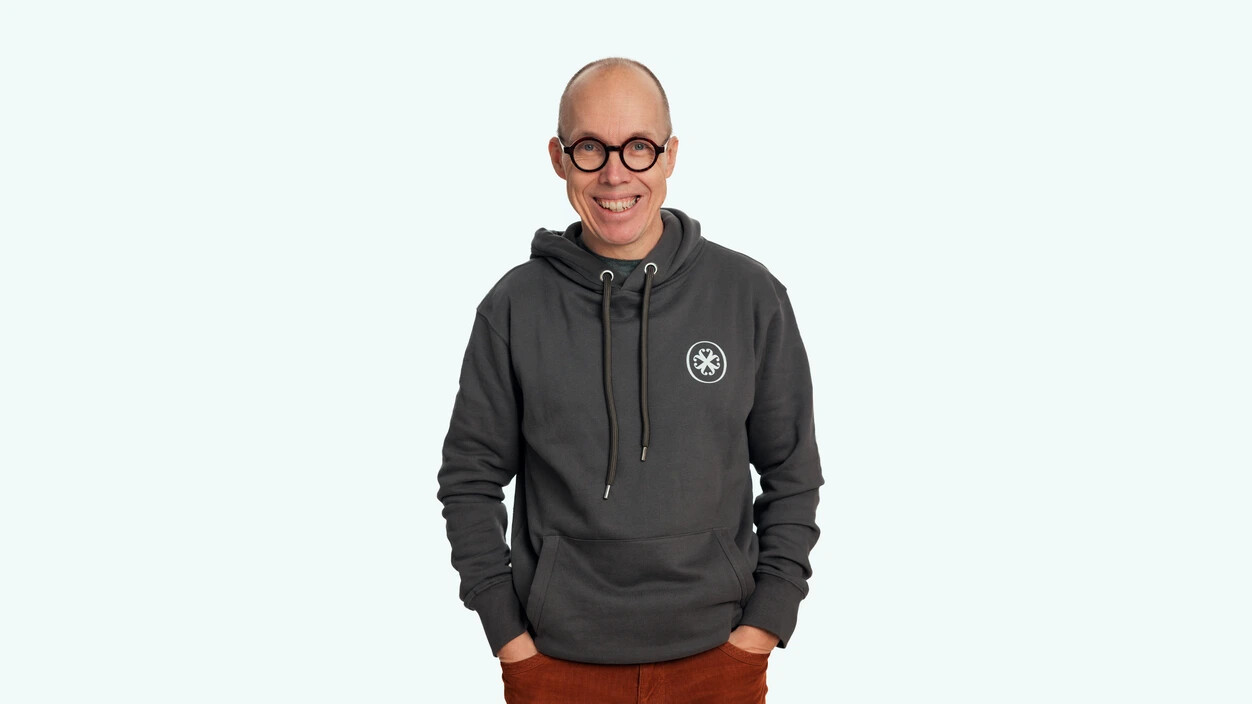
1. In fifty words, tell us who you are.
I am Timo Lappi, and I serve as the CEO of Fondia. Professionally, I describe my identity with the word Lawyerpreneur. It means a combination of a lawyer and a growth entrepreneur.
I live in Töölö, Helsinki, with my spouse and our dog Pulla. My three twenty-something sons are studying business and have already moved out on their own. In my free time, I recharge my batteries through sports, the company of friends, reading, and music.
2. Tell us three things about yourself that few people know in public.
First, I am the black sheep of my family. My grandfather was a doctor, both of my grandparents were doctors, my parents are doctors, my brother is a doctor, my cousin is a doctor, and my uncle is a doctor. I am the only lawyer in our family. I made the decision to aim for a career as a lawyer already in high school and have always felt at home as a lawyer.
Second, few people would guess from my outward appearance which sport I have won a Finnish championship in. The answer is: weightlifting, in which I won gold about ten years ago in my age and weight class.
The third is something some may already know, but I hope even more would know. I recently finished the book “Osakeyhtiön johtoketju” (The Chain of Command in a Limited Company), published by Alma Insights. It is about how a limited company’s shareholders, board of directors, chairman, CEO, management team, and personnel can best collaborate, avoid conflicts, and move in the same direction. The book contains many stories and is based on my own experiences in various roles within limited companies. Writing the book was a very interesting way to develop my own thinking.
3. What interests and hobbies do you have besides investing?
I believe in lifelong learning. Therefore, I actively read books and follow the events around me. Both fiction and non-fiction can teach you to look at things from new perspectives.
On the one hand, I get my energy from exercise, and on the other hand, it is the best way for me to unwind. It is also a way for me to meet friends during morning workouts involving weightlifting, swimming, and indoor cycling. Many thoughts have crystallized for me during a long run without company or music.
4. What is a typical weekday like for you?
My alarm clock starts the day shortly after 6:00 a.m. Unless I head straight to a morning workout upon waking, I start my workday at home with tasks that require quiet concentration. The quiet morning hours are the best for that.
I usually head to the office by 9:00 a.m. Almost every day, I remember to enjoy the fact that I can walk my roughly fifteen-minute commute. At the office, I spend most of my time meeting other people. That is at the core of my work, because I believe a good leader succeeds in their job when they make others around them shine.
I usually leave the office around 6:00 p.m. Unless I have evening plans, I might head out for a run. And before the lights go out, I spend the last hour of the day reading.
5. What are you like as an investor?
I don’t think I’m a good enough investor. I am quite impulsive and get excited about things quickly. My main job takes up so much time that I don’t have enough time to delve into investment targets in a sufficiently long-term and careful manner. Therefore, I only make relatively small investment decisions entirely on my own.
We operate with a more long-term perspective together with my asset manager. Together, we have drawn up a long-term investment strategy that we now follow. It brings a new kind of discipline to my investing. My investment horizon is long, which gives me the confidence to take on and tolerate risk. The equity weight in my investments is very high.
6. What is your investment history?
I have always been interested in stocks. Even as a student, I occasionally traded Finnish stocks. I have basically been a “buy and hold” investor. I have traded stocks quite rarely and steadily built up my stock portfolio.
About ten years ago, I started working with an asset manager. Since then, I have systematically saved for investments. It’s not as exciting as direct stock picking, but it’s smarter for me.
7. What is your work history?
I studied at the Faculty of Law and the Faculty of Business at the University of Helsinki. After graduating, I headed into the legal profession, working as an attorney dealing with mergers and acquisitions, private equity, technology companies, and general advisory for growth companies. I really liked my job and wasn’t looking for anything new when I heard about a startup in my own industry that was looking for a Co-Founder.
I transitioned from the legal profession to Fondia, where I worked as CEO and in other management roles for a good ten years. Shortly before Fondia’s IPO in 2017, I moved on as founder and CEO to build a “healthcare Fondia,” namely Heltti, in the occupational health and therapy sector.
At the beginning of this year, I returned to Fondia, initially as interim and later as permanent CEO (if permanent CEOs even exist in listed companies). I have a feeling that I have returned to a familiar industry, a beloved company, and a very interesting role.In addition to serving as Fondia’s CEO, I also act as the chairman of the board in a few interesting growth companies, namely Heltti Oy, Linio Biotech Oy, Nordic Business Group Oy, and Witted Megacorp Oyj.
8. What kind of portfolio do you have, and what are its largest holdings?
My portfolio was originally an investment advisor’s nightmare because it was so poorly diversified. My largest holding is Fondia’s shares, which I own through my company Sijoittamo Oy. In addition, I have invested a six-figure sum in the shares of Witted Megacorp Oyj. I serve as the chairman of the board of Witted.
Since then, together with my asset manager, I have gradually started to diversify my investments. We have built a well-diversified portfolio of American stocks. In addition, I have invested in Venture Capital, Private Equity, and real estate funds.
9. What does your stock-picking process normally look like step by step?
This is an area where I have a lot of room for improvement. I haven’t managed to build a systematic stock-picking process for myself that I would follow. Instead, I might get excited about a company, for example, based on a magazine article or discussions on the Inderes forum. After that, I familiarize myself with the company in more detail, following which I might make an investment decision. For example, right now I am interested in getting to know Framery and its IPO better.
10. Describe in three hundred words what kind of company Fondia is?
Fondia is a business law service company operating in the Nordic and Baltic countries, offering companies ongoing legal services (Legal Department as a Service, LDaaS) as well as traditional legal assignments. Fondia’s core idea is to make law more accessible, predictable, and business-supporting for companies. The company stands out in the market particularly through its service model, which combines the availability of an in-house lawyer with the expertise of a traditional law firm.
The LDaaS model is based on a monthly-billed, long-term partnership. It offers clients a stable and predictable way to handle legal matters without or in support of their own internal legal department. The model generates recurring and relatively predictable revenue for Fondia, which reduces the cyclicality of project-driven work. At the same time, it enables a deep understanding of the client and long-lasting relationships, which are among Fondia’s key competitive advantages.
Fondia has an established position in Finland as a strategic legal partner for medium and large companies. The company also has offices and teams in Sweden, Estonia, and Lithuania. The service portfolio covers key areas of business law such as contract law, corporate law, labor law, data protection matters, intellectual property rights, and corporate transactions.
Fondia aims to be the market leader in continuous legal services in the Nordic and Baltic countries. This is achieved by making client work more efficient, improving the employee experience, commercializing the revamped LDaaS service, and agilely adopting Legal Tech tools. The company invests in efficient, scalable operating methods and is a pioneer in its field in the application of Legal Tech.
From an investor’s perspective, Fondia is a service company that generates stable cash flow, whose competitive advantage is based on long-term customer relationships, a scalable service model, and a strong corporate culture.
11. What do you enjoy most about your work? What is the least enjoyable part of your work?
I enjoy most in my work the moments when, together with the team, we succeed in some important project. For example, winning a new customer for Fondia or successfully closing a new key person joining the team. I have also greatly enjoyed the international aspect related to my work. This autumn, for example, I have spent a lot of time with Fondia’s Swedish team.
The least enjoyable part of my work are situations where interpersonal conflicts within my own organization need attention. In my experience, these exist in all organizations. The most important thing is to address them quickly and decisively if they are observed.
12. What do you consider to be the company’s most important long-term growth drivers? And what factors do you see as the biggest risks on the path to the company’s (and the share’s  ) success in the future?
According to recently published information by Talouselämä, Fondia is the 9th largest law firm in Finland. According to in-depth interviews conducted in connection with Fondia’s strategy process, a corresponding place exists for a company like Fondia in the markets of the other Nordic and Baltic countries as well. If Fondia were to achieve its current Finnish market share in these other markets as well, Fondia would multiply its revenue. This is the biggest driver of Fondia’s revenue growth. The biggest driver for increasing profitability, in turn, is making client work more efficient.
The regulation concerning the operating environment of businesses is constantly changing and increasing. This also increases the demand for legal services.
On the other hand, the biggest risks are people and technology. Fondia’s business relies heavily on the professional skills of Fondia’s lawyers and other key persons. Fondia actively wants to hold on to these people. Losing people in the team would pose a risk to the business. The second risk is technology, which I have commented on in more detail below.
13. What are your three best traits as a CEO? And what do you feel is your biggest area for improvement in this role? 
My three best traits are a deep understanding of the industry and a lawyer’s work, an understanding of numbers, and communication and people skills. Areas for development, on the other hand, can be found in focusing and prioritization. I should know how to say no to more things in order to advance the things in focus even more effectively.
**14. When talking about employee satisfaction, many companies measure and talk about it, but fewer succeed in turning results into actions. What is a concrete thing Fondia does differently than competitors in improving employee well-being? A follow-up question as well - doesn’t making such a change generally take a long time – even years, and how can we trust that if employee satisfaction is raised, it will stay there and no longer fluctuate?**Right from the founding phase, one of Fondian’s strategic goals was to create the best workplace in our industry. In the 2010s, we participated in a study by the Great Place to Work Institute, which named Fondia the best workplace in Europe in the legal services sector. Unfortunately, this is not the case today, and we still have work to do in improving our employee satisfaction.
Fondia’s best asset in improving employee satisfaction is that we do not operate in a traditional pyramid-shaped partnership organization where our staff would be divided into partners and other personnel. We operate in a more non-hierarchical and informal manner. With us, all lawyers get into direct contact with clients, which helps them develop faster and makes the work more meaningful. I believe that, at the end of the day, employee satisfaction is best improved by focusing on the actual work tasks rather than wellness days (tyky-päivät) and soda machines. By ensuring that lawyers have a sufficient amount of sufficiently interesting client work.
Having returned to Fondia after an eight-year hiatus, I noticed that our corporate culture had rusted a bit. I strongly believe in corporate cultures, and I also believe that corporate cultures are ultimately the responsibility of CEOs. Changes do not happen quickly. I am prepared to work for the long term to repair our corporate culture.
Building a good workplace is good business. Satisfied lawyers perform better. This ensures that the development of employee satisfaction will remain at the core of Fondia in the future as well.
15. AI has already changed many industries – at least to some extent. How do you think the spread of artificial intelligence in legal services will affect the role of a lawyer and the creation of client value over the next five years? Are you afraid that international players with their resources and more modern AI systems will take your clients away from the negotiating table?
The legal industry is currently in an interesting situation as Legal Tech applications are changing the work of a lawyer. People I know have very different perspectives on this change: some expect Legal Tech applications to soon handle a large part of lawyers’ work. At the same time, others, like one of Finland’s leading artificial intelligence experts whom I listened to a couple of weeks ago, state that the previous technology transformation from pens and papers to computers was actually greater than the AI revolution now dawning.
I believe that lawyers will get good tools from Legal Tech applications to handle routine tasks. We human lawyers will still be needed in the future, and these Legal Tech applications are good news for us. When machines handle routines, we can use the time thus saved for more demanding and interesting work. A law firm recently published a press release stating that Legal Tech applications have freed up an average of 16 hours a month for its lawyers to be used for new purposes.
I believe that this upheaval will challenge traditional partnership-structured law firm models. Sweden has provided a good example of this when Axcel Partners bought a majority stake in six Swedish law firms, whose lawyers resigned from the Bar Association as a result of the arrangement. Axcel has announced that this new company named AGRD Partners will actively invest in Legal Tech solutions. I am following this development with interest.
16. Sweden is Lextopia’s first market. Why did you start there, and do you see the possibility that this so-called “internal startup model” could also work for Fondia as a way of expanding into other countries?
I have spent a lot of time this autumn following the situation in Sweden. In my view, the Swedish legal services and Legal Tech market is ahead of the Finnish market. For this reason, we wanted to build our internal startup called Lextopia in Sweden.
The internal startup helps us be faster and more agile as we pilot various AI Native legal services. Such AI Native services could very well be low-threshold services with which we could also start exploring new countries.
17. What would today’s Timppa say or/and teach to the Timppa just starting his career?
He would say “loosen your tie”! At the beginning of my career, I focused on being a 100% sharp lawyer at work, and then took it easier in my free time. Later, I learned that the more you let your own personality show at work with colleagues and clients, the better the connection you create with both the team and the clients.
18. Why do you invest? What goals do you have regarding investing?
I invest because it is interesting and educational. In investing, the annual return is a concrete metric with which you can evaluate what you have learned and how you are doing relative to others. When you invest, you automatically stay interested in the trends and companies around you.
Of course, I also invest to gain financial security. My goal is for my investments to bring me financial independence before long.
19. Alokas is perhaps overly cautious and security-seeking in life, how could Alokas dare to take the plunge and take appropriate risks like you, so as not to get too stuck in the familiar and safe?
Thank you Alokas for the good question! In my own life, my biggest financial risk-taking moments have been related to times when I have left behind employment and become an entrepreneur. I have done this three times so far. I always remind myself at those times that usually fear is a sign that good and interesting things are happening.
In addition, before new ventures, I go through in my mind what is the worst that could happen if the venture went wrong. Usually, it’s not very bad. Once you have gone through this mental exercise, failure is no longer so frightening.
20. What do you want to thank Inderes and the Inderes Forum for?
I have long been a fan of Inderes, which has boldly renewed the practices of its own industry. One good example of that is the Inderes Forum.
Thank you to the members of the Inderes Forum. I have drawn a lot from the comments and questions of other members, both as an investor and nowadays also as the CEO of a listed company._________
Thanks, Timo!
Great to have investor-friendly Timo here on the Forum. I always find it somewhat reassuring and trust-inspiring when a company representative comes down to the Forum, as it often indicates that the person trusts their company.
Many companies organize expensive events for dozens of people, but on the Forum, many companies could get free visibility while potentially reaching even thousands of readers.
Fondia’s story is at an interesting stage, and I believe that under the leadership of a CEO like Timo, the company might reach its potential.
Have a great Friday, everyone!