150. Svenne Holmström
Svenne is definitely one of the best “investor teachers” out there. He is also an investor influencer in the very best sense of the word. 
Svenne is a true expert and professional in the field, and on top of that, he has an excellent way of explaining and teaching things so that there are no misunderstandings, while genuinely helping people learn to act for the long term and make smart decisions.
I felt it was important to have him as my interviewee for many different reasons, and by no means just because of his position. He’s a great guy with versatile and extensive experience in these matters, but he also has the skill to pass on his expertise in a useful way to the rest of us.
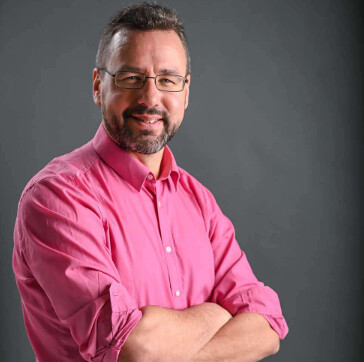
1. Tell us in fifty words who you are.
I am Svenne Holmström, 46, a long-term investor and financial sector professional. I worked with investments in banks from 2002 to 2017, and since then I have worked as an investment educator in my company Ghost Investor and, starting in 2025, as the Chairman of the Finnish Shareholders’ Association (Suomen Osakesäästäjät). My life largely revolves around investing, as it is my favorite hobby and greatest interest. I have been active as an investor since 2000.
2. Tell us three things about yourself that few people know.
a) I am a devoted Saab enthusiast, even though I don’t currently have a Saab in the garage.
b) I have the fastest car in Finland because I am always first in the car queue (without driving under the speed limit, however).
c) I live in Karjaa, which is a peaceful locality close to big cities.
3. What interests and hobbies do you have besides investing?
I enjoy kayaking because I love the sea and otherwise like being in nature. I also occasionally go orienteering. We also have a caravan, so we are caravanners.
4. What is a normal weekday like for you?
An entrepreneur’s life is quite varied, and no two days are really alike. Work follows the school year, and days are long in the spring and autumn because I teach several times a week either online or somewhere in Finland. During the day, I do other work and meet clients at my office unless I am on a business trip. I sit on many boards of directors and attend meetings there quite often, too. Quite a lot of time goes into producing and developing educational materials. My workweek is usually six days long, but as a counterbalance, I can take mostly a month and a half off in the summer.
5. What kind of investor are you?
Mostly a value investor, but partly a quality investor as well. I am very patient and do not trade actively. Stock investing gives me the biggest kicks, but despite that, I have also invested in mutual funds and ETFs, as well as a few investment properties. I value stability and do not strive for rapid wealth accumulation. I avoid growth companies because my thesis is that I only find them when everyone else has already been talking about them for years. By then, there is only limited upside and plenty of risk left.
6. What is your investment history?
I started in 2000 with just a few hundred marks of summer job earnings into mutual funds, but my actual investing began in 2002 when I got a job at Nordea after school. In the beginning, I bought quality stocks, but I was much too impatient as an owner. Then came that familiar experimental phase when you want more, faster. You had to trade, specifically with warrants. I could have skipped this phase, and I advise everyone to avoid trading. Few succeed at it, and I didn’t either.
I went into the financial crisis using roughly a one-stock strategy, and it proved extremely costly. I had far too many stocks relative to free liquidity. This wasn’t wise, and I made numerous mistakes. Having learned from this, I have since tried to operate much more systematically. I have diversified my portfolio, nothing is allowed to dominate the portfolio, and I am much more disciplined across the board. That has also yielded good results, meaning the old wisdom “follow your investment plan” works extremely well.
Along the way, I have also invested with leverage, but nowadays I am cautious even with that. I want to build my portfolio so that there is no major risk of losing large sums, except during major recessions when everything goes down. With over 20 years of investment experience, I can say that compound interest works.
7. What is your work history?
I started at Nordea in 2002 and spent a few months at the cash desk, after which I became a personal bank advisor. I specialized in investing because it was close to my heart. In 2005, I moved to Aktia Bank as an investment advisor, where I advanced to investment specialist and manager. In 2012, I was promoted to branch manager in Ekenäs (Tammisaari) and was also given the secondary role of heading investment operations for the entire Western region (from Turku to Kirkkonummi). From 2016 onwards, I focused solely on that.
However, the banking world changed a lot in the 2010s, and in 2017 I no longer wanted to be part of that change. I stepped down from my job as sales manager and founded my company Ghost Investor. Since then, I have trained over 10,000 people and given countless expert presentations. Now I do work that I truly enjoy.
8. What does your portfolio look like? How have you thought about your portfolio’s diversification?
The portfolio currently has about 40 investment targets, with the largest representing about 7% of my assets. I want to diversify broadly, and it hasn’t eaten into returns. Almost all of the stocks pay dividends. I value dividends, but the dividend yield doesn’t have to be high. I have also paid a lot of attention to sector diversification; no single sector is allowed to dominate. The largest sector currently is the financial sector with a share of about 17%. As for funds, I have included options that I don’t bother with or can’t invest in directly. About half of the portfolio’s total value is in mutual funds and ETFs.
**9. What are the last two stocks you bought for your portfolio? Explain your reasons for the purchases.**Oma Säästöpankki at around €9. Reputation as an investment is largely lost, which is reflected in the price. I don’t believe the savings bank foundations will sell at this price, as the stock is significantly undervalued. However, the vast majority of the misconduct and problems are surely already uncovered, and the company can gradually refocus on its core business, which is on a fairly healthy foundation. I believe the bank will take less credit risk in corporate lending from now on. It will take time for investor confidence to return, perhaps 2–3 years. During that time, I will receive dividends and the potential feels good.
Proximus at around €7.50. This is a Belgian telecom operator. The quality seems comparable to Telia, and the stock is really cheap, but for a reason. I think it has been beaten down too much. The business is profitable, the company is the local market leader, and changes in its operations are slow. I didn’t buy the company based on growth opportunities, but in the hope of the undervaluation unwinding. This might take a few years, after which I will exit.
Both were bought in April–May 2025.
10. What is your stock-picking process normally like step by step?
The process has three stages.
-
Fundamental analysis. What the company does, and what the financial statements look like. To pass to the next stage, the company’s fundamentals must be in order. That is, the company must be profitable, preferably pay a dividend, not be overly indebted, and its sales and earnings must be growing. You don’t always get everything, but I won’t let wild guesses through to the next stage, no matter how much they are hyped on social media.
-
Ratio analysis. Is the company cheap or expensive, how efficiently does it operate, and what is its growth like? I follow traditional ratios such as P/E, P/B, P/S, and ROE, as well as the net debt-to-equity ratio and the equity ratio. Since I am mainly looking for undervalued companies, the company should be cheap or reasonably priced according to its ratios.
-
Technical analysis. I follow moving averages, RSI, MACD, sometimes I draw Bollinger Bands, etc. But the idea is that I don’t buy during a downward trend, but on an upward one. The best returns are made when there is hardly anything wrong with a company, but it is still shunned by investors because the industry or the company is boring, and the selling pressure has ended. I look for signs of a nascent upturn. Technical analysis serves as decision support, not a driver.
11. What do you think are the three most underrated valuation multiples? Justify your choices.
P/B and P/S are by far the most underrated. I know many prefer EV over P, and I use them myself sometimes. However, my screening software allows me to see how these have evolved day by day on the same chart as the share price. They show quite well when a company is over- or undervalued. Of course, you also have to take into account changed profitability and growth, but still, these work really well, at least in my own work.
With their help, I’ve avoided stepping into many traps. I can’t think of a third one off the top of my head right now.
12. Mention two memorable moments related to investing that you will never forget.
Back in the day, there was a company on the stock exchange called Puuharyhmä. It ran, among other things, the Puuhamaa amusement park. One day, it became the target of a takeover bid. I don’t remember the exact price, but was it €50 per share? The company had LP, meaning Liquidity Providing. A bank maintained a bid and ask quote. When the market opened, the bank’s quotes from the previous day were still there, and the ask was €42 for 1,000 shares. A half-free lunch of €8,000 was on offer as long as you just bought the shares and the takeover bid went through. I hesitated too much because the situation felt absurd, but I really should have bought them for myself immediately, because 10 minutes later the entire takeover bid was on the buy side at €50. So the shares could have been sold immediately. I still regret this.
I once attended an Efore general meeting. The atmosphere was tense because the company was doing poorly. Then suddenly, an unwary investor asked when they would get some dividends, at which a lady from the main owners or the board popped up from her chair and loudly lectured this greedy investor… No one dared to ask anything after that. The next day, I sold my shares, and a good thing too. The company did even worse after that. Sometimes it’s worth attending general meetings, because that episode didn’t make it into the minutes…
13. You have excellently trained many different people in investing; if you had to teach only three single things, what would they be and why?
-
Risk is a tool for success. We fear risk too much, even though it has proven to be an advantage throughout history. It pays to take risks and invest. Fear is Finns’ biggest obstacle to getting rich.
-
Don’t trade. I know only one successful trader, the others haven’t even reached index returns. The vast majority fail in a gruesome way and lose large sums of money. This isn’t talked about enough.
-
Diversify, diversify, and diversify. The vast majority of concentrated portfolios that I have seen have performed extremely well—no, extremely poorly. Sometimes they have done well for even years, but usually, the investor makes big mistakes sooner or later when things get difficult. Concentration requires above-average skill, diversification less. The return can still be excellent.
14. How has the membership of the Shareholders’ Association (Osakesäästäjät) changed in recent years – is the new generation visible, and if so, how do their thoughts and needs differ from previous ones?
In 15 years, the number of members has grown from 10,000 members to the current approximately 35,000 members. We are getting more young people involved, and that’s a good thing. More women have also joined. However, both young people and women are still underrepresented in our organization. By far the biggest change, however, is the interest in cryptos. Interest in this is growing really fast, but overall the share of cryptos in portfolios is still at a modest level. This is definitely taken into account in our work.Toinen mielenkiintoinen havainto on se, että paperijäsenlehtemme arvostetaan edelleen todella paljon. Siinä ei ole siis ollut mitään muutosta, joka maailman muuttuessa on kiinnostava havainta.
15. Kerro sintaan sanaan, miksi kannattaa liittyä Suomen Osakesäästäjiin?
Pyrimme olemaan Suomen yksityissijoittajien ykkösedunvalvoja. Mitä enemmän jäseniä meillä on sitä paremmin voimme vaikuttaa, ja sitä tarkemmin meitä kuunnellaan. Esimerkiksi keväällä tehtiin veromanifestia, jossa kerrottiin miten pääomaverotusta pitäisi kehittää Suomessa. Osakesäästötiliä oltiin ajamassa jopa kymmenen vuotta ennen kuin se otettiin käyttöön.
Meillä on myös oikein hyviä jäsenetuja, joita kannattaa hyödyntää. Niitä kehitetään koko ajan ja pyrimme vaikuttamaan välittäjiin ja pankkeihin. Silloin jäsenmäärällä on merkitystä. Itse saan kyllä vuosittain jäsenmaksuni takaisin etujen hyödyntämisen kautta. Jäsenhinta on matala.
Minusta tuntuu, kun sijoitat osakkeisiin, olisi luontevaa kuulua Osakesäästäjiin. Samalla tavalla kun karavaanari on SF Caravanin jäsen. Moni meistä kaipaa yhteisöllisyetä ja parasta yhteisöllisyyttä olen kokenut jäsentapahtumissamme. Salkun koolla ei ole mitään merkitystä.
16. Kerro sintaan sanaan, mikä tämä Ghost Investor on?
Ghost Investor on sijoituskoulutukseen keskittynyt yhtiö. Meillä on omia kursseja ja tarjoamme myös kursseja eri yhteistyökumppaneiden kautta. Lisäksi on paljon asiantuntijaesityksiä. Vuoden aikana esiinnyn noin 120-140 kertaa eri yhteyksissä.
Erikoisuutenamme on yksinkertaistaa vaikeita asioita. Saamme joka kurssillamme kiitosta tästä. Kurssit on rakennettu niin, että ihmisten todelliset tarpeet on huomioitu mahdollisimman hyvin. Pitkä pankkikokemus on tässä ollut avainasemassa, niin kuin oma kokemus sijoittajana. Tämä luo kivan vivahteen kursseihin.
Tavoitteena on pitää kurssien hinnat mahdollisimman matalalla tasolla, jotta useimmilla on mahdollisuus osallistua. Samalla haluan, että sisältö on parasta A-laatua. Tässä olemme saadun palautteen perusteella onnistuttu. Arvosana ollut aina vähintään 9/10 joka kurssilla ja osallistujia ollut yli 10.000 kpl jo.
17. Mitä nykypäivän Svenne sanoisi juuri sijoittamisen aloittaneelle Svennelle?
Unohda treidaaminen ja toimi selvästi pitkäjänteisemmin. Uskalla istua omistusten päällä vuosia. Seuraa vuotuista osinkosummaa ja huolehdi, että se kasvaa koko ajan. Hajauta.
Useimmiten kaksi asiaa jää harmittamaan, miksi en aloittanut aiemmin ja miksi en laittanut enemmän. Itse aloitin ajoissa ja laitoin riittävästi poikimaan. Olisi vain pitänyt toimia kurinalaisemmin heti alusta.
18. Miten sinä olet oppinut hallitsemaan tunteesi sijoittajana? Tuntuu, että kärsin sijoittamisessa vieläkin FOMOsta. t. Alokas
Ajattelen, että sijoittajat on kuin lammaslauma. Lammaslaumaa kiinnostaa aina paremmat laitumet. Jos jatkuvasti seuraa lammaslaumaa ei tästä sijoittamisesta tule yhtään mitään. Sehän nimittäin tarkoittaisi, että minun tavoitteeni ovat samat kuin kaikkien muiden lampaiden. Se on epätodennäköistä. Siksi kannattaa laatia itselleen muutamat periaatteet ja noudattaa niitä. Pärjää todella paljon paremmin, kun keskittyy omaansa kuin muiden perässä juoksemiseen.
Omassa salkussani ei ole juurikaan USA, eikä AI. Ei myöskään vihreätä teknologiaa ja muita polttavia aiheita. Mutta ei myöskään FOMO:a. Kun toimii riittävän kurinalaisesti ja hajautat laajasti häviää mielenkiinto seurata laumaa. Ja jos teet jotain kuten lauma tekee ovat summat suhteessa niin pienet, että sillä ei ole merkitystä, koska hajautat laajasti. Silloin stressi löytää parhaat vaihtoehdot poistuu.
19. Alokas haluaa olla täysipainoinen osakepoimija; kahdeksan vuotta hän on jo osakepoiminut ja silti turskalla. Nöyryyttä on ja yritystä on, mutta tulos on tämä. Kannattaako vain luovuttaa, vai mistä kannattaisi lähteä liikkeelle suunnan muuttamiseksi?
Tietämättä miltä Alokkaan salkku näyttää voisin kuvitella, että syyt ovat seuraavat
-
Keskittynyt salkku
-
Omistusten keskipituus alle 2v
-
Alennat keskihintaa
-
Salkussa on Qt, Kamux, Harvia, AI-yhtiöitä ja jotain muuta. Siis aina kuumaa tavaraa, missä paras potentiaali
-
Ei ole kirjallista sijoitussuunnitelmaa (eli miten ostat, ja milloin luovut, ja millainen riskienhallinta)
Useimmiten aloittelevien sijoittajien kannattaisi valita laatustrategiaa. Eli mahdollisimman laadukkaita yhtiöitä salkkuun, samalla kun antaa arvostuskertoimille vähemmän roolia. Jos yhtiö on vahva ja johtava alallaan on se todennäköisesti aika hyvä pitkäaikainen sijoituskin. Ei välttämättä lyhyellä tähtäimellä. Ja näitä parikymmentä kappaletta melko samalla painolla ja hyvää tulee. Kannattaa siis jaksaa!
20. Mistä haluat kiittää suomalaista sijoitusyhteisöä?
Jos muita sijoittajia ei olisi, olisi sijoittaminen todella tylsää paperin pyörittämistä. Yhteisö ja ihmiset tekevät tämän mielenkiintoiseksi. Joten ihan vaan kiitos siitä, että olet aktiivinen ja myös annat muille!
Kiitos paljon Svenne!
Vastaukset olivat erinomaisia ja mielestäni hienointa on se, että hän osaa vastata hyvin ymmärrettävällä ja käytännönläheisellä tavalla. Svenne osaa myös mielestäni “lukea” kuulijakuntaansa hyvin, mikä on opettajalle todella tärkeä ominaisuus.
Lukekaa tämä haastattelu rauhassa, sisäistäkää ja oppikaa. Erityisesti minun olisi hyvä lukea hänen ajatuksiaan tasaisin väliajoin.
Kiitoksia ja mukavaa viikonloppua!