143. Tero Weckroth
Today’s investor interview features the Vice Chairman of the Board at Inderes, who is a fine combination of sharp intellect and diverse, wonderful life experience from near and far. Tero is seasoned in many countries and schooled in multiple industries, yet remains a guy without any unnecessary pretension (people who act important almost always have low self-esteem and other issues). Based on my impressions, he is also a curious, relaxed, and appropriately contrarian fellow whom I would expect to be, among other things, an absolute top-tier sparring partner.
He has indeed been involved in the Inderes scene for a long time—a wise and solution-oriented guy with unusually broad experience and an impressive skill base. The Doer.

1. In fifty words, tell us who you are.
I am a Finnish investor and co-entrepreneur in my fifties and a bit. My education and work experience are dualistic; almost all my expertise lies in two fields: the pharmaceutical and financial businesses. I have lived or worked in seven countries, and my career was spent in the pharmaceutical industry and old-school investment banks. Nowadays, I divide my time between Helsinki, Berlin, and our vacation home.
2. Tell us three things few people know about you publicly.
I brought chessboxing to Finland—it’s a great sport born in Berlin that nurtures both body and mind.
A sort of pinnacle of my career was the Finnish Gynecological Association’s week-long ski trip to Madonna di Campiglio.
Together with a school friend, I was among the first commercial computer game developers in Finland in the 1980s.
3. What interests and hobbies do you have besides investing?
Chessboxing has taken a backseat as I’ve gotten older, and my previous hobby of playing music has also practically stopped. I still jog and swim, and I am consciously building billards into a new social exercise hobby better suited for an older body. I read a lot of economic and intellectual history, though I don’t claim to be a historian on Verneri’s level.
4. What is a typical weekday like for you?
There isn’t really one. Unless there are meetings, I can work from almost anywhere as long as I have a laptop and an internet connection. A large part of the time goes to reactive tasks, responding to news, and sparring with management. But I try to set aside plenty of time for proactive reading and learning new things. I also maintain my own spreadsheet model of all the companies I’m involved in. This habit has stuck with me since my analyst days. I can’t call it an Excel model, because I try to avoid Microsoft software and don’t use Excel.
5. Could you tell us about your career?
I made my actual career in the pharmaceutical industry and investment banking. After a couple of short stunts, I was at a Swiss biotech company called Serono as a project manager in neurology clinical trials and as a product manager for fertility treatments. I had completed a finance-oriented MBA, and my plan was to pursue a career on the financial side of the pharmaceutical industry when a headhunter unexpectedly called and asked if I wanted to become an investment banker. I thought that calls like this probably don’t come every day and seized the opportunity. I ended up spending 11 years in various investment banks in Helsinki, London, and Zurich.
6. What is your investment history like?
My first investment as a schoolboy was a few Nokia shares in the 1980s. I lost money on that, and I took a bath every other time I touched Nokia, too. I don’t touch it anymore; I’ve learned my lesson. I saved money from my salary into an investment property and stocks in the 90s, but I only started investing systematically after my investment banking career.
7. What kind of investor are you?
The same as most others. I claim and convince myself that I am rational, but really, I am impulsive.
8. What does your stock portfolio look like? What other “investment targets” do you invest in besides stocks?
Basically, I try to divide the portfolio into three equal parts: real estate, quality stocks, and risk stocks. The latter include unlisted companies and small companies whose boards I sit on or otherwise actively participate in. However, value volatility, illiquidity, and insider regulations usually make it impossible to keep the portfolio at target weights.
One part of my portfolio is an equity savings account (osakesäästötili), the relative size of which interests me. The value of my account is currently just under a quarter of a million. This is an interesting competitive situation because no one has been able to transfer more than 100,000 euros into an equity savings account, and initially even less than that—when the accounts opened, the maximum was 50,000 euros. And the theoretical start date is the same for everyone, so it’s a well-structured investment competition. I don’t believe I’ll win or even make the Top 10 with that portfolio size, but it would be really interesting to know how many larger equity savings accounts exist… Could someone in the community organize an open “Come out of the closet with your equity savings account” competition?
9. What is your stock-picking process step by step?
Very different depending on what kind of investment it is. For example, I buy shares of Nordea or other large European companies with quite little DD (due diligence), more from a macro perspective and dividend yield standpoint. With risk stocks, whether it’s an unlisted or listed company, I do a proper deep dive and talk to management, competitors, and owners before getting involved. Real estate is then entirely its own separate thing.
**10. How do you identify a promising startup at an early stage, and what factors determine your final investment decision? How has the Finnish startup ecosystem evolved in recent years, and where do you see the biggest opportunities or shortcomings at the moment?**I cannot really say anything about the Finnish startup ecosystem at the moment. I focus on my own verticals and my latest investments are in Germany, not Finland. However, there seems to be enough money at the early stage; the problems with financing availability are more on the side of large growth companies.
11. You have an exceptionally diverse career ranging from the pharmaceutical industry and finance to startup investing and board work, as well as a lot of other things… so how have you managed to combine these different fields and roles, and what has been the driving factor in your career choices?
I haven’t had any driving factor, unless you count doing what interests you as one. One clear goal was that I didn’t want to stay in Finland.
12. You have been a board member since 2013 and now the vice chairman of the board since 2025, what moments related to Inderes have been the most memorable?
I was already vice chairman earlier and now I took that job back from Jocke. Although the vice chairmanship doesn’t really matter much at Inderes. The most memorable ones have definitely been certain ownership-related arrangements, which Mikael partially opens up in his book, and the listing, of course. And one of the most wonderful things is the community of owners and investors, which I think is a tremendous asset in Finland. Internationalizing it is then a challenge of its own.
13. You have indeed been involved with Inderes for a long time, what particularly fascinates you about this company? What are the most important things you have brought to Inderes?
I am a staunch populist capitalist (kansankapitalisti) and Inderes’s mission is close to my heart, whether I am involved myself or not. I hope I have brought expertise in analysis operations in the early stages and a serious calmness in handling compliance matters. But the founders, the community, and the staff have certainly created this company.
14. What do you think about the Inderes staff on a general level?
Good and, from my perspective, young crowd who still have a great future ahead of them. You just have to dare to think big enough.
15. As an experienced investor, what makes Inderes an attractive company to own, and what are the key risks you monitor in board work?
Inderes combines a solid foundation in Finland with attractive opportunities internationally. The risks, in my opinion, have always been mainly in regulation, but now we must of course monitor technological development closely. We are not far from ChatGPT doing 80% of an analyst’s work. However, I am an optimist; technology ultimately increases productivity and makes the judgment of capable people even more valuable and important.
16. Have you read the Inderes Forum, and if so, what thoughts does it evoke in you? Do you promise to write on the Forum, at least once a quarter? 
I follow the Forum regularly. But I don’t want to write as long as I am a member of the Inderes board, or an insider in any listed company in general. On the other hand, some sort of investigative journalist lives inside me; maybe I’ll start some sort of activist investor blog later.
17. Why and for what purpose do you invest? How have you concretely enjoyed the wealth brought by your career and investing?
I invest out of curiosity and to be free. Independence is surely the most important reward. On the other hand, I don’t think my life would change much even if my portfolio were 10 times larger than it is now. I am already doing what I find fun and meaningful.
18. You have succeeded in many different fields. Alokas (“Newbie” / forum user) not really anywhere specifically, the effort has certainly been hard in everything, but maybe it hasn’t been led by reason, what would be your tips for Alokas so that the hard effort would channel into some kind of results and/or success?
My former boss said that “It is not enough to be good, you need to be lucky too”. There is profound wisdom in that, which helps to appreciate and respect those who haven’t had luck yet. On the other hand, if you don’t try, you can’t succeed either. So my advice is just to continue on the path you have started. Just make sure you enjoy what you do.
19. What would you like to thank Inderes and the Inderes community for?
For existing.
Thanks Tero for the great answers! 
I will quote this from his answers here as a reminder:
My former boss said that “It is not enough to be good, you need to be lucky too”. There is profound wisdom in that, which helps to appreciate and respect those who haven’t had luck yet. On the other hand, if you don’t try, you can’t succeed either. So my advice is just to continue on the path you have started. Just make sure you enjoy what you do.
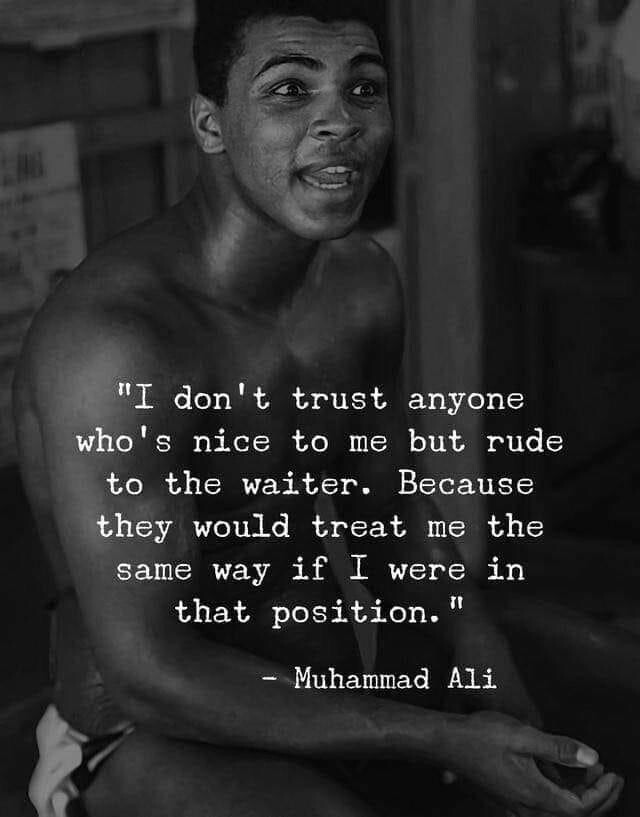
I appreciate people, among other things, who work hard and don’t just talk, and who treat people well. I have bumped into Tero once and even then I got a relaxed and pleasant impression of him. Not in Ruoholahti or among my interviewees, but elsewhere in life I have sometimes bumped into somewhat successful, pompous snobs… these are not easy to respect - despite their status/success, such people give the feeling that deep down they have low self-esteem and other problems with themselves and life.
Thanks and have a great weekend everyone! 