81. Riku Virtanen / @Kulta-Into_Pii
I follow quite a few different accounts on Twitter; nowadays, that app usually manages to serve me what I want without me having to follow a huge mass of different accounts. However, I have started following Riku Virtanen because he has very diverse and high-quality investment-related tweets. As of this writing, he has 3,436 followers, which is very little given the high quality of his account’s content.
In my opinion, Riku is a versatile investor who knows how to write about investment-related topics in a down-to-earth, educational manner, and in addition, he knows how to pick out interesting things from the investment and financial world that one might not notice on their own.
I won’t deny that he has a talent for the game, but much like Mikko—behind it all are many thousands and thousands of hours, as well as enthusiasm and a fitting passion. I believe Riku’s strengths as an investor are his logic and a suitably open yet critical mind.
I think many will get general ideas for their own investment activities from this interview, as well as various “tools” and individual insights that can be utilized in investing.
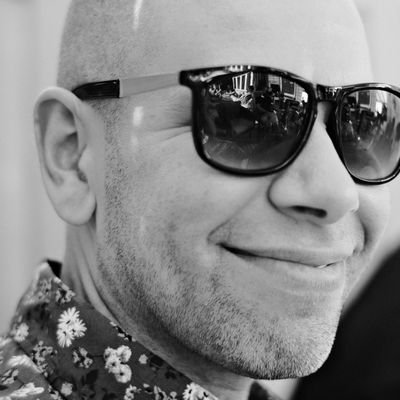 1. Tell us in thirty words who you are.
I am a 36-year-old family man, a working-class blue-collar worker, and an ordinary guy.
A passionate investing hobbyist since 2011, you might have come across my ramblings more often on Twitter/X.
2. Tell us three things that forum members don’t know about you.
I ran a gym alongside my work with some acquaintances until I sold my share to them due to a lack of time. A child was on the way and I was working 60-hour weeks at times.
I am a pretty competitive person; I rarely bother doing things into which I don’t put time and effort.
By my own choice, I have worked a 3-day workweek for about 7 years and have been in the workforce since I was 18.
For the first 3 years, I took care of my son at home, and now more time has opened up for myself as well. You can never really have too much free time; I always find something to do.
3. What interests and hobbies do you have? You are not allowed to mention anything related to investing.
Outdoor activities with the family and cycling are things I enjoy in the summers.
I am a passionate video game player; if “ranked” is found in a game, it quickly takes a man over.
If a game is too casual, it doesn’t really spark my interest.
Vices in the summer include cigars and craft beer. 
Sci-fi movies and series also interest me; the recent Fallout series on Amazon Prime was amazing. So there is definitely some nerd in me.
4. What is a regular weekday like for you?
I wake up around 07:00–09:00, breakfast for myself and the boy. After that, take the boy to school and back home.
Usually, the computer is open at that point: stock market news/releases, Twitter/X, and TradingView.
Inderes’ forum is also almost always checked.
I watch the stock market opening on most weekdays, at least keeping an eye on it if I have time, taking action if necessary.
Between 11:00 and 14:00, I often go for a walk or bike ride, as long as I get some movement for the body and get to be outdoors.
Or play something to relax the mind.
Often also chores and cooking before the rest of the family gets home.
Around 15:00–16:00, pick up the boy from school; if it’s a workday, until 18:00.
If not, spending time with the family until evening.
At 19:00–20:00, evening routines and putting the boy to sleep, then something relaxing for the brain again.
Scratching the missus’s back and watching TV, or playing games by myself if the wife wants some peace to watch her own shows 
Before sleep, I often read or listen to pods.
5. Could you describe what kind of an investor you are?
A stresser, paper hands, and a skeptic (when a position starts going into the red, the mouse quickly moves to the sell button).
Of course, those same personality traits have also helped me survive many times when positions started going in the wrong direction, and you get more than enough of those when trading.
A lot of character flaws that an investor shouldn’t have; as a plus, I could mention that in certain matters I can be quite persistent if there is a goal.
6. Could you share what your investment history looks like?
I started in 2011 when a friend told me he had bought Nokia shares. (At 24 years old)
I also started my game with Nokia shares; at that point, we bought the dip as long as the falling knife was falling, the last purchases were probably around 1.5 €.
We borrowed money from my partner and, if I remember correctly, I also withdrew money from my Visa card at a 7% interest rate.  The wisdom of that can be debated.
I sold when Elop managed to sell the phones to Microsoft; if the story had gone differently, I don’t know how my investing career would have started. Would the enthusiasm have ended at the very beginning?
I actually got excited about the activity right away and started figuring out how you are supposed to try to make money in the stock market. (Indeed, I’m still on that journey.)
It became clear right away that I needed to read about this from the smartest people, otherwise nothing would come of it. And over the years, I have read probably around 60 books around the subject.
I also read quite a lot of personal finance books in the early days, since at least back then that wasn’t taught to kids when I went to school. However, the first few years are mostly about capital accumulation unless you are naturally very good at it or, of course, have good luck.
Which also plays its part in investing.
I had no touchpoints to this world before this.
Now reading Momentum Masters (a book made in the form of interviews with heavy hitters like Mark Minervini, David Ryan, Dan Zanger & Mark Ritchie II) and the previous one was Morgan Housel’s latest book Same as Ever.
I also got hungrier relatively quickly; I sold my car to make my starting capital bigger.
I bought a car half as cheap in its place. The savings rate from income was also quite high at that time so that capital could be grown. 50%+ was pretty standard when you always figured out something to buy from the stock market. Investing Riku probably wouldn’t have put that extra 50% toward paying off a car loan, anyway.
From 2011 to 2017, I was some sort of value/quality investor, but I noticed that my personality perhaps doesn’t suit this best; I still traded quite a lot, so I then grabbed books that had thoughts beyond just the fundamental side.
That began a sort of transformation into a hybrid; nowadays I use charts a lot to support my investment process.
7. What does your portfolio look like right now? Which three holdings do you trust the most and why?
It contains funds, cash (20%) because US weight has been brought down, Finnish stocks, Swedish stocks, the US weight is now really low (around 7%). There are now 14 individual stocks in the portfolio.
More small and medium-sized ones rather than giants.I’ll start by saying that I don’t really trust almost anything ever, having seen many times that something unexpected or not so unexpected can always happen. So these cases are also for sale if needed. This was written with the information available on April 22, 2024.
Orthex
Valuation is humane with an fwd EV/EBIT of around 10, qualitative metrics like ROE and ROI are good, and the stock entered an uptrend in my books during the spring.
The drivers that brought it down in 2022 will hopefully take it up in 2024 and beyond.
I see raw material prices as the biggest risk here; they might not necessarily be passed on to prices quickly if they start rising again.
I like simple ideas.
Fodelia
Outperforming the market leaders, Feelia’s concept is in good shape to keep doing so in the future.
I’ve also seen firsthand how Feelia’s concept works in a school environment and how it nicely speeds up and eases the daily work of employees.
It also brings clear cost savings to the company. It partially or completely replaces central kitchen production, which is quite heavy to maintain in terms of costs.
The products are praised for being high quality and work on a larger scale as well.
The valuation looks fairly cheap relative to growth (EV/EBIT), and qualitative metrics are also acceptable.
As a bonus, I also like their Oikia chips, they are really good. 
The stock also transitioned back into an uptrend around the turn of the year.
The risks include an excessive rise in raw material prices, which would penalize profitability, or the loss of a major customer. The brand also cannot afford to take very many hits in a business like this.
Let’s also mention Knorr-Bremse, as it might not be found in everyone’s portfolio.
A 100-year-old German manufacturer of braking and control systems for commercial vehicles.
Qualitative metrics are better than average, and the order book has survived this economic slowdown quite well. The valuation is no longer super cheap.
Fwd P/E 16
The insider has also been on the buying side multiple times within the last 18 months. The chart isn’t perfect, but a Stage 2 uptrend is being attempted there as well.
If I’m wrong about these, the market often tells me so, I lick my wounds and move on.
8. What are your three most recent stock sales and why did you sell those stocks?
Neste, was a pure trade. I bought near the gap where I expected a bounce; well, selling was pretty much intuition.
I don’t trust this turnaround enough yet; the stock is not yet in a long uptrend in my books. That makes me cautious. Let’s see if we return to this one later.
Google, ripped upwards so hard and there was a sense of a correction in the air, so I hopped off.
NNN (REIT) stop loss, losses were cut quickly. The loss was around 5% of that position; I rarely let a position go past 10% in the red.
9. What is your step-by-step stock picking process?
I always look at the charts and draw my own conclusions from them.
At least the latest quarterly reports are reviewed; if it’s a Finnish company, I often check Inderes’ forecasts. Forums are a double-edged sword if you let other people’s opinions influence your own decisions, but I also peek through the threads.
At least you get a feel for the sentiment around the stock, you have to try to mine every grain of information.
I also often look at whether earnings forecasts have been raised or lowered in the recent past and whether previous reports had positive or negative surprises.
From these, you can often ponder the continuation for the future.
I also often think about macro themes, big drivers for sectors and the entire stock market for the next 12 months. Currencies, commodities, and interest rates are often drivers for many stocks or sector rotation.
The “story” also has a massive impact on the market—what the market believes in at that moment, which brings demand to the sector and the stock.
I don’t run Excel models or cash flow calculations; if you can’t sell the investment case to yourself in a couple of sentences, you have to wonder if it’s a good case.
My best successes have come when I buy a company that is somewhat cheap or cheap relative to growth, which is in an uptrend or, to my eye, starting to head that way.
After that, it’s all in your head: many times buying more into the rise and how long you dare to let the position run.
10. How big a role does trading play in your investment activities? And how do you trade? You use a lot of technical analysis, so could you tell us about that side as well?
It plays a pretty big role; I feel I’m some sort of hybrid between an investor and a trader.
I never day trade; trades last from a week to months. The longest holding period for a stock has been 3 years.
I also short very rarely; I can count my short positions on the fingers of one hand over the past 3 years. It hasn’t ingrained itself into my playbook, at least not yet.
I like to buy stocks on the rise; that way it feels easier to make money than by buying on the dip. I prefer uptrends over downtrends. (Usually when I don’t follow this, things don’t go well.)
Stage analysis is often used (Stan Weinstein’s system). I have also adopted “Canslim” methods from William J. O’Neil. These aren’t day trader methods, more like position trading.
The price chart should also ideally be harmonious and familiar to the eye, rather than erratic and something where I can’t grasp at all where it’s heading.
I don’t use too many indicators myself; if I have to mention any, it’s moving averages (they give an indication of trends and potential reversals).
The longer the moving average, the fewer false signals it gives. Usually, the stock also needs to be stronger than the index, which also tells its own story.
RSI and MACD on daily and weekly charts—from these, you can then try to figure out trend reversals or divergences relative to the chart, but honestly, these are rarely in everyday use nowadays.
But I don’t use any single one and try to draw too many conclusions from it; the less, the better for myself.Classical charting is the most important tool here; you have to train your eye for charts.
Trend lines also frequently appear in my charts on Twitter; some people laugh at them, but there seems to be something to them.
I really like charts; they often tell more than people think.
Major trend changes reflect shifts in human behavior in the market. Something significant has happened that has caused the broad masses and capital to change their minds.
It’s not worth ignoring and laughing off by thinking how foolish the market is once again.
If your fundamentals-based thesis and the price are heading in completely different directions, I think it’s a good idea to question your investment thesis.
11. Do you think trading is an activity that is only worth doing/pursuing if you are willing to invest a lot of time in it over the long term? My impression from various sources is that a percent or two of starting traders continue as profitable traders in the long run; the vast majority quit and a small portion continue, many of whom are losing money.
Well, you wouldn’t dare recommend it to anyone, but if you intend to trade more actively, you definitely have to invest time and effort. A couple of theory books are not enough to make you ready.
I still recommend studying it through theory as well; you need to know the laws of the market and also learn a lot about yourself before you can operate there “safely,” if you can even use that term.
You need to learn how you react when a lot happens in the market that you didn’t expect. How you handle losses and wins. How much emotions come into play and when you need to take a break from the market.
Fortunately, I can already recognize pretty well in myself when I need a break.
If you have a mentor to discuss these with, it’s always better; I’ve only had books and the internet.
You need to have a passion and drive to develop your own process as well, and you definitely have to practice your chart eye for thousands of hours. I can’t say how much I have under my belt. Quite a lot, though.
I have a day job 3 days a week; fortunately, this kind of swing/position trading doesn’t require a huge amount of screen time. My positions can be open for weeks or months.
It doesn’t require sitting in front of the screen for hours if the groundwork has been done well and stop losses/alerts are set. Of course, you certainly end up doing a lot of that quiet, unnoticed work while browsing X/forums or charts.
I can’t really say much about the profitability of traders; that’s probably how it is. Online, the ones who are truly successful and rake in hundreds of percent a year are often the ones in the spotlight.
Doesn’t a longer horizon in these things also raise the odds for success and profitability? After all, the stock market goes up most of the time.
I’ve struck a deal with myself that if I lose to my kid’s index portfolio for enough years in a row, I’ll start shifting more toward funds; at least for now, I’ve been allowed to continue trading.
Maybe if my capital gets big enough at some point, I’ll move most of it to index funds and just start taking it easy.
After all, that’s almost like momentum trading—buying the winners and dumping the losers from the index. So it would suit me well!
12. What are your three best traits as an investor? What is your biggest area for improvement as an investor?
I find it hard to buy into a dip unless there’s some broader general market correction. I consider that a good thing 
I strive to improve my investment process over the long term; I have lists of “rules” for which direction I should be heading and all sorts of trading journals.
I also always write down my blunders/successes and corrective actions for them at the end of the year.
Probably also persistence, since I’m still doing this with some degree of passion.
As an area for improvement, I’d say I need to learn to push emotions completely aside in this game; euros are just numbers, but often they aren’t that to me. Especially when racking up losses, I somehow just never get used to them.
13. What are the five most important sources of information for your investment activities, and why?
-Charts, which often tell quite a lot about outlooks, expectations, enthusiasm, or despair.
Often there’s also a situation where the market doesn’t yet know how to decide on the future direction.
-Inderes forecasts and forum. You get good data there on expectations for a company, and then you can form your own opinion on whether, for example, there might be room for a positive surprise that isn’t properly priced in.
Also a lot of good write-ups on the forums and information about companies that I wouldn’t find on my own otherwise.
-Marketscreener, where I look at consensus forecast revisions for non-Finnish stocks, valuations for the next year, etc. You can find a lot of data there.
-Twitter/X, where I often search for what comes up by company name or ticker. I also follow a lot of discussion and charts about macroeconomics. I occasionally throw my hat into the ring on the topic myself.
Reports from company websites, the “largest owners” list and their changes. Changes in nominee-registered holdings are also of interest. Is foreign capital flowing in or out?
14. What do you think are important aspects of stock picking that often receive too little attention?
Everyone can probably guess my answer to this by now, namely the charts and their interpretation.
I understand that many dismiss them as speculation, gambling, and weather forecasting of various sorts.
But. The market is often relatively efficient and looks far ahead, which is often reflected in the price on charts as a certain kind of behavior. For me, the most important thing is trying to spot trends and changes in them.
Valuation is often a double-edged sword; cheap is often cheap for a reason, and expensive is expensive for a reason. It is also entirely okay to buy expensive under certain boundary conditions.
Buying cheap is often hardwired into human genes, and buying expensive feels foolish, with people often fearing that you’re buying at the top.
Also, far too often, many people look in the rearview mirror or stare too much at the previous report, even though the market is looking far ahead.
**15. What are the three most important threads on the Forum for you, and why?**In addition to checking the company threads of the companies I own myself, I also tend to glance at the geopolitics thread, though I’ve tried not to take a stance on those even when I have opinions.
TA (Technical Analysis) threads, it’s nice to follow how others interpret charts. Many do it very differently than I do. Although time horizons are also often shorter than my own.
The forum also has some great talents in that field as well.
16. You have to give your portfolio for five years to two forum members, two Inderes employees, and two Finnish investors, who would you give it to and why?
Forum members
@Pohjolan_Eka, provides good challenges on the forum and understands the secrets of fundamentals surrounding companies.
@DayTraderXL, a TA expert.
These balance each other out.
Inderes employees
Quite a difficult choice, as there are a lot of smart people in the house.
@Verneri_Pulkkinen, would bring perspective to others on the macro picture, which is also an important building block for my own portfolio.
@Erkki_Vesola, an experienced analyst. Didn’t get caught up in the 2020-2021 valuation madness, for instance; he stuck to his guns.
Finnish investors
@Mikko_Makinen, probably doesn’t need separate justifications. Alokas’s previous interview proved it once again.
Jyrki Uurasmaa, I’ve followed his writings on X for a few years, an experienced guy and has convinced me with his thoughts, at least.
17. How do you manage your emotions in trading?
Sometimes better and sometimes worse. In a bear market, I often get frustrated when I try to be long-only, and at times like that, you should just sit on your hands and wait, or short.
“There is a time to go long, a time to go short and a time to go fishing” - Jesse Livermore
The quote above is from 100 years ago by Livermore, who was one of the famous traders of his time. I should follow that last piece of advice myself whenever a downturn is starting.
The book written about him is, btw, really interesting; the same things were already happening in the markets back then, without the internet and smartphones.
Having some kind of rules and guidelines helps me with this; if the indices turn into a prolonged downward trend, my cash weighting automatically increases, and I reduce trading. It reduces my stress if I have a higher cash weighting.
In a bull market, of course, it’s also mentally easier; positions don’t hit stop-losses as often, and you don’t have to constantly try to micromanage the portfolio.
18. What concrete good has investing brought into your life?
-
Free time, as I’ve been able to work shortened hours for many years already and spend more time with my child/family.
-
Financial peace of mind.
-
A nice hobby that brings enjoyable activity to everyday life and has also taught me a lot about the world through it.
-
Discussion company among fellow hobbyists.
19. Do you have any tips on how Alokas should get acquainted with technical analysis?
If you want to go down that path, I would recommend reading at least these 2 books or getting familiar with the methods. Developing trading psychology is also good; there are plenty of books on these topics.
(You can surely also find them on YouTube as 15-minute videos if you’re feeling lazy and don’t feel like picking up a book, though I still recommend doing so.)
CANSLIM (How to Make Money in Stocks, William J. O’Neil)
Stage analysis (Stan Weinstein)
These are specifically suitable for a fundamental-based investor in my opinion, and ARE NOT suitable for trading with too short a time horizon.
I personally wish someone had shoved these in front of my face at the beginning of my investing career.
And that famous “chart eye” needs to be developed; just open the charts and ponder after learning the theory. You just choose your own time horizon and let others play the game they are playing.
Following TA/charting discussions can give quite a confusing picture when many have completely different time horizons in the market, one specializes in using a specific indicator and is good at it, while others don’t use any.
For that reason as well, I recommend reading the books before practicing.
20. Who do you want to thank in particular among the forum members?
First, I would like to thank you for asking me to do this interview; it was an honor. Great and interesting interviews in this thread.
It was terrifying to come after Mikko here; unfortunately, the bar dropped quite a bit from that, but someone had to do it.
Now it apparently fell on me.
I thank the forum members for all the fundamental-based work that many take the trouble to do and scribble down here.
In my opinion, there is a lot of good-spirited writing on the forum, and fellow investors are respected. There is appropriate challenge, of course, so that the discussion isn’t one-sided.
I thank Inderes for letting me read good analyses of small companies for free, as it’s hard to find more detailed figures anywhere else, and also for the vibe not being so stuffy.
Fresh atmosphere, nobody is sitting around in suits acting all stiff with serious faces, that’s no longer modern times. Nor do I believe it attracts our generation and younger folks.
Thanks for the good thoughts, Riku! 
Capable guys often seem to share the trait of listening to others, reading a lot, studying, and everything else, yet they don’t copy anyone directly; instead, they make investing their own. Both Riku and Mikko seem to do this.Riku was once again a unique investor in his own right, and his interview is worth reading through at a leisurely pace, as you are sure to learn something new. Interviews always have a certain element of entertainment to them as well, but from investors’ direct and open answers, you also learn all sorts of new things if you are willing to receive them. I don’t mean that you should copy Riku’s or anyone else’s actions, but for example, various ideas might arise that will help you become a better investor step by step… after reading an empowering investment book or attending an expensive, high-energy investment seminar, we haven’t really changed or developed tremendously, unlike millions of others - if you want to succeed in something, it often requires thousands of hours, but fortunately that journey can be enjoyed.
I would like to remind you that I have heard of those who have stopped their investing activities at the bottoms of crises, for example, and have not continued, and most of the time such people regret this, but I cannot think of a case who has stubbornly walked through crises year after year, investing regularly, and regretted it.
Thank you and have a great weekend!