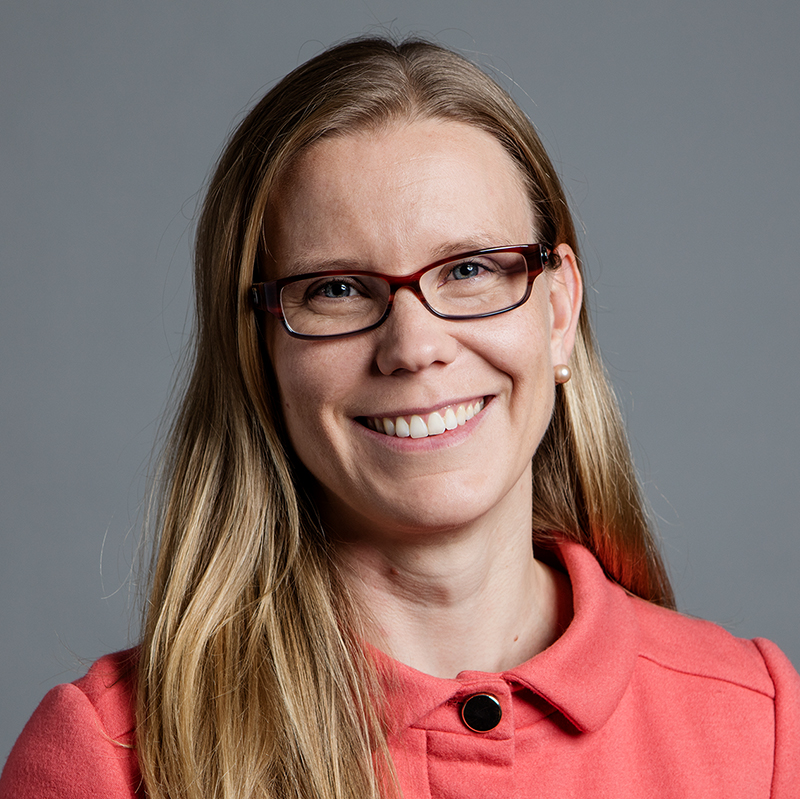
74. Pia Kåll, CEO of Capman
Pia is a charismatic and wise individual who is purposeful and an excellent leader. I strongly believe in her ability to make sustainable decisions that generate long-term value for the company she represents.
As a leader, she stands out positively through her courage and solution-oriented mindset, among other traits. I also believe she has the ability to make tough decisions, supported by her patience and perseverance. The charismatic Pia has the skill to master details, the ability to focus on essentials, and the capacity to act optimally with the big picture in mind. This brings about things that strongly propel the company forward, rather than just getting through the next year or quarter…
Capman is a significant player in the Nordic private equity market, acting as an active owner in real estate, infrastructure assets, and unlisted companies, among other areas. Founded back in 1989, it is by no means a brand-new company, and Capman takes pride in its international networks and sustainability. Naturally, the company aims to provide attractive returns and progressive solutions for investors.
One of the biggest reasons I am interested in Capman as an investment is precisely her competence. We could use more patient and resolute leaders like her. 
1. In about a hundred words, tell us who you are.
I am Pia, and I serve as the CEO of CapMan. I am a curious problem solver, a mother, and a dog owner. I am energized by discovering new things and by situations where I get to solve intellectually challenging puzzles while enabling the success and growth of the people around me. These are situations you encounter in everyday family life, when leading an expert organization, and when working in the private equity industry
2. Share an interesting fact about yourself that few people know.
During my university days, I ran a nightclub for several years. So, by day I immersed myself in the wonders of plasma and nuclear physics, and by evenings I was responsible for running a nightclub and a banquet restaurant. That was also my first introduction to what business and people management actually mean in practice.
3. Could you tell us about your career path?
I hold a Master of Science in Engineering in Technical Physics. At the beginning of my career, I spent nearly ten years in international management consulting at McKinsey, after which I moved to Outotec’s management team in the world of mining and metallurgical processing technology. In 2016, I got my first taste of the private equity industry when I started as a partner in CapMan’s Buyout team, and from 2017 onward, I led the Buyout team. In the spring of 2023, I transitioned to become the CEO of CapMan. I have also served as a member of Elisa’s board of directors for the past couple of years.
4. What are your interests and hobbies? You must not mention anything related to investing.
I read quite a bit—practically at least fifteen minutes every evening. It’s my way of relaxing and disconnecting from the workday. I am interested in a wide variety of books, ranging from fantasy to non-fiction across all genres. The only thing I generally avoid is American business books; they remind me too much of work I also enjoy spending time in nature, which I get a daily dose of while walking the dog, as well as spending time at our summer cabin in the archipelago.
5. What does a typical weekday look like for you?
My workdays vary greatly, consisting of everything from client and investor meetings to internal sparring sessions with various teams. I also regularly visit our various offices in the Nordics and meet with different stakeholders, which means several travel days every month.
My weekdays are largely structured around family life. I try to make sure we eat breakfast and dinner together as a family every day. The other daily routine is our dog, with whom I take a roughly one-hour walk in the morning before the rest of the family wakes up, and another one-hour walk in the evening.
6. Could you briefly describe what kind of investor you are?
When it comes to my personal investments, you could either say I am really lazy or very determined
Clearly, my largest investment is in CapMan stock. I have always invested a significant portion of my own wealth in the company I work for, and especially now as CEO, that feels even more natural. It also ensures that my interests are completely aligned with those of the shareholders.
Otherwise, I do not invest in individual stocks. Since the beginning of my career, I have chosen to invest exclusively in various funds. The background behind this is that both as a consultant and a private equity investor, I am in constant discussions with the management of various listed companies regarding strategic topics. Therefore, I have found it more straightforward to avoid stock investments rather than constantly having to ensure I don’t accidentally possess insider information or unreleased information about a given company.
7. What does your stock portfolio look like? If you had to choose two stocks from your portfolio that cannot be sold for five years, which ones would you choose and why?
This is easy I have two direct stock holdings: CapMan and Elisa, where I serve on the board. I will not sell either as long as I am actively involved in creating value there.
**8. Which industries do you currently see as particularly interesting from an investor’s perspective?**I understand that your question specifically targets investments in listed equities, but I have to say—both as a personal view and from a professional standpoint —that the unlisted market is currently very interesting. Over the past year, with rising interest rates and a general economic slowdown, valuation levels have come down, particularly in the real estate sector and in early-stage venture capital investments. The market continues to be uncertain, heavily influenced by global geopolitical tensions alongside the simultaneous need to invest in and promote the green transition. Such a combination of uncertainty and market shift creates interesting investment opportunities for a private equity investor, and I believe that the funds being invested now will generate strong returns in the future. Historically, the best unlisted funds have been deployed during such years of market transition.
9. What is the most enjoyable part of your job, and what is the least enjoyable?
People and problems. This is both the most enjoyable and the most unpleasant part. I feel I have succeeded when people around me develop and shine, but enabling that is not always straightforward and easy, so the journey to success can feel quite uncomfortable and heavy. The same applies to problems; fundamentally, a problem is unpleasant, but I get energy from solving problems and especially from situations where a solution is found to a problem that at first glance seemed impossible.
10. Quite a few people say or write that you are good at solving problems and moving things forward in the right way. Can you share from personal experience how companies generally succeed in making the right decisions and taking actions that stand the test of time?
A few guiding principles have formed for me based on my own experiences and listening to the advice of wiser people. When you manage to put these into practice, the results usually withstand scrutiny and stand the test of time.
- In decision-making, both the timing and the decision itself will likely hit the mark if the guiding principle is always that you must be able to look every stakeholder in the eye and explain why you ended up with that specific decision right now, also and especially when the decision does not please everyone. This helps avoid pushing problems forward, cutting corners unnecessarily, or making decisions in a panic or the heat of emotion.
- One should always strive to understand what drives the thinking and actions of different people; you don’t have to agree with these drivers or even accept them, but it is important to understand them. Then, instead of a back-and-forth tug-of-war, you can focus on finding solutions that take into account the things that are most important to each stakeholder and achieve solutions that work for everyone.
11. In your opinion, what are the three best things about CapMan? What do you think is the biggest area for improvement at CapMan?
Our strengths are our entrepreneurial spirit and our culture. Our people are professional, top experts in their field, while at the same time being down-to-earth and team-oriented. We take our work seriously, but not ourselves.
We have set ourselves the vision of being the most responsible private equity investor in the Nordics. Although sustainability is already a strong part of what we do, there is still much to improve before reaching our goal in all areas.
12. What kind of employer is CapMan for its employees in your opinion? How does CapMan motivate its employees to perform better?
Our operations are based on highly independent investment teams that entrepreneurially, with a low hierarchy, execute and develop their own business, while simultaneously utilizing CapMan’s shared platform of expert and support function services. We are able to offer our professionals the best combination of responsibility and freedom; entrepreneurial, independent investment activity combined with the services and support functions of a larger community.
13. The share price was still over three euros at the beginning of March (2023), but has now drifted below two euros. What could be the company’s opportunities and growth drivers in the coming years that could bring joy to shareholders in the future?
CapMan’s result consists of three components:
- Profitability of management fees. Management fees are recurring revenue based on long-term contracts. This is clearly the most valuable component of our result. Our profitability based on management fees has grown for the fourth consecutive year—including in 2023. With the growth of assets under management, ongoing significant fundraising projects, and the acquisition of Dasos Capital completed on March 1st, we have strong foundations for the development of fee-based profitability this year as well.
- Carried interest. These are realized when our funds exit their investments by selling them to new owners, and thus their timing varies. Last year, we did not want to exit targets in a challenging market at poor valuations, but the potential for carried interest still exists, is significant, and grows as assets under management increase.
- Changes in the fair value of our own balance sheet investments. In 2021 and 2022, our balance sheet investments yielded over 20% annually. Last year, the value of our balance sheet investments dropped by -4%, but so did the market. Over the longer term, our goal is to continue outperforming the listed market.
Particularly due to changes in fair value, there is volatility in our earnings model, but as we purposefully execute our strategy and progress toward our target of 10 billion euros in assets under management, we are in an excellent position to create shareholder value.
**14. Regarding new sales, there is light on the horizon, or how would you see it? Investment returns haven’t really pleased analysts either, but do you see this as just a “temporary problem,” or do you already see green shoots in these in the short term or near future?**Regarding new sales, i.e., fundraising for funds managed by CapMan, we raised approximately 400 million euros in new assets under management during 2023. The capital came from around one hundred professional investors, of whom about a third invested in CapMan’s funds for the first time. This is proof that although the fundraising market has slowed down, our investment strategies remain attractive, especially to international institutional investors. It is important to remember that while we are talking about a slowdown in the fundraising market, private asset classes are still a growing asset class.
Predicting investment returns for individual years is as difficult as predicting the performance of stock indices. In the long term, private equity operations have historically generated clear excess returns compared to the listed market, and nothing suggests this trend will change in the future. The total return of CapMan’s funds remains at a quite competitive level, which also creates good conditions for new sales. A good example of this is CapMan’s newest Growth III fund, which reached its target size in record time despite the difficult market environment.
15. One of the company’s cornerstones is surely profitable recurring fees, which apparently reduce risk and, for their part, make the company an attractive investment target. How is CapMan able to maintain or perhaps even grow the amount of such recurring fees while maintaining good profitability?
Recurring fees are at the core of CapMan’s value creation. They mainly consist of management fees paid by fund investors from the funds managed by CapMan’s investment teams. Fee income grows as CapMan’s assets under management grow, and our strategic goal in this regard is to double assets under management to 10 billion euros by 2027. In addition, as we grow, we achieve economies of scale, and therefore I see that the profitability of fee income can also grow faster than fee income in the future.
16. Investing in unlisted companies is generally considered somewhat risky, and the operating environment is also currently considered uncertain. One might think that the near future will be exceptionally difficult for CapMan. How do you see this matter?
Investing in unlisted funds has outperformed the stock market over time, and excess returns have always been greater when the stock market and economic situation in general are more difficult. From that perspective, now is the right time to make investments. At the same time, it must be remembered that there is no high return without high risk.
Risk in unlisted asset classes comes especially from the fact that the investment is not liquid in the same way as a listed share that can be sold at any time. Funds generally have a 10-year lifespan, and the ownership period of a single target company is on average 3-5 years. However, it is impossible to say in advance exactly how long the ownership period will be. During CapMan’s 35 years, we have seen ownership periods of under two years as well as over 15 years.
17. Where will CapMan be in five years?
Our strategic goal is to double assets under management to 10 billion euros by 2027. This will come from growing current investment areas and products, as well as launching new products.
At the same time, it must be remembered that five years is a short time in the fund world; it is only a little less than half of a fund’s lifespan. Therefore, I see that in five years we will be in a situation where the strategic goal has been achieved, but even more importantly, by then products and investment areas that ensure the next growth leap in assets under management will already be underway under the hood.
Thank you, Pia, for the excellent answers!
It’s good that the CEO has the vision and ability to manage the big picture, as well as the skill to genuinely be involved in both the current situation and the future. Quite a few others just seem to lack vision and long-term commitment in their actions, as well as sometimes a genuine understanding of what is required to drive success through.
This is one of those points in particular that surely warms the hearts of both an investor and an employee, and pleases a people-oriented person like this:
Our operations are based on highly independent investment teams that, with an entrepreneurial spirit and a low hierarchy, execute and develop their own business, while utilizing CapMan’s shared platform of expert and support function services. We are able to offer our professionals the best combination of responsibility and freedom; entrepreneurial, independent investment activities combined with the services and support functions of a larger community.
That’s all for now, thanks everyone and have a great rest of your Friday!
EDIT:
I retroactively fixed typos and other mistakes of mine, as for some reason I always tinker with things at the moment of publication, even though I proofread many times. And true, some things are correct, but then for some reason I manage to mess up a little right before publication, as always. 