Xbrane Biopharma AB - Riding the Megatrend of Biosimilars in the Pharmaceutical Industry
For quite some time now, I’ve been thinking about starting a dedicated thread on the Inderes forum for the small Swedish pharmaceutical company Xbrane, but for one reason or another, I haven’t gotten around to it. Now, during the Christmas holidays, I figured I’d finally put a few words together. There has barely been any discussion in Finnish about this company or biosimilar companies in general; there are a few individual posts about Xbrane on the Kauppalehti forum, but I doubt there’s a single one from this year. From time to time, I’ve thrown out comments related to the company on Twitter, but going forward, it might be good to gather those here in this thread as well. Hopefully, the company and the industry will spark some interest and discussion here among others, too.
Website: https://xbrane.com/\n
Q3 Report: https://xbrane.com/en/mfn_news/xbrane-biopharma-releases-interim-report-for-january-september-2020/
Listed: Sweden, Nasdaq Stockholm
Presentation video featuring CEO Martin Åmark: https://www.youtube.com/watch?v=HElSXiAh65o&feature=emb_logo
Xbrane is one of the few listed companies focused solely on one of the pharmaceutical industry’s megatrends: biosimilars.
Biosimilars are medicinal products that contain a new version of the active substance and characteristics of an original biological reference medicine. Furthermore, comparability studies have shown that the efficacy and safety of biosimilars are sufficiently similar to those of the original biological product. When the patent of a biological medicine expires, developers other than the original manufacturer can also produce them, and over the past few years, this has brought biosimilars to the pharmaceutical market. Biosimilars are significantly cheaper to manufacture and have therefore steadily gained market share drug by drug over several years, as the cheaper biosimilar replaces the original medicine once its patents expire.
Biosimilars are an extremely fast-growing segment with a very favorable risk/reward ratio. The FDA granted the first marketing authorization for a biosimilar in the US in 2015, and to date, only 29 marketing authorizations have been granted, meaning the industry is still in its very early stages. List of all FDA-approved biosimilars: https://www.fda.gov/drugs/biosimilars/biosimilar-product-information
A few links on general topics regarding biosimilars:
An article from early 2020 by the Finnish Medical Journal (Lääkärilehti) titled “Biosimilaarit säästäisivät miljoonia” (Biosimilars would save millions): Biosimilaarit säästäisivät miljoonia - Lääkärilehti
Fimea’s article on biosimilars: https://www.fimea.fi/laaketurvallisuus_ja_tieto/biosimilaarit/fimean-kanta-biosimilaarien-vaihtokelpoisuuteen
In May, Kela (The Social Insurance Institution of Finland) addressed biosimilars on its website, thanking doctors who have prescribed the equally effective but cheaper biosimilar instead of the biological medicine: https://www.kela.fi/-/biosimilaareilla-voidaan-hillita-biologisten-laakkeiden-kustannuksia
An exceptionally comprehensive breakdown of biosimilars in the Duodecim journal: https://www.duodecimlehti.fi/duo15344
Xbrane’s website also summarizes what biosimilars are:
A recent article on biosimilars in the US market, published late in the year. Biosimilars are estimated to bring savings of 100 billion dollars over the next 4 years, and robust growth is expected for the industry: Biosimilars in the United States 2020–2024 | IQVIA
Xbrane Biopharma AB
Xbrane’s strategy is to develop and manufacture high-quality and cost-effective biosimilars using a patented technology platform and leading expertise.
Xbrane Biopharma AB is a biotech company that develops and manufactures biosimilars. Xbrane has a patented protein production platform and world-leading expertise in the field of similar development. Xbrane is headquartered in Solna and has R&D facilities in Sweden and Italy (building new and larger facilities during 2021). Xbrane has been listed on Nasdaq Stockholm since September 2019 under the ticker XBRANE, but has been on the stock exchange since February 2016.
Xbrane develops and manufactures biosimilars for medicines with limited competition in the global market. Xbrane leads globally in biosimilar development in terms of development and production efficiency, resulting in low development and production costs compared to competitors. Xbrane builds its competitive advantage on patented technology that allows them to achieve lower costs than competitors. Manufacturing a biosimilar is much more difficult and requires more expertise than a chemical generic drug, which naturally creates a bit of a moat for Xbrane.
Link to Xbrane’s website, which explains their technology in more detail: https://xbrane.com/en/technology/\n “Xbrane’s technology is based on protein production in E. coli cells. A unique feature of Xbrane’s technology is that it can lead to significantly lower production costs for specific proteins. This can be achieved because the technology allows the tuning of the production intensity of a specific target protein in the host cells.”
“Xbrane’s technology is called LEMO™, standing for LEss is MOre, and it is a patented ‘Expression system for protein’ (EP2268818 and WO2009106635 A1) approved in Europe and the US until 2029. There are several academic studies published in various scientific journals, including Nature, which demonstrate the superiority of Xbrane’s technology.”
The most important thing about Xbrane’s technology is this: “Xbrane´s technology has demonstrated to have an up to 12 times productivity advantage vs. standard system in E.coli. difficult. Finding that hidden safety signal may not be possible.“
Because of this, Xbrane is able to produce biosimilars eight times more efficiently than standard methods and at 85% lower cost.Interest among investors in Xbrane has grown quite nicely this year, as the company had a total of 3,516 owners at the end of February 2020, and correspondingly, in the latest update on their website, the ownership structure shows 5,332 shareholders in the listing made on November 30.
Xbrane Pipeline
Xbrane’s drug pipeline: Portfolio – Xbrane
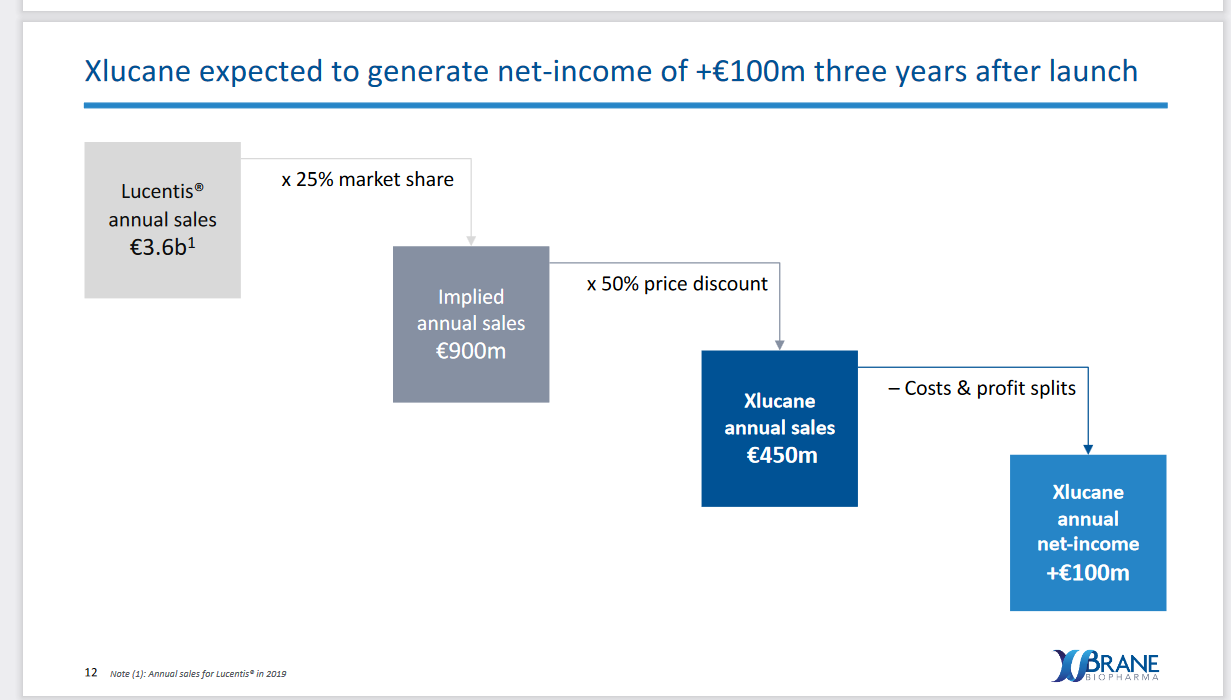
Xbrane does not have a single drug on the market yet, but their first drug has advanced to Phase 3, which was fully recruited in November 2020. 6 months from this, the results will be known, and their publication is likely to slip to the summer of 2021. Xbrane’s first drug, Xlucane, has been developed for age-related macular degeneration, and the drug in question is a biosimilar to the original biological drug Lucentis (ranibizumab).
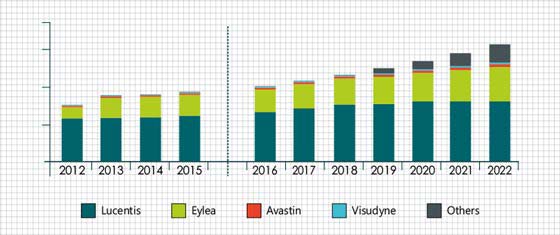
Xbrane’s Xlucane is one of three biosimilars developed to replace Lucentis’ original drug, the other two competitors for this drug are Coherus Biosciences and Biogen. A comprehensive article on the subject can be found here: https://biosimilarsrr.com/2020/01/16/who-are-the-key-lucentis-biosimilar-players-to-watch/
After the first drug, Xbrane also has Xcimzane in its pipeline, which is a biosimilar of the original drug Cimzia, and at least for now, no competition is in sight + the pipeline also includes Xdivane, which is a biosimilar of Opdivo, and this drug has a very large market, double compared to Xlucane.
Partners
Xbrane, nor any other drug manufacturer, handles the commercialization of the drug itself; instead, deals are made for this, and a partner handles the commercialization of the product. The same goes for Xbrane with the Xlucane drug, and the commercialization of the product in Europe is handled by Stada Arzneimittel AG, an experienced player in the field, a company founded over 100 years ago. Stada owns a stake in Xbrane, so it will likely also act as the commercializer of Xbrane’s other drugs in Europe in the future. Stada is Xbrane’s fourth largest owner. In the USA and Canada, the drug will be commercialized by Bausch + Lomb, with which Xbrane negotiated an agreement in the summer of this year. News on the subject: https://xbrane.com/en/mfn_news/xbrane-and-stada-partner-with-bosh-lomb-for-commercialization-of-xlucane-in-the-united-states-and-canada/
Bausch+Lomb is an excellent partner for the commercialization of the drug in America, because the company in question is a leading firm focused on eye health. Bausch+Lomb has comprehensive networks in a very specific field, as they are one of the world’s best-known companies in the ophthalmic sector and offer one of the world’s widest ranges of eye health products. Its core businesses are prescription drugs, nutritional supplements, eye care products, eye drops, contact lenses, lens care products, ophthalmic surgical devices, and instruments. It would have been very difficult for Xbrane to invent a better partner for conquering America.
Xbrane is still looking for partners for the commercialization of Xlucane in Japan, China, and South America.
Xbrane Through the Eyes of Analysts
Xbrane is still quite well hidden from analysts, although it has received slightly more attention this year compared to previous years. Redeye was one of the first to take up coverage of Xbrane, and their analyst raised the target when Xbrane got the Xlucane Phase 3 cohort fully recruited. Redeye’s target price is now base: 101 SEK and bull 157 SEK, with the share price hovering around ~70 SEK. In the summer of 2020, momentum finally came to the share price after a long period of stagnation when Vator Securities raised its target price to 155 SEK. Pareto also gave a momentary boost to the share price when it gave Xbrane a buy recommendation and a 157-190 SEK target price.
Redeye: https://www.redeye.se/company/xbrane-biopharma
Vator Securities: https://vatorsecurities.se/analysis-company/xbrane-biopharma/
Pareto: Xbrane Biopharma får köprekommendation av analytiker – Börsposten
Redeye’s base scenario is calculated with a 20% market share (Xbrane itself expects a 25% market share) and a 90% probability that Xlucane will enter the markets in the United States and Europe in 2022 (I actually consider this probability to be higher than 90%, so it is calculated with quite conservative figures). In the bull scenario, they calculate with a 25% market share and that Lucentis’ markets are 10% larger than in their base scenario.
Although I don’t understand technical analysis terribly much as such, a support level has formed for Xbrane’s share between 67-69 SEK, where it has now turned around several times; this level is also supported by the most recently made share issue, which was conducted directly to institutions at a price of 68.5 SEK. As in other pharmaceutical projects, before the first drug is put on sale, a lot of money has been spent because drug development is an extremely expensive business, and there have been multiple share issues, and the last one may not have been seen yet. Relying on my memory, I would say that the last 2 or 3 share issues have been handled directly through institutions, and I have already participated in the two preceding these. New share issues may no longer be needed before the first drug is commercialized and put on sale, but one more share issue before this would not really surprise the undersigned.
Market Catalysts
I personally expected the market to react positively when Phase 3 was fully recruited, but this did not happen because at the same time an issue directed at institutions was announced, and the reactions canceled each other out. It is a small company and trading volume is not crazily high daily, so even small positive news has acted as strong catalysts in the market, such as new recommendations from analysts or when a new firm takes up coverage of small Xbrane.Potential positive triggers for 2021 clearly include agreements on the commercialization of Xlucane in new regions; Japan, China, and South America are in the crosshairs, and by all logic, agreements for these should materialize during 2021. Phase 3 results will arrive after 6 months, and it is highly likely that this will also cause a positive ripple in the share price and act as a major catalyst. Biosimilars pass Phase 3 almost every single time because it is not a new drug, but rather a biosimilar developed from a biological drug already on the market, which is similar in function, active substance, and other properties to the reference biological drug.
A couple of articles on the subject: https://considerations.bmj.com/content/1/1/3 and https://biosimilarsrr.com/2018/08/22/phase-3-studies-in-biosimilars-are-useful/. There is also quite a bit of discussion on whether Phase 3 studies will even need to be conducted for biosimilars in the future, as they pass them with a completely different probability than new biological drugs developed for different diseases or other drugs.
The Lucentis patent expires in 2020 in the US (no biosimilar will make it to the market immediately, but Coherus and Biogen are currently expected to get their drugs on the market somewhat before Xbrane) and in Europe in 2022 (Xbrane aims to get its product on the market as soon as it is possible to sell it, as will Coherus and Biogen, and preliminarily everyone will get their drugs on the market in Q3/Q4 2022).
As a concluding remark, I should mention that I bought my first Xbrane shares for my portfolio in 2017, and I increased my holdings substantially last year and even more substantially this year. In all honesty, I must admit that I don’t know a huge amount about the pharmaceutical industry and I have no formal education related to the field, but everything I know I have learned in practice through researching this company and discussing it and other pharmaceutical companies with people who are truly knowledgeable and have a bit more than just a gut feeling about the industry. Xbrane is still clearly the largest holding in my portfolio.
Hopefully, this company and biosimilars will spark interest and discussion among other forum members as well, both for and against. Everything written above can and should be challenged to the best of your ability, and any additional information is very welcome. Surely a lot of basic information about the company was left unmentioned, but at least this gets the ball rolling.
 . Usually I gladly skip pharma companies, but this one already has a good package, so it might be worth at least checking out.


 ), but the attitude towards biosimilars is constantly improving, and the prolongation of matters will likely decrease in the future. The hard-to-pronounce drug you mentioned is the best-selling drug on the market, so it’s very understandable that the original drug manufacturer is doing everything to hold on to the market, but ultimately, biosimilars for that drug were also brought to market, even though lawsuits prolonged the matter.