First of all, thanks to @JHeiskanen, whose encouragement in the coffee room got me started on this project 
To paraphrase Ford Fairlane: The project was a bit like masturbating with a cheese grater, slightly entertaining but mostly painful.
WINPAK EXTENSIVE WRITE-UP - NOT AN INVESTMENT RECOMMENDATION
Foreword
“Sure, I could throw some analysis at you, but you blockheads wouldn’t understand it anyway. Let’s just have the egg hawk tap his testicles on the edge of the table so we can go to Rivoli for a drink.” - Ketonen & Myllyrinne
An excellent company description and history can be found in the annual review
Table of Contents
- History
- Market
- Differentiation, growth segments, and competitive advantages/disadvantages
- Ownership structure
- Management
- Culture
- Valuation
- Target price and recommendation
-
History
This is a short description; the complete one can be found at the link above.
Winpak was founded in 1975 in Canada alongside Wihuri Oy Wipakkaus. Winpak
(North America, Canada) and Wipak (Europe) belong to Wihuri Packaging Oy; after various other arrangements, Wihuri Packaging Oy now belongs to Wihuri International Services Oy.In any case, this has always been the Wihuri family’s business.
picked from the review:
1978-1986 private (listed in -86). Operating with 1 factory specializing
in modified atmosphere packaging.1987-1997 post-listing expansion to 9 locations, 5 acquisitions.
I won’t describe the industry expansion in detail—that requires an
engineer—but to my eye, the acquisitions were aimed at, among other things, ‘flexible lid’
manufacturing technology, special expertise in various films, film layers,
rigid packaging, pharmaceutical packaging, etc.1998-2020 Efforts are mainly put into organic development and finding synergies.
A new unit was established: American Biaxis Inc, which manufactures BOPA film (don’t ask) for the needs of the Americas. (you asked anyway) - biaxially oriented polyamide.
Joint venture with Nichimen (currently Sojitz Pla-Net Corporation).In addition to that, some operations were established to take care of the financing needs of the various units.
Acquired Webkote. Some packaging lid die-cutting was the target here, because through this
Winpak became North America’s largest lid die-cutter (subject to correction).The flexible packaging manufacturing and distribution network was strengthened by acquiring Walsroder Packaging
LLC.2011 Mexican operations are established. (later expanded but still small-scale)
2019 Acquired Cheringal Associates, Inc. and Norwood Printing, Inc. (for the pharmaceutical side)
2021-2023 Basic expansion work
2) Market
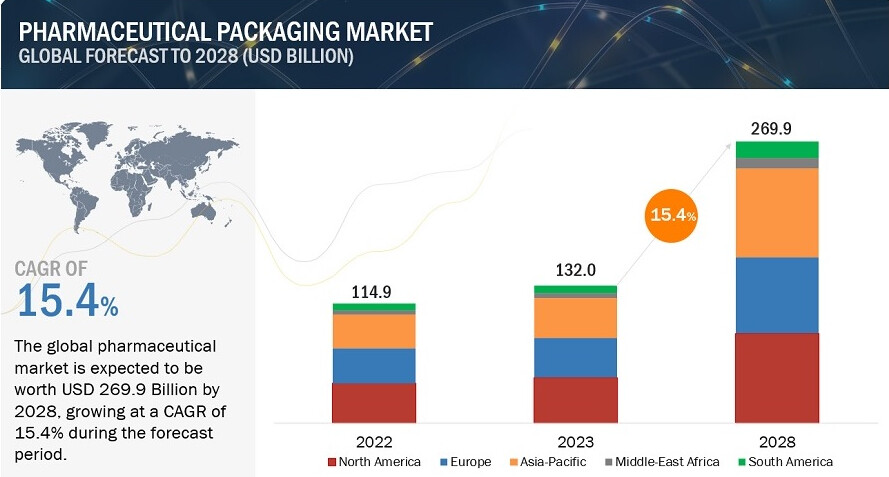
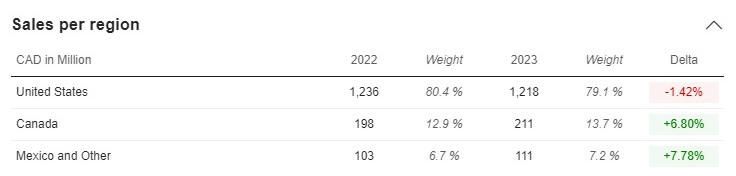
In Winpak’s case, as seen from the image below, the most important area is the U.S. of A, so
I will focus on that. The US market is expected to grow by a few percent/year until 2030
(single-serving packaging solutions even ~4%), and even using common sense, one could imagine
that the market in the US will continue to grow steadily.

Google mentions ‘competitors’ left and right, but I will focus on those from which
Winpak itself has ordered market research (as its competitors). Kind of a poor man’s
solution; I’m not going to buy the studies myself.
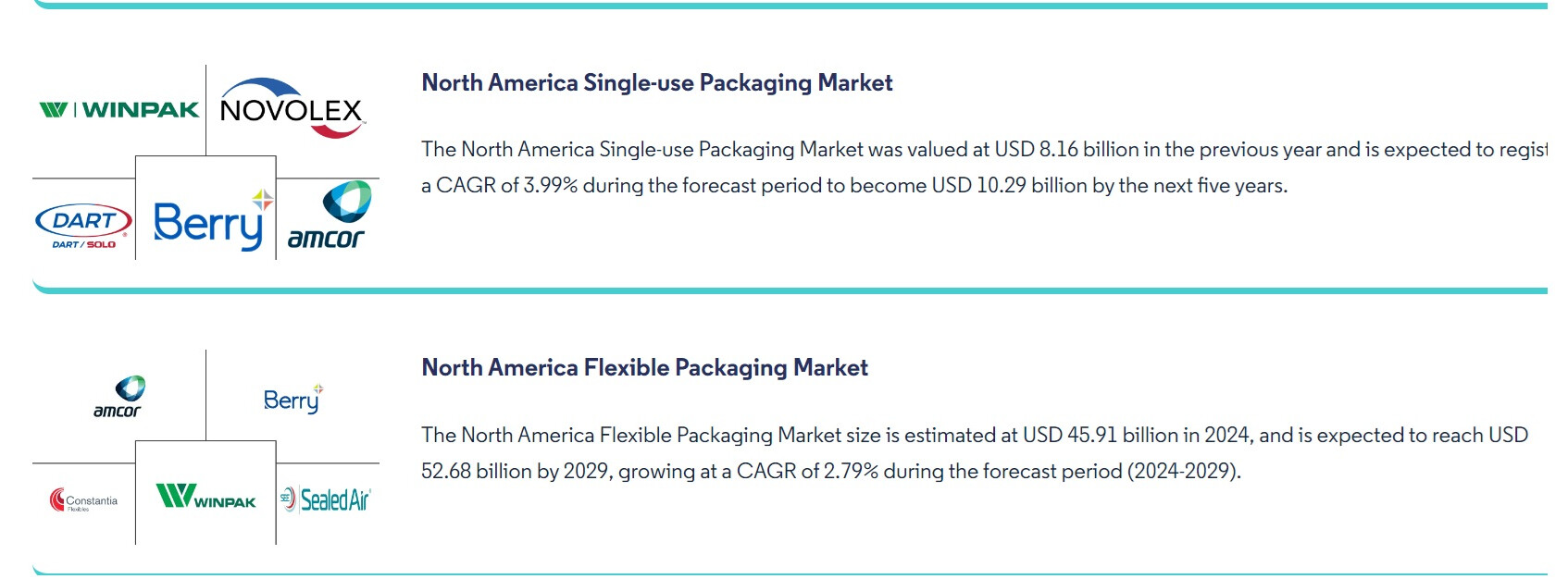
Link: WINPAK Reports - Industry Research
Amcor: Global player, focus on flexibles, factories in China, more pharmaceutical side vs. Winpak
Sealed Air: Global player, approx. 40% of net sales comes from mail packages and similar packaging

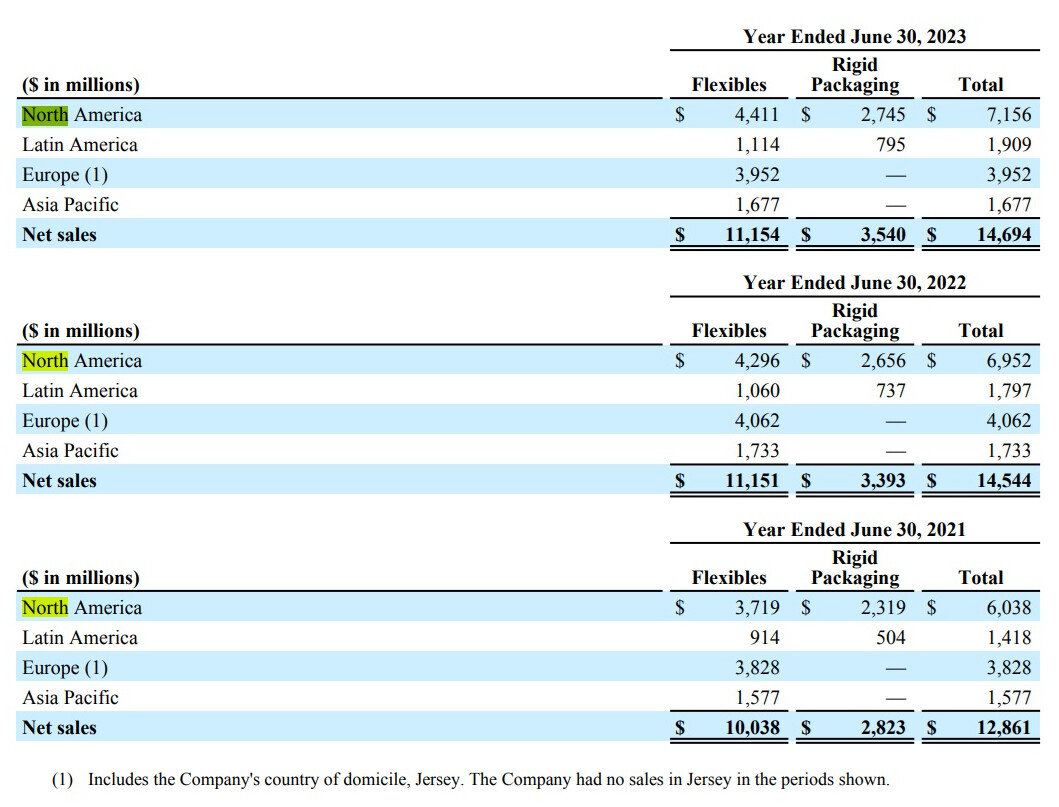
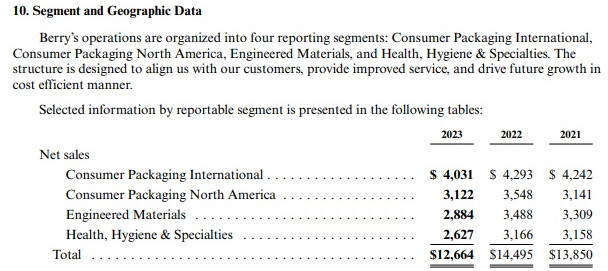
Berry Plastics
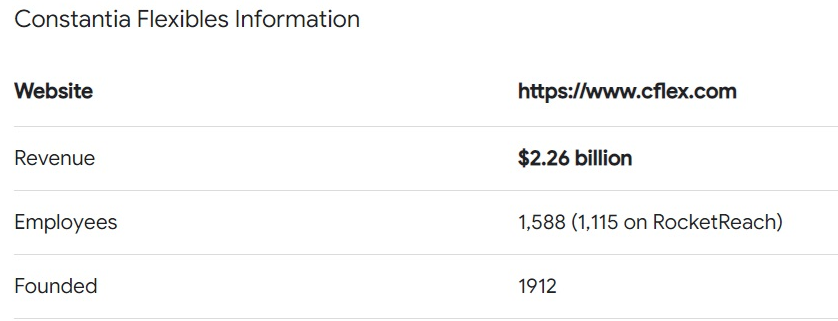
Constantia not a public company (oyj)
Novolex $3.6B Focuses on food packaging and paper bags, not a public company
Dart $3B Focuses on food packaging, not a public company
Every joint advertises itself as the leading company or one of the leading companies in its field,
which is probably true because everyone defines the target market a bit in their own way.
Even though Amcor, Sealed Air, and Berry are better comparables, Winpak competes with all of them.
3) Differentiation, growth segments, and competitive advantages/disadvantages
While some competitors have over 50 factories across North America, Winpak has 12 factories. Is
this more efficient operation or a business risk(?) This will hopefully become clear in the financial section; in any case, all the big players like to repeat the number of their factories, as this is certainly brought up in customer interactions.
When large store chains or similar make long-term contracts, they are able to pit packaging operators
against each other. The number of factories is sold as delivery reliability and capability.Where they stand out:
“Winpak is the only supplier that can deliver the complete packaging
solution of an In-Mold Label (IML) container, IML overcap and die-cut lidding. The overcaps are made from the same material as the container which reduces waste and promotes recycling. Typical applications include room temperature or refrigerated products such as shredded cheeses, yogurt, spreadable cream cheese, hummus, condiments, dips and ready-to-eat meals.”
Since Winpak is a leading supplier of portion & disposable packaging in North America, something is being done right there, and it’s good to monitor that this holds and strengthens. I assume that the printing operations and such acquired in recent years are aimed precisely at this.
Expanding operations is always a risk, but considering how cautiously Winpak has started expanding into the pharmaceutical packaging market, I consider this a healthy area to seek growth from. Another reason below.
Geographically, Canada and Mexico look promising.
4) Ownership Base
Antti I. Aarnio-Wihuri, Chairman, Wihuri International Oy, owns or controls 52.7 percent of the outstanding common shares of Winpak.
There are no other large owners; the next largest is 0.3788%. I assume that the lion’s share held by Wihuri makes this undesirable for private equity firms.
Insiders do own shares, though I did find some hefty stock-based compensation in the reports — stock based compensation needs to be combed through in the financial section. (I didn’t find anything alarming from recent years)
5) Management
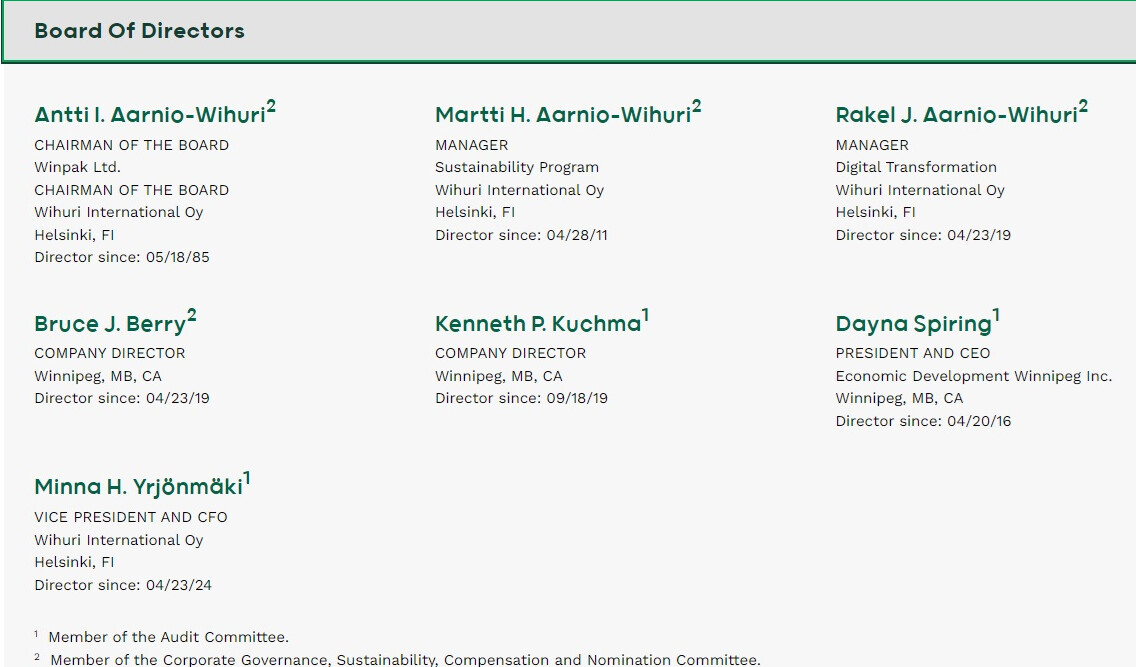
One should probably read a biography or two about the big chief Antti Aarnio-Wihuri, he seems to be a go-getter. At least when he was younger. While waiting for that Antti Aarnio-Wihuri – Wikipedia
Martti H. Aarnio-Wihuri is the big boss’s son. By all accounts raised ‘correctly’ Miljonääri Antti Aarnio-Wihuri laittoi 6-vuotiaan poikansa töihin – porsaan kasvaminen opetti ymmärtämään rahan arvoa - Ilta-Sanomat
Rakel J. Aarnio-Wihuri, on the other hand, is the daughter. I couldn’t find anything about her, as I don’t want to log into Instagram.
Bruce J. Berry has been CEO for a long time, jumped to the board a few years ago.
Kenneth P. Kuchma has long been CFO/VP, jumped to the board a few years ago.
A trailblazer article about Diana Spiring can be found here https://www.nelliemcclungfoundation.com/150-trailblazers/dayna-spiring%2C-ll.b.
Minna H. Yrjönmäki is the CFO of Wihuri International.
You could say it’s firmly in the hands of the Wihuris, but outside perspective from outside the family has also been sought for the board.
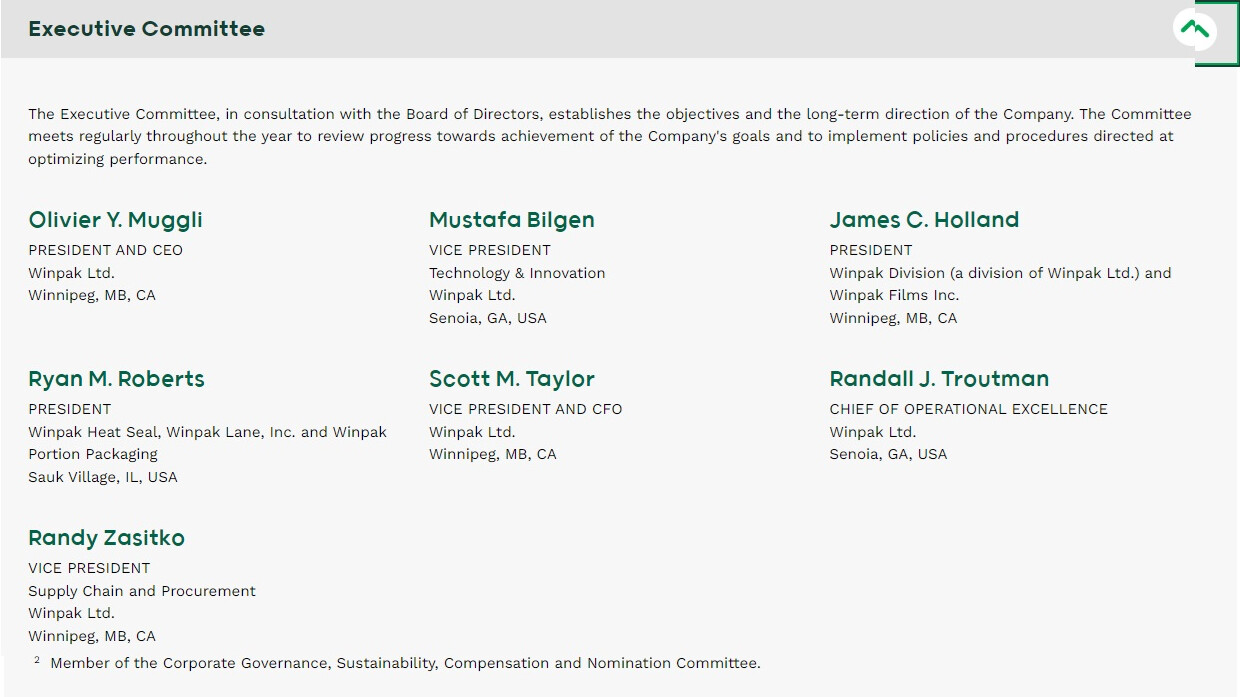
Muggli is the Research & Development Director, snatched from Amcor in 2011.
I couldn’t find (free) information on VP Mustafa.
Regarding Holland, the only source is from the Management Circular: ‘James C. Holland assumed the position of President of Winpak Division, a division of Winpak Ltd. July 1, 2017 and President of Winpak Films Inc. December 11, 2018.’
Ryan M. Roberts has been General Manager at DS Smith and has also worked at Sealed Air and Unilever.
Scott Taylor has worked at Winpak since 1999, Director of Corporate Accounting & Treasury since 2017. VP & CFO since 2022.
Randall J. Troutman - couldn’t find info.
Randy Zasitko - no info, though I did find a news article where he was quoted complaining about Canadian infrastructure.
To a delightfully large extent, the management either consists of longtime Winpakians or has been successfully lured from a competitor. These could be considered targeted hires for specific positions.
6) Culture
Culture eats strategy for breakfast, a wise man once said. That’s why I try to find some signals in the corporate culture. No complaints regarding the management; the strategy seems to work and the story has progressed swimmingly when reading the annual reports. What about the employees then?
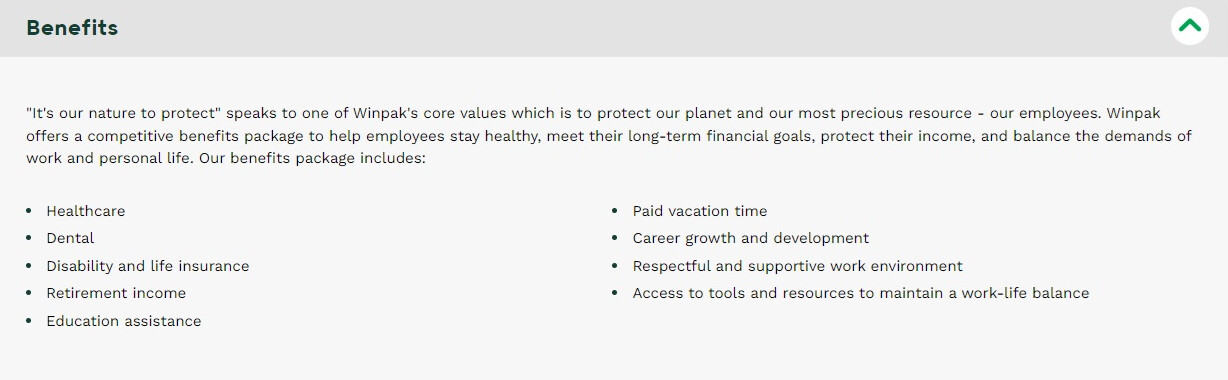
Sounds good, but are there signs of this?
“63% of employees would recommend working at Winpak to a friend.”
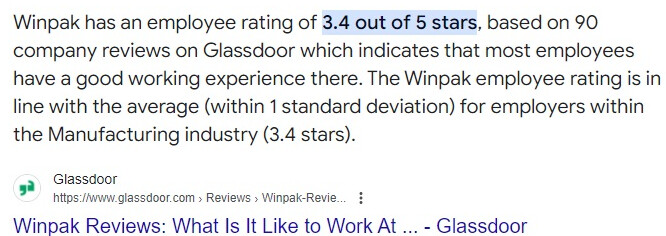
Amcor’s figure is 3.6 - and the benefits also look better (Glassdoor).
Let’s just say I’m not jumping for joy. And it feels very difficult to find admiring essays about how ecstatic it is to ‘drive Winpak forward’.
7) Valuation
‘There’s so much cash it hurts your wrists.’
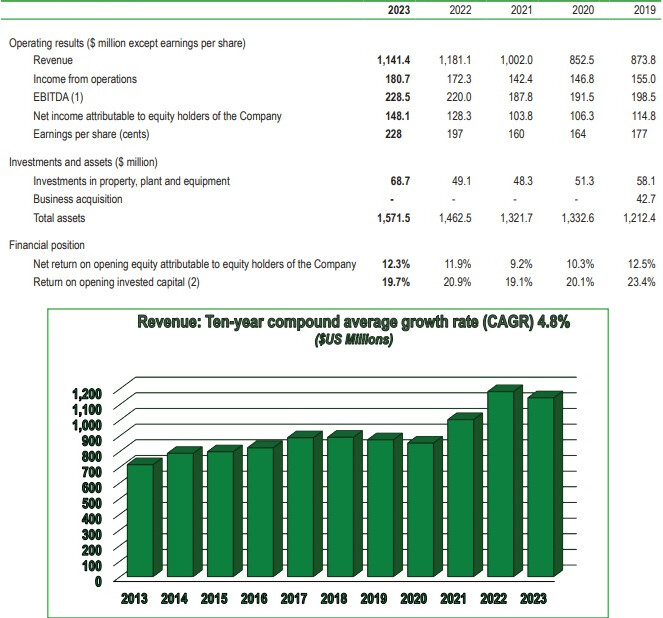
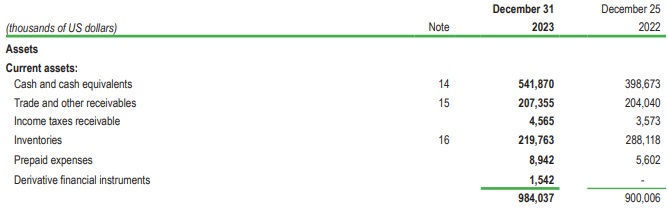
Winpak’s Mcap is 2.12B (USD), but with net debt at -0.53B (USD), EV is 1.59B. You could say the company is doing quite well — about 0.5B in cash has been carried along for a long time. But what about the valuation? Let’s see.
From 2020-2023, Winpak has baked wildly varying cash flow; the dividend policy has also played a role — at times, the entire cash flow + half extra has been paid out when Wihuri wanted money. The total 2020-2023 free cash flow (+dividends) distributed over the years is ~82M (USD), which means at this pace, the business needs to run for 19.39 years to cover the EV. Of course, growth (or shrinkage) swings this figure.
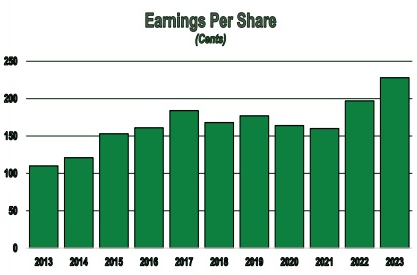
Sure, the CEO gushes that 2023 was a record year, but with the cash flow bouncing up and down annually as inventories are sometimes filled and sometimes emptied, you can’t latch onto single years when considering an investment.
I certainly don’t see any bargain here at first glance, perhaps later if I can convince myself of (profitable) growth.
Apologies for the awful layout, I’m not at home outside of notepad 
EDIT: Fixed the Berry Plastics image