
Li Auto’s Q3 didn’t exactly go to plan, but it was probably partly expected. Deliveries fell by nearly 40 percent, revenue collapsed, and both earnings and cash flow were well in the red, although the cash position is apparently in good shape.
The company is now leaning fully into new BEV models, but the Q4 guidance is indeed weak.
https://x.com/earnings_guy/status/1993611367417319926


Company’s own materials


Here is the share price reaction; note the graph starts from Monday. 

Chinese electric vehicle companies fell as December sales figures pointed to cooling demand.
Industry growth slowed to five percent year-on-year, compared to over 30 percent growth a year earlier. BYD’s stock fell and its December sales dropped by about 18 percent for the fourth consecutive month, even though the company surpassed Tesla in last year’s sales. Li Auto, NIO, Xpeng, and Xiaomi also weakened.
According to the article, the underlying factors are the gradual phase-out of subsidies and tax incentives, as well as margins eaten away by the price war. Growth has slowed and, in addition, prices have also fallen. 
The Chinese are dominating the electric vehicle market, at least according to this pie chart, although they do fudge the numbers sometimes.


2 Likes
Xiaomi announced that over 600,000 of its EVs have already been delivered since 2024.
The SU7 and YU7 are selling well: in January 2026, sales were approximately 39,000, and the target for this year is as high as 550,000 cars.
The tech giant, famous primarily for its consumer electronics offerings, sold over 400,000 units in 2025, placing it among China’s biggest EV firms. A mix of price cuts, promotional offers and positive critical reception drove up sales, with the YU7 being a main sales driver for the company.
Xiaomi CEO Lu Weibing stated that they are testing humanoid robots at their electric vehicle factory.
The robots are already performing heavy basic assembly tasks at the pace required by the production line, but in the future, Xiaomi’s goal is to improve productivity by replacing humans in certain job roles with these robots.
Xiaomi first introduced its CyberOne humanoid robot in 2022, but the product is not currently available for sale.
Chinese automakers experienced widespread sales declines in February, largely due to the timing of the Chinese New Year. This downturn was also reflected in a significant drop in the country’s electric and hybrid car sales, which was the first such decline in nearly two years. However, NIO ADR A stood out from the crowd by reporting substantial growth in its deliveries, which was in sharp contrast to many of its competitors.
-
NIO ADR A’s sales grew by 58% to 20,797 vehicles in February, defying the broader market trend.
-
Many Chinese automakers, including BYD (-41%) and XPeng (-50%), reported significant sales declines during the same period.
-
China’s electric and hybrid car sales fell by 20% in January to 596,000 units, which was the first decline in nearly two years.
-
The widespread sales decline is primarily linked to the timing of the Chinese New Year, which fell in February this year.
https://www.nordnet.fi/markkinakatsaus/uutiset/729a9346-32f3-4ff2-9e17-4504dcd985a1
Quite a peculiar phenomenon, if other manufacturers have about a 50% drop and NIO has a +50% increase in deliveries.
I’m really wondering whether European sales have exceeded expectations or if a local taxi company has renewed its fleet with NIO cars.
At first, I wondered if January’s deliveries were shuffled to February to make the statistics look good, but NIO delivered over 27,000 cars in January as well, which was a +96.1% improvement YoY.
2 Likes
Xiaomi CFO Alain Lam interviewed by Nicolai Tangen of the Norwegian Oil Fund. Duration 40 min.

1 Like
The article below reports that Xiaomi’s EV sales jumped to over 30,000 cars in April, and total sales for the beginning of the year have grown by 11 percent.
The company is targeting sales of 550,000 cars this year with its two models (SU7 and YU7), after which Xiaomi will head overseas; in other words, the conquest of Europe is set to begin late next year.
https://www.investing.com/news/stock-market-news/xiaomi-delivers-over-30000-evs-in-april-4651871
1 Like
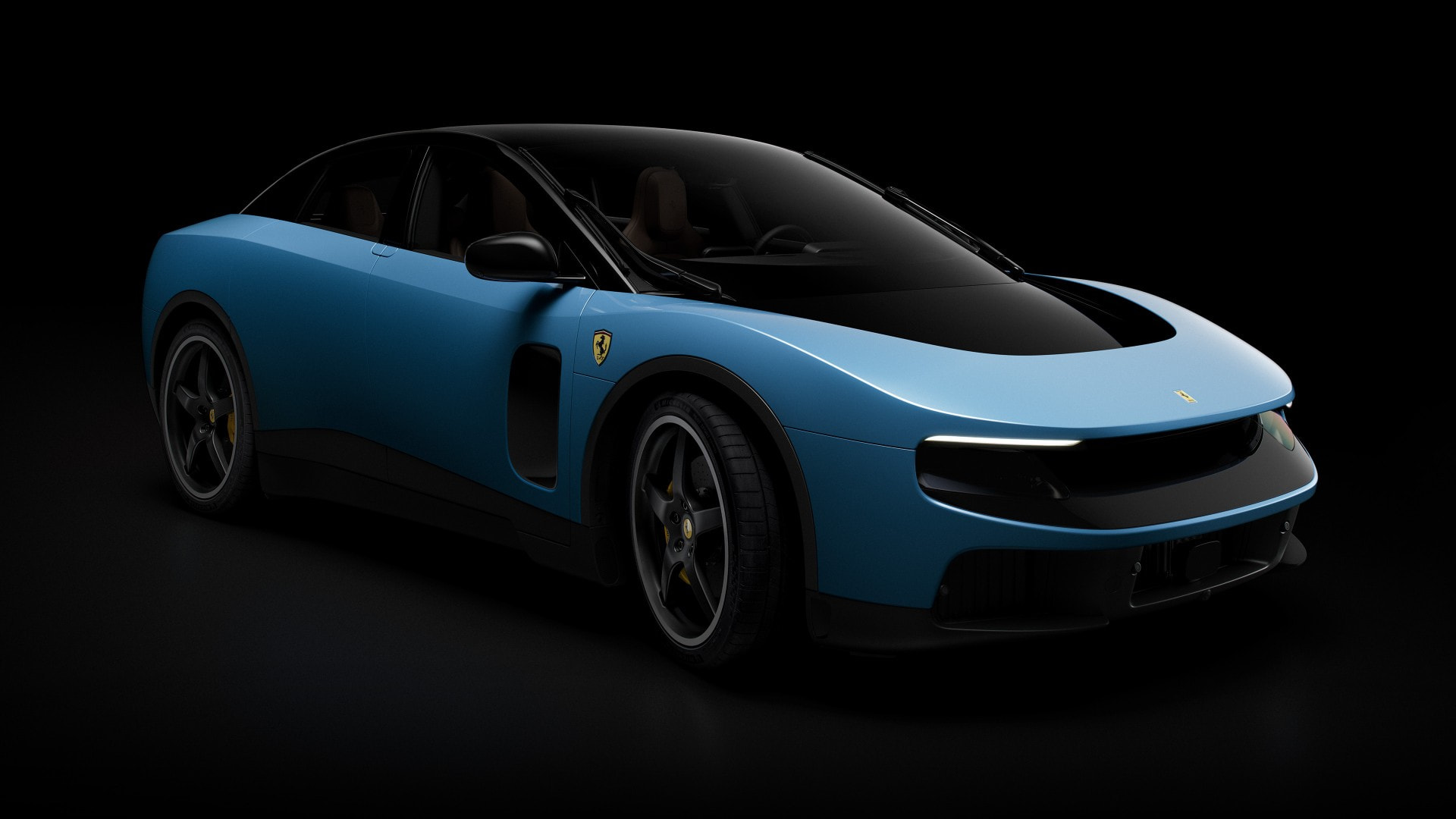
According to rumors, this was originally the rumored Apple Car. Since then, its chief designer moved to Ferrari.
5 Likes
Ferrari’s season as an electric vehicle manufacturer didn’t start very promisingly. The stock price is down over 6%. The car looks quite chillingly bad. Also, the 550,000€ starting price is freezing, even for a Ferrari.
2 Likes
Salkunrakentaja’s article on Ferrari’s electric car: Ferrari astui sähköaikaan, ja sijoittajat äänestivät jaloillaan
2 Likes
Xiaomi has announced three proprietary chips for smartphones, as well as for electric vehicles and robots.
Thanks to these, devices will be able to run AI faster and with lower power consumption. Proprietary chips can also lower manufacturing costs for cars, improve the synergy between Xiaomi’s devices, and reduce dependence on other chip manufacturers.
1 Like
Xiaomi is preparing to bring its electric vehicles to Europe next year.
The company signed a preliminary agreement with eight German car dealership groups.
The article below takes less than a minute to read.
Below is a discussion on how Chinese electric vehicle manufacturers are expanding into humanoid robots as car market growth slows down and profitability weakens.
Xpeng, Xiaomi, Nio, and others are pursuing robotics as a new avenue for growth and to achieve higher valuations typical of tech companies. The automotive industry’s manufacturing expertise, supply chains, and factories give them at least a head start, though the market still harbors doubts about commercial demand, software functionality, and the profit potential of these ventures.
Xpeng plans to start mass production of its robots as early as the end of the year in its own showrooms and facilities.
Key Points
- Xpeng, Xiaomi and other Chinese electric car companies are directly or indirectly expanding into humanoid robotics.
- It’s part of a bid to reshape “capital valuation narratives,” said Kevin Li, associate director at Counterpoint Research.
- The business diversification comes as slowing growth and weakening profitability put pressure on China’s EV makers.
1 Like
Xiaomi delivered over 40,000 electric vehicles last month, bringing deliveries since the beginning of the year to over 286,000 vehicles.
The new SkyNomad series gathered more than 70,000 orders. Citi expects the third quarter to be the weakest of the year, but views any potential dip as an attractive buying opportunity.
1 Like