Titaniumin yhtiökokouskutsussa ei suurempia yllätyksiä. Ainoa merkittävä muutos aiempaan on antivaltuutuksen nosto 1,2miljoonasta 2,0 miljoonaan osakkeeseen. Mielestäni tämä on selkeä signaali siitä, että yhtiö pohtii myös aktiivisesti yritysjärjestelyliikkeitä kasvustrategiansa vauhdittamiseksi. Kuten olen usein sanonut, olisivat yrityskaupat Titaniumille hyvin looginen tapa vauhdittaa strategiaa, sillä kasvun vauhdittamisen lisäksi ne pientäisivät myös yhtiön riskiprofiilia (Hoivan osuus laskee).
12 tykkäystä
Näin suuri antivaltuutus mahdollistaa ja voi signaloida myös monia muita yritysjärjestelyjä. Ei pelkästään Titaniumin suorittamia yritysostoja.
Kokouskutsun mukaan hallitukseen valitaan uudelleen Mikko Bergman, Teemu Kaltea, Tommi Santanen, Petri Kärkkäinen ja Tom Lojander. Nykyinen hallituksen jäsen Eeva Raita on ilmoittanut, että hän ei ole käytettävissä uudelleenvalintaan.
Kaikki kunnia herroille, mutta ei tuo tulevan hallituksen kokoonpano varsinaisesti indikoi mitään poikkeuksellisen tuoretta lähestymistapaa yhtiön tulevaa toimintaa ajatellen. Olisiko kuitenkin ollut uutta suuntaa etsivälle yhtiölle parempi, että yksi tai kaksi yhtiön omistajista olisi vetäytynyt hallituksesta takavasemmalle ja tilalle olisi valittu 2-3 ulkopuolista henkilöä tuoreilla ajatuksilla.
Luulen myös, että Eeva Raita on ollut hallituksessa se, jolla on ollut eniten kuplan ulkopuolisia suhteita ja ajatuksia. Eeva Raita on myös ollut ehkä se kaikkein riippumattomin hallituksen jäsen ja sikäli yhtiön pienosakkaiden kannalta tärkeä henkilö. Jos sattuisi vaikka yhtiön suuromistajien ja pienosakkaiden etu jossakin vaiheessa risteämään.
Hallitusmuutoksen jälkeen Titanium Oyj ei lisäksi täytä Arvopaperimarkkinayhdistys ry:n ylläpitämää Suomen listayhtiöiden hallinnointikoodia hallituksen jäsenten riippumattomuus vaatimusten osalta. Koodin noudattaminen on toki useimmille First North yhtiöille vapaaehtoista, mutta Titanium on kuitenkin ilmeisesti koodia tältä osin pyrkinyt noudattamaan. Prittisen eroa yhtiön hallituksesta aikanaan perusteltiin sillä, että yhtiöön sidoksissa olevia jäseniä oli hallituksessa liian paljon.
Ei näyttäydy Titaniumin tuleva hallitus minään liian dynaamisena joukkona. Pikemminkin herää epäilyksiä enempi jäähdyttelystä.
3 tykkäystä
Nyt loppuviikosta on Ervasti näköjään merkattu yhtiön virallisilla sivuilla johtoryhmään kuuluvaksi. Mihin hänet viimevuoden tiedotteen mukaan nimitettiinkin, mutta tähän mennessä hän on esiintynyt yhtiön sivustoilla rivimiehenä.
Ervastin virallinen titteli on varainhoidon johtaja, ei siis myyntijohtaja. Varainhoitotalossa varainhoidon johtajan voisi olettaa olevan kakkosmies TJ:n jälkeen.
3 tykkäystä
Hoivalta uusi rahoituspaketti. Titaniumin Hoivarahasto sopi 240 MEUR:n uudelleenrahoituksesta Deutsche Bankin kanssa - Inderes
Omissa papereissa tämä kääntyy varovaisesti plussalle, koska raha on pitkäaikaista ja paketti on aiempaa isompi. Toki rahan hintaa emme tiedä, mutta en nykymarkkinassa olisi erityisen huolissani tästä. Yleisesti ottaen olen siinä käsityksessä, että kotimaiset pankit ovat tällä hetkellä aika nihkeitä rahoittamaan kotimaisia kiinteistö erkkareita. Deutchehan tuli rahoittaamaan eQ:n YKK-rahastoa jo 2024.
8 tykkäystä
## Uusi paketti on isompi ja pitkäaikaisempi
Nyt solmittu rahoituspaketti korvaa aiemman 6/2024 solmitun 203 MEUR:n paketin, jossa rahoittajina olivat Danske ja OP. Arviomme mukaan aikaisempi paketti oli erääntymässä nyt kesällä. Uusi rahoituspaketti on pitkäaikainen, mikä tarkoittaa arviomme mukaan 3–5 vuoden maturiteettia. Näin ollen rahaston työrauha onkin nyt turvattu pidemmäksi aikaa. Paketti on myös kooltaan suurempi (240 vs. 203 MEUR) kuin aiempi, ja se antaa rahastolle lisää liikkumatilaa. Huomautamme, että rahaston oma pääoma oli 12/2025 463 MEUR, ja koko vierasta pääomaa ei voida edes rahaston sääntöjen puitteissa ottaa vielä käyttöön (velkavipua saa olla korkeintaan 50 %). Lähtökohtaisesti emme odota, että rahasto kasvattaa nykyistä noin 40 %:n tasolla olevaa velkavipuaan, vaikka paketti tämän mahdollistaisi. Paketin korkokuluja ei tiedotteessa kommentoitu, mutta emme oleta niiden oleellisesti muuttuvan aiemmasta.
Hoivan säännöistä: Rahastoyhtiö saa ottaa Rahaston lukuun Rahaston sijoitustoimintaa ja
omaisuuden hoitamista varten luottoa määrän, joka vastaa enintään
sataa (100) prosenttia Rahaston varojen nettoarvosta (NAV).
Eli maksimi lainamäärä on 463 milj., jos omapääoma on 463 milj. ja GAV on 926 milj.
Jos taas GAV on 663 milj., kuten Hoivalla joulukuun rapsan mukaan on, maksimi lainamäärä on 331,5 milj.
Hoivan LTV, (lainat suhteessa varat), on maltillinen 30%.
Velkaantumisaste, (lainat suhteessa omaan pääomaan) on 43%. (Sääntöjen mukaan saa nähdäkseni olla 100%)
Teoriassa Hoiva voisi ottaa lisää velkaa ja maksaa lunastuksia rapiat 80 miljoonalla. Jolloin 80 miljoonalla GAV olisi noin 583 milj., NAV 303 milj. ja velat 280 milj..
Eli teoriassa 40 milj. voitaisiin hyvinkin käyttää lunastusten maksuun.
Ilmeisesti Kiinteistörahastolaki (1173/1997), jossa säädettiin kiinteistörahaston maksimi velaksi 50% GAV:sta, on viimeistä päivää voimassa 16.4.2026? Säädetäänköhän 16.4.2026 jälkeen enää tarkalla prosenttimäärällä avointen kiinteistörahastojen velkamääriä?
4 tykkäystä
Tässä on Salen kommentit siitä, kun Titanium nimesi uudeksi toimariksi Jukkapekka Laurilan 
Titanium tiedotti maanantaina nimittäneensä MBA Jukkapekka Laurilan yhtiön uudeksi toimitusjohtajaksi 1.4.2026 alkaen. Laurilalla on yli 20 vuoden kokemus rahoitusalalta ja pääomamarkkinoilta, ja hän siirtyy tehtävään Danske Bankin Large Corporates & Institutions -yksiköstä. Pidämme tärkeänä, että uusi toimitusjohtaja pääsee aloittamaan nopeasti, vaikka hänen instituutiomyyntiin painottunut taustansa olikin meille yllätys. Nimityksellä ei ole vaikutusta ennusteisiimme tai näkemykseemme yhtiöstä.
3 tykkäystä
Mitäs ajatuksia ketjussa herättää uusi toimari? Omat fiilikset vähän kaksijakoiset. Vanha myyntitausta ja nopea aloitus isot plussat, varainhoitotaustan puute miinus. En tosiaan kyseistä henkilöä tunne, eli nämä ovat vain cv:n pohjalta tehtyjä ensihavaintoja. 
8 tykkäystä
Viimeisen kolmen vuoden aikana Titaniumissa on tapahtunut paljon. Tärkeimpänä tietysti monet rekryt, jotka viitoittavat yhtiön reittiä tulevaan. Kaiken muutoksen jatkumona Laurila on kuin kirsikka kauniin kakun päällä. (Jos Inderes jotenkin palkitsee kauneimmat ja koskettavimmat kommentit, olen luultavasti aika vahvoilla täällä kommentilla, itsekin herkistyin.)
Asiaa voisi pohtia ja spekuloida monesta näkökohdasta.
Tässä hetkessä yksittäisenä asiana Laurilan nimitys osuu enemmän kuin hyvään saumaan huomioiden, että Eeva Raita on jättämässä hallituspaikkansa ja Walteri Ahlström poistui rivistä marraskuussa. Raita ja Ahlström olivat näin ulkopuolisena arvioiden ne henkilöt, jotka ovat/olivat eniten kuplan ulkopuolisia laajoilla kontaktipinnoilla. Näytti, että yhtiö oli ikään kuin käpertymässä itseensä. Laurila pitkään alalla olleena paikkaa tilanteen varmasti erinomaisesti.
Titanium uudisti strategiansa 14.11.2024. Uudessa strategiassa todetaan mm.
- Merkittävä osa palveluiden kohteena olevasta varallisuudesta kohdistuu uusiin tuotteisiin, palveluihin ja asiakaskohderyhmiin.
- Titanium vahvistaa asemaansa strategisena kumppanina tarjoamalla henkilökohtaisempaa palvelua ja laajentamalla asiakaskuntaansa, erityisesti ammattimaisten ja kansainvälisten sijoittajien keskuudessa.
Strategian julkistamisen aikana em. tavoitteet olivat, sanoisinko sanahelinää ohueessa ilmakehässä.
Nyt, vajaa puolitoista vuotta myöhemmin, viimeistään Laurilan nimittämisen myötä, em. tavoitteet ovat saamassa vahvaa konkretiaa.
Lisäksi olen sitä mieltä, että parhaat palat on vielä näkemättä ja Laurilan nimittämisen jälkeen niitä ei enää tarvitse kauaa odottaa.
5 tykkäystä
Laurilan seuraaja Danskella aloitti työt jo viime vuoden elokuussa. Mistä voisi veikata, että Laurilan pesti Titaniumilla on taputeltu mahdollisesti jo sitäkin aikaisemmin. Jos ei Titaniumin niin ainakin Titaniumin pääosakkaiden kanssa.
Mistä voisi veikata edelleen, että askelmerkkejä eteenpäin on jo hyvän tovin aseteltu ja ne ovat tässä kohtaa suht selvät.
Jatkoa odotellessa…
4 tykkäystä
Tähän lunastus/merkintä asiaan palatakseni. S-Pankin uusissa Asuntorahaston säännöissä on tämmöinen kohta:
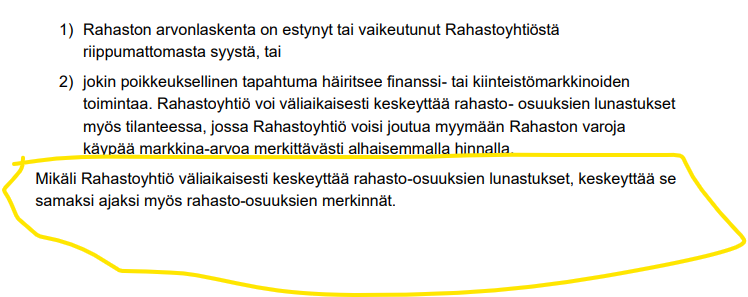
https://dokumentit.s-pankki.fi/tiedostot/s-pankki-asunto-saantomuutos-fi-27032026
Ainakin Ässä tulkitsee tätä regulaatiota samoin kun minä, koska muutenhan rahaston ei missään nimessä kannattaisi pistää merkintöjä säppiin, kun lunarit ovat säppiin.
4 tykkäystä
Samaa mieltä tuosta.
Mutta sitten on kohta maksuvalmiudesta. Jos rahaston lunastuksia rajoitetaan, merkinnät ovat edelleen mahdollisia. Tuo 5% ei ole lain määräämä. Se voisi olla ilmeisesti pienempikin. Vahvalla puskurilla ja hyvällä kassavirralla rahasto voitaisiin pitää auki merkinnöille pitempäänkin.
Maksuvalmiuden hoidon keinot
Rahastolle on valittu käyttöön seuraavat rahastokohtaiset maksuvalmiuden hoidon keinot:
lunastusrajoitus, ilmoitusajan pidentäminen ja apporttina tehtävä lunastus.
Lunastusrajoituksella tarkoitetaan päätöstä rajoittaa Lunastuspäivänä toteutettavien
lunastustoimeksiantojen kokonaismäärää.
Mikäli annettujen lunastustoimeksiantojen kokonaismäärä Lunastuspäivänä ylittää viisi (5)
prosenttia Rahaston nettoarvosta (NAV), Rahastoyhtiö voi päättää rajoittaa toteutettavien
lunastusten määrää viiteen (5) prosenttiin Rahaston nettoarvosta, mikäli se on Rahaston
osuudenomistajien edun mukaista.
3 tykkäystä
Hoiva maksaa loput H1/2024 lunastuksista.
10 tykkäystä
Hieno juttu, että pääsevät tässä eteenpäin! Nyt kun eivät raportoi kk-katsauksia, niin emme tiedä onki siellä myyty yksittäisiä kohteita tämän rahoittamiseksi, vai meneekö tämä uuden velkapaketin puitteissa. Titanium tuskin raportoi yksittäisistä kohdemyynneistä, vaan pelkistä portfoliokaupoista.
5 tykkäystä
Hoivan taseesta päätellen H1/2024 lunastukset olivat 36 milj. Joulukuun 2025 kiinteistökauppa oli 35 milj.. Joten eiköhän myös tämä jälkimmäinen maksuposti hoidu pitkälti em. joulukuun myynneillä.
Viime kesäkuun laajassa rapsassa H1/2024 lunastusten haarukaksi arvioitiin 30-50 milj. (vrt. 36 milj.). Jos tahti suhteessa rapsan arvioihin jatkuvat samana, loput rästissä olevat lunastukset, H2/2024 10 milj, plus vuosi 2025 35 milj. olisivat yhteensä 45 milj..
2 tykkäystä
Mitä vähän seuraillut muiden avointen kiinteistörahastojen lunastusten maksuja, vaikuttaisi siltä, että usein tyylinä on ollut, että myynneistä vain osa käytetään lunastusten maksuun ja osalla lyhennetään velkaa.
Tietysti jos velkavipu pyörii edes vähän miinuksella ja lainasuhde alkaa olemaan siinä rajoilla, näin pitääkin tehdä.
Titaniumin hoivalla on eri tilanne. Kassavirtapohjainen nettotuotto on reilusti yli korkotason, korko lienee tällä hetkellä 3,5 ja 4,0 prosentin välillä, ja korot on luultavasti lähes kokonaisuudessaan korkosuojattu.
En pitäisi aivan mahdottomana, että loput lunastukset maksettaisiin pääasiassa lainalla eikä mitään kiinteistömyyntejä enää tehtäisi asian hoitamiseksi. Lainalimiitti sinänsä sen luultavasti mahdollistaisi, mutta asia ei liene aivan niin yksioikoinen.
Jos tosiaan lunastuksia ryhdyttäisiin maksamaan velalla tilanteessa, jossa velkavipu on kohtuullisen terveellä tasolla, tarkoittaisi se tietysti NAV:in kassavirtapohjaisen tuoton kohtuullista kasvua vielä nykyisestä. Mistä ei olisi ainakaan haittaa ajatellen rahaston uusmyyntiä.
Kokonaan ei voi enää myöskään pois sulkea kiinteistöjen hienoista arvon nousua lähitulevaisuudessa. Mikä tietysti sekin helpottaisi monella tapaa tilannetta. Puolikin prosenttia näkyisi luvuissa ihan kivasti.
4 tykkäystä
Vähän luulen, että tämä on aikalailla vanhentunutta tietoa. Jos laaja rapsa tehtäisiin nyt, niin luvut olisivat selvästi isommat. Joka tapauksessa lienee selvää, että Titanium yrittää käyttää kaikki muut mahdolliset keinot lunastusten maksuun kuin parhaiden kohteiden myynnit. Ei liene helppo homma.
2 tykkäystä
Titanium on päivittänyt rahastojensa sääntöjä maksuvalmiuden hoidon osalta. Kiinteistörahastojen maksuvalmiutta hoidetaan jatkossa seuraavilla tavoilla.
Rahastoille on valittu seuraavat maksuvalmiuden hoidon keinot:
Titanium Asunto, Titanium Baltia Kiinteistö ja Titanium Hoivakiinteistö: lunastusrajoitus, ilmoitusajan pidentäminen ja diluutiosuojamaksu. Muutokset on tehty sääntöjen 13 §:ään.
Näiden lisäksi on vielä mahdollista, että tietyissä olosuhteissa keskeytetään sekä merkinnät että lunastukset.
3 tykkäystä
Merkintäpalkkio, vuotuinen hallinnointipalkkio, transaktiopalkkio (kun kiinteistöjä ostetaan/myydään kiinteistösalkun sisällä) ja lunastuspalkkio ovat nyt käytössä. Tämän lisäksi tulee nyt siis mahdollinen diluutiosuojamaksu 0-20%. Hyvässä markkinatilanteessa diluutiosuojamaksu on varmaan 0% tai lähempänä 0%, mutta paljonko se on huonossa markkinatilanteessa nyt tai tulevaisuudessa? Jossain skenaariossa esim. 5% ja maksimi on siis 20%.
Näillä tiedoilla rahastoon sijoittavan suositeltava sijoitusaika tulisi olla varmaan vähintään 7-10 vuotta.
Mielenkiintoista nähdä, että miten tämä käytännössä toimii. Jos teet lunastuksen, kerrotaanko asiakkaalle etukäteen indikaatio todennäköisestä diluutiosuojamaksun prosentista (esim. vaihteluväli 3-5%) ennen kun rahat tulevat pankkitilille ja sitten vastaat kyllä/ei, että haluatko rahat vai perutko mieluummin lunastustoimeksiannon viime hetkellä jos diluutiosuojamaksu on asiakkaan näkökulmasta tänä vuonna liian korkea. Vai tulevatko rahat ilman ennakkotietoa pankkitilille ja etukäteen et yhtään tiedä diluutiosuojamaksun suuruutta kun teet lunastustoimeksiannon.
Jotain ennakkotietoa pitäisi rahastosijoittajan saada. Ei oikein voi olla niin, että rahaa tulee pankkitilille 100 000 euroa tai 80 000 euroa ja tiedät asian vasta sitten kun lunastustoimeksiantoa ei voi enää mitenkään perua. Tuossahan voi muuten pyyhkiytyä rahaston esim. 4 vuoden tuotto kerralla pois lunastuksen yhteydessä.
9 tykkäystä
12 viestiä yhdistettiin ketjuun: Finanssisektori sijoituskohteena
Asunto ja Hoiva tehneet uudet rahoitussopimukset.
Kuinkas sattuikaan, osuiko ihan korkopohjiin! Taas!
Hoivan aikaisempi korkosopimus oli 2,5% + marginaali. Ymmärtääkseni.
4 tykkäystä