I don’t feel like repeating too much of the same things that have been said here and in the “Bought/Sold” thread, but Amazon isn’t fully encroaching on the same territory as TTD, and TTD has its own clear strengths, as can be read from my posts. There is already evidence regarding the Kokai platform, and there is some experience with the new auction mechanism, but there isn’t enough concrete evidence yet to hype it up much more.
Yeah, Amazon isn’t a pleasant thing though, and there are other threats here too. On the one hand, TTD feels cheap for some reason and Amazon might not be seen as a completely direct competitor given their different strengths; on the other hand, there is some credibility to it, as the share price plummeted—so maybe there is unnecessary downplaying from TTD bulls regarding this giant competitor. God only knows what will happen and whether TTD’s new “setups” are the kind that end up as mere tinkering and wither away.
Some still feel that valuations are high and don’t see a particularly bright future for the company, and they have wondered about the lack of insider buying.
Here is a TTD bull’s video about the company. I only speak very poor English and watched it with subtitles, but he seemed to consider the company cheap relative to what is expected of it. In my opinion, he emphasized that the company and its management have performed well without major mistakes.
Through my bullish glasses I don’t see Amazon’s entry into the same market as being as bad as it’s currently priced into TTD’s share price.
The biggest threat here, in my opinion, is customers moving from TTD to Amazon’s ecosystem, which as far as I understand hasn’t really happened; instead, customers have stayed or rather increased.
The question is more about where more growth will come from, given that Disney, Netflix, Roku, etc., are already in the pocket.
Smart TVs are here to stay, so they should get a few more manufacturers on board where TTD would be built-in when the TV is brought home from the store.
Advertising isn’t going to end in this world until the last person turns off the lights
My strong gut feeling is that the next earnings release will be positive and the bears will put on bull suits => the music will play again.
Disclaimer:
(Babble predicted from tea leaves and horoscopes that may or may not happen)
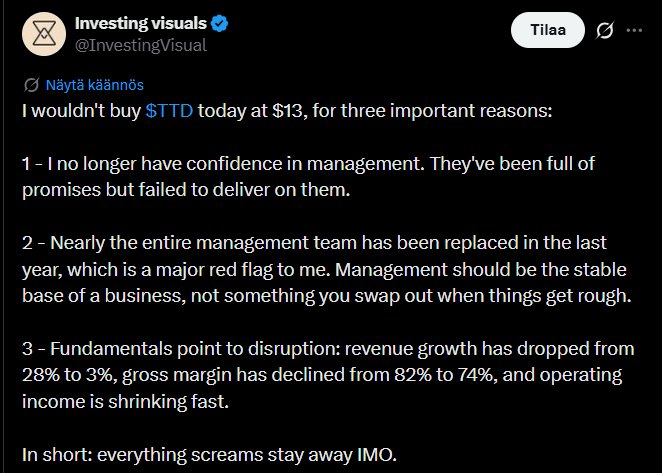
What kind of company have I gotten myself mixed up in again, sounds promising… two CFOs dismissed within a year + the head of audit has been replaced as well
Well, at first it looked quite good, but then, when we got to the company’s future outlook…
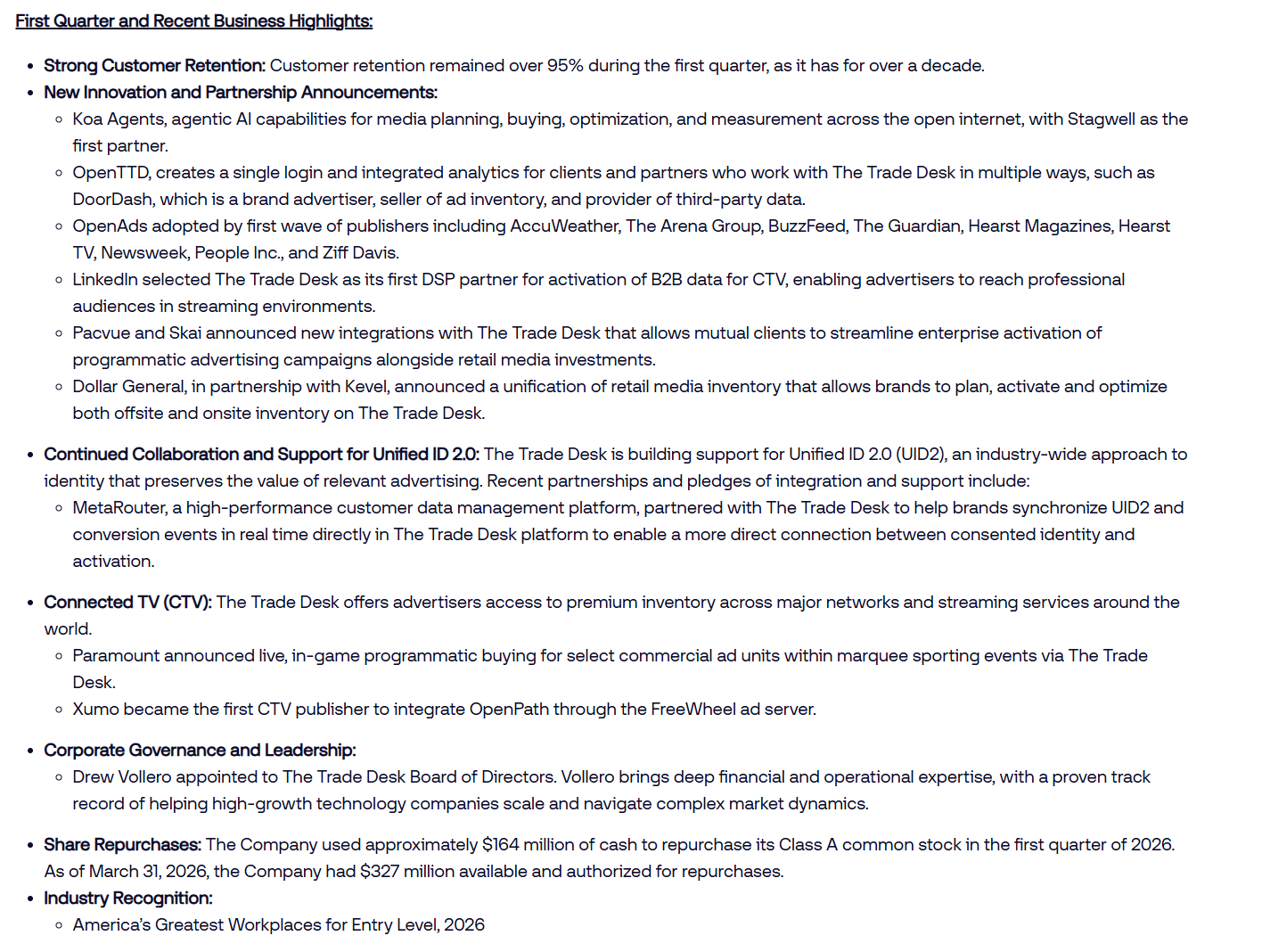
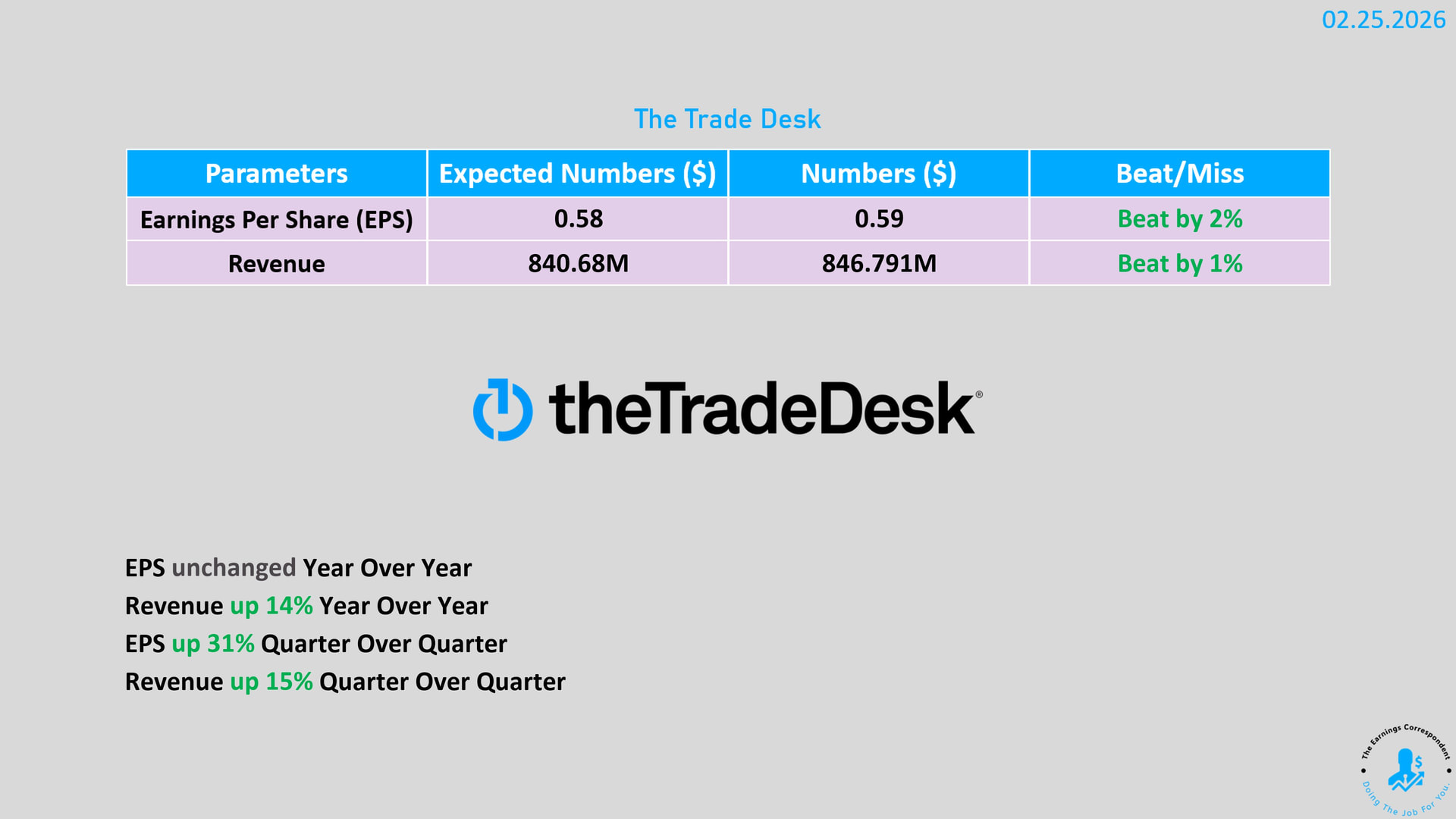
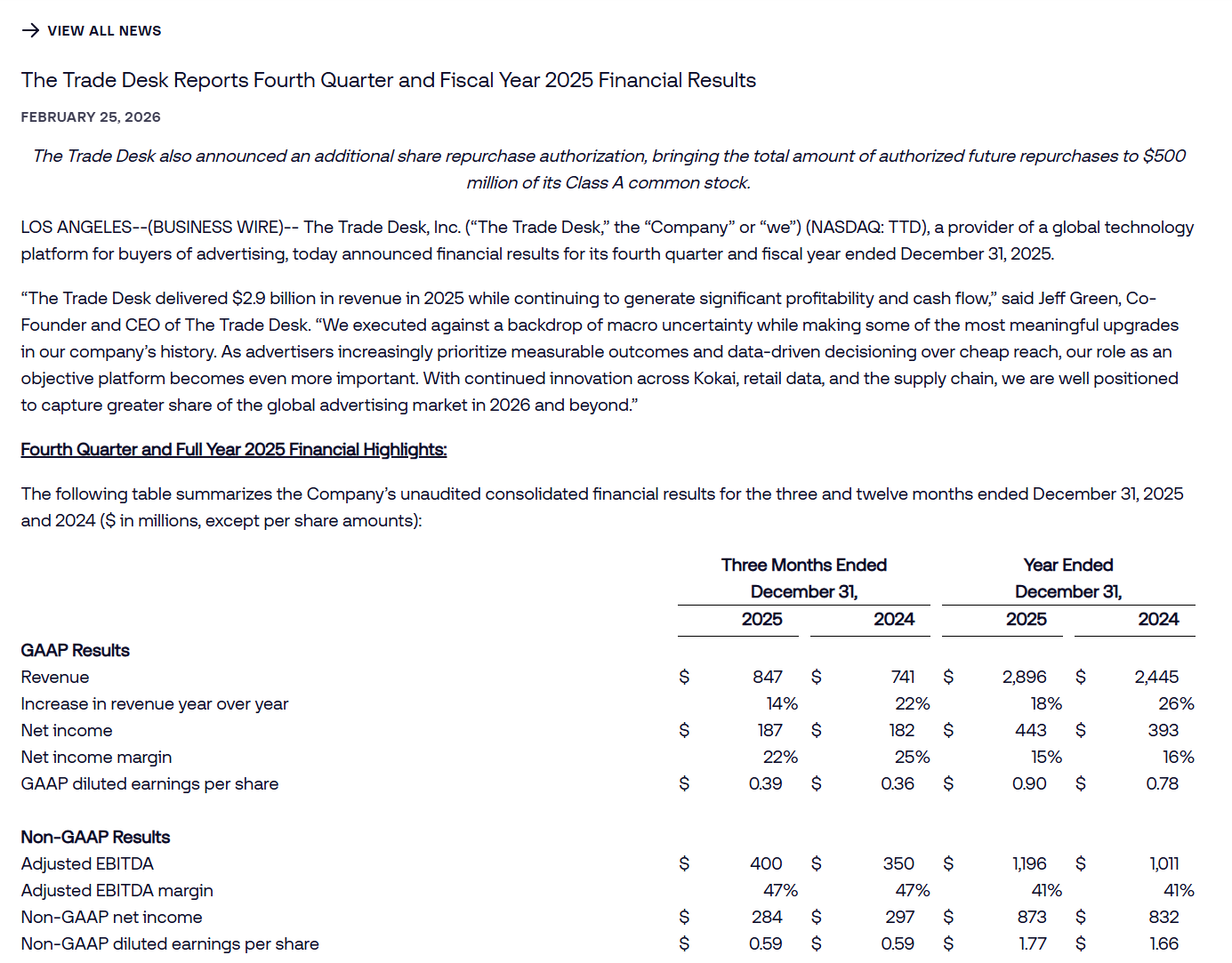
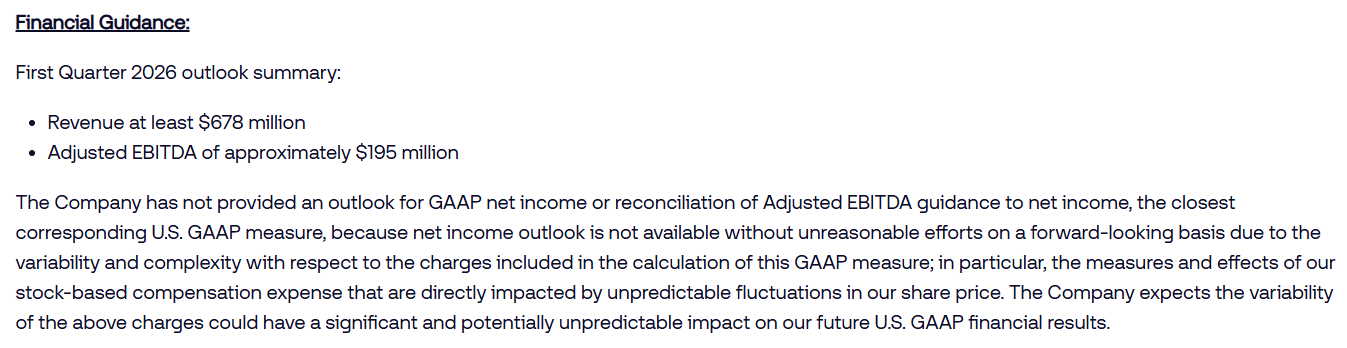
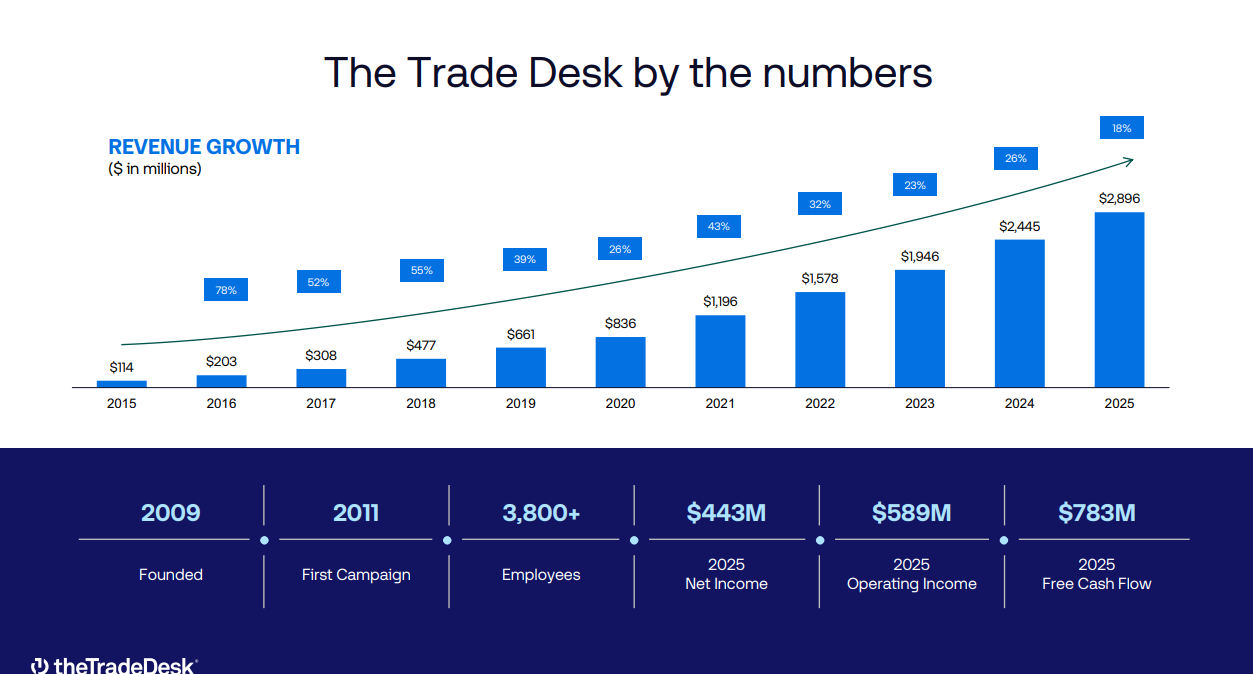
So Trade Desk reported a decent quarter and even record sales for the full year, but the growth rate seems to be clearly fading. Sales growth has slowed & slowed, and additionally, the company’s guidance for the start of the year hints at even weaker development and softening profitability - not much was expected, but even that was missed.
Management highlighted all sorts of new platform improvements and their positioning against closed ecosystems. The results still showed some good performance in terms of cash flow, but either way, investors are worried about the cautious outlook, and for good reason.
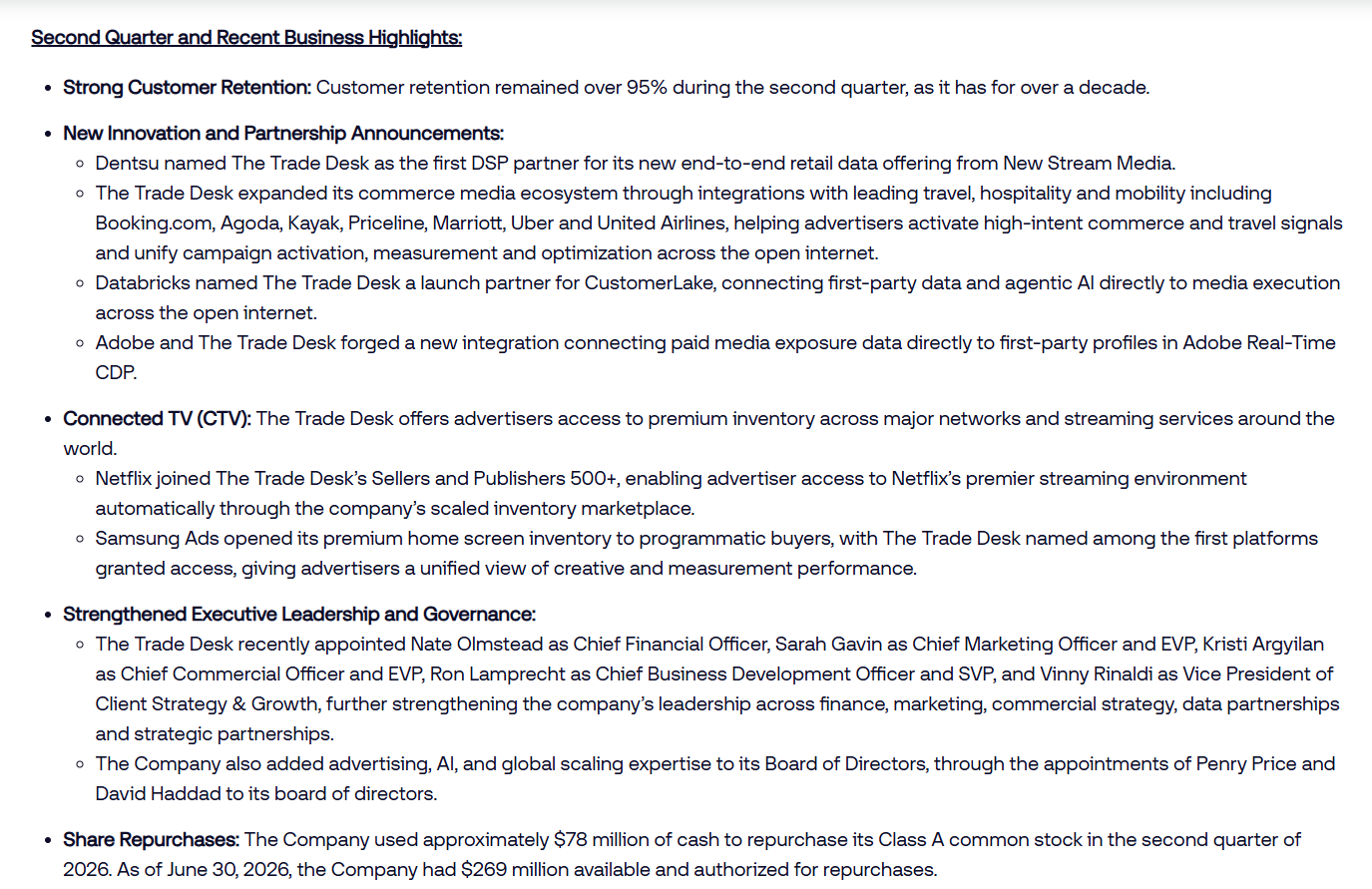
Still, customer retention remains high, margins are strong, and the company is even continuing share buybacks.
Have you noticed that TTD has generated about $690M in free cash flow in a year, while the share count has remained practically the same? This still looks good until I note that share-based compensation (SBC) has been $508M! Booyah! To put it simply: TTD makes good money, it buys back shares with almost all of it and gives them to the employees. The real free cash flow is 690-508 = $182M. If we are generous and use a high P/FCF of 25, the fair value would be 182x25 = $4.55B.
The current market cap is 12.2B. This back-of-the-envelope calculation makes my interest vanish immediately, and that’s why TTD isn’t among those I’ll spend more than 5 minutes on.
I had to reply to this separately; I hadn’t noticed. And it’s possible that I’ve read it but haven’t internalized it, but since you wrote it that way, it’s stuck in my head now. Thanks!
If that was mentioned in English somewhere and I read it first, then had it translated with some program, it certainly went over my head. And I wouldn’t know how to look for it independently by just looking at the figures, so thank you. My back-of-the-envelope calculations are simpler and include a narrower range of different numbers etc. (and they’ve still gone wrong)
And when you consider that the guidance wasn’t very pleasant and growth has slowed down a lot, it really makes these look even worse; plus, the CFO changed — again.
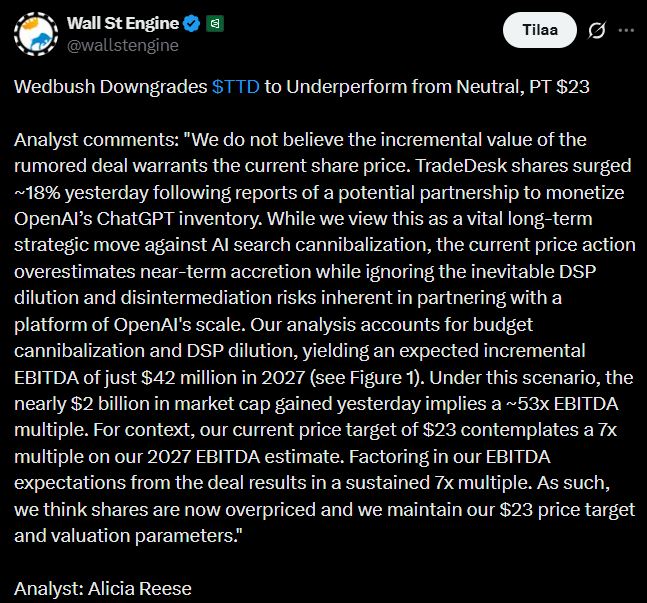
Wedbush maintained its price target for Trade Desk at $23 even after the latest news.
The company’s stock price rally is thus considered overextended, as the near-term financial benefits of the potential OpenAI collaboration are estimated to be limited relative to the expectations already priced in.
Analysts don’t appreciate (and neither do I) when Trade Desk has disputes with Publicis and other media companies, which adds uncertainty about customer relationships, revenue, and growth prospects. Target prices were clearly lowered.
Wall Street analysts cut rating on The Trade Desk, citing rising risks to client relationships and near-term revenue visibility after reports of a dispute with advertising giant Publicis.
Rosenblatt downgraded the stock to Neutral, pointing to a sharper-than-expected tone in reports of tensions not only with Publicis but also with other major agency groups including WPP and Dentsu.
Nasdaq has notified The Trade Desk of a rule violation after Kathryn Falberg resigned from the board. The audit and compensation committees now lack the required number of independent members. The company has until September 21 to rectify the situation with new appointments.
I don’t know if this is a big deal or a small one, but things sure happen a lot with this company
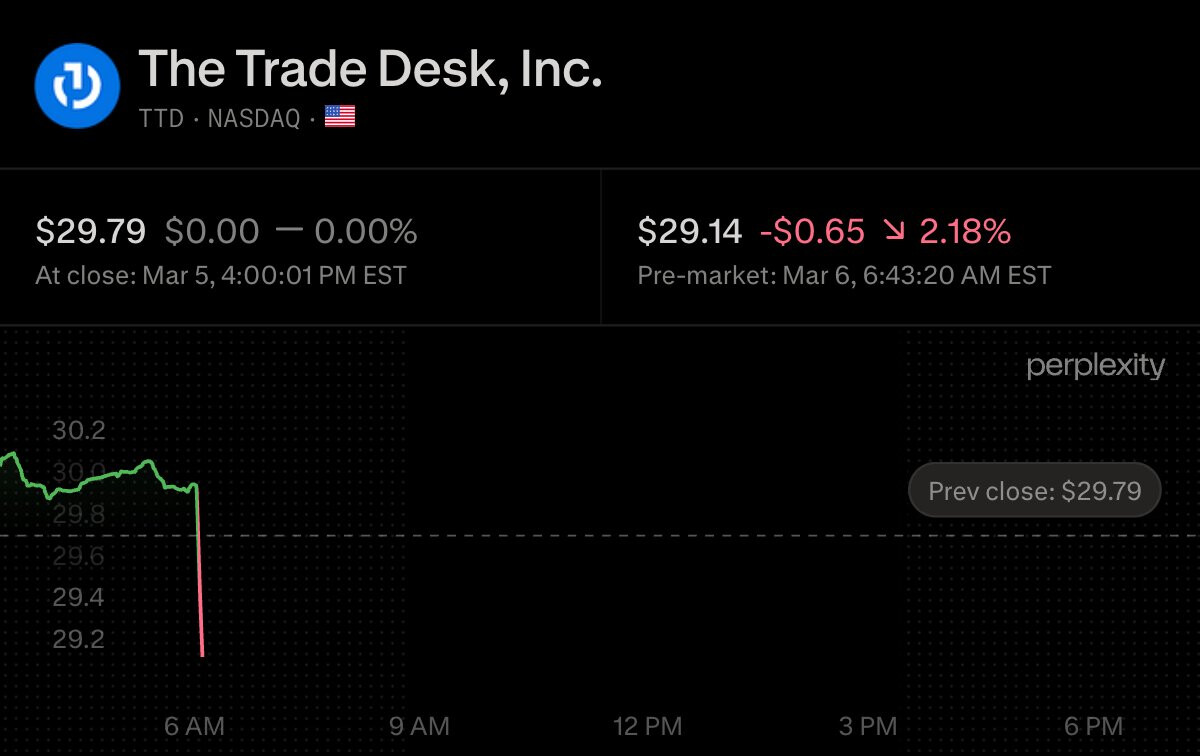
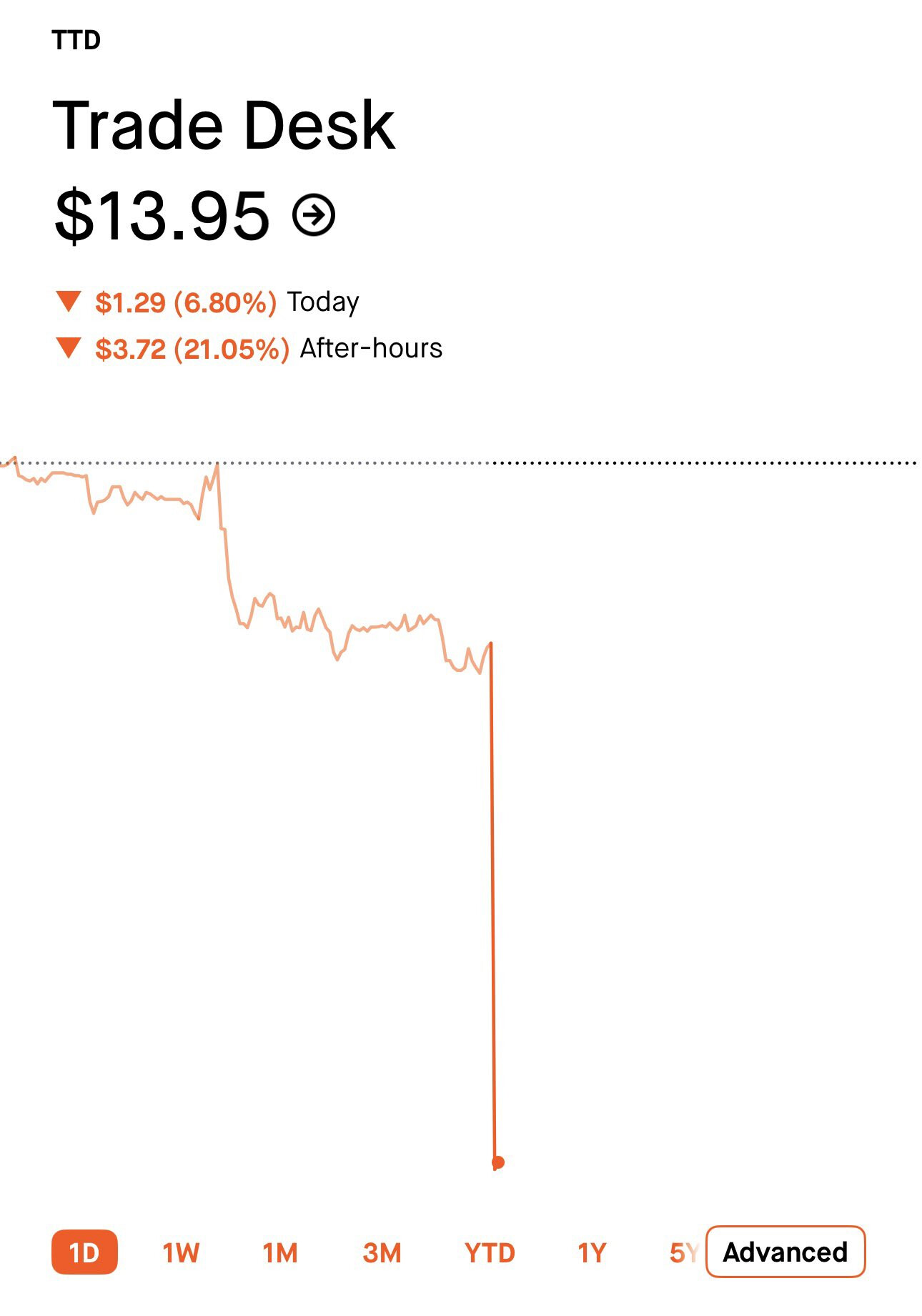
It seems TTD’s report didn’t please the market. It’s looking like about -15% in the pre-market. Profitability took a bit of a hit. Growth on the top line, but a decrease on the bottom line. On the other hand, free cash flow improved.
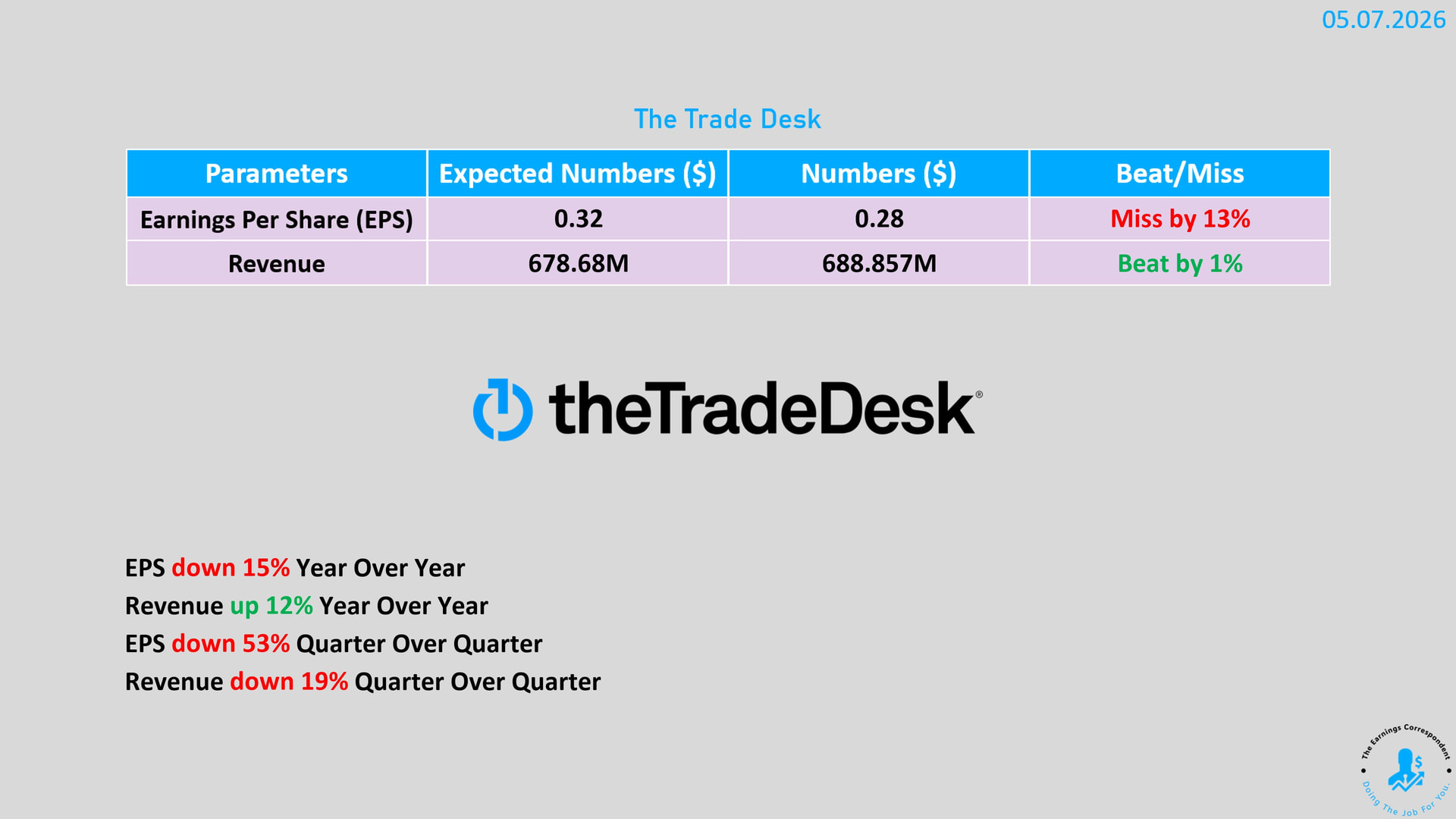
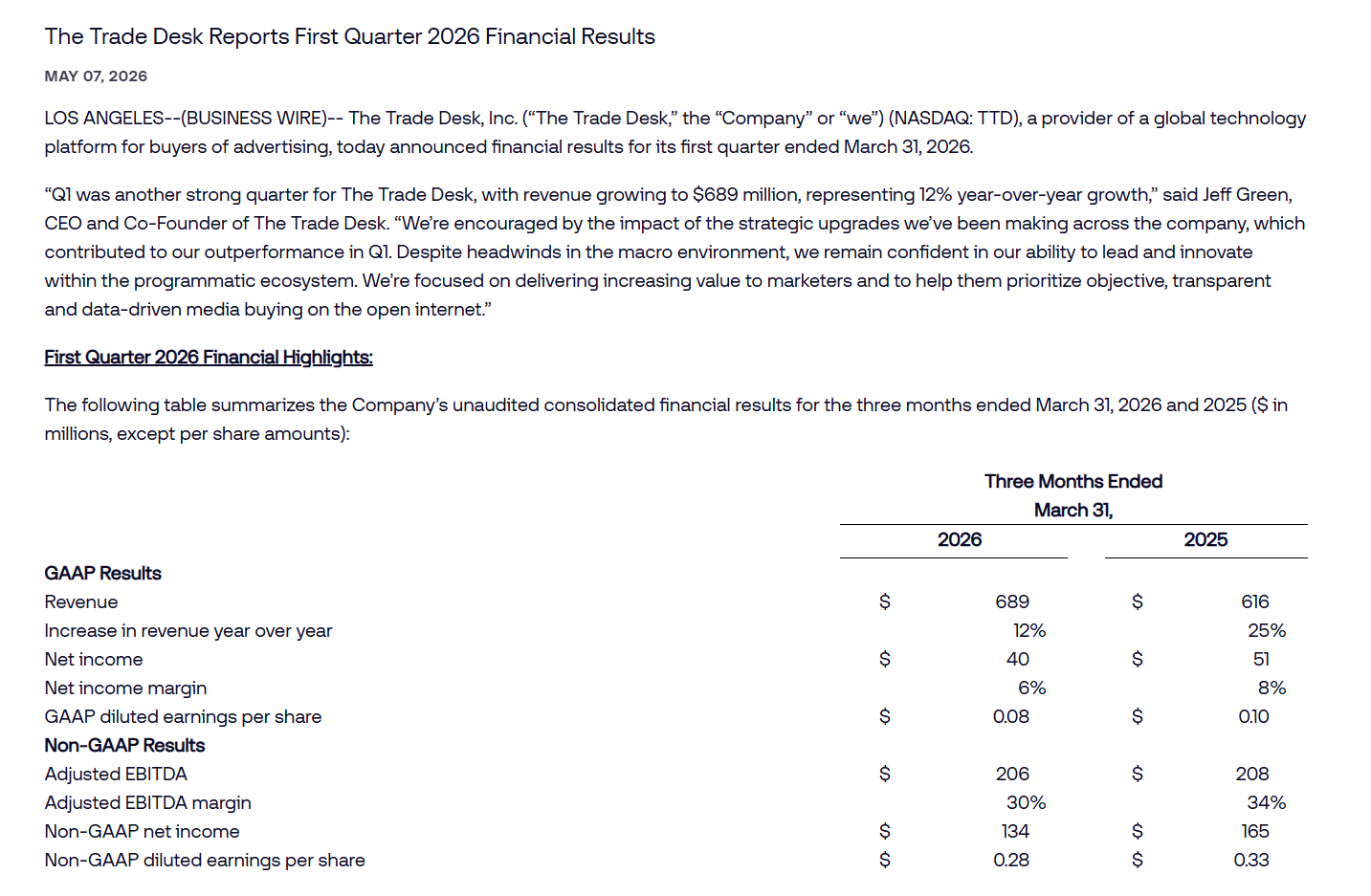
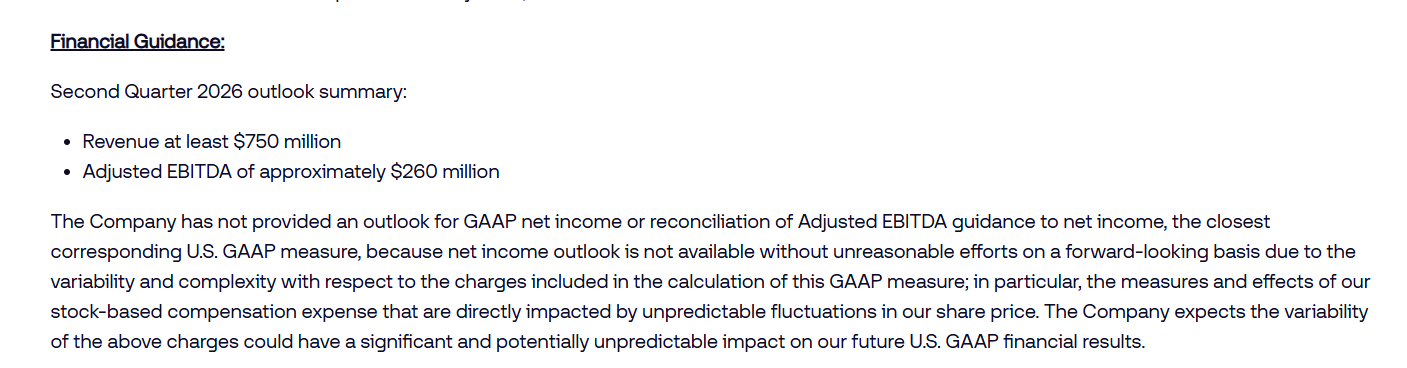
The advertising technology company posted adjusted earnings per share of $0.28, falling short of the analyst estimate of $0.32. Revenue reached $689 million, slightly exceeding the consensus estimate of $679.5 million and representing 12% growth YoY from $616 million in the prior-year period. However, the company’s second quarter revenue guidance of at least $750 million came in well below the analyst consensus of $772.4 million.
The Trade Desk also guided to second quarter adjusted EBITDA of approximately $260 million. The company’s adjusted EBITDA for the first quarter was $206 million, down from $208 million in the same period last year, with margins contracting to 30% from 34%.
The company’s latest “performance” brought vomit to my mouth, as per usual.
The results clearly missed expectations, even though expectations weren’t particularly wild. While they are still trying to chase growth, the engine seems to be coughing and efficiency is on the decline; furthermore, the future outlook is lackluster, which suggests demand is stalling.
The massive partnership announcements actually seem like little more than a smokescreen used to try and hide weakening performance and the tightening grip of the market environment. But “Vomit” is my middle name, so I’m not necessarily selling right away.
Based on what I’ve read in recent press releases and news, The Trade Desk hasn’t received a great deal of hype or attention—and certainly for good reason. Not even on X, where many big companies are (too) easily praised. I’ve come across a few individual buy recommendations and estimates suggesting that the outlook could improve modestly. Of course, for large companies, there are almost always analysts who believe in better performance, but in TTD’s case, such positive views have been surprisingly few. In addition, negative points have been raised on the analysis front, as well as by individual types of investors. Overall, the sentiment seems quite subdued.
On the other hand, the company has received a boost, with someone moving from Amazon to strengthen strategic partnerships, and then a person who had previously served at companies like Alphabet & Amazon becoming the head of growth and customer strategy. A person from Uber also joined as Chief Commercial Officer to strengthen the management team and oversee, among other things, the company’s data partnerships. Then there is Penry Price, who joined the board with experience from Google and LinkedIn, and who reportedly has expertise in areas like marketing and AI.
However, I’m reflecting on the fact that there haven’t been any huge, major pieces of news lately, even though you might hope for such things from a company like this. One of the biggest bright spots was the major insider buying by the company’s boss (one of the co-founders) in the spring, which were also relatively large compared to his previous holdings. But one or even two bright spots aren’t enough to prove that a turnaround is in sight.
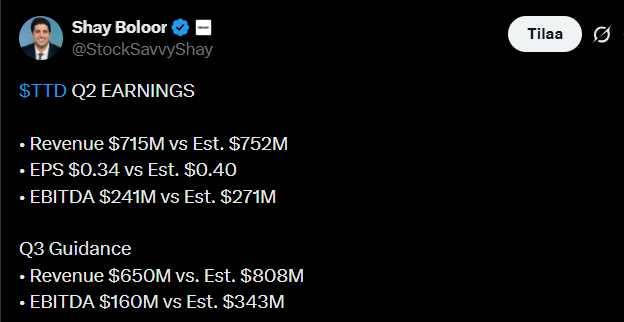
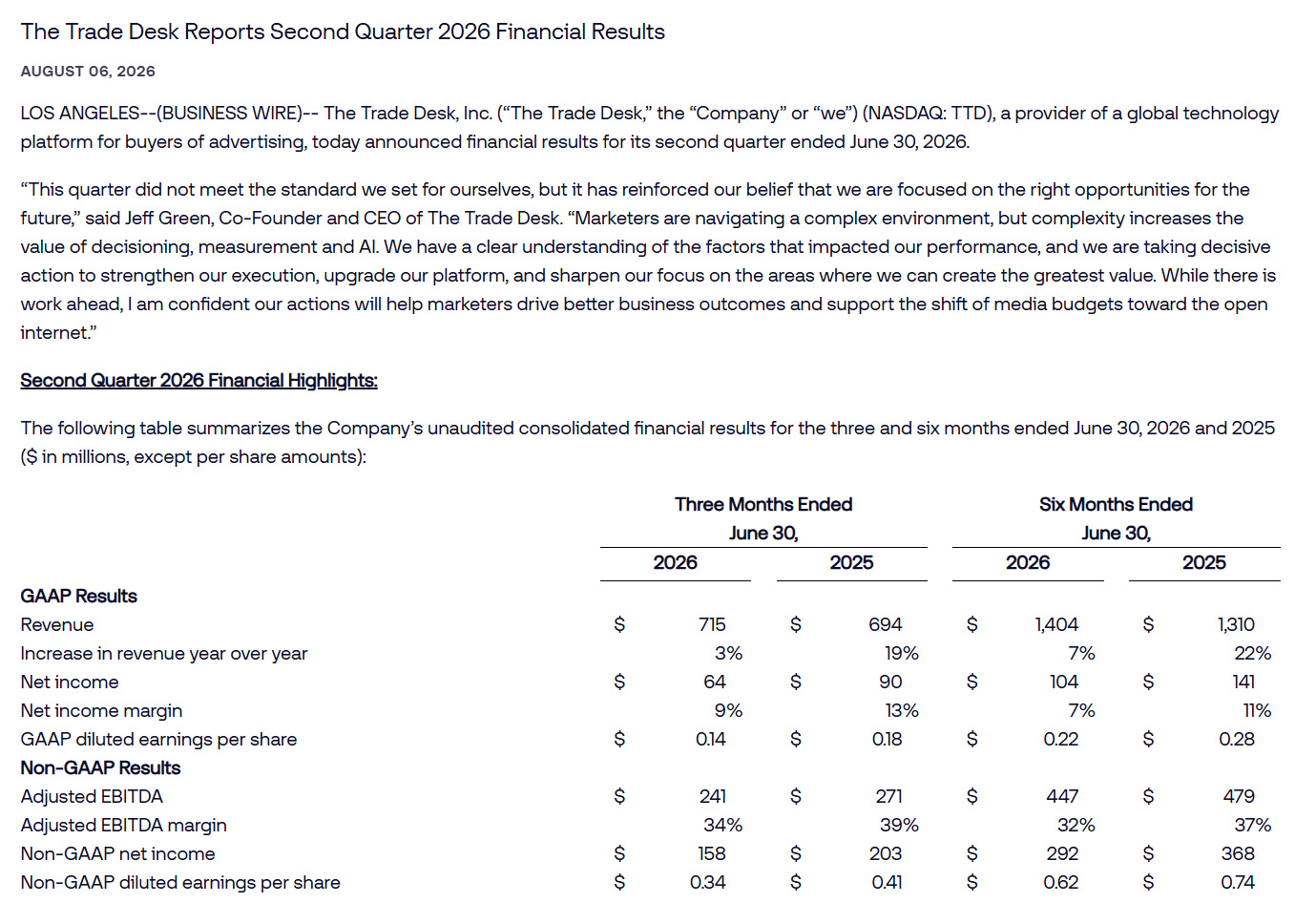
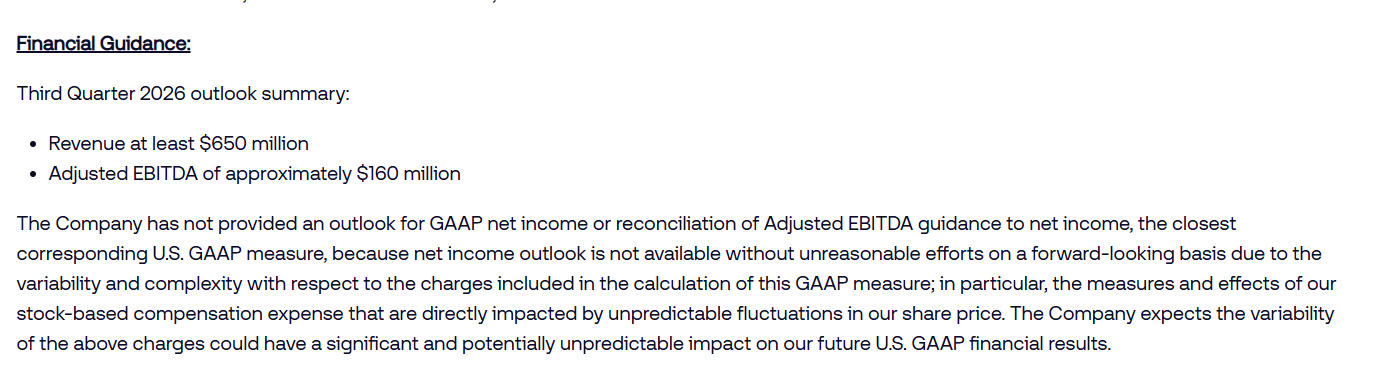
The Trade Desk’s second quarter missed expectations on almost all key metrics, and oh my… on top of everything else, the company’s outlook for the next quarter was also clearly weaker than anticipated. Management admitted directly that the performance did not meet their own targets… well, it’s rare for Americans to be this humble, but they really had to be this time, because the performance was just atrocious.
If you’re looking for any positives, you’ll need a magnifying glass.
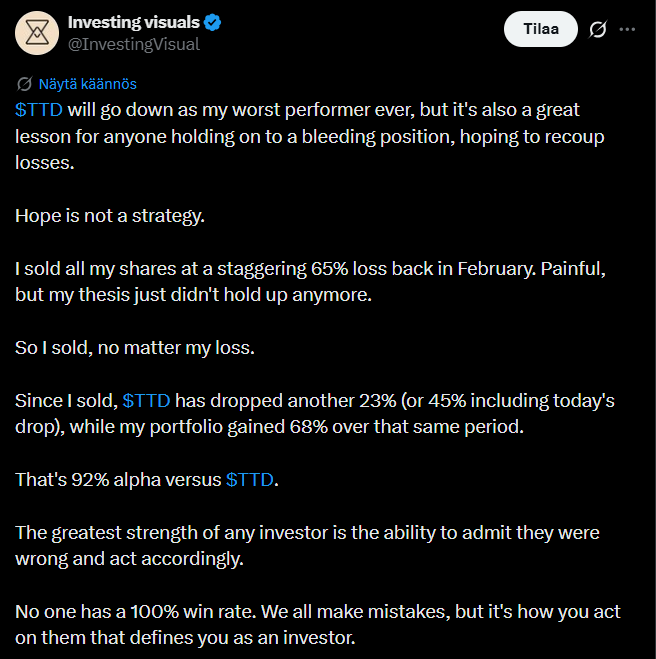
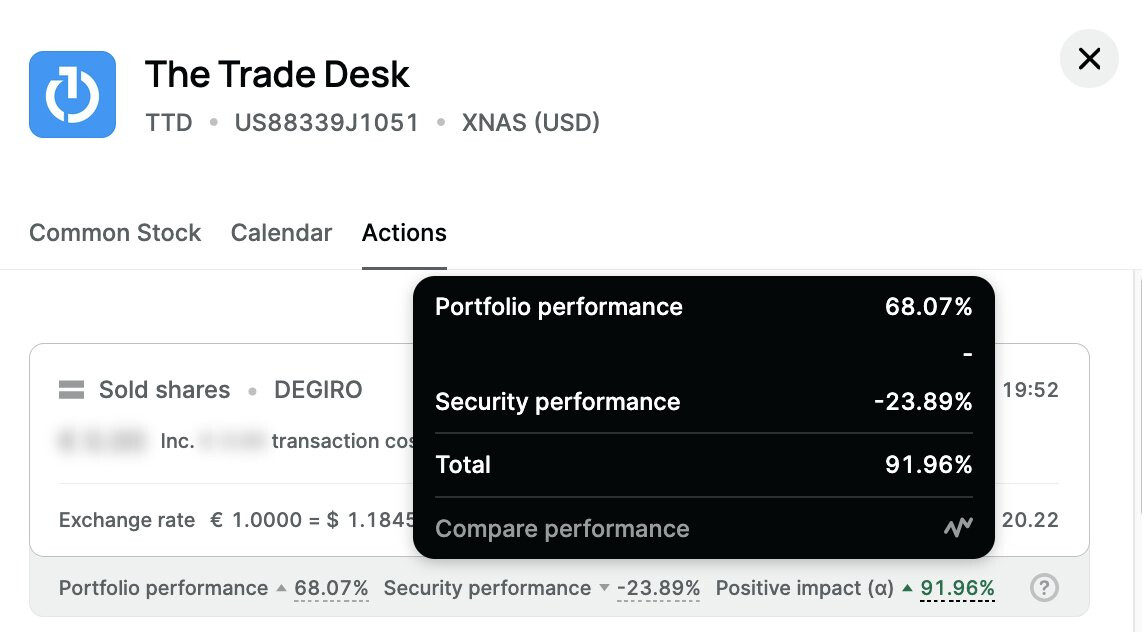
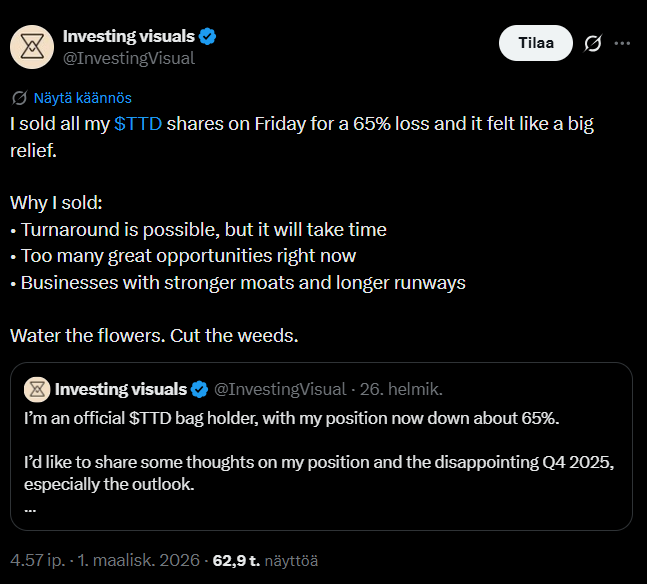
The administrator of the X account “Tutun” says that The Trade Desk was his worst investment ever.
He sold his shares back in February at a huge loss because the original investment thesis no longer held up.
In hindsight, the decision proved to be a good one, as TTD continued its sharp decline while the rest of his portfolio rose strongly. His lesson from that was that hope is not a strategy—in other words, an investor must be able to admit their mistakes and act accordingly.
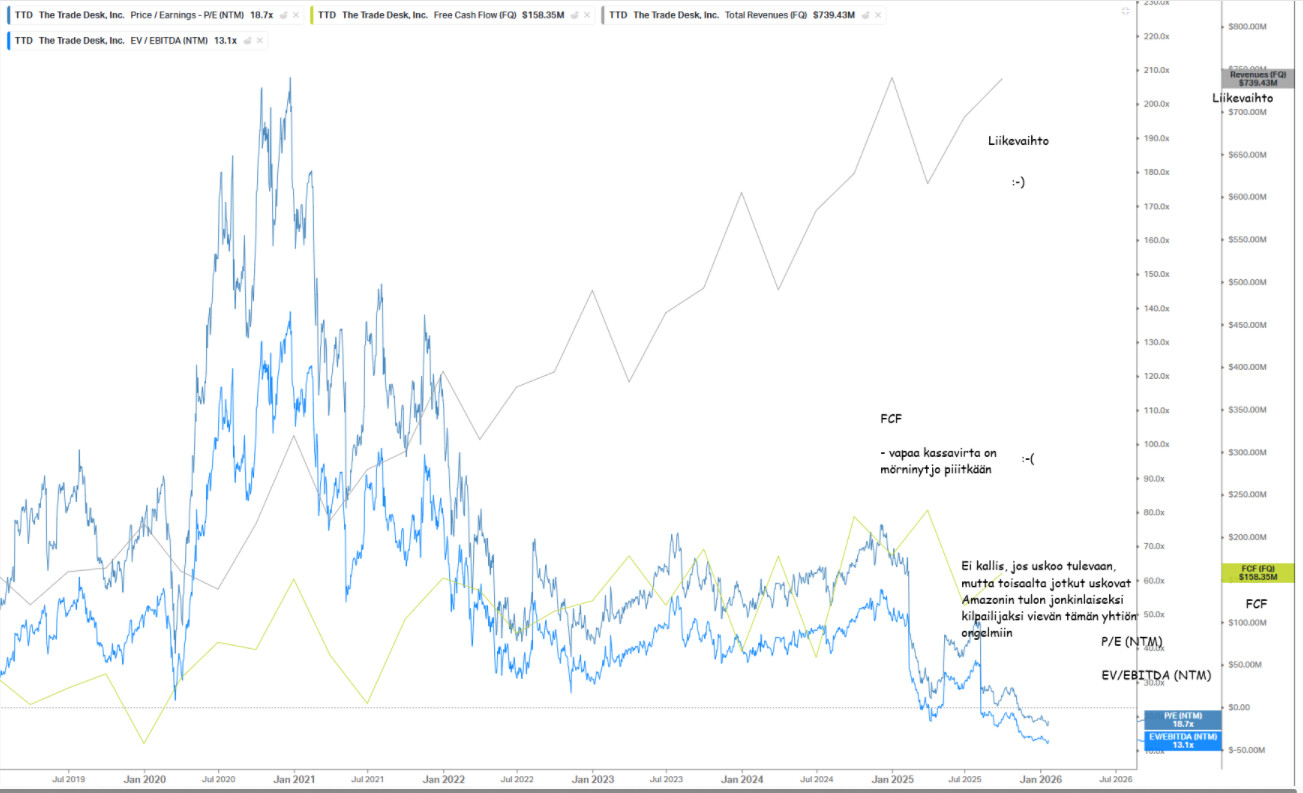

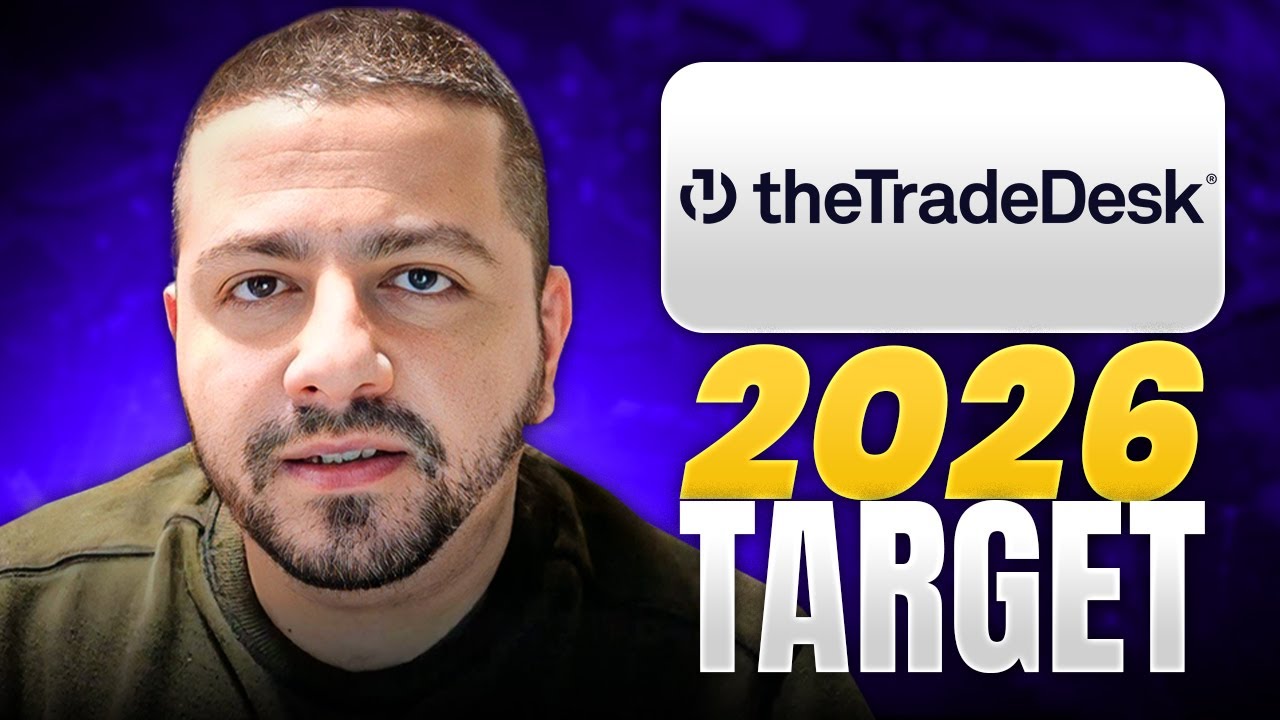
 I don’t see Amazon’s entry into the same market as being as bad as it’s currently priced into TTD’s share price.


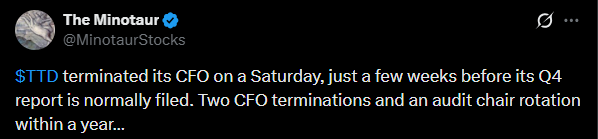
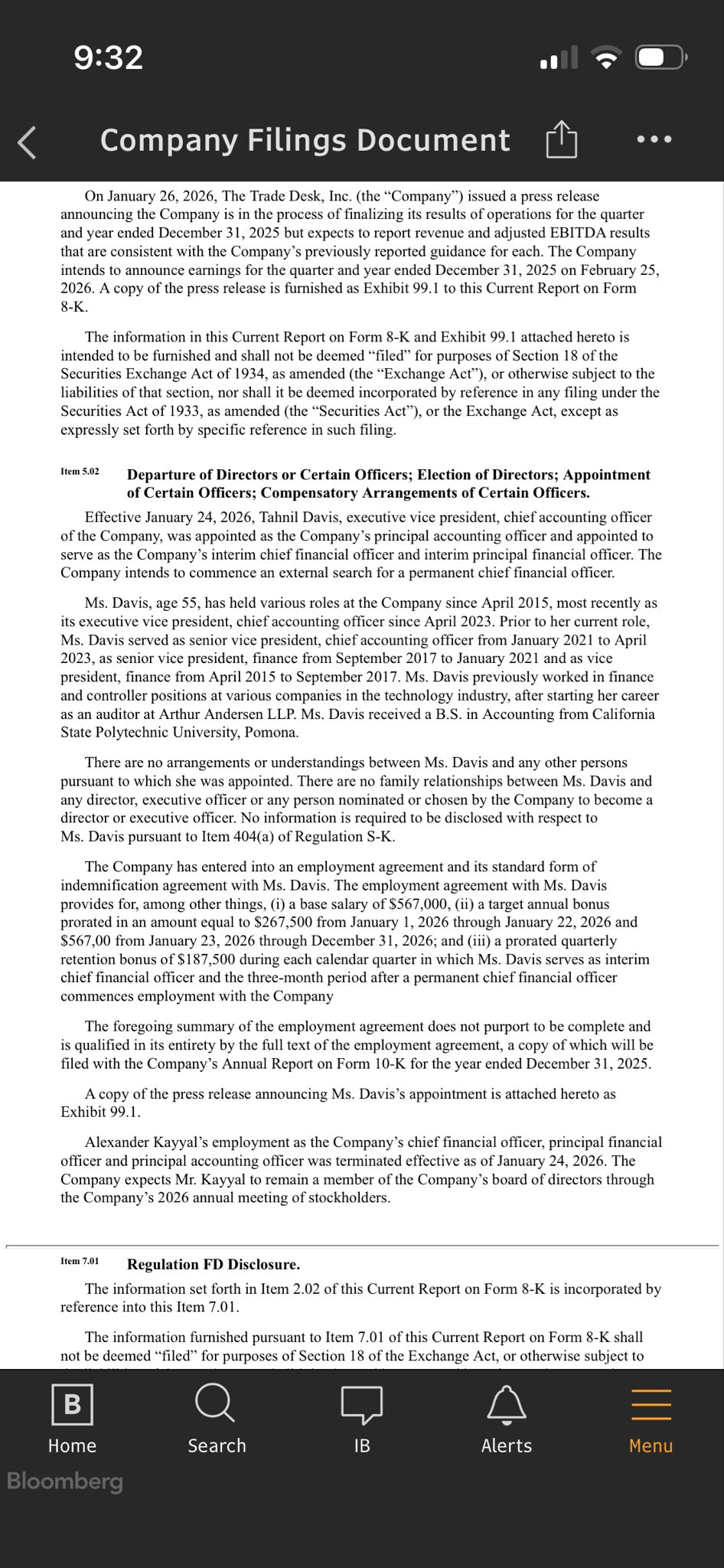

 Sales growth has slowed & slowed, and additionally, the company’s guidance for the start of the year hints at even weaker development and softening profitability - not much was expected, but even that was missed.



 My back-of-the-envelope calculations are simpler and include a narrower range of different numbers etc. (and they’ve still gone wrong)