A few weeks ago, we met with Solteq’s management and received an overview of the company’s product business and particularly its development projects. We produced a more extensive update report on the company’s products, which can be read in full at Katsaus Solteqin tuoteliiketoimintaan - Inderes
Markkinointi & Mainonta wrote yesterday about the robots in Prisma (readable at the link below), which are one of Solteq’s new products we are following this year.
Solteq kertoi viime viikolla voittaneensa 1,1 MEUR:n hankintakilpailutuksen Tullin käteismaksujärjestelmästä. Toimitus perustuu Solteqin kehittämään pilvikassaohjelmistoon integraatioympäristöineen.
Solteq on panostanut voimakkaasti uusin tuotteisiin viimeisen parin vuoden aikana ja olemme odottaneet yhtiöltä tiedotteita omien tuotteiden tilauksista. Kokoluokaltaan kauppa on pieni, mutta tukee ennustamaamme 4-5 %:n liikevaihdon kasvua vuosille 2019-2020 (2019e liikevaihto 59 MEUR). Strategisesti kauppa on kokoluokkaa parempi, koska se sisältää yhtiön omia tuotteita. Odotamme syksyn aikana yhtiöltä uusia tilauksia yhtiön omille tuotteille. Julkaisimme toukokuussa laajemman katsauksen Solteqin ohjelmisto- ja tuoteliiketoimintaan, joka on edelleen hyvin ajankohtainen ja luettavissa tästä.
Solteq tuntuu olevan IT-firmoista kaikista tuntemattomin, vaikkakin tekee ihan tasaista tulosta. Toki kasvu on hidasta verrattuna muihin IT-yhiöihin. Mitä ajatuksia muilla Solteqista?
Tutkailin vajaa vuosi sitten Solteqia mahdollisena sijoituskohteena, mutta päätin kuitenkin pitää näppini erossa yhtiöstä. Keskeisiä syitä päätökseeni taisivat olla pääoman alhainen tuottoaste ja korkea velkaantuneisuus; en löytänyt Solteqista riittävää tuottopotentiaalia. En ole sen koommin seurannut yhtiötä, joten tilanne voi nyt olla toisenlainen.
En itsekään ole perehtynyt yhtiöön hirveän hyvin. Nyt kun avasivat tarkemmin tuotteita (Software) ja niiden osuutta, niin ei tiedä vaikka innostuisi tutkimaan yhtiötä tarkemmin.
Yhtiö tosiaan avasi segmenttilukujaan eilen. Alla hieman aamun kommentista:
Solteq Software sisältää yhtiön omiin tuotteisiin perustuvan liiketoiminnan. Segmentin liikevaihto koostuu pääosin omien tuotteiden käyttöoikeus- ja ylläpitomaksuista sekä niihin liittyvistä palveluista, kuten integraatioista ja käyttöönottoprojekteista. Solteq Digitalin liikevaihto muodostuu pääosin IT-asiantuntijapalveluista. Näitä palveluita ovat konsultointi, asiakasjärjestelmien toteutus projekteina, jatkuvat kehityspalvelut ja ylläpito.
Solteq on panostanut viime vuosina voimakkaasti omiin tuotteisiinsa. Uusi raportointirakenne parantaa huomattavasti odottamaamme läpinäkyvyyttä ja kiinnostus on erityisesti Solteq Softwaren kasvussa ja kannattavuudessa. Solteq julkaisee Q1-osavuosikatsauksensa ensi viikon torstaina 30.4., jolloin saamme indikaatiota myös segmenttien kasvusta. Vertailukelpoisuuden takia suosittelemme seuramaan oikaistua liikevoittoa käyttökatteen sijaan, johtuen IFRS 16 -kirjanpitoeroista sekä aktivoiduista tuotekehityskuluista. Solteq Digitalin oik. EBIT-% oli viime vuonna 5 % ja alle yhtiön pitkän aikavälin 8 %:n tavoitteen. Yhtiön panostus vaiheessa oleva Solteq Software ylsi viime vuonna yksittäisillä neljänneksillä jo ohjelmistoliiketoiminnalle välttävälle reilun 10 %:n kannattavuustasolle, mutta on vielä selvästi alle pitkän aikavälin vähintään 25 %:n tason. Solteq Softwaren kannattavuuden heilunta johtuu ymmärryksemme mukaan pääasiassa lisenssitulojen tuloutuksesta ja tasaantuu liiketoiminnan kasvaessa.
Solteq on jo aikaisemmin julkaissut segmenttien pitkän aikavälin taloudelliset tavoitteet, jotka ovat Solteq Softwarelle keskimäärin 20 %:n liikevaihdon kasvu ja EBIT % vähintään 25 %. Vastaavasti Solteq Digitalin kasvutavoite on 5 % ja kannattavuustavoite 8 %. Näkemyksemme mukaan Solteq Softwaren tavoitteet ovat kunnianhimoiset, mutta saavutettavissa ohjelmistojen kaupallistamisen onnistuessa pitkällä aikavälillä. Solteq Digitalin tavoitteet ovat taas realistisesti saavutettavissa jo lyhyellä aikavälillä ja kuvastavat IT-palvelusektorin keskimääräistä tasoa. Lyhyellä aikavälillä arvioimme Softwaren tuotepanostusten ja poistojen painavan kannattavuutta selvästi, mutta rasituksen asteittain pienenevän tuotteiden kaupallistamisen edetessä. Lisäksi Solteq kertoi huhtikuun alussa koronan vaikuttavan yhtiöön ja erityisesti Solteq Softwaren uusmyyntiin. Huhtikuun alun kommenttimme on luettavissa tästä.
Solteq Oyj on allekirjoittanut 31.3.2020 ja 27.4.2020 kahden suomalaisen energia-alan asiakkaan kanssa yhteensä noin 8 miljoonan euron arvosta toimitus- ja palvelusopimuksia, jotka koostuvat yhtiön kehittämän asiakastietojärjestelmän toimitusprojekteista ja niihin liittyvistä optioista (noin 2,1 miljoonaa euroa) sekä käyttöoikeusmaksuista 4-5 vuodelle.
Itse olen parin kolmen vuoden ajan ottanut kohtalaisesti näkemystä tämän kanssa. Menee vielä ison yleisön tutkan alla, mutta tilanne korjaantunee kun omat ohjelmistotuotteet lyövät vahvemmin läpi. Hyviä näyttöjä jo saatu, kuten tänäänkin ja potentiaalia on. Kirjoitellut oon enemmän kl:n palstalle nimim. visionääri.
Aamun kommentista:
Kokoluokaltaan eilen julkaistut kaupat ovat yhtiölle hyvän kokoisia. Solteq on panostanut voimakkaasti omiin tuotteisiin ja ratkaisuihin viimeisen parin vuoden aikana, ja tämän takia tilaukset ovat erityisesti strategisesti positiivisia. Lisäksi koronan on arvioitu hidastavan erityisesti yhtiön omien ratkaisujen uusia tilauksia, ja tilaukset kuvaavat näin ratkaisujen kriittisyyttä asiakkaille. Yhtiö julkaisee huomenna Q1-raporttinsa.
Osinkoesitys vedetään takaisin, mikä mielestäni loogista ja järkevää Solteqin rahoitustilanteessa. Rahalle on nyt kriittisempääkin käyttöä, kuten esim, 1% palkkio lainanhaltijoille, jos ja toivottavasti kun hyväksyvät lainaehtojen muutokset.
Solteq on meikäläiselle täysin uusi tuttavuus. Olen perinteisesti vähän karttanut IT-palveluyhtiöitä siitä syystä, että en kovinkaan usein näe niissä skaalautumisen elementtejä ja siltä osin erityisen menestyksessään tulevaisuuden hahmottelu on hieman hankalaa. Jossakin aamukatsauksessa osui kuitenkin silmään, että Solteqilla on orastavaa tuoteliiketoimintaa varsin mielenkiintoisissa kohderyhmissä ja tuli sellainen fiilis, että tämä firma pitää analysoida lähitulevaisuudessa mahdollisia jymymenestyksen siemeniä silmällä pitäen.
Aion tässä lähipäivinä ottaa laajan raportin, yhtiön verkkosivut, vuosikertomukset ja muut tiedotteet tarkasteluun, mutta onko @Joni_Gronqvist heittää vinkkejä, että mistä kannattaa metsästää tietoa jos haluaa perehtyä tarkemmin erityisesti tähän tuoteliiketoimintaan? Palaan sitten kysymyspatteriston kanssa, kunhan olen ensin analysoinut oman pääni sekaisin.
Yhtiö alkoi Q1:llä raportoimaan ohjelmistoliiketoimintaa erikseen, joka helpottaa huomattavasti yhtiön liiketoiminna seuraamista. Yhtiön avasi Q1-raportissa sanallisesti myös huomattavasti aikasempaa enemmän toiminnan luonnetta ja erityisesti näkymiä.
Eli jos perehtyisin, katsoisin vuosikertomuksen, yhtiön Q1-raportin, meidän tuotekatsausken (linkki yllä) ja Q1-kommenttimme.
Katsotaan kysymyspatteristosta sitten mihin voin vastata ja jos saataisiin yhtiön puolesta joku avamaan pohdintoja
IT-yhtiöiden kohdalla puhutaan paljon post-korona ajasta ja siitä miten pandemia on jo nyt muuttanut ja kiihdyttänyt digitalisaatiota monessakin suhteessa. Solteqilla on vahvaa taustaa ja osaamista mm. verkkokaupan osalta. Etätyön lisääntyminen loogista. Paljon puhutaan myös erilaisten palvelujen virtualisoinnista, missä myös tekoäly ja virtuaalitodellisuus keskeisiä elementtejä.
Olisikin kiinnostavaa kuulla miten yhtiö itse näkee pandemian vaikutukset toimialaan ja palveluihin pidemmällä tähtäimellä ja miten yhtiö kokee osaamis-/fokusalueensa osuvan tähän kehitykseen.
Jonille isot kiitokset hyvistä rapsoista ja haastatteluista myös Solteqin kohdalla
Tässä Ilkka Branderin kirjoituksessa oikeastaan jo vastausta kysymykseen. Ei siis mitään uutta ja mullistavaa Solteqin näkökulmasta, muuta kuin muutosnopeuden kiihtyminen. Korona ei tuonut mitään uutta | Kauppalehti
Solteqin Retail Roboa demotaan nyt Citymarketissa. Ensimmäinen pilottihan oli Ison Omenan Prismassa. Solteq on Keskon pitkäaikainen kumppani, enkä ihmettelisi vaikka ensimmäiset robot löytäisivät pysyvän osoitteen juuri Keskon yksiköistä.
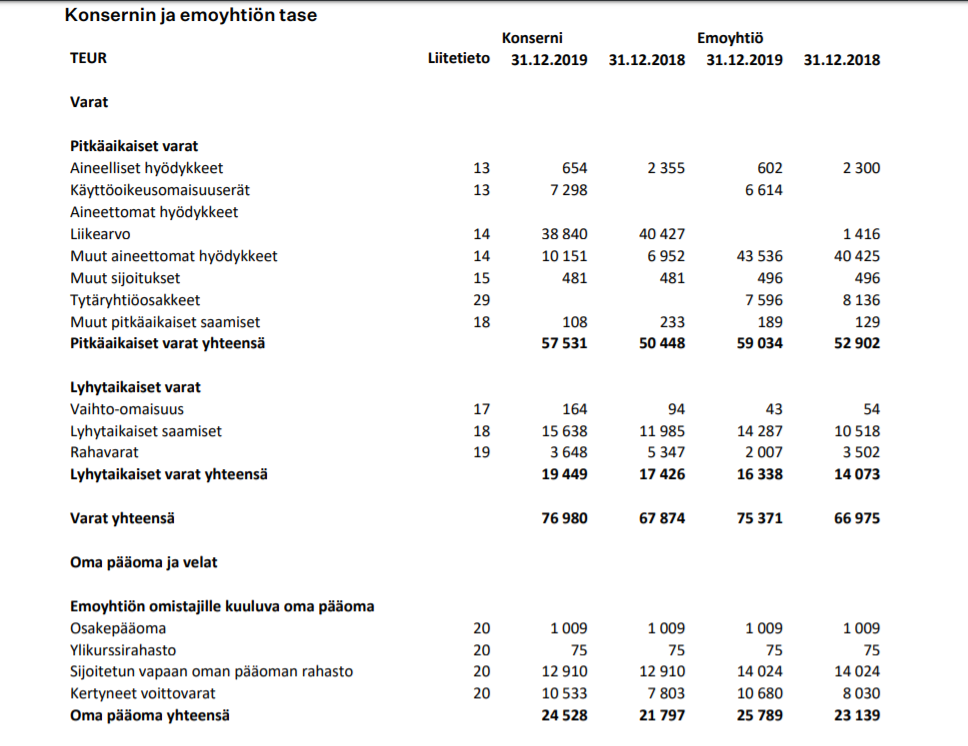
Palaisin tähän huhtikuun tekstiin ja Solteqin taseeseen: ollaanko poistoja tehty vai onko suurin osa kuluista aktivoitu taseeseen (“Muut aineettomat hyödykkeet”)? Alla ote viimeisestä vuosikertomuksesta, jossa liikearvo ja aineettomat hyödykkeet (lue: Solteq Softwaren kehityskulut) ovat yhteensä noin 200% oman pääoman määrästä. Aineettomien hyödykkeiden määrä on myös kasvanut yli 3M€ 2018->2019.
Q2-tiedotteessahan kerrottiin, että kehityskuluja tullaan aktivoimaan tämänkin vuoden aikana lähes 3 miljoonan edestä. Voiko firman tulospohjaisia tunnuslukuja siis pitää enää realistisina, jos sen taseeseen aktivoimat kehityskulut vastaavat lähestulkoon koko vuoden liikevoittoa? Jos kehityskuluja käsiteltäisiin oikeina kuluina, olisi liikevoitto noin 1/4 nyt raportoidusta.
Onko näin merkittävä taseeseen aktivointi vain normaali käytäntö IT-alalla? Entä pitäisikö näin suuresta liikearvosta huolestua? Olisi mielenkiintoista kuulla @Joni_Gronqvist:n ajatuksia taseen kehityksestä ja siitä, mitä riskejä se mahdollisesti pitää sisällään?
Solteq mukana apteekkisektorin digiloikassa myös Ruotsin puolella. Suomessa Solteqilla on diili apteekkariliiton kanssa verkkokauppojen toteutuksesta ja niihin liittyvistä koulutuksista liiton jäsenille. Sielläkin on vielä iso massa apteekeista siirtymättä verkkoon. Vaikuttaa siltä että apteekeista on muodostumassa vahva asiakassektori Solteqille.
“Apoteksgruppen has selected the Nordic IT service and software solutions provider, Solteq Plc, to deliver a unified commerce software platform connecting enterprise resource planning to point-of-sale and pharmacy operations.”
“Specialized in the pharmacy sector specific IT solutions, Solteq is reaching a significant market position in the Nordics with hundreds of pharmacies adopting new technologies provided by the company during this year alone.”