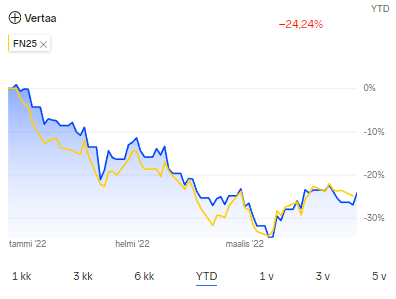
Exactly one year ago, I made a decision: I sold my funds and became an active stock investor. Partially as a hobby, partially for fun. Since then, or more precisely since summer, it’s been quite a ride, and the first annual return for passive “income” was -26%. This is a rather perplexing achievement considering the reasonably broad temporal, sectoral, and even partly geographical diversification.
Practically all classic mistakes have been made: buying near the peak, diversifying over too narrow a timeframe, reacting to minor dips, FOMO, the lemming effect, bumtsibum, and following RedEye. The icing on the cake was the forum’s summer stock of 2021, Arocell I’ve only avoided selling at the bottom, and on the other hand, I didn’t hit the absolute peaks with any stock.
Currently, my portfolio includes (in order of size):
Kamux
Tokmanni
Orthex
Embracer
Better Collective
Smarteye
Citycon
Harvia
Solteq
Kambi
Calliditas
Arocell
Hydrogen ETF
When looking at the list more closely, almost every one has come down ~40% from their peaks, so -26% isn’t that bad As a side note, at the time of purchase, every stock had a buy recommendation from some analysis firm.
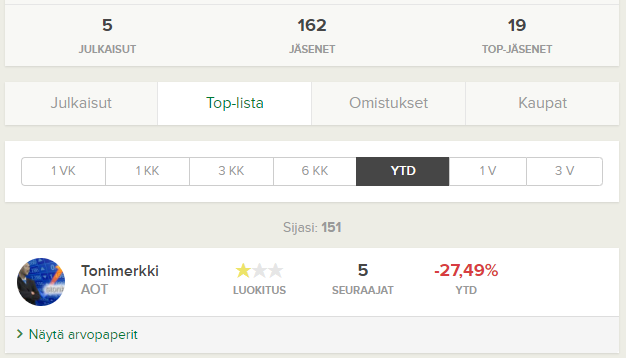
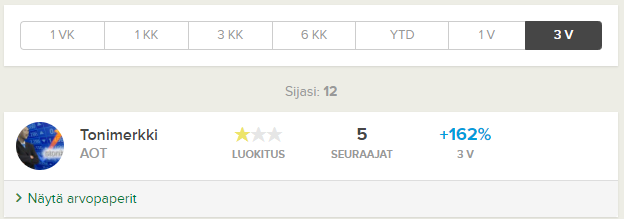
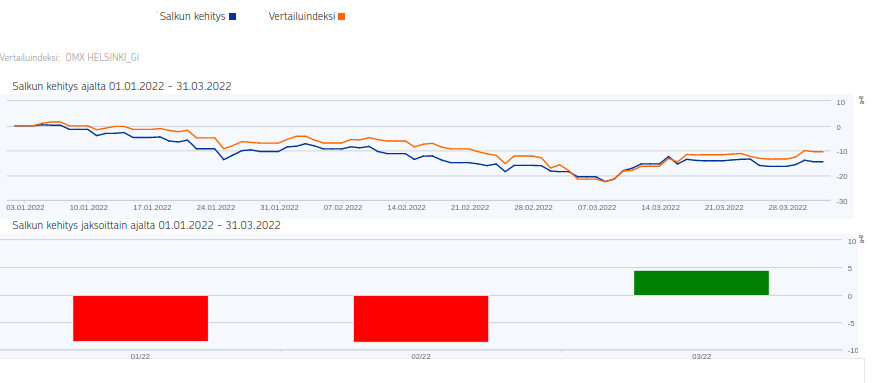
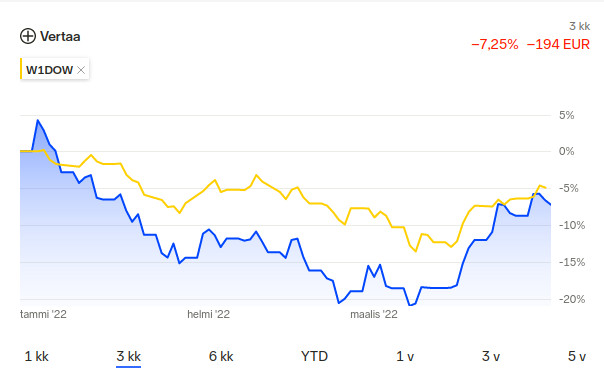
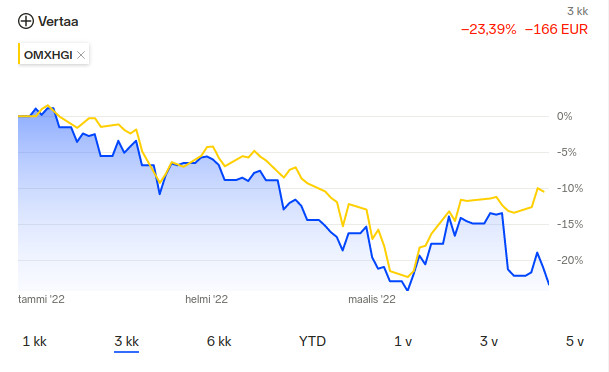
Browsing Shareville, I noticed that groups have a “Top lists” tab. I eagerly checked where my AOT (investment account) ranks in the Inderes group, and it seems my year-to-date performance has been much worse than I thought
That 151/162 ranking isn’t very comforting, but I’ve dealt with this year’s share price development quite well, and the calm sled ride hasn’t caused any panic symptoms. On the contrary, a small leverage has been in use all the way, which partly explains the perhaps steeper than usual decline.
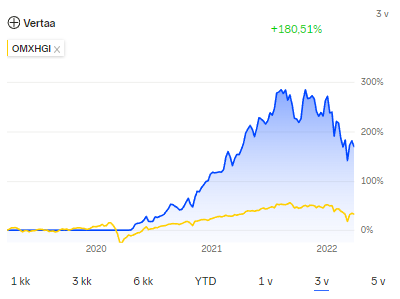
Well, so I don’t have to close Shareville entirely, it seems longer-term returns are still on the positive side, and the investment’s Inderes ranking is flattering.
When you set the return curves to a sufficiently long time horizon, small declines don’t feel too bad. Similarly, the truth about the net buyer’s advantage keeps the investor’s psychology in check. What could be more pleasant than tanking up on your trusted companies currently at half the price of what their value could optimally be
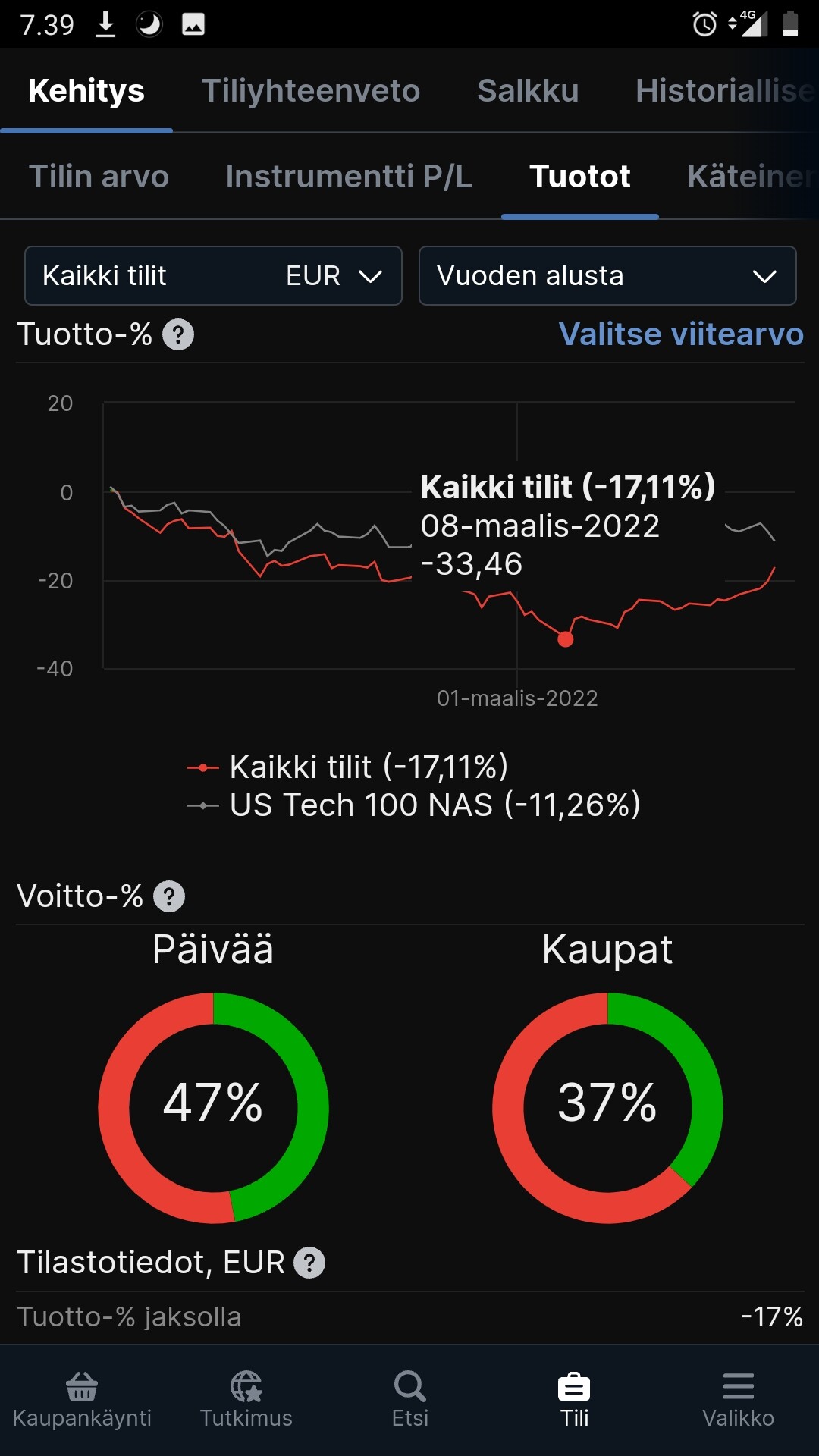
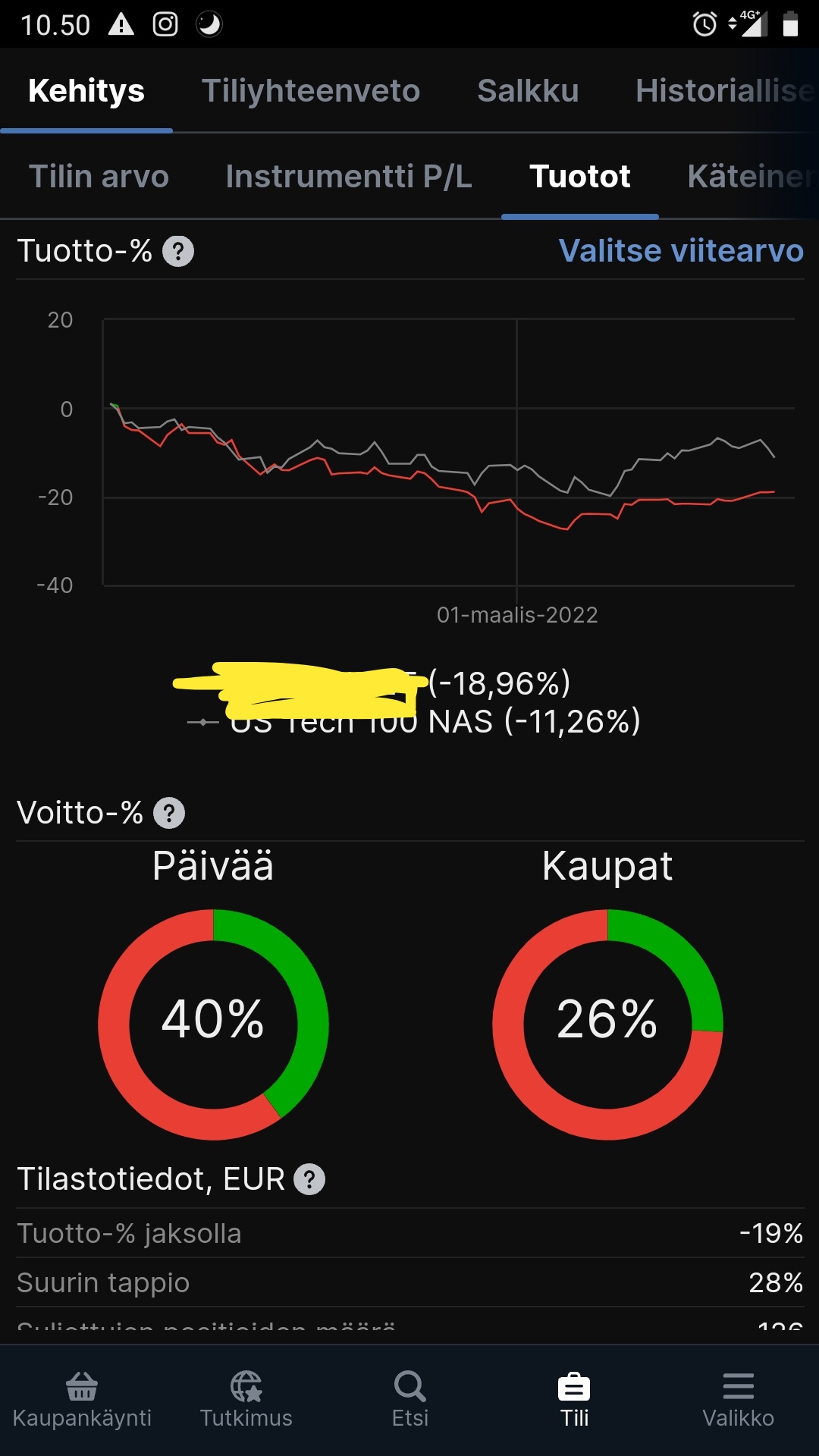
The opposite figure in the table compared to last year. There has been a lot of volatility during the current month. Strong signals of an impending recession emerged from close circles as oil prices rose, imprinting on my mind the need to lighten the portfolio. At the same time, I hedged myself against the biggest rise when the stock market suddenly jumped up by the year’s index return; live and learn.
Currently, I have 40% cash, and in my opinion, there are more negative drivers ahead than positive ones. Although I believe there is always a market for stock pickers, I don’t feel the need to go into more stocks at the moment.
I also got involved in convertible bonds for the first time when Injeq organized a financing round.
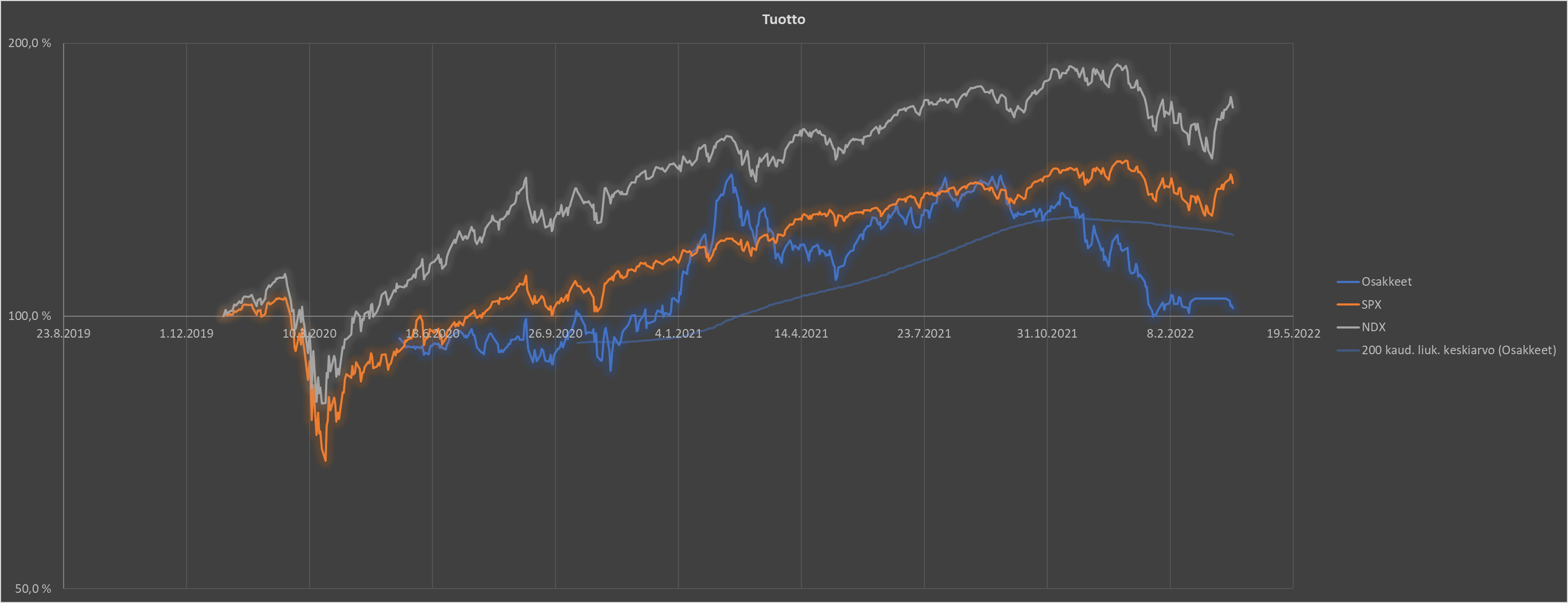
Investing period: 819 days
Average annual return: 0.9%
March return: -1.3%
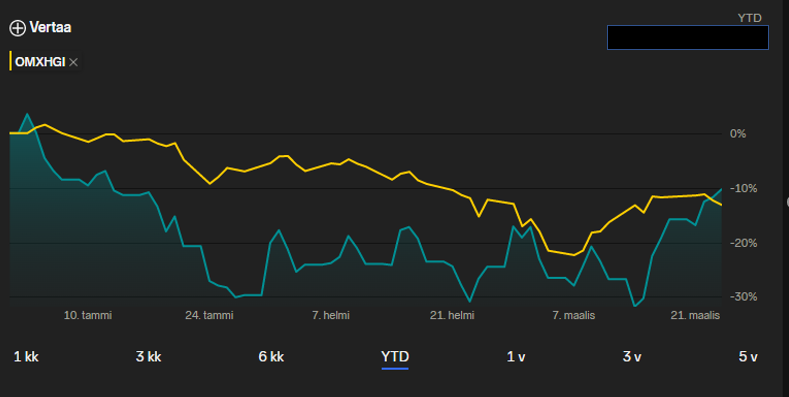
YTD: -13.6% (S&P 500: -4.9%; Nasdaq 100: -9.1%)
Total return (Jan 2, 2020): 2.0% (S&P 500: 40.2%; Nasdaq 100: 69.9%)
Drawdown: 28.9%
Minus for a change. Luckily, there was at least that positive February in between. Most of the month was spent in cash, but the second algorithm jumped back into action this Monday, so the equity allocation is currently about 67%. The other algorithm will join tomorrow, so then the equity allocation will be 100% again.
Cryptos have been doing a bit better lately. The overall result is still around -80%, but they have now risen for an impressive two consecutive months!
Six largest investments, comprising 47% of the portfolio: Tokmanni 9.70% (OP aot share 18.5% and Nordnet ost 100%) USD Coin 9.16%, practically the only cash-like asset in the portfolio (and otherwise). Osk Tradeka 8.83% diversification outside the capitalist system . Cronos Coin 7.63% Coinmotion Oy 5.84% Tesla 5.61% (Nordnet aot share 40%)
OP’s book-entry account (arvo-osuustili), holding 36% of investments
The development of the equity savings account (OST) is absolutely shocking, but fortunately, its significance is constantly decreasing. In addition to Tokmanni, Modulight and Harvia have also dragged down OP’s book-entry account. Nordnet’s book-entry account (AOT) has been burdened by Puuilo and the Swedish index fund.
I started investing last June, and the beginning of the year conveniently wiped out all my previous gains. Fortunately, I woke up before things went too deep into the red (except for growth stocks… RIP), and sold my Nordea funds with +/- 0 returns. This was a perfectly OK outcome, because I learned during these 9 months that simply holding 100% funds doesn’t suit me. I like to keep an eye on these things for fun and as a hobby, and sometimes react to changes, which those funds don’t allow with their 3-day change lag… so I need to build a strategy more in that direction. I left a little bit there because Nordea has a couple of funds I genuinely like, but I’m moving the rest to ETFs (World SRI and renewables), adding some stocks (probably US ones), and adding money to bonds to collect passive interest (e.g., Estateguru). In addition, I have a significantly larger portion in cash, because I also learned during the last 9 months that I have a bad habit of diving in on the wrong premises, purely out of FOMO.
Now I’ve managed to climb back to +2.49%, which is a lot less total return than it was just 3 months ago, but maybe this is it.
Investing is a marathon; short dips mean nothing. The worst thing you can do is watch a dip for a while and then panic-sell your portfolio at heavily reduced prices, only to realize a month later that its value would have returned to its previous level. I only sell if there’s alarming bad news from a company, but if declines are due to a general market downturn, I do nothing. I calmly wait for the dust to settle and for stock prices to return to their starting points, and sometimes even higher. During these market downturns, you just have to dare to buy if your finances allow it. I was born in the 50s and have seen many “ends of the world,” but we’ve always climbed out of the pit, and the upward trend has continued.
My returns, and those of many others, are in the red for the beginning of the year, but in the long run, many are in profit. If you like to actively trade, it’s worth having two portfolios: one for holding and one for trading. The trading portfolio could be on an “OST” (Osakesäästötili - Share Savings Account) account, because capital gains taxes apply up to the estate if you wish.
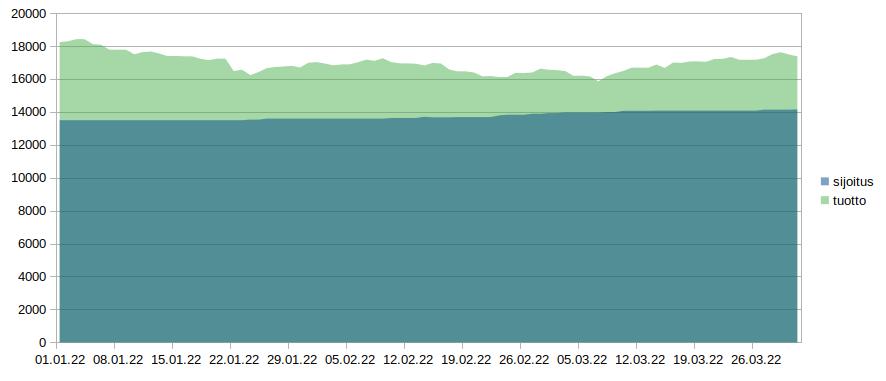
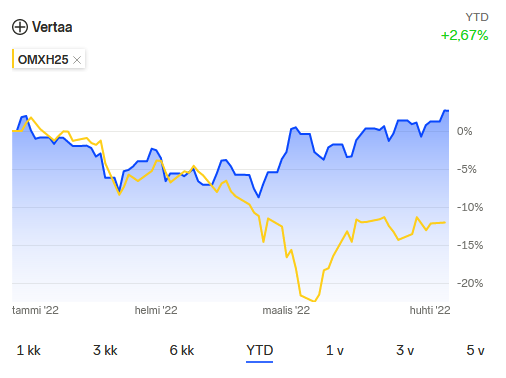
This year is slightly different from the previous one, and that is clearly reflected in the portfolio’s YTD return. Poor geographical diversification is partly to blame; one of this year’s goals is to finally expand this hobby into foreign stocks. Fortum was sold at the beginning of the year, and Sampo was acquired with the same amount. Kempower now also has almost as much weight as other stocks. Unfortunately, the image does not show the “lost” amount, which is ~€1300. No major changes are expected; every month I try to put aside more cash for the next purchase.
First quarter of 2022 is over!
What a rollercoaster the beginning of the year has been in my portfolio. I certainly didn’t expect anything like this at the turn of the year…
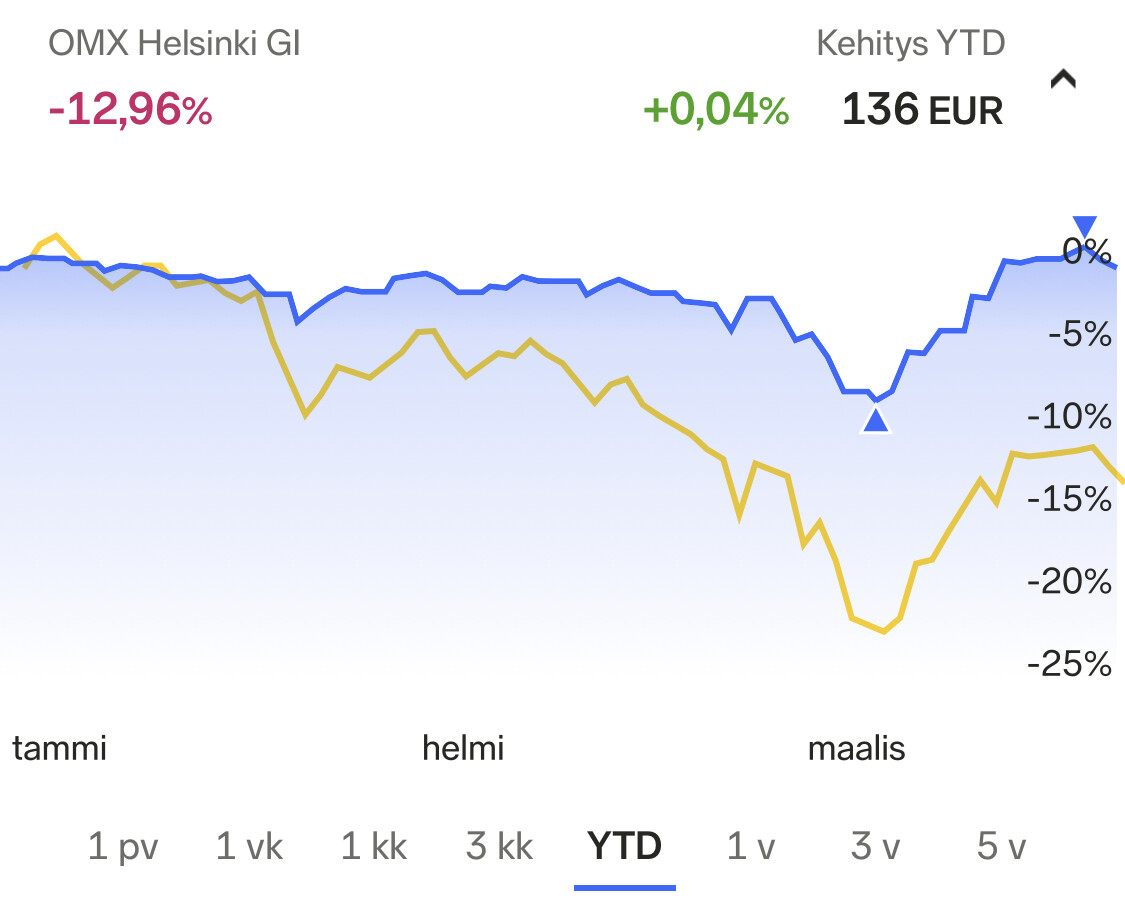
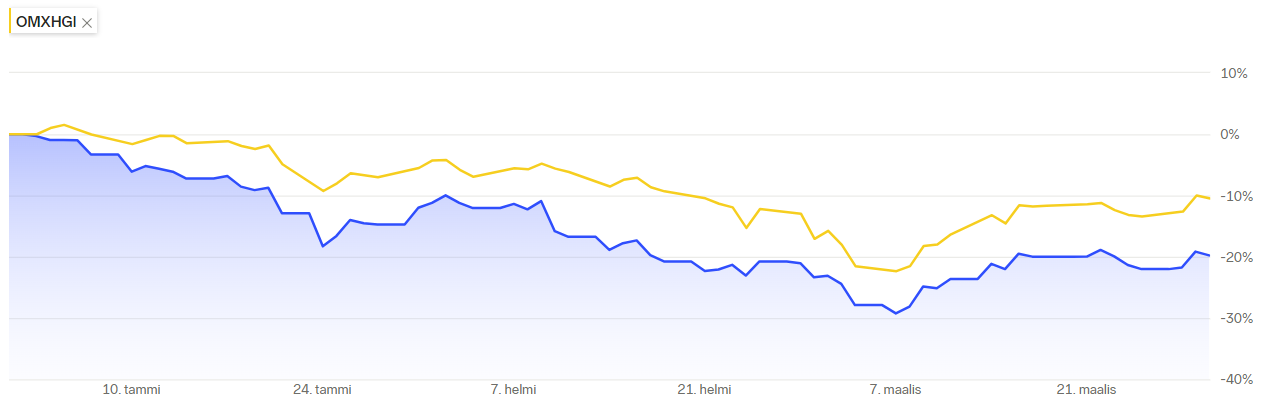
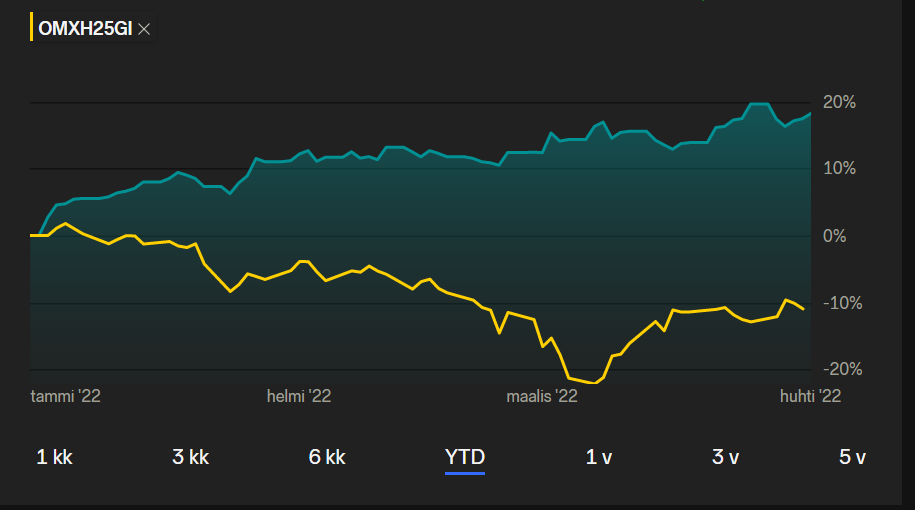
Portfolios currently from the beginning of the year; Book-entry account YTD +22.5% Share savings account YTD -10.5% Both portfolios combined YTD -9.80%
At its worst in March, the share savings account plunged over 25% from the beginning of the year, which would have terrified weaker investors. I put all the remaining cash I had in my share savings account to work on March 7th at the opening, when stocks were falling very fast in Helsinki. Coincidentally, on this day, the Helsinki Stock Exchange saw the bottom of the correction (at least for now).
In addition, I made a rather large move, of course, being aware of the risks, as I closed my ASP (Owner-occupied Housing Savings and Support System) account and bought shares with some of those funds (these funds are in my book-entry account, from which I can withdraw them if needed). I couldn’t resist the temptation and would have surely regretted not making this move, no matter what happened in the markets.
So far, the move has been successful, as I have gained over 5x more returns from shares in euro terms than what the ASP account’s interest yielded in two years.
However, the intention is to reopen the ASP account at some point once my income stabilizes. Let’s see what the rest of the year brings!
Here is the current main portfolio, which is about 2.5 times larger than the sports portfolio.
The sports portfolio is a personal AOT (Asset-backed Obligation Trust) and OST (Ordinary Share Trust), and there have been expenses there, so new additions have mostly been made to this portfolio in 2022. Then there are a couple of others with a similar vibe.
Cash is still relatively okay, but the tax authorities want a lot in the autumn, and loan repayments and such are coming, so the net cash is about 25%.
Portfolio update: Porch Group was sold a bit too early, but looking at it now, it was quite good, with a profit of a few hundred. Voxtur left today at 1.26. Only Oroco remained, which I have added more of. There are now 14,000 shares of it in this portfolio. The portfolio value as of now is 24517 and YTD is thus over 20%. Oroco is patiently waiting for drilling results, and then the portfolio will be completely emptied, and hopefully, taxes will be paid.
The YTD for other portfolios has turned positive, albeit only slightly.
This year, the raw material-driven portfolio has so far continued where it left off last year. Coal, Steel, Tin, and Fertilizers.
I consider this a quite reasonable performance, especially given the portfolio’s large cash weighting, which has fluctuated between 30-50%. Of course, much higher returns could have been achieved with greater risk.
Yep, it would be nice to be in the black myself since the beginning of the year, but perhaps staying in growth stocks was a conscious choice where a reasonable probability of a decline was visible. I protected my positions with a large cash pile.
I had perhaps expected a little better, in that sense.
It’s funny that several companies have progressed nicely, but their share prices have mostly declined, though there are a few bright spots like Ses imagotag and Voxtur.
There’s a good chance we’ll still catch up if the choices are just right.
If the mood is inflationary and there’s a recession, perhaps digital tech can still relatively perform well… But whether that’s enough for a positive year remains to be seen.
An interesting year is coming, and at least in my opinion, there have been things to buy.
 I’ve only avoided selling at the bottom, and on the other hand, I didn’t hit the absolute peaks with any stock.




 During these market downturns, you just have to dare to buy if your finances allow it. I was born in the 50s and have seen many “ends of the world,” but we’ve always climbed out of the pit, and the upward trend has continued.




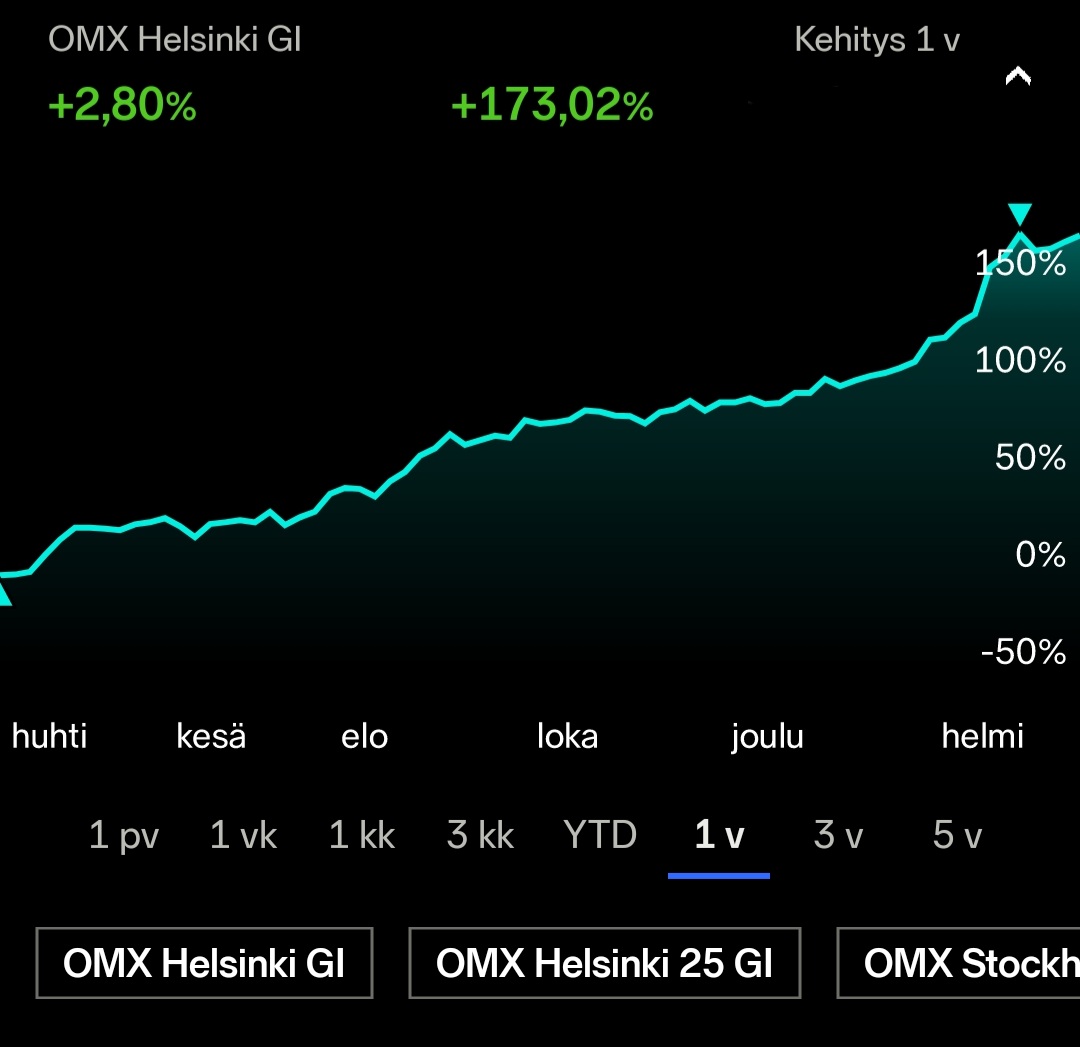
 , those choices have really paid off!