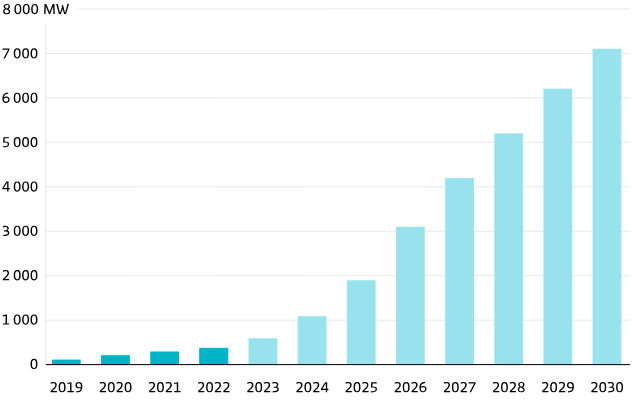
[quote=“Salvelinus, post:281, topic:38264, full:true”]
Last night on A-studio, electricity was being discussed, and it really bugs me that people are focusing a bit too much on these few days and cold spells when prices have been really high or consumption close to exceeding production capacity. Overall, we’ve managed well and the situation is constantly improving. Out of curiosity, I went for a drive when it was cold and Fingrid warned of a possible electricity shortage; I didn’t see much sign of saving, at least regarding street lighting, outdoor lighting, etc., neither in residential areas nor on industrial properties. Of course, consumption showed that at least spot-price electricity customers cut their consumption to a minimum. The potential electricity shortage situation should be addressed at a national level, at least to the extent that when approaching a critical limit, a hazard warning is broadcasted on television and possibly via text message, similar to the test alerts that have often scrolled across the top of the TV screen. This potential electricity shortage affects everyone, whether they have a fixed-term or spot-price contract; consumers must also accept temporary flexibility and not always just blame the government or power companies. More balancing power and transmission grids are clearly needed, and more are on the way. The situation is simply that people got used to the situation in past years where electricity was cheap and always flowed effortlessly. The war started by our eastern neighbor scrambled the deck, but within a few years, we can tell Putin regarding energy to take a hike if he’s even still alive by then—that’s the best part of all this.
[/quote](I moved the above from the energy saving discussion here.)
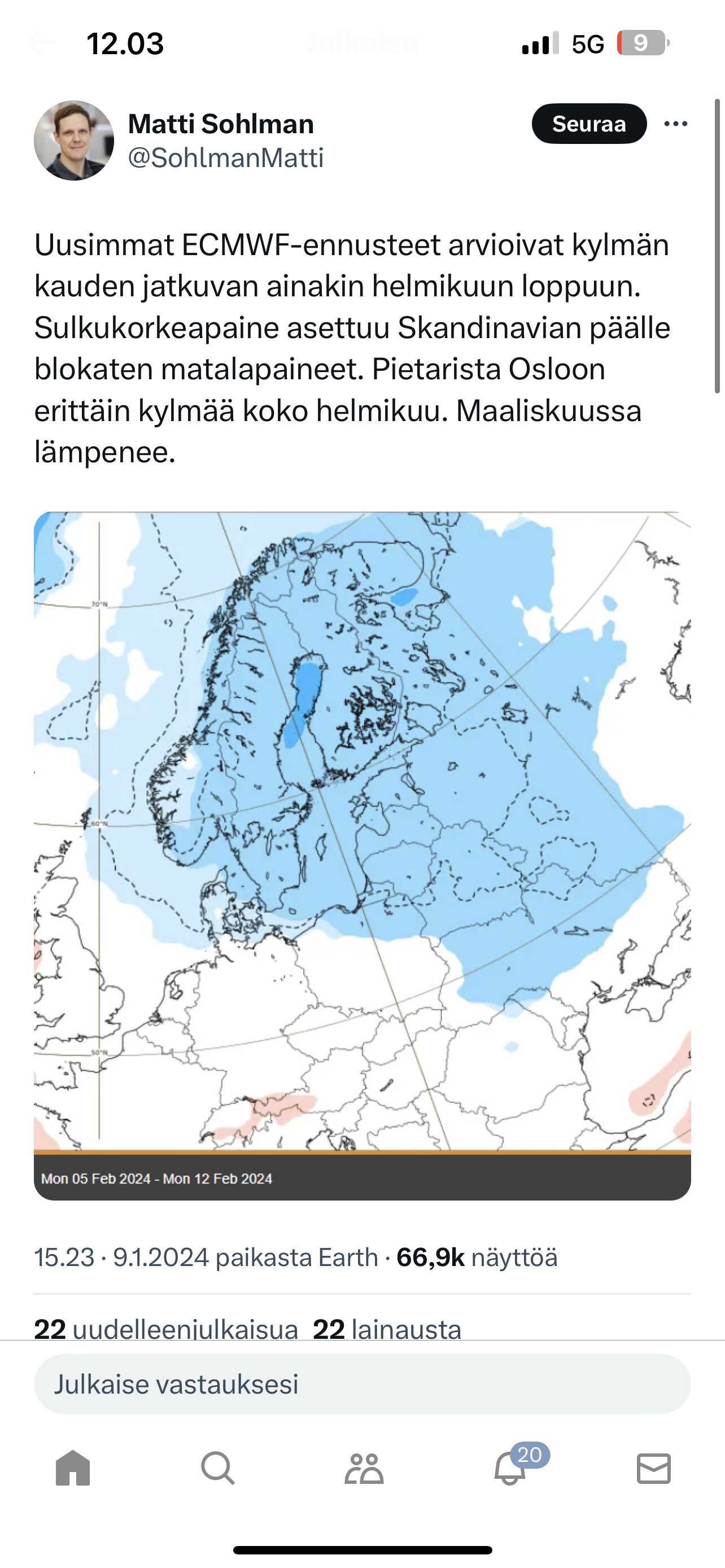
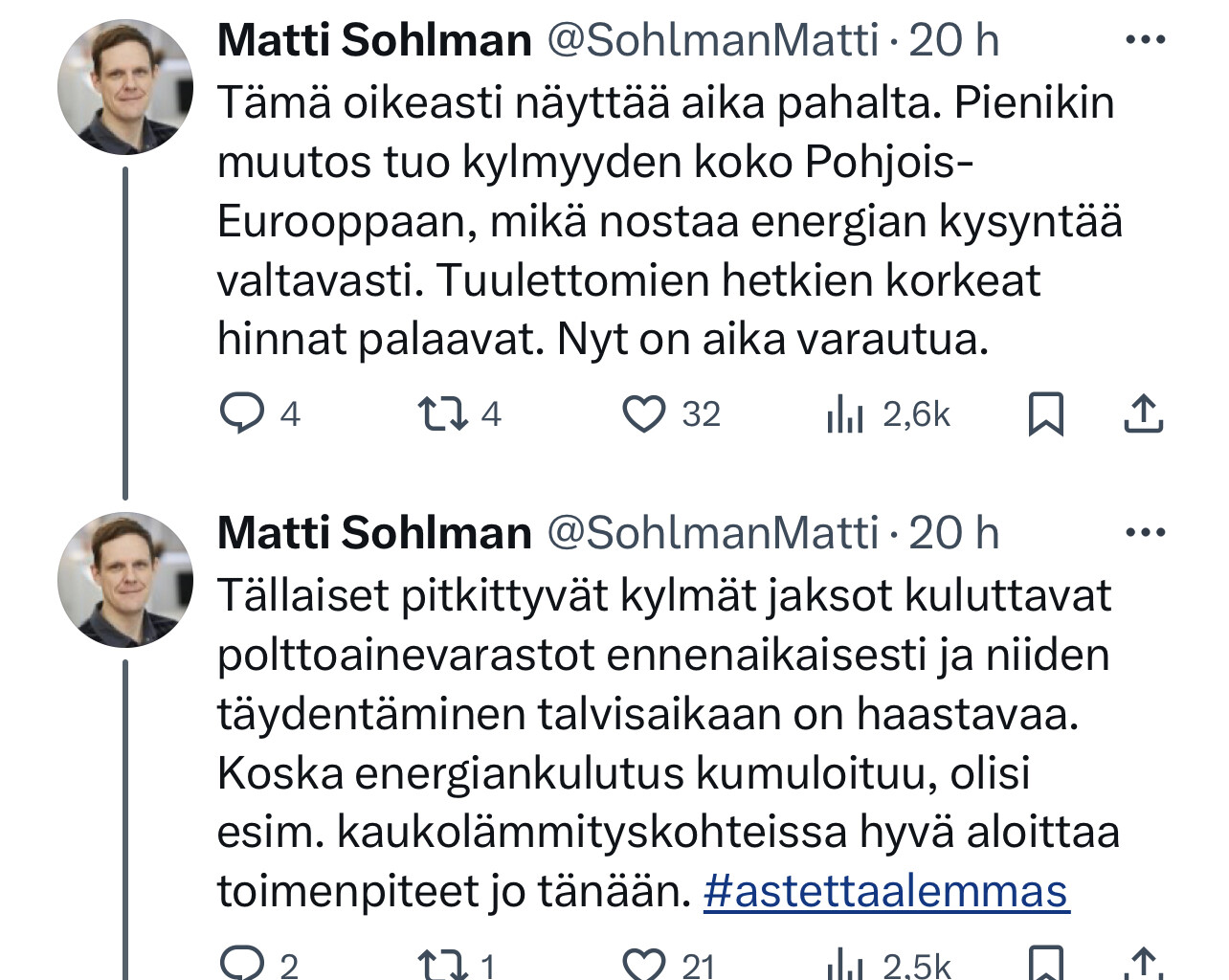
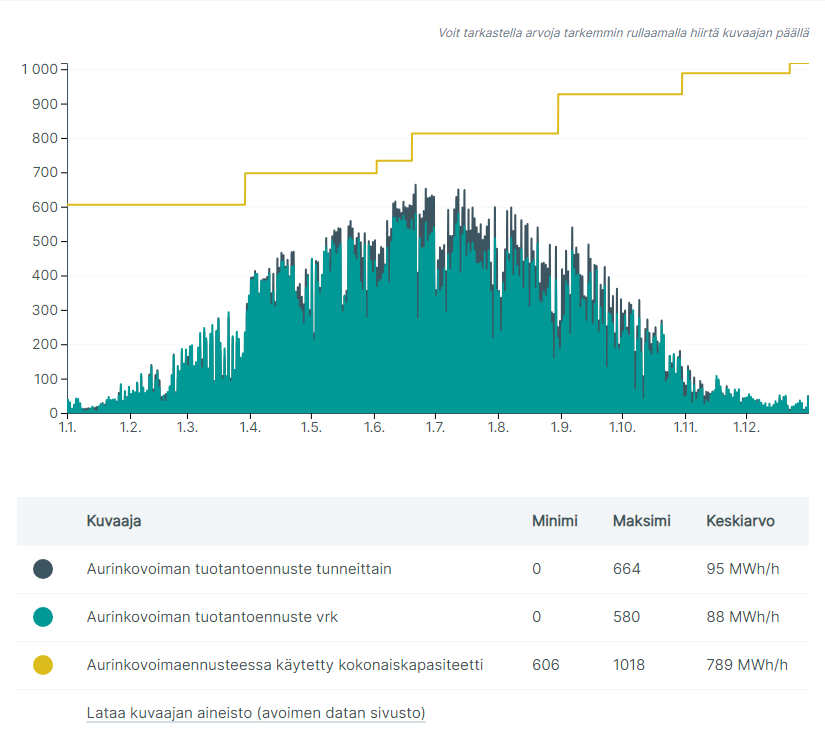
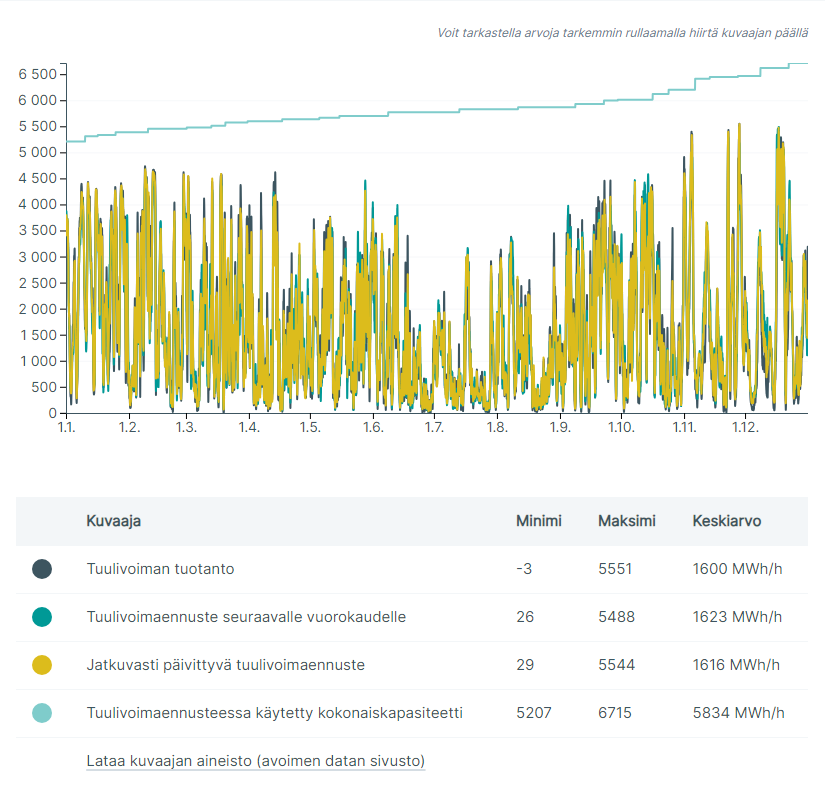
From a professional’s point of view, the situation of the electricity infrastructure looks like this:
The situation is not constantly improving, but gradually getting worse, provided that the construction of additional wind and solar power continues. Wind power is still a hidden-subsidized form of electricity generation, even though direct subsidies from taxpayers are no longer funneled to new projects.
By the worsening of the situation, I mean that electricity will occasionally become in such severe short supply that the price will rise to the wild levels seen at the beginning of January and even higher, because at least currently there is no price cap defined in the system by, for example, legislation. The sky’s the limit. This price volatility mostly hits private households and small and medium-sized industries. It generally does not hit our basic industry, because large companies/basic industry have managed to secure their own electricity supply mainly outside the spot electricity market. They do not have demand response and are hardly interested in such an activity.
Spot electricity subjugates mostly private individuals. (That’s not how it was supposed to go?) Many private individuals are already signaling their fed-upness with having to stalk electricity prices as a “forced hobby” and on the worst days, like the ones seen at the beginning of January this year, heating can result in an extra bill of up to 100 euros in a single day! Nothing guarantees that there won’t be more such surprise-surprise days in the future.
The construction of additional transmission capacity abroad only ensures that the price of electricity will permanently rise to Central European levels, i.e., expensive for those who have gotten used to the 4-5 cents/kWh levels of past years. IF cables to Central Europe are carelessly built more, the new normal average price will likely be around 20 cents/kWh - unless people come to their senses in time and restrict the construction of transmission lines through, for example, political guidance.
It is not in the interest of energy companies to make this restriction. They just earn more from their electricity when the price level rises but production costs do not.
When I said that wind power is hidden-subsidized, I will explain what I meant here:
The assumption is that for the majority of consumers, the old, former electricity energy system, which was weather-independent and reliable, reasonably priced, even cheap (4-5 cents/kWh) regardless of the time of day, is the ideal system that people would like to return to, and for which they are even ready to pay a small extra price (1-2 cents/kWh), because stalking electricity prices is getting tiresome, the bingo days hitting in January with their 100-euro daily extra bills are already shaking the economies of some and above all: that Brave New Electricity Market with its demand responses envisioned for us by a certain sort of professors without asking anyone else’s opinion is not so nice after all: taking a sauna at 3 a.m. or running the laundry all night long (definitely an apartment building neighbor-appreciated activity) is just not that blissful.
On top of everything, that sort of demand response is just tinkering. The electricity market does not really “demand-affect” by consumers’ bows. People have a completely wrong idea about the scale of things. At the moment, an estimated few hundred megawatts of the sold electricity capacity is part of the spot electricity market - and thus even theoretically susceptible to demand response driven by price pressures. Out of that sold spot electricity as well, only a small part can flex.
Basic industry etc. do not flex because they have no need to. They buy electricity at mankala prices. Out of the basic industry, only Outokumpu has struggled slightly because of spot electricity, because they are such a huge electricity buyer in Finland that they cannot get all their electricity at fixed prices. The nuclear facility in Kemi, next to the steel mill, wasn’t built either… since it didn’t come to Pyhäjoki a bit lower down the coast, either. Therefore, Outokumpu has started studies to build its own small modular reactor next to its factory.
Here you see the real demand response intention from industry: Basic industry does not intend to flex - and maybe cannot even do so. Squatting down and up flexing is left as a nuisance for consumers. (Question to the professors: this wasn’t supposed to go this way either, was it? Didn’t you understand enough about the electricity usage side when you created this system for us? Or did you just not care… many of you have ideological roots in green ideologies and the 80s anti-nuclear movement…)
It is easy to understand even with common sense why basic industry does not demand-flex as envisioned in the slides of wacky professors back in 2010. How on earth are you going to demand-flex with an electricity-heated blast furnace? Turn off the power and let the batch freeze in the pot?
Demand response has otherwise been found according to the market “surprisingly little in Finland”. Would this matter also have been worth studying a bit better beforehand before jumping into this stupidity?
Consumers, even though they do not represent a very large share of the electricity market, are recommended by all sorts of DIY electricity experts like Osmo Soininvaara to “store energy”. Well, you just don’t store energy - or electricity - like that. Thermal energy could still somehow be stored, e.g., in pressurized water, but electricity storage: There are no cheap - or even really good - solutions for that.The best-known technology for electricity storage is pumped-storage hydroelectricity. In a pumped-storage plant, water is pumped to an upper reservoir using an electric pump. When electricity is needed, water flows from top to bottom, turning a turbine and a generator. In Norway, there are coastal elevation differences of up to 1 km. The highlands feature artificial reservoirs containing millions of cubic meters of water. There, the system works. We have those 1 km elevation differences in Finland… uh… yeah. There might be one hill in the very northernmost corner of Finland that reaches a kilometer above sea level (I don’t know how much relative to the surrounding terrain)… and it doesn’t even have a body of water nearby, so it doesn’t really work. Even if you were to build a pumped-storage plant there, there isn’t a single electricity consumer within hundreds of kilometers, so transmission losses kill the idea.
All other technologies envisioned for electricity storage are crap and expensive. Hydrogen (power-to-X) in particular is an especially expensive and crappy technology for storing electricity. No one has the ability or the nerve to say this out loud either, even though everyone in the industry knows it. By the way, this is also the reason why practical hydrogen plants are nowhere to be seen. Lots of talk, little action. No one wants to invest in this bullshit with their own money. Instead, the market is full of these charlatans who would invest in hydrogen using your money. “Would you be so kind and give us a little money, and we’ll certainly invest…”
So, if we take weather-independent generation as a desirable attribute of an electricity system, wind power is currently a cuckoo’s chick that fails to meet this condition. Furthermore, no conditions have been imposed on wind power stating that when the wind isn’t blowing, wind power owners should be obligated to supply electricity reliably regardless of the weather. Thus, every additional wind turbine is like another cuckoo’s chick added to the nest: one that crowds out the other chicks. In this case, wind power is slowly killing off thermal power plants, which are those weather-reliable power plants.
Thermal power plants involve high investment costs—and for the investment to be profitable, there need to be enough operating hours during the year to generate revenue. Wind power eats away at that number of hours, so weather-reliable generation is gradually disappearing from the market as old investments reach the end of their lifespan. As Anttonen from St1 pointed out a couple of years ago, no sound-minded board of directors will approve an investment proposal for an underutilized thermal power plant. Btw, this weekend’s Helsingin Sanomat has a short news item where Fortum states they are not interested in investing in a new nuclear plant in the current market: too much volatility, too unpredictable where the energy policy is heading. Are we going to continue subsidizing overt or covert “cuckoo’s chicks” in the future, i.e., market disturbers like wind power that take away the profitability of weather-reliable power—but then leave people stranded when the wind doesn’t blow?
Consequently, as a continuation of this development, we will inevitably have an electricity system where the main form of electricity production is wind turbines. Since there are no significant electricity storage facilities (= no one with basic math skills wants to put their money into such a crappy investment), we will inevitably face situations where there is a shortage of electricity. The 2 euros/kWh seen now is just the opening act. In the future, we could easily have situations where electricity costs 100 euros/kWh.
Our electricity grid might also collapse—or before it collapses, electricity rationing will begin through Fingrid’s coercive measures. We are moving into a rationed economy. Someone has compared the situation to a developing country’s electricity grid. You can compare it to that, too. When I was in Africa, electricity was only available for part of the day. The power might come on only twice a day for two hours at a time, and that’s when you had to cook food and brew coffee if you didn’t want to go outside to cook by a campfire… Perhaps this is the situation the Finnish population wants to drive things toward, since wind power is fantasized about so intensely? As a society and an economy, we are already heading toward the developing nation league, so it admittedly fits quite well that our electricity system is also at a developing country level? Isn’t that right? There is a certain strange synergy there.
Wind energy is also, from my perspective at least, a cancerous, dirty energy because biodiversity loss is increasing. The amounts of forest that are cleared, for example, for a new wind farm are not insignificant. Now, a working group had calculated very precisely what the minimum price for forests cleared under new roads or new fields, for example, should be. It was 5,000 euros per hectare. That was reportedly a very conservative and understated calculation. Do wind energy parks pay that price for the forest they destroy—the turbines, power transmission lines, maintenance roads? Well, of course they don’t. What is the profitability of wind power if they are made to pay even a somewhat more realistic price for the damage they cause? It certainly wouldn’t be profitable the old way.
And what about biodiversity loss: now the first outcries have been heard (e.g., from Suomen Luonto nature magazine) about how wind turbines are actually extremely harmful to nature. Many species flee wind turbines and their noise pollution. Many species die in the turbine blades and apparently even from infrasound (bats). People haven’t even started to outrage yet over the amounts of microplastics that the blades release into nature as the plastic wears away from the blade’s surface.
The list could go on. Wind power does not contribute in any way to the costs of the billions in additional investments the electricity transmission grid will need in the coming years simply because of wind turbines. The electricity grid is also losing so-called inertia, because as large thermal power plant units leave the grid, large rotating generators disappear with them. Wind turbines do not produce inertia for the grid, so this must be compensated for somehow. Now Fingrid is picking up that tab—at the taxpayers’ expense. (Or rather: it is being paid for by all electricity buyers without asking your opinion on whether you would have preferred to use that money to subsidize weather-reliable, more nature-friendly nuclear power instead.)Shouldn’t all of these actually be added up and we should consider whether any of this actually makes sense? Calculate some total cost for this whole thing? Also place a value on security of supply and peace of mind from price stability — as well as the fact that half the nation isn’t harnessed into staring pointlessly at the Fingrid Hourly Price app as a new “forced hobby”? Couldn’t Finns use their lives and time a bit better than by staring at the electricity price? In addition, we could actually calculate what the costs of wind power are when it is made the main form of electricity generation? Because as far as I know, no one has done that.
What if, in the long run, a reasonably affordable and practically the most convenient electricity system for everyone would actually be a bunch of well-run nuclear power plants supplemented by hydropower, bioenergy combined heat and power (CHP) plants, a moderate amount of solar power, and a limited amount of wind power (= including all hidden costs)? Even if that system cost 1–2 cents/kWh more than some theoretical windmill contraption where there are times when electricity is unavailable — at least I, personally, am willing to pay that price premium so that I don’t have to spend any more of my few remaining hours of life using electricity as a “hobby.” Would you be willing to do the same?
Would you yourself be willing to pay a flat rate of, say, 7 cents/kWh for your electricity year-round, if it meant you could get rid of staring at the Tuntihinta.app, never have to care about when you flip on the sauna, or ponder how many endangered birds a given windmill has chopped to pieces this month? Or how many tons of microplastics the windmills in the Gulf of Bothnia are releasing into the Baltic Sea with irreversible consequences that we perhaps cannot even foresee yet? At your next lunch, you’ll then eat those plastics along with the Baltic herring…