Röko: New venture by CEO who 100x'd the value

Karlsson’s new round is a very interesting case.

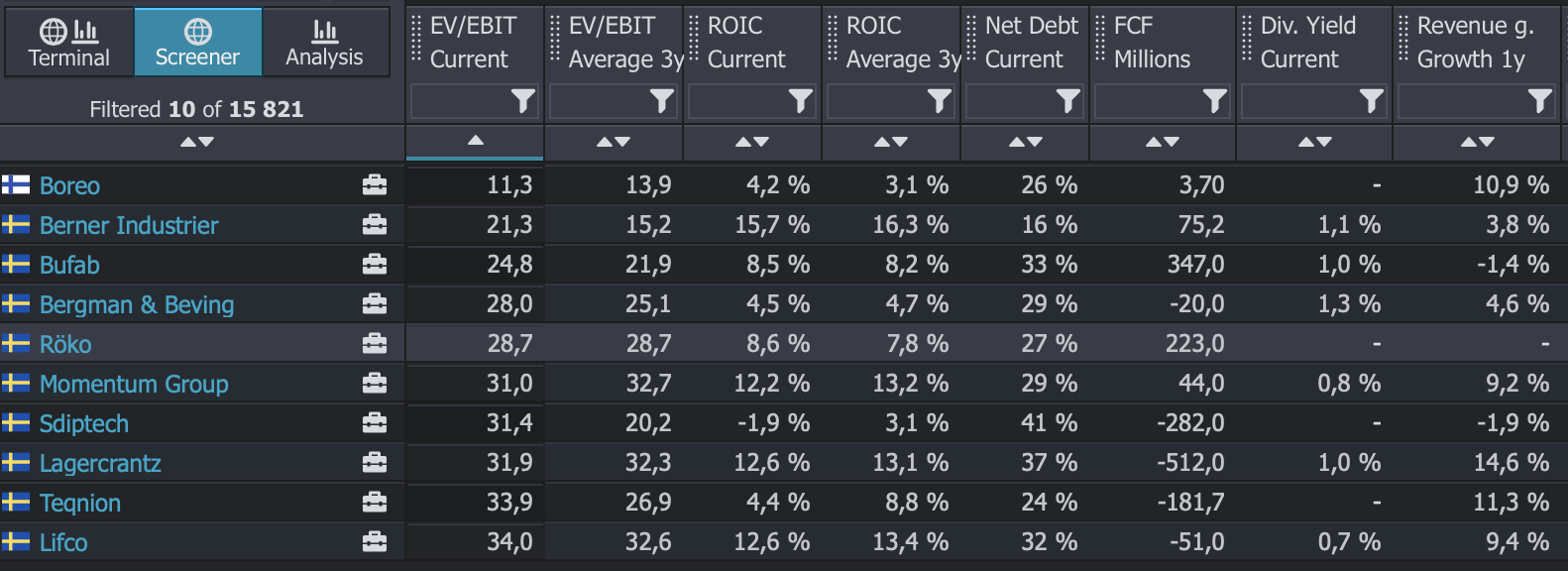
Röko’s stock price has fallen significantly, but Röko is still not cheap at its current price compared to its peers. Now it’s at roughly the same valuation as Lifco, which has historically been chronically expensive for years. For good reason, of course.

I also watched Karlsson’s presentation. A couple of things stood out.

Karlsson explains how he approaches M&A situations compared to other serial acquirers, or compared to Lifco. He states quite directly that Röko’s advantage is their small size, which allows them to grow faster through acquisitions than larger companies. He also praises that M&A is always a matter of trust between buyer and seller, and here Röko’s advantage is that Karlsson himself can directly participate in the acquisition, and the owner has weight in the situation.

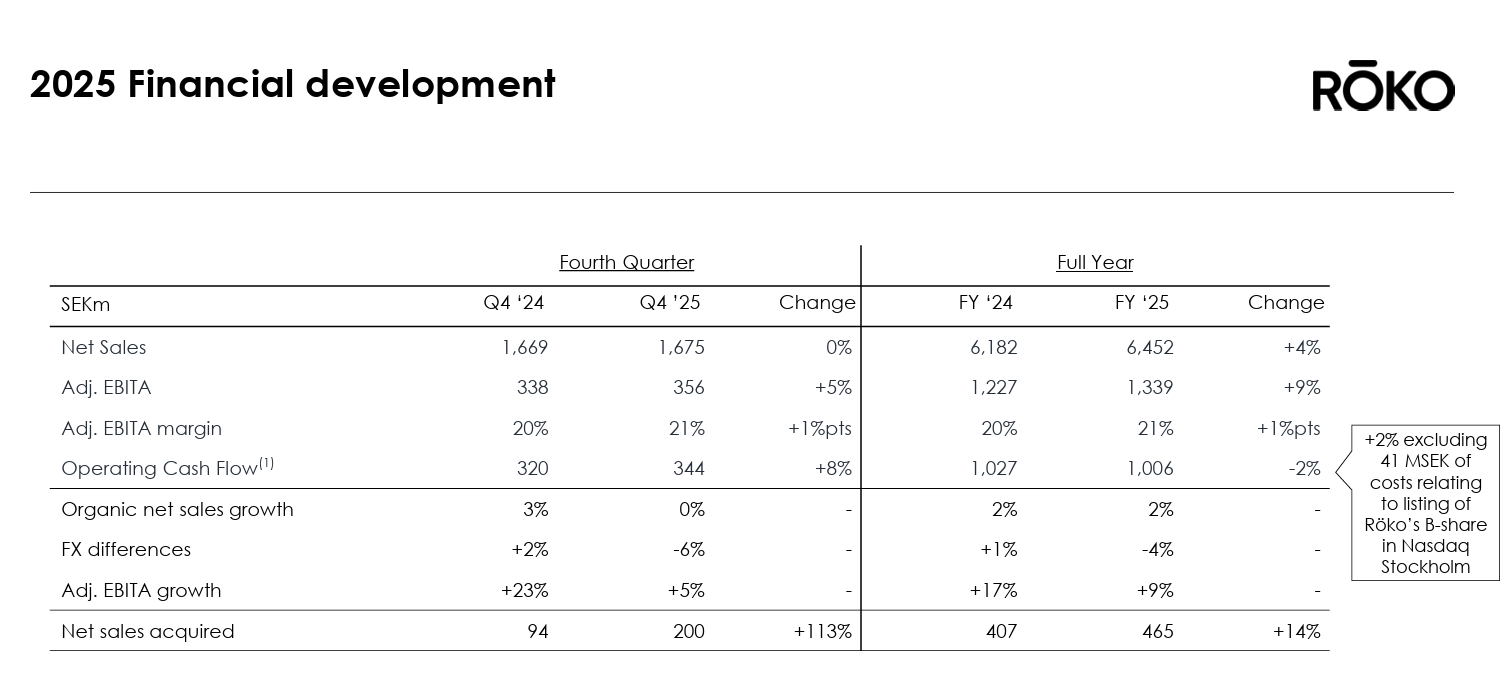
An interesting company, hopefully it will become even more affordable in the coming months. The last couple of earnings reports have been OK, but the share price has still drifted lower. Now, however, insiders have also started buying.

Näyttökuva 2025-12-06 kello 14.44.02

8 Likes

It will. Reasons: Selling pressure, so far a limited number of people who know about this. Not all of them are buyers.

My own guess is that as selling pressure continues and there are few buyers, the price will correct sharply downwards. A short U-shaped bottom when sellers realize holding is a better idea. After that, a fairly steady rise, who knows for how long. Probably until the next crisis.

T: Waiting for entry, brooding over a nest egg

7 Likes

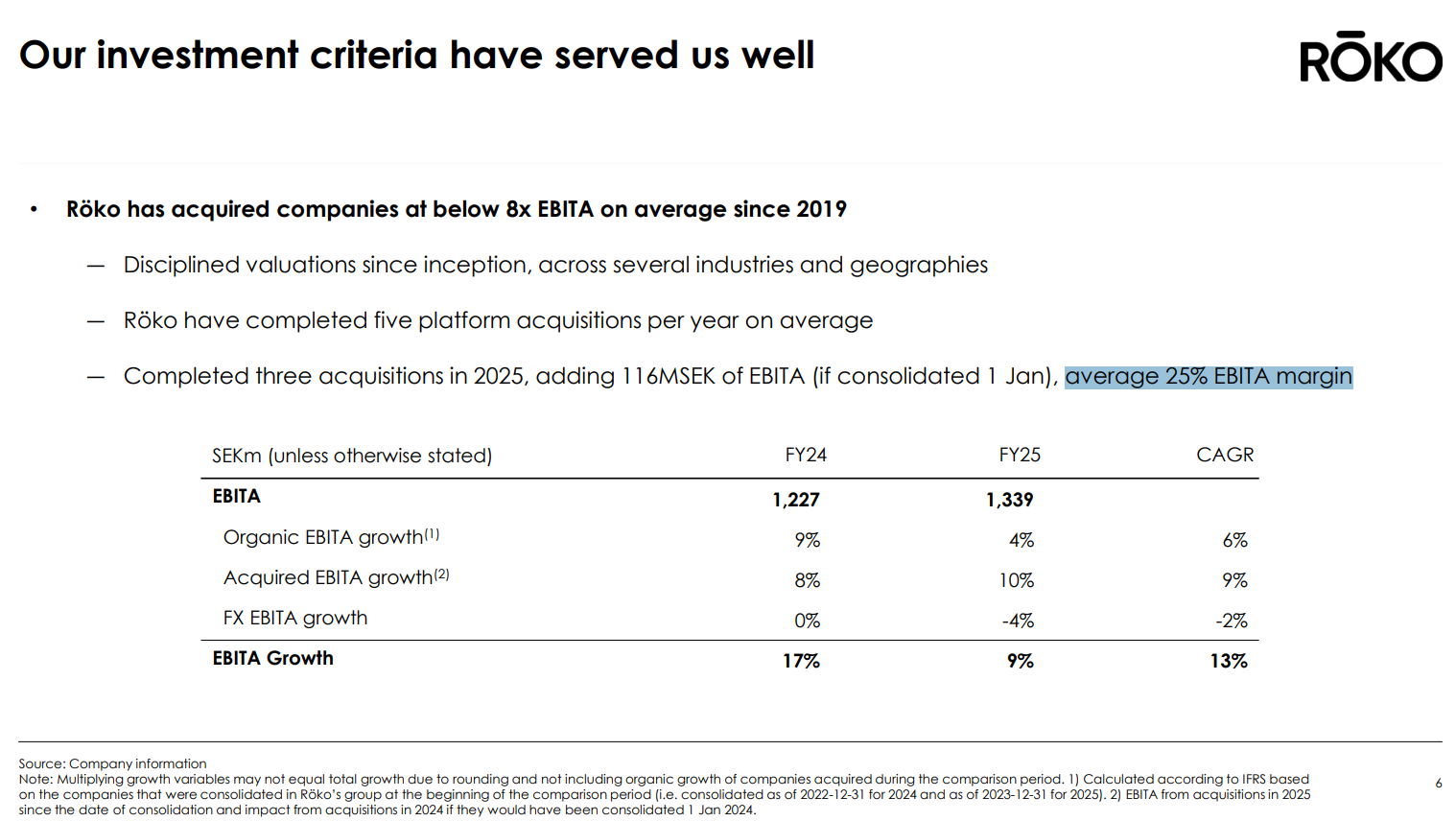
Good reflection! The small size is definitely an advantage vs. multi-fold larger serial acquirers (e.g., Lifco, Indutrade). If we consider a suitable acquisition target for Röko, a small or medium-sized company with approx. 2-10 million € EBITA, an average of 3-4 acquisitions annually is enough to maintain a growth rate of over 10%.

Roughly simplifying, a 4-5x larger Lifco would have to make 12+ deals annually to achieve the same growth rate, if equally small companies were acquired.

When acquiring these private small companies, one typically achieves the low valuation critical for the serial acquirer model, 5-8x EBITA. Valuations tend to rise when moving to increasingly larger companies, assuming their quality remains at the same level.

As the size grows, maintaining growth thus requires more and more small acquisitions, or alternatively, larger companies must be acquired :grinning_face_with_smiling_eyes:

Of course, these larger serial acquirers are still growing at a good pace, and someone like Constellation Software has been able to do it already at an epic scale. But it’s certainly easier to achieve that growth with Röko’s playbook when starting small :grinning_face_with_smiling_eyes:

A truly bullish argument could be that one can pay more for Röko than, say, Lifco, because Röko will grow faster and longer due to its smaller size :grinning_face_with_smiling_eyes:

I must also reveal that I opened a position last week, so it’s good to keep that in mind when reading my ramblings. My thoughts are therefore certainly already biased :cry: Pressing the buy button made me wince, and it hurt a little at the same time, as my portfolio includes, for example, the serial acquirer Relais Group from the domestic stock exchange at more than half the valuation :grinning_face_with_smiling_eyes:

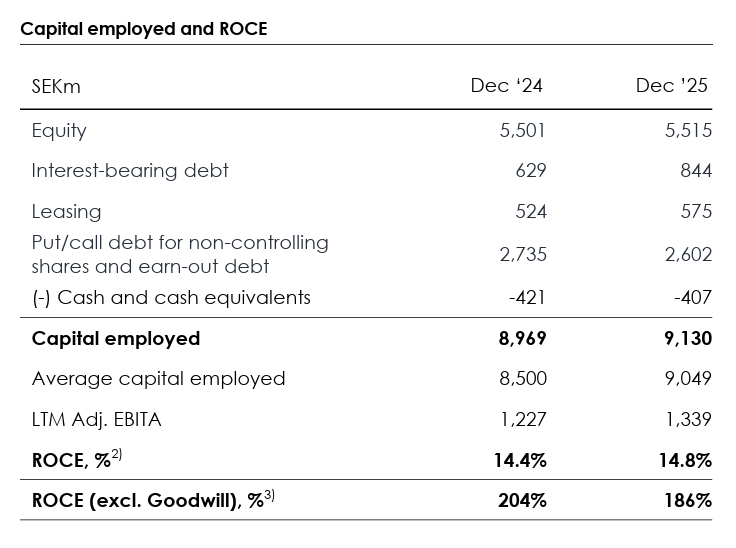
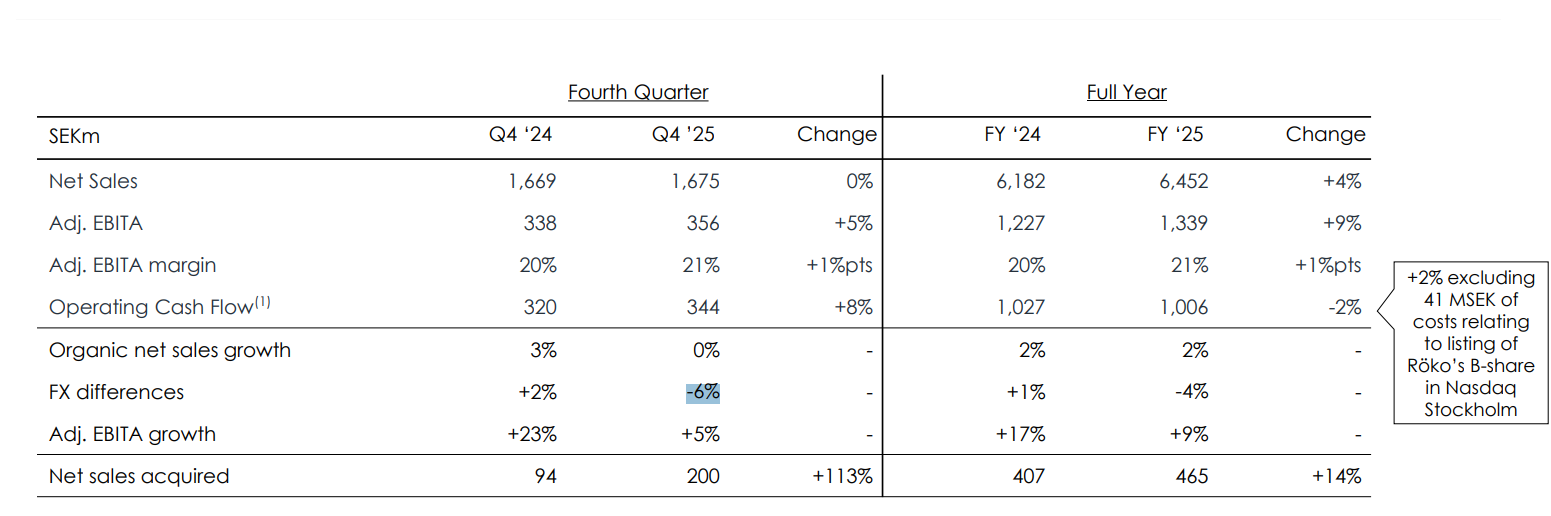
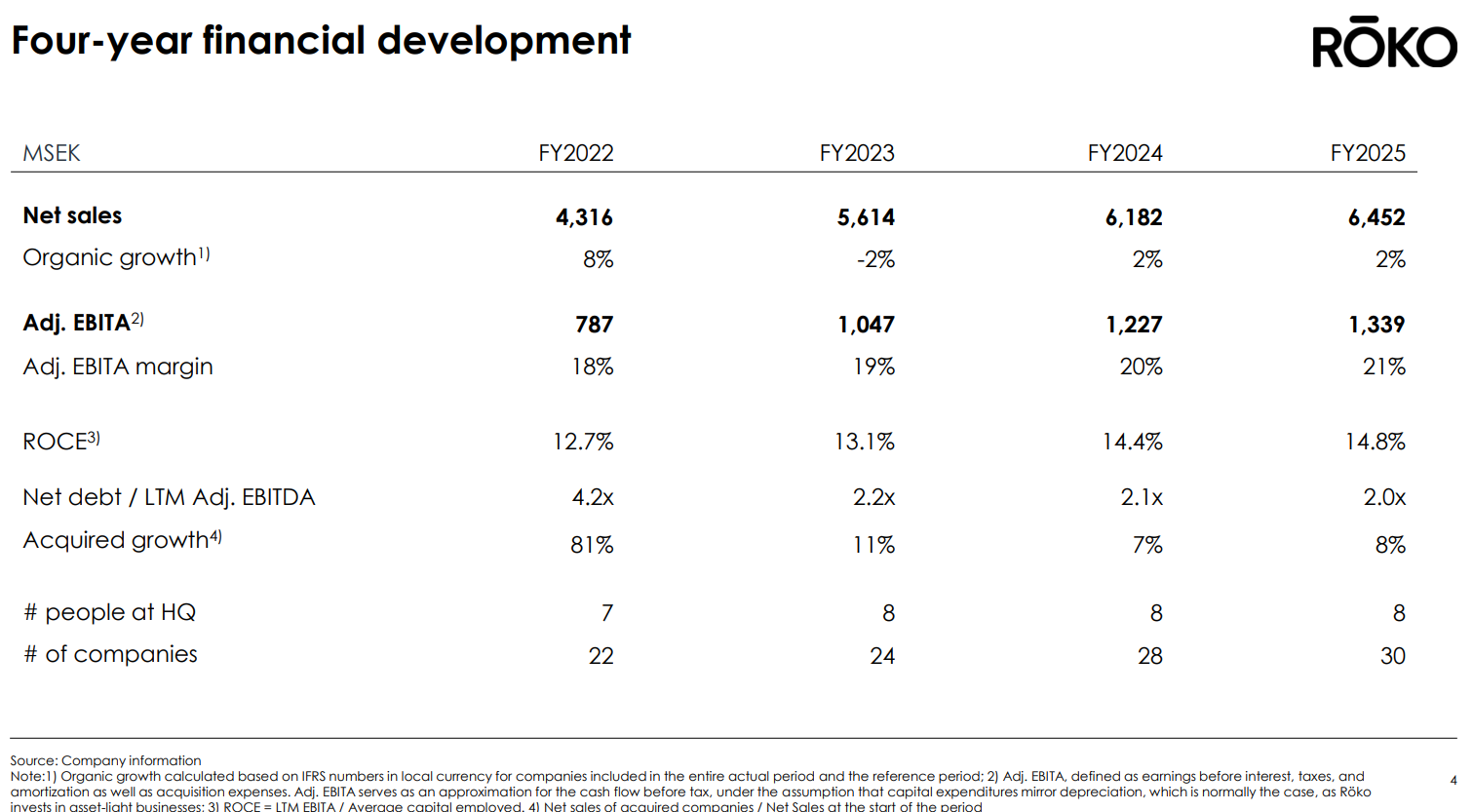
My thesis, however, is that Röko invests 80-90% of its operating cash flow into growth (acquisitions), achieves approx. 15-20% ROIC on it, and this can be done for the next 10-15+ years. With these bullish parameters, a valuation of just over 20x EBITA (based on next year’s consensus estimates) doesn’t hinder the expected return much :joy: There are risks, of course, no getting around that. Let’s see if Mr. Market offers an opportunity for that famous cost averaging :grinning_face_with_smiling_eyes:

4 Likes

Yes, I agree that EV/EBITA is a quite valid valuation metric.

Initially, I thought that multiple arbitrage would be partially overlooked in a situation where Röko buys the company at an 8x EBITA multiple and leaves the entrepreneur with a 20% ownership stake in the new subsidiary. In this case, Röko’s valuation increases by the new subsidiary’s EBITA × 20, minus the price paid (considering the put/call option). For this reason, I still considered the multiple difference in the result to be undervalued for that 20% portion.

However, you are right that the arbitrage materializes when Röko buys the rest of the company in a few years. The undervaluation is only temporary.

3 Likes

Hi, thanks for this thread and discussion. I agree with what you wrote above, that the forum could use more discussion about capital allocators. Serial acquirers and investment company threads, as well as these company-specific threads. I have tried to keep the Fairfax thread alive, among others, but judging by the lack of discussion, there are apparently very few of us interested in this niche. It’s a bit of a shame, because there are many successful companies in this genre that might be “boring” but have simultaneously been excellent investments.

Apologies that my message didn’t bring any added value to the discussion about Röko. The company is completely new to me and I noticed this thread by chance. It’s good that a dedicated thread has been created for the company. This is exactly the benefit of discussion: finding new investment opportunities and learning new things even about companies you’re already familiar with. I’ll bookmark this thread and start following the company :slightly_smiling_face:

8 Likes

Wiser people can answer more comprehensively than I can, but as I understand it, the main reason for these option arrangements and minority owners in general is the raw entrepreneurial spirit required at the operational level in the subsidiary by Röko’s decentralized operating model. In practice, Röko’s headquarters would only want to focus on capital allocation. Subsidiaries are, of course, helped when necessary, even in the form of consulting/sparring, but they try to keep their hands off the daily business of the subsidiaries for as long as possible (unless there is a need to intervene, e.g., if the business starts to deteriorate).

So, if the local management of the acquired company or, for example, an entrepreneurial family retains that 20-25% minority stake, they will likely still wake up every morning to solve their business problems with the same entrepreneurial perseverance as before. At the same time, the entrepreneur who sold their company knows that they eventually have the opportunity to retire and sell the minority stake through the option arrangement. This is where the trust between the parties is emphasized, and the entrepreneur needs to see Röko as the forever home for their company, which isn’t going anywhere. As I understand it, the option arrangements are usually longer-term and are not based, for example, only on the cash flow development of the next financial year, after which the entrepreneur cashes out and moves to the golf courses.

By the way, the 2025 investor letter from the guys at REQ was released today: https://req.no/wp-content/uploads/2026/01/Investor-Letter-2025-2.pdf

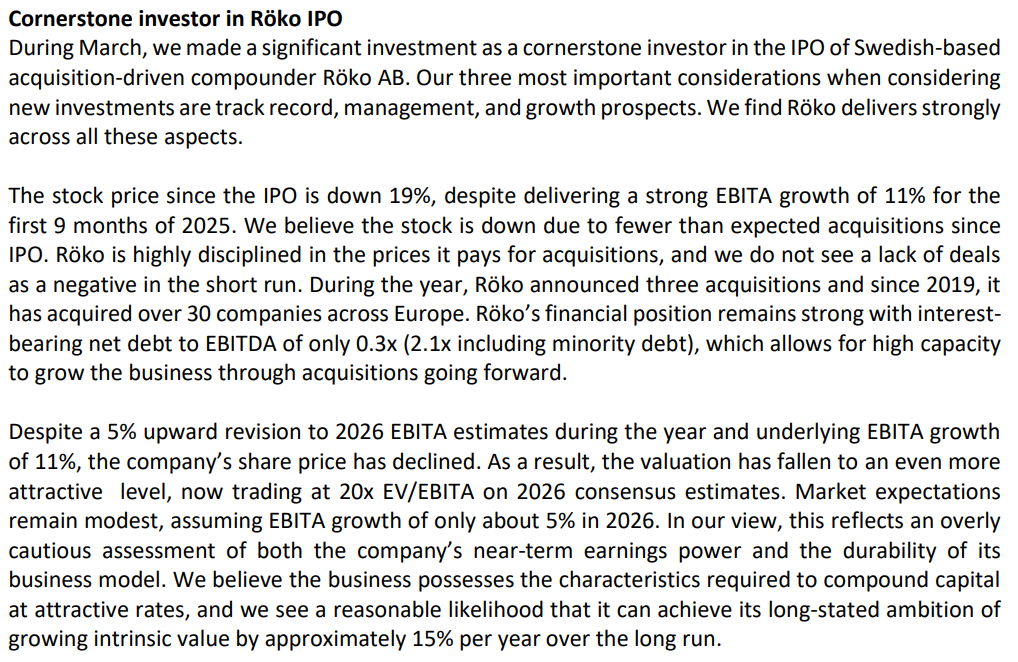
There was more talk about Röko again, although there was some repetition from the previous letter too.

9 Likes