It seems there isn’t a thread for this yet. Quite a surprise 
As a retail investor, I’ve been thinking for a long time about what the best way to gain exposure to the growth of the private market (listaamaton markkina) would be, while still maintaining decent liquidity. EQT, primarily owned by Investor AB, has been on my radar for a long time, but yesterday I finally decided to jump in.
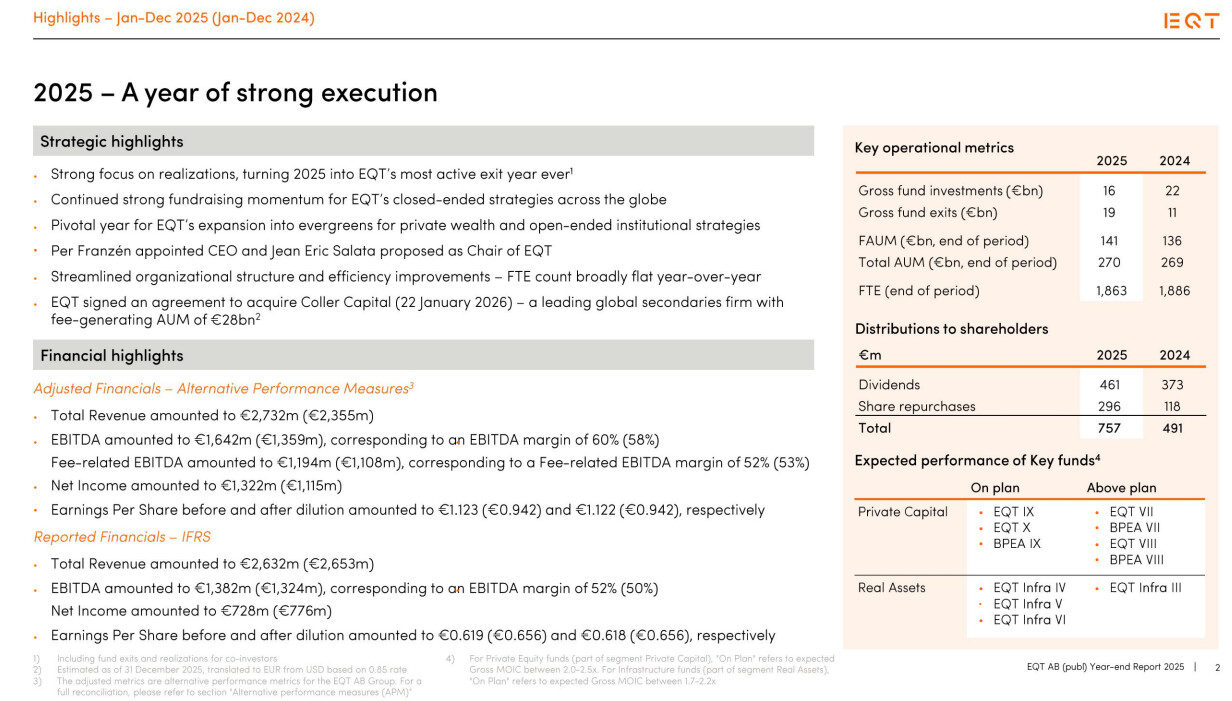
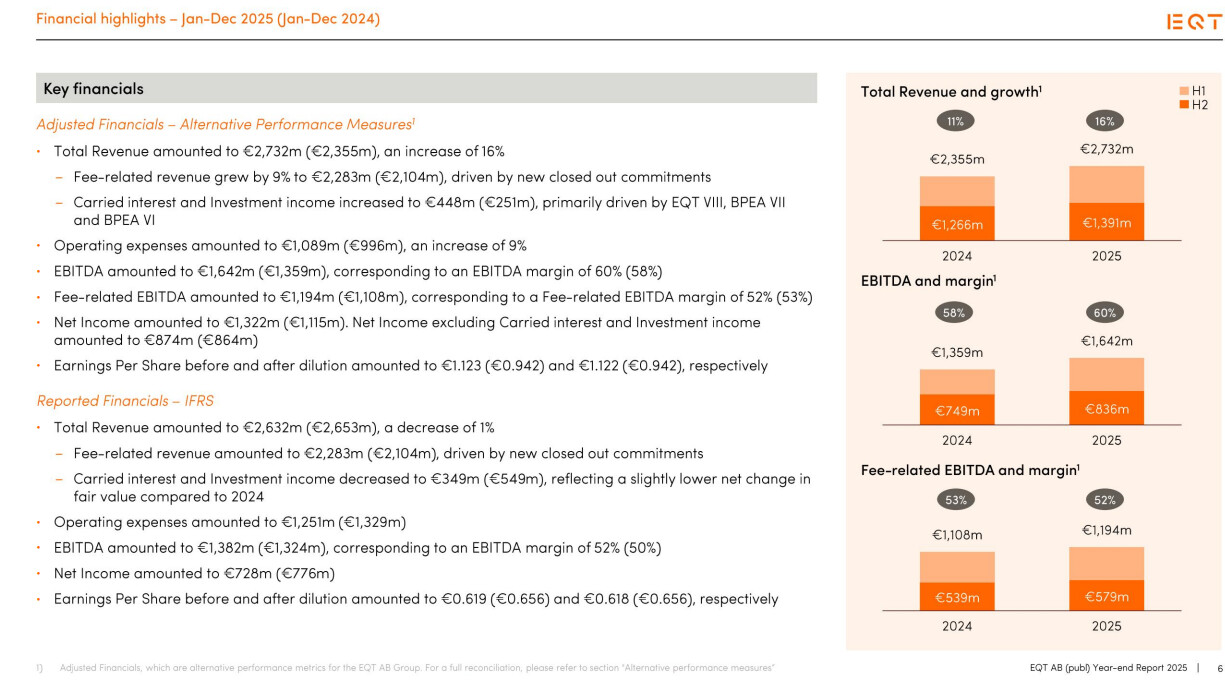
What makes EQT interesting to me is the nature of its recurring management fees: they clearly make up the majority of revenue and operating profit, and they are predictable, long-term income streams instead of fluctuating with exit returns. On top of that, of course, are the performance fees.
Yesterday I calculated a basic scenario: if you forecast a moderate 6% annual growth in EQT’s so-called fee-generating AUM, management fees could rise from the €2.3 billion level to about €2.9 billion over a five-year period, and this stable income stream drops down to EBITDA (käyttökate) with a margin of over 50%. This is the foundation that I think would justify some kind of “compounder” discussion (maybe even valuation?) regarding the company and makes this case interesting.
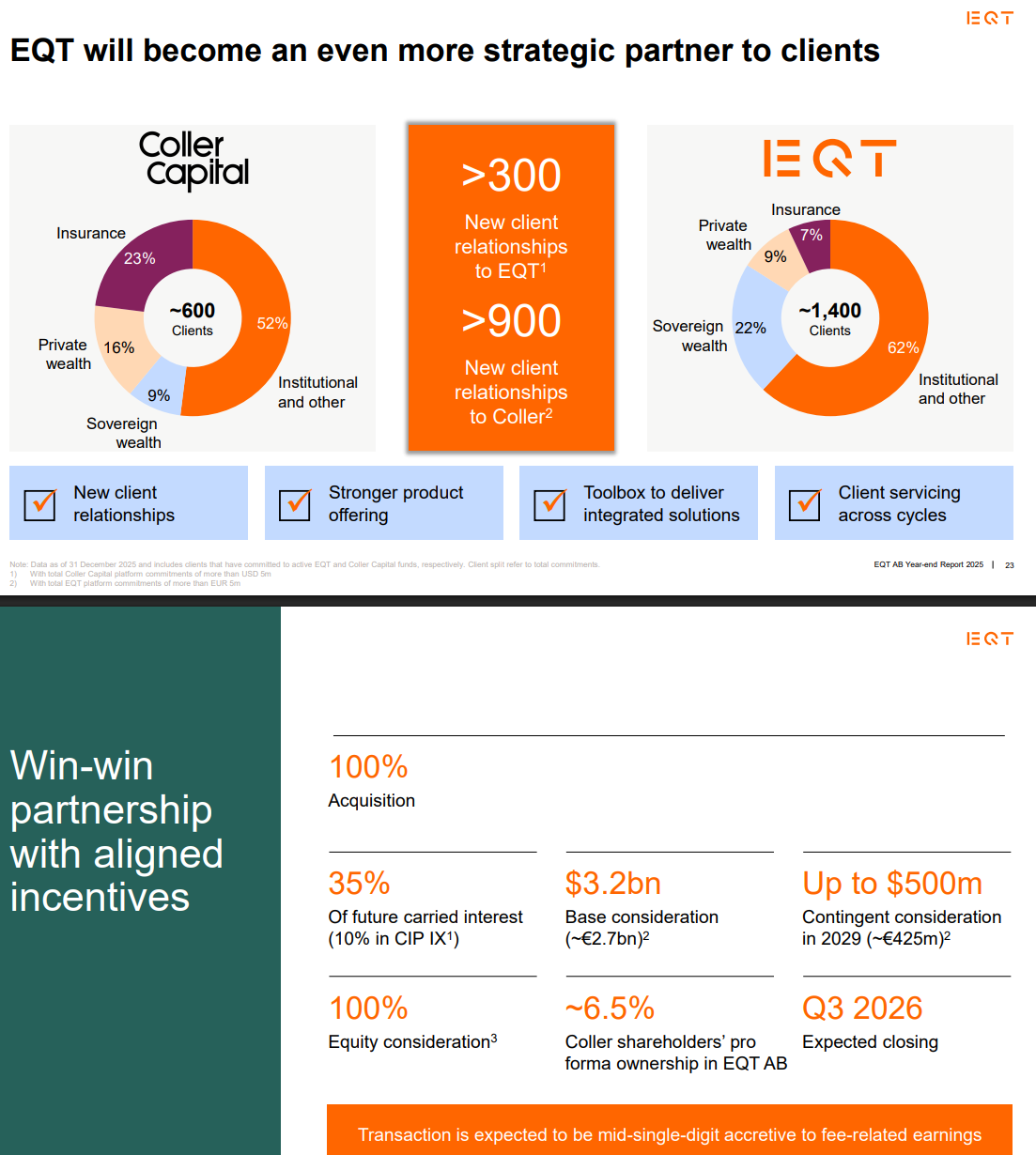
Some additional perspective is provided by yesterday’s news, where EQT’s main owner Investor AB bought 2.3 million shares and the incoming Chairman of the Board Jean Eric Salata bought a 670 million SEK stake. EQT’s stock has dropped significantly in recent weeks from the level of about 370 SEK to below 300 SEK. To me at least, this pricing doesn’t reflect any kind of compounder nature, the growth potential of the private market, or the stability & longevity of current income streams.
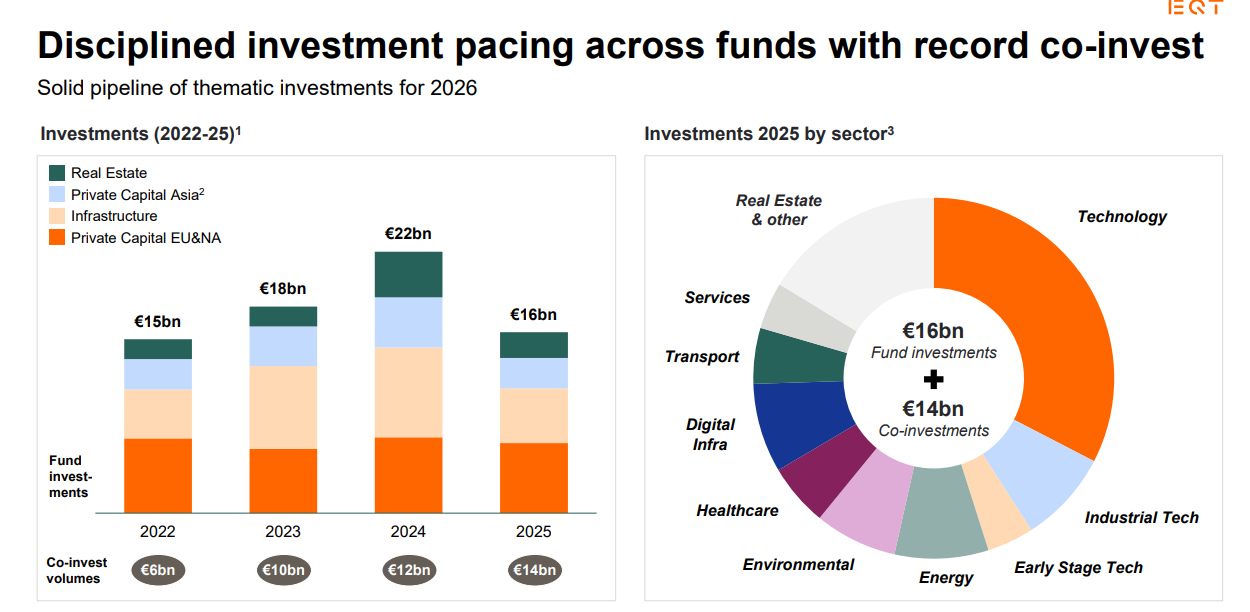
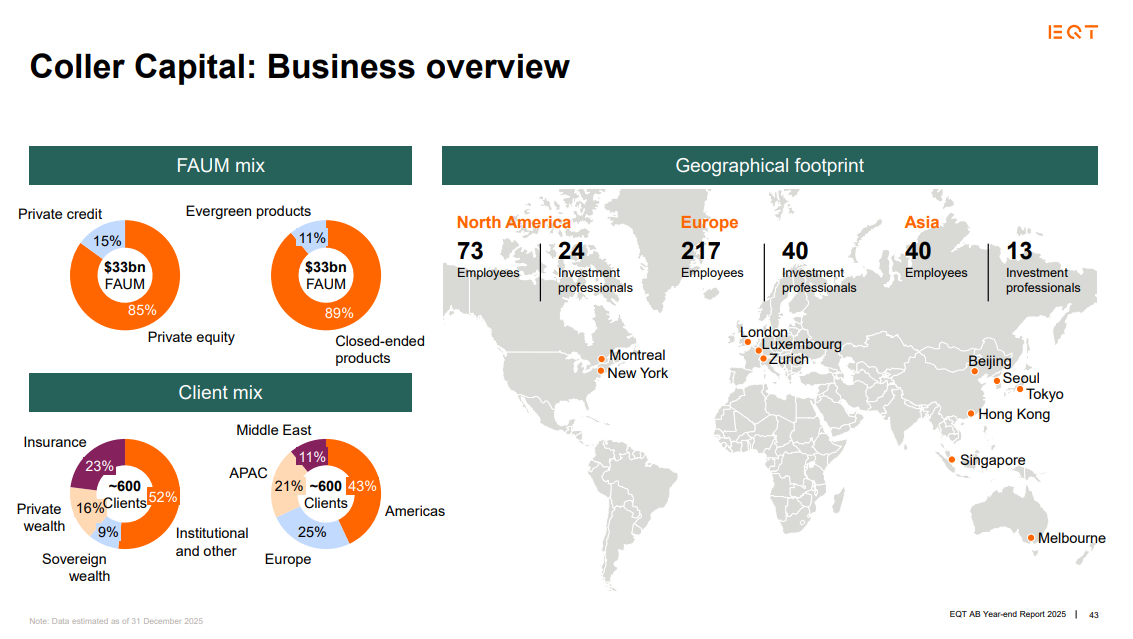
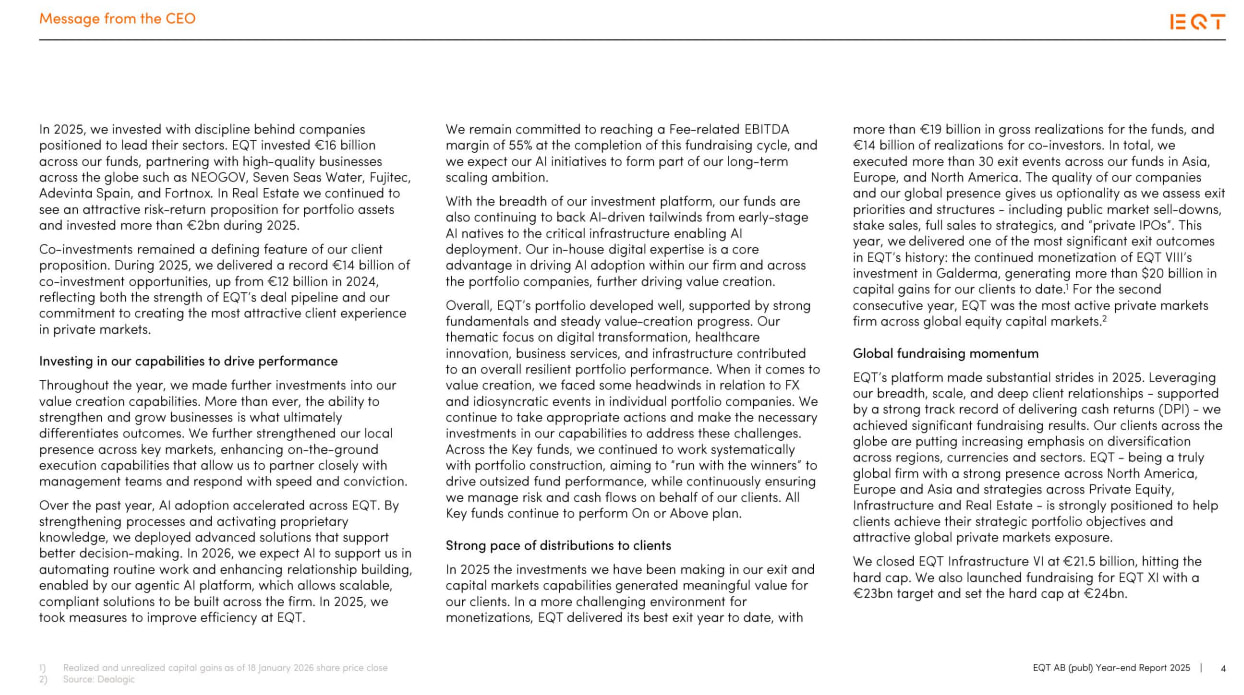
A while ago, I listened to an interview with the incoming Chairman Salata, and an interesting point about EQT funds’ investment strategy stuck with me. They invest heavily in thematic investments, where the main roles are played by country-specific businesses, such as various service companies and underdeveloped sectors especially in Asia, and on the other hand, strong secular trends, such as healthcare. Salata’s own background is in the Asian private equity market, where EQT made a large acquisition several years ago, after which Salata, who was an entrepreneur there, joined EQT and has now, years later, made a significant additional investment.
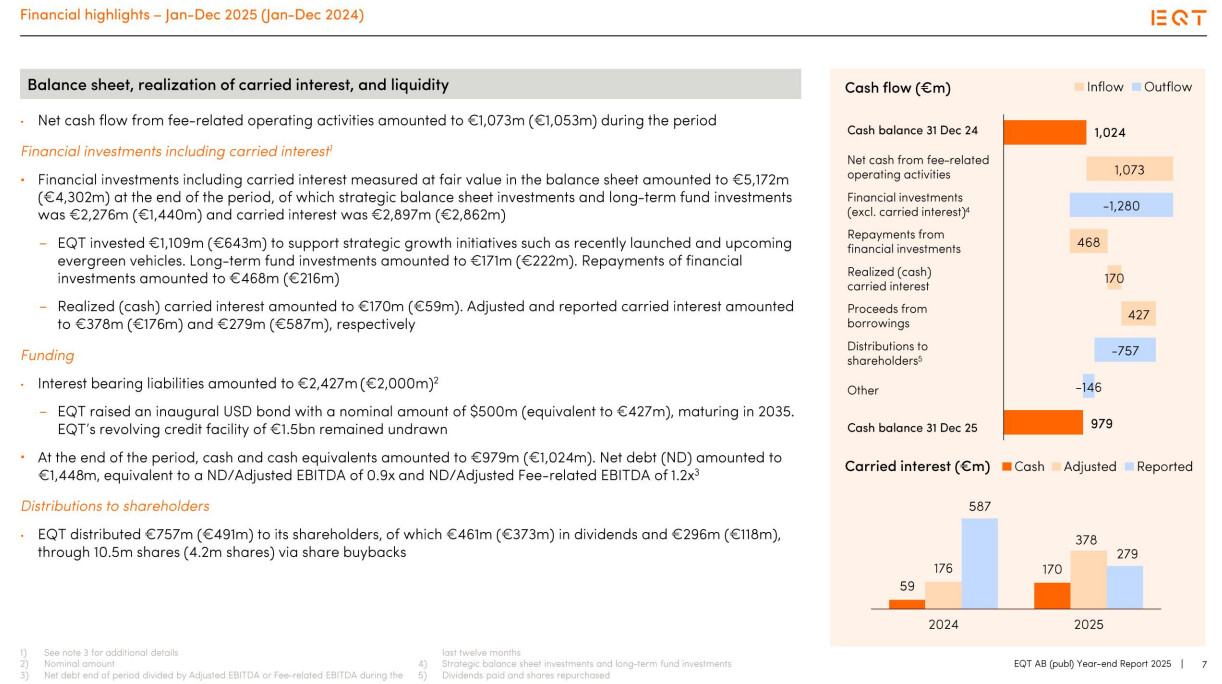
This opening post wasn’t meant to be the analysis of the century, nor am I capable of that. But as a whole, I think EQT is at least worth following for those who want exposure to the growth of the private market. Personally, I consider the company a relatively predictable, scalable option for a portfolio, equipped with strong (and free) cash flow. It also brings in that so-called idiosyncratic weighting. Maybe in times like these, one could own worse things?