First and foremost: This is not an investment advice thread. Instead, the purpose of this thread is to gather Rivian experts and news in one place, without constant comparisons to other similar companies.
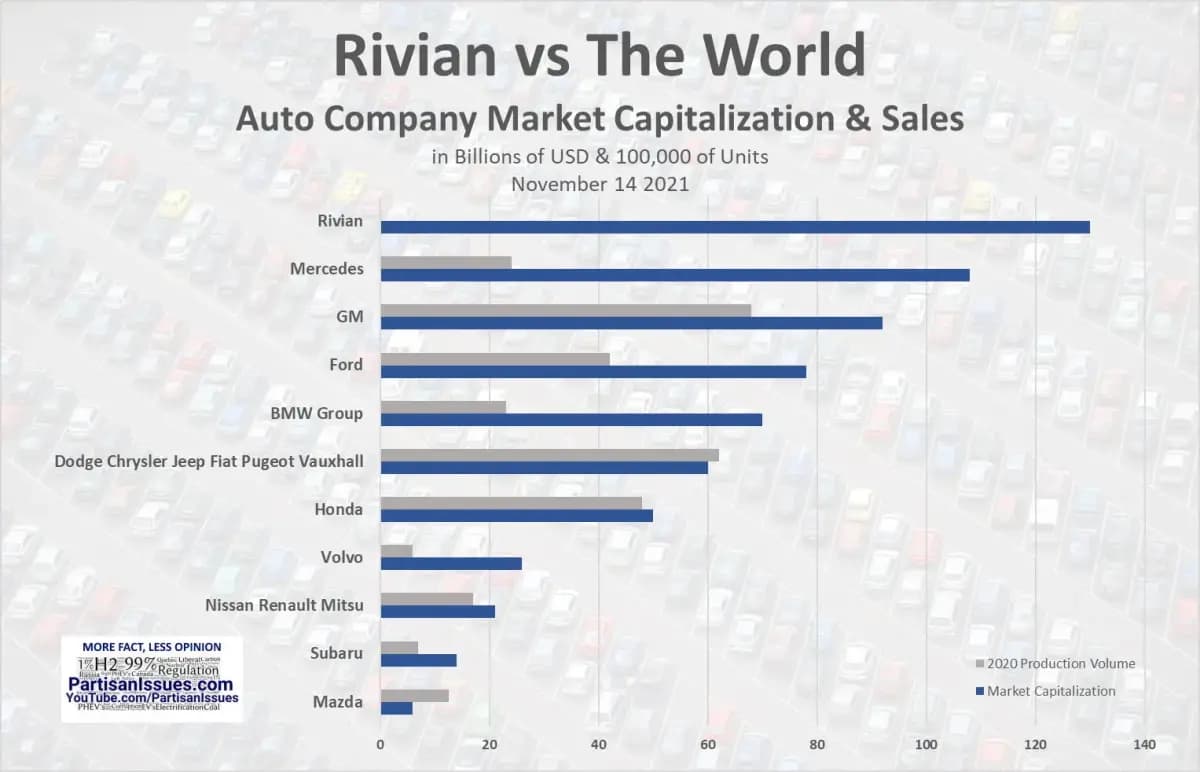
November 10, 2021, was an exciting time when Rivian “RIVN” went public in one of the largest IPOs ever. With strong backing from both Ford and Amazon, including an order for 100,000 vehicles, Rivian raised 12-14 billion (this amount seems to change depending on where you look) in direct cash reserves. The company was valued at up to 127 billion, catapulting Rivian directly into the ranks of the most valuable electric car companies and a challenger to Tesla.
The valuation in early November 2021 was even this absurd:
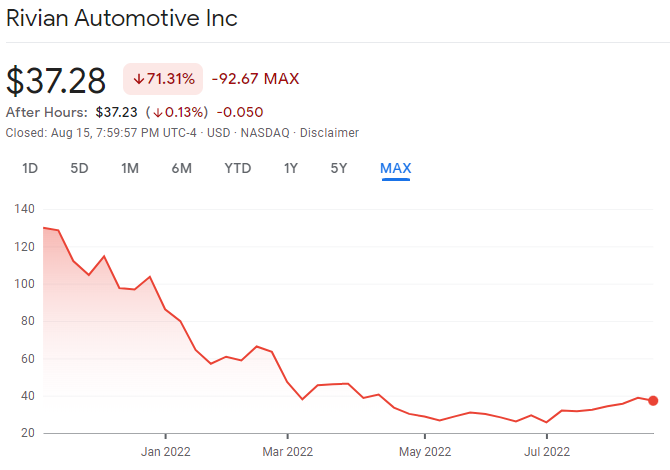
The stock price was $78 at IPO, and soon after the initial hype – and a very generous market situation – the price even reached (the current ATH) around $172 by November 16. It went to the moon.
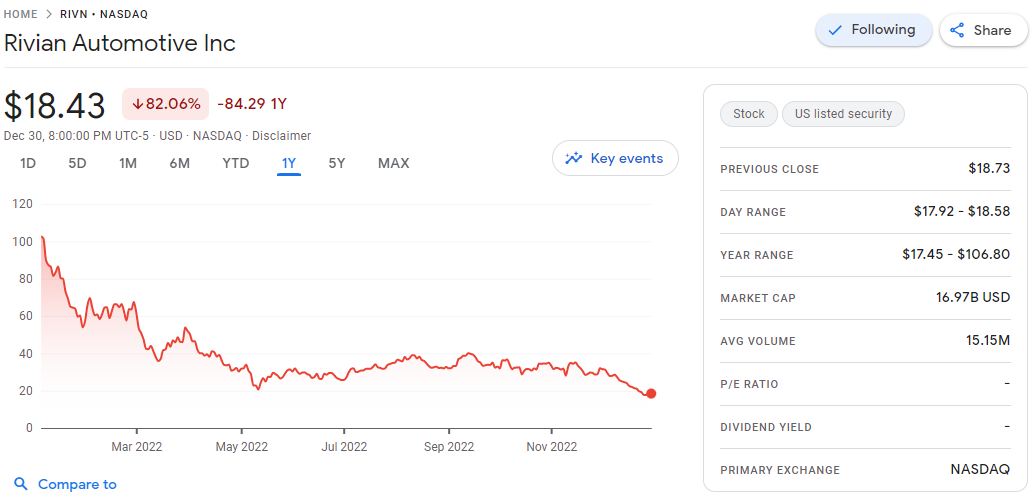
Since then, the market situation of 2021’s exuberance has become more realistic. After Rivian made a few PR blunders (first tried to raise the price of already ordered cars for customers citing increased costs and also fought with a seat manufacturer subcontractor over pricing) and then Rivian announced supply chain issues, the stock price plummeted sharply, even reaching $20.60 on May 11, 2022.
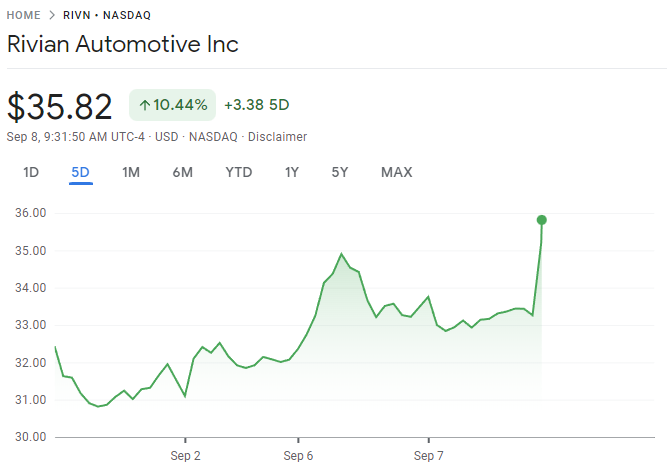
By the end of trading on August 15, Rivian’s stock price has recovered somewhat, being around $37.28.
Perhaps the biggest factor in Rivian’s decline, however, was that the company initially announced it would produce up to 50,000 cars in 2022. Later in early 2022, the company announced it could not meet this target and halved its goal to 25,000 cars, which naturally caused a critical reaction. Since then, Ford and Amazon have recorded significant losses so far in Rivian’s early stages.
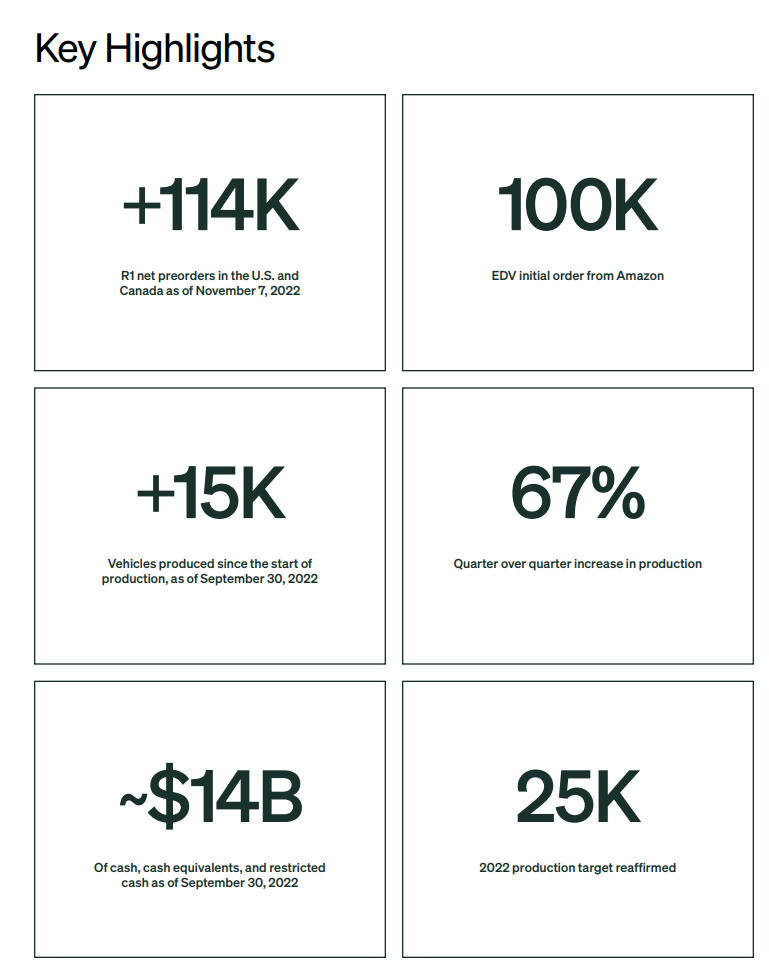
However, Rivian still benefits from the overly high initial pricing. While many startup and growth companies are desperately seeking funding, Rivian has a solid 15.5 billion in its own assets (situation after Q2 2022). Assets are needed, as Rivian incurred a loss of 1.71 billion in Q2 2022, and 5 billion has been allocated from that for a new factory.
However, Rivian has so much wealth in its pocket that the company is calmly planning future strategies, new models, the development of a charging network, and that new factory. To reassure investors and the future, however, the company laid off 6% of its workforce in July 2022. This meant the layoff of approximately 800 employees out of a total of 14,000.
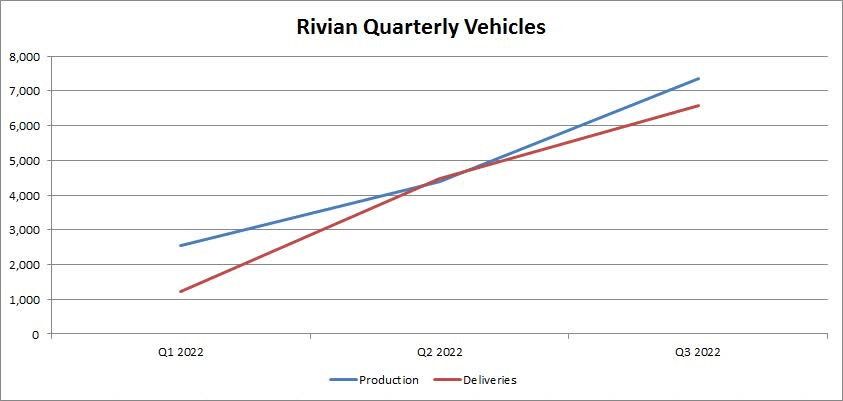
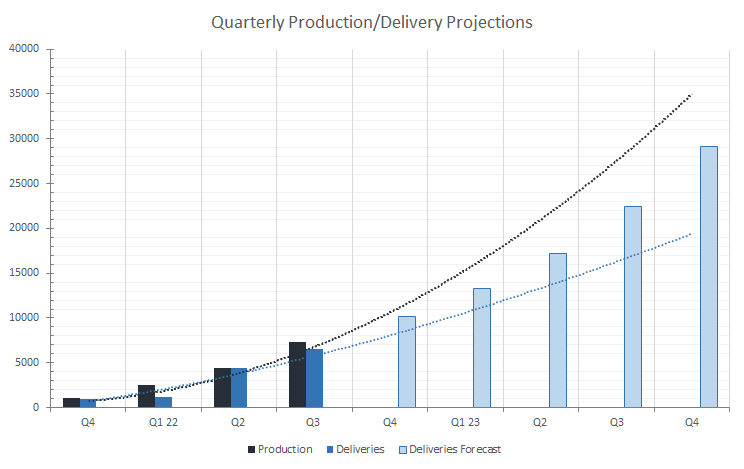
Q2 2022 was the first quarter for the company when a significant number of cars were produced (4,401 units) and revenue was generated (364 million dollars). Rivian’s success in late 2022, however, is largely linked to whether the company will reach its target of 25,000 cars produced. In the Q2 review, Rivian itself confirmed – for the second time – that the target will be met. However, this requires the production of 18,000 cars in the second half of 2022, and production efficiency must increase significantly to achieve this. The Irvine plant should eventually produce 150K cars per year, so capacity will be there. The question is whether production can be made more efficient this year and whether there will be enough material in the market.
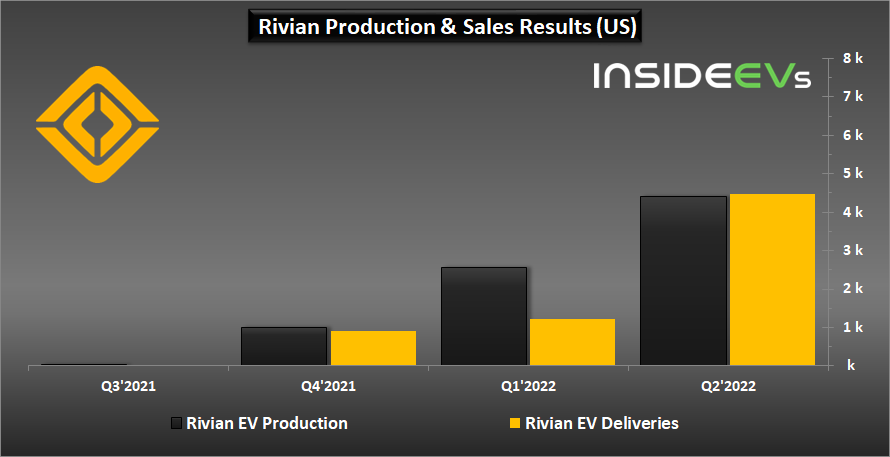
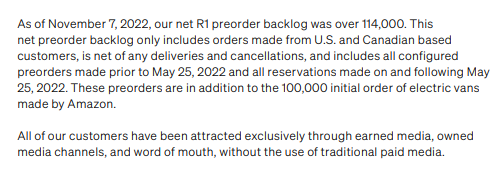
Orders don’t seem to be an issue; Rivian has 90,000 reservations for R1T and R1S models. Rivian also received 8,000 new car orders during Q2 '22, so despite the worse market situation, expensive Rivian cars seem to be selling well. Also, reading comments from Rivian customers, these adventure vehicles are quite popular.
Rivian stands out in the market by offering more expensive cars (starting from $80K) and branding itself as an adventure brand in its early stages. This is a bold strategy, but it distinguishes Rivian in that it does not directly compete on price, for example, against Tesla. Rivian plans to bring a more affordable option to market by 2025 at the earliest, and in that sense, Rivian resembles Tesla in its early years. Rivian’s brand is currently focused on adventure, and Rivian’s electric car models are designed with wilderness conditions in mind.
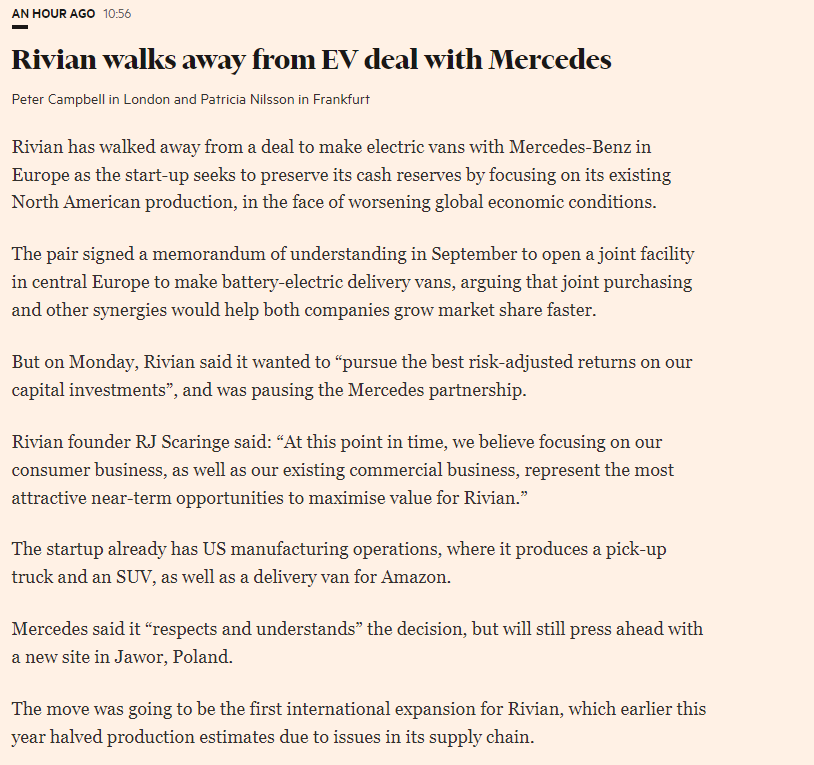
Rivian has its own factory in Irvine, California, and the intention is to build another factory in Georgia. Rivian services its cars itself, and continuous additional revenue is also intended to be generated from Rivian’s electric car charging network in North America (including Canada). Its own production, own service, and charging network are different choices, as fresh startup electric car companies usually don’t seem to have them.
Development has occurred, but Rivian is still relatively expensive compared to its operations, even though its market value has dropped to 33 billion. It is therefore definitely a growth company for which the market situation is not forgiving.
The company has had, is having, and will have a fascinating journey, so Rivian is worth keeping an eye on.
News/articles:
Early stage problems:
https://www.forbes.com/sites/sergeiklebnikov/2021/12/17/rivian-shares-fall-to-record-low-as-company-warns-of-supply-chain-issues/?sh=73b3f42b18a4
Latest figures Q2 2022:
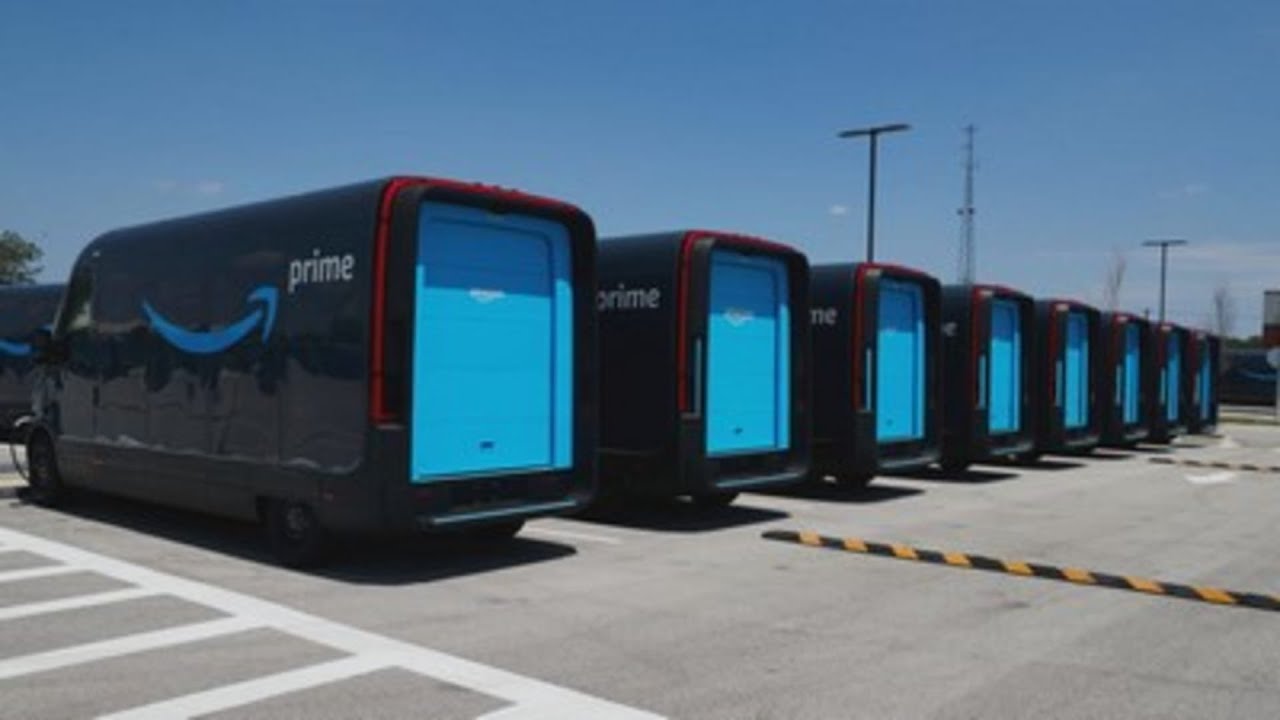
Rivian, for its part, enables Amazon’s electric car armada with its vans (the goal is to have 100,000 of these Rivian vans in traffic by 2030):
https://www.geekwire.com/2022/amazon-begins-rollout-of-rivian-electric-delivery-vans-across-u-s-in-drive-to-shrink-carbon-footprint/
This is what the vans going to Amazon look like (they also include their own software):
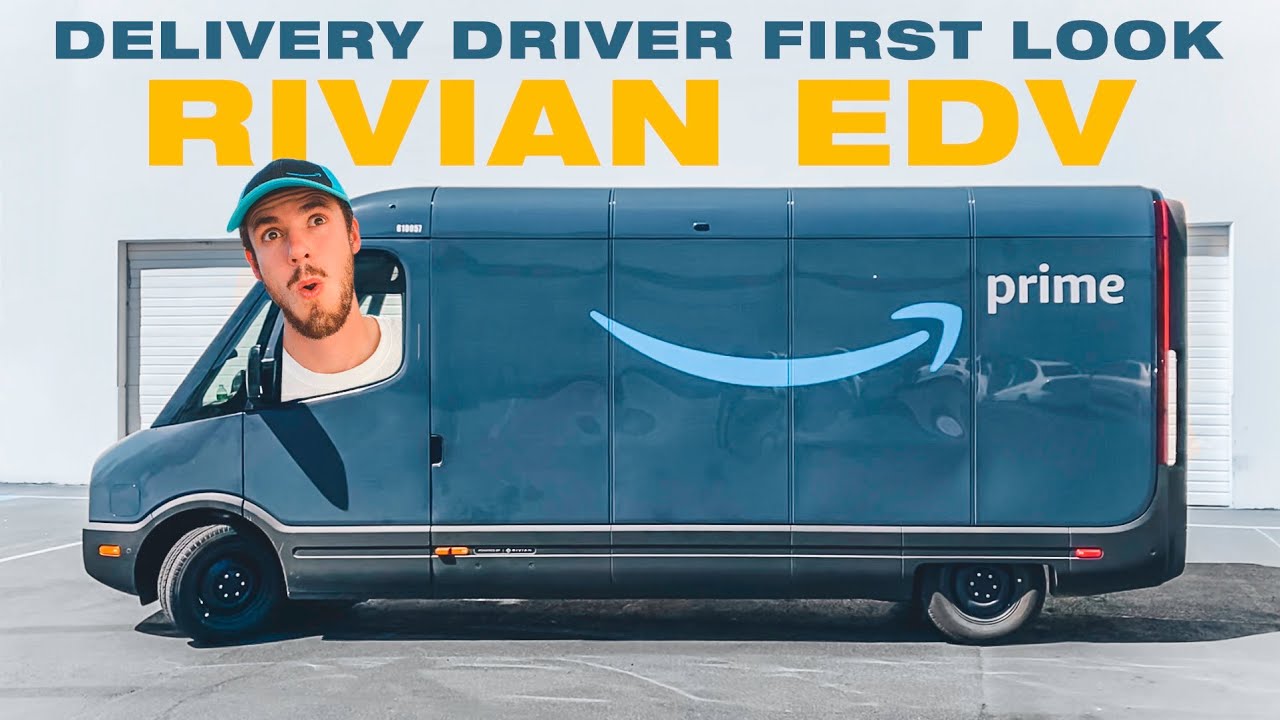
Amazon employee comments on Rivian’s electric vans:
 The opening will be corrected over time.