Alla olevassa jutussa ilmaistaan, että hopeasta ja kuparista on tullut uudet lempparit, kun sijoittajat hakevat tuottoa kullan sijaan.
Hopea on lähes tuplaantunut toimitusvaikeuksien ja ETF-kysynnän siivittämänä. Kupari sitten taas hyötyy energiasiirtymästä ja datakeskuksista.
Hintaheilahtelut ovat rajut, mutta moni lyö vetoa näiden rallien jatkumisesta myös ensi vuoden puolelle.
Where the silver rally ends is hard to pin down, according to Marex’s Meir.
“When a chart breaks out like this, there are no resistance signposts,” he said. The top “could be $85, could be $60.”
While copper has less of a financial component, the growing demand for electrification to feed AI data centers as well as clean-energy projects has strategists predicting supply shortfalls in years to come.
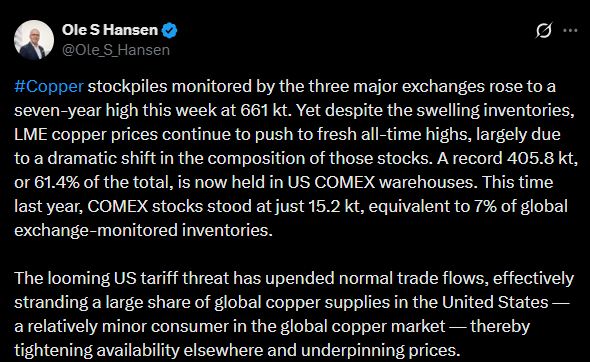
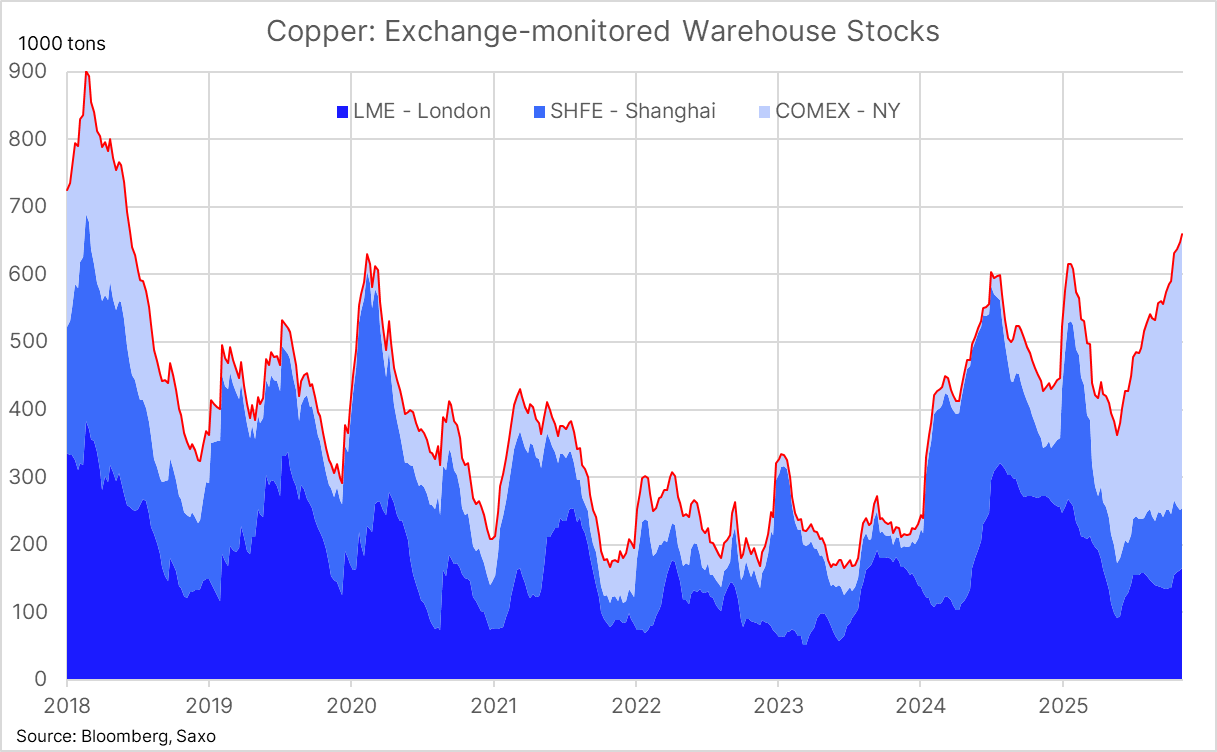
Kuparivarastot pörsseissä ovat korkeimmillaan seitsemään vuoteen ja hinnat jatkavat nousua.
Syynä on varastojen keskittyminen Yhdysvaltoihin tullipelkojen vuoksi, mikä sitoo kuparia markkinoille, joilla kulutus on vähäistä, ja kiristää tarjontaa muualla maailmassa.
Tsekkasin huvikseni minkälaista osuutta nuo kuparipörssien varastot edustavat kulutuksesta.
Näköjään kulutus noin 28mton= 28.000 kton, josta 18.000 kton uustuotetaan, 10.000 kton kierrätyksen kautta uuskäyttöön.
660kton / 28.000 kton = 2,35% = 8,6pv kulutusta vastaava määrä.
Eli putkessa / toimitusketjussa = kuparin tuottajat, kuparin jalostajat, kuparituotteiden valmistajat, kuparituotteiden myyjät, kuparituotteiden kuluttajat, yms sekä kuljetuksissa kuparia on pakko olla useampikymmenkertainen määrä.
Ts pörssivarastot ovat em lukujen perusteella melko pieni osa kuparin kulutuksesta, ja ‘allokoimalla’ reilun viikon kulutus maailmassa ne voisi tuplata.
Mutta miksi pörssivarastot ovat juuri tuollaisella tasolla, ja miksi 7 vuoden huipuissa, ei minulla mitään järkevää ajatusta …
Tässä on vähän pidempi juttu kupariin liittyen, vähän samaa juttua kuin yllä olevissa viesteissä.
Kuparin hinta on noussut ennätyslukemiin, jutun mukaan toimitushäiriöiden ja Yhdysvaltojen tullipelkojen vauhdittamana.
Asiantuntijoiden mukaan Yhdysvaltoihin suuntautuva kuparin hamstraus kiristää tarjontaa muualla maailmassa. Energiasiirtymä ja tekoäly lisäävät kysyntää - samalla kun kaivostuotanto jää jälkeen.
Ennusteiden mukaan kuparin hinta voi nousta erittäin korkealle ensi vuonna.
The copper rally is also underpinned by persistent mine disruptions that have dented expectations for future supply growth. In a note published on Wednesday, Deutsche Bank characterized 2025 as “a heavily disrupted year,” with production setbacks forcing several major miners to downgrade output estimates.
Jutussa puhutaan, miten tänä vuonna kuparin hinta on noussut toimitusprobleemien, kaivosongelmien (pysähdykset + hidastukset - sääilmiöiden, lakkojen, poliittisten levottomuuksien takia jne.) ja yleisten tullihuolien vuoksi.
BHP:n toimarin mukaan ongelmat jatkuvat ainakin ensi vuoteen. Kysyntä kasvaa nopeasti vihreän siirtymän takia, mutta uusien kaivosten avaaminen on kuulemma yhä entistä vaikeampaa, vaikka ei aiemminkaan ole helppoa ole ollut. Analyytikot odottavat hintojen pysyvän korkealla tai nousevan edelleen.
"Key Points
Copper prices have surged to record highs this year, and are closing in on the $12,000 milestone.
Mining disruptions, supply shortages and concerns about U.S. tariffs have helped lift prices higher.
Mike Henry, CEO of copper mining giant BHP, told CNBC those challenges will persist into 2026 and possibly beyond."
Platinan hinta on noussut korkeimmalle tasolleen sitten vuoden 2008, kun syvenevä tarjontapula ja Kiinan kasvava kysyntä ovat ajaneet metallin hinnan lähelle 2 000 dollarin rajaa unssilta.
Metallin vuotuinen hinnannousu on nyt jyrkin yli kolmeen vuosikymmeneen.
Vuoden 2025 aikana platinan hinta on yli kaksinkertaistunut. Torstaina hinta kohosi hetkellisesti 1 974 dollariin unssilta, mikä on vain muutaman sadan dollarin päässä kaikkien aikojen ennätyksestä, joka nähtiin keväällä 2008.
Kyllähän se Platinakin lähti sitten hopean tapaan rajuun nousuun. Molempien vuoden kehitys n. 115%. Tuplat kultaan verrattuna. Platina samalla tänään myös 2000 usd rikki. Ath 2290 usd 2008 finanssikriisin ajoilta.
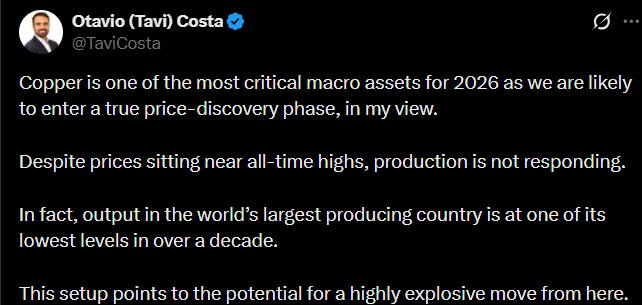
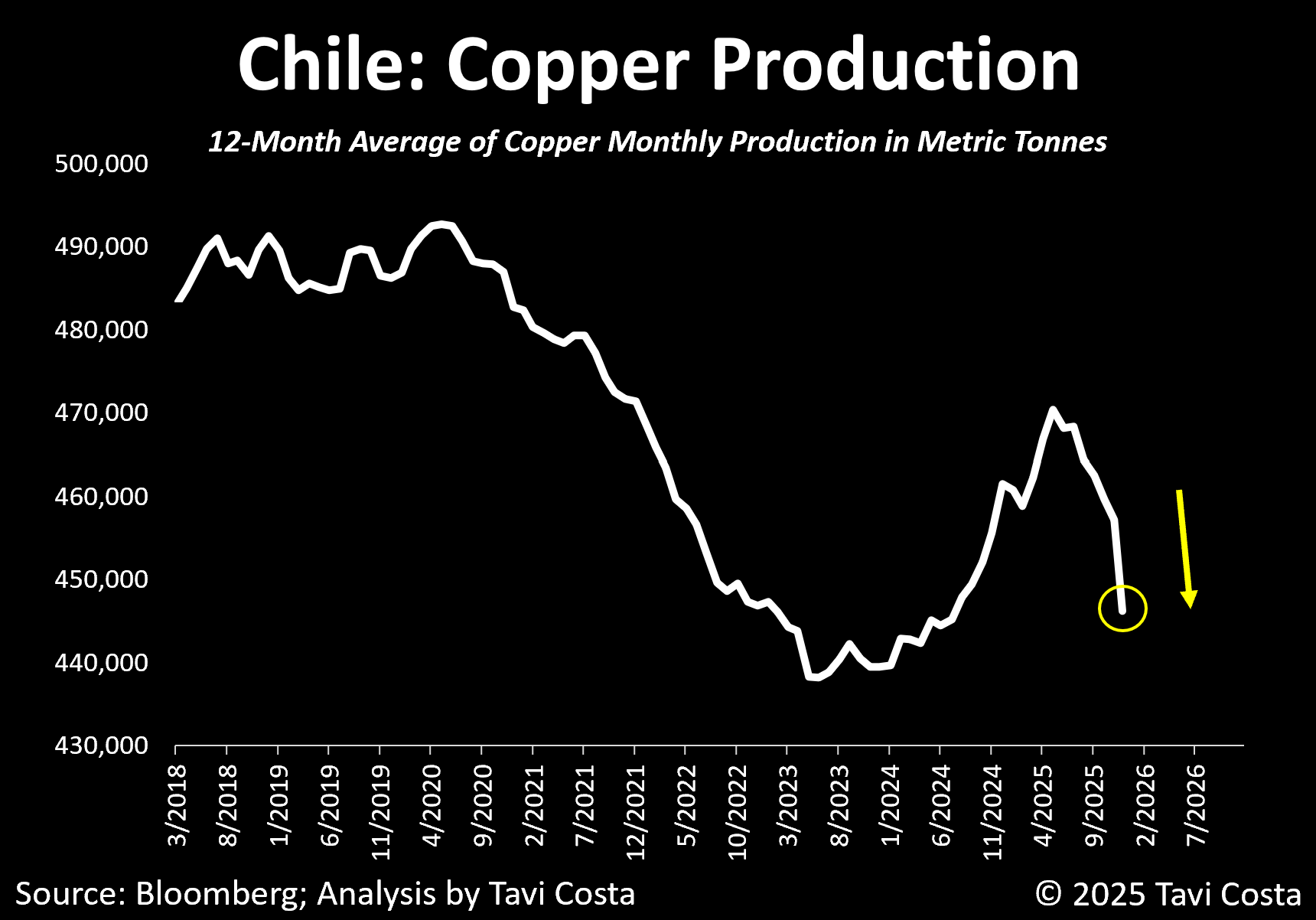
Kuparin hinnat ovat lähellä kaikkien aikojen huippua, mutta tuotantopuoli on vaatimatonta. Tviitissä todetaankin, että maailman suurimman tuottajamaan tuotanto on yksi alhaisimmista yli kymmeneen vuoteen ja tviitissä pohditaankin mahdollista rakettinousua kuparille ensi vuonna.
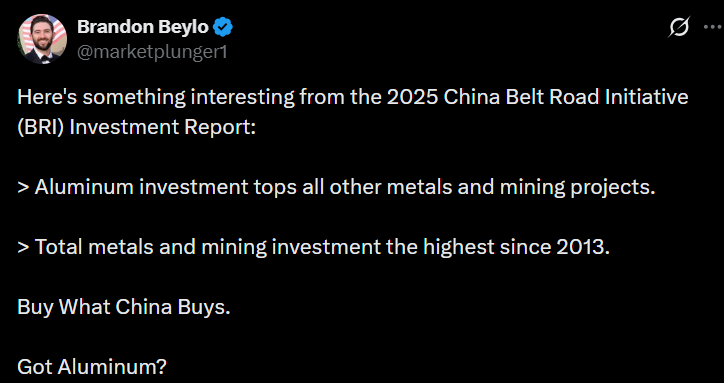
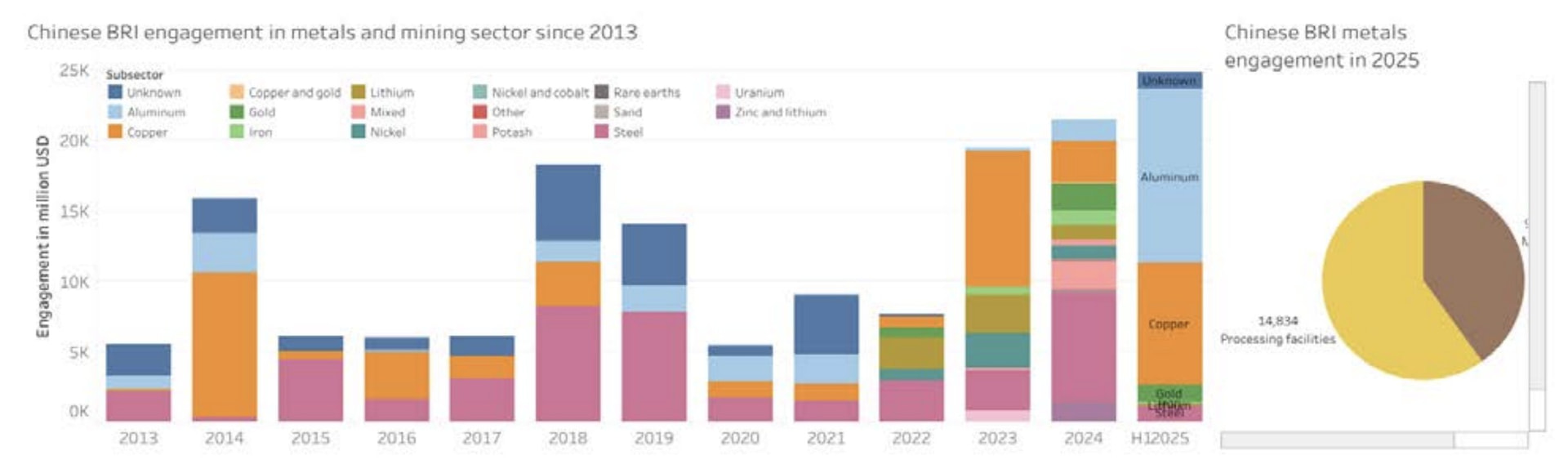
Kiina sijoittaa nyt ennätysmäärin metalleihin ja erityisesti alumiiniin.
Tviitin viesti sijoittajille on aika selvä, eli seuraa Kiinan rahavirtoja, jotka menee just mm. alumiiniin. Enpä ole koskaan ennen tutkinut alumiinijuttuja sijoittamista ajatellen.
Anteeksi maalaisuuteni… Mitä tarkoittaa, että Kiina sijoittaa metalleihin? Ei kai niitä kuitenkaan varastoon osteta kuten kultaa? Jos niihin sijoittaminen tarkoittaa esim. kaivostoiminnan lisäämistä, niin eikö metallien hinnat tule pian laskemaan?
Ymmärsin aiemmin lukemastani, että Kiina hamstraa sitä mm. uuden infrastruktuuri- ja investointiohjelman takia. Sitten maa koettaa varmistaa alumiinin saatavuutta toimitusketjujen hallitsemisella ja erilaisilla muilla hankkeilla, koska vihreässä siirtymässä ja sähköistämisessä sitä tarvitaan. En tosiaan tiedä, kuinka konkreettisesti se alumiinia hommaa kuin em. tavoin, eli en tiedä, että varastoiko se sitä suoraan myös tai muuta vastaavaa.
Mun mielestä tuosta kaivospuolesta on alumiinin osalta kirjoitettu paljon, ja on kirjoitettu mistä se Kiina sitä saa - niin siitä tuli mieleen, että hyvää pohdintaa sinulta tuo, että jos/kun kaivostoiminta lisääntyy niin eikö tosiaan metallien hinnat esim. alumiinin sitten laske
Jutun mukaan hintarallin takana on Euroopan Unionin päätös perua polttomoottorikielto, mikä “pidentää” esim. platinan kysyntää, lisäksi myös Yhdysvaltojen tulliepävarmuus, Kiinan uusi futuurikauppa (mukana mm. platina) ja platinan niukka tarjonta antavat kivasti myös nostetta.
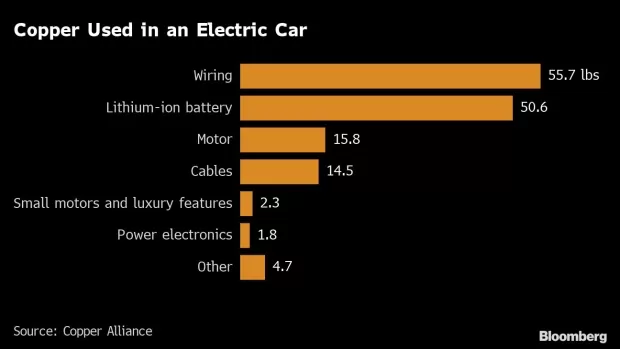
Platina nousee, koska polttomoottorikielto lykkääntyy ja kupari tykkää ja nousee, kun sähköautojen määrä kasvaa. No ehkä vedin mutkia turhan suoraksi meemeilläkseni.
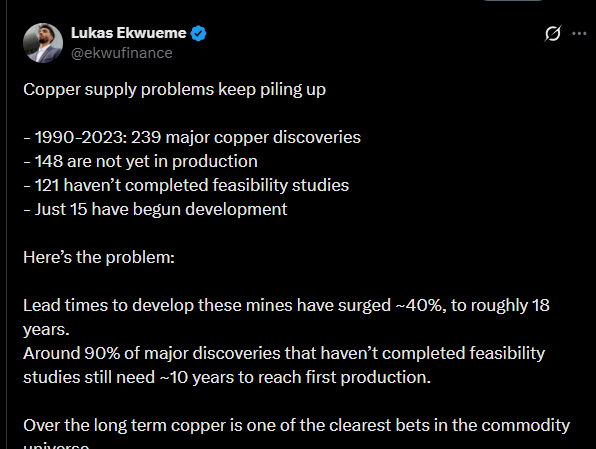
Kuparin tarjontaongelmat näyttävät pahenevan, koska uusia löytöjä ei saada nopeasti tuotantoa varten.
Moni hanke on vielä hyvin varhaisessa vaiheessa eikä kannattavuutta tai/ja toteutustakaan ole saatu varmistettua, lisäksi kaivosten kehittäminen kestää nykyään aiempaa pidempään, joten uusi tuotanto tulee markkinoille hitaasti.
Tviitin mukaan näiden syiden vuoksi kuparissa on pitkällä aikavälillä selkeä nousupaine.
Alla olevassa jutussa kerrotaan, että S&P Global arvioi, että kuparin kysyntä kasvaa jopa 50 prosenttia vuoteen 2040 mennessä, koska AI, puolustuspuoli ja robotiikkahommat vetävät sähköistymistä eteenpäin.
Kysyntä nousisi noin 42 miljoonaan tonniin vuodessa (vrt. viime vuonna: 28 miljoonaa tonnia), mutta tarjonta ei pysy perässä - ilman lisää kaivoksia ja kierrätystä maailmalta voi puuttua yli 10 miljoonaa tonnia kuparia joka vuosi.
Yksi hinta-ajuri on ollut Trumpin tulliuhkaukset. Tullit välttääkseen amerikkalaiset hamstraa kuparia nyt urakalla ja varastotasot on siellä historian korkeimmalla tasolla.
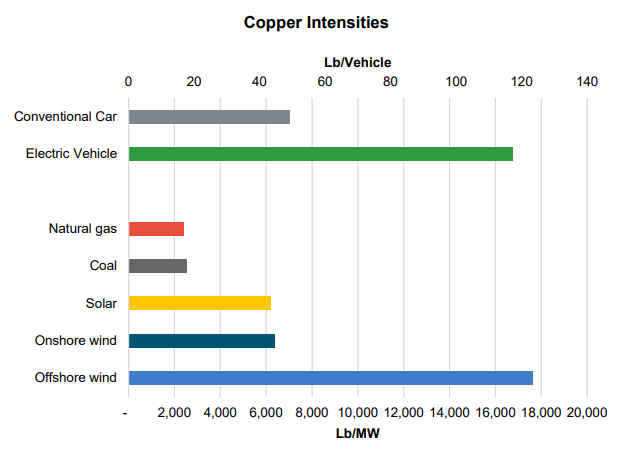
Tviitin uusiutuvat vaihtoehdot vaativat moninkertaisesti kuparia “perinteisiin vaihtoehtoihin” verrattuna.
Tviitin pääpointti on varmaan se, että “puhdas energia” tarkoittaakin käytännössä valtavaa ja pitkäkestoista nousukautta kuparin kysynnälle ja hinnalle.
 …
…



 No ehkä vedin mutkia turhan suoraksi meemeilläkseni.