Platinalla paksuimpaa vihreää kynttilää kuukausitasolla viiteen vuoteen. Oisko tässä nousukäänne tapahtumassa? Onko joku seurannut tilannetta tarkemmin?

5 tykkäystä
Tuossa sivutaan tuota platina-keissiä
6 tykkäystä
OPEC+ kiihdyttää öljyntuotannon palauttamista markkinoille:
4 tykkäystä
Menikös se uraanisykli jo ja jostain tuli taianomaisesti markkinoille lisäuraania vai miksei supply-demand -epäsuhta näy hinnassa? Onko siis jaksettava odottaa roimaa hintapiikkiä vai oliko se vain markkinamiesten puhetta?
4 tykkäystä
Tässä on Sijoittaja.fI:n yleisluonteinen juttu kuparista, mutta alokkaat huomio; juttu sisältää myös markkinointia ja sellaista.
Viime päivinä kuparin hinta on noussut nopeasti. Yhdysvaltojen presidentti Donald Trump ilmoitti tiistaina 8.7.2025 aikovansa asettaa 50 %:n tullin kuparille, tavoitteenaan lisätä Yhdysvaltojen tuotantoa metallissa. Kuparifutuurit nousivat ennätyskorkealle Trumpin ilmoitettua tullisuunnitelmasta, joka tuli aiemmin kuin ala oli odottanut ja tullien suuruus oli odotettua korkeampi.
3 tykkäystä
Suurin öljylöytö Puolan alueella
Kanadalainen yhtiö löytänyt Puolan suurimman öljy- ja kaasuesiintymän.
5 tykkäystä
Kupari futuurit -20%, USA-tullit…
………….
……………
…………,
6 tykkäystä
Oisko ostopaikka?! Erikoisen kovasti heilahti, ottaen huomioon ihmisten kyllästyminen Trumpin touhuihin.
Jesper Hagman on kirjoitellut mielenkiintoisen artikkelin palladiumista. 
Kulta, hopea ja platina ovat olleet otsikoissa tänä vuonna, mutta analyytikot uskovat palladiumin olevan vahvan paluun edessä. Hinta on jo noussut yli 38 % tänä vuonna, ja joidenkin arvioiden mukaan nousu on vasta alussa.
Palladium on harvinainen jalometalli, joka kuuluu platinaryhmään. Se on vaalea, hopeanhohtoinen ja sitä käytetään sekä koruissa että ennen kaikkea teollisuudessa, jossa se on avainkomponentti bensiiniautojen ja kuorma-autojen katalysaattoreissa. Tämä tarkoittaa, että autoteollisuuden kehitys ohjaa pitkälti palladiumin kysyntää.
4 tykkäystä
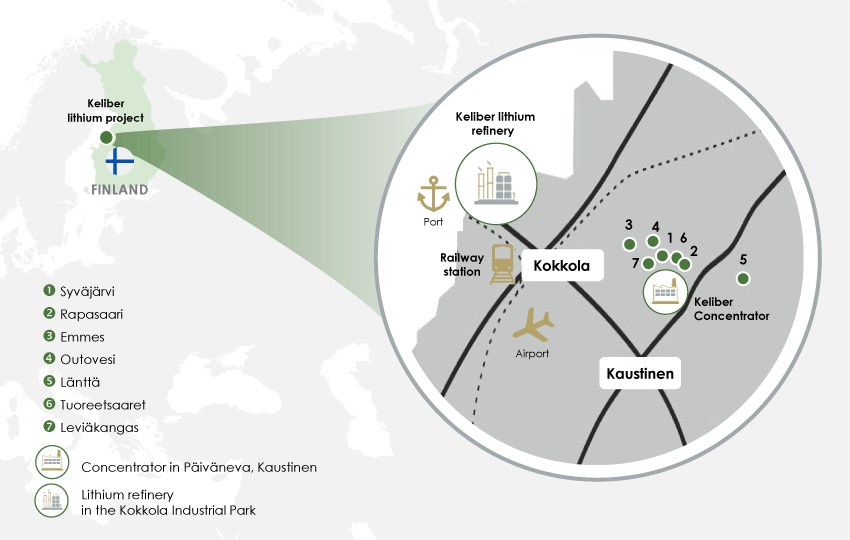
Samalla kun sijoittaa noihin monikansallisiin kaivosyhtiöihin, niin kannattaa muistaa, että se voi myös olla sijoitus kotimaahan. Sibanye Stillwater, tickeri SBSW on ensisijaisesti kullan, platinan ja palladiumin tuottaja, mutta niillä on erilaisia sivuprojekteja monessa paikassa. Tuossa olisi viime kauden tulokset ja artikkeli Kokkolan projektista. Sivuhuomiona viimeisen parin viikon aikana erityisesti platinaan tai palladiumiin liittyvät osakkeet ovat alkaneet nousta nopeasti, mikä varmaan ennakoi lisää hinnannousua noille metalleille.
4 tykkäystä
Freeport McMoRan Inc. aikoo luopua vertailuhintajärjestelmästä, joka on ollut louhittujen kuparimalmien maailmanlaajuisen myynnin perustana, suojellakseen sulattojen kannattavuutta, yhtiön kaupallinen johtaja sanoi haastattelussa.
Maailman kupariteollisuus on pitkään luottanut yhteen vertailuarvoon puolivalmiiden malmien, eli rikasteiden, myynnissä. Kuparisulatot saavat käsittelymaksuja, joita kutsutaan käsittely- ja jalostusmaksuiksi (treatment and refining charges) tai TC/RC-maksuiksi, muuttaakseen rikasteet metalliksi.
Nämä maksut – jotka vähennetään rikasteissa olevan metallin arvosta – ovat ratkaisevan tärkeitä uunien toiminnassa pitämiseksi, sillä ne muodostavat tyypillisesti lähes kolmanneksen sulattojen tuloista.
2 tykkäystä
Jarmo Friman:
“Mahtavia aikoja elämme!
Pitkään odottamani rotaatio kohti aitoja assetteja, metalleja ja kaivoksia on alkanut. Iso paradigmamuutos aka siirtymä teknohypestä kohti materiaaleja toteutunee kirkkaammin vasta, kun jenkkitalouden käänne taantumaan vahvistetaan. Kulta aloitti karjuen, hopea repii vaatteitaan keuliessaan, uraani jauhaa hitaasti ylös, Trump et al. suorastaan räjäyttivät REE-playt ja muut kriittiset materiaalit. Voimme silti olla vasta alussa. Iso rotaatio kohti commodity-skeneä kestää usein vuosia.”
https://x.com/JarmoFriman/status/1978390967280341414
Voisin hypätä tähän “metaan” mukaan indeks(e)illä - onko suosituksia Nordnetissa listatuista raaka-aine- ja/tai jalometalli-indekseistä? Vai pitääkö tietää oikeat firmat, jotta tästä trendistä pääsee tuotoille? Kulta -ETF:ää toki omistan jo.
4 tykkäystä
Yleisimmät indeksirahastot kaivosalalla lienee tyyliin GDX, GDXJ, SIL, SILJ, COPX, REMX, URA, URNM, URNJ ja noista sitten euroversiot erikseen kaupankäyntiin. Ainakin nuo sektorirahastot kannattaa lisätä seurantalistaan erikseen, niin näkee mihin suuntaan raha on virtaamassa, mutta niihin ei ole kuitenkaan välttämätöntä sijoittaa suoraan, jos kokee pystyvänsä poimimaan yksittäisiä osakkeita vaikka screenerien avulla. Siinä tapauksessa noissa indekseissä tulee varmaan liikaakin hajautusta, koska ei ole välttämättä tarvetta omistaa kymmeniä eri kultakaivosyhtiöitä tai vastaavaa, koska ne kaikki kumminkin liikkuvat jokseenkin raaka-aineen hinnan mukaan. Somen puolelta vaikka X:stä voi kokeilla kerätä samaan listaan useampia tilejä tuolta alalta, niin siitä pääsisi alkuun markkinoiden seuraamisessa, mutta kuitenkin volatiliteettia kaivososakkeissa riittää aina ja korjausliikkeet voivat olla hyvinkin suuria.
5 tykkäystä
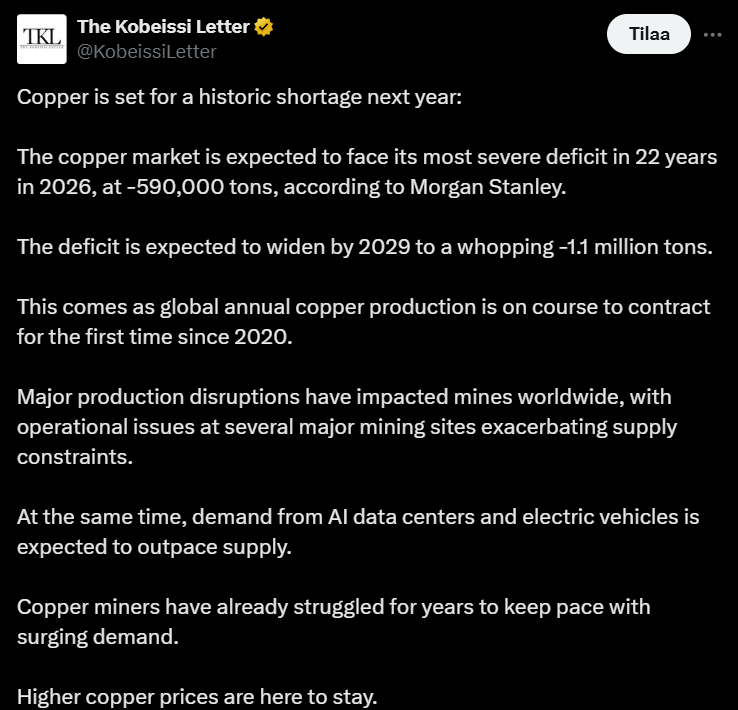
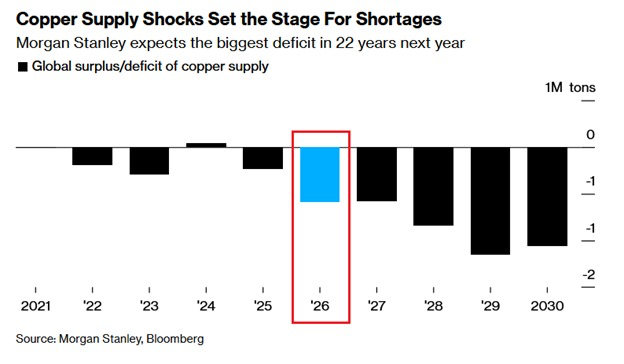
Alla olevassa tviitissä kerrotaan, että kuparista on tulossa historiallisen suuri pula esim. vuonna 2026 sen ennustetaan olevan 590 000 tonnia alijäämäinen.
Tuotanto vähenee ja kysyntä kasvaa etenkin tekoälyn ja sähköautojen takia, lisäksi pula pahenee vuoteen 2029 mennessä, mikä pitänee hinnat korkealla.
https://x.com/KobeissiLetter/status/1987703781392371859
10 tykkäystä
Tämä pitää muuten täysin paikkansa, mutta jos jenkkeihin tulee taantuma, niin esim. Rick Rule uskoo kuparin hinnan tippuvan.
Suurin ongelma on ollut Freeportin Indonesian kaivoksen onnettomuus, jossa kuoli myös ihmisiä. Muistutus taas siitä, että länsimaissa asiat tehdään paremmin ja riskit ovat pienempiä, vaikkeivät poissuljettuja.
6 tykkäystä
Tässä on Johannes Ankelon ajankohtainen kirjoitus raaka-ainemarkkinoista.
Keskustelu raaka-aineista on kadonnut valtamedian makrotalousuutisoinnista sen jälkeen, kun niiden hinnat poksahtivat korkealle pandemian aikana.
Hyödykekeskustelun sivuuttaminen on kuitenkin virhe suuremmassa kuvassa, sillä niiden hinnat ovat irtautumassa ylöspäin, tehden tällä viikolla huiput sitten alkuvuoden 2023.
9 tykkäystä
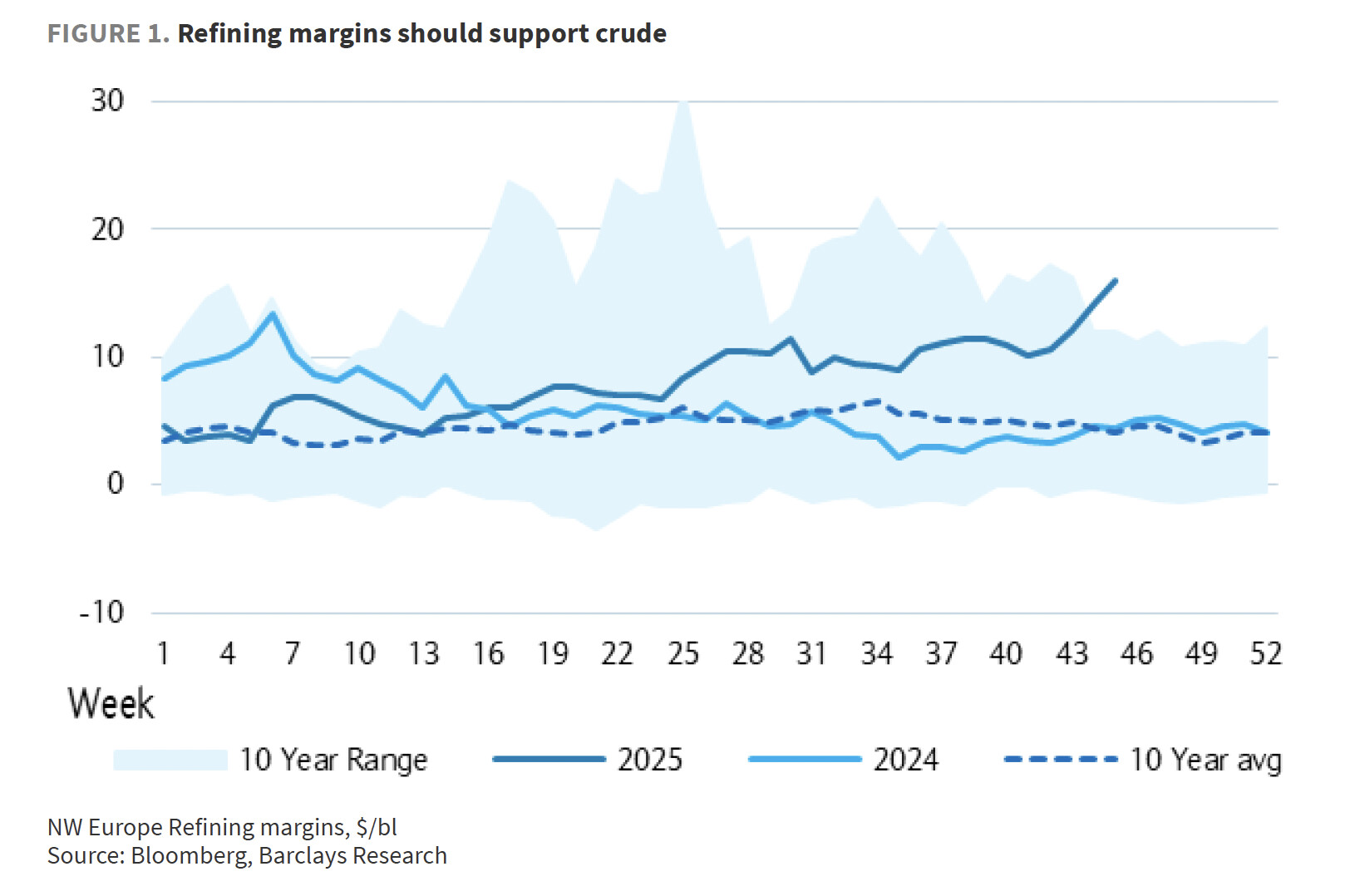
Barclays argumentoi, että öljymarkkina on terveemmällä pohjalla mitä öljyn hinta antaa ymmärtää. Tämä päättely perustuu jalostajien leventyviin marginaaleihin, mikä kertoo loppukysynnän vahvuudesta.
Yleinen narratiivihan on, että ylituotannon ja alikysynnän takia öljyn hinta menee kohta kellariin. Mielenkiintoinen nosto Barclaysilta. Ilmankos se Nestekin porskuttaa vaihteeksi. 
5 tykkäystä
Argumentoiko Barclays, että jonnekin rakennetaan lisää jalostamoita vai mistä se raakaöljyn kasvava kysyntä tulee 
3-2-1 Crack Spreadi on kyllä nousussa, joten jalostamoiden tuloksentekokyky lienee aidosti parantunut:
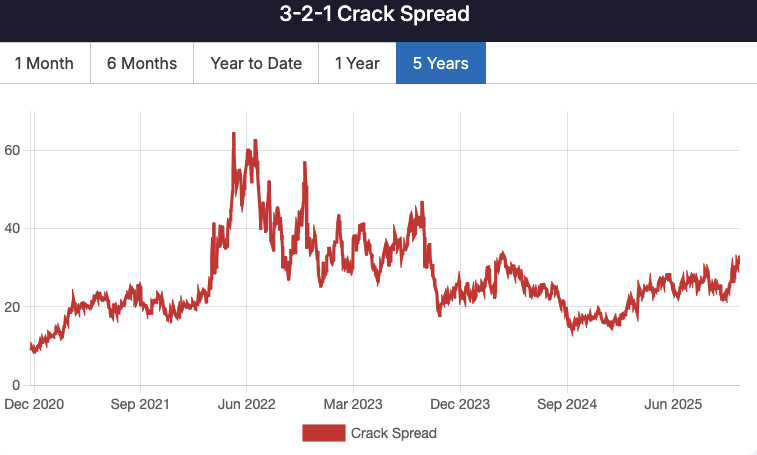
Eikö todennäköisempi selitys tälle kuitenkin ole, Venäjän valtava jalostamokapasiteetti on nyt Kremlin asettaman vientikiellon vuoksi poistunut markkinoilta, jonka takia jalostettujen öljytuotteiden hinnat ovat ylhäällä. Samalla oil on water on kasvanut melkein 200 miljoonalla barrelilla kahdessa kuukaudessa, eli raakaöljyä on kyllä ihan oikeasti dumpattu valtavasti tankkereiden kyytiin ja markkinoille myytäväksi, joka tulee jatkossakin pitämään raakaöljyn hinnan matalana. Tämä on tietysti paras mahdollinen tilanne omistaa eurooppalainen öljyjalostamo.
9 tykkäystä
Alla olevassa jutussa puhutaan Kiinasta ja kuparista.
Kuparimarkkinoilla on jännä tilanne, kun rikasteen niukkuus ja Kiinan massiivinen jalostuskapasiteetti ovat painaneet jalostus- ja käsittelymaksut ennätysalhaisiksi + murentaneet perinteistä vuosihinnoittelua.
Kiinan aggressiivinen raaka-ainemäärien hamstraaminen haastaa kilpailijat, ajaa länsimaiden sulattoja ahdinkoon ja lisää tarvetta uusille erilaisille sopimusmalleille.
Ala valmistautuu vaikeisiin ensi vuoteen tilanteessa, jota jutun mukaan jotkut analyytikot ovat kuvanneet teollisuuden selviytymistaisteluksi.
At the heart of the tensions is China, where the copper industry has continued to expand even as annual fees plunge and spot charges turn negative, meaning processors are effectively paying miners to process ore. While some smelters in China have racked up large profits this year, there have been closures in the rest of the world.
1 tykkäys
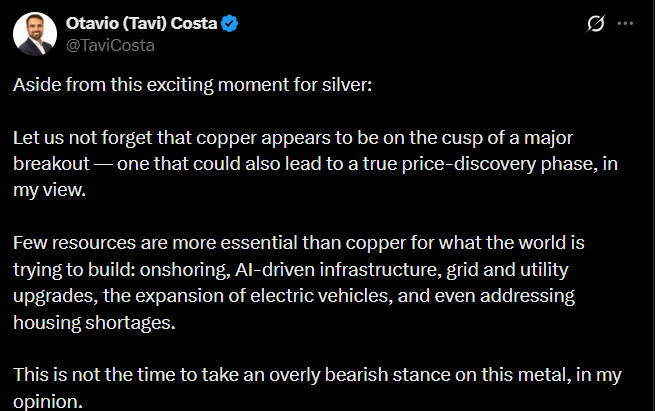
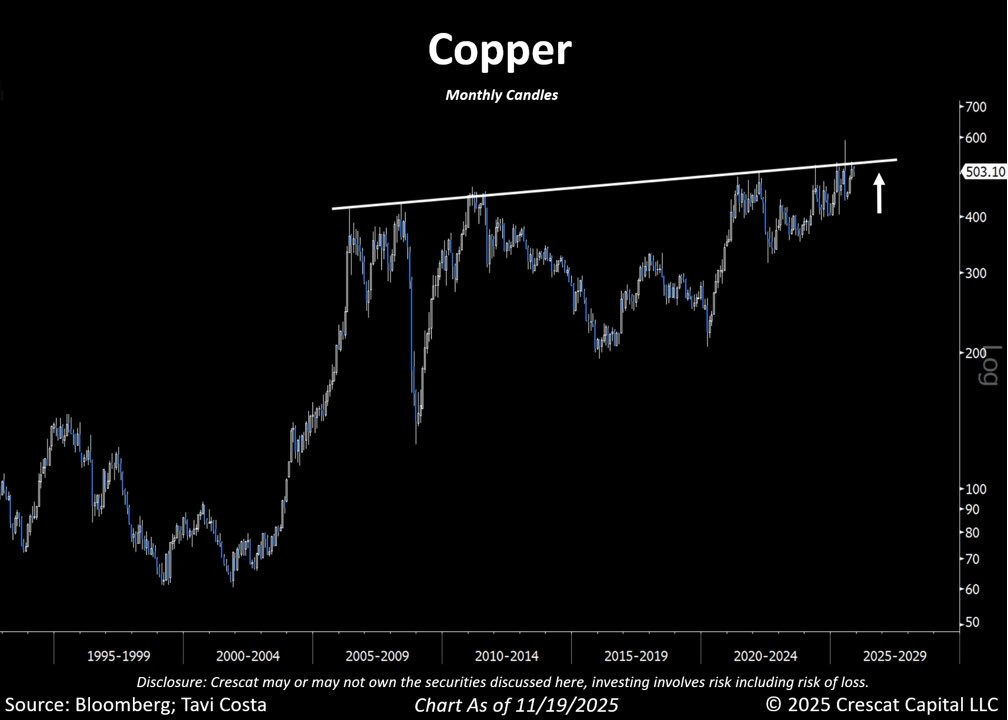
Kupari on tviitin mukaan lähellä isoa läpimurtoa.
Sen kysyntä kasvaa infrashommissa sekä sähköautoissa että energiaverkoissa – eikä nyt ole tviitin mukaan syytä liialliseen pessimismiin.
https://x.com/TaviCosta/status/1995262682161955126
7 tykkäystä