Quite an interesting piece of news considering that Nvidia recently invested 1 billion USD in Intel and now Intel is buying a competitor ~with that money
This would probably be Intel’s third acquired AI chip manufacturer after Nervana and Habana. Neither really took off, even though Habana’s legacy Gaudi series is still being sold. And the self-developed Jaguar Shores should also be coming, but Intel already has such strong evidence of canceling AI/compute GPUs that I’ll only believe in Jaguar Shores when I see it for sale.
Intel still seems to be in a bit of a panic about getting on the AI train. On the bright side, SambaNova is at least coming quite cheaply; a couple of years ago, when AI chip startups were at their peak, SambaNova’s valuation was probably several billion.
Below is likely partly familiar information regarding how Nvidia and AMD are reopening doors to the Chinese market with new sales deals, even though regulatory risks and tariffs continue to cause friction.
Nvidia is preparing shipments of H200 chips for February, while AMD has reportedly already received a significant order from Alibaba for its China-tailored MI308 chips. However, both companies must pay a substantial portion of their revenue to the U.S. government in exchange for export licenses.
For investors, cooperation with China certainly offers massive growth potential, but it also requires preparing for geopolitical surprises and tightening local competition.
According to Reuters, Intel’s shares fell because it emerged that Nvidia tested Intel’s 18A chip production but ultimately did not move forward with using it. There have been issues with this 18A process, and the first customers have been disappointed, to say the least, which has eroded demand for it.
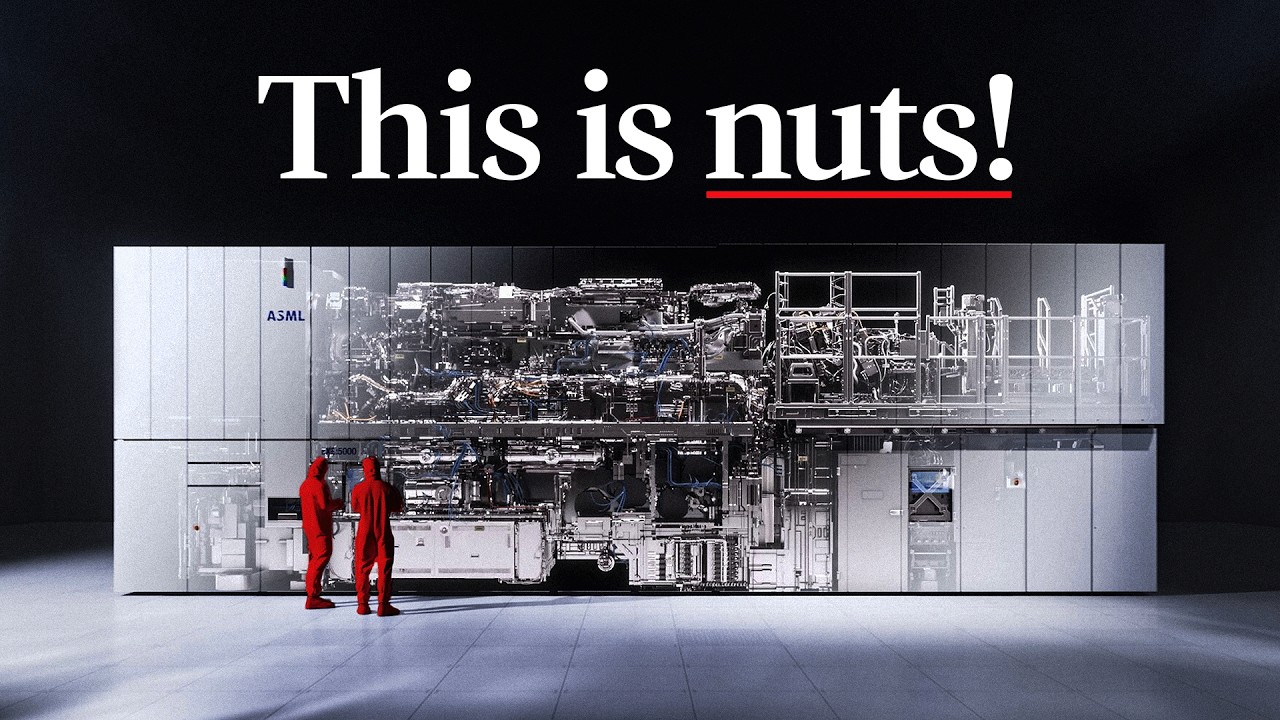
The story of the birth of ASML’s EUV system and how the impossible was made possible. I knew it was a complex machine — it costs about 400 MEUR, after all — but it’s incredible what all had to be done to make the production of today’s new microchips possible.
The video is 55 minutes long, and the story felt too short. I would have watched another one just like it in one sitting. I recommend it to everyone.
Intel’s stock climbed over seven percent in a week, despite mixed news.
The article below explains how Apple labeled old Intel Macs as “vintage and obsolete,” but in the end, this mostly just limits repair options and doesn’t really impact Intel’s bottom line.
What mattered more to investors was Intel’s assurance that it is moving forward with the Ohio One factory project, even as it pushed the completion to 2031 (that’s quite far in the future, isn’t it?). While delays certainly highlight execution risk, the decision also supported the turnaround story.
Furthermore, the controversy surrounding TSMC remained minor and buying interest stayed strong, even though analysts remain cautious.
Corporate drama around a former TSMC employee whom Intel planned to rehire, and who was later found with sensitive TSMC materials, added intrigue but did not scare off shareholders; the stock even rose on that news, suggesting investors see limited legal or strategic fallout for Intel at this point. Wall Street remains cautious, with a Hold Consensus and only Modest upside implied by average Analyst price targets after a powerful run over the past year. Still, the combination of a solid Weekly gain, confirmation that key expansion projects remain alive, and ongoing optimism about Intel’s next‑generation chip launches has kept buyers engaged, even as risks like rising memory costs and execution delays linger in the background.
Regarding ASML, I came across an interesting Reuters article from a couple of weeks ago about how aggressively China is trying to copy ASML’s EUV technology. A secret Chinese laboratory has already managed to build a prototype using components from older ASML machines. Below are some highlights from the article.
In a high-security Shenzhen laboratory, Chinese scientists have built what Washington has spent years trying to prevent: a prototype of a machine capable of producing the cutting-edge semiconductor chips that power artificial intelligence, smartphones and weapons central to Western military dominance, Reuters has learned.
Completed in early 2025 and now undergoing testing, the prototype fills nearly an entire factory floor. It was built by a team of former engineers from Dutch semiconductor giant ASML (ASML.AS), who reverse-engineered the company’s extreme ultraviolet lithography machines or EUVs, according to two people with knowledge of the project.
The team includes recently retired, Chinese-born former ASML engineers and scientists—prime recruitment targets because they possess sensitive technical knowledge but face fewer professional constraints after leaving the company, the people said.
Two current ASML employees of Chinese nationality in the Netherlands told Reuters they have been approached by recruiters from Huawei since at least 2020.
Dutch intelligence warned in an April report that China “used extensive espionage programmes in its attempts to obtain advanced technology and knowledge from Western countries,” including recruiting "Western scientists and employees of high-tech companies.”
The ASML veterans made the breakthrough in Shenzhen possible, the people said. Without their intimate knowledge of the technology, reverse-engineering the machines would have been nearly impossible
Their recruitment was part of an aggressive drive China launched in 2019 for semiconductor experts working abroad, offering signing bonuses that started at 3 million to 5 million yuan ($420,000 to $700,000) and home-purchase subsidies, according to a Reuters review of government policy documents.
Recruits included Lin Nan, ASML’s former head of light source technology, whose team at the Chinese Academy of Sciences’ Shanghai Institute of Optics has filed eight patents on EUV light sources in 18 months, according to patent filings.
To get the required parts, China is salvaging components from older ASML machines and sourcing parts from ASML suppliers through secondhand markets, the two people said.
Networks of intermediary companies are sometimes used to mask the ultimate buyer, the people said.
A team of around 100 recent university graduates is focused on reverse-engineering components from both EUV and DUV lithography machines, according to the people.
Each worker’s desk is filmed by an individual camera to document their efforts to disassemble and reassemble parts—work the people described as key to China’s lithography efforts.
Staffers who successfully reassemble a component receive bonuses, the people said.
Below is a link to an article explaining how TSMC has achieved a global monopoly in AI chip manufacturing, enabling significantly higher margins.
The company’s financial rise is driven by three factors: the completion of depreciation for old equipment investments, rising prices for CoWoS packaging technology (CoWoS = Chip-on-Wafer-on-Substrate) due to capacity shortages, and the ability to raise prices without hurting the profitability of core customers like Nvidia. Many investors failed to recognize this shift, which transforms the company from a traditional manufacturer into a more stable infrastructure monopoly.
According to the article, the market is expected to wake up to reality during this year’s earnings release; as analysts update their forecasts to reflect sustainably higher margins, the stock value is predicted to rise significantly.
According to the author, the failure of competitors such as Samsung and Intel has cemented TSMC’s position as the only player capable of meeting the computing power required by the AI revolution. The author believes this creates an opportunity for investors to profit from a mispriced market situation.
Understanding why TSMC margins will expand while every analyst model predicts contraction requires abandoning the mental framework that semiconductor foundries operate as capital-intensive commodity manufacturers subject to pricing pressure and cyclical margin compression. That framework described the industry accurately for four decades. It stopped being accurate in 2023.
What thoughts do the members of this thread have about TSMC? For example, @Jarnis?
In my opinion, it’s currently hard to say how the company’s fundamentals are priced, as there is certainly a lot of political risk priced into the share price as well, and after Xi’s New Year speech, that risk hasn’t diminished, at least in my view.
The industry remains highly capital-intensive and cyclical. TSMC is currently well-positioned to milk a premium thanks to its technological lead, but in the long run, the sector is too strategic for “cream-skimming” to succeed indefinitely. Customers pit the available manufacturers against each other ruthlessly, and although TSMC has the edge right now, Samsung is not out of the game—it still takes a significant slice of the market. As long as Intel exists, there is a realistic chance they will get their technology in order and become relevant in the foundry market. Massive investments have been made to catch up to TSMC—Intel’s only problem is that yields don’t yet give cause for celebration, and there is still a shortage of third-party customers.
I predict that high-end chips will remain a three-company game over the next five years, and since Intel is too important to be allowed to go bust, it will eventually crawl its way back into the game for real. TSMC will dominate for many years to come but will have to invest insane amounts in new processes and factories, while customers turn up their noses at expensive wafers, causing concern over how those massive investments will actually translate into profit. The next couple of years are a quite favorable situation due to AI-driven demand, but even TSMC is breaking a sweat as they have to make decisions on factory investments 5–10 years out—if demand is miscalculated, a lot of expensive equipment will end up sitting idle…
And on top of that, there’s a bogeyman lurking in the closet in China. For now, the technological lead means the Chinese are not relevant competitors in modern chips, but China is pouring such absurd sums into filling that gap that TSMC must be worried about what happens on, say, a 10-year horizon. If China’s SMIC gets onto the same playing field in manufacturing technology, they will take a significant bite out of the market, and this also causes problems when trying to estimate how much capacity it’s worth building 5–10 years ahead. If you guess wrong in one direction, a lot of money is left on the table and customers grumble when capacity is scarce. A wrong guess in the other direction, and you get expensive, idle factories on the balance sheet…
I’m posting this since I just sent a message regarding TSMC. The company’s stock jumped seven percent in Taipei and ended at ATH levels as Goldman Sachs raised the price target to 2,330 Taiwan dollars and estimated that AI demand will keep growth strong. Possibly a momentary swing; the longer-term outlook is a different matter. (it’s worth reading Jarnis’s message above)
According to the article, the AI theme also pulled other Asian tech companies higher. Goldman expects TSMC to invest approximately 150 billion dollars in capacity between 2026–2028. TSMC will release its results on January 15.
According to Bloomberg, the interpretation in Taiwan is that Xi doesn’t “dare” to take Taiwan now that the US is taking action rather than just making threats. Markets apparently agree. Finnish media, naturally, has a different view.
There is some in Mainland China, but that obviously won’t help if things kick off in Taiwan.
As I understand it, three fabs are under construction in the USA. One of these might be completed this year and the rest in '27–'30 if the schedules hold. Additionally, they have one older operational facility in the States, but its technology isn’t exactly cutting-edge.
There was also a facility planned for Germany, but I’m not sure if the project got started.
There is production in Japan, the United States, and China, as well as under construction in Germany. The vast majority and the most advanced production is in Taiwan.
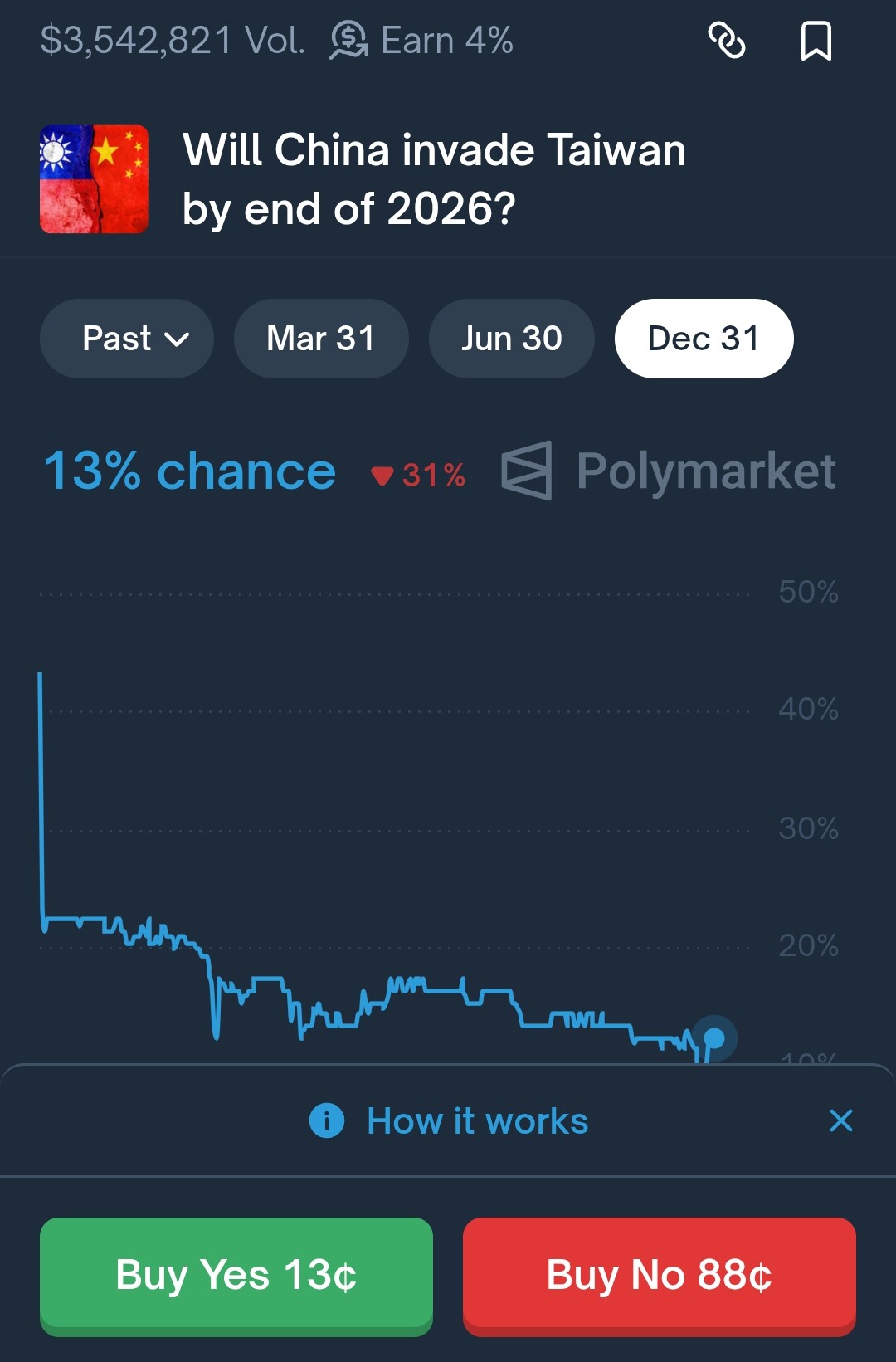
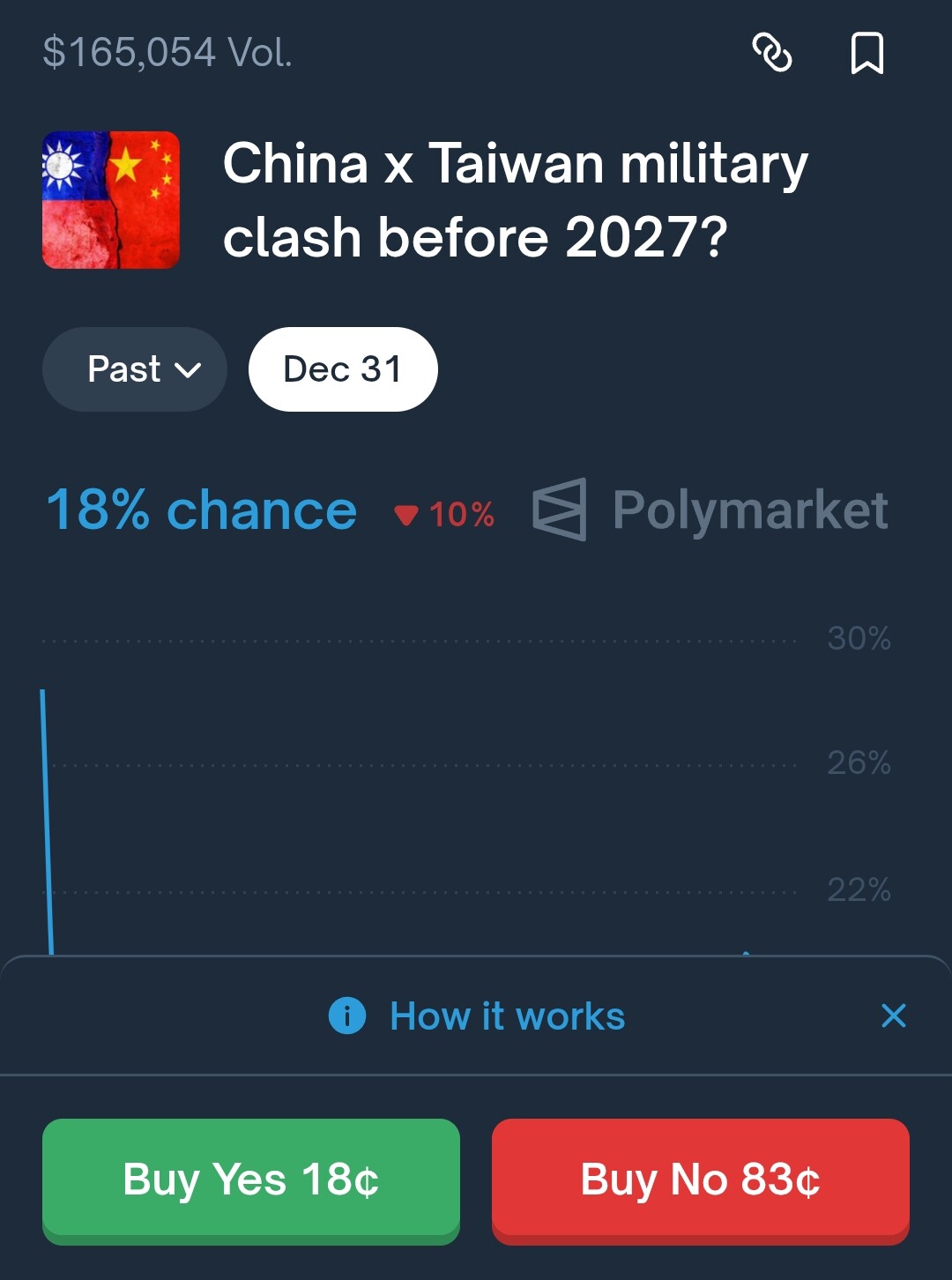
I have been thinking about the same questions myself and found it useful for clarifying my thoughts to examine the betting market. If China were the only risk, and you were completely comfortable with your investment by removing only this one risk, would you then be ready to “insure” your investment at these prices? I found that this kind of thought experiment adds some concreteness to just ruminating on vague threats.
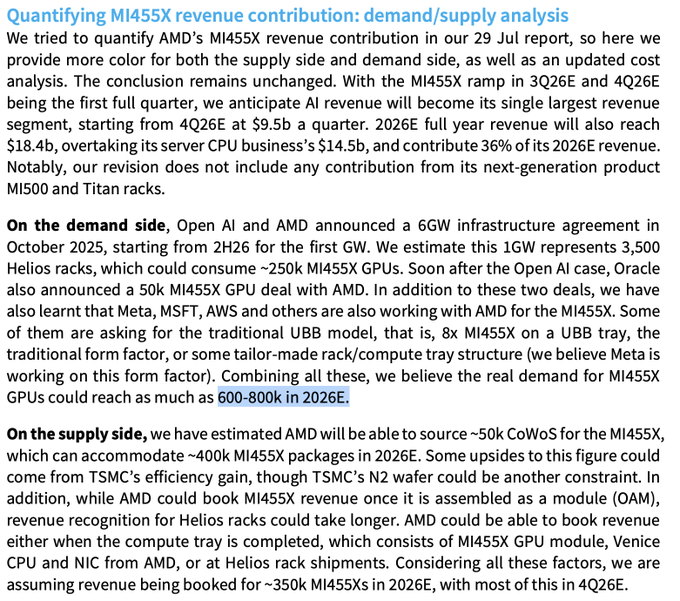
One of the most respected tech analyst firms based in Taiwan, Aletheia Capital, has estimated that AMD’s revenue could even double in two years. This analyst house has a good vantage point on the latest developments as well as a very strong track record regarding technology stocks. If I recall correctly, chief analyst Warren Lau has, among other things, correctly analyzed Nvidia’s development as well as AMD’s turning points since 2016. Especially AMD’s year-end Q4/26 should be strongly on the rise as sales of the MI455X series take off. Aletheia predicts that MI455X GPU sales could reach up to 600,000 - 800,000 units by the end of 2026. China’s MI308X sales are also a bonus in the near future.
Last week’s Steam data shows that AMD will likely overtake Intel in CPU market share in March 2026. In December, the number of AMD CPU users rose by +4.06%. AMD has been very popular especially among gamers, and December’s solid increase suggests that AMD will finally surpass Intel in CPU market share and hold the lead for a long time. The rise has been staggering in just a couple of years. On the Steam lists, only one Intel CPU (14900k) fits into the top twenty most popular CPUs; the remaining positions are held by AMD.
The trend has also strengthened in favor of AMD among Linux users during December:
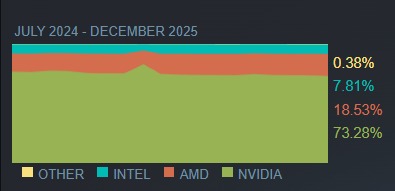
On the GPU side, Nvidia still dominates, although AMD has grown steadily and its market share at the end of December was 18.53%. AMD’s “base model” RX 9070, released in the spring of 2025, has appeared on the list for the first time.
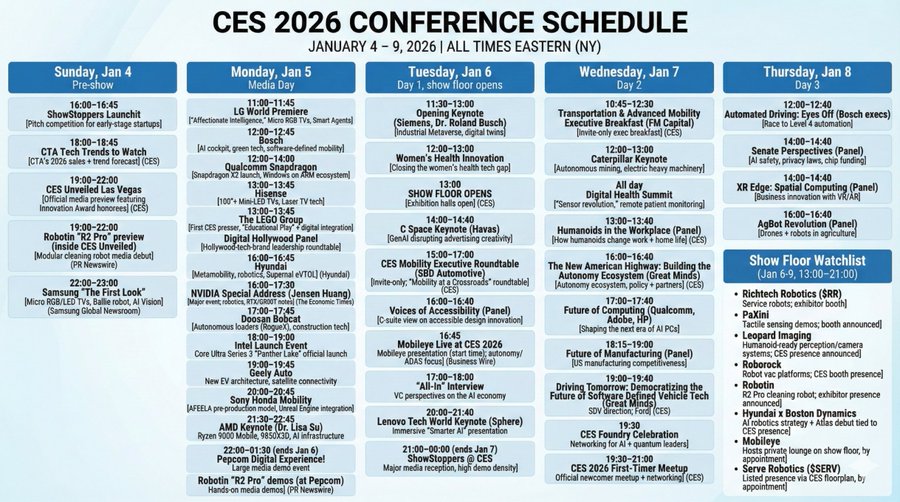
CES presentations today and in the early hours of tomorrow.
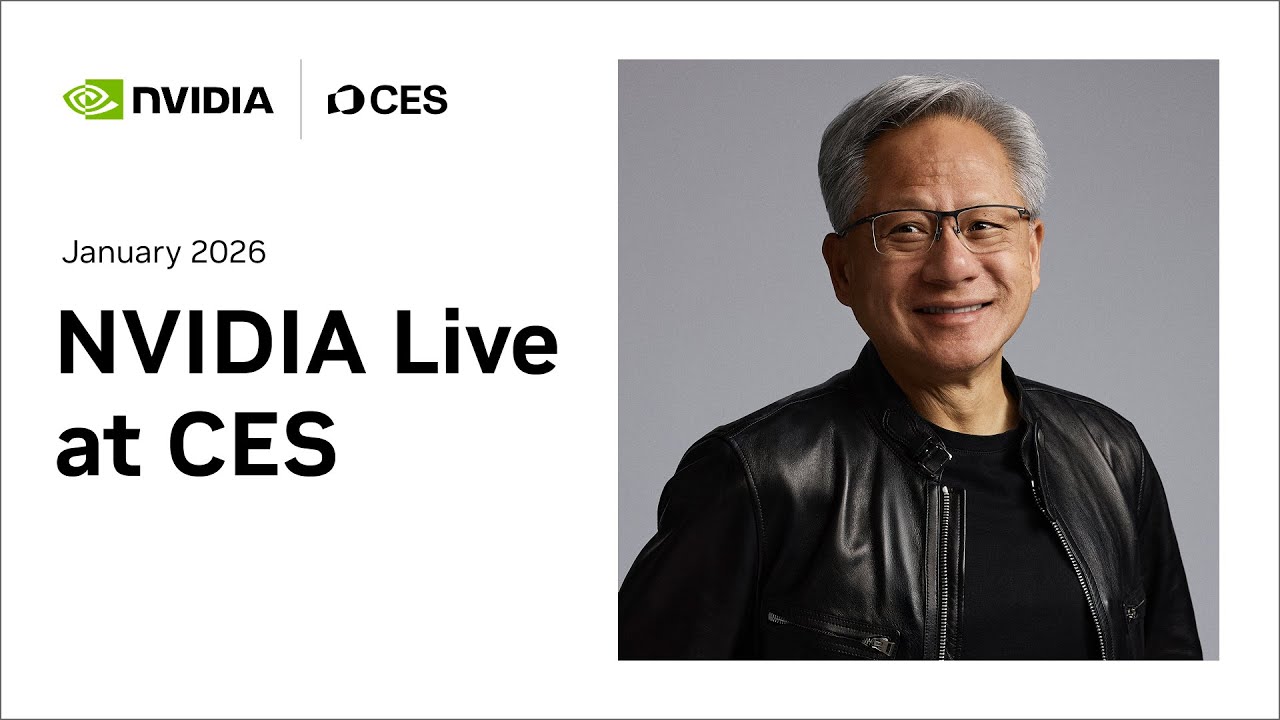
NVIDIA starts at 21:30 Finnish time.
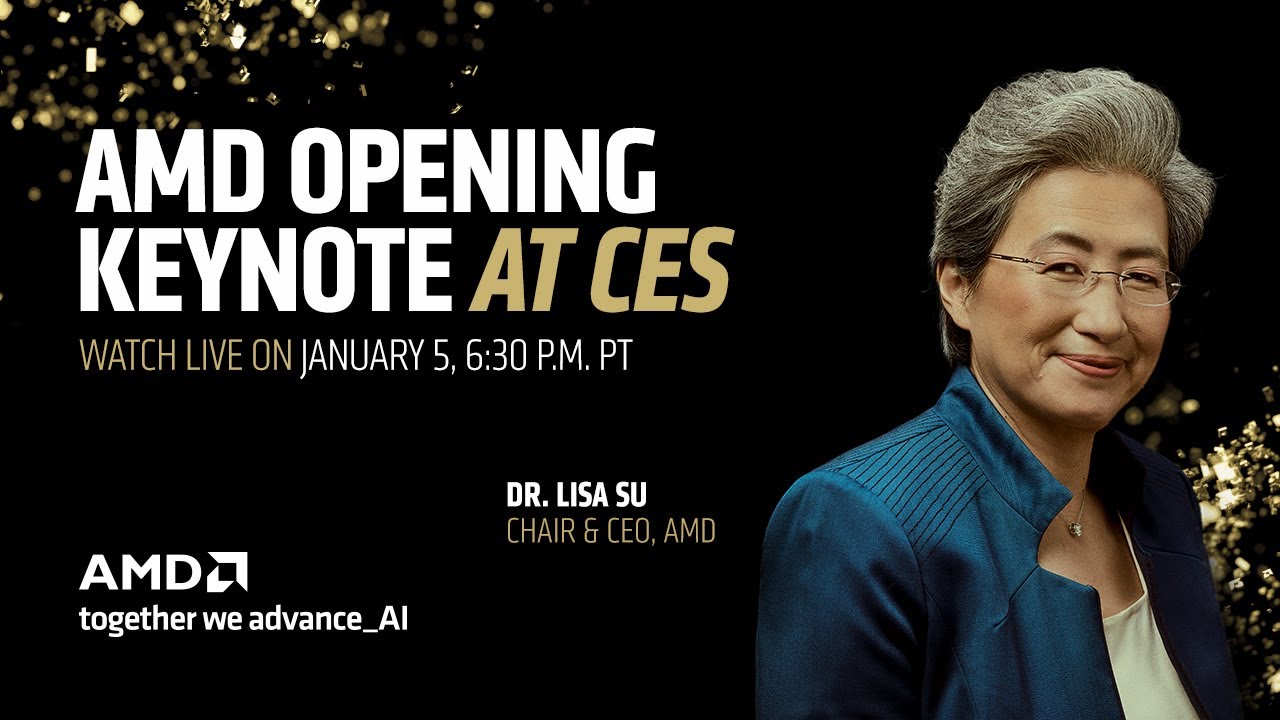
AMD is holding theirs at 4:30 AM.
Qualcomm doesn’t have its own show, but they’ve already released a press release about the new, more wallet-friendly Snapdragon X2 series Windows Arm laptop processors.
Intel is showcasing the new Panther Lake chip for laptops at CES in Las Vegas. According to the report, it is particularly significant as it is Intel’s first major product built using the new 18A manufacturing process. Intel promises that Panther Lake is about 50 percent faster than the previous Lunar Lake.
Intel naturally aims to regain market share from AMD with this move. AMD and Nvidia are also appearing at the show; AMD CEO Lisa Su will discuss new AI and graphics chips sometime in the early hours of the morning. And as can be read from the message above, Jensen might have already spoken. (EDIT: he hasn’t; see Jarnis’s message below)
 and now Intel is buying a competitor ~with that money


 Transistors are indeed incredibly small nowadays!