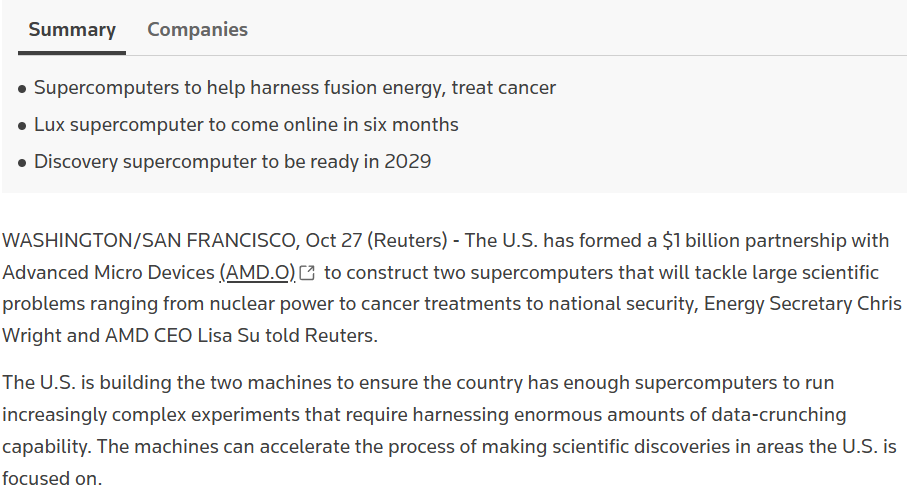
The US Department of Energy made a billion-dollar deal for two supercomputers with AMD.
13 Likes
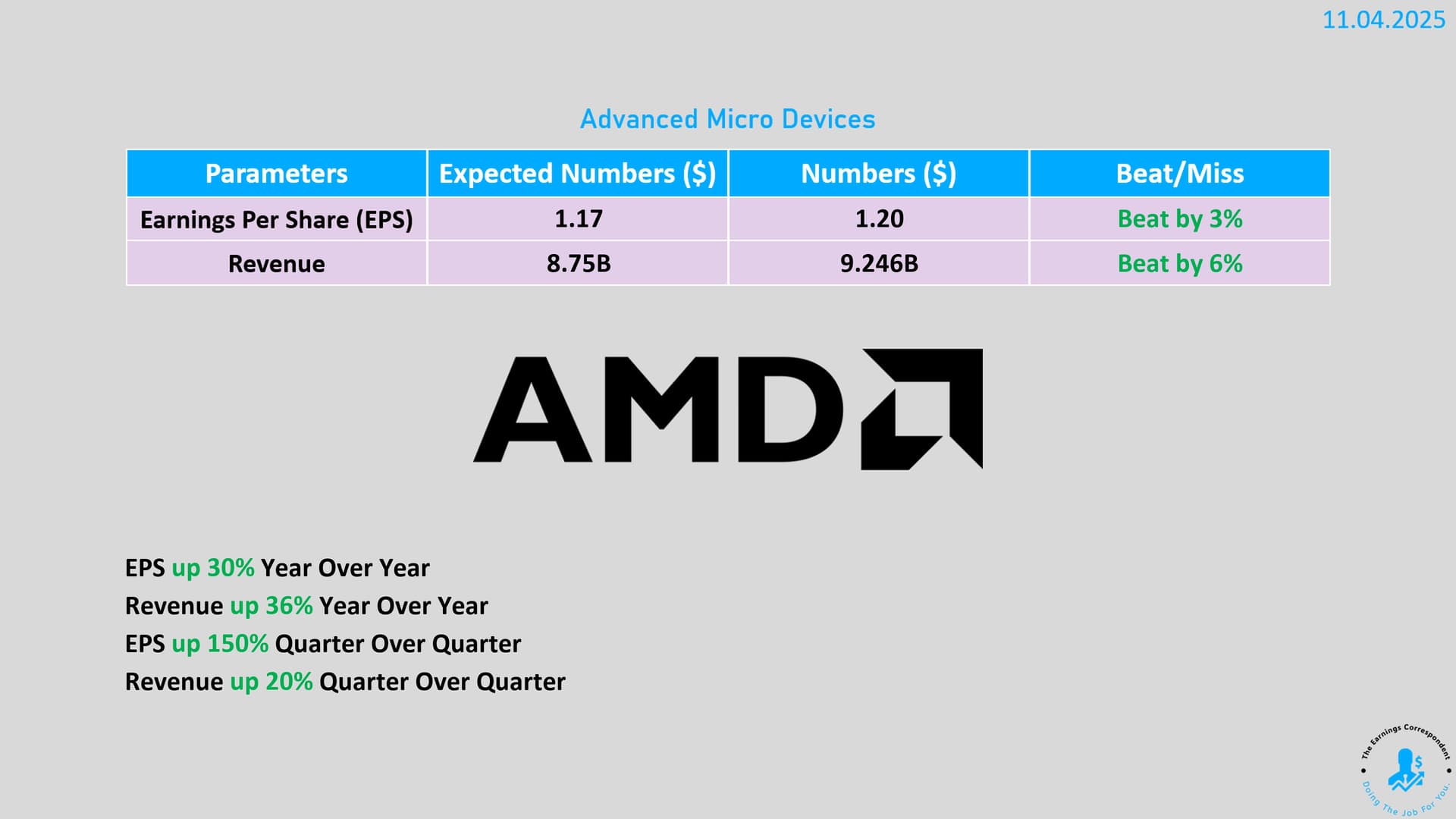
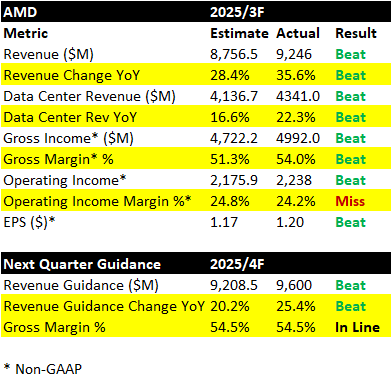
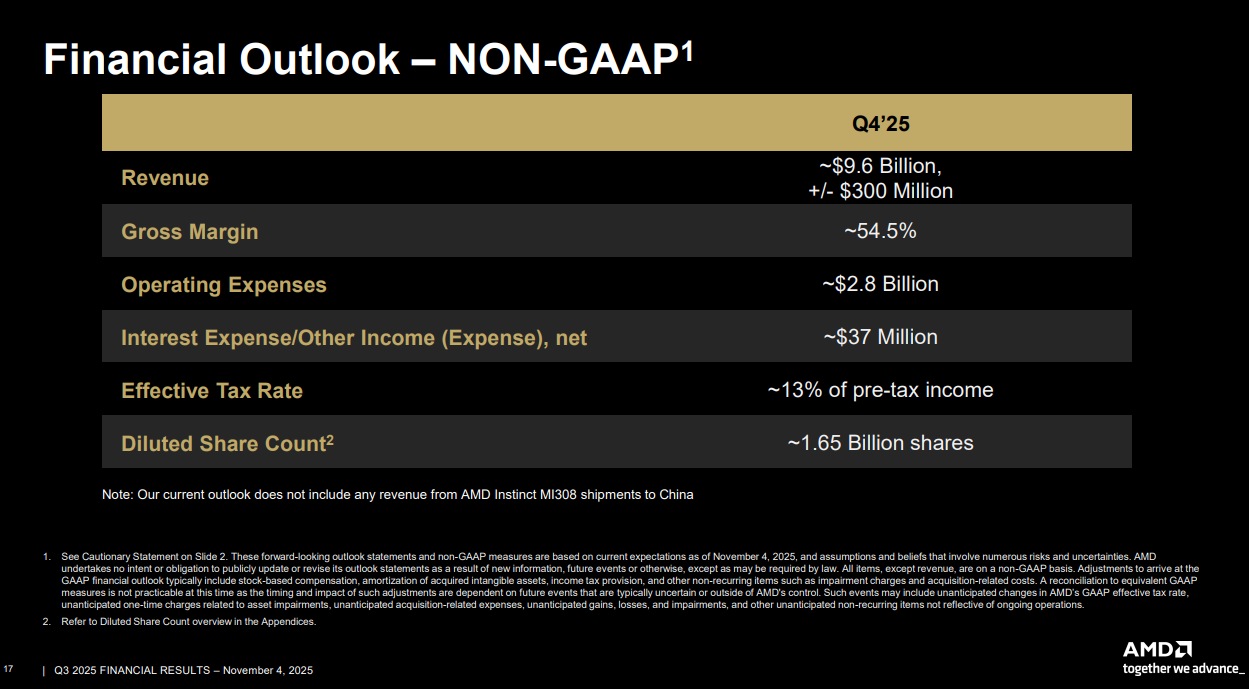
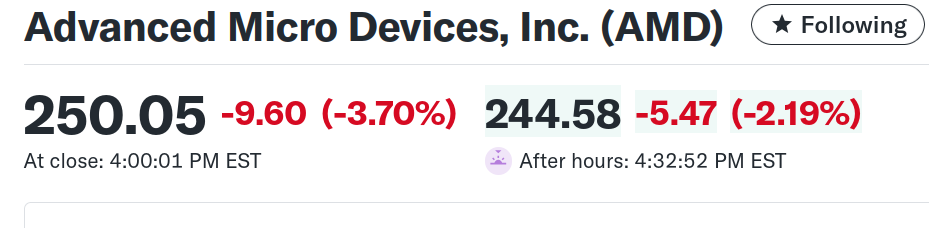
AMD had a record-breaking quarter: revenue and profitability rose to a new level. The results were based on strong demand for powerful EPYC and Ryzen processors and Instinct AI accelerators - quite familiar products to me  . A quite satisfactory performance compared to expectations.
The data center, client, and gaming segments performed particularly well, while sales of embedded systems slightly decreased. Sales grew especially due to new processors and gaming graphics cards, and free cash flow also reached record highs.
According to management, expanding investments in AI and high-performance computing will continue to drive growth and build a strong foundation for AMD’s future.
https://x.com/earnings_guy/status/1985818214555582860

https://x.com/OphirGottlieb/status/1985819010286698760

Company’s Own Materials

14 Likes

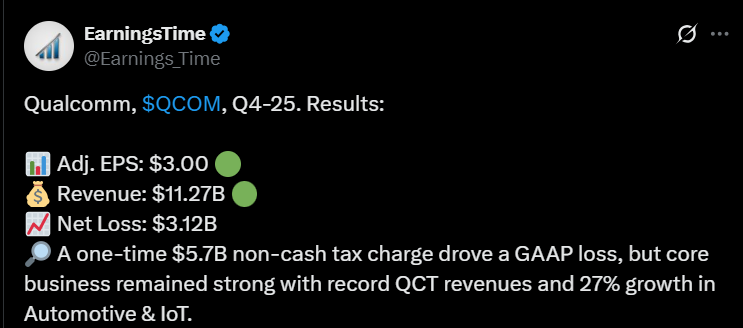
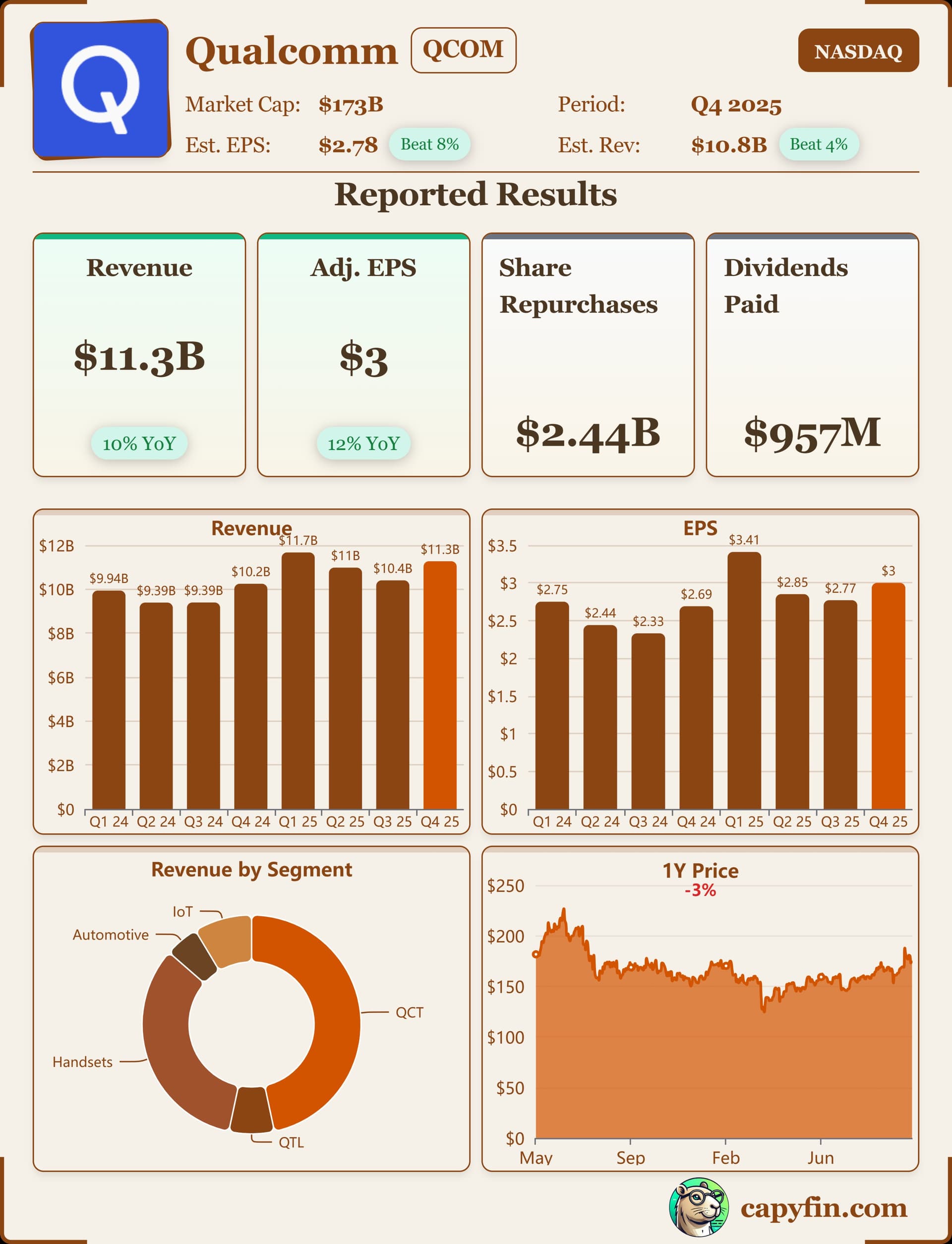
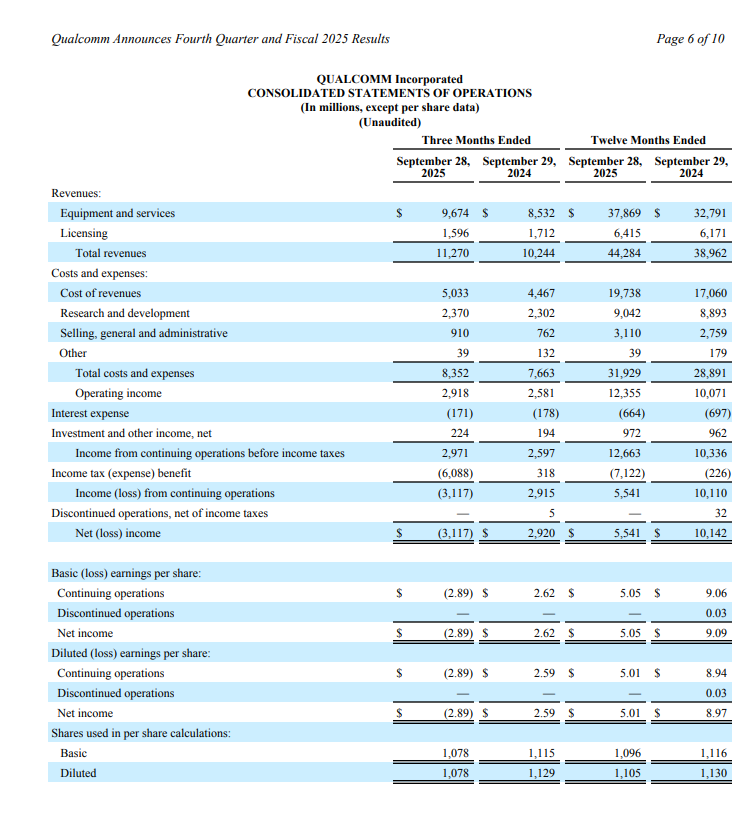
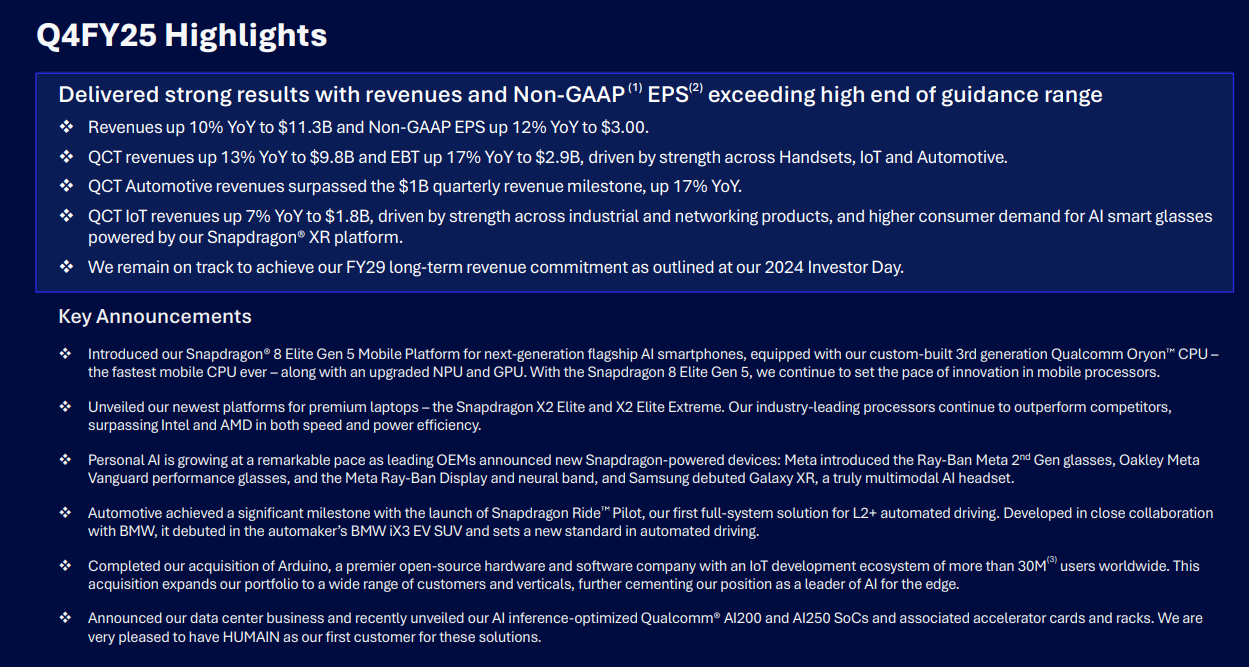
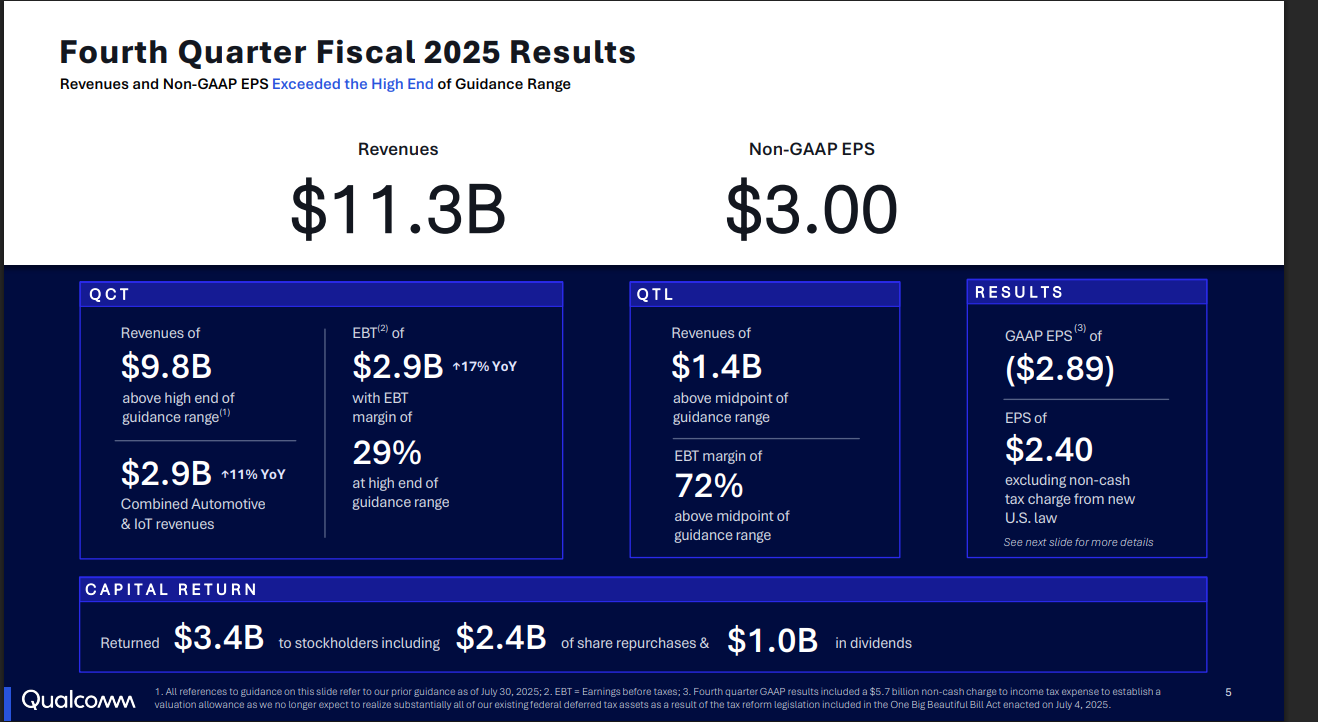
Qualcomm delivered a consistently satisfactory overall result. Revenue grew, especially the Automotive and IoT businesses continued their strong growth, while the licensing side slightly declined. Profitability remained strong, although the result was impacted by a large one-time tax issue (?). Cash flow was strong.
The company launched new technology, and a positive aspect was also that the Arduino deal significantly expanded the developer community.
There were no major changes to guidance, and long-term targets in the Automotive and IoT areas were kept as before. 
https://x.com/Earnings_Time/status/1986178655354056721
Company’s own materials

4 Likes
If this source can be trusted, then: According to a Microsoft employee, MSFT is converting CUDA models to AMD’s ROCm models to enable the use of AMD hardware instead of Nvidia’s equipment. Whether this is earth-shattering news or just amateur tinkering remains to be seen. But efforts are certainly being made everywhere to break free from Nvidia dependence.
$MSFT has built some toolkits to help convert CUDA models to $AMD’s ROCm so that you could use it on an $AMD 300x, and they are getting a lot of inquiries about $AMD’s path and the 400x and 450X: »
Link to the source:
1 Like
This is completely normal business. The open question is whether the intention is to ensure a better price is negotiated with NVIDIA, or to be able to buy whatever hardware is available and not complain if NVIDIA can’t deliver enough.
This is exactly the “software is just software” thing I mentioned earlier. When data centers are built with billions, the software can certainly be made to adapt.
5 Likes
Hardly even a company larger than medium-sized would put all its eggs in one basket. They will likely continue to have “support” for both Nvidia and AMD.
The chip market is now a seller’s market, as giants are investing heavily in AI data centers. I believe that Microsoft is now acquiring products from both AMD and Nvidia just to get enough chips.
When the investment cycle eventually cools down, they can then tighten the screws and make suppliers compete, as they won’t be dependent on just one.
2 Likes
Intel announced that Sachin Katti is leaving the company and Lip-Bu Tan will take over its AI and technology divisions.
Intel emphasized that AI remains one of its key priorities, but Katti is moving to OpenAI to lead the development of computing infrastructure, which supports at least the company’s advanced AI research and applications.
2 Likes
The AI sector (and especially AI cloud) has taken a bit of a beating lately, and amidst that, AMD recently held a long Financial Analyst Day, which can be found at the link below and is worth listening to for those interested in AMD:
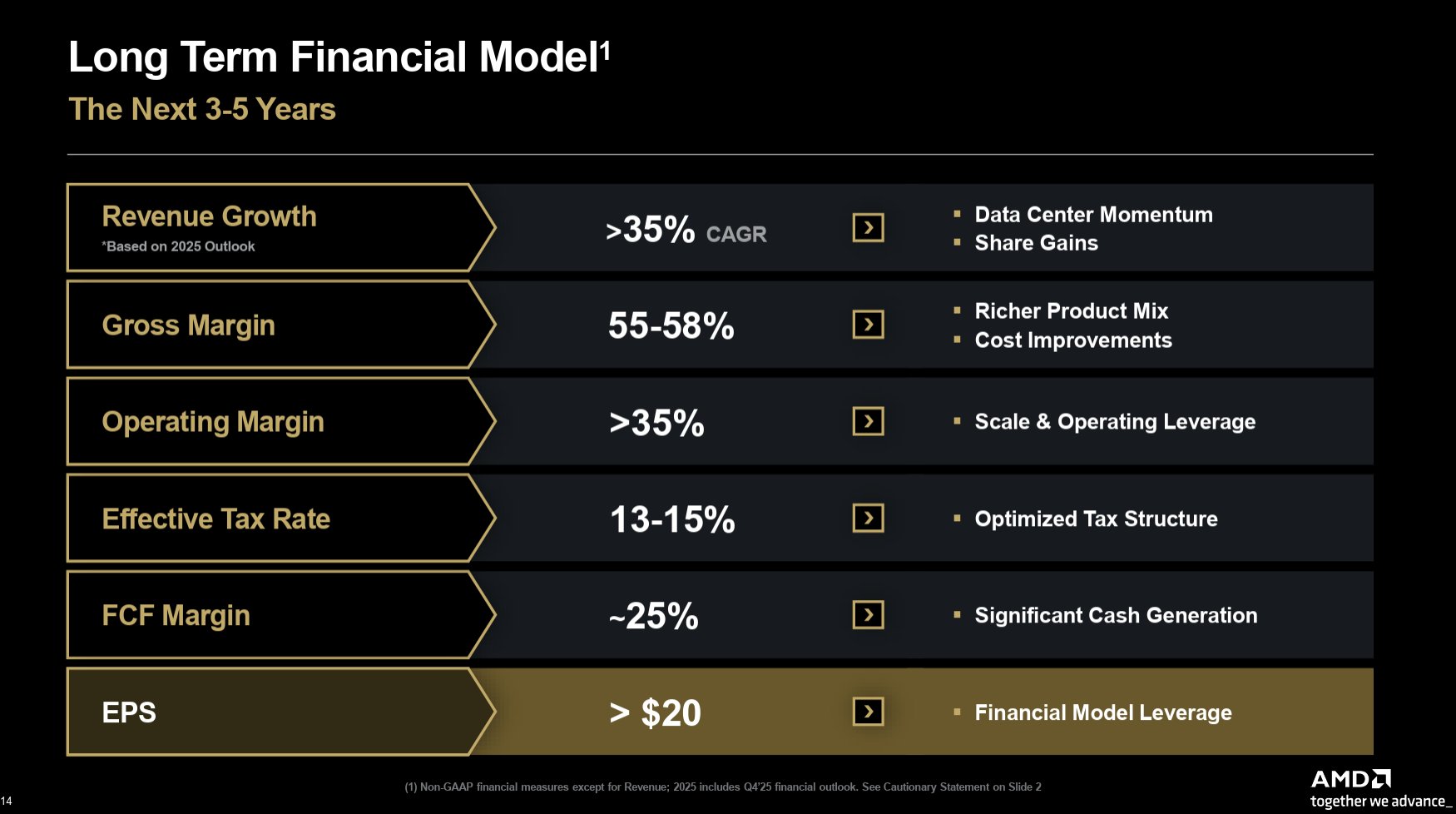
Towards the end of the event, after the market had already closed, AMD’s new guidance was released, and from what I had time to input into my calculator and model growth until 2030, it is very bullish for the continuation of the AI cycle, at least for AMD. Recently, AMD has also clearly beaten its own guidance, so Lisa sees the growth coefficient even rising in the future and AMD broadly gaining market share across all sub-sectors:

As a result of this new guidance and the Analyst Day’s offerings, I secretly start to hope for a temporary market crash so I could buy a more substantial AMD dip and add to my position. AMD is such a potential grower in the coming years, if one believes Lisa and the AMD team and their fresh roadmap. Currently, that growth is certainly priced in for 2025-2026, and the stock has risen significantly from its spring lows, but with the aforementioned growth expectations, the stock still has considerable upside potential within a 3-5 year horizon, especially when compared to Nvidia’s earlier growth phase and similar valuation multiples. This needs to be chewed over from several angles, but the initial impression was this.
EDIT: Here are a couple more summaries from the event:

26 Likes
AMD itself sees the data center and AI markets growing to as much as a trillion dollars by 2030, which indicates strong demand for AI computing. The company aims for significant market share growth, and according to the article, its Instinct GPUs are used by most major AI players.
“AMD also revealed $45 billion in new custom design wins and noted that its Instinct GPUs are now deployed at seven of the top 10 AI companies, positioning AMD strongly against Nvidia’s (NVDA) dominance.”
6 Likes
The article below states that AMD believes the growth of the AI and data center markets will continue to be strong.
The company estimates its data center business will grow by up to 60 percent annually for the next five years, while other segments, such as gaming and embedded solutions, would grow by about 10%. With these expectations, AMD estimates its results will rise significantly and also believes it will be an increasingly balanced alternative compared to Nvidia, which is heavily focused on data centers.
The article also speculates about wild stock price increases, etc. The article highlights that AMD is unlikely to completely displace Nvidia even in the wildest scenarios, but its new products and growing investments could give it a significant share of the AI markets and indeed offer investors pleasant returns.
6 Likes
The article below contains quite a lot of information, but it tells, among other things, how AMD’s Lisa Su gives a clear picture of the company’s future opportunities. For example, the AI data center market is estimated to swell to a trillion dollars by 2030, and AMD intends to grow even faster than that. Su sees AI as a multi-year growth opportunity, not just a temporary spike, and therefore investments are being accelerated.
She believes that AMD can rapidly increase its revenue and maintain a balanced product portfolio compared to Nvidia.
The message to investors is direct: long-term AI growth is now being built, and AMD is ready to play boldly at the forefront.
Put together, Su’s recent comments amount to a coherent pitch to long-term investors. She is arguing that AMD sits at the intersection of a massive AI data center expansion, quantified by that $1 trillion target and 80% CAGR in AI revenue, and a broader shift in computing that favors heterogeneous architectures where AMD’s CPUs, GPUs, and adaptive chips can shine. At the same time, she is offering concrete financial markers, including an overall expected CAGR of 35% and non-GAAP earnings per share exceeding $20 over the next five years, that give the market a way to judge whether the strategy is working.
4 Likes
Intel nousi tänään, kun analyytikko Ming-Chi Kuo vahvisti huhuja Applesta mahdollisena uutena asiakkaana. Kuon mukaan Intel voisi alkaa toimittaa Applen prosessoreita jo vuonna 2027, mikä lisää varmasti sijoittajan uskoa yhtiön käänteen onnistumiseen.
Mahdollinen sopimus olisi tärkeä Intelille, joka pyrkii vahvistamaan foundry-liiketoimintaansa ja houkuttelemaan pitkäaikaisia asiakkaita.
"
Key Takeaways
- Intel shares surged Friday after an analyst’s social media post added fuel to rumors that iPhone maker Apple could become a customer.
- Shares of Intel have doubled in value in 2025 after a flurry of high-profile deals, including a partnership with Nvidia."
https://finance.yahoo.com/news/intels-stock-pops-rumors-swirl-200612022.html
A Chinese firm has developed an all-new optical quantum computing chip that is closing the gap, called the world’s first scalable, “industrial-grade” quantum chip. The South China Morning Post reports that the chip’s developer claims it is “1,000 times faster” than Nvidia’s GPUs at AI tasks and is already being used in some industries, including aerospace and finance.
6 Likes
The news below reports how AMD plans to raise the prices of Radeon graphics cards by about 10 percent at the beginning of next year, as memory prices have spiraled out of control amidst the AI boom.
The rising costs of DRAM and GDDR6 are eroding margins, so consumers will have to pay more as wholesalers update their inventories with more expensive components.
Nvidia is in the same boat, but its focus is more on data centers, so it doesn’t really compete on price. This gives AMD room to raise its prices, and according to the article, the message for PC builders is clear: if you want to upgrade your computer, it’s cheaper now than it will be next year.
The rise of AI isn’t only shattering records in data centers; it’s also transforming how consumers purchase and use computers, beginning with the memory bus. GPUs will be the first to change prices, as HBM, DDR5, and GDDR6 are all in high demand. RAM won’t be far after.
The Christmas window for 2025 would look better next to the shelf tags for 2026 if you’re planning a project. Investors should pay attention to how quickly memory costs decline in gaming relative to how long AI controls most of the supply.
4 Likes
AMD’s Lisa Su states that the company has received permission to deliver limited MI308 chips to China and is ready to pay a 15 percent surcharge to the United States.
This refers to a lightened model according to some export regulations. At the same time, however, China is tightening its stance and directing state-funded data centers to use only domestic AI chips – a development that significantly disrupts AMD and Nvidia.
It must be remembered that these are so-called old vintage and goods that were already manufactured into stock when the sale of “too good” chips to China was blocked. Then the sale of these also stopped due to the US regulator when ‘we’re altering the deal’ regulation came into effect. A 15% “haircut” on goods that would otherwise have to be sold well below market prices somewhere other than China won’t break the world because these still have considerable margins. I suspect that once this batch has been cleared from stock, AMD’s chip trade with China will officially remain non-existent unless regulations change significantly.
At the same time, those in China who genuinely still want AMD or NVIDIA chips will still buy them through other channels; this doesn’t really change anything. While the export of high-end chips is a crime in the US without permits, importing them into China is completely allowed. The government merely “officially” instructs to favor domestic chips, but the fact is that they are still completely uncompetitive. In China, only practice matters, not theory, and if an intermediary elsewhere in the world gets a shipment of GPUs, nothing really prevents their sale to China.
8 Likes
Intel has made deals, in some of which its CEO Lip-Bu Tan has benefited as an investor. For example, Tan suggested to Intel the acquisition of AI-startup Rivos, even though he himself owned a stake in this particular company. Ultimately, Meta won the bidding war, but Tan’s investment still yielded a profit.
Intel has, of course, been aware of Tan’s extensive investment network and believes his contacts will help the company achieve even greater growth. However, Tan’s holdings have naturally raised concerns about conflicts of interest, as Intel Capital has invested in the same companies in which Tan is involved.
Tan himself feels he acts in the best interest of all parties. The company also assures that its governance adheres to strict rules, but independent experts disagree – and demand more transparency from the company.
2 Likes
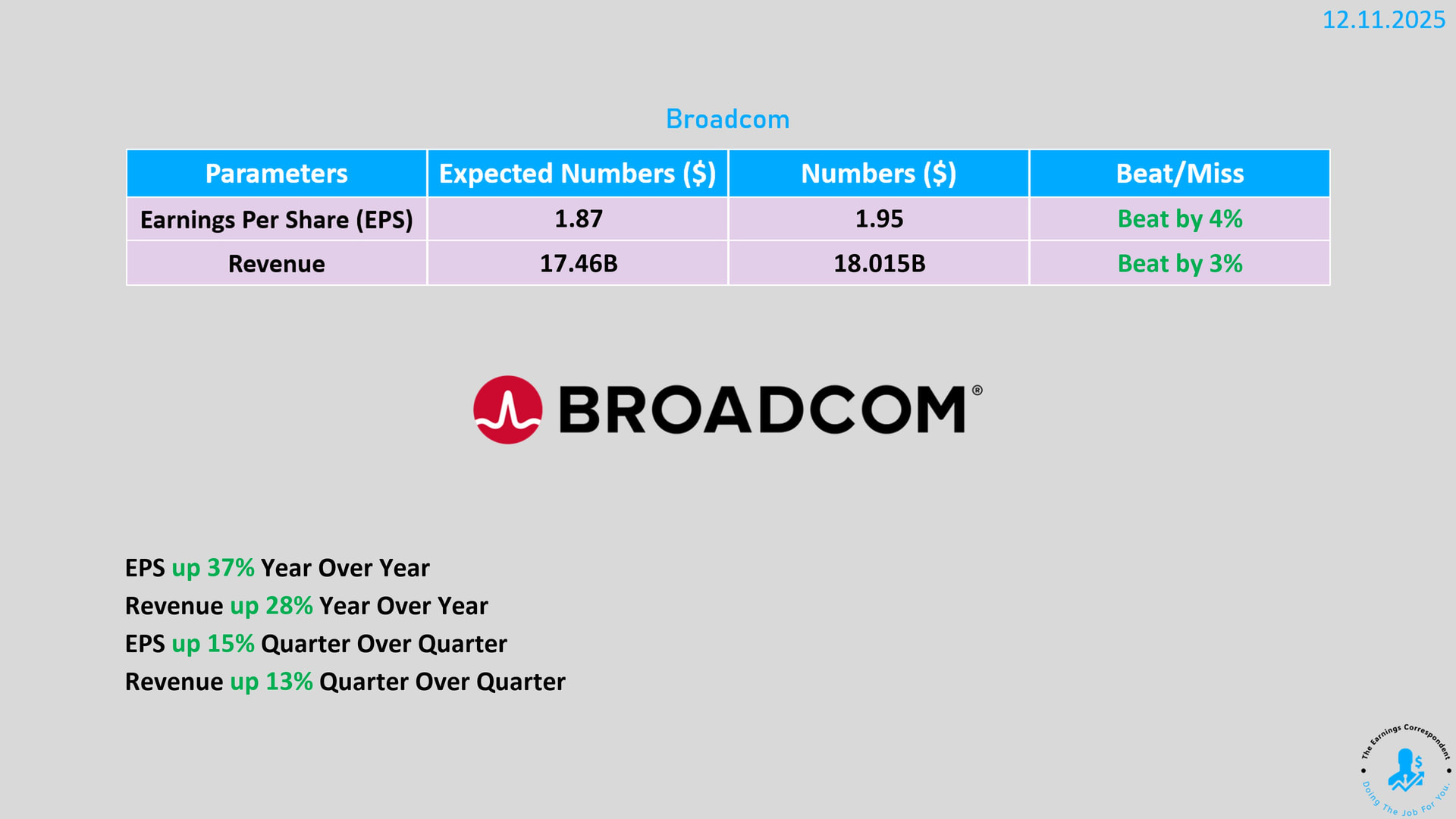
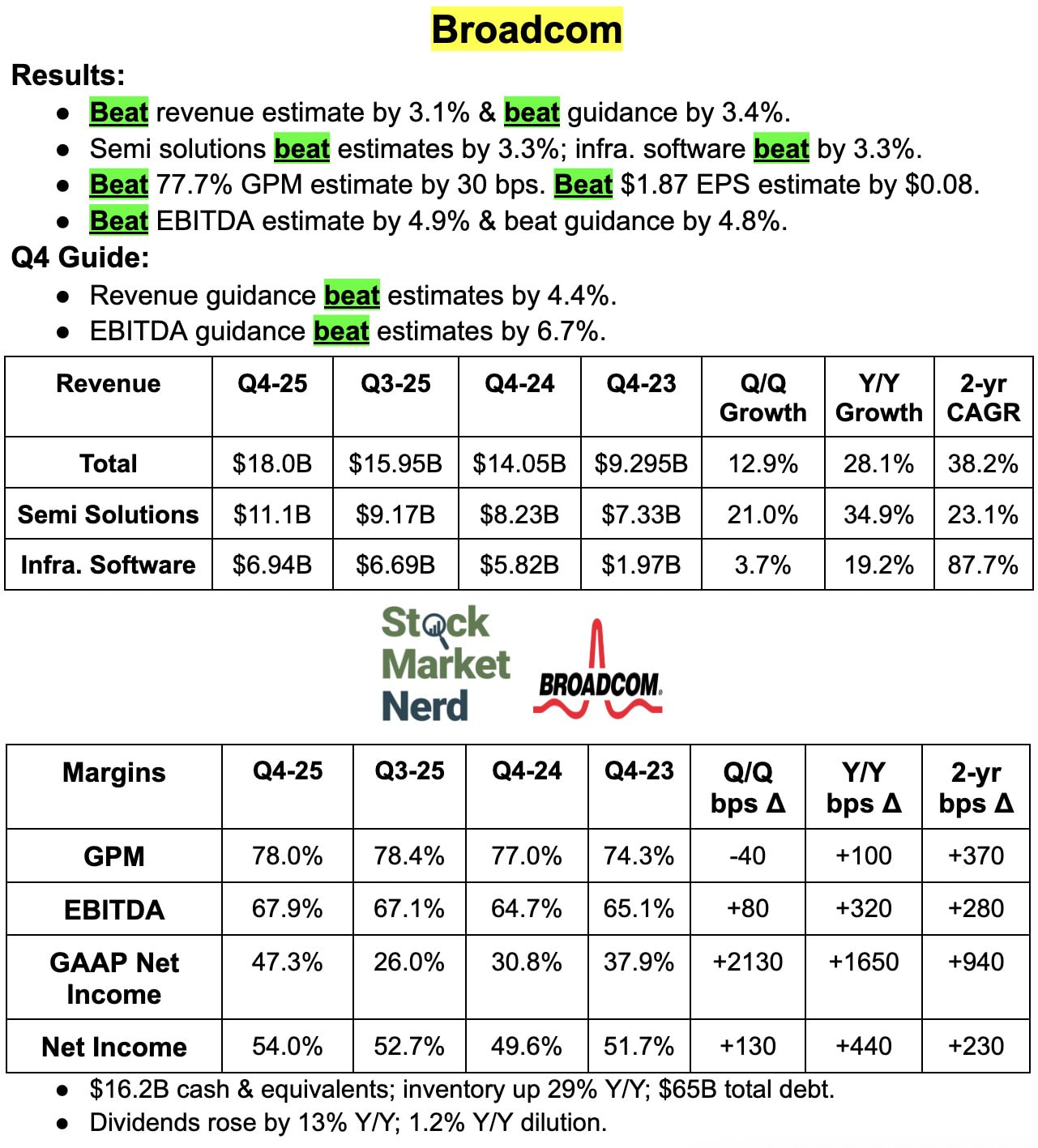
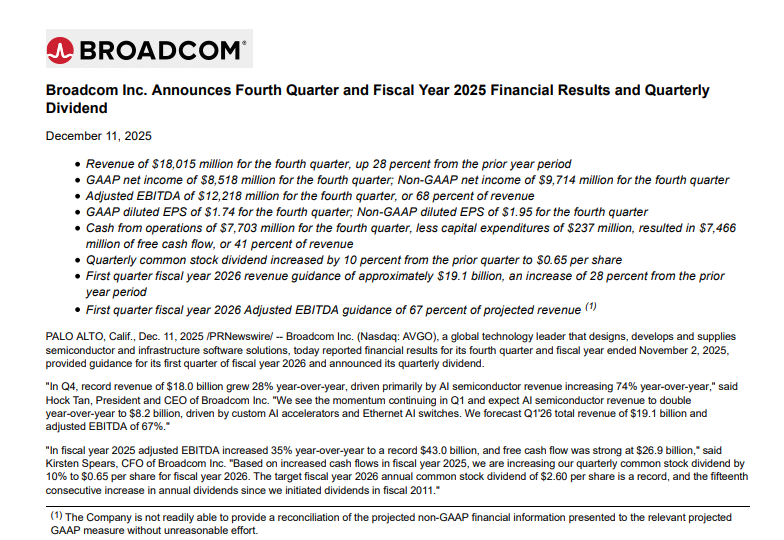
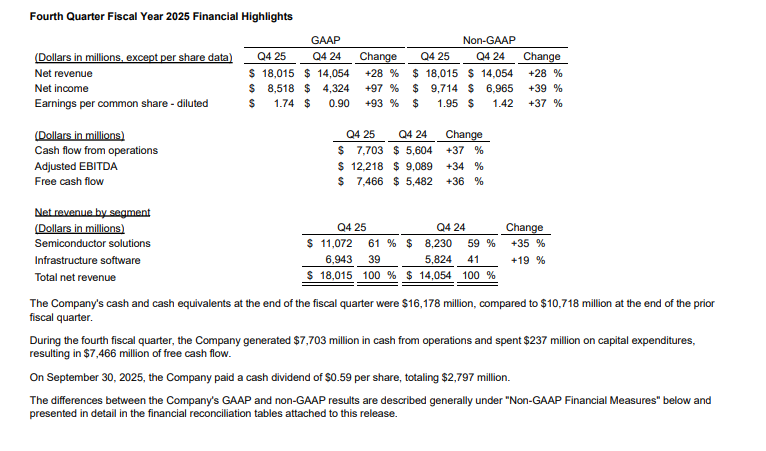
Broadcom achieved a better result at the end of the year than before. Revenue grew and profitability remained high, primarily due to the demand for AI-related chips. Management estimates that this momentum will continue at least into the first half of 2026, as customized AI accelerators and network switches are adopted by larger customers.
For the entire fiscal year, the company improved its results, and cash remained in hand even after investments. The CFO stated that thanks to the strong cash flow, the dividend will be raised again 
https://x.com/earnings_guy/status/1999226519898423370

https://x.com/StockMarketNerd/status/1999231470456459661

Company’s Own Materials
4 Likes