Clarifying post Thiebault. Quickly thought: since AMD doesn’t have Nvidia’s mountains of cash, a scheme has been devised to finance trading by pumping up the stock price
4 Likes
I was writing down my thoughts on AMD to pass the time, while reading recent analyses after the OpenAI deal.
The future development in the AI sector is uncertain, so I favor AMD as an investment, as it builds its systems modularly, meaning AMD does not build one giant AI chip, but rather the chips are developed from smaller modules called chiplets. These can be utilized/arranged/combined much more flexibly, without heavy chip re-development, while updating them according to need and development. Costs and especially development times remain lower, and the same chiplet can be sensibly used for basic users, server-side, and AI projects. In practice, AMD can update and customize products according to need and demand. For example, the MI300A combines CPU and GPU chiplets into one package.
In addition, the business is broad-based; both CPUs and GPUs are attractive in terms of performance, availability, and price from a private user’s perspective, which allows AMD to gain new customers from the Nvidia+Intel camp, like me, who, after a positive experience and a functional and very cost-effective AI combo, will later recognize AMD’s capabilities, which in the long run can contribute to AMD’s growth, possibly also through investment interests or professional applications.
One important aspect from an investor’s point of view is the improvement of reputation, and the current AMD can no longer be judged by the software problems and weak, crashing drivers of recent years. The mitigation of reputational damage has progressed relatively quickly among industry followers, but full verification of competitiveness and gaining trust still requires significant work in developing efficiency and especially the ecosystem. Today’s deal was in that sense the first truly significant step, highlighting a long development trajectory, and it was reflected in the stock price, analyses, and target price updates.
AMD’s chiplet-based architecture may offer advantages in scalability compared to Nvidia as we move deeper into the inference era, but a clearer picture of development directions will only emerge in the coming years. However, I don’t think today’s stock price reaction was a particularly large overreaction; rather, it validated AMD’s recent development trajectory, strategically made correct decisions, and a currently bright-looking future, and acknowledged one of the world’s leading AI companies, OpenAI, as a reference customer.
In summary, AMD has been able to strengthen its position in just over a year by offering flexibility, cost-effectiveness, and adaptability in the demanding AI sector, which together make AMD a strong competitor in the coming years. For example, the tens of billions of dollars/year OpenAI deal over the next four years raises analysts’ expectations for AMD’s market share growth from single digits to double digits by 2030. At best, AMD doesn’t have to chase Nvidia; instead, it can make its products with its own developed recipe and possibly offer alternative guidelines on what is the most effective way to develop chips in the future.
Below are the changes in AMD targets after the OpenAI deal. In total, target prices have recently been raised by +25.59% (within approximately a week), which ultimately corresponded roughly to today’s stock price increase. Most of them are compiled below. The majority of analyses will only be updated in the coming days (my own list has about 30 analysts, of whom 11 updated their target price/analysis immediately after the deal):
- Barclays: Raised the price target from $200 to $300, maintaining an Overweight rating. They estimate the deal could add approximately $4.5 billion per quarter to AMD’s revenue by the end of 2026.
- Jefferies: Upgraded AMD from Hold to Buy, increasing the price target from $170 to $300. They view the OpenAI deal as a strong validation of AMD’s AI roadmap, potentially worth $80–100 billion.
- Bank of America (BofA) Securities: Raised the price target from $200 to $250, maintaining a Buy rating. They estimate the deal could be worth over $100 billion over several years.
- Truist Securities: Increased the price target from $213 to $273, citing the deal as evidence of AMD’s growing role in AI infrastructure.
- TheStreet Pro: Analyst updated their target to $234, based on a pivot from a cup pattern apex at $187, though they noted the rally’s organic nature and potential for further gains.
- Cantor Fitzgerald: from 200$ to 275$, Overweight
- Roth/MKM: from 200$ to 250$, Buy target
- Stifel Equity Research Group: from 190$ to 240$, Buy target
- Benchmark Research: from 210$ to 270$, Buy target
- CFRA Research: from 200$ to 250$, Strong buy target
- Melius Reseach: from 200$ to 300$, Buy target
21 Likes
Intel took a deep squat, from which not all 57-year-olds would rise again
3 Likes
Problems:
- These were supposed to be ready in the autumn, and by Christmas, stores were to be full of laptops with these chips. It was delayed. It will extend into 2026. Laptops might be ready at CES.
- These will only come in thin, low-power models. Gaming laptops or heavier workstation laptops will not use these processors, which tells you everything you need to know about their performance, or lack thereof. They are only competitive when competing with very low power consumption (“ultrabooks”).
- There will be no desktop version at all. Instead, last year’s models will be reheated with a new sticker.
Progress, but as it stands, a delayed, barely-on-the-market half-series of models, with desktop and high-end laptops having to wait another year for new models, while AMD grabs market share in those segments.
But naturally, if they manage to mass-produce these on a large scale (i.e., more than one or two models per OEM and large volumes), it indicates that Intel has managed to manufacture its 18A node at least somewhat economically profitably (yields are good enough), and it suggests for the next node version that perhaps it too can be brought to fruition if they don’t run out of money before mass production… so if a turnaround is sought, there is a small hope that the situation could improve in 2026 / 2027.
It remains a guess how much and how quickly the stock price will gain momentum from this when the turnaround begins to strengthen. The problem is that Intel is completely out of touch with the AI side, which is the driver pushing NVIDIA’s and AMD’s stock prices uphill, and nothing in sight suggests this will change in the coming years - the deal with NVIDIA is a bit of a desperate attempt to become relevant (to more tightly marry Xeons as the processor provider for future generations of datacenter NVIDIA hardware), but I suspect Intel will be left with mostly crumbs to try and hold onto datacenter CPU market shares.
On the positive side, the latest Xeon 6, which recently became available, is finally somewhat competitive with the previous generation Zen 5-based AMD server chips, which have been on the market since 2024. The only problem is that it should be competitive with the next generation Zen 6 (“Venice”) series to stop the loss of market share there, and I fear it’s not even close.
2 Likes
Intel’s Diamond Rapids should (though there are risks…) come to market around the same time as AMD’s Venice.
Yes, the plans clearly are that they would be able to join the race with a newer model then. Whether it will be ready on time and whether it will be competitive remains to be seen.
Jussi Halme has made a video on the topic: AMD vs NVIDIA  I think this is a suitable video, at least for an ordinary investor like me.
When Lisa Su took the helm of AMD in 2014, the company was on the verge of bankruptcy. Ten years later, it is a $330 billion technology giant challenging Nvidia for dominance in the AI market.
In this video, I explain how AMD rose from the bottom to the top of AI, why the OpenAI deal is one of the biggest technology deals in history – and what it means for investors.
Is AMD truly becoming the next winner of the AI revolution – or has the market already priced in all the good news?
We will go through AMD’s strategic change, the terms of the OpenAI warrant agreement, and future risks.
This is a story of how one woman changed the direction of the entire semiconductor industry.
5 Likes
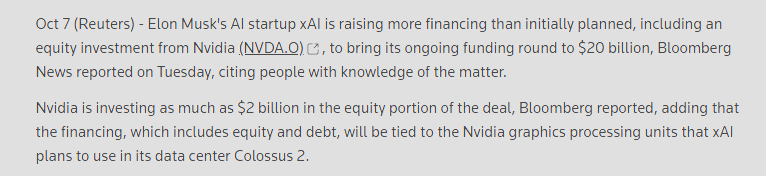
NVIDIA investing a bit more coffee money (2 billion dollars), this time into xAI, which will probably use the invested money… to buy NVIDIA chips 
6 Likes
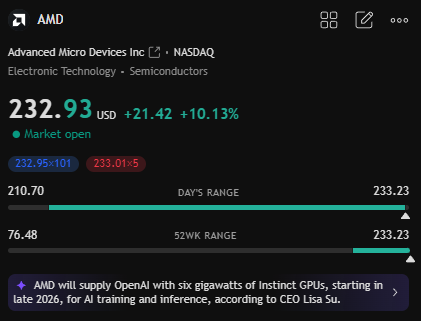
AMD reached new heights with a significant change.
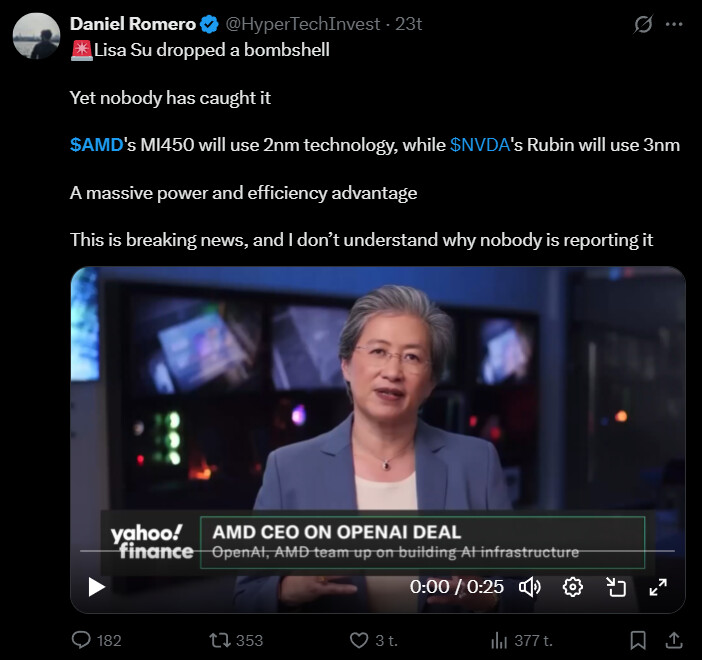
According to Lisa Su, AMD will use 2nm technology in the MI450 chips launching next year, while NVIDIA will reportedly use 3nm.
https://x.com/HyperTechInvest/status/1975635156796121551
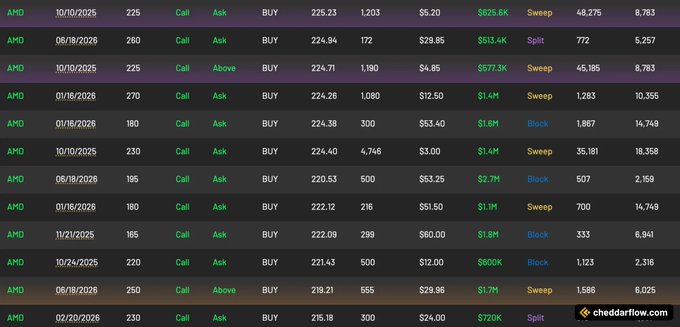
An exceptionally large number of bullish Call options have flowed into AMD today, with strikes varying widely, and the highest being a 100% OTM (Out of The Money) $450 call, expiring on 18.9.2026, with a bet size of $916k.

In addition, an exceptionally large number of ITM and OTM calls have appeared, totaling several million dollars with varying strikes:
Finally, a lighthearted take on the current market’s financing conditions, which are adding fuel to the flames:
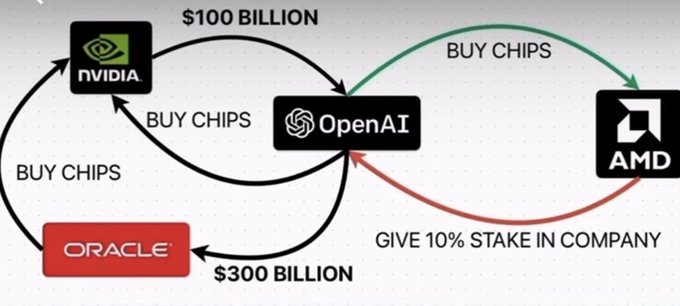
EDIT: To conclude, let’s add today’s biggest Call option, which was taken about half an hour before the close. The size of the Call is truly significant, 13.4 million dollars, expiring on 17.10.25, with a $250 strike 7% away. Such large OTM bets are quite rare to see:

26 Likes
Amidst the AMD/Nvidia discourse, it’s worth adding the latest OpenAI deal.
OpenAI and Broadcom sign deal to build up to 10 gigawatts of custom chips.The announcement comes just a week after OpenAI announced a multiyear, multibillion-dollar deal with AMD (AMD) that will see the chipmaker provide OpenAI with up to 6 gigawatts of AI processors.
And also from CNBC:
Broadcom’s chip president says mystery $10 billion customer isn’t OpenAI
So, was the guess that caused Broadcom’s big jump last quarter wrong?
2 Likes
Intel esitteli uuden Crescent Island -tekoälypiirin, joka on tarkoitettu nimenomaan datakeskuksiin ja tulee markkinoille ensi vuonna.
Piiri on suunniteltu energiatehokkaaksi ja edulliseksi vaihtoehdoksi tekoälylaskentaan, lisäksi Intel toivoo sen auttavan kilpailemaan erityisesti NVIDIAn ja AMD:n kanssa.
This announcement comes as part of CEO Lip-Bu Tan’s strategy to revitalize Intel’s AI initiatives after previously shelving projects such as the Gaudi line of chips and Falcon Shores processor. The company has struggled to capitalize on the surge in AI spending that has generated billions in revenue for its competitors.
2 Likes
Atte went through ASML’s results because of Canatu.
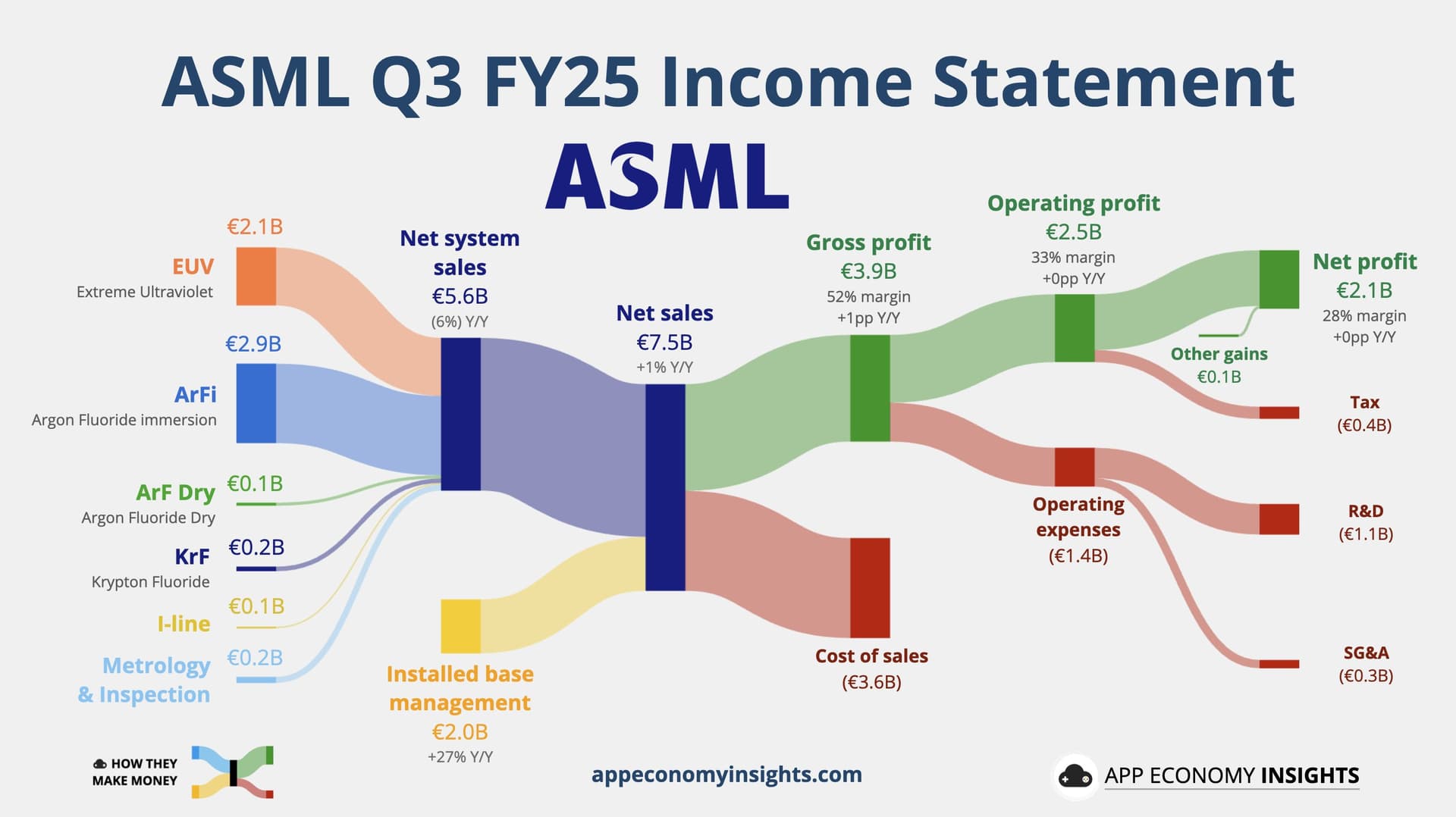
ASML, which practically holds a monopoly in EUV lithography machines, reported its Q3 results on Wednesday, with orders exceeding analysts’ expectations. The outlook comments forecasting growth for 2026 are also a positive signal, as the company’s previous comments regarding 2026 had been more uncertain. The growth in AI investments creates increasing demand for ASML’s most advanced equipment, even though demand for older generation technology in China is expected to decrease next year. From Canatu’s perspective, the growth in demand for these most advanced devices is central, as they will require the company’s carbon nanotube-based pellicle films.
https://x.com/earnings_guy/status/1978325078606586129

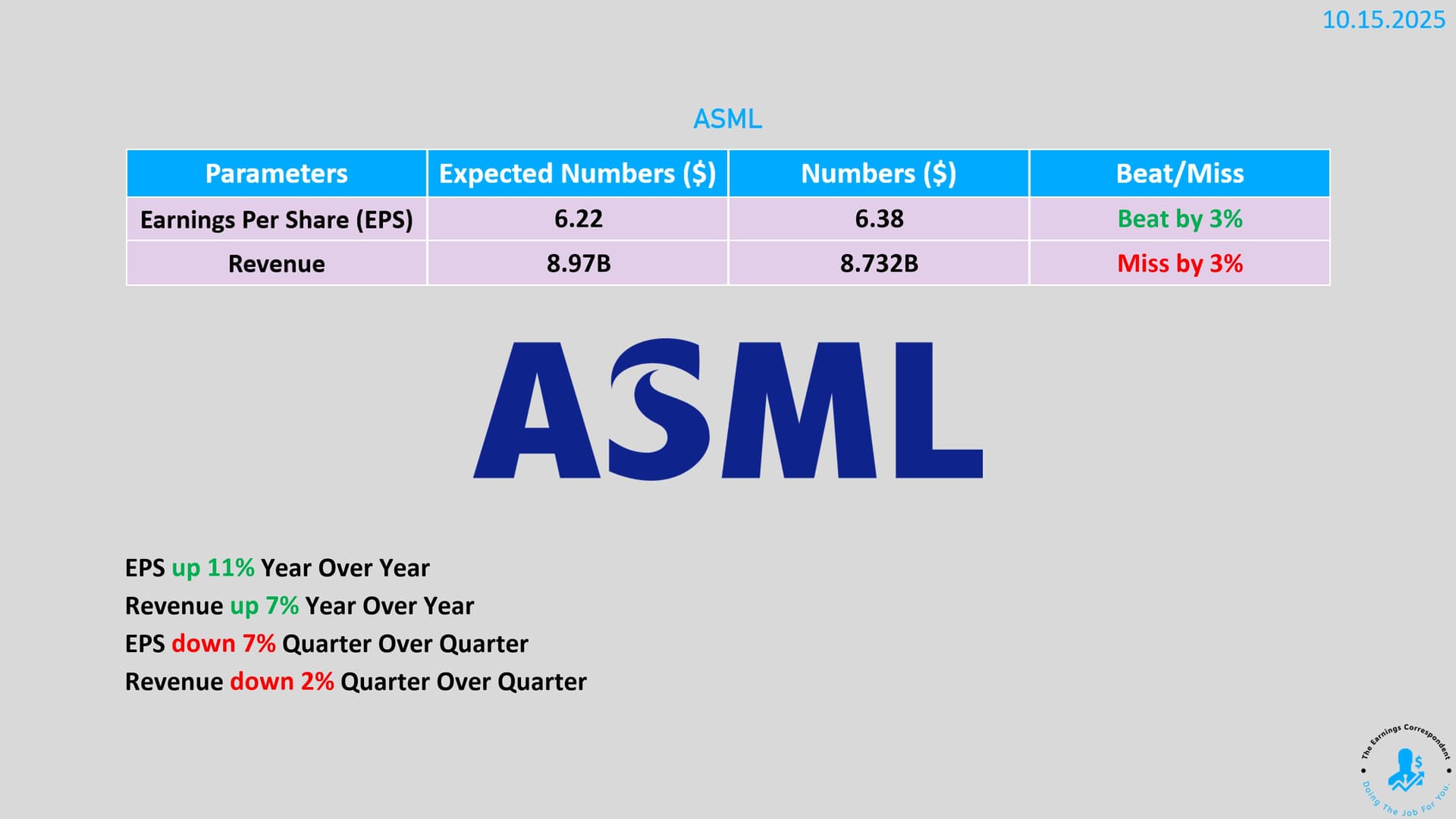
Figures visualized
https://x.com/EconomyApp/status/1978447226469847266

6 Likes
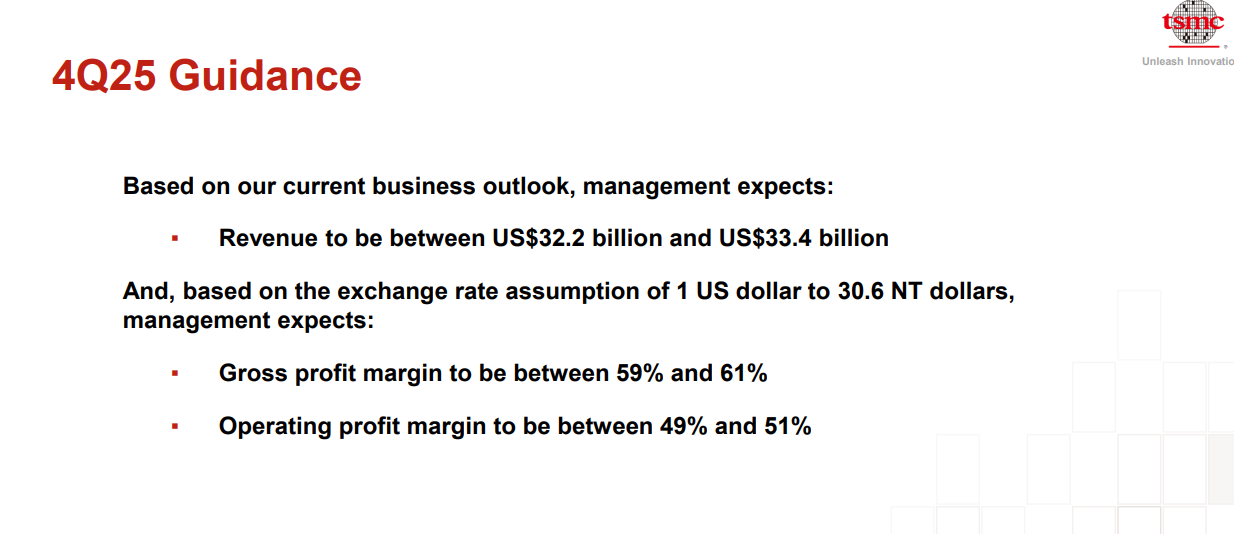
TSMC posted strong results, as robust demand for AI and advanced manufacturing technologies fueled the company’s growth. The company’s profitability improved, and its results exceeded expectations, strengthening its position in the industry.
The company raised its full-year growth forecast and plans to increase investments in production in various countries. TSMC believes that the demand for AI is permanent and not just a fleeting trend, and is preparing for it by building more capacity globally.
https://x.com/StockMarketNerd/status/1978793966595444770

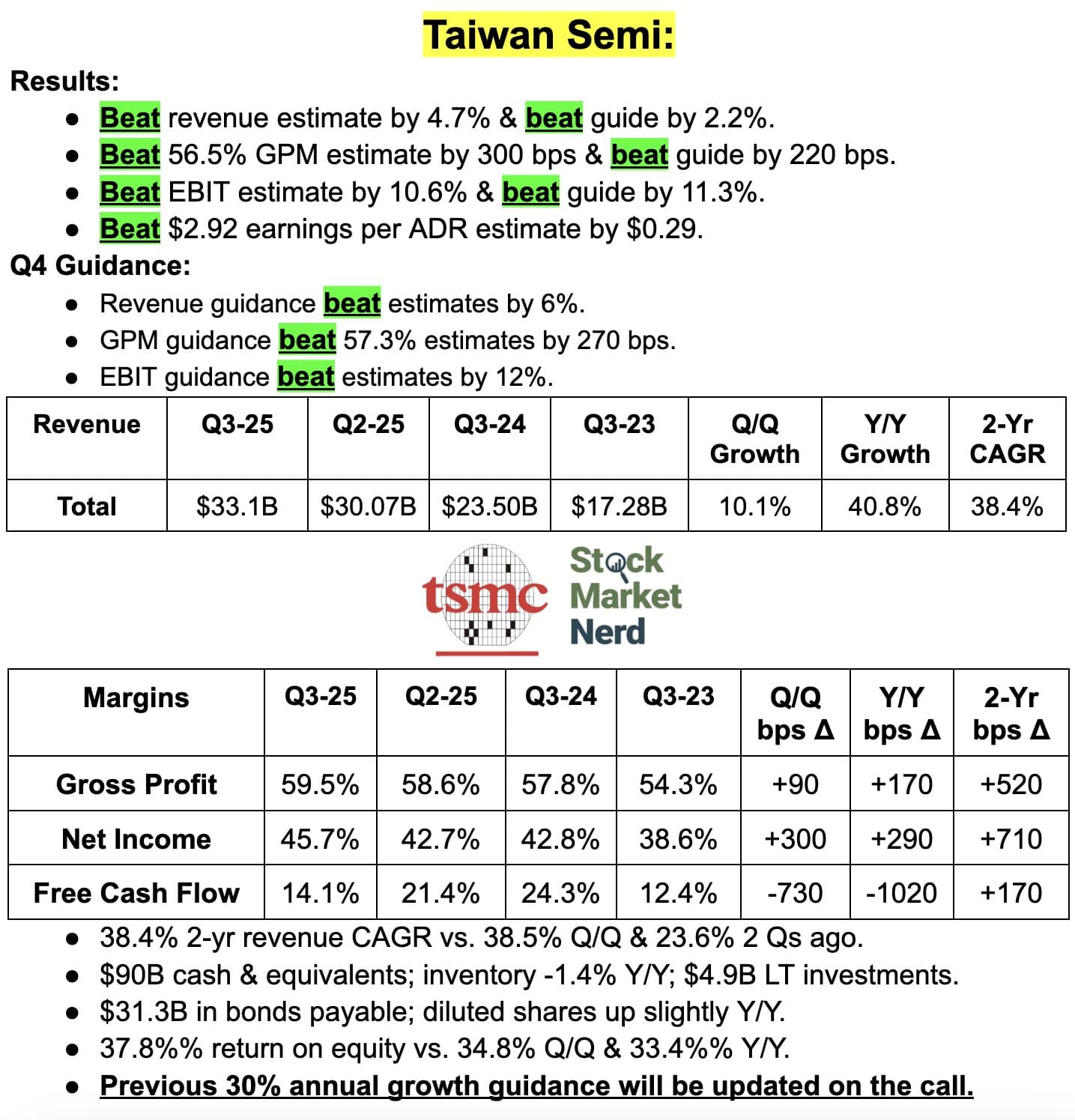
Company’s Own Materials
9 Likes
BESI raportoi tänään
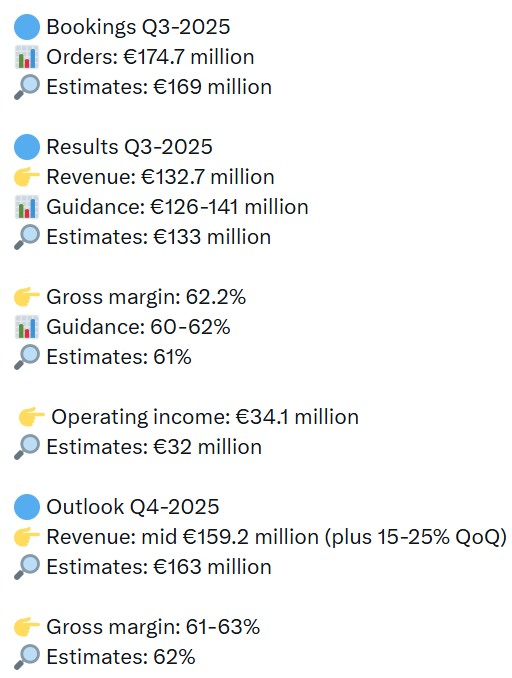
Key Highlights Q3-25
-
Revenue of € 132.7 million decreased by 10.4% vs. Q2-25 and was at the midpoint of guidance. Revenue decreased 15.3% vs. Q3-24 principally due to the ongoing industry downturn
-
In contrast, orders of € 174.7 million increased by 36.5% vs. Q2-25 and 15.1% vs. Q3-24 principally due to a significant increase in bookings by Asian subcontractors for 2.5D datacenter and photonics applications
-
Besi’s gross margin of 62.2% exceeded guidance. It decreased by 1.1 points vs. Q2-25 and 2.5 points vs. Q3-24 due primarily to adverse forex effects from the decline of the USD vs. the euro
-
Net income of € 25.3 million decreased by 21.2% vs. Q2-25 and 45.9% vs. Q3-24 due principally to lower revenue and gross margins realized. Besi’s Q3-25 net margin decreased to 19.0% vs. 21.6% in Q2-25 and 29.9% in Q3-24
-
Cash and deposits at September 30, 2025 increased by € 28.4 million vs. June 30, 2025, principally due to increased cash flow generated from operations
2 Likes
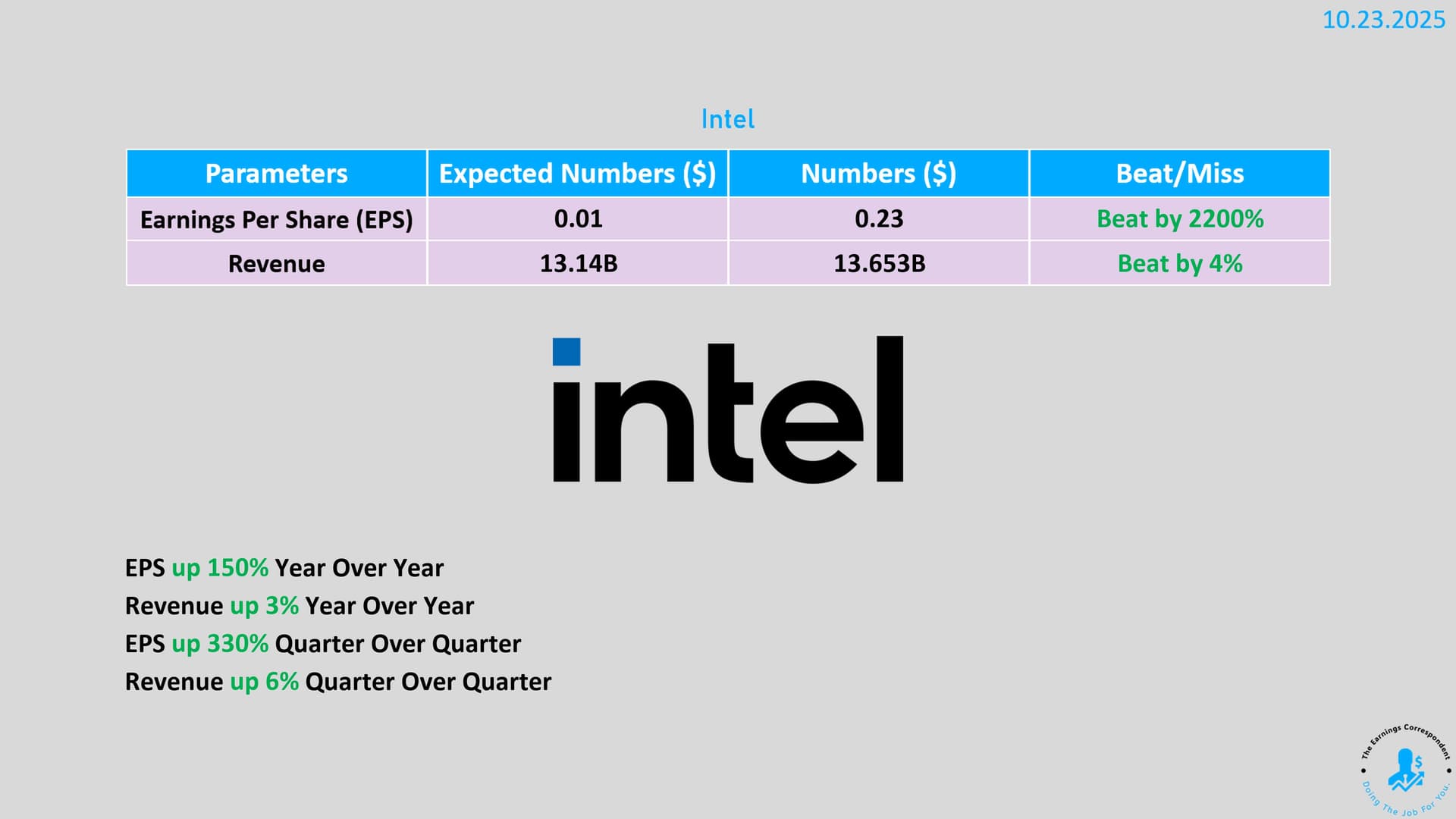
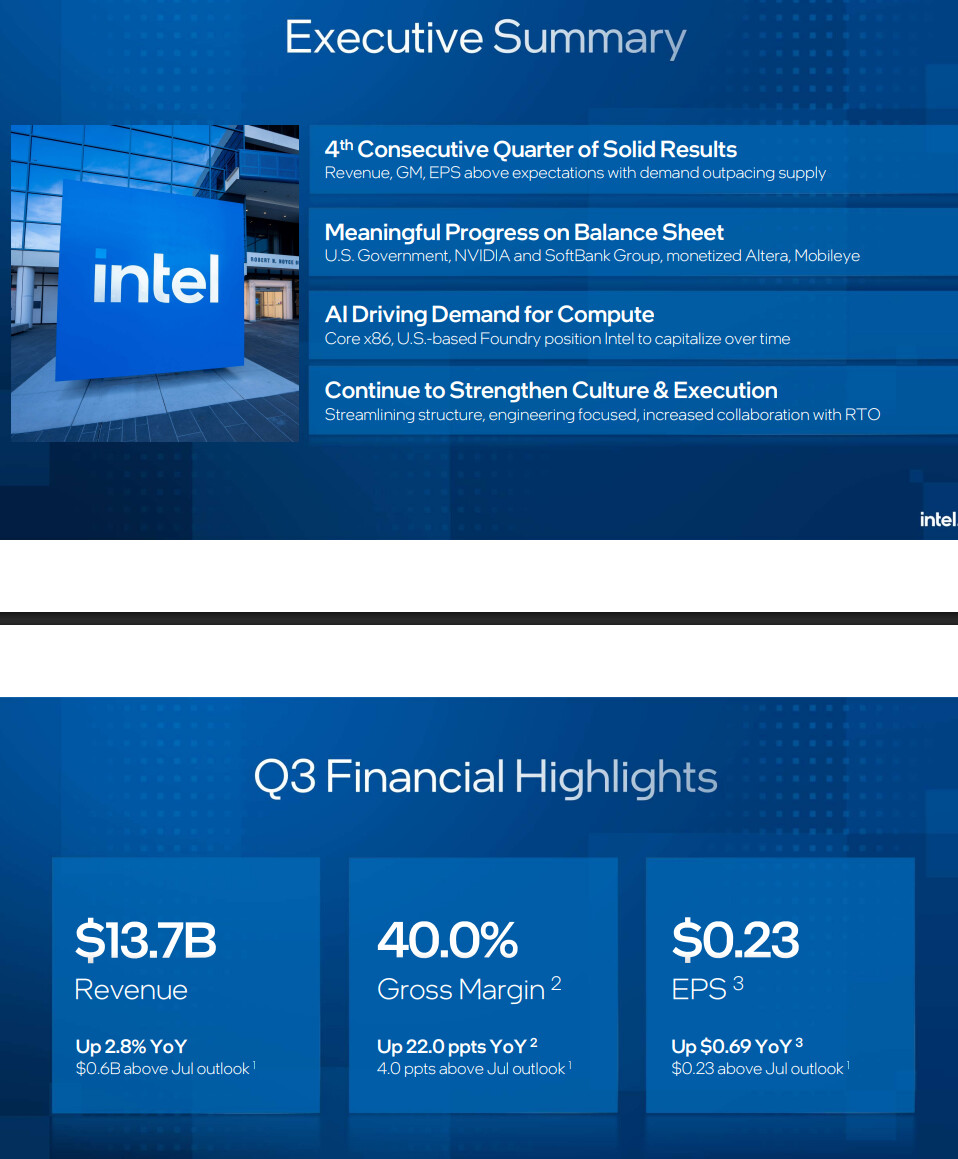
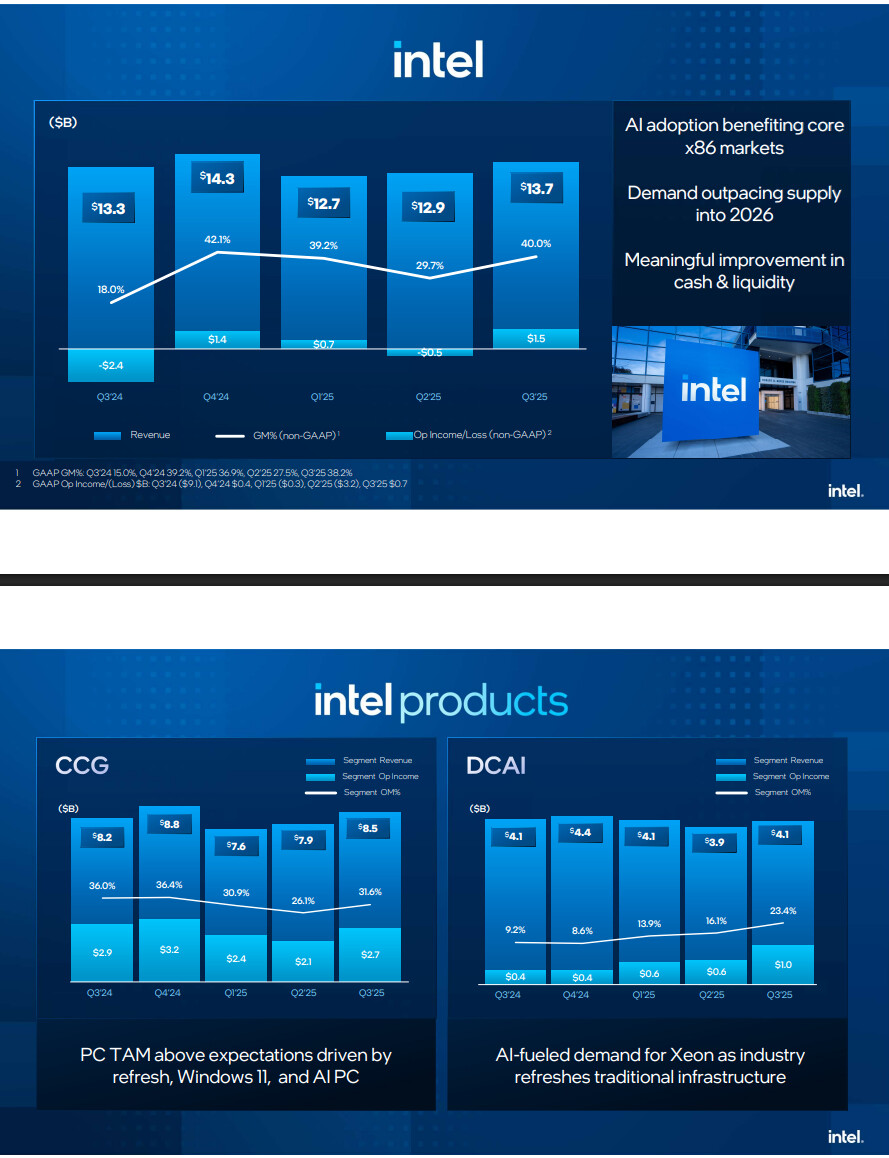
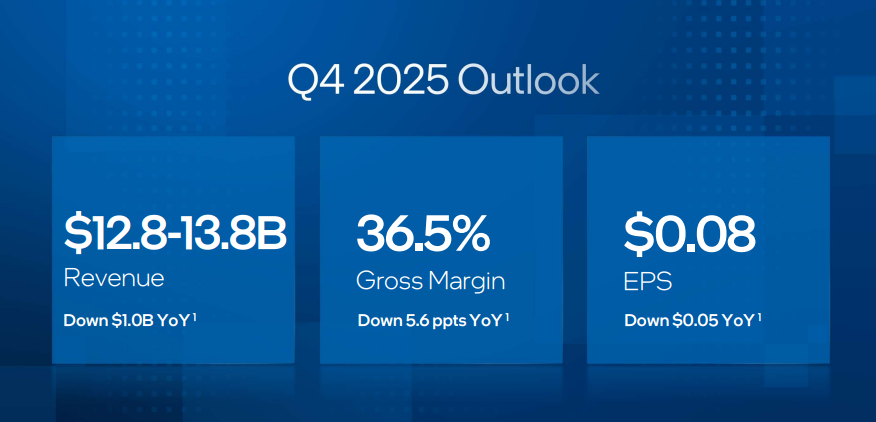
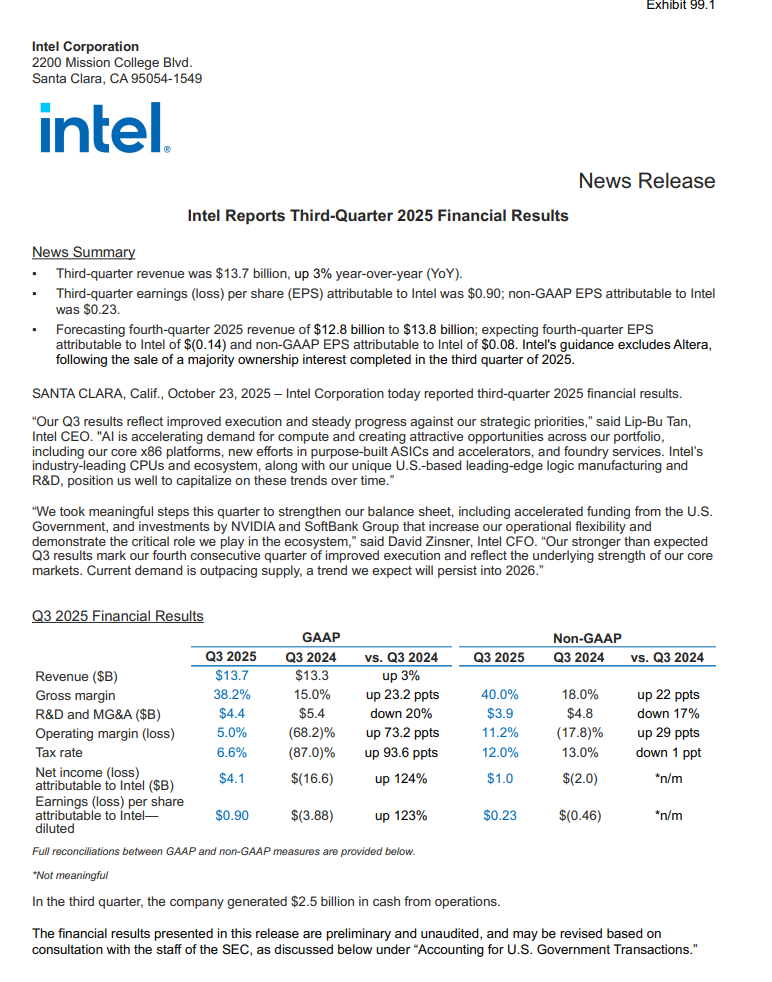
Intel Q3 was released today and it was slightly better than expected.
The company’s revenue grew, and management says it’s due to improved performance and AI-driven demand. Intel sees good opportunities, especially in processors and and AI chips.
The company strengthened its finances with new investments and government support. Management believes the company is well-positioned to continue leveraging AI growth.
https://x.com/earnings_guy/status/1981450896539037716

Company’s own materials
6 Likes
From the quarterly results, it can be stated that Intel has regained investor confidence by combining an aggressive investment program, a growing AI partnership with NVIDIA, and a new business challenging Broadcom.
The future looks more promising than it has in a long time, but now the company must above all succeed in execution. Its track record in that regard hasn’t been great in recent years, but the partnerships prove that confidence exists.
The US government’s involvement around Intel has been little discussed, but in my opinion, it’s an important topic and driver. The summary could be: Intel is too important for the USA, which means lower investor risk.
Pre-market indications are sharply rising. →
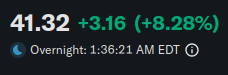
As a personal comment, I could also say that it’s been a crazy week in my portfolios. Almost all of my biggest investments are up significantly. Intel is still the worst-performing stock in my portfolios, but its price has also doubled in a short time, and I think I’m in the green again. The dip was longer and deeper than I expected, but I didn’t stay down there. In US investor media, the year 2027 is now considered a turning point. I think I’ll watch at least until then.
6 Likes
After’s rise seems like a relief rally. The next quarter’s EPS estimate of 8s was a disappointment for me after the reported 23s. Now it has reached a fairly normal valuation, so it will probably hover around 40 for longer.
2 Likes
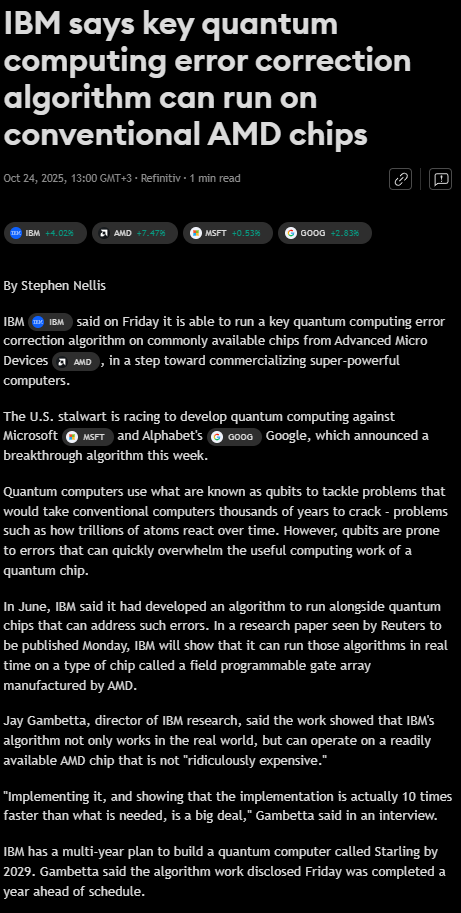
AMD is once again hitting new ATH levels ($253.08), as yesterday’s Intel earnings report provided a boost to the entire AI sector, with demand and outlook remaining strong well into next year.
The article below mentions that AMD’s “reasonably” priced chip can run a quantum machine’s error correction algorithm up to 10x faster than the target level. IBM had completed this project a year earlier than expected, and the news is now also boosting AMD’s shares in the quantum sector.
9 Likes
AMD sold ZT Systems (datacenter manufacturer) to Sanmina
SAN JOSE, Calif., Oct. 27, 2025 /PRNewswire/ – Sanmina Corporation (“Sanmina”) (NASDAQ: SANM), today announced it has completed its acquisition of the ZT Systems data center infrastructure manufacturing business from AMD (NASDAQ: AMD). The combination positions Sanmina as a leader in the Cloud and AI end-market, enabling the company to further capitalize on significant growth opportunities.
As part of the agreement, Sanmina and AMD have committed to a strategic partnership where Sanmina is a U.S.-based, preferred new product introduction (NPI) manufacturing partner to accelerate quality and time-to-deployment of AMD cloud rack and cluster-scale AI solutions.
4 Likes
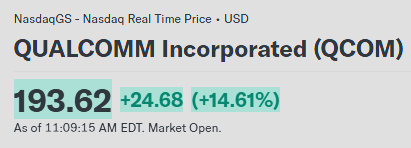
Qualcomm unveiled datacenter chips. It focuses on inference, and memory is stacked generously, with 768GB LPDDR memory per card.
A somewhat similar product to Intel’s recently announced upcoming model - specifically for running AI models (Inference) and not for training them. This means the chip’s power might not be very high, but the focus is on the amount of local memory and memory bandwidth.
The stock price jumped for understandable reasons, at its best around +20%, now around +15%.
5 Likes