Portillo's PTLO - The Next Chipotle?

This is a US fast-casual restaurant chain founded in 1963, originally from Chicago. The company currently has 85 restaurants in ten states in the US. Their goal is to increase the number of restaurants to approximately 500. The company has never closed a restaurant in its history, meaning all locations are profitable.

The company is so popular in the States that when they open a new restaurant, there are hours-long queues during the opening week.

40% of the restaurants’ sales come from drive-thru lanes, and the average spend per person is $10.75.

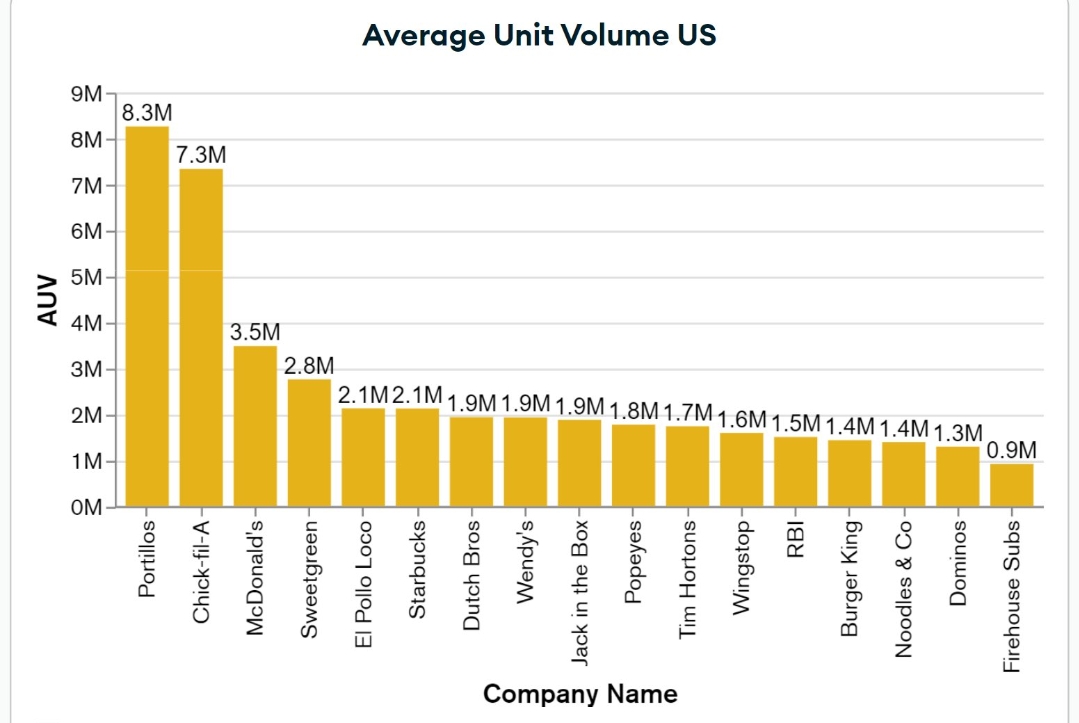
Annual sales per restaurant are approx. $8.3M, which is significantly higher than their competitors.
Screenshot_2024-06-23-22-18-35-14_40deb401b9ffe8e1df2f1cc5ba480b12

In 2014, the chain was sold to a private equity firm named Berkshire Partners, which took the company public in 2021. The IPO price at the time was $20 per share.

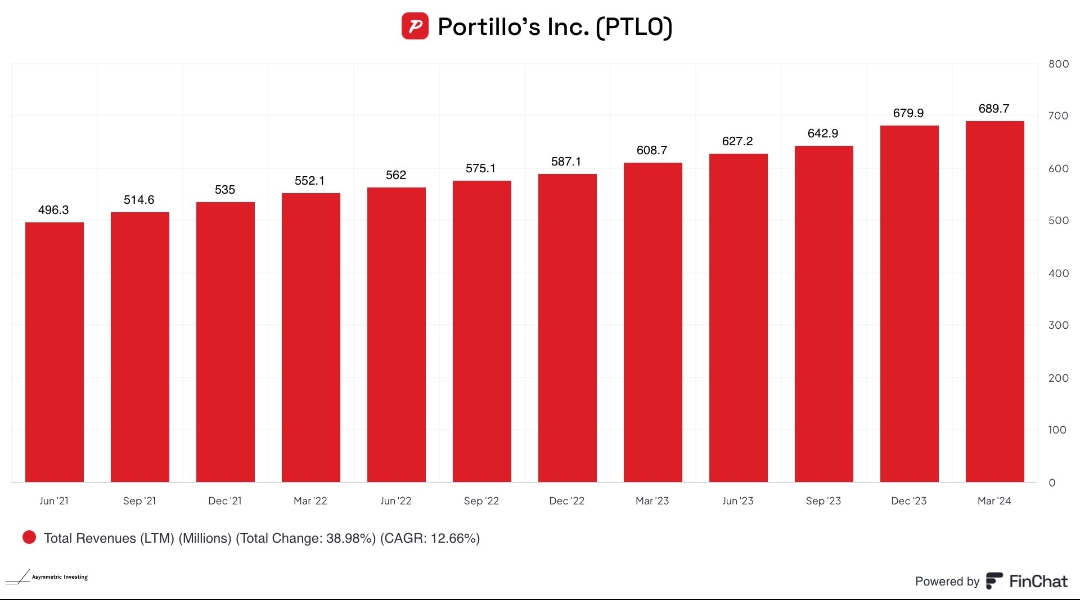
The company has grown its revenue at an annual rate of approx. 10-15% in recent years and aims to keep growth in the 12-15% range in the future. The company’s growth is partly slowed by the fact that the company owns all the real estate itself and funds growth directly from operating cash flow. Building a new restaurant costs approx. $7M, but according to the company, construction costs can be pushed down to around $5.5M with their new restaurant concept, where the kitchen will be smaller and more efficient. A newly opened restaurant also generates positive cash flow immediately.

The company has two classes of shares listed: Class A shares and Class B shares owned by the private equity firm. However, the company regularly buys those B shares and converts them into A shares, which increases the trading volume of the listed stock without diluting ownership. There are still 11.6M B shares left for the company to redeem, while there are 61.6M A shares.

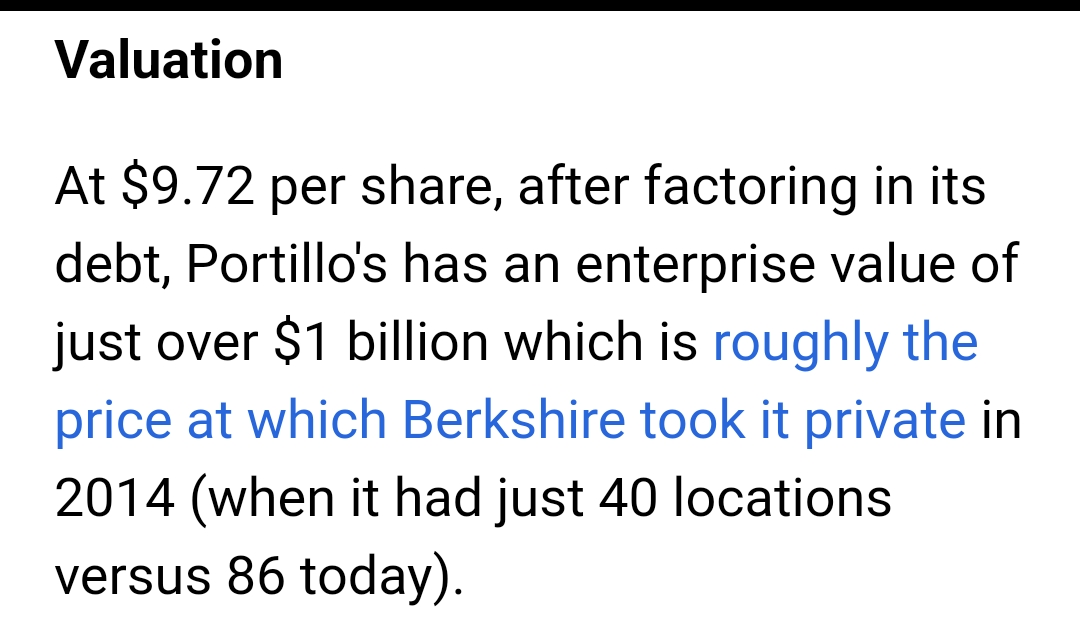
What makes this interesting is that the company’s EV/EBITDA multiple for this year is 11.3, while the average for listed US restaurants is 16.6—even though the company is growing at double-digit rates.

At the beginning of this year, activist investor Glen Welling bought a 3.5% stake in the company; he has also done good work at Shake Shack. I believe he will try to get the company to sell the real estate on its balance sheet, which would increase the company’s return on capital and free up more cash for growth. Additionally, he typically places his own people on the board. Glen mentioned in an interview that his only job in a company where he buys a stake is to figure out how to drive the stock price up.

They have $306M worth of real estate on the balance sheet, and if building a new restaurant costs $7M, selling those 85 restaurants could bring in more money than the $306M currently on the balance sheet.
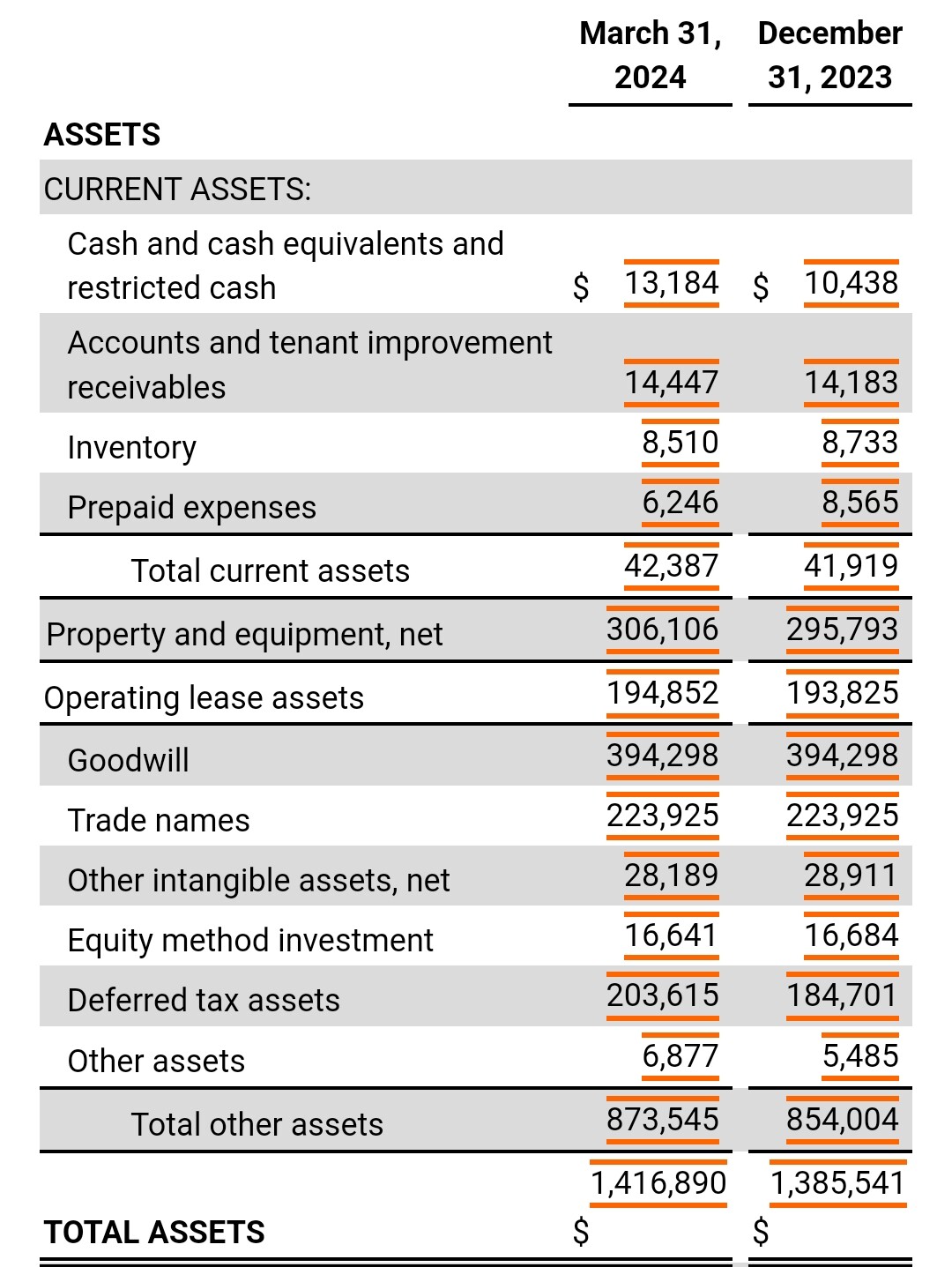
Screenshot_2024-06-23-23-13-28-78_40deb401b9ffe8e1df2f1cc5ba480b12

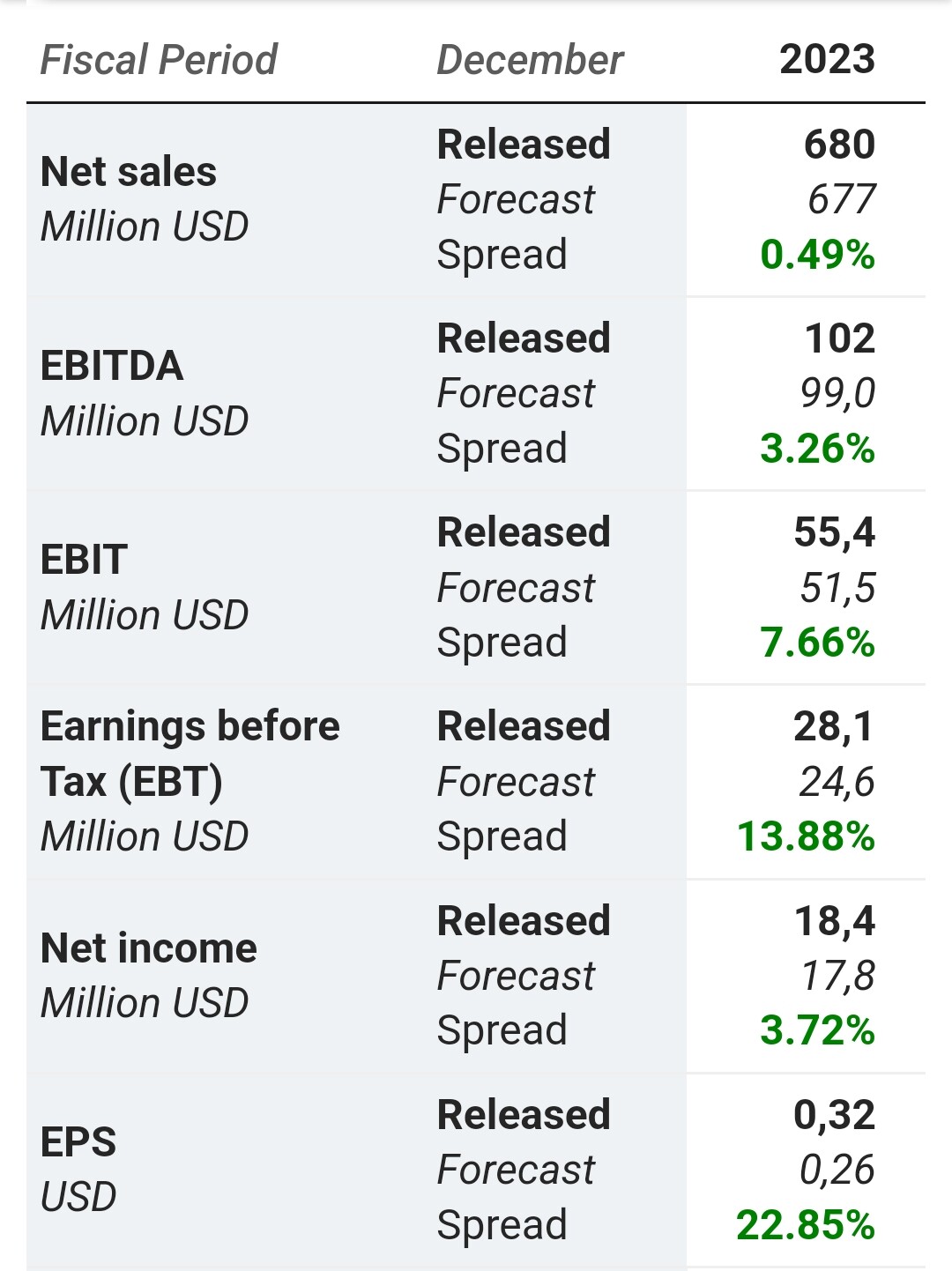
Figures:

Screenshot_2024-06-23-22-14-35-31_40deb401b9ffe8e1df2f1cc5ba480b12

Screenshot_2024-06-23-19-32-04-57_40deb401b9ffe8e1df2f1cc5ba480b12

Below is a customer experience from the restaurant and an interview with the CEO.

https://youtu.be/VLuur2Xwx5g?si=h6I3lamsclMyPSyK

https://youtu.be/V0uyctDSGB4?si=xNlYyld4NzSXS-39

55 Likes

The share price has been trending downwards since the IPO; has the company had any difficulties in implementing its strategy, or is the market just doing its own thing?

1 Like

Quite an interesting case.

EV ~ 1.15B but one should take a closer look at that since there is indeed almost 400M in goodwill and a lot of lease liabilities.

OCF ~ 55M when you subtract ‘equity based compensation’ because it is salary :expressionless:

The TRA originating from the IPO is nearly 300M; if someone understands the terms of this better, they could shed some light. Personally, I don’t even know the timeframe over which that must be paid.

Hard to say

1 Like

Portillo’s is on my watchlist; if the slide turns around with the next report, then maybe I’ll buy in. There are some red flags, of course; the Facebook reviews are quite harsh reading. At the moment, Darden Restaurants is more attractive.

This is hard to answer as no one can know for certain the exact reasons why the share price is falling.

Of course, these smaller companies have a life of their own, and the share price doesn’t necessarily have anything to do with fundamentals.

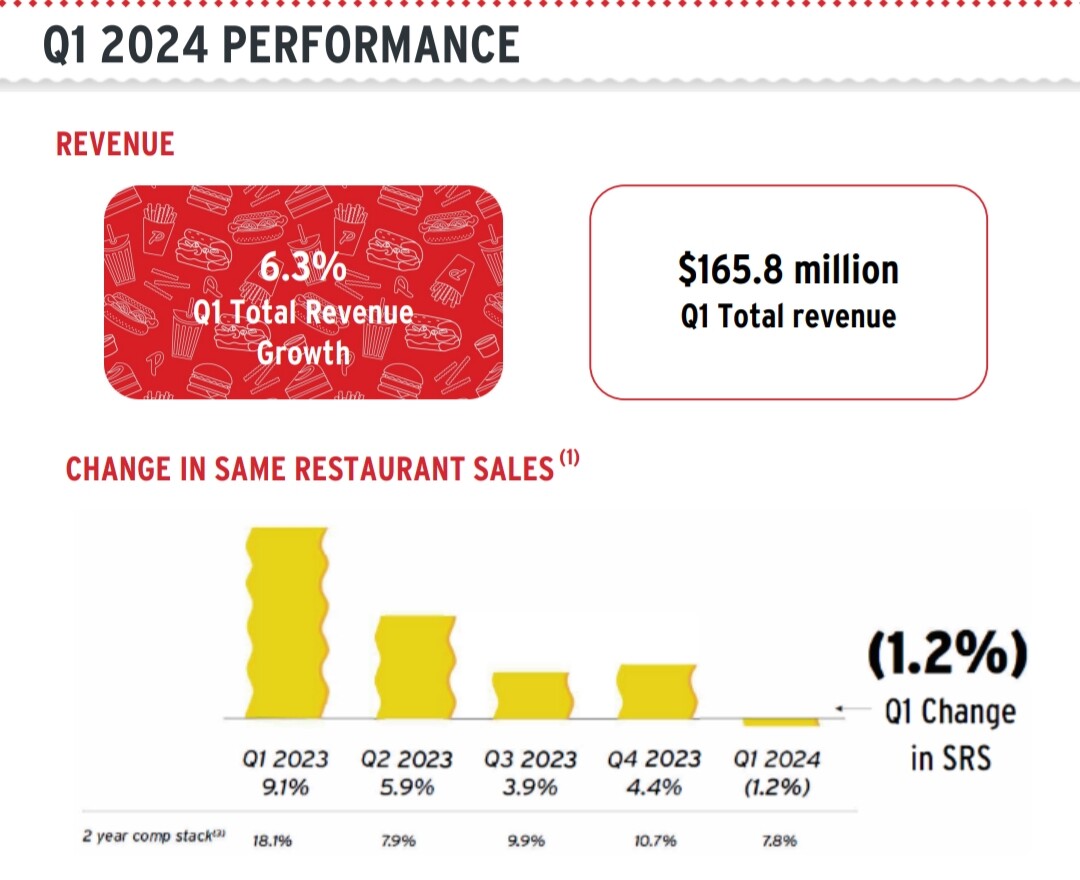
It’s possible that the decline is due to that complex share arrangement. The drop following the Q1 results was apparently because same-restaurant sales fell by 1.2%. The company itself explained that the decline in sales was due to bad weather. This may be true, as lost daily sales cannot be recovered in the restaurant business, unlike, for example, in a clothing store, where those shoes eventually have to be purchased.

Screenshot_2024-06-24-19-20-03-72_e2d5b3f32b79de1d45acd1fad96fbb0f

The CFO also guided at a conference held this month that sales will nevertheless grow by +10% this year.

Bill Ackman said in an interview when asked about the restaurant business that if a company already has, say, 100 restaurants, it is certainly not impossible that one day they will have, say, 300.

If you’re interested in the company, it’s worth listening to the conference calls available on their website.

https://investors.portillos.com/events-and-presentations

1 Like

Thanks for the great opening.
.
Here is a link to another analysis that was published recently:

3 Likes

The indebtedness and poor margins are what worry me the most. Significant dilution as well. A current ratio of 0.36 at first glance at least suggests a company in crisis. Maybe that’s the reason for the downward slide? The numbers are poor. Competitors have a net margin of around 10%, while this outfit is under 3%—not profitable enough. The situation has been the same for several years, so it’s likely not just a temporary phase. Something is majorly wrong on the cost side. You can’t know the future, but it seems to be on such a shaky foundation that I wasn’t personally interested.

1 Like

I would remind you that when a company is trading cheap on the stock market, there are always some red flags: China risk, weight loss drug risk, negative equity on the balance sheet, you name it :sweat_smile:

In other words, the perfect company doesn’t exist. Of course, it’s also good that these shortcomings are being pointed out.

Below is a new post on Seeking Alpha regarding this.

Things don’t always go smoothly for the private equity investor when they need to get rid of a stock.

Screenshot_2024-07-01-06-01-08-83_40deb401b9ffe8e1df2f1cc5ba480b12

Screenshot_2024-07-01-06-12-19-41_40deb401b9ffe8e1df2f1cc5ba480b12

https://seekingalpha.com/article/4701746-portillos-ptlo-buy-the-stock?source=content_type%3Aall|first_level_url%3Alatest-articles|section%3Acontent|line%3A6

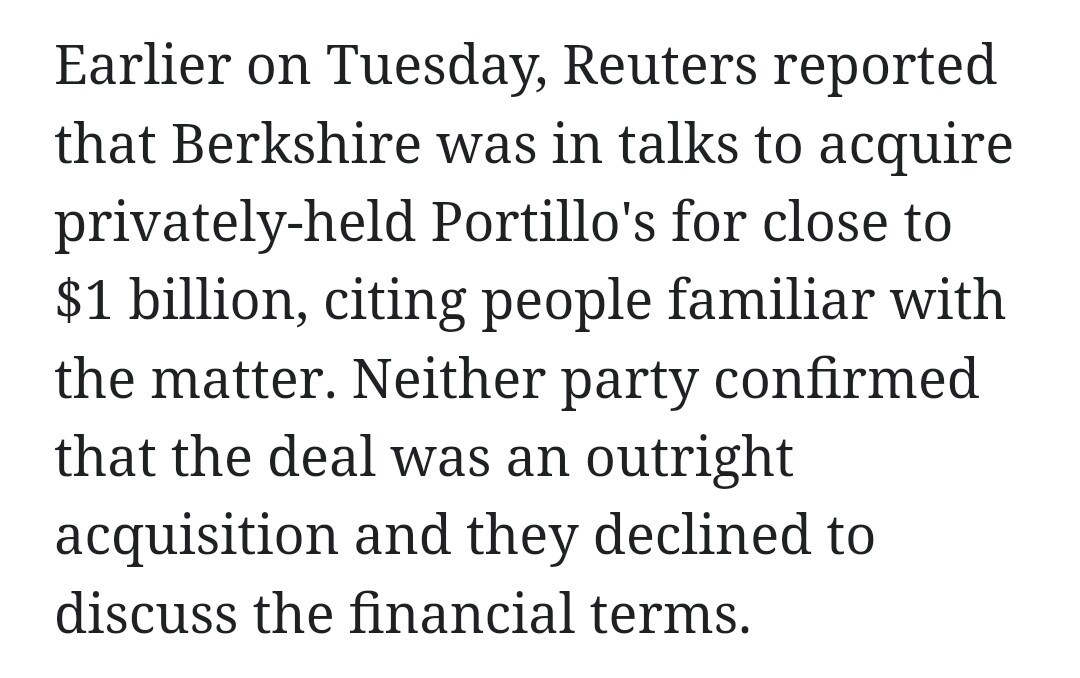
Let’s update this a bit. The company updated its strategy slightly on September 10th. Restaurant-specific sales are expected to drop by 1-1.5% from last year, and restaurant-specific operating margin (EBITDA) will be 21-21.5%. However, total revenue will grow by 5-7% due to new restaurant openings. Apparently, US consumer spending has decreased since the Q2 earnings release in August.

https://investors.portillos.com/news-releases/news-release-details/portillos-provides-business-update-highlighting-development

The positive aspect here is that the company aims to be free cash flow positive for next year. This means only 8 new restaurants will be opened next year, 6 of which are already under construction.

The conductors of the new strategy have apparently been new board members Jack Hartung (Chipotle’s former CFO) and Gene Lee (Darden’s former CEO). Portillo’s CEO said in an interview after the strategy update that these two men have been a blessing to the company. Of course, faith in turning the direction around is now needed :sweat_smile:

Portillo’s also appointed Denise Lauer as the new Chief Marketing Officer. She will start in the position on September 22, 2025. Marketing has a really big impact in the restaurant industry. For example, in Texas, Portillo’s initially had problems when new restaurants were over-marketed and people had to queue for hours to get in, then when marketing was reduced too much, the restaurants were “empty”.

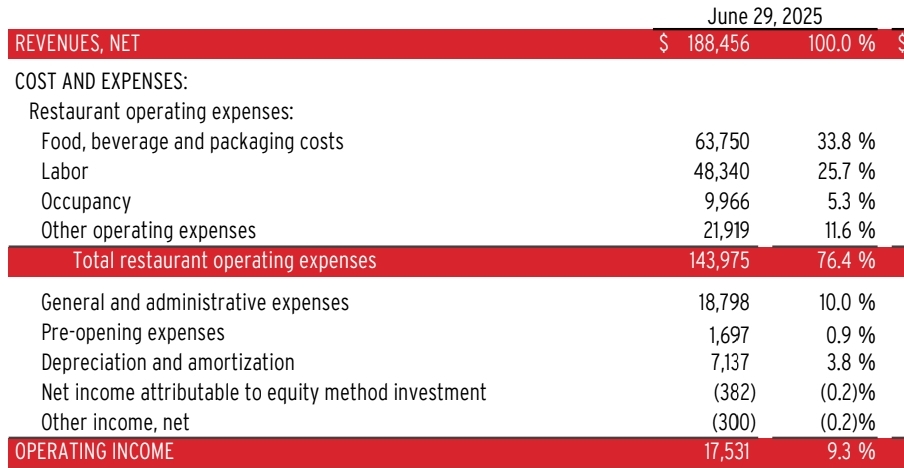
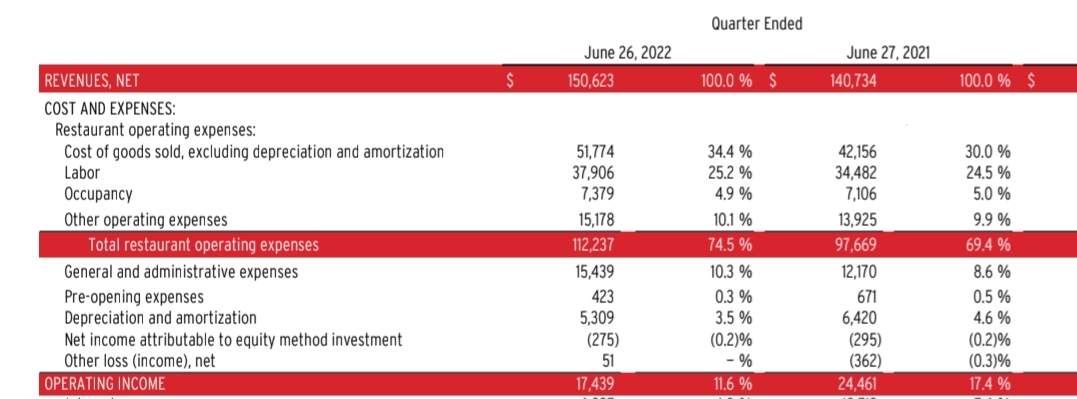
In my opinion, the new strategy is better than the old debt-driven growth. Portillo’s restaurant-specific operating margin (EBITDA margin) was still around 26.5% in 2020-2021, now it is 23.1% for the last 12 months. An improvement of just under 3% would increase the restaurant-specific operating margin (EBITDA) by approximately 20M annually. Below are screenshots from the Q2 results for 2021, 2022, and 2025. This means the company has room for improvement at the restaurant level. Of course, the biggest impact on the weakening result has been the increase in raw material prices, which has not been fully passed on to menu prices.

Regarding the company’s Tax Receivable Agreement (TRA) (343M), the company has to pay 85% of future tax benefits to the previous LLC owners. However, this is significantly more favorable for the company than a long-term debt of a similar size. These TRA payments are not mandatory if the company does not generate a profit. In addition, the TRA agreement can be bought out from the old owners for a sum less than its balance sheet value.

The stock’s valuation multiples have also fallen nicely, and the 12-month trailing P/E is approximately 14.

Berkshire Partners now owns only about 1.45% of the share capital, so there should be only one class of shares before the end of the year.

1 Like

CEO out. Good job from the board :+1:

https://investors.portillos.com/news-releases/news-release-details/portillos-announces-leadership-transition

1 Like