Philip Morris and other nicotine firms

I thought about opening a thread just for Philip Morris, but tobacco companies probably don’t need multiple threads, so we can centralize all discussion about the industry and its companies here.

I know that Swedish Match was to some extent popular among Finnish investors at one time. In 2022, Philip Morris made a takeover bid for it, and now the Swedish company is officially part of Big Tobacco. For Philip Morris, this acquisition seemed very “juicy.” The company integrated Zyn, the world’s most popular nicotine pouch, which complements Philip Morris’s Smoke-Free product portfolio.

Without further ado, let’s start reviewing Philip Morris as an investment.

Philip Morris International (PMI)

For an investor, the most important nicotine categories in PMI, in addition to traditional tobacco, are heated tobacco and nicotine pouches from the Smoke-Free products.
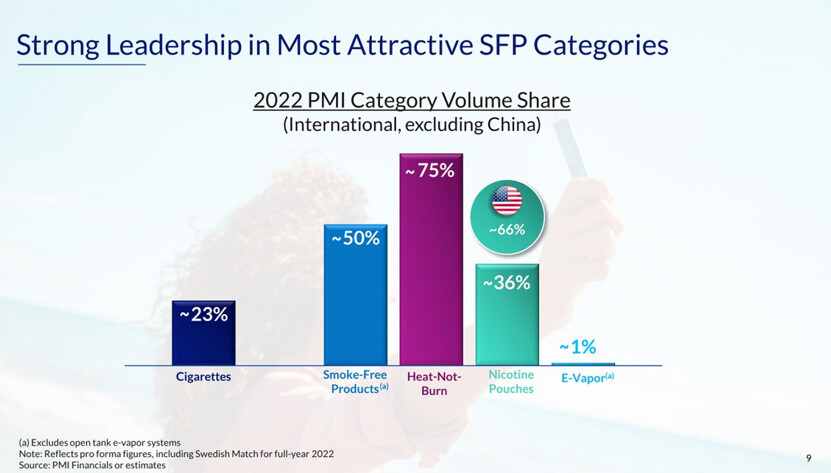
kuva

Let’s break down the company category by category:

1. Combustibles
Share of revenue: 63.5% (2023)

Traditional cigarettes still account for the lion’s share of PMI’s revenue. PMI’s well-known brands include Marlboro, L&M, and Chesterfield. The company’s market is pretty much the entire world minus China and the USA. In 2008, PMI spun off from Altria, at which point the entire US business was left with the old company and the new PMI retained the international operations.

PMI has a massive moat in the tobacco business. No new competitors are entering the industry (who would start a cigarette company in 2024?) and smokers are surprisingly brand loyal. Price increases are applied to cigarette packs annually, and it hardly affects market shares. In this industry, market shares are now divided and will likely remain at the same levels indefinitely.

Tobacco is famously a dying (and death-causing) industry that investors avoid. Tobacco manufacturers’ P/E ratios usually hover around 7–9; the industry is highly disliked, and the trend of ESG investing certainly doesn’t provide any tailwinds. From a business perspective, however, the industry is perhaps not as bad as one might initially assume. Philip Morris’s Combustibles revenue was 22.3 billion in 2023, with 3.5% growth compared to the previous year. The company also guides for revenue in this category to remain stable. The decline of the tobacco market is largely offset by price increases; PMI raised the prices of its tobacco products by 8.9% in 2023, and market shares did not decline. So, there is pricing power.
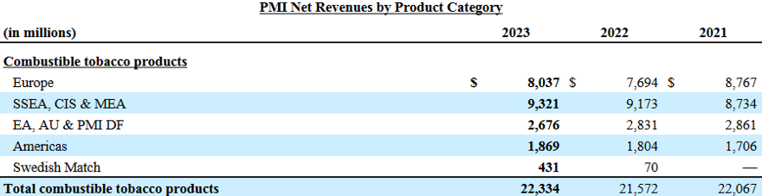
kuva

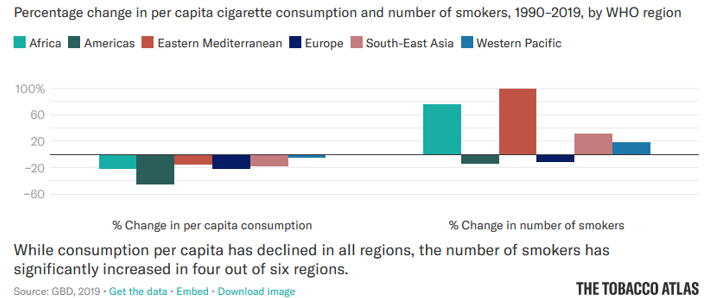
Furthermore, population growth has meant that even though smokers per capita are decreasing, the actual number of smokers in the 1990–2019 review period has actually risen. PMI also has no business in the States, which is a major market where smoking is declining sharply.
kuva

Surely other regions will eventually follow the development of Western countries, but these trends will likely turn quite slowly. Per capita figures in some developing countries are even growing due to increasing disposable income.

The industry is, of course, heavily regulated, and raising tobacco tax is politically very easy. However, smoking is so popular that it cannot be completely banned without creating a massive black market in its place.

2. Smoke-Free Products
Share of revenue: ~36.5% (2023)

PMI’s growth engine is their Smoke-Free products. The company’s goal is to grow this segment to represent 2/3 of the company’s revenue by 2030. PMI has two extremely popular category-leading products: IQOS and Zyn. With these products, PMI aims to capture the largest Smoke-Free categories, which are heated tobacco and nicotine pouches. For now, the revenue from IQOS is about 10x compared to Zyn. However, Zyn is on a strong upward trajectory, and nicotine pouches are expected to grow by far the fastest among all nicotine products.

- Heated Tobacco Products

HTP is a category where, instead of burning tobacco, it is heated. The idea is that the harms of tobacco can be reduced when the smoke it produces is removed from the equation. PMI’s own research has convinced at least themselves of these harm reductions, but it is important to note that, to my understanding, no third-party studies providing decisive evidence on the benefits of HTP have been conducted. What is certain, however, is that HTP users also expose themselves to dangerous chemicals in tobacco. The question is whether it is still healthier than cigarettes.

Either way, this category resonates with consumers, as it was a 10-billion-dollar business for PMI last year. As a benefit of HTP, it should be mentioned that (supposedly) compared to cigarettes, it doesn’t stink as much, and the smell doesn’t cling to clothes as easily. Additionally, second-hand smoke is also milder.
kuva

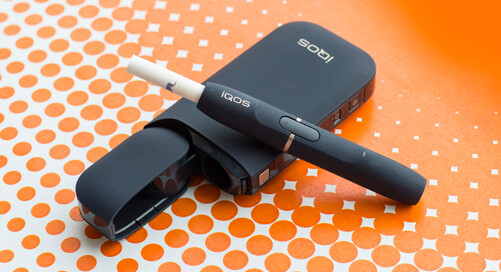
IQOS is the undisputed number one in the HTP category with 29 million users. Last year, it surpassed Marlboro in revenue and is now PMI’s highest-grossing brand. IQOS was originally launched in 2014 in the Japanese and Italian markets, from where it has now spread to 70 countries. Last year, PMI also bought the rights to the US market from Altria. The price tag for this was 2.7 billion, and on April 20th, PMI was allowed to start selling the product in the States as well. Success in the USA would be very profitable for PMI shareholders because, unlike in other markets, the success of IQOS in the USA would not cannibalize PMI’s Combustibles business at all.
kuva

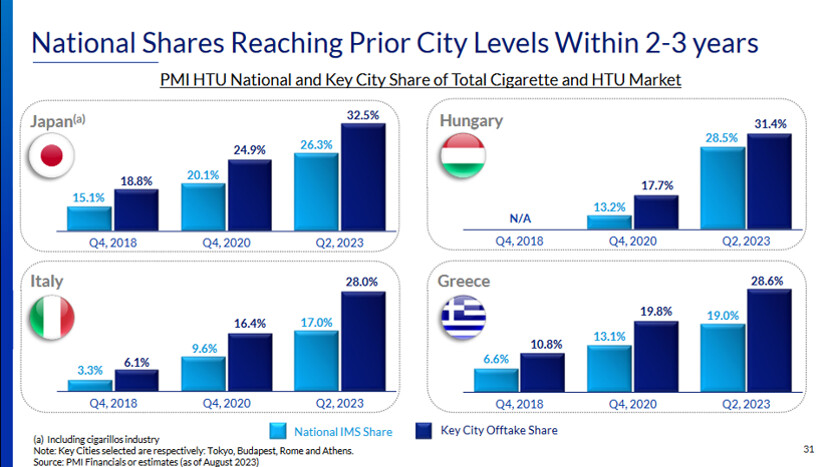
The expansion strategy for IQOS is quite interesting. PMI targets its product only at certain key cities, from which it has successfully made the market shares of the rest of the country match the levels of the key cities with a 3-year lag.

In my opinion, IQOS feels like an odd “in-between” nicotine product. It still uses tobacco, whose popularity is at a breaking point in the West and whose health risks are known. For me, it’s hard to justify why someone would want to switch a cigarette addiction to an IQOS addiction when there are clearly healthier nicotine products available as alternatives. Of course, I am not a smoker myself, and the numbers here speak for themselves. IQOS has been an incredible success for PMI.

- Nicotine Pouches

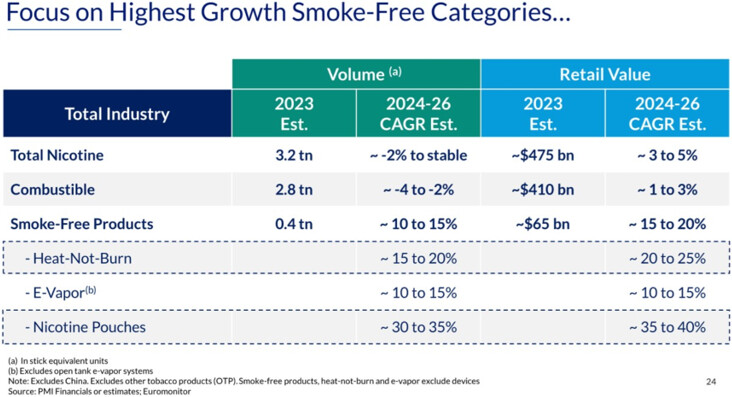
Although nicotine pouches are still relatively marginal compared to PMI’s other business, this category is the strongest grower in the coming years. The nicotine pouch category is expected to grow at an annual rate of up to ~35%, and if you have followed social media culture, this is not surprising.

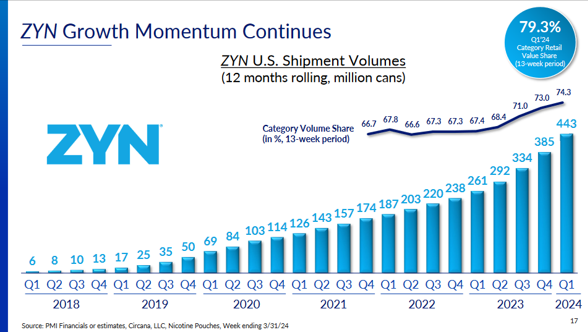
Nicotine pouches are a new, cleaner, and more stylish way to get hooked on nicotine. Zyn has broken through especially in the USA, where these cans are being torn off store shelves.
kuva

Growth has been very strong and is not expected to slow down. In much the same way as key cities showed the direction for the rest of the market with IQOS, the Western US seems to be a few years ahead of the rest of America in “Zynification.” So, there are still many new growth areas even within America. If the Nordic nicotine culture were to land in the States, pouches would replace other nicotine products in massive quantities. This development would suit PMI quite well, as one must still remember that PMI does not sell cigarettes in the States. Thus, the growth of Smoke-Free products would not cannibalize PMI’s own products.
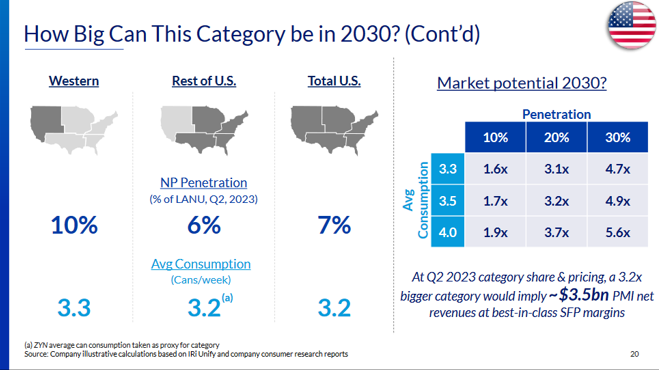
kuva
(LANU=Legal age nicotine user)

Zyn’s second growth lever is, of course, expanding into new countries. Currently, Zyn is only sold in a few countries, so there is certainly room for growth. In this expansion, PMI utilizes the infrastructure used for IQOS, meaning it aims to cross-sell Zyn cans to IQOS retailers as well.
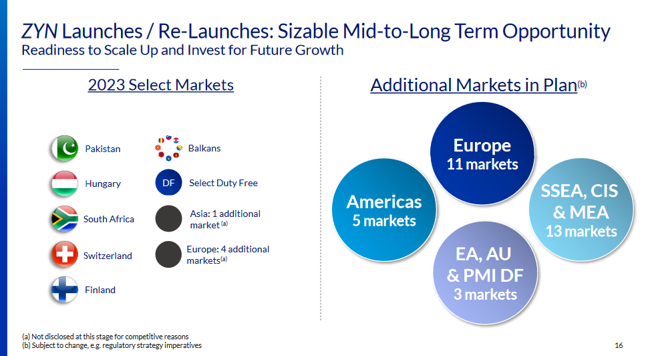
kuva

Philip Morris ValuationEV/EBITDA is ~13.5 based on this year’s forecasts. One can draw many conclusions from the valuation. If you compare it to the average S&P 500 company, it sounds cheap. On the other hand, if you compare it to the valuations of other tobacco companies, there is room for it to drop by almost half. Personally, I think that if PMI can churn out 10% earnings growth, there shouldn’t be much downside in these multiples, but you shouldn’t expect tech multiples for a tobacco company either.

My own back-of-the-envelope calculations expect the valuation to remain unchanged, with the investor’s expected return consisting of 10% earnings growth in the coming years and a >5% dividend. This probably won’t be a moonshot, but you can still achieve a good return with that.
kuva

The nicotine industry is very much dependent on trends, which can change quickly. Regulation can also come as a surprise and change the entire market overnight. A few years ago, vaping was massive, and Juul’s popularity in particular was halted by the CDC, which banned the most popular flavors entirely. So nicotine products change form, but the need is unlikely to ever disappear. Roughly one in five of us walking this earth uses nicotine, and humans seem to have some compelling need for this substance. From the perspective of the investment case, it’s critical that PMI continues to perform well in the most important nicotine categories, whatever they may be.

82 Likes

It was a pleasure to read such a carefully prepared opening post. Big thumbs up for that :+1:

I am also back on board the nicotine ship myself these days, although I ended up choosing British American Tobacco as my company. Years ago, I owned Altria, but I jumped ship when the company’s investments in Juul started to sink.

But let’s get back to British American Tobacco. Like Philip Morris (PM), the majority of British American Tobacco’s (BAT) profit still comes from traditional cigarettes. (BAT’s globally known cigarette brands include Dunhill, Kent, Lucky Strike, Pall Mall, and Rothmans, among others. In the United States, the most famous brands are Newport, Camel, and Natural American Spirit.) Sales of traditional cigarettes have been in a rather steep decline. In 2018, BAT still sold over 700 billion cigarettes, whereas last year sales were only 555 billion. That’s a drop of over 20% in just five years, which is a quite alarming figure, but through price increases and other maneuvers that all tobacco companies have to employ, they have managed to keep profits on a slight growth trajectory. With a quick Google search, I found PM’s corresponding figures. PM appears to have sold 740 billion cigarettes in 2018 and 613 billion last year, so they also saw a drop of just over 17% over the last five years.

In these “next-generation” products, BAT lags behind PM, and their share of revenue was 16.5% last year. While PM has ZYN, BAT has a corresponding product called VELO, which is also a tobacco-free nicotine pouch seeing massive global growth figures. ZYN is the absolute market leader in this field in the United States, while VELO’s market share is somewhere on the better side of 12%. Now that PM is having trouble meeting the massive demand for ZYN in the New World, let’s hope that consumers of “nics” (nikotiinipussit) increasingly find the competing VELO on the shelves :grin: However, it should be noted that VELO nicotine pouches are already sold globally, so growth is coming from everywhere. As Ipelius stated in the opening, global sales of nicotine pouches are growing at over 35% annually, and while sales were around a couple of billion globally a few years ago, they are predicted to be well over 20 billion dollars by 2030. There’s plenty of market to share, but I see the market being split mainly among the top two or three players.
In e-cigarettes, BAT’s brand product is VUSE. It is the market leader in the US with a 38.5% share, and globally its market share is slightly under 36% based on a quick search. I expect continued strong growth for VUSE, especially in the United States. The federal government is now seriously trying to clear illegal products off the market, which will create more room for growth for these FDA-approved products.

As a competitor to PM’s IQOS, BAT has GLO; in both, the principle is the same: tobacco is heated but not burned. Perhaps a slightly healthier or rather a less harmful product, maybe… GLO has just under 9 million users, which is about a third of the competitor’s IQOS.

BAT’s results for last year look ugly at first glance, but that’s because BAT took an accounting write-down on its traditional US tobacco business. The company announced that its tobacco brands there will become worthless over the next 30 years, and these values will be written down.

https://www.reuters.com/business/retail-consumer/bat-takes-315-bln-charge-us-cigarette-brands-2023-12-06/

BAT’s goal is for non-traditional tobacco products to account for 50% of revenue by 2035. On the other hand, these new businesses became profitable just last year, two years earlier than expected, so in a favorable environment, the goal could perhaps be reached much sooner.

The reason I ended up investing in BAT specifically, rather than Altria or PM, is, among other things, its global operations. Altria does not operate outside the US, and PM, for its part, does not operate in the traditional tobacco business within the US. Another reason is the share price, which has collapsed 30% over the last couple of years. The price collapse itself isn’t the reason, but rather that I see the price drop as an overreaction. Traditional cigarette sales are declining almost hand-in-hand for all companies, but these new products are growing at such a pace that I believe they will eventually replace the declining cigarette sales quite well. The third and perhaps one of the most intriguing reasons to choose BAT was the dividend. The dividend yield is currently ~9.5%, which is a truly wild figure. However, the company’s payout ratio is well under 60%, whereas other tobacco companies are steadily moving at over 80% or even higher, so I don’t see the company as a total dividend trap when profits have still maintained slight growth and new products are bringing more cash into the coffers at a rapid pace.

Edit: Corrected a couple of factual errors in the text now that I’m reading with fresher eyes.

Time will tell if I chose correctly, but I intend to stay on the buy side.

So, here are some of my own musings during the dark hours of the night. Now time to hit the sack and head to work in the morning..

42 Likes

Joining the discussion myself. The industry’s lack of sexiness and contrarian plays are always of interest. I haven’t made an entry yet, but I’ve been keeping an eye on the aforementioned companies. There’s also one player from the Nordics (Denmark).

Scandinavian Tobacco Group (STG)

Marketcap: 8 591 MDKK
Number of Shares: 86,000,000
Last share price: 99.90 DKK
Top 5 shareholders as of 15 March 2024:

Chr. Augustinus Fabrikker Aktieselskab >25%
C.W.Obel A/S >10%
Capital Group Companies, Inc >5%
Parvus Asset Management Europe >5%

Free float (excl. treasury shares): 58%
Source: https://www.st-group.com/investor/shareholder-information/

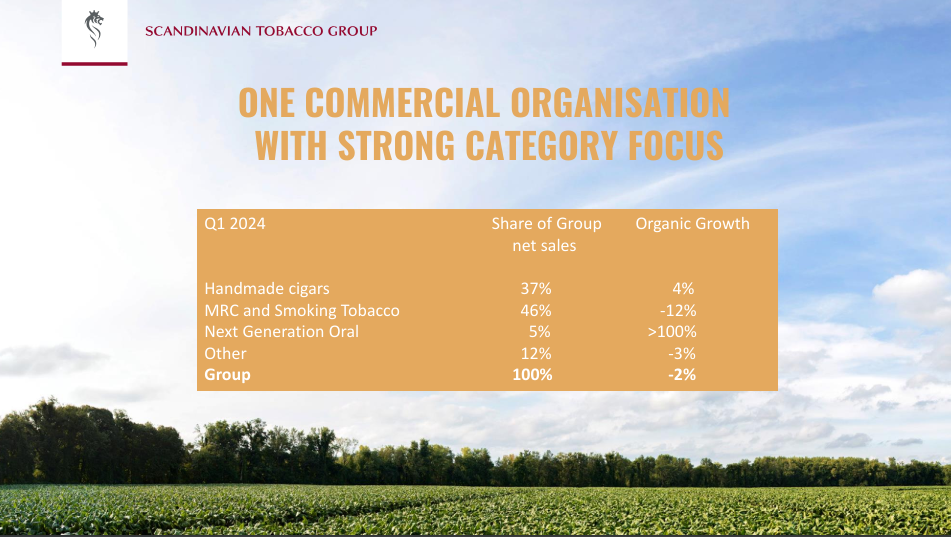
The company’s results are generated by the following categories:

  1. Handmade cigars (Meaning cigars: Cao, Cohiba, La gloria cubana, Macanudo, Partagas, and Petit)
  2. Machine rolled cigarettes and Smoking Tobacco (Meaning roll-your-own and pipe tobacco, as well as traditional cigarettes; there are many brands: https://www.st-group.com/about-us/our-brands/)
  3. Next Generation Oral (Nicotine pouches, Ström and XQS)
  4. Other (Brick-and-mortar stores in the United States. This category likely also includes some new ventures, but a quick browse didn’t reveal anything significant yet.)
    Screenshot 2024-07-06 10.35.25
    Source: Q1 2024 https://www.st-group.com/media/rmybwg3x/stg-q1-2024.pdf

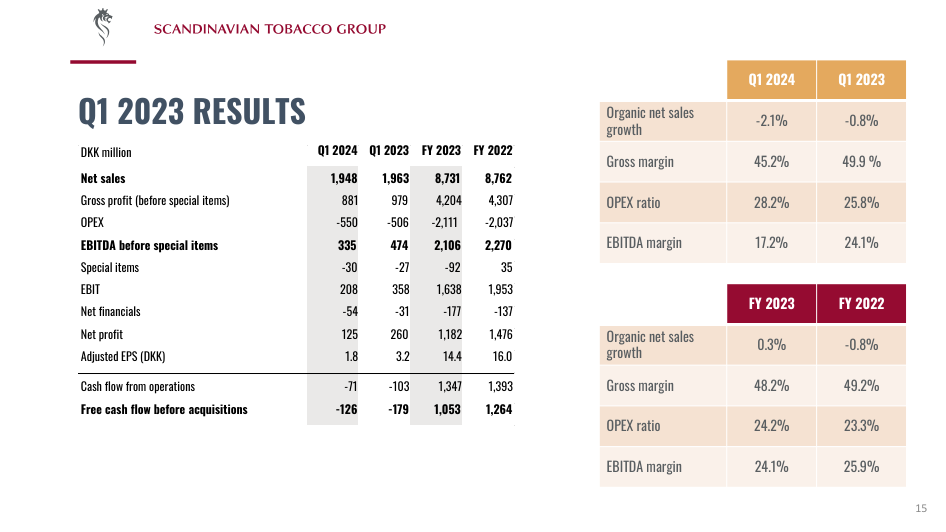
Q1 Results:
Screenshot 2024-07-06 10.37.48
Screenshot 2024-07-06 10.39.18

The question is likely how the company will grow/fare in the future. In the Q1 presentation itself, they provide the following guidance:

OUTLOOK
18
• Core categories to deliver flat low single digit annual net sales growth
• Growth enablers to deliver double digit annual net sales growth
• Acquisitions remain a key pillar of our strategy
• We adapt to fast changing consumer behaviour and create a ONE COMMERCIAL ORGANISATION
• Increasing investments to deliver stronger sustainable net sales growth will impact margins near-term
• At the end of strategy period, we expect EBITDA margin to revert towards 24%
• Updating our strategy plan beyond 2025 during the first half of 2025
• Beyond “Rolling towards 2025” we expect to continue to deliver annual net sales growth and like-for-like
annual margin enhancements driven by investments in the Growth Enablers and continuous cost efficiencies

I’ve only superficially looked into companies in the industry, but if STG interests you, it’s worth reading the Q1 24 report—it’s only 23 pages!

edit: the company has also been shopping in late June:
Scandinavian Tobacco Group A/S to acquire Mac Baren Tobacco Company A/S
https://www.nordnet.fi/markkinakatsaus/uutuukset/b1b29c6a-871f-4030-bd83-4c84997e2b33

9 Likes

Great opening and the related responses right at the start! These are needed.

My two cents:

As a benefit of HTP (Heated Tobacco Products), it’s worth mentioning that (allegedly) compared to cigarettes, it doesn’t smell as much, and the odor doesn’t stick to clothes as easily. Additionally, passive smoking is also milder.

Nicotine pouches are a new, cleaner, and more stylish way to get hooked on nicotine.

The success of new products will, in addition to health benefits, be largely based on getting rid of the stigma of smoking. Smokers are always banished from the scene with their vice, whereas the use of nicotine pouches (and why not snus too) isn’t always even visible. IQOS is a more visible solution and closer to traditional smoking, but even it is a less hated (and obviously safer) alternative. PM’s advantage is, of course, that the growth of new products doesn’t cannibalize cigarette sales quite as strongly as it does for its competitors, but it’s easy to estimate that a large portion of smokers will switch to the new option—that’s where the strength of the new products is tested, no matter where you sell them.

Zyn has broken through especially in the USA, where these cans are flying off the store shelves.

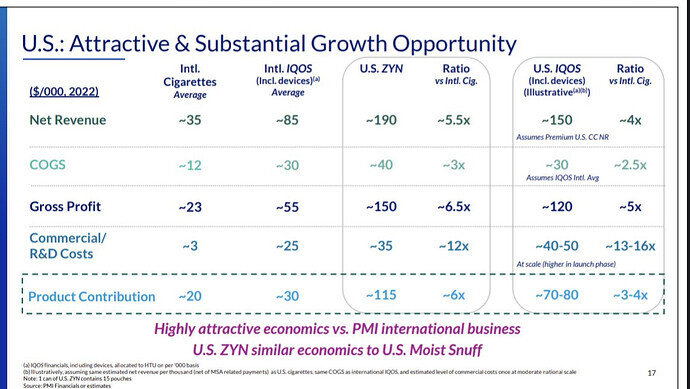
Is it too bold to say that the entire investment case rests on this card? Everyone can reflect on what an excellent product tobacco has been in all its characteristics—high margins, good customer retention, easy to distribute, limited competition, cheap AND possessing pricing power. Now, alongside Marlboro comes Zyn, which is not only less harmful but also possesses all the aforementioned qualities. A strong brand is also developing for it, partly aided by media reporting on Zyn’s availability issues (extremely useful when marketing is restricted by law). On top of everything, the product is also more profitable in terms of margins than traditional alternatives:

image

Zyn was already a product with an EBIT margin clearly over 40% while in the Swedish Match portfolio. The room for growth is not limitless, and at some point, tax authorities around the world will take their share and thus limit sales and scalability, but an EBIT % of 50+ is likely realistic. From that, everyone can calculate for themselves what kind of cash machine we have on our hands, as can sales are expected to reach the one billion mark in the coming years.

A PMI investor naturally has to accept that institutional money won’t even touch the company, even though the firm invests significantly in the illusion of sustainability. Therefore, as an investor, it’s good to remember that if problems arise with the new generation products, whether related to regulation or health risks, the bottom will fall out of PMI’s valuation very quickly. If the outlook remains as it is, this is undeniably an excellent dividend company with excellently predictable growth prospects. Investment recommendation? No, of course not.

Other Philip Morris observations that were missing from the opening:

  • The company operates a small pharma segment, which includes three drug development companies. These businesses are not significant to the company, and acquisitions made for a couple of billion have already been written down within a couple of years of the purchase. The business is loss-making, and the company has sought to sell part of its unit: https://www.cnbc.com/2023/09/20/philip-morris-considers-selling-stake-in-pharmaceuticals-unit.html. No wonder it hasn’t really taken off: would you trust a tobacco manufacturer to promote your health?

  • Even though the investment case revolves around being smoke-free, don’t think for a second that the company would only invest in nicotine pouches. A couple of months ago, Philip Morris acquired a minority stake in the Egyptian tobacco giant Eastern, with whom they have collaborated for a long time. I wonder if this will end up on the cover of the sustainability report? https://www.reuters.com/markets/deals/philip-morris-buys-147-stake-egypts-eastern-company-2024-05-22/

  • Every PMI earnings report contains long bedtime stories about the headwinds caused by exchange rates. A strong US dollar and a global business aren’t always the best possible combination. The growth of ZYN and IQOS will help in this area.

Could we get some writings from an Altria owner here as well? :slight_smile:

8 Likes

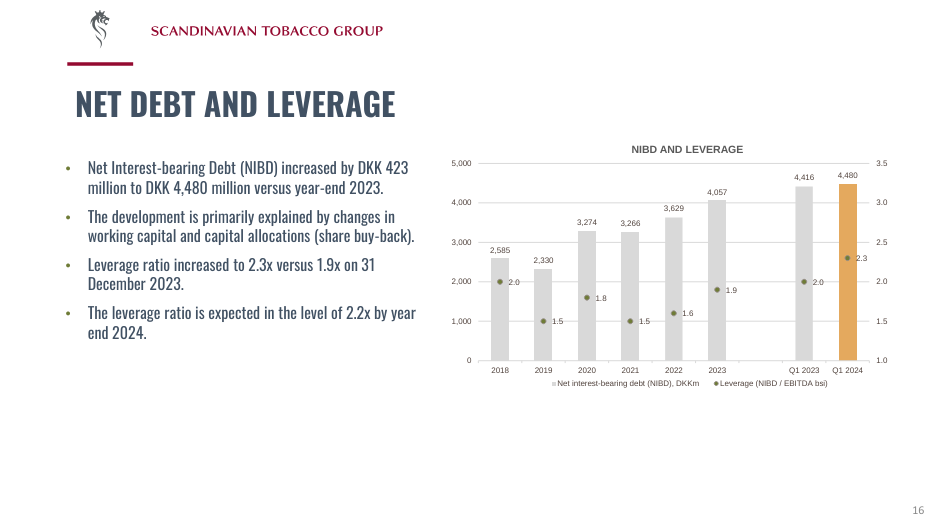
Everything is in order here, but I’m not a fan of the current debt burden at all. Or rather, debt isn’t an issue when the business is relatively stable, but a high dividend payout ratio significantly slows down debt repayment and limits the room for maneuver regarding share buybacks, etc. The company management aims to quickly bring the debt ratio down, but this relies mainly on earnings improvement.

10-11 billion in cash flow - 8 billion dividend - capex around 1.5 billion doesn’t pay off much of the 45 billion in long-term debt. The aforementioned figure is likely on an upward trend regardless of currency movements, so the room for maneuver should increase even without significant debt repayment. But this is already priced in. As long as the share of segments other than tobacco continues to grow, sales figures will soon grow quite handsomely at the group level.

At a quick glance, the guidance seems very conservative in all respects, at least after the first quarter. Total volume growth at the unit level is expected to be 0-1 percent, while after the first quarter, it was up by 3.5 percent. A slight negative impact is expected from EU regulatory measures, but overall, it’s a very small effect. I wouldn’t be surprised if the guidance were raised again. Looking at the targets of the previous strategic period, they were exceeded, so the forecasts are presumably conservative.

I haven’t looked at the company in a long time, but the pivot away from tobacco has been very strong in recent years. Perhaps even the dullest companies can reinvent themselves when forced to. It’s stoking the urge to buy in a dividend believer like me :slightly_smiling_face:

9 Likes

https://seekingalpha.com/news/4124538-philip-morris-invests-600m-in-a-new-colorado-manufacturing-facility-for-zyn-pouch-production

Specifically increasing ZYN capacity

11 Likes

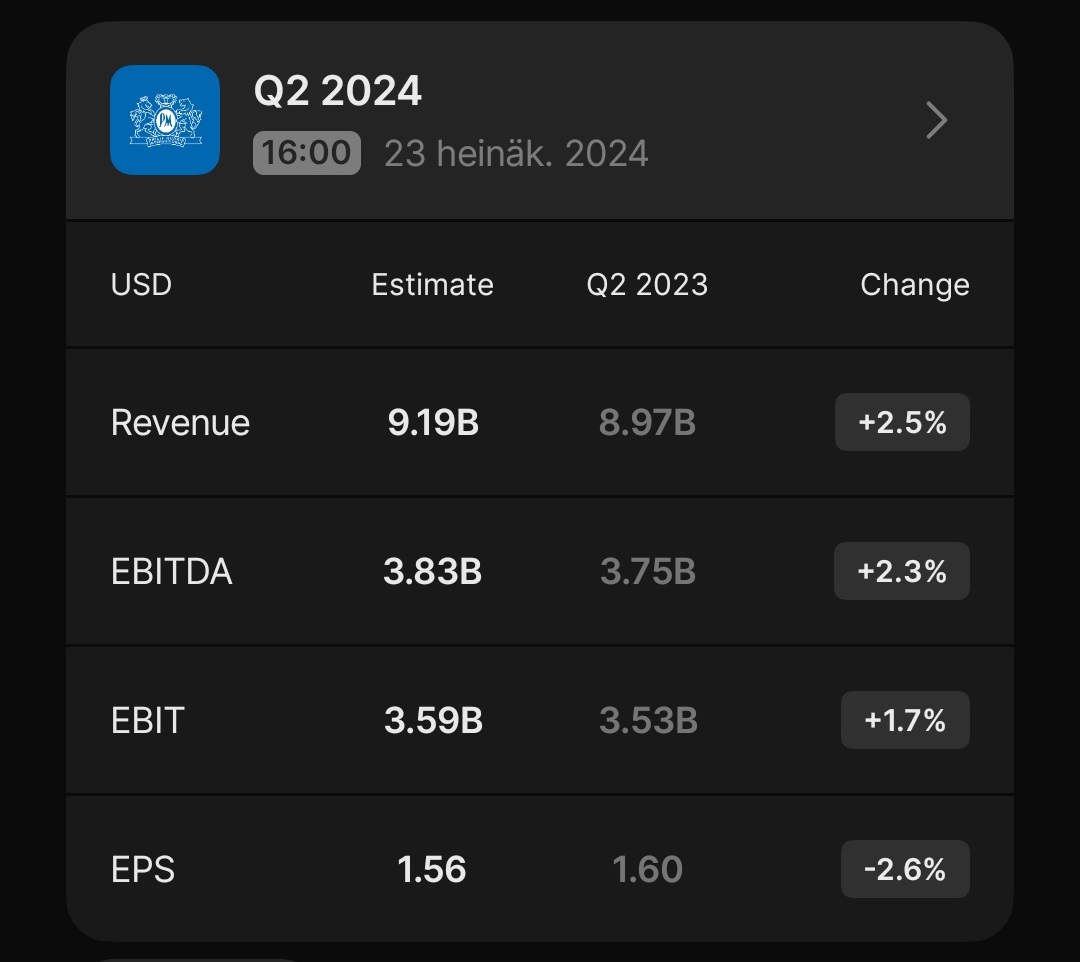
Philip Morris’s earnings report tomorrow; let’s post the consensus expectations here.

Screenshot_20240722-162803805

Of particular interest is how the company comments on the IQOS US launch. The current situation is that the older IQOS 3.0 device has FDA approval, but the newer ILUMA model is still awaiting a decision. PMI must therefore decide whether to launch IQOS immediately with the older model, or wait for the FDA’s green light for ILUMA. In itself, focusing efforts on Zyn in the US right now is probably not a bad idea, so if IQOS is slightly delayed, it wouldn’t be the world’s biggest disappointment. Of course, PMI paid nearly 3 billion for those rights, so for that amount, they would likely want to generate some revenue in the near future.

https://www.reuters.com/business/healthcare-pharmaceuticals/campaigners-target-philip-morris-flagship-heated-tobacco-us-launch-2024-07-16/

There have been dissenting voices from various organizations directed at the FDA, which could delay the ILUMA decision. However, it will surely be difficult for the FDA to justify why selling cigarettes and IQOS 3.0 is legal, but selling ILUMA is not.

5 Likes

Revenue 9.5B
Adj. EPS $1.59

Small beats on both lines. Additionally, the full-year 2024 guidance was revised slightly upwards. Testing for IQOS 3 will begin in the USA during Q4.

A solid-looking result overall

8 Likes

BAT has also released its half-year report:

Summary highlights from the report:
– Reported revenue down 8.2% (-3.7% at constant FX), driven by the sale of businesses in Russia and Belarus in September 2023 and translational FX headwinds
– Organic revenue down 0.8% at constant rates, mainly due to investment in U.S. commercial actions and negative impact of wholesaler inventory movements
– New Categories revenue down 0.4%; on an organic constant rate basis it was up 7.4%
– Expected H2 acceleration, driven by the roll-out of product innovations, our U.S. commercial actions gaining traction in the first-half of 2024 and the unwind of wholesaler inventory movements
– Revenue from Smokeless products now 17.9% of Group revenue, up 1.4 ppts vs FY23
– New Categories contribution increased by £165 million on an organic, constant FX basis
– Robust Combustibles pricing - AME and APMEA volume and value share gains offset by the U.S.
– Reported profit from operations down 28.3% (with reported operating margin down 9.7 ppts to 34.5%), driven by higher amortisation charges related to U.S. Combustibles brands and lapping comparator inclusive of Russia and Belarus
– Adjusted organic profit from operations down 0.9% at constant FX, adjusted organic operating margin flat at 44.9%
– Reported diluted EPS up 13.8% to 200.3p largely due to one-off credits related to ITC monetisation and net finance costs
– Adjusted organic diluted EPS up 1.3% at constant FX
– Partial monetisation of ITC stake enabled the initiation of a sustainable share buy-back programme, with £700m in 2024 and £900m in 2025

As a quick summary, currency headwinds and large one-off items from divestments and write-downs of “Combustibles” brand values are impacting the figures. In addition to a high dividend, there will be annual buybacks of approximately one percent for the next couple of years, funded by the partial sale of ITC shares.

11 Likes

Tobacco Insiderin BAT-analyysi H1/2024:

Sis. myös ohutta valuaatiovertausta PMI:

Undemanding valuation: Although Philip Morris International (PMI) has significantly of better-quality assets (brands, technology, people, etc.) than BAT, these two companies have comparable business scope & scale and financial delivery capacity. Obviously, PMI’s business growth performance is superior to that of BAT’s in every metric. Nevertheless, based on the last closing prices, PMI is worth $176 billion – 2.3x BAT ($77 billion) – and, if BAT delivers its promises, the valuation gap between the two companies would become less pronounced over the long-term.

7 Likes

image
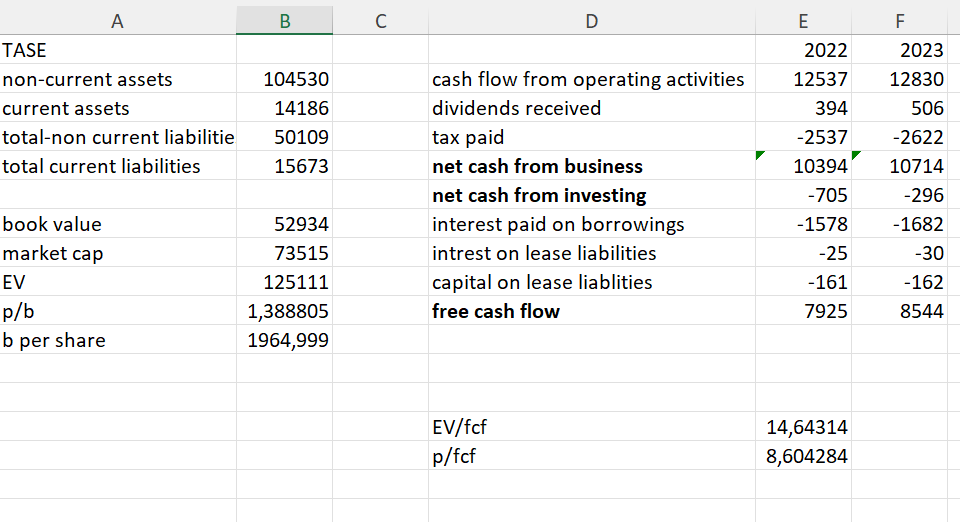
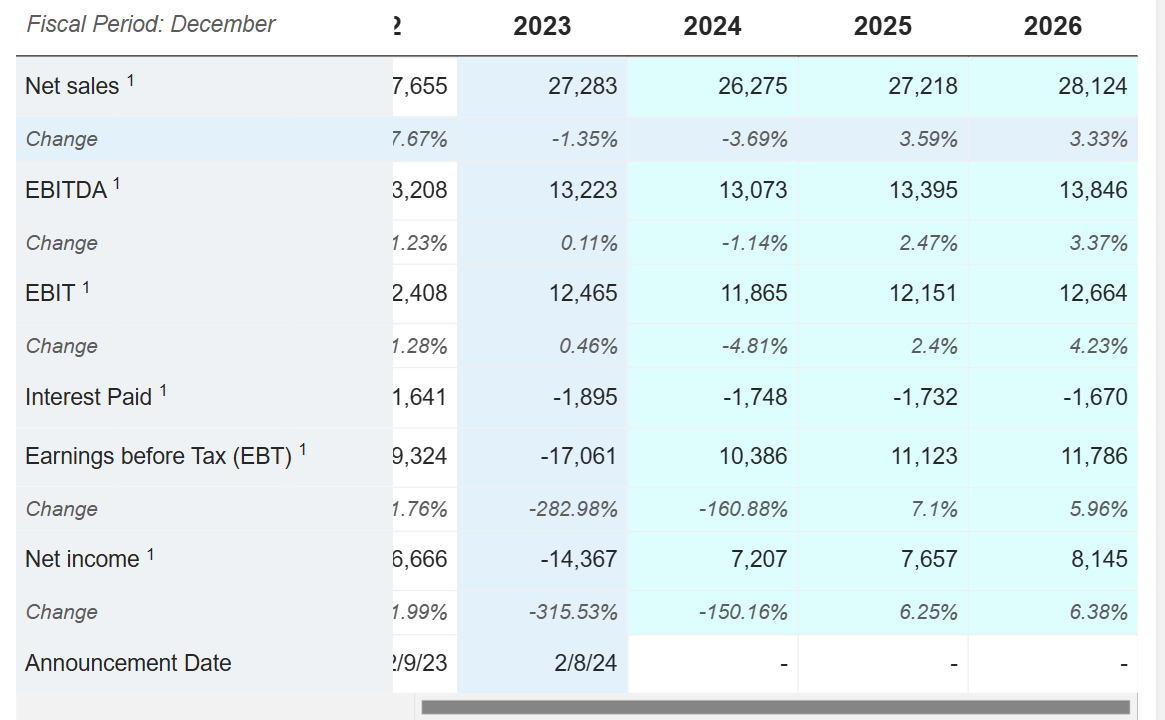
BAT’s valuation is attractive with a P/FCF of 8.6 and EV/FCF of 14.6, even when accounting for the debt burden. Analysts predict slowly growing earnings and revenue for BAT (source: Marketscreener).
image
In the longer term, I believe the investment case culminates in two things: how slowly the cash flows from tobacco fade and whether they can be replaced with new products (the share of new products in last year’s revenue was a reasonable 16.5%).

6 Likes

https://seekingalpha.com/news/4148942-philip-morris-raises-dividend-by-38-to-135

Looks like the dividend is going up a bit.

Gotta wonder again, where do all these dividend increases keep coming from :face_savoring_food:

1 Like

I noticed that @Atte_Riikola is at least to some extent on board with the Swedish snus/nicotine pouch retailer Haypp Group.

I’ll nudge the gentleman a bit, as it would be nice to hear Atte’s thoughts on the company and the investment case.

I’ve come across the company before myself, but the razor-thin margins in that e-commerce sector were a bit of a turn-off (investing in Verkkokauppa.com has left some traumatic scars).

1 Like

The main idea in this case was mostly that since it seems quite many people are stuffing nicotine pouches under their lip nowadays and seeing the growth figures for this category, I wanted to be involved in this trend in some way. Haypp’s name came up in some discussions at the office, and I then did a superficial look into the company. There isn’t really any major analysis behind this, but rather a gut feeling that high growth potential + reasonable valuation could offer good returns in the coming years. I consider regulation to be the biggest risk and partly a black swan, and lately there has indeed been some concerning news regarding this, which has also hit the share price.

In my own research process, I’ve read the company’s interim reports to some extent, but the best overview came from watching this CMD. Based on the message from the Capital Markets Day, my feeling was also strengthened that this isn’t just a regular e-commerce business, and therefore I wouldn’t necessarily transfer “Verkkis” (Verkkokauppa.com) traumas directly to this case :smiley:

https://www.inderes.fi/videos/haypp-group-capital-markets-day-2023

Additionally, I’ve read this gentleman’s blog posts:

https://invariant.substack.com/p/haypp-group-nicotine-pouch-trend

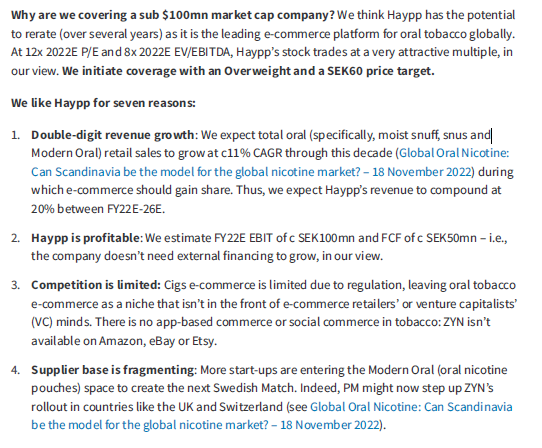
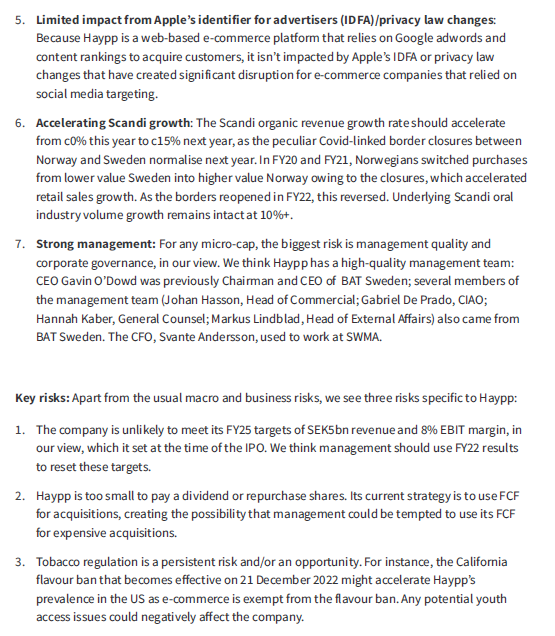
I’ve also managed to peek at Barclays’ analyses on Bloomberg (Blomma). Kudos to them for starting coverage on Haypp in late 2022 with a very bullish view when the stock was trading at just over 20 SEK. Here are the main points from the initiation of coverage:

image

image

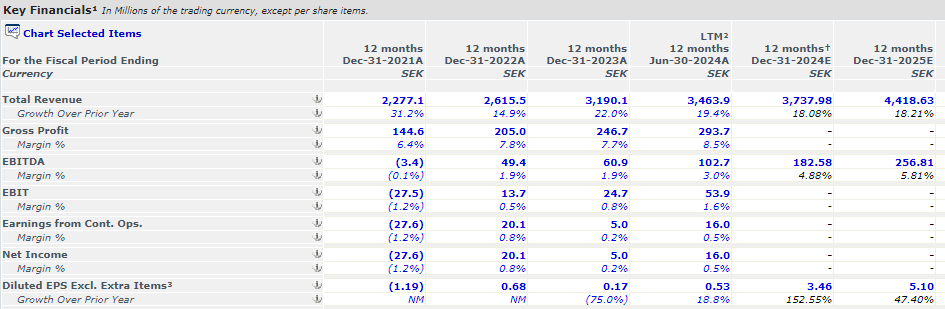
The analyst consensus forecasts for the coming years found on Capital IQ look like this:

image

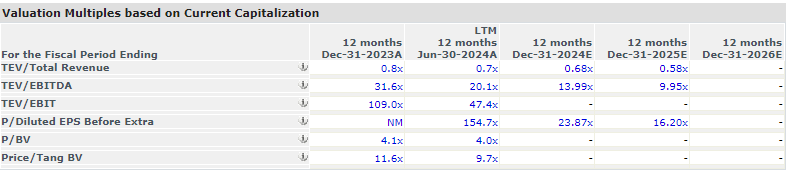
And the valuation multiples look like this:

image

I’d see that if the company can continue to churn out 15-20% growth in the medium term and the margin gradually continues to improve as economies of scale kick in even in newer markets, then this could roughly be priced at least at P/E 20x with that earnings growth profile. Of course, on the flip side, one could argue that for ESG/regulatory reasons, the multiple will drop low, as has been seen with many other companies in this industry. So if next year’s forecast is met, the stock would have a nice amount of upside on a one-year horizon with these specs. Of course, it’s possible that these latest developments on the regulatory side will cut the forecasts… But in the big picture, the nicotine pouch trend seems to be still quite in its early stages and Haypp is in a good position to benefit from it.

15 Likes

I came across this podcast: Spotify

The guest has some rather unconventional opinions regarding the health effects of tobacco, but despite them, the podcast does a solid job of covering the industry’s regulatory dynamics and history. The podcast focuses mainly on traditional tobacco products, which receive less attention these days, but there is also some talk about newer products mixed in. In my view, understanding the regulatory history of traditional products can help an investor consider the regulatory development of new products and its impact on companies, as regulators themselves likely look in that direction as a natural starting point.

3 Likes

British American Tobacco is launching a version of Velo nicotine pouches for the US market where the nicotine is of synthetic origin and not extracted from tobacco leaves.

Hard to say if this is a cheaper way to produce the required nicotine, or if it’s a rebranded product with even less of that “evil tobacco”. Either way, let’s hope users continue to enjoy it in increasing numbers and keep those upper lips packed :grin:

13 Likes

Philip Morris International Reports 2024 Third-Quarter & First Nine-Months Results; Raises 2024 Guidance for Reported Diluted EPS to $6.20 - $6.26 and Adjusted Diluted EPS to $6.45 - $6.51

Third-Quarter Reported Diluted EPS grew 49.2% to $1.97, Adjusted Diluted EPS increased by 14.4% to $1.91 and grew by 18.0% excluding currency

Pussit tekevät kauppansa ja se alkaa hiljalleen näkymään numeroissa, kun valuuttakurssit eivät ole enää niin pahasti sotkemassa

Kukapa olisi hetki aikaa sitten uskonut, että röökifirmalta saadaan näinkin mukavaa kasvua

11 Likes
  • ZYN’s dominant market share remained unchanged in the US
  • IQOS continues double-digit growth
  • All-time record market share for Marlboro
  • Analyst estimates beaten on both lines
  • Full-year guidance was raised

All is well on the PMI train.

6 Likes

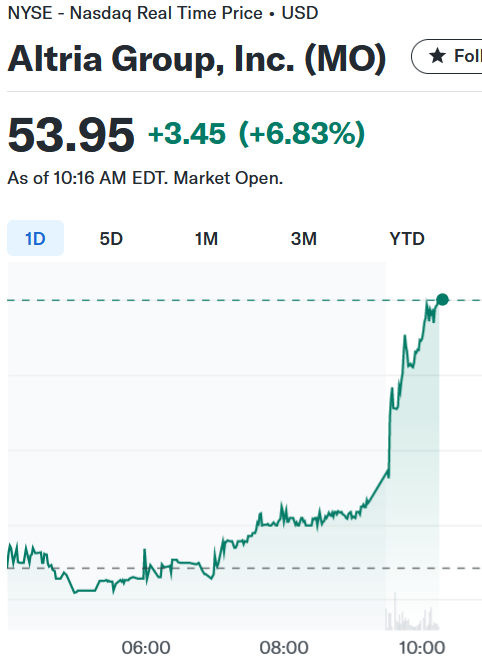
Altria had a great quarter (1.38 USD vs. 1.35 USD) and luckily, the stock price in America is following the results :wink:

https://finance.yahoo.com/news/altria-reports-2024-third-quarter-110000567.html

image

10 Likes

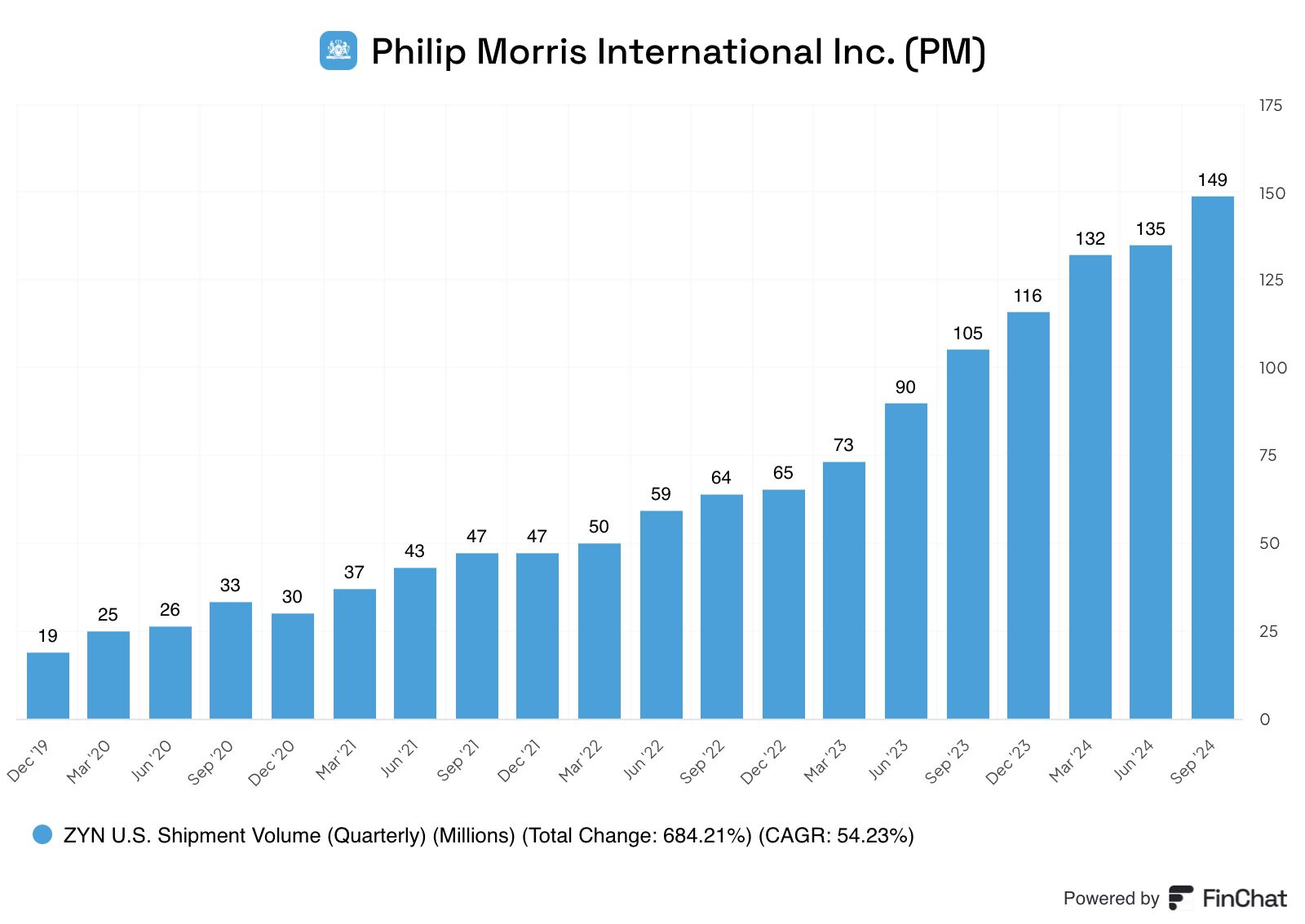
Below is an interesting chart regarding this company.

https://x.com/finchat_io/status/1856459649161273795
image
image


The FDA’s new decision on lower-risk claims for General Snus products will likely benefit Philip Morris.

This FDA decision allows these snus products to be marketed as less harmful than cigarettes, which may strengthen Philip Morris’s market position in the United States.

5 Likes