Cosmetics industry - profit from vanity?

The cosmetics industry is such a massive entity that I believe its companies deserve their own thread. The reason I’m personally interested in the industry is its defensiveness combined with meaningful growth prospects. Going by gut feeling, without fact-based data, I would say that the baby boomer generations use much fewer skincare products. This is likely obvious if you compare a generation that washed about once a week on Saturdays to subsequent generations who shower once a day. Consumption is very different. Additionally, men’s cosmetics have clearly gained momentum over the last 10 years, and I see that demand growing as well.

Then to the problem. In the 2000s, the cosmetics industry is dominated by a small group of multinational companies founded in the early 1900s. The French L’Oréal is the market’s oldest and most extensive cosmetics company, with exposure to all segments of the industry.

I’ll quote another forumist @jps, who I think summarizes the current market split well:

The cosmetics industry is globally dominated by seven conglomerates that hold over 180 leading cosmetic brands. After the thirteen largest, only scraps are left of the global markets for others, even though one can still do very large and profitable business in those leftovers.

Current major players are richly valued and therefore don’t pique interest (though the product portfolio would be attractive).

L’Oréal - P/E 35, dividend <2%
Estée Lauder Companies - P/E >40, dividend <1%
Beiersdorf - P/E >30, dividend <1%

However, there are plenty of other players in the market; here are a few examples of different types of operators in the value chain:

elf Beauty Inc - Founded 2004, profitable growth from the US, growth company.
Coty Inc - 77 own brands and additionally cooperation with large players. Revenue declining and some losses in recent quarters.
Ulta - P/E around 20, cosmetics retail, not a manufacturer.

As I understand it, social media marketing and online product sales have grown strongly, and at least L’Oréal has invested in this. I believe that in an industry where brand significance is everything, companies that win visibility on social media are in a strong position. When distribution channels are also established, especially in developing countries like India, these companies could well get their share of the conglomerates’ pie.

In this thread, I would hope for discussion on which players will potentially take market share from the giants (or eventually be bought by them) and on what grounds. Women especially would surely have the insight I’m looking for in this thread, and I would greatly appreciate it if someone had the time to comment if my reasoning is way off or if a certain product/company/marketing channel is currently on the rise.

ps. feel free to suggest a better title! :smiley:

17 Likes

I would also include pharmaceutical companies that also produce cosmetics. For example, Johnson & Johnson intends to spin off this segment into a new company (Kenvue) later this year, or AbbVie, which now owns Allergan, the manufacturer of Botox, among other things.

Compared to companies focusing purely on cosmetics, their valuation levels are significantly lower, though growth is also slower.

3 Likes

As a typical guy with an engineer-like mindset, when approaching this industry, creating a whole vision feels very challenging. Thinking through megatrends, Asia’s population growth and disposable income for consumer products are increasing, and cosmetics along with them, much like the sales of J&J toothpaste. For a lazy Westerner, it’s a sobering thought how few people in the world brush their teeth or use toothpaste. The market is growing, but figuring out who will grow within it is really difficult to grasp.

In Asia, beauty trends differ from those in the West. There are country-specific differences in which Western trend breaks through and is worth aspiring to. Do they want to be snow-white or tanned, and are the eyes almond-shaped or cat-eye flicks? After all, in most of the world, pairing up determines the standard of living more than one’s own choices regarding education, career, etc.

In the West, on the other hand, trends seem to change so fast that no one can keep up. Everyone is “responsible” (sustainable), and massive amounts of currency are poured into advertising, while superlatives are simply added to the same old products. One variable that has caught my eye is these social media celebrities who push a cosmetic line under their own name (Kylie Jenner, Rihanna, etc.), and Forbes reports them as being worth billions. The biggest beneficiary is the celebrity who, with their own brand, scoops up the money as it passes by.

This brings us to these brands. For my long-term portfolio, companies whose product portfolio is relatively narrow and focuses only on their legacy brands that are becoming classics would fit as value growers. This allows for massive margins and loyal customers. Every house tries to create these classics, so thanks to @massimo that there is now a thread on the Forum where these future “Voxturs”, “Hyzons”, and “Kamuxes” of cosmetics are starting to surface :yum:

5 Likes

If anyone knows if there’s a company like Deciem listed, for example, give me a shout. I was wondering what kind of liniment bottles the wife was bringing home (retinol drops, hyaluronic acid) and was amazed how these can be sold in stores for under a tenner. Just the active ingredients, no brand premium or other useless fragrances. Disruptive, I say.

1 Like

Deciem is a brand owned by Estée Lauder, I think? It belongs to that category that is already a bit too big and expensive for my own portfolio.

It’s undeniably tricky. :smiley:

For example, Lakme, which is an Indian cosmetics manufacturer, is already massive just based on its domestic market sales. It is part of Trent Ltd. If you could catch wind of a product that starts spreading via something like TikTok in a country the size of India, it wouldn’t take long before a larger player buys it out. The keywords can probably be found in sustainability, accessibility, and youth trends.

Top Cosmetics Brands in India- Check All Details of the Brands

  • Lakme.
  • L’Oreal Professional.
  • MAC.
  • Maybelline.
  • Colorbar.
  • The Body Shop.
  • Bobbi Brown.
  • Revlon.
1 Like

Based on this thread and my spouse’s praises to friends about The Ordinary and It’s Skin products, I started researching the companies behind them. Unfortunately, The Ordinary is owned by Estée Lauder, which feels quite expensive.
This It’s Skin is very interesting indeed; it’s a small Korean manufacturer and a brand already known worldwide. The company, It’s Hanbul, is unfortunately private, so I’ll have to remember to keep an eye on it in case it goes public one day. The company’s figures can be found on Yahoo, and I’ll have to return to them in more detail in the future.

2 Likes

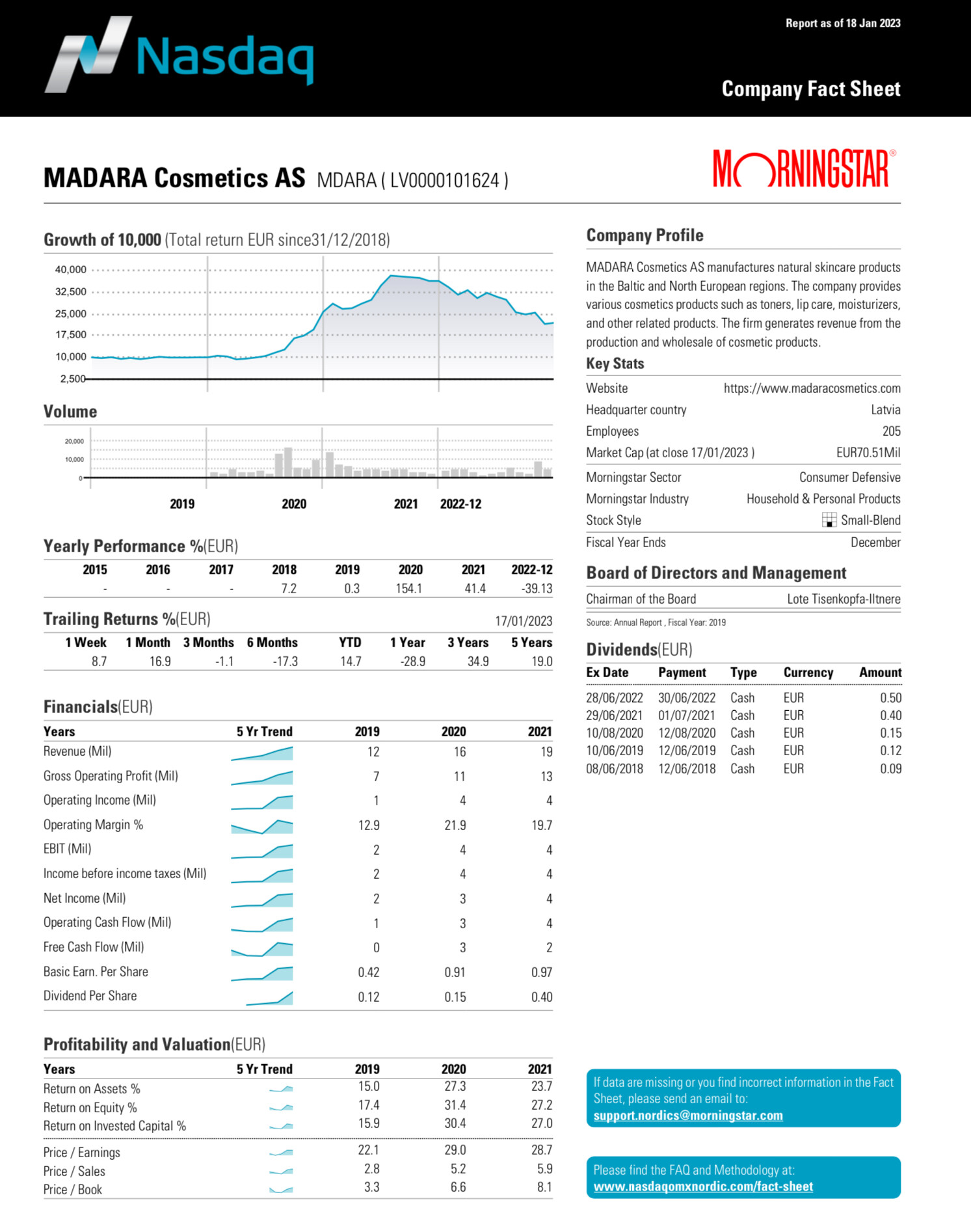
If you have access to the Baltic stock markets, Madara Cosmetics, a smaller natural cosmetics manufacturer, can be found in Riga on the First North Baltics list https://www.madaracosmetics.com/lv

Finnish Transmeri owns 22.9%

2 Likes

Thoughts on cosmetics and consumer behavior during a recession (including “the lipstick effect” and companies like L’OREAL + Estee Lauder in the spotlight) in my post :slight_smile:

6 Likes

An interesting company caught my eye over there, one I’ve had some professional dealings with in the past: Moët Hennessy Louis Vuitton (ticker LVMH). My own impression is that this company emphasizes quality and high standards in everything they do, from the production line all the way to the customer. It’s also interesting that by investing in this, you gain exposure to cosmetics, high fashion, champagne, and cognac with a globally competitive portfolio. It looks like the perfume and cosmetics segment is still growing.

This isn’t cheap either, but it’s seen nice growth with good margins, and I believe that in this case, operating across several different markets is only a plus. I’ll have to look into it more when I have more time. :slight_smile:

1 Like