Stock picks for the second (corona) round

This can be removed if there was already a suitable thread here. I thought I might get some good ideas for companies worth picking up now for a second wave of coronavirus (so imagine that the second wave comes, and quite strongly, with more lockdowns, etc.). The reasoning could be, for example, that the business didn’t suffer much from the first wave, the business might even benefit and grow thanks to coronavirus, the stock price will dip, but it will almost certainly recover because blah blah blah, etc.

So, if you can briefly mention these companies with short justifications, or you can also reflect on the past March dip and the time since then. The forum is probably full of these scattered here and there, but it would be great if people would briefly share them here. Hearts will indicate if someone’s suggestion is excellent, so give likes to those you agree with. Maybe in the end, we could get statistics on which company gathers the most “votes”.

5 Likes

I’ll add my first one.

Zalando. It’s already doing quite well, but the outlook is strong. I won’t buy at the current price, but I’ll keep an eye out. If Corona (or something else) causes a big enough dip, it will definitely go into my portfolio.

Old link: https://corporate.zalando.com/en/investor-relations/en/news-stories/zalando-expand-platform-business-support-brands-coronavirus

https://www.boerse.de/nachrichten/ANALYSE-FLASH-Deutsche-Bank-hebt-Zalando-auf-Buy-Ziel-84-Euro/29517794

5 Likes


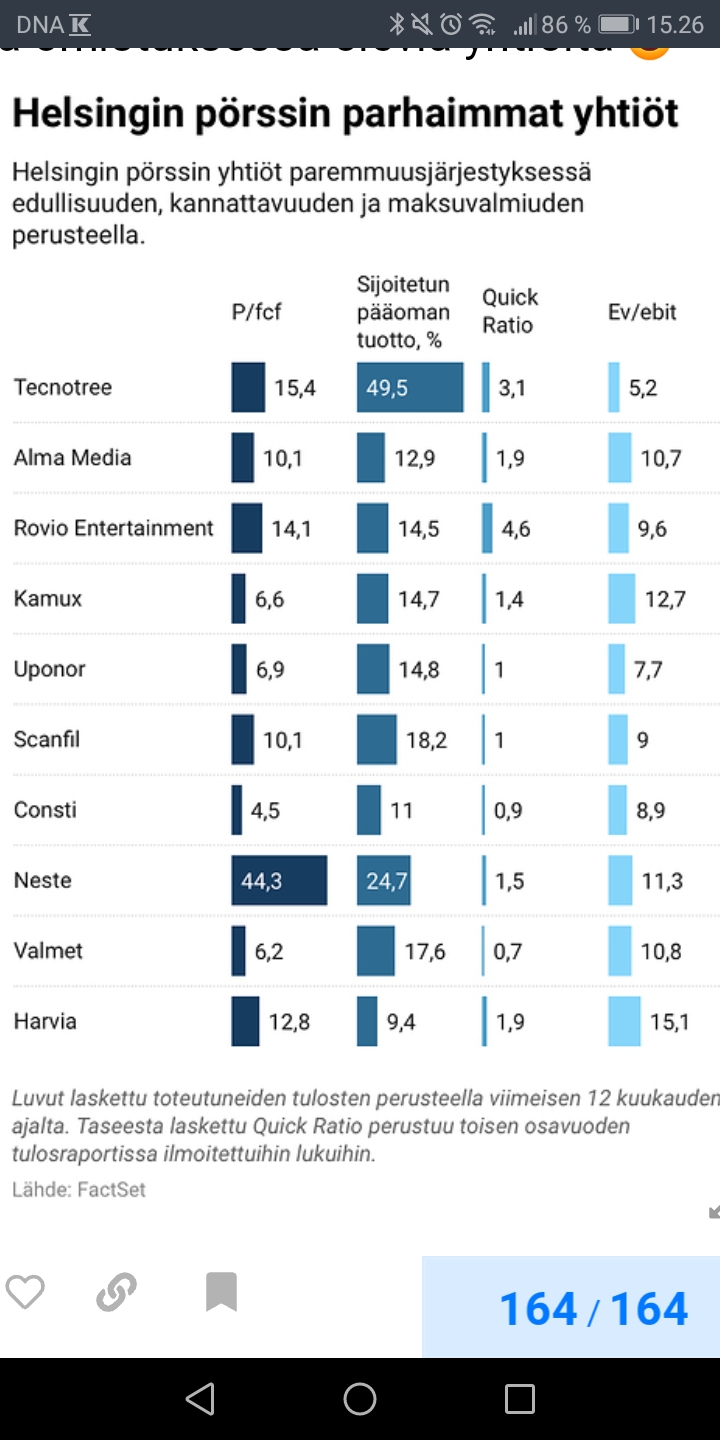
Yes, it’s Tecnotree. The turnaround has happened and the key figures are excellent.
And yes, it benefits from the corona.

4 Likes

I’m going with a pretty grassroots analysis here, but I’ve only done some casual polling among my acquaintances (mostly men aged 25-45) and a rough scan of discussion forums to see how the pricing of Sony’s new console and the upcoming game lineup revealed in the press were received, and the reception seems almost like Tesla hype. A friend had already inquired about these consoles in stores, and it seems all the pre-orders he checked were ‘sold out’. Then, over the weekend, while having coffee with another friend, we watched a compilation of trailers for upcoming games, and even this “max one game a year, and that too from the bargain bin” guy started asking when it would be released and at what price.

Last spring, I had planned to invest in Sony because I had read that the year preceding the release of new consoles has consistently been a growth year for console companies (source: I no longer remember which magazine I read it in, but possibly Kauppalehti), perhaps with the exception of the PS3, which was sold at a significantly higher price than the competing Xbox released at the same time, leading to a loss of market share. However, the pandemic altered my investment plans, and I completely forgot about Sony. Now, I haven’t really been following Sony, but I should check their quarterly reports and calculate how, for example, Q2 went for the company in other aspects during the pandemic, and how large a share of the company the console side covers. The marketing for the new console will, of course, take a large chunk, so I should probably dig up some estimates of what it has cost during this unusual time, as, for example, huge gaming E3 conventions where much of the marketing is done were not held. I can say this much about marketing costs: Sony’s management announced in the summer that they want to sell the console as cheaply as possible, but they didn’t yet know the marketing costs, which is why the pricing of the upcoming console was delayed. Thus, one could imagine that marketing didn’t consume too many costs, as the now-released price has been quite well received, based on what I’ve read.

In any case, the release date of the new console is in November, and if some kind of broader lockdown occurs, and it doesn’t affect Sony’s factory operations and thus the availability of the console too much, I would assume that the release date for a new generation console is nearly perfect.

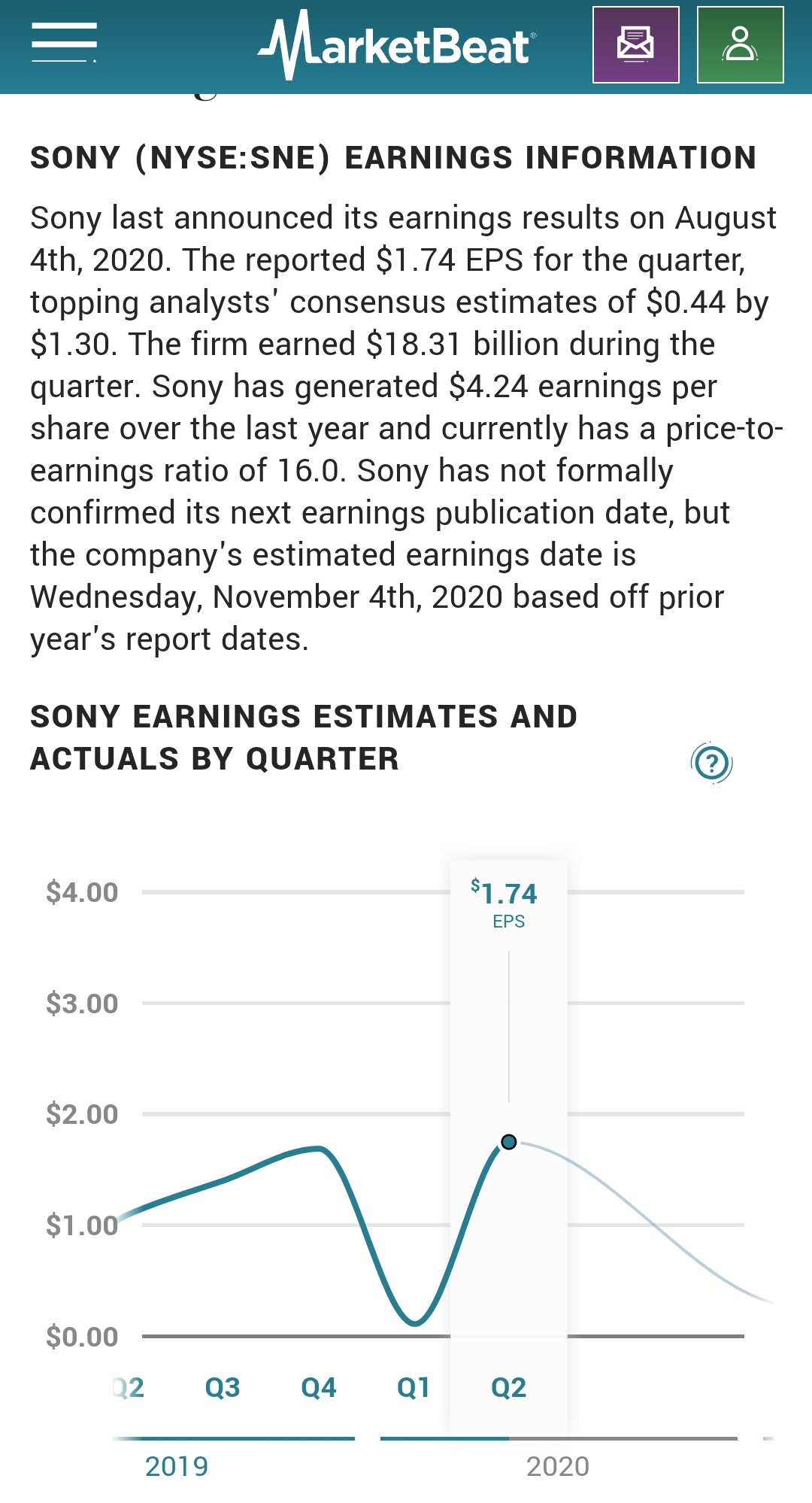
If anyone has been following Sony’s results this year, or has any counter-thoughts, please let me know, because I only started thinking about whether I should start examining the numbers before the next quarterly reports last week. Q4 2020 could show pretty good results during the pandemic.

Edit. I also looked at some rumors before hitting the post button, and apparently there’s a rumor circulating that Microsoft might be buying the game studio Bethesda. That’s undeniably a game-changing move, because if Bethesda started pumping out Xbox exclusive games, it would be a pretty big blow to PlayStation. If someone doesn’t know about video games, that game studio has the world’s buggiest but at the same time immensely popular game selections. And if anyone is at all interested in Sony’s shares now, I can try to find out more when I have more time. The stock seems to be at ATH prices, so we’re not talking about digging through bargain bins from the pandemic era.

Edit2. I also linked a screenshot of the first target price that came up with a quick Google search to add some color to the message. It’s nice to see that when I started writing this message based purely on guesswork, and immediately thought of PlayStation lockdowns, it turns out some real analyst also likes the stock.
6 Likes

It doesn’t matter if it’s a Sony console, a Microsoft console, an Nvidia graphics card, or an AMD graphics card, everything is flying off the shelves in the current global situation.

Similarly, Microsoft has invested quite a lot in acquiring new game studios, so Xbox should have the means to challenge Sony (the last generation can be counted as a Sony victory).

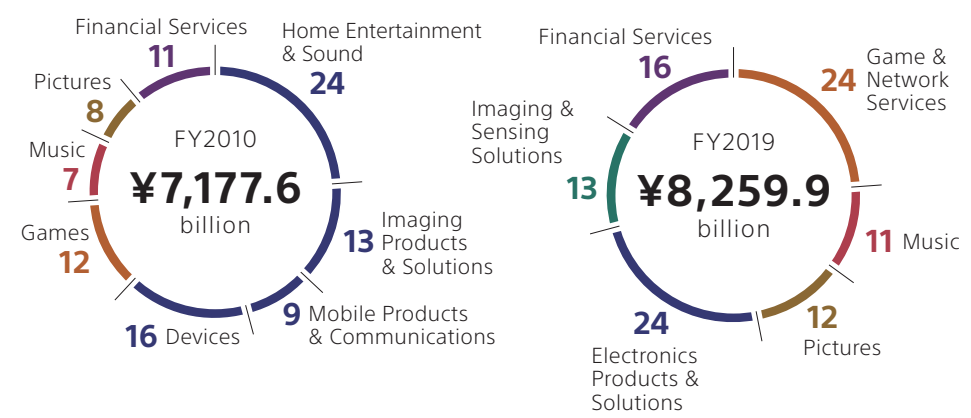
So I’m not saying Sony is a bad investment, I’m just presenting my own perspectives. The gaming and console segment accounts for 24% of Sony’s revenue, and a larger share of its profit.


Operating profit share:

For Microsoft, the gaming segment’s share is considerably smaller, as expected:

So investing in Sony gives a very strong perspective on the gaming side (compared to Microsoft).

1 Like

I haven’t looked into Sony specifically from an investment perspective, but the company’s problem has been that its gaming business (Playstation) is the only truly profitable unit. Sony Pictures and other divisions are performing so poorly that a new console generation won’t save the situation; the company needs to fix its structural problems and update its strategy. Perhaps it has already done so, and results will improve in the future. With Sony, one needs to be careful and understand that the company operates in several different fields.

Ask the same target group how many own a Sony phone or how many have been to the cinema in the last 6 months.

EDIT:
Apparently, gaming is not the only successful business:

1 Like

In the opening message, I was trying to find out how much weight the company’s other segments have on the overall result. Perhaps the biggest advantage I see is digitalization and streaming services, where Sony has, in my opinion, positioned itself well. I remember the fuss during the PS4 era when PS Plus membership became mandatory for online gaming, but now it has become quite commonplace. PS Now is also an unfamiliar feature to me, and I haven’t had time to research how it has been received.

An article picked from Fool, but it doesn’t give any perspective on other parts of the company outside of gaming. Last year, Sony’s mobile camera sensors were considered the best in the industry, and customers included Apple, Huawei, and Google, but I don’t have quick information on whether the market position has changed. “iPhone 12 Pro and iPhone 12 Pro Max may come with Sony LiDAR sensor”

Wouldn’t it be worth looking at who did well in the first wave and then buying accordingly when it’s cheap enough?

For example, from Finland, IT services, Sampo, etc.

3 Likes

It would be a miracle if the markets didn’t front-run the “corona beneficiaries” at all in the second round.

Is there still a need for new stoves or paints in the second corona round, or were they already installed for everyone? Will, for example, a deeper dive in GDP, the restaurant or travel industry, with its multiplier effects, also drag down companies that survived the first wave without major damage?

For example, Kamux may have even benefited from the first wave in the end, but if the crisis continues and new car sales slump for much longer, at what point does it start to cause more harm than good for Kamux? And is it ultimately just an opportunity for Kamux to make those famous strategic moves?

Corona didn’t really affect QT’s business, but do the forecasts for the coming quarters already include more and more payments from distribution licenses, which might not be reached due to the second wave.

In addition to this, recruitment is probably central for many growth companies, and difficulties in recruitment are slowly starting to show in operations.

But now, figure these out.

Kahoot! I opened a separate thread for this. I only realized today that you can invest in Kahoot.

5 Likes

Oh Viljo, what an analysis! Exactly. For grandpa, that meant, during the spring corona, Fortum (avg price 12.xx), Kamux (avg price 7.02), Qt (avg price 23.xx), Sampo-lohi (29.xx) and Tokmanni (10.9x). The salmon (stocks) left the coffin a while ago, others are firmly in place.

And when panic hits in the 2nd round and prices drop to grandpa’s average price levels, grandpa will strike mercilessly :slight_smile:

Masse-setä, FA, just views, opinions and stories about my own actions

1 Like

Regarding heaters, Harvia estimated that it was accelerated demand caused by corona, with no impact on long-term growth. So, there will likely not be a second demand peak…

The second wave of corona has already been somewhat factored into prices. This is an issue that is somewhat known from the previous wave and has a certain probability of occurring. To be smarter than the markets, one would need to see more clearly into the future, specifically what the new wave concretely entails, especially what surprising things are associated with it. And even if one knew these surprising things, one would still need to assess what they mean for the stock prices of different companies. Evaluating such situations is indeed difficult, and when it comes to probabilities, the task is almost hopeless.

I believe that the demand for homes/cabins/renovations/cars/hobbies, etc., will continue. Reason: Many should already be planning their 2021 trips, right? There aren’t any, there won’t be any? So the money will be put into what can be enjoyed now.

2 Likes

Listening recommendation. I personally like Komulainen’s writings and views.

US Markit Services luckily met forecasts :slight_smile: More support for the markets for the autumn as well.

https://twitter.com/LiveSquawk/status/1308764620149133313?s=20

3 Likes

If staying at home were to actually continue for years, then without taking a stance on a widespread stock market crash, but based on my own current walls closing in, I would short at least the first 5 stocks on the list.

Who would bother renovating a sauna or painting those apartment walls a second time, let alone getting a new dog in the second round of corona? Those trains have left the station. If the corona situation continues next autumn, I would start looking for companies that offer some substitute circus entertainment for a population that has definitively grown tired of staying at home.

7 Likes

Of the companies on your list, Kesko has stated that less than half of the earnings improvement can be explained by the impact of the coronavirus. What kind of figures have the others presented? I don’t follow everything myself.

For a Finnish man’s definitive maturation, the tough trio would be Altia, Fiskars, and Piippo… in that order :see_no_evil:

More seriously, I don’t really believe that the continuation of staying at home would have such a significant positive impact on company results anymore. Instead, I’m looking at those companies that have been hit hardest by corona but have shown strength in surviving the crisis through their own actions.

From the Helsinki stock exchange, the first companies that come to mind are Eezy and Noho, both of which I believe have coped with the challenging situation at least reasonably well, and whose valuations are quite moderate once the situation eventually normalizes.

3 Likes

Noho has been on a subtle rise for about a month now. The company is indeed doing well given the situation, even though its debt burden is a bit heavy.