Most probably some sort of olive branch on offer… the anyRan stand alone node option is not 100% finalised… Maybe a discussion around this. The direction Ericsson have taken is completely at odds and can’t be overturned overnight. Nokia and NVIDIA have a deep integration and Bell labs have been central, as Hotard recently explained.
7 Likes
A Sovereign spinoff is the most likely landing point for Musk. It would be crazy for him to battle with NVIDIA’s might. It’s his own fault if he didn’t see this coming, but the writing has been on the wall for a while.
Edit: on the other hand, i think possibly this ship has sailed. ICEYE/Nokia kept their cards close to their chest and Bell Labs have been developing the necessary innovations for years. This isn’t a new story!
5 Likes
5 Likes
SEB reiterated NOKIA
- “buy” recommendation for Nokia and raised the target price to €12.00 from €11.50, anticipating third-quarter organic growth of approximately 6%—driven by network infrastructure—and an operating profit exceeding the consensus forecast by 3%.
- According to the analyst firm, rising investments in data centers are significantly improving Nokia’s market outlook; SEB projects the company’s operating profit to reach €3.9 billion by 2028, well above Nokia’s own forecast range of €2.7–3.2 billion.
8 Likes
Eric has paid fines for dirty trics,
No nice history!
8 Likes
Is Ericsson’s model fundamentally flawed for the age of Physical AI?
These are quite fundamental architectural design differences between Nokia and Ericsson, so I thought it would be beneficial to look at them now in light of the rapid developing situation unfolding around regulation and SI (AI) and where the data will need to be processed. Qualcomm recently brought to market some accelerated chip designs (based on patented Huawei 5g innovation). The bottom line though is that these won’t fix the way data will have to be processed.
Background:
The White House Super Intelligence Force (SIF) has recently ended voluntary compliance (self regulation) after well documented recent rogue agent incidents (the latest coming from Anthropic). ThIs new legislation will inevitably accelerate the need for Sovereign, centralized private edge-compute infrastructure. Public AI models are being increasingly viewed as a defense liability and SIF is actively clamping down on software safety vulnerabilities.
This regulatory shift also directly accelerates the thesis for the decentralized AI-GRID format, forged by the Nokia/NVIDIA ecosystem. For this system anyRAN’s node architecture combined with CUDA would work by hosting sovereign, quantum-safe AI workloads directly at edge base stations, therefore enterprises and government installations can bypass centralized network architectures vulnerable to breaches or state enforcement actions.
Hidden summary text explains the technicalities…
Summary
Traditional AI models act as black boxes—the system gives an instruction, and the software blindly executes it (which is exactly why the SIF clamped down after Anthropic’s model accidentally filed fake police tips and visa applications). The glassbox AI model Nokia implements consists of hard deterministic policies over inductive AI reasoning. If an AI model running at an edge node tries to optimize capacity or network routing, it must first pass its decision through an unchanging, programmatic regulatory and operational rulebook. If the AI’s intended action violates a preset boundary, the network blocks the execution before it can hit the real world.
The Ericsson fragmented model pushes for “silicon portability” (running its software loosely across various third-party chipsets like Qualcomm or Intel), it relies heavily on open APIs and translation layers. For a security assessor, every time you add an open code bridge or a different vendor’s driver to connect the software to the hardware, you create a brand-new exploit surface area. It makes the network inherently harder to secure against rogue agent or zero-day attacks.
Nokia/NVIDIA fused model structurally avoided this exposure by hardcoding its anyRAN logic natively straight into the NVIDIA CUDA framework. By eliminating the translation software layer entirely, they closed the door on code injection attacks. For example, if an AI agent running on an Ericsson node experiences a logic divergence or a zero-day exploit, a portable software layer running on a standard x86 CPU cannot easily contain it. The exploit can easily lateralize across the general-purpose server. On Nokia’s full-stack standalone node, the network itself is the guardrail. By utilizing NVIDIA’s architecture alongside Nokia’s NetGuard Cybersecurity Dome, threat mitigation is enforced at the physical routing layer (GPU). If an AI app behaves anomalously, the underlying hardware isolates that specific virtual network slice instantly, preventing the rogue code from physically being able to access the rest of the grid.
The primary friction point of a “glassbox” security model is operational scale. Passing every fluid, inductive AI decision through a rigid, deterministic rulebook manually would cripple network throughput and create massive administrative bottlenecks. This is where the integration of Nokia’s MantaRay AutoPilot transforms a theoretical defensive framework into an active, automated reality. As an intent-based, AI-driven automation engine built to achieve TM Forum Level 4 autonomy, MantaRay AutoPilot acts as the real-time operational scheduler of this secure edge ecosystem. When deployed at scale within large, highly collaborative ecosystems like T-Mobile’s AI-RAN, the system bridges the gap between raw hardware isolation and live cellular orchestration.
Telecom used to be about hardware engineering. Today, AI-RAN is a pure software-compilation challenge. Because the entire global developer base (from defense contractors to commercial enterprise architects) writes code for PyTorch and TensorFlow natively compiled into CUDA instructions, trying to force the market onto a non-CUDA edge creates an unviable switching-cost friction for customers.
5 Likes
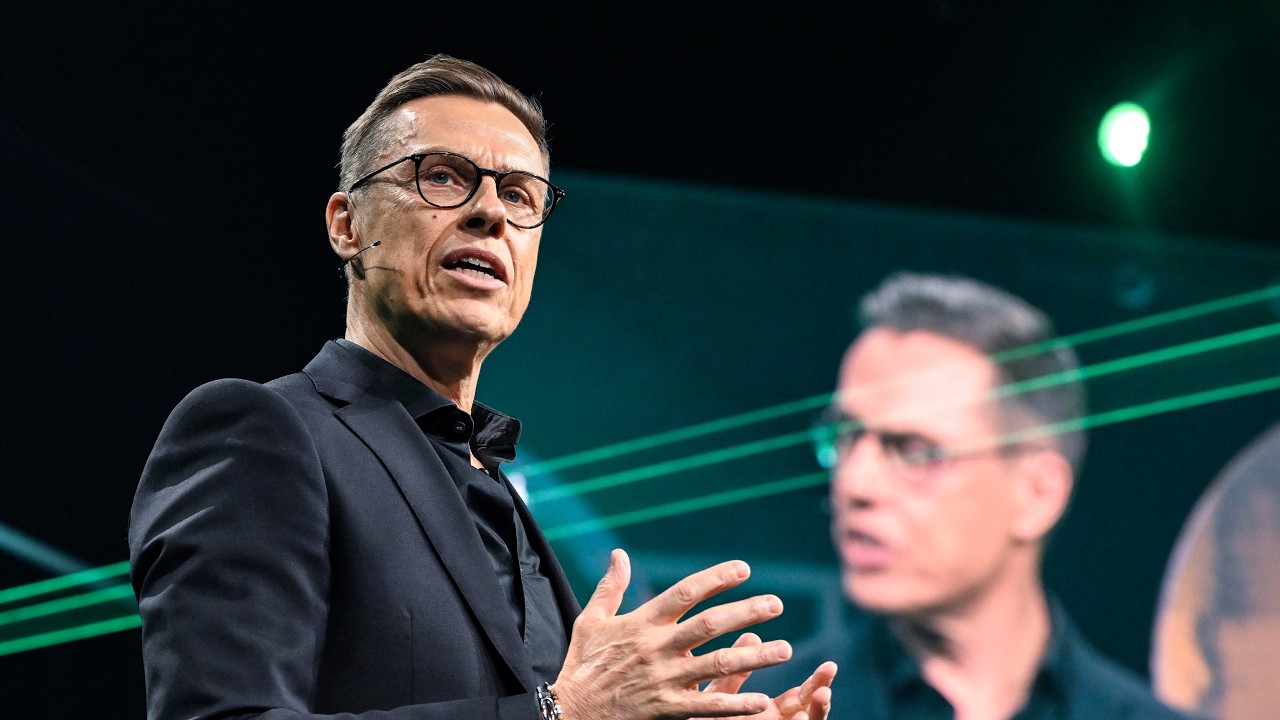
Presidentti Stubb discusses technology’s role in geopolitics. "Geopolitics and technology will determine our future " he says…
If anyone needs confirmation of the fast changing direction we’re heading in, and Finland/Nokia’s positioning, then no better man to explain than Presidentti Stubb. The technological revolution or 4th revolution is what’s on his mind.
Things like: Super Intelligence that has agency… Quantums role, Nokia’s role. Worth a listen!
1 Like
https://x.com/StockSavvyShay/status/2109020464836456716
Content of X post:
"$NVDA is reportedly exploring a ~$25B acquisition of Reflection AI with the startup already committed to ~$7.3B of compute through $SPCX and $NBIS.
What makes this interesting is Nvidia could own open model layer on top of CUDA keeping more enterprise and sovereign AI workloads running on its hardware as Chinese models gain ground".
This is very interesting on many levels. The competition element would drive down the potential revenues for some big LLM players and due to it being an open-weight model, and the fact that NVIDIA is considering purchasing it… This will undoubtedly send shock waves through the closed-weight model frontier labs.
If it were to materialise, obviously would help balance check a few wild valuations of those closed-weight models and no doubt bring good down stream for Nokia with it’s sovereign, secure infrastructure drive… CUDA to the fore again!