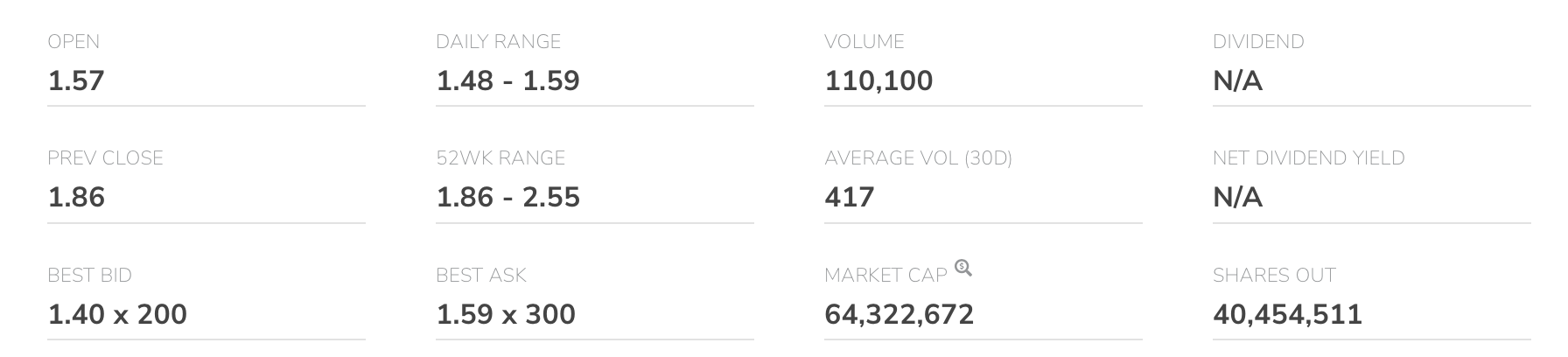
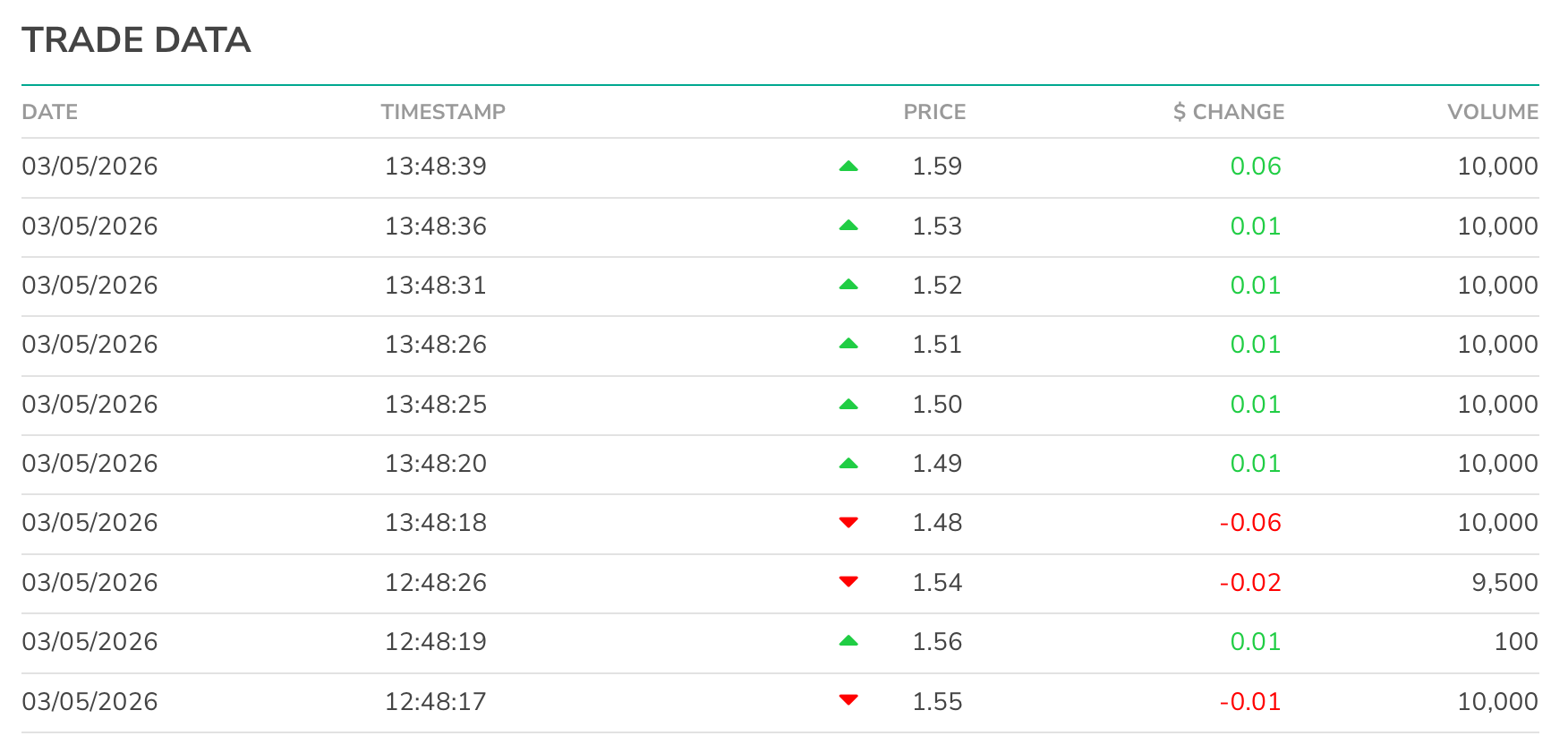
Here are Siltanen’s preview comments as Nightingale reports its H1 results on Thursday.
We expect revenue growth from low baseline levels, driven by research projects and the Terveystalo partnership. We estimate that the result remained heavily loss-making, as the company invests in international expansion and new laboratories. In the report, our interest is particularly focused on the progress of commercial partnerships in Singapore and the United States, as well as the impact of the recent New York laboratory permit on the company’s outlook.
It’s a pity that revenue growth wasn’t seen yet in H1. Much remains to be proven for H2, but in my opinion, the picture of the sales pipeline has become clearer. Also in the webcast, Teemu presents more business-oriented slides, which is a good change.
The guidance is being maintained because, in practice, orders are at 50% growth. Nothing from the Aalborg deal was recognized as revenue in H1 yet, and they expect that it could all be recognized in H2. Therefore, if the guidance is met, the rest of the business will be flat in H2, with all growth coming from that one deal; I’m highlighting this.
Pipelines are strengthening and pilots are starting—good—but that is also what was said six months ago. The potential is massive, but the track record is missing for now. One new commercial deal was promised in fairly clear terms for the current half-year; it would bring sales for the next fiscal year, fifty-fifty whether it comes from the research or healthcare side.
I’ll quickly comment on that robo-comment from our trusted analysis firm.
“What is noteworthy, however, is the decrease in net cash to EUR 37.9 million (June 30, 2025: EUR 47.6 million), meaning the cash burn in the H1 period was approximately EUR 9.7 million. At the current burn rate, the cash will last for about four years, but the buffer has clearly diminished in half a year.”
With my limited math, the money won’t last for four years.
According to Inderes’ math, the money should last (at the autumn 2025 burn rate) for four half-year periods, i.e., two years.
For the first time, I am razor-thinly concerned about whether the money will last. Will the original over 100M cash be enough for sales to scale after all?
As Teemu has stated many times, these are slow processes and take time.
It will be interesting to see what @Antti_Siltanen recommends once he gets his analysis together.
Regarding that cash, it was mentioned that there is about 2M in extra burn due to the Helsinki premises. If you subtract that and assume that sales grow, reducing the burn, it might last for three years.
This company really has an unfortunately high ratio of fixed to variable costs; the valley of death is wide.
Here is the discussion between Antti and Nightingale CEO Teemu Suna following the H1 results
Topics:
00:00 Introduction
00:07 H1 summary
00:45 Changes in Singapore
02:21 Laboratory license in the United States
04:25 Clinical accounts vs. new customer acquisition
05:26 Partnership with Terveystalo expands
07:33 Pilot projects with wellbeing services counties
08:18 Research projects in Denmark and Italy
10:53 Priorities for the financial year
I don’t know, Suna’s interview left me a bit speechless. Somehow the spark was missing from the man. Even the pipelines weren’t top-notch like they usually are.
As a shareholder, I’d like to be wrong, but it feels like they’re always charging ahead with great intensity in some direction and then fixing things they failed to account for. They’re just going back and forth. You can’t get the products out of the giant freezers easily, or then they print out reports for doctors that are too hard to read..? Really..???
CFO Tuukka Paavola left his position in December 2025, and Chief Scientific Officer Jeffrey Barrett will step down by March 2026 at the latest. The departure of two key individuals in a short period is noteworthy for a company that is at a critical stage of commercial scaling. Successors have not yet been announced.”
In my opinion, the flesh-and-blood analysts haven’t worried about this matter much. However, it has been gnawing at me somewhere on the fringes of my stream of consciousness.
Because this is usually a very bad sign.
Hopefully, though, as I wrote a bit earlier while waiting for the release:
Here is a company report on Nightingale from Antti.
Nightingale’s H1 fell short of expectations in terms of numbers, which was, however, largely explained by the revenue recognition of research projects occurring only in H2. According to the company, rapid progress is being made under the surface, but key healthcare customer accounts, with the exception of the Terveystalo partnership, still appear to be at a very early stage. H2 looks set to be strong, supported by large research projects, and management also expects new successes during the current period. We are lowering our target price to EUR 1.7 (prev. EUR 2.5) following the forecasts and upgrading our recommendation to Accumulate (prev. Reduce), as the recent sharp decline in the share price has turned the risk-reward ratio attractive.
The IT strategy consultant was spouting jargon again. After watching the Boston Heart webinar last May, I noted that Jeffrey Barrett was the first company representative who was able to explain the clinical significance of the test results. But now he is leaving (or has he already left?) the company. The IT strategy consultant, with their pipelines, is returning to the kind of waffle that hasn’t convinced customers. It’s frustrating that I didn’t exit my “risk-free” remaining position already in 2024.
Has the Japanese market been mentioned anywhere? They’ve been there for quite a long time already. If things don’t start working in Japan, why would they work anywhere else?
There wasn’t really much revenue to speak of. Mostly just hiring new people and investing in sales activities. Some smaller research projects, if I recall correctly.
Although I was a long-time NGH believer, I have been shouting here about Tuukka Paavola’s suspicious, hasty departure from the CFO position as a red flag. The CEO’s icy “thanks… [expletive] for absolutely nothing” words didn’t ease my fears one bit.
On the contrary.
My worst-case scenario then was that Paavola would have had to do something so unethical within his role that he refused and chose to walk out, slamming the door instead.
After mulling over that news for a long time, and with sales stalling (either Terveystalo or Moli-Sani or something else is lagging or stuck for some reason), and the share price sliding below 1.5 euros, I dumped 30% of my holdings at a loss.
Only today (I’m sometimes slow, sometimes stupid, and often both) did it become clear to me, thanks to @Vino_Pino in the BRETEC thread, that Paavola has apparently been the CFO of that outfit for TWO MONTHS already.
And as CFO, he is responsible for the ongoing and potentially future printing of 1.75 billion shares, which is going to take an incomprehensibly outrageous amount of ink.
Paavola’s dramatic exit may, in the end, be a really good signal for NGH owners.
Our Silver Lining.
Today I bought back a small piece of my big panic sell—at the day’s peak price, of course.
This stock is so tightly wound right now that it can’t even handle a lukewarm-neutral-positive LINKEDIN (seriously!) update without jumping a quick 10%.
I’m still waiting for buying opportunities under 1 euro if announcements about concrete sales increases (or large contracts that take a long time to monetize) don’t start trickling in.