antimicrobial resistance is becoming the next pandemic, which may kill more people than cancer by the year 2050
In October last year, the World Health Organization (WHO) reported that hospitals around the world have reported an alarming increase in the number of antibiotic-resistant infections.
According to a report published by the WHO, in 2023 every sixth laboratory-confirmed bacterial infection was resistant to antibiotic treatments. Between 2018–2023, more than 40 percent of antibiotics lost their effectiveness against common infections.
Antimicrobial resistance occurs when pathogens evolve to withstand the drugs used to kill them.
If the insect decline doesn’t move you, how about antimicrobial resistance? Why is no one doing anything, the article asks, but can anything actually be done about it?
Finland has been doing something for a long time now. Doctors are deliberately prescribing fewer antibiotics than in years past. Now, we just need to get the major nations on board with this.
Or then it’s just a common purge, which is essentially part of such systems.
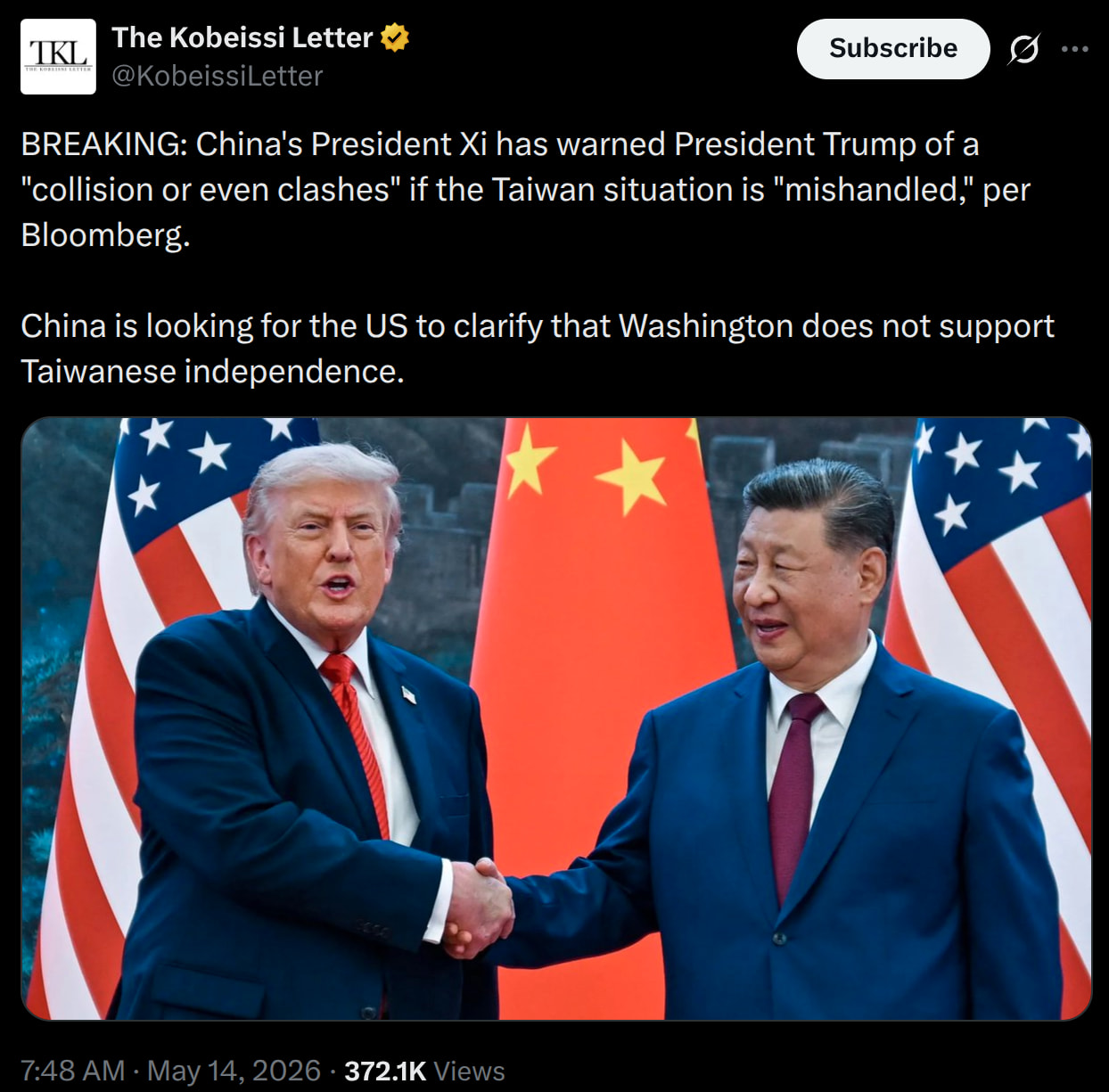
A possible invasion of the Republic of China by the People’s Republic of China is perhaps the biggest bogeyman in the economic sphere.
The region has some of the world’s busiest trade routes. For now, Taiwan is the world’s semiconductor factory. The rest of the world is more or less completely dependent on Chinese supply chains.
One can imagine so many paths forward.
What if nothing happens, and all the military buildup is just part of a pressure tactic that might eventually yield results?
What if China’s Nth massive military exercises around the island casually turn into a medieval siege? What would the rest of the world do other than sit and wait for Taiwan to surrender and hope that China doesn’t cut off the transport of strategic raw materials?
What if China attacks the island directly and risks a lot? What if the operation fails—what happens to Xi’s position then? What if it succeeds, but slowly, and the United States rushes to help and the EU condemns the attack?
What if the ghost of Chiang Kai-shek appears and mainland China is reunited under the Kuomintang again?
Well, it doesn’t really matter what has been done here when some tourist returning from Turkey might bring back a bacterium like that as a souvenir in their carry-on luggage. One can only hope that such a globetrotter is a hermit who prefers staying in their own company at home.
‘Yksittäinen datakeskus vie pienen ydinvoimalan verran sähköä. Jos sama laskenta tehtäisiin memristoripohjaisilla neuroverkoilla, energia vastaisi paria sähkökiuasta.’
Weak signs of the future today.
edit: Tuollaisen sienimemristorin kun istuttaisi tulevaisuuden elävästä biomassasta 3D-tulostettuun tietokoneeseen, niin silloinhan…
A small gray swan for the Bitcoin boys and girls. I won’t tell a long story, I’ll just list the main points.
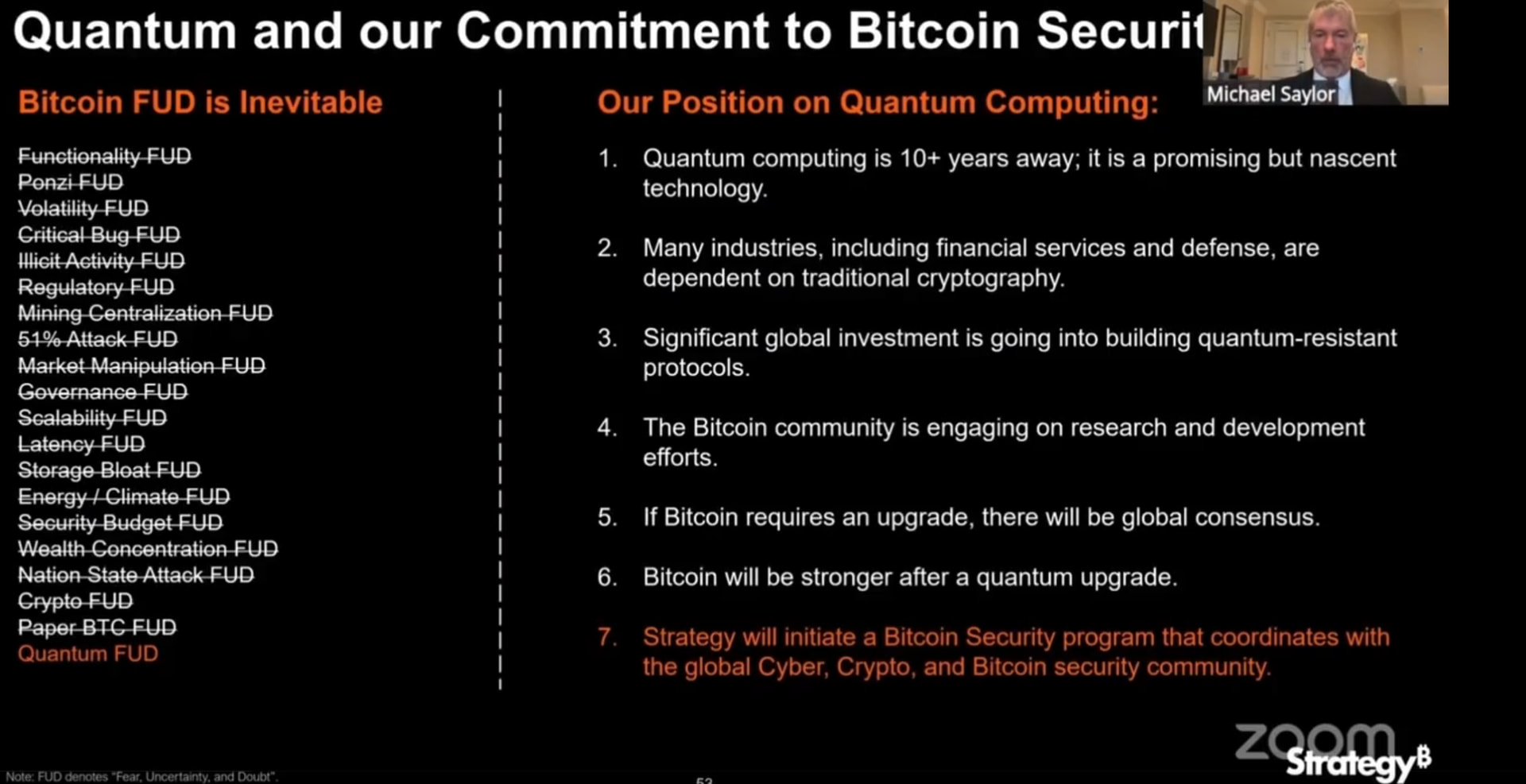
Last week Michael Saylor & co. announced that they are starting to prepare for the challenge posed by quantum computers. They see these machines being > 10 years away. This also seems to be the mainstream view today.
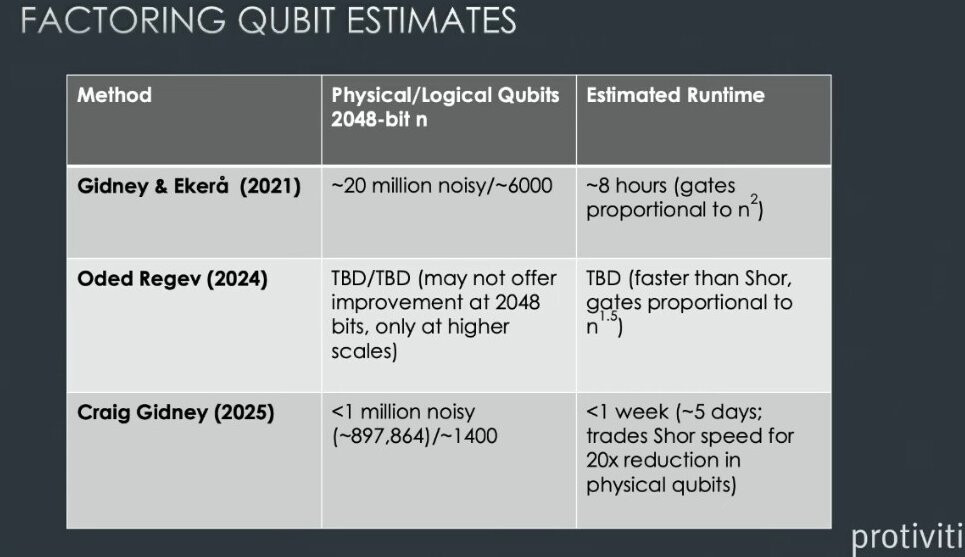
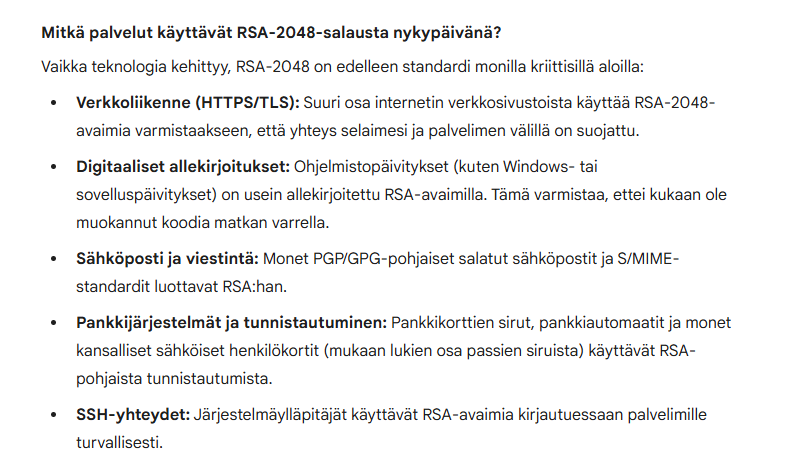
At the same time, there has been wild development on the algorithm side. In light of last year’s data, RSA2048 (harder to crack) requires 1,400 logical qubits. I believe that AI development can bring even more speed to this in the coming years.
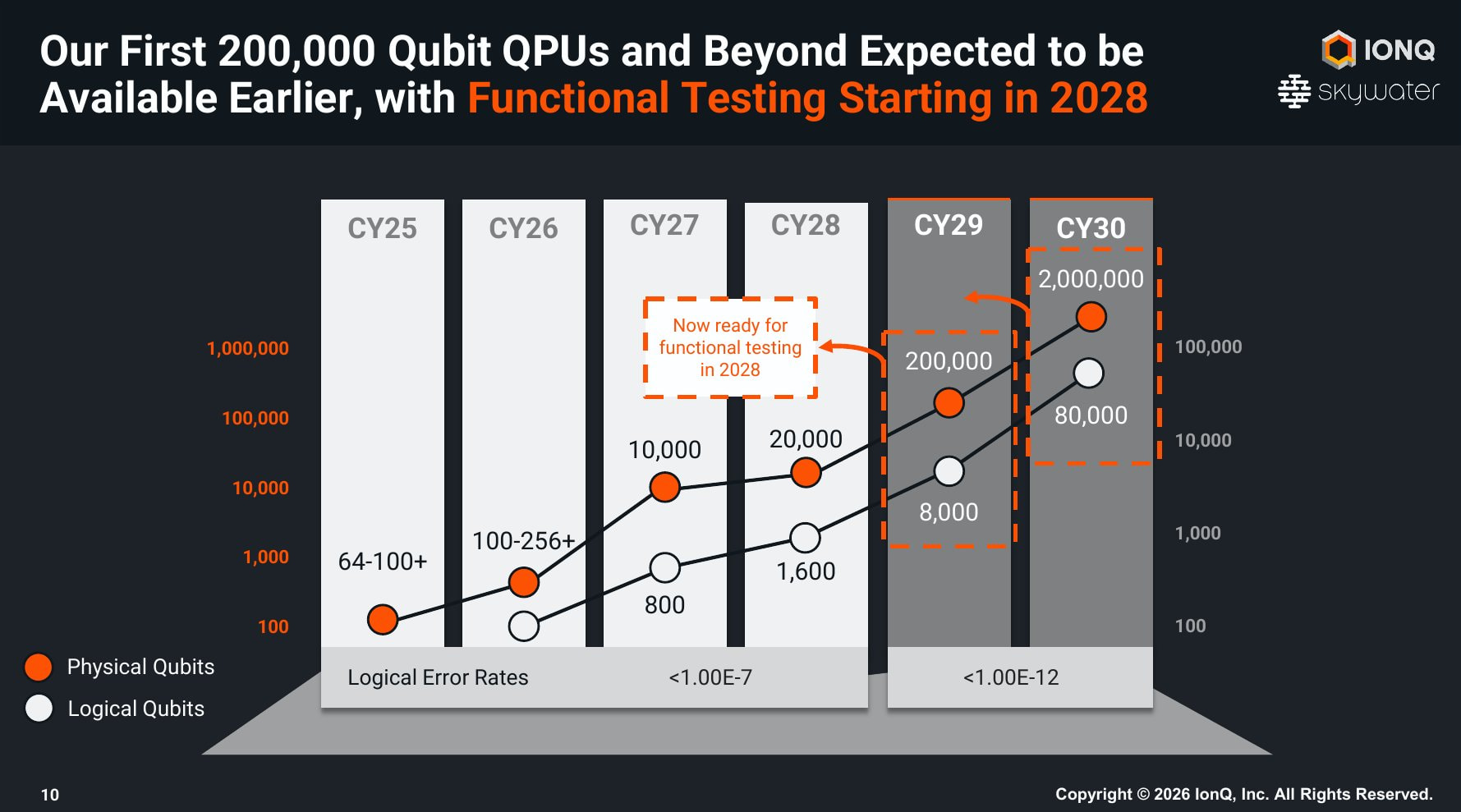
From the quantum companies’ side, IONQ updated its roadmap in January-February after the $SKYT acquisition. The goal is to start conducting operational trials with an 8,000 logical qubit machine in 2028.
Citi published a fresh estimate on the impacts of Q-Day’s arrival
Bitcoin risk:
According to Citi, about 25% of Bitcoin supply is potentially quantum-exposed because the associated public keys have already been revealed on-chain. That translates to roughly 4.5 million to 6.7 million bitcoins, worth an estimated $500 billion to $600 billion at current prices.
Other blockchains face higher exposure. The report estimates that more than 65% of Ethereum’s current supply could be vulnerable, while Solana’s exposure is described as effectively total due to differences in transaction design.
Perhaps not all roadmaps are being followed there either (or believed )
The report refers to “Q-day” as the point when quantum computers become powerful enough to break widely used public-key encryption. Based on estimates cited from regulators and risk institutes, the probability of such a breakthrough is placed at 19% to 34% by 2034, rising to 60% to 82% by 2044.
NIST has published quantum-safe algorithms, but the target schedule for their implementation is by 2035:
According to Citi, U.S. federal agencies are expected to begin migrating high-risk systems to post-quantum cryptography by 2030, with full adoption targeted by 2035.
A key challenge for Bitcoin is securing the blockchain in time:
The challenge lies in deploying those standards at scale across complex, aging systems. Large institutions may need to inventory thousands of applications, coordinate with vendors, retrain staff and redesign authentication layers over multi-year timelines.
Someone might ask, well what if IONQ / NSA / CIA etc. crack the encryption? They won’t take anyone’s Bitcoins. Well, they probably won’t. But since Bitcoin fundamentals are a bit more loosely connected to any ‘business fundamentals’, trust in the system is emphasized in the market. Is there enough trust if quantum machines advance? If progress is made in the United States, how do we know it’s not happening in China too?
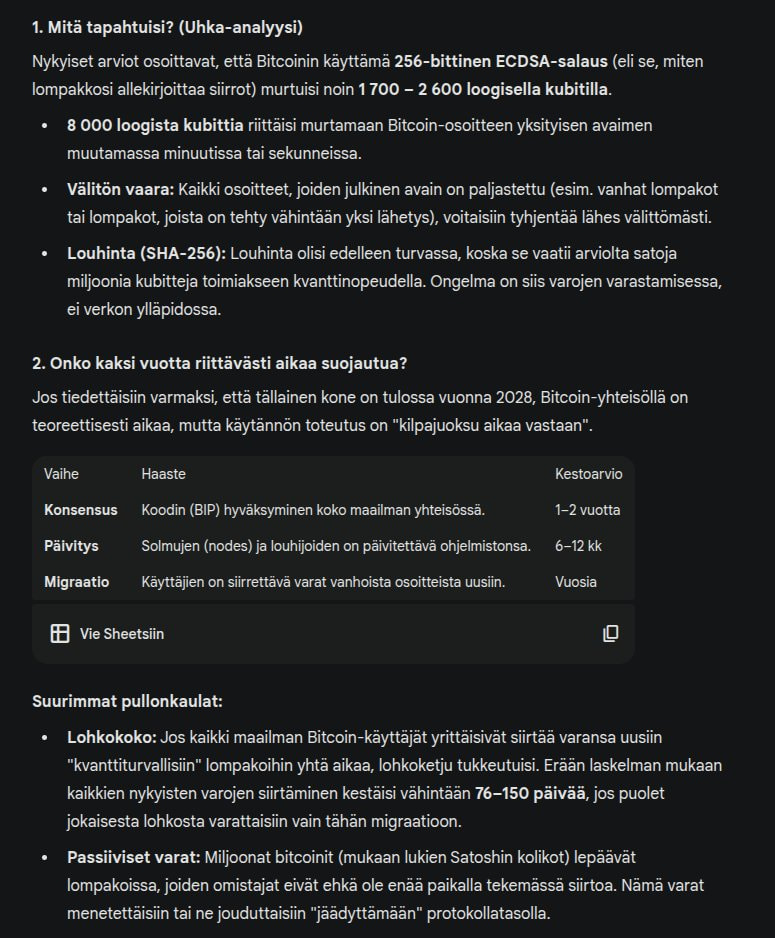
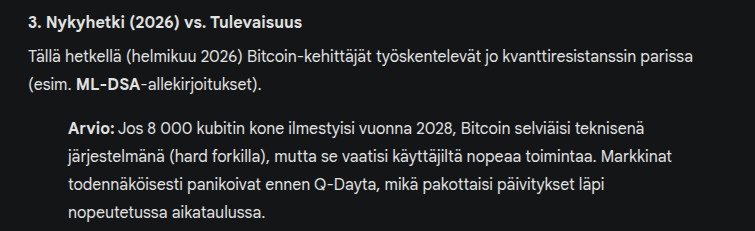
As a bonus, an analysis provided by Gemini if an 8,000 logical qubit machine were to appear in 2028. Gemini also identifies the scheduling challenge.
The quantum doomsday clock might end up hitting surprisingly close.
At this point, it goes without saying for the reader that timontti is an IONQ owner and does not own Bitcoin. Thus, I am certainly not handling the matter objectively.
If breaking encryption like that with quantum computers becomes possible, wouldn’t all other systems be at risk as well, and not just cryptocurrencies?
This is a bit of a tangent, but I think it’s wrong to say that Bitcoin’s fair value is zero at the moment.
Of course, if the encryption is broken, then the fair value is zero. Admittedly, the developments in quantum computing brought up by timontti are a major risk—and I don’t personally know how that “Bitcoin Quantum upgrade” would actually work; my own understanding doesn’t quite go that far.
Still, I believe that if Bitcoin’s encryption can be broken, I’ll have completely different black swan risks on my mind than Bitcoin.
If China embarks on its own adventure in Taiwan, the sea area between China and Taiwan will certainly be filled with scrap metal. And they know it themselves. Taiwan has so much hardware to fire back with that China would have to level the entire island if they want to take control of it.
This is a slightly more complex issue. China can easily (in a military-technical sense) impose a blockade so that all the island’s exports and imports stop, and life quickly becomes very difficult. Of course, the geopolitical and economic price of such a move would be massive for China itself as well—probably unbearable.
On the other hand, when the United States used X amount of ammunition just to crush a significantly smaller Middle Eastern country, with the end result being that the US’s relative position in the region appears to be weakening rather than strengthening, the People’s Republic of China might be feeling an itch to take a crack at the Republic of China.
Of course, the “special operation” to capture the island would be handled in three days. No one in their right mind enters into long wars.
It is a significant question mark whether Xi will launch an invasion of Taiwan during Trump’s term. Based on what I’ve read, China does not have enough amphibious assault ships to transport a sufficient number of soldiers to the Taiwanese coast quickly in a D-Day style operation. Preparing such an operation takes months, providing ample early warning—much like Russia’s invasion of Ukraine. Preparation took months, and despite Russia’s claims to the contrary, its level of readiness was being read in real-time on Twitter.
Trump, for his part, has thrown Taiwan under the bus. The following must be read exactly as it is:
An interview with Fox News, aired later that day, provided further soundbites, as Trump declared he was “not looking” to “travel 9,500 miles to fight a war” in Taiwan’s defence.
He then described weapons sales to Taipei as a “very good negotiating chip” for Washington with Beijing, adding that he was “not looking to have somebody go independent”.
In other words, Trump is now so politically weak that he cannot proceed with already agreed-upon arms deliveries to Taiwan, for fear of angering Xi and risking a halt in rare earth mineral exports to the US or a cancellation of promised soybean purchases.
Furthermore, it has become apparent that any conflict larger than a minor skirmish lasting more than a few weeks would deplete the remainder of the US stockpiles of advanced weaponry.
The US military has significantly depleted its stockpile of key missiles during the war with Iran and created a “near-term risk” of running out of ammunition in a future conflict should one arise in the next few years, according to experts and three people familiar with recent internal Defense Department stockpile assessments.
Consequently, the Pentagon has ordered 785 more Tomahawk missiles, but their annual production capacity is only 55 units.
According to the budget request analyzed by USNI, the Pentagon plans to allocate $3 billion for long-range missiles in 2027 to fund the production of 785 Tomahawks. This is more than a 1,200% increase compared with 2026, when $257.6 million was allocated to produce 55 missiles for the U.S. Navy.
One can ask in all seriousness how quickly new production can be ramped up. A Tomahawk is not an item that can be slapped together in any workshop using components freely available on the market.
In particular, the contracts for these missiles from 2024 and 2025 are revealing, as they set completion dates in early 2028 and 2029, respectively. In other words, in 2027, the order will only be placed, and the missiles will be delivered much later.
So, the situation is that the US is currently practically unable to engage in a large-scale conflict without severe deficiencies in air defense and offensive capabilities; replenishing weapon stockpiles to normal levels will likely take years. Additionally, seeing how the United States has handled the conflict with Iran, it is clear that all of this is an “invitation” for China to act regarding Taiwan before the end of Trump’s term.
On the other hand, that same Iranian conflict has shown how an actor several orders of magnitude stronger cannot ensure control and security of nearby waters, regardless of how much air force and naval assets they have in the vicinity. The lessons from Ukraine follow the same pattern, albeit from the perspective of land warfare. Furthermore, navies are being kept at least outside the range of the smallest drones. This is a clear signal to Taiwan that if missile/mining/drone assets can be kept sufficiently decentralized and protected through an intensive air campaign, it can make it extremely costly for an adversary to attempt to bring a fleet near the coast. Moreover, Taiwan’s rocky coastline has only a few locations suitable for landing, making the defender’s job easier in ensuring that the troops that do make it ashore do not survive long.
If there are smart people in the leadership of Taiwan—and there is no reason to assume there aren’t—then at least three projects are underway there right now:
Decentralizing air and coastal defense units and digging them deep into mountains to survive an initial strike.
Development of drone defenses, likely in collaboration with the Ukrainians.
Procurement of new weapon suppliers, now that the US has proven to be an unreliable actor.
Trump’s recent statements should be understood as meaning he will not lift a finger for Taiwan if Xi decides to send troops there. This cannot be known with 100% certainty, but Hope is not a strategy, especially not a national security strategy.
So, recent events have given China food for thought, presenting both arguments in favor of and against an attack. It is certain that China is analyzing all lessons from both conflicts before they begin to act one way or the other.
But traditional Chinese calm and long-term calculation may also be affected by the fact that Xi—like Putin—is reaching an age where leaving his mark on the world cannot wait another 25 years; something must be achieved soon. When one is the Great Leader of their country and no one dares to oppose them, one wonders how well-considered the actions will finally be when they are eventually undertaken?
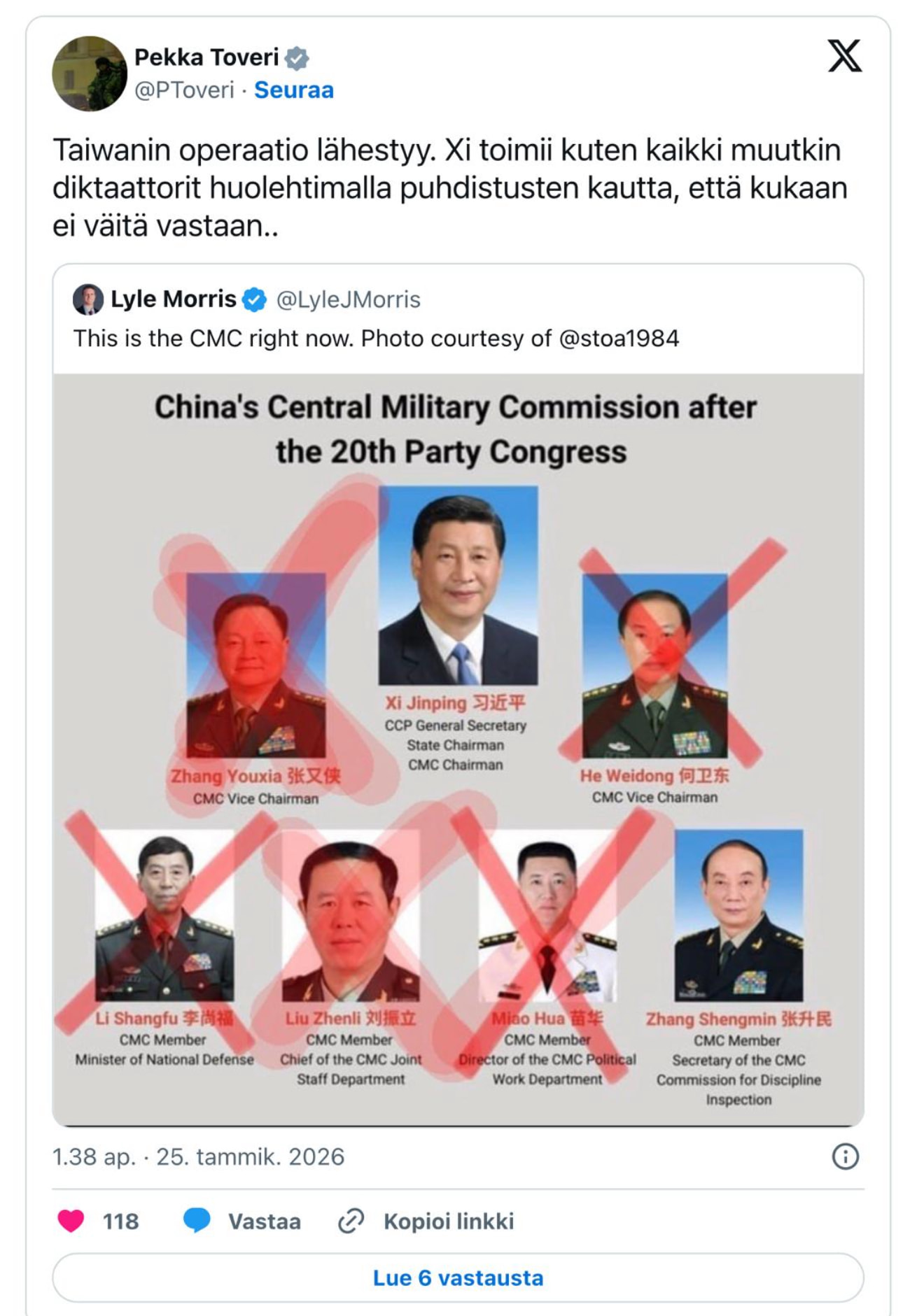
Xi has purged many from the military general staff; was the reason a lack of competence or a lack of loyalty? We cannot know, but it is certain that those who remain will not say “No can do” to the president when he comes to ask when Taiwan can be taken.
The purge China’s leader, Xi Jinping, has inflicted on the military elite was plain to see at a recent legislative meeting. A year earlier, state television footage showed around 40 generals in the room. This time, there were only a handful.
Yet Mr. Xi indicated that an upheaval that rivaled those of the Mao era was not over. Stony-faced, he warned the remaining officers to beware of disloyalty.
Russia’s and the USA’s invasions have likely also taught China that the success of a quick operation is by no means easy. In Taiwan’s case, the difficulty is increased by its geographical location; the island is not at all easy to attack. Taiwan’s military capability and readiness are in a completely different class than Ukraine’s or Iran’s were when their situations began. Furthermore, Taiwan’s technology is quite advanced and its economy is in good shape. Taiwan has been cooperating closely with Ukraine on drones and other defense systems. It’s quite a nightmare to conduct a landing when faced with huge swarms of advanced sea and air drones. A blockade is likely a easier option for China as well. Additionally, someone needs to drum into Trump’s head that the USA will be neck-deep in trouble if microchips and other semiconductors stop coming from Taiwan.
However, it is worth remembering that for this reason, Taiwan is 95% dependent on imported energy brought in by tankers and cargo ships. The lights will go out and petrol and diesel will run out very abruptly if the country is subjected to a blockade, and China’s military capability to implement such a blockade is at least ten times greater than Iran’s capability to keep the Strait of Hormuz closed.

 )
 The AI train might hit a major roadblock if things start happening over in Taiwan.