Merus Power - Power quality, storage and more

Merus Power announced its intention to list today (2021-05-11)
Electricity quality and storage
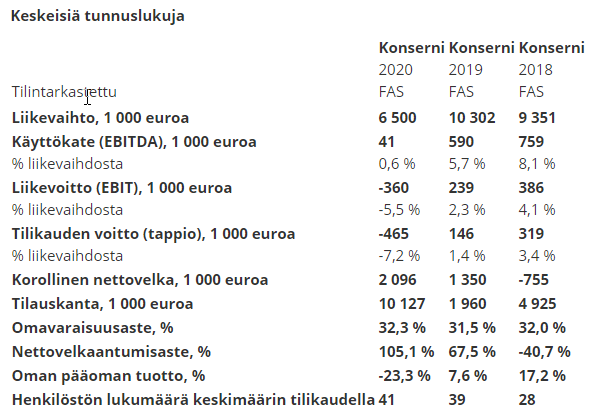
In 2020, revenue slumped, but in 5 years, revenue should still be 80 MEUR with organic growth. That’s a tough goal!

About Merus Power
Merus Power designs, manufactures and markets a wide range of world leading power quality solutions for dynamic reactive power compensation, active harmonic filtering and power protection. Our solutions portfolio includes active harmonic filters, STATCOMs, SVCs and UPQ energy storage solutions. Our customers benefit from improved power quality which enables energy savings, increased productivity, guaranteed process reliability and grid code compliance.

Company website:

Investor pages

Listing announcement

27 Likes

Growth targets are at least tough when the goal is to grow from a turnover of 6.5 million (Covid year) to 80 million in 5 years, mainly organically.

4 Likes

A few scattered observations about the materials:

“The planned share issue size is tentatively 12 million euros.” & “Anchor investors’ subscription commitments are conditional on them being allocated shares totaling approximately 11.8 million euros.”

→ This means the issue will be oversubscribed (because of the personnel issue + public issue on top of that). But:

“In addition, certain current shareholders of the Company plan to offer existing shares of the Company for purchase if the share issue is oversubscribed, in which case the Company’s Board of Directors has the right to increase the number of shares offered”

I didn’t notice anywhere how large a share this sale would be (vs the issue).

“Anchor investors have committed to subscribing for shares under certain customary conditions and provided that the valuation of the Company’s entire share capital before the share issue is at most 31 million euros”

If we assume a pre-money valuation of that maximum of €31M, then (my calculation corrected 2021-05-21 9:00)

  • With 2020 figures: P/E: negative and P/S: 4.8.
  • With 2019 figures: P/E: 212 (31,000 / 146) and P/S: 3

If we assume the issue size is €12M, and the 2021 figures materialize according to guidance (revenue €13-15M), then P/S would be 2.8 - 3.3

It is indeed an ambitious goal, if we forget the corona year and look at, for example, 2018->2019 growth, it was 10%. However, that is quite a while ago, so it may not be a relevant comparison in the current situation. If the company hits its guided revenue range for this year (EUR 13-15M), then growth from 2019 would be 30-50%.

The order book at the end of 2020 was quite good (> 10M):

image

Hallitus - Merus Power Oyj

The board, by the way, is exceptionally small, three members, one of whom is conditional on the listing going through: Hallitus - Merus Power Oyj. Of the members, Riihimäki is from Wärtsilä and Sadeharju is through a private equity investor (board memberships in energy companies).

The question arises for me: has this been rushed to the stock exchange now? The board has not had time to be shaped for the listing, and it’s coming to the market with poor figures from the corona year (though this year’s guidance is significantly better)? As a model, one would think that if, for example, H1 figures were to be excellent, it would have been worth waiting until autumn in light of the figures (unless the fear of the listing boom drying up before then).

27 Likes

This is undoubtedly an interesting case and IPO. I’m afraid that only crumbs falling from the table will be left for retail investors.

It’s easy to see strong demand for Merus’s products. Wind turbines, the proliferation of electric cars, etc., will require a lot of investment in the dynamism of the electricity grid, and Merus’s products fit this gap perfectly.
Definitely worth following.

25 Likes

Inderes has already published the CEO interview.

17 Likes

Does anyone have an idea about the quality of the company’s products or the advancement of their technology compared to competitors? In the video, the CEO mentioned that they use self-designed, state-of-the-art technology.

4 Likes

Apologies if this information is already available somewhere, but was there any data on how large a percentage of the revenue comes from Wärtsilä or joint projects?

5 Likes

An interesting company from Nokia, Pirkanmaa. => About Merus Power - Company

A few excerpts from the CEO’s InderesTV interview for the thread.
Only brief observations, may contain misunderstandings. It’s worth watching the interview.

0:30 What Merus Power does => Products: Energy storage solutions - Merus Power

  • Active filters that improve power quality
    listen to disturbances in the power grid and in real time inject a component in the opposite phase => The result is clean sinusoidal electricity, which increases energy efficiency and reliability
  • Energy storage systems
    The same technology is applied in energy storage systems. The devices can connect energy storage systems to the power grid, thereby balancing the difference between consumption and production.
    => Enables more renewable energy in the power grid

2:30 How long have the product and technology been developed?

  • The company started its operations in 2009 with intensive product development for 1.5 years.
  • A product family that improves power quality and energy efficiency, built on a basic technology platform.
  • “A strong product family that can now be widely introduced to the world.”

3:27 Business in concrete terms

  • Finnish technology, devices and systems developed in Nokia and also manufactured in Finland. All industrial rights belong to the company.
  • Market entry is done through a partner network, which creates added value for customers worldwide.
  • System integrators create larger entities and undertake comprehensive deliveries, which include the energy efficiency component from Merus Power, for example, in the steel industry.

4:45 Customer references

6:40 What kind of market do you operate in: development phase, size, and growth rate?

  • The size of the energy storage market, according to research institutes, is currently 6.5 billion.
  • The market is growing at 20 percent annually over the next 10 years.
  • The energy storage market will grow to a 50 billion market by 2030 => 12-fold increase in the next 10 years.
  • The power quality market is growing at a good pace of 5-8 percent annually.

8:25 Main competitors?

  • A key competitor is the Dutch, Amsterdam-listed Alfen, which has also established itself in Finland => (Alfen B.V. => AMS:ALFEN)
  • Other notable competitors include Tesla, ABB, Siemens Fluence.
  • We aim to challenge larger players in a size class where we are strong.
    => Medium-sized energy storage systems under 10 MEUR requiring special expertise.

11:05 Strategy and financial targets?

  • Revenue target of 80 MEUR in 2026.
  • The energy storage market will grow most strongly as part of the pull of renewable energy.
  • Results are aimed to be achieved in the domestic market and in Europe, where there is consistent regulation.
  • In the power quality market, the distribution network creates added value for customers; products have been sold to 59 countries.
  • Experience in international business can be utilized.

13:40 Profitability

  • So far, all money has been invested in product development and products.
  • Going forward, sales and manufacturing will be scaled, which will improve profitability.
  • “The average EBITDA level will be 15%.”

14:55 Why are you planning to list on the Helsinki Stock Exchange?

  • The market we are entering requires working capital for the implementation of energy storage systems.
  • Project sizes are growing, payment terms, cash flow is not front-loaded.
  • “Growth requires most of this capital we are seeking.”
  • The technology must be world-class so that we don’t have to compete on price.
43 Likes

https://www.youtube.com/c/MerusPower/videos

Merus Power’s YouTube channel has good videos that, at least for me, better explained what the company concretely does.

All in all, an interesting and potential company; if its products and services are competitive and it’s facing a strongly organically growing market, Merus will surely take its share. Additionally, there’s optionality as the market is still young. Here’s a mention on the company’s website:

“The disruption in the electricity storage market gives Merus Power the opportunity to grow and establish itself as a Finnish high-tech player. According to the company’s management, the market is rapidly changing, and new potential applications for Merus Power’s products and solutions are constantly emerging. The company’s management expects renewable energy to become more widespread globally, both in the electricity grid and in microgrids of industrial plants.”

The COVID-19 year was clearly an interim year as investments temporarily froze, but now the strong order book and the mentioned reasons for listing signal that the management sees the path open for growth again. The CEO is also a founding partner and has served in his position since 2009. This perhaps gave me a slight Kalliokoski & Kamux vibe :smiley:

17 Likes

As I understand it, in power electronics, development mainly occurs at the component material level. Furthermore, power electronics is already quite an old field, and applications are somewhat standardized. In this case, new technology is available to all manufacturers. A small head start can be gained with different solutions, but in my opinion, no moats are built in this field with R&D.

This means that when researching the company’s potential, one should focus on everything else: market development, sales, competition in certain applications, etc.

3 Likes

Related to this:

In Finland, there does not seem to be any standard that would define the need for Merus’ active filter. For example, in Norway there are such requirements, but even their compliance seems to be open to interpretation. Other power quality requirements (voltage, frequency) also seem to be at a pretty weak level just about everywhere.

3 Likes

You can learn about the electricity quality factors required in Finland on Fingrid’s website. It is true that these are not as strict as in many other countries.

Merus Power is known to operate largely internationally, even though the references in the interview were Finnish and the CEO initially spoke about winning the home market.

5 Likes

As can be seen from Fingrid’s website, electricity quality is defined in its own standards:

  • European standard EN 50160:1999, which has been adopted as Finnish national standard SFS-EN 50160: Voltage characteristics of electricity supplied by public distribution networks.
  • According to Section 97 of the Electricity Market Act (588/2013), electricity quality is faulty when “the electricity quality does not meet the standards observed in Finland”.

On the other hand, the importance of electricity quality and its monitoring is emphasized as renewable energy introduces rapid production fluctuations. The result can be poor quality electricity that damages sensitive equipment.

In certain places, electricity quality is particularly emphasized, such as in hospitals, industry, and data centers. These would be potential customers for Merus Power.

There are, of course, competing manufacturers, but some information about Merus Power’s customers was found, for example, regarding hospitals. More information about electricity quality and its importance in a hospital environment can be found in this Merus Power presentation.

https://ssty.fi/sahkojaos/download/emc-seminaari04102016/MerusPower_sahkon_laatu_esitys20161004.pdf

According to this online article, Merus Power is already a preferred supplier to five hospitals in the UK.

https://www.enertec.fi/natiivi/471/sita-parempaa-sahkoa-kiitos

“We then came to the rescue and started by measuring the electricity grid. The solution was a compact and quiet active filter that filters out disturbances from the electricity almost in real-time,” describes Tuomala. In addition to the British, the Chinese have also excelled on the hospital front: about half a dozen hospitals in China also utilize Merus’ “electricity purification service”.

8 Likes

If Merus focuses on medium-sized/smaller projects, then grid connections are not the most central level of requirements. In general, Finland follows Entso-e codes and SFS-EN50160 as a basis, which defines minimum quality, etc.

A couple of core questions come to my mind (I haven’t yet familiarized myself with the company’s presentations, I quickly skimmed through the thread).

What does Merus do itself? Battery energy storage systems are often highlighted, but Merus only supplies these as projects and may add some of its own technology? What technology? Battery modules, switchgear, inverters, automation, etc., are likely sourced elsewhere? How much of the “battery storage” revenue remains under the company’s bottom line if a lot of the technology is purchased elsewhere?
Edit. They do have their own solutions in the form of UPQ (Uninterruptible Power Quality) as well. I was mainly thinking about large energy storage systems; these are probably more for industrial solutions and at most medium-sized solutions at this stage.

I have encountered Alfen many times in various industry contexts, but Merus has not been prominently featured, why is that? What are they doing to better capture market share? Apparently, they are still quite small, as this company hasn’t been seen much in the protection issues and reactive power compensation solutions in the first post of the thread, compared to ABB, Siemens, Schneider, KKM, Arcteq, Energineering, UTU, Ensto…

Edit.

It doesn’t inherently affect quality when renewables come online, as connection conditions etc. are still in force, and for example, every wind power plant must undergo VJV tests (Grid Code Compliance Tests) and accordingly meet quality standards and connection conditions. In practice, however, the matter is a whole different story; time will tell how well those conditions are met. But these matters come in their own scales; we can consider them starting from the consumption point level upwards and then reflect on where Merus steps in more or most, and through this, also weigh the potential for scaling. There is certainly a lot of competition.

16 Likes

I was wondering the same thing. In principle, Merus apparently just assembles a container with inverters, batteries, and switchgear. It’s quite easy to enter that competition.

Edit: This doesn’t make the case bad yet :man_shrugging:t2:
Edit2: And maybe they can sell them with a better margin when the inverter is their own.

7 Likes

I added an edit to my previous answer, but I’ll put it here too. So, indeed, they also have their own equipment offerings, for example, a combined UPS and Q-unit, which is essentially a combination of an energy storage unit (how large are the available solutions?) and a power quality compensator. What that cabinet contains is another story, the design etc. is Merus, and the components etc. are something else. But this is definitely their own solution, which is good.

In itself, there would be a lot of market for various solutions nowadays, keeping quality issues in mind, but how to gather that market for oneself amidst all the competition is the core question here. Why is their solution the best or better than other suppliers’ solutions?

9 Likes

Will there only be 200,000 left from this offering for windbreakers like me? That’s how much is already being dug out from under the mattresses of interested forum members.

6 Likes

Customers who specifically want to invest for power quality reasons are likely interested in STATCOM devices, as these are better suited for, for example, instantaneous and rapid changes in voltage. Likewise, customers whose grid environment is dynamic in nature, meaning if reactive power consumption and generation vary, for example, according to energy production or load. I do see more that quality criteria weigh significantly in the acquisition of these devices.

Reactive power challenges in renewable energy come into play more (in Finland) in larger entities, i.e., only in something other than micro/small-scale production. A large number of grid companies still do not charge small producers for reactive power production/consumption. If the reactive energy windows were tighter and practically charged, the market would be quite extensive even in 400V networks.

Reactive power generation is not a problem today; rather, the situation has turned upside down in ten years, and too much reactive power is being generated. For example, wind turbine feeder cables play a major role in reactive power generation, especially when these turbines do not produce active power (in which case many facilities are unable to compensate in one direction or another). These STATCOM devices can handle this issue, and that is one market area for them. I also see battery systems participating in regulation/reserve, but for example, those Merus UPQ devices are intended for different applications where protection against grid changes and short interruptions is needed. A critical customer base whose production or operation is at risk even from small changes should be found for these in the market.

This is getting too technical, but in a nutshell, there are very good purposes for these Merus devices, but how to find a place in a competitive market and whether these can be sold to potential customers… if one could assess this well, one would probably know whether to get involved in this case or not.

14 Likes

Sorry, I have to jump in. :grin:

It would have to be a small power plant at the end of a long 110kV+ cable if the park cannot consume the reactive power it produces. The production side is typically the problem because transformers also help with consumption.

Currently, a STATCOM is just an expensive substitute for a capacitor bank in power parks. Batteries are typically relatively small, so there hasn’t yet been a need for stepless regulation.

And that regulation could also be handled with better converters, so a STATCOM is mainly just an extra component.

6 Likes

In active filters / power quality, there are large competitors such as ABB, Danfoss, Siemens, Schneider, and other power electronics manufacturers. These companies have entirely different muscles for product development and sales, not to mention production. On the other hand, they could also buy Merus if it’s such a good product. Among smaller companies, for example, there’s the Swedish Comsys, which seems to be further along with product development and sales. Having previously worked in a power electronics company, I don’t recall ever encountering Merus.

4 Likes