On 17 July 2026, the EU approved a plan for the electrification of Europe. The 31-page document can be read via the link above, but if you don’t feel like slogging through a dry PDF, hop in below.
First, a few quotes from the document.
Building on AccelerateEU18, this plan acts on these barriers to speed up electrification across the sectors that are most dependent on fossil fuels, notably transport, buildings and industry.
Energy storage is central to the plan.
Energy storage is an essential element to optimise the functioning of the EU energy system, notably long-duration energy storage providing power for more than eight hours to provide reliable base power to reduce dependence on fossil fuel backup capacities and to make better use of domestic renewable generation. The Tripartite Agreement on Energy Storage30 has recently brought together important players in the value chain, including Member States, storage and renewables developers and manufacturers, industrial consumers as well as the European Commission and financial institutions around mutual commitments to accelerate exploitation and deployment of energy storage capacities as a priority for the coming years (2026-2028). The pledges submitted for the period 2026-2028, taken together, account to 30- 35 GW of stationary storage capacity.
Over the next three years, €75 billion will be available for large-scale electrification projects.
Since electrification is at the heart of the EIB Group’s energy strategy, the EIB Group intends to provide more than EUR 75 billion over the next three years, focusing on large-scale electrification of end-use sectors in industry, buildings and transport, alongside decarbonisation and capacity expansion in the power sector.
The aim is to increase locally produced green energy and gradually reduce dependence on fossil fuels. If the plan is implemented as intended, gas imports will decrease by 70% and oil imports by 40% over the next 14 years.
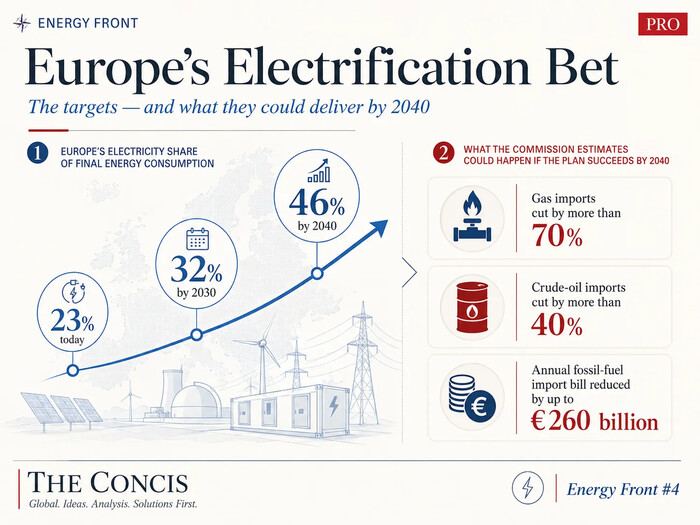
And what does this mean for Merus? Endless business opportunities. Double the marketing department tomorrow. The European Commission wants energy storage capacity to increase ninefold from its current level over the next 14 years.
The Commission wants storage capacity to rise from roughly 55 GW in 2026 to 200 GW by 2030 and 500 GW by 2040. The EIB intends to provide more than €75 billion over three years for electrification, power generation, grids, storage and related manufacturing.
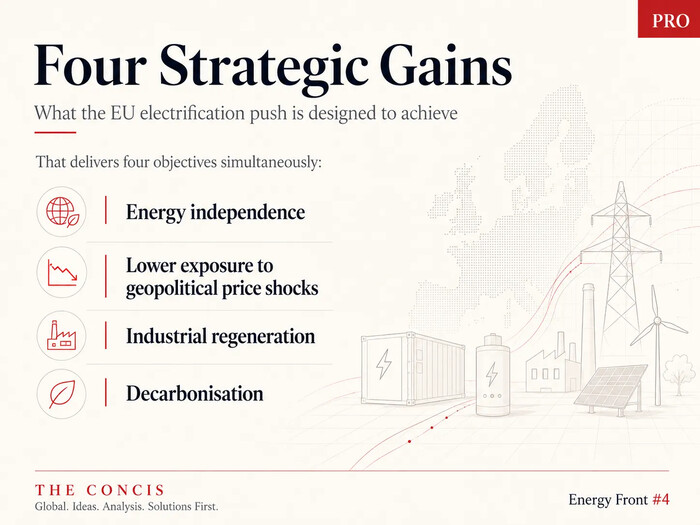
In how many of the four strategic areas below can Merus offer solutions? Exactly.
https://substack.com/home/post/p-207792718
This is not a one- or two-year project. It is a horn of plenty lasting for decades for companies like Merus, even in the construction phase alone, not to mention maintenance over the next hundred years. Triple the marketing department. And hire a person—or five—who knows EU energy law, support processes, and procurement regulations. Make Merus the new Nokia. There won’t be a better opportunity than this. 