When the Corona crash melted the value of my portfolio, I did just as the old and experienced ones had advised: nothing at all. Or rather, I didn’t sell anything. I added a few good companies when I had cash, which was unfortunately little. I’ll use the same tactic for the next storm. It might last longer and be deeper, but everything will eventually correct itself. And if it doesn’t, then the world has become such that money won’t matter anyway 
22 Likes
Here’s a good point that’s often forgotten in every bubbling market, namely company risk. If your entire portfolio is +50 EV/sales in renewables, electric cars, or tech, it’s possible that your wealth will never recover. In my own experience, index investors can breathe much easier during crashes if they believe the market will return to an uptrend in the long run and simply continue monthly saving as usual.
I had a few hydrogen trades left in my portfolio in March, which I was looking at worst-case at -50% in March. Before the Fed promised liquidity to the markets, it felt much worse to look at these in the red than, for example, Kemira 
There’s been a lot of talk here about the uselessness of diversification and how it eats into returns. The reduction of company risk brought about by diversification is often forgotten.
18 Likes
Diversification is, in a way, also a diversification of strategies. You’re simultaneously using value, growth, and whatever other strategies if you invest, for example, in the S&P 500 index. Everyone should also know that winning strategies have changed over the course of time. Also in such a way that a strategy that became ineffective has made a comeback.
Despite the corona dip, we have practically been moving upwards for a decade, with valuation multiples seemingly growing all the time. It’s not necessarily wise to draw too many conclusions about which strategy has worked during such a period. Nor should one downplay it, I don’t mean that.
However, if something extraordinary happens, things can change, and so can effective strategies. If, for some reason, valuation multiples started to come down, would concentration still be the best strategy? Perhaps? At least if you have made good choices, but it’s worth remembering that the market environment can change and effective strategies along with it.
4 Likes
It depends entirely on the investor themselves, but for a small investor, having about 15-20% cash is quite common. If you have a very strong conviction that a collapse is coming sooner rather than later, then 30-35% cash is perfectly justifiable.
While waiting for this collapse, it might be worth looking for good companies with reasonable valuation multiples. There are still some out there, even though parts of the market are already in a nice bubble. Everything really depends on the structure of your portfolio. If you invest in quality companies (which are not in hydrogen, EV, and in some cases tech companies), then just continue with the same model and moderately increase your cash position.
1 Like
Please excuse my foolishness, but what is the basis for the claim that EVs, hydrogen, etc. renewables will never recover?
In my opinion, there will be increasing investment in the sectors I listed in the future. Although valuations are already high, electric cars, for example, will become more common faster than the Finns Party can even imagine
6 Likes
They’ll surely come back, that’s hardly the question. What’s on my mind, at least, is when the average Joe, who commutes from Lahti to Helsinki for work, will be able to afford an electric car. Those drivers make up, for example, 90% of the driving population in Finland.
Ugh, gotta borrow a hammer from my cousin. Viking Chief Takkuparta thanks you.
2 Likes
The same model as is currently being implemented… So, a Finnish worker will be able to drive an electric car when worn-out junk cars start becoming available from Germany or Sweden at a reasonable price. Before that, the state will make sure to take all the money from the people by raising fuel prices and inventing all kinds of additional taxes that will be targeted at fossil-fuel driving, solely under the pretext that ordinary people cannot afford to buy a new modern electric car, for example.
15 Likes
You’re forgiven It’s going to be a harsh sight when these companies start to be valued based on their results instead of future promises. I’ll just take one example of key figures at Friday’s closing price (FCEL). The slope of earnings growth would have to be very strongly northward and fast for this to be in any way justified.
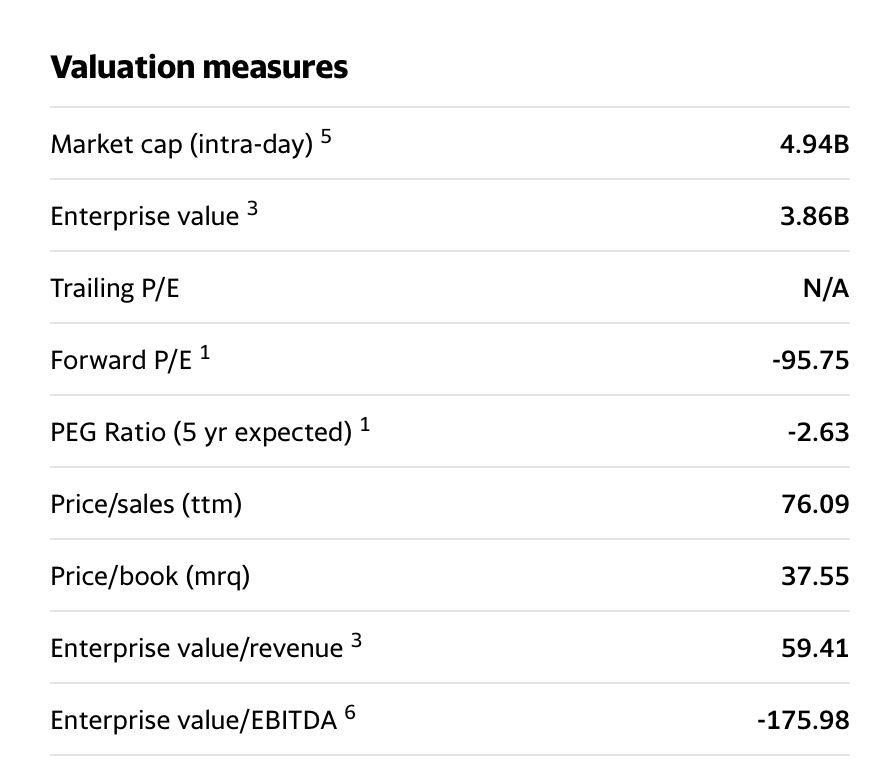
No matter, if you believe these are on a sustainable basis, then just put more money in. I myself was long in a few carefully selected companies in the sector until the trotters grew wings and I decided it was better to turn them into salami for my sandwich.

11 Likes
Now you’re lumping all the industry stocks into the same package and, for example, you picked one of the worst ones.
Of course, stock picking is essential here too. You can’t even talk about FuelCell and, say, Plug, on the same day.
6 Likes
I haven’t particularly followed the EV market, so take this as the background noise of an ignorant bystander at most, but do EV companies make a profit, even if all cars in the future are electric? Practically all cars have been internal combustion for several decades, but traditional car manufacturers aren’t exactly rolling in money, nor do they rank among the largest and most successful companies. So they’re not little tiddlers losing money, but more like companies among others. Many of them are even smaller in market value than the new EV companies.
11 Likes
I’m no expert, but I think that for old manufacturers, old investments and old structures are a burden.
Many old investments/ways go to waste, so to speak, and perhaps they can’t let go of old ways of thinking quickly enough.
Resources are wasted because they have to focus on several things at once.
Even though the general perception is that they already have some production/knowledge ready.
However, you don’t need to do everything yourself for electric cars; contract manufacturing can pick the plums, and the actual production will be bulk.
2 Likes
Okay, but my point was perhaps to go back in time, say 10 or 20 years. Back then, electric cars weren’t on the horizon yet, and internal combustion engine cars still had a good future. Even then, car companies weren’t exceptional in any way. So, in a market where everyone drove internal combustion engine cars and no shift away from them was in sight for the near future, these companies weren’t cash cows. Why would the electric car business be any different? As I see it, it’s currently priced as if profit margins will be completely different from those of internal combustion engine cars.
One factor, of course, is the software sold with cars, which will be “pure profit.” But will everyone do this, not just Tesla? And will competition eventually eat into these margins too? Will it be profitable for competitors to gain market share by selling cars at a loss and compensating with software sales, resulting in a positive margin that isn’t significantly higher than with internal combustion engine cars? Or will the market simply be so completely different from internal combustion engine cars that manufacturers’ margins will remain very high for a long time, and current electric car manufacturers’ valuations are reasonable? I don’t have answers to these questions, but perhaps those investing in them should.
19 Likes
If you’ve invested in hype stocks that have risen to extremely high valuation levels, I would put in trailing stop-losses. When a collapse comes, these are likely to come down the most.
If, on the other hand, you’ve invested in stocks with reasonable valuation levels (compared to historical levels), I would hold through a collapse. In these stocks, the downside is considerably smaller; money might even flow into these as a refuge from hype stocks, raising prices.
I use both methods myself. Although I don’t have the biggest hype stocks in my portfolio, for example, for stocks whose P/E is more than double compared to historical levels, I use a 15% trailing stop-loss.
My portfolio is so new that I don’t need to think about what to do with stocks held for years (5+). If a stock has been held for a long time and is more than double its historical P/E, I might not even put a stop-loss on these, even if the valuation levels are high. Taxation and loss of dividends could eat more into the results than a potential collapse. Considering each stock individually when deciding how to act means you can’t go too far wrong.
3 Likes
What about IT stocks 20 years ago? There’s no doubt that the IT sector saw significant investment over the next 20 years, but many of the stocks from that era will never recover.
The point is that the winners in the EV and hydrogen sectors could very well be large companies that enter the game later. I would venture to predict that now is the time to be very cautious with these hyped stocks (EV, hydrogen), as there are far too many speculators and inexperienced investors involved. A classic case from investment books.
9 Likes
One link says more than a thousand words:
The winners can certainly win big, but most of the thousands of companies in various “hype industries” will go out of business.
12 Likes
This is a bit hard to understand, but watch it a couple of times, and you’ll probably get the main point. And this relates to those hydrogen/EV topics.
1 Like
Good thoughts! What things would you consider important to follow now with a possible collapse in mind? Apparently at least the direction of inflation and interest rates? I watched from a video that it would be good to also follow the development of “velocity of money supply”, which now seems to be making a turn. However, I don’t really understand yet what this means. Can wiser people shed some light on the matter?
I’m personally tracking the development of my own cash reserves  so I can buy in a crash. However, the rest of the year will be spent saving to get about 20-25% together.
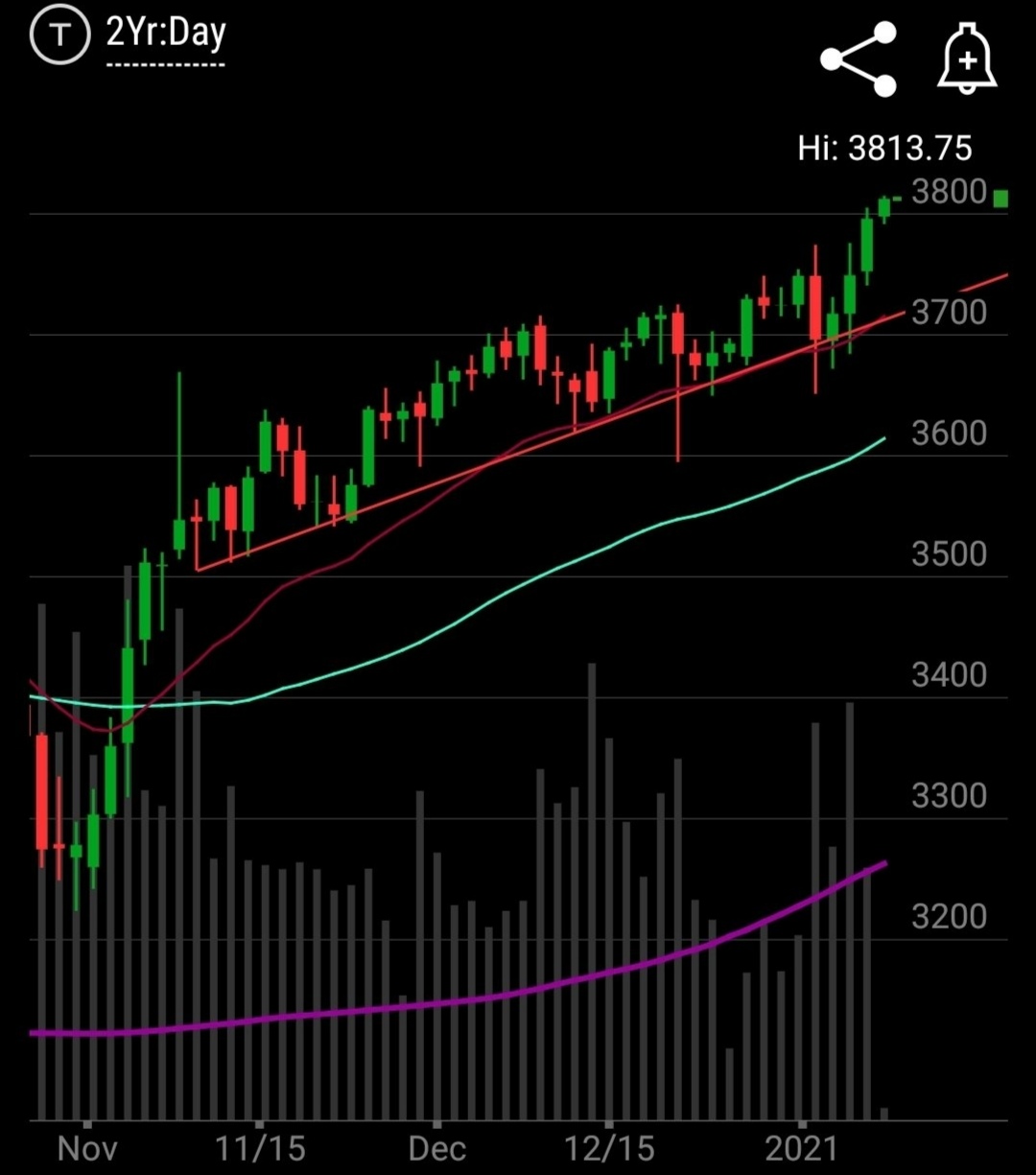
The trendline of the S&P 500 could be considered a kind of indicator for a correction, i.e., if it falls below the line that rose due to, for example, vaccine news, it could be a sign of a larger correction. Note: speculation is always questionable. Here’s a picture from a slightly longer timeframe.
2 Likes
Over the years, stock market crashes have come and gone, and frankly, I haven’t really prepared for them in any way, nor has their outcome significantly affected my portfolio balance in the end. So, if you’re afraid of a momentary 70% drop in value in your investment career, you’re in the wrong place. In my own portfolio, I have stocks whose value has dropped by 80%, and after waiting for some time, I have usually sold them with over 20% profit – so a stock market crash is more of a welcome event than something to fear. All market disturbances bring more profits than losses.
Eagerly awaiting the next crash.
19 Likes
I’m somewhat concerned about this constant rocketing everywhere. On YouTube, various guys are hyping things up, saying, “Buy this and that, profits will be 10x!” I actually started proper stock trading myself only last summer, and precisely with Tesla (volatility became familiar right away). Before that, I had only managed to invest in basic ETFs for a couple of years. Somehow, even with this much investment experience, it feels like this can’t be right? Week after week, stocks are rising here and there by dozens of percentages without any major news?
5 Likes