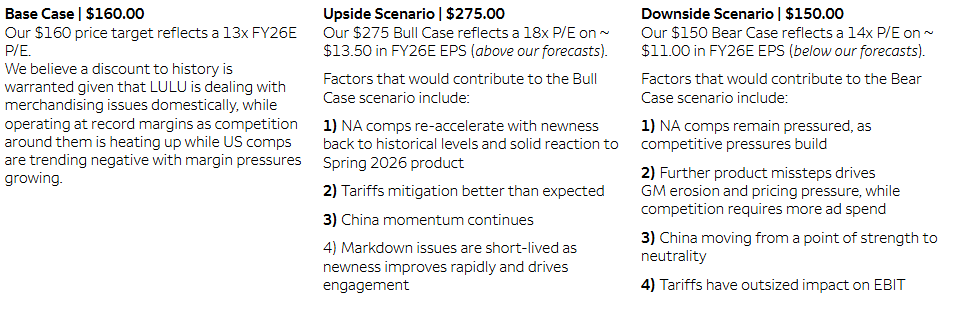
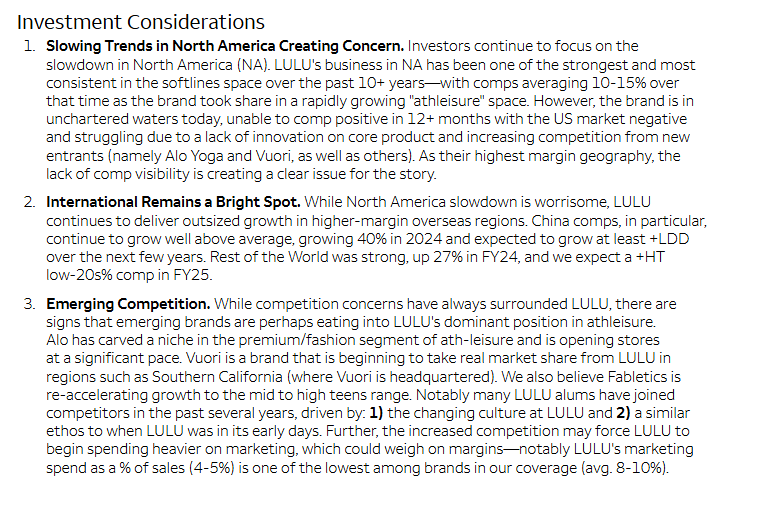
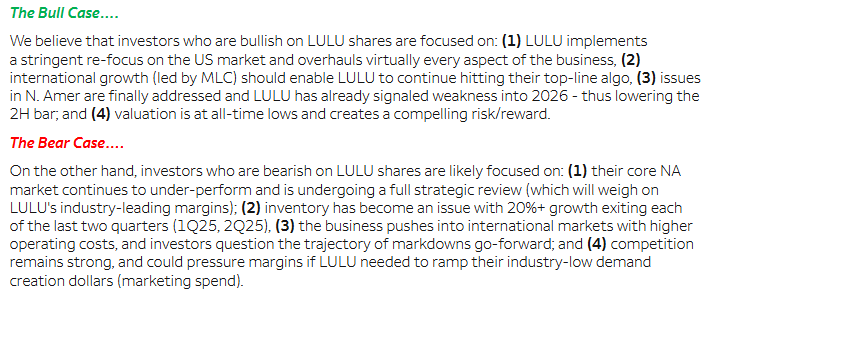
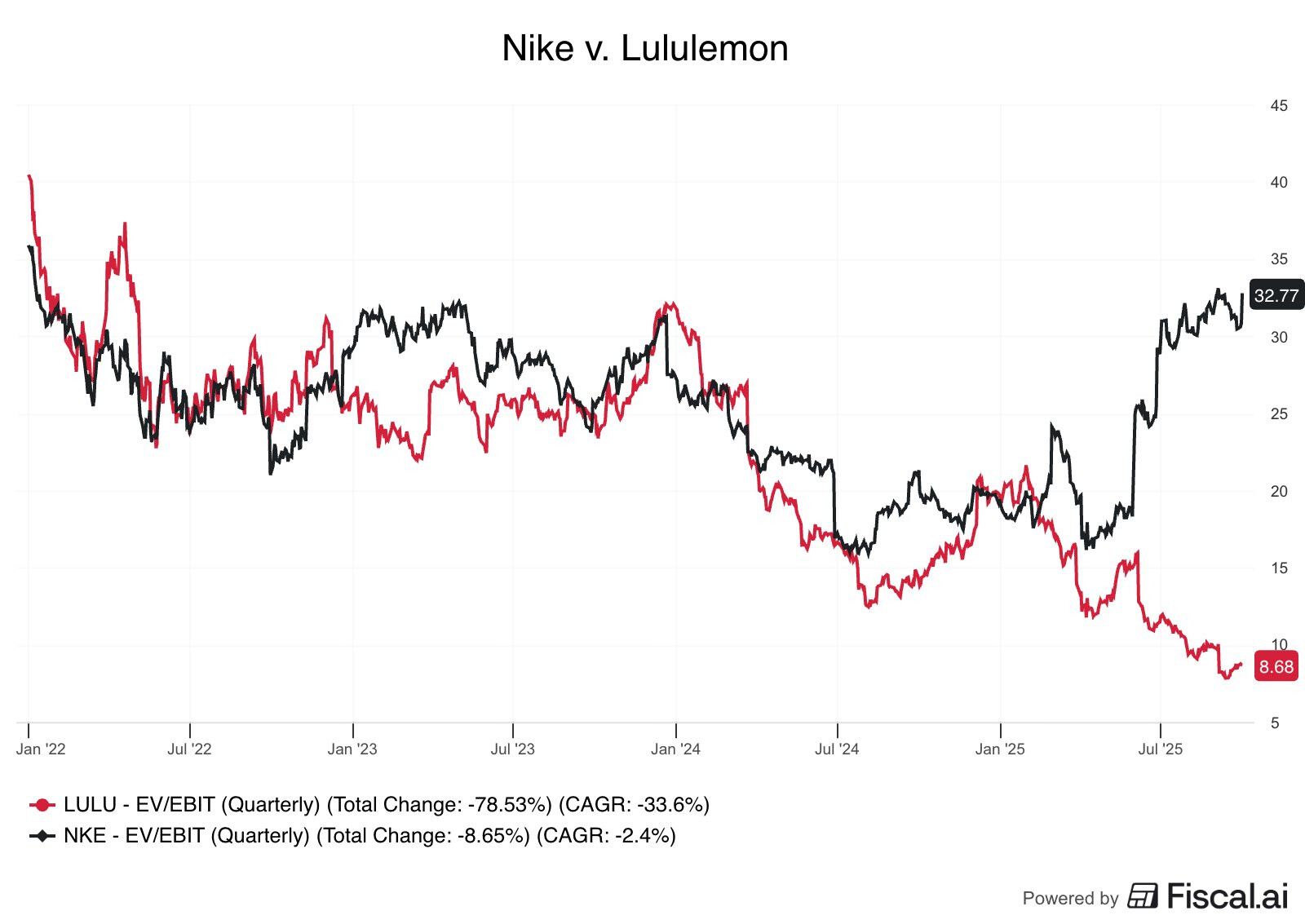
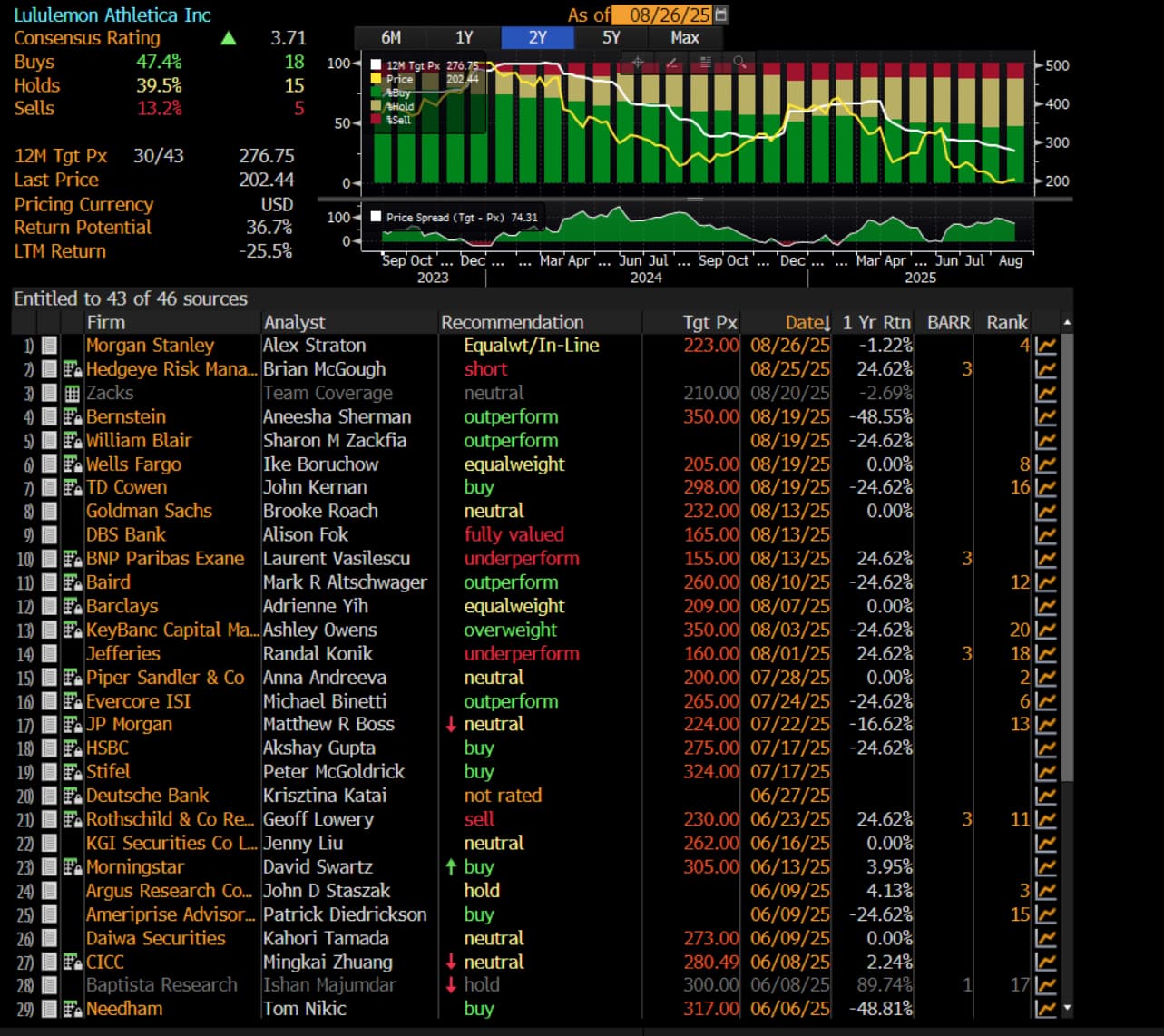
I dug up some more charts from Blomma on Lululemon. First, it’s nice to see that analysts’ views are quite spread out here. There are both bears and bulls. Usually, the worst situation would be if everyone in a unified herd was shouting STRONG BUY
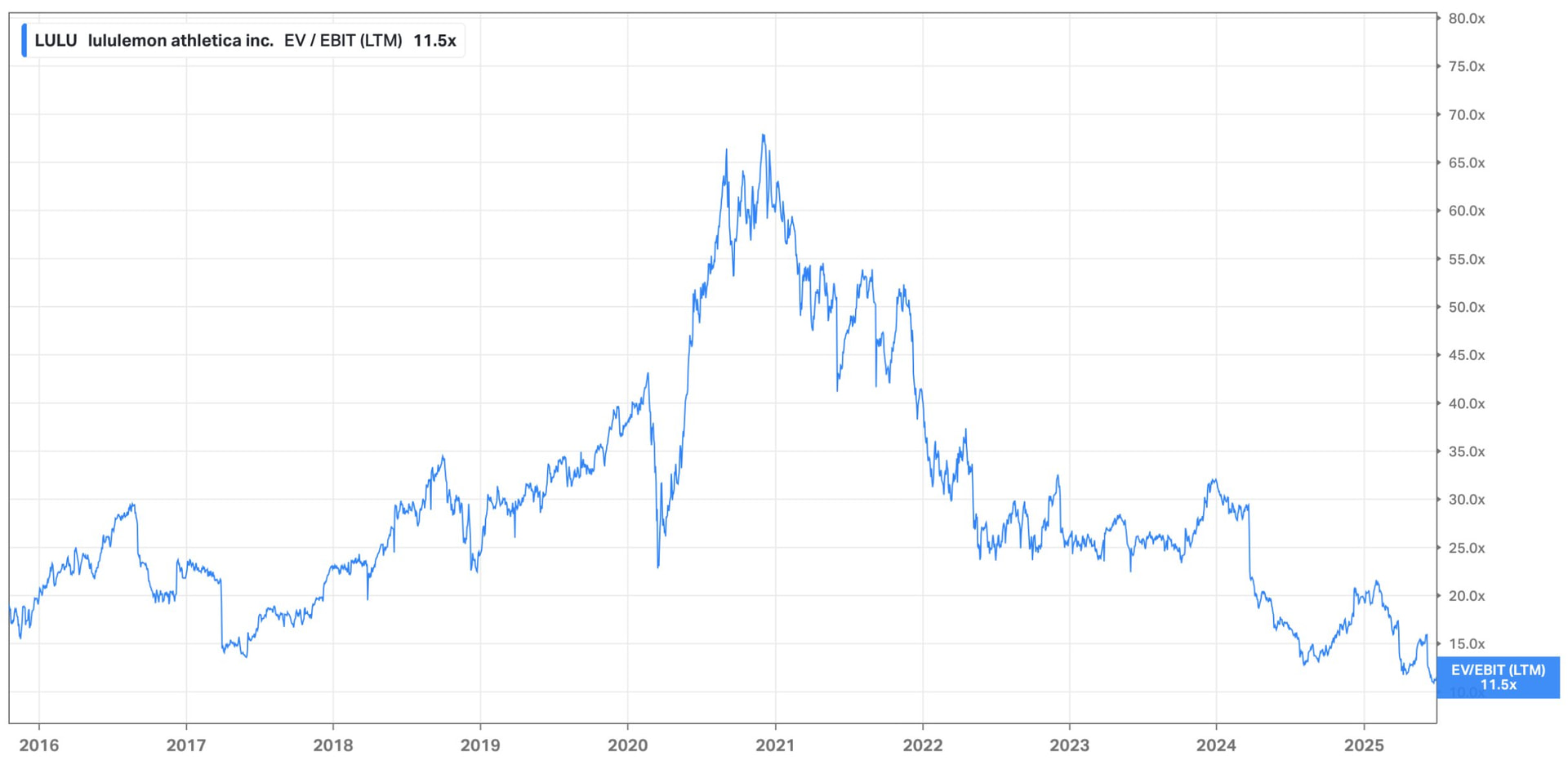
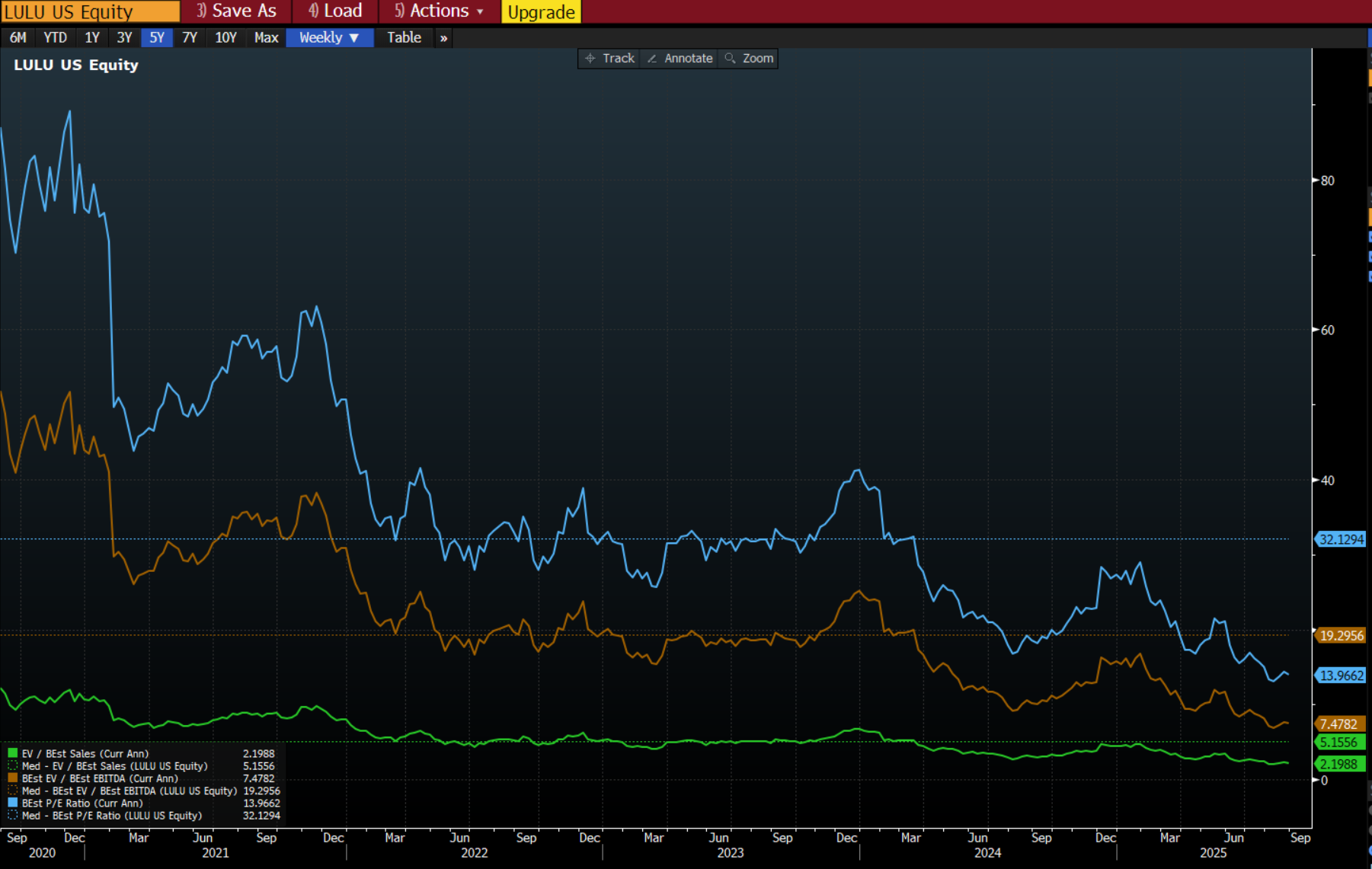
Lululemon’s valuation multiples are indeed very low compared to historical levels! Here you can see the EV/S, EV/EBITDA, and PE multiples, as well as their 5-year medians.
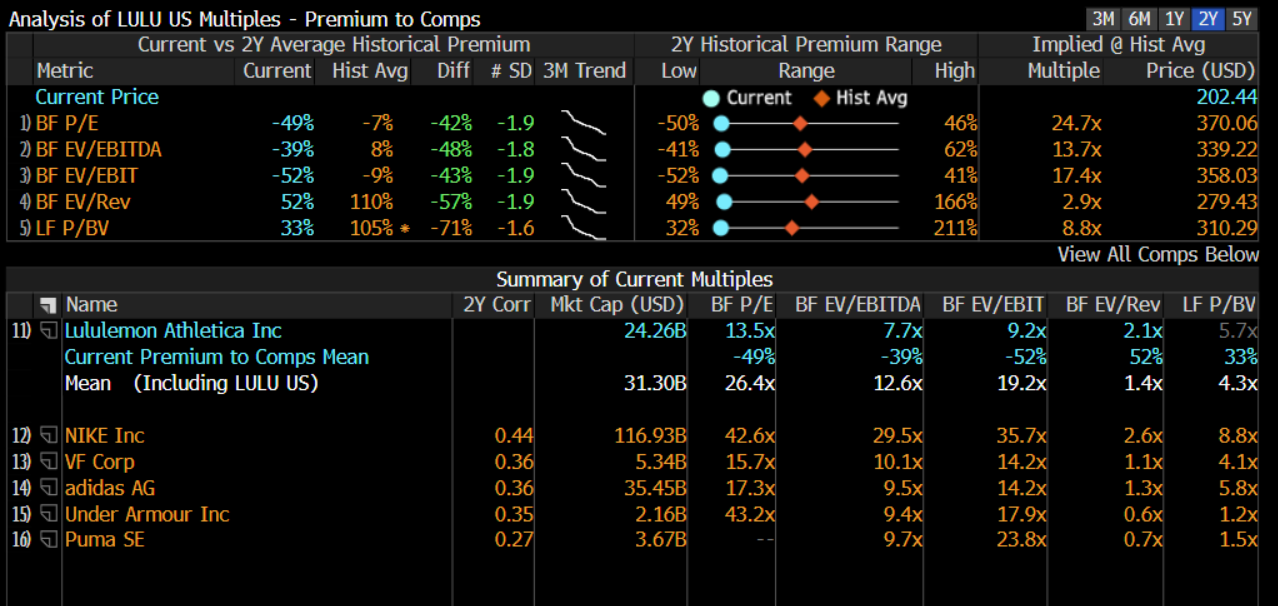
The valuation discount is also significant compared to peers, but of course, to some extent, we are comparing apples to oranges there.
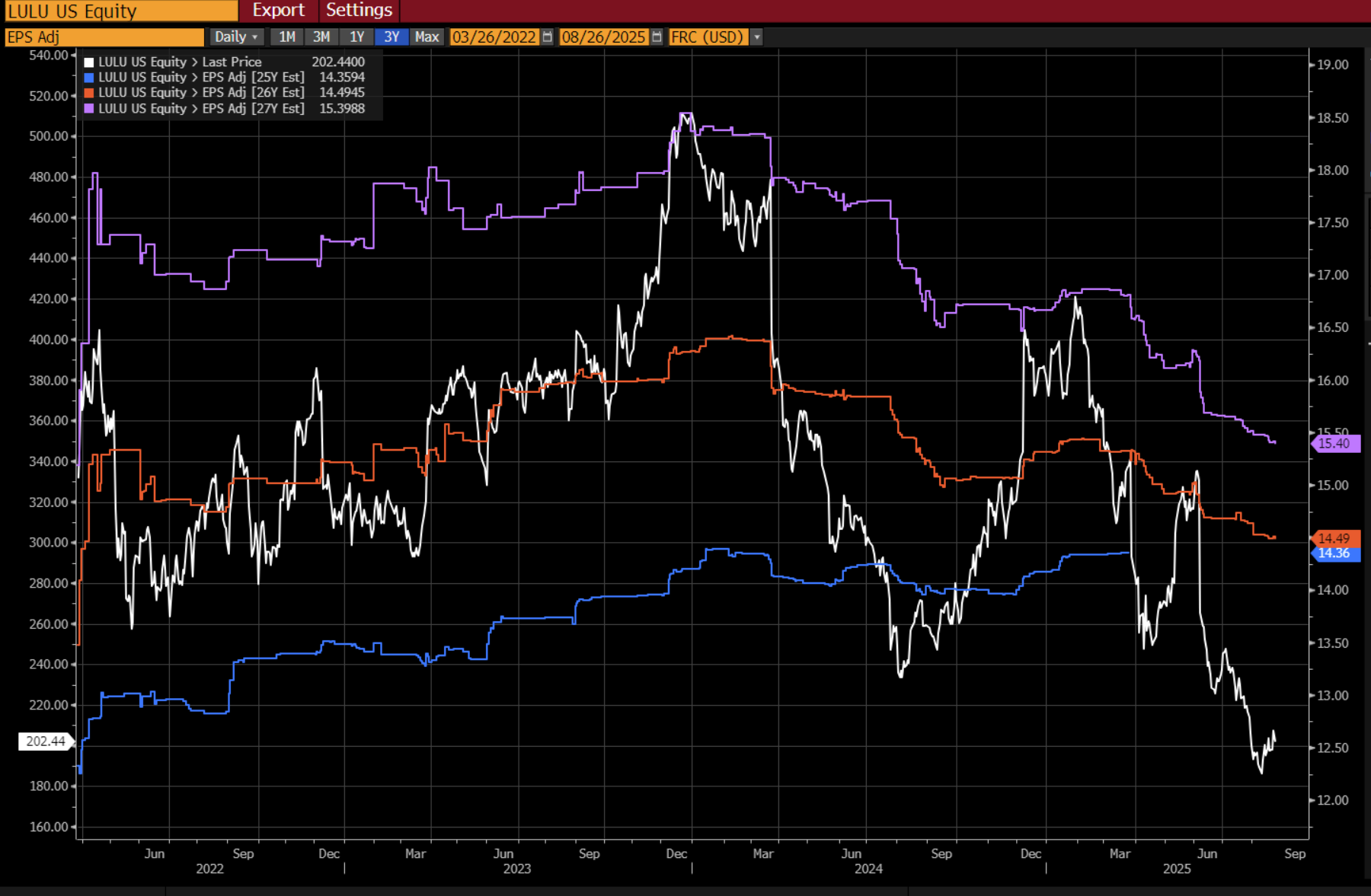
Indeed, not much growth would be needed here to make this a perfectly decent investment in the coming years. This development of EPS forecasts is quite interesting. For 2025, the forecast has even risen slightly, but the 2026-2027 forecasts have been under pressure recently. If visibility for the coming years were to improve and/or the trend of earnings forecasts were to stabilize or even start to rise, then the stock would surely start to rally.
Nice to see that smart investors here have also been led astray by Lulu.
My thesis:
Excellent product and brand
Quality and product development, see other comments above
My own Lynch observations when visiting the US, both in stores and yoga studios, have confirmed what market data says: the brand is still clearly stronger than Vuori etc. smaller challengers, no change in the big picture
International growth
The most important part of the thesis: I believe the athleisure trend is only just beginning, especially in Asia; the market size is huge and there’s a runway of 10+ years ahead
Chinese, Indian, etc. middle-class/wealthy people don’t wear Adidas regardless of the economic situation, but rather stylish, high-quality, perceived-as-expensive brands = Lulu
Management’s execution has been mostly excellent, the company’s employer image is good, there’s money, the ingredients for continued international growth are there
Valuation
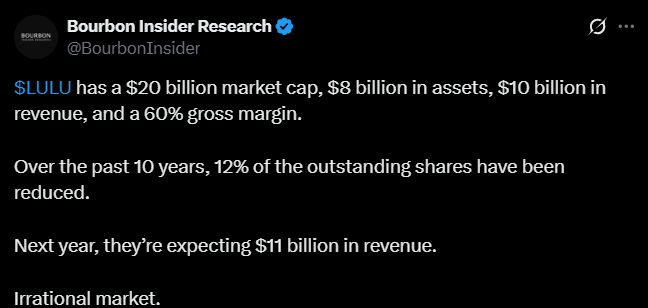
EV/EBIT 10 (ntm) after a difficult US consumer year; it’s a bit pointless to compare to historical multiples when such strong growth was expected then, but surely a retail company of this quality should trade at 30-50% higher multiples
Risks
Consumer trends and brands come and go
EBIT 22-23%, it’s hard to improve on something so good; if I had to guess, in 5 years this will be 18% rather than 28%, there are always all sorts of challenges
The easiest growth in the US has already been captured, and the US is still such a large part of revenue that the company’s overall growth will only be single-digit in the coming years
Of course, there are many other things, but in my opinion, only a rapid change in the first bullet point would severely put the investment case into a loss at the current $200 price.
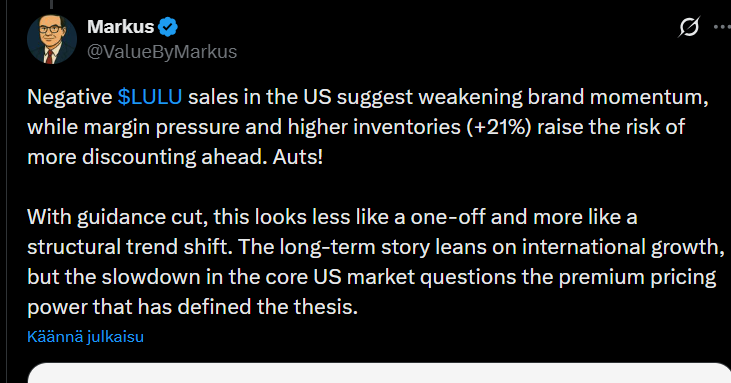
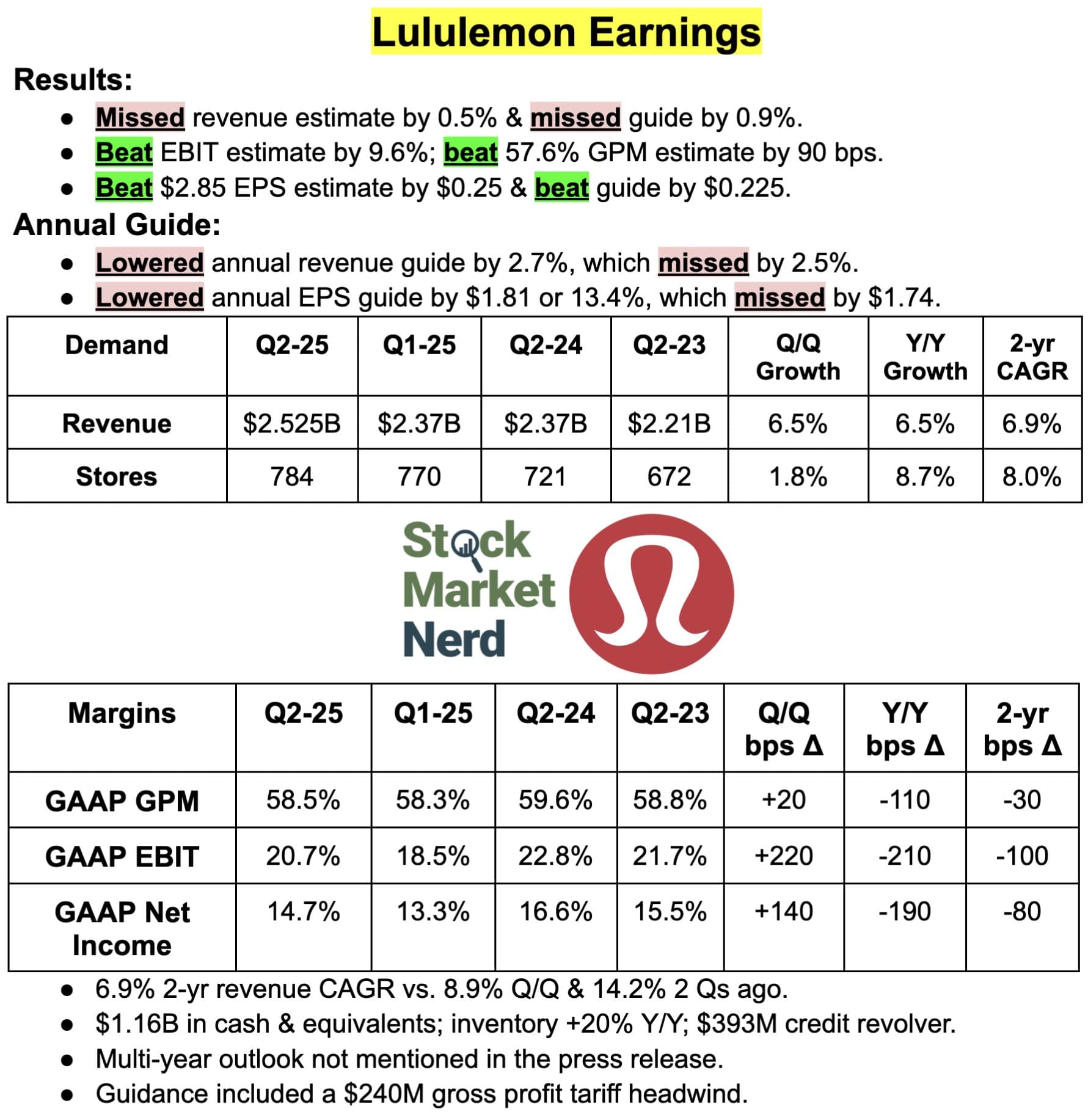
Results quite good, but guidance very poor. There will be a big drop.
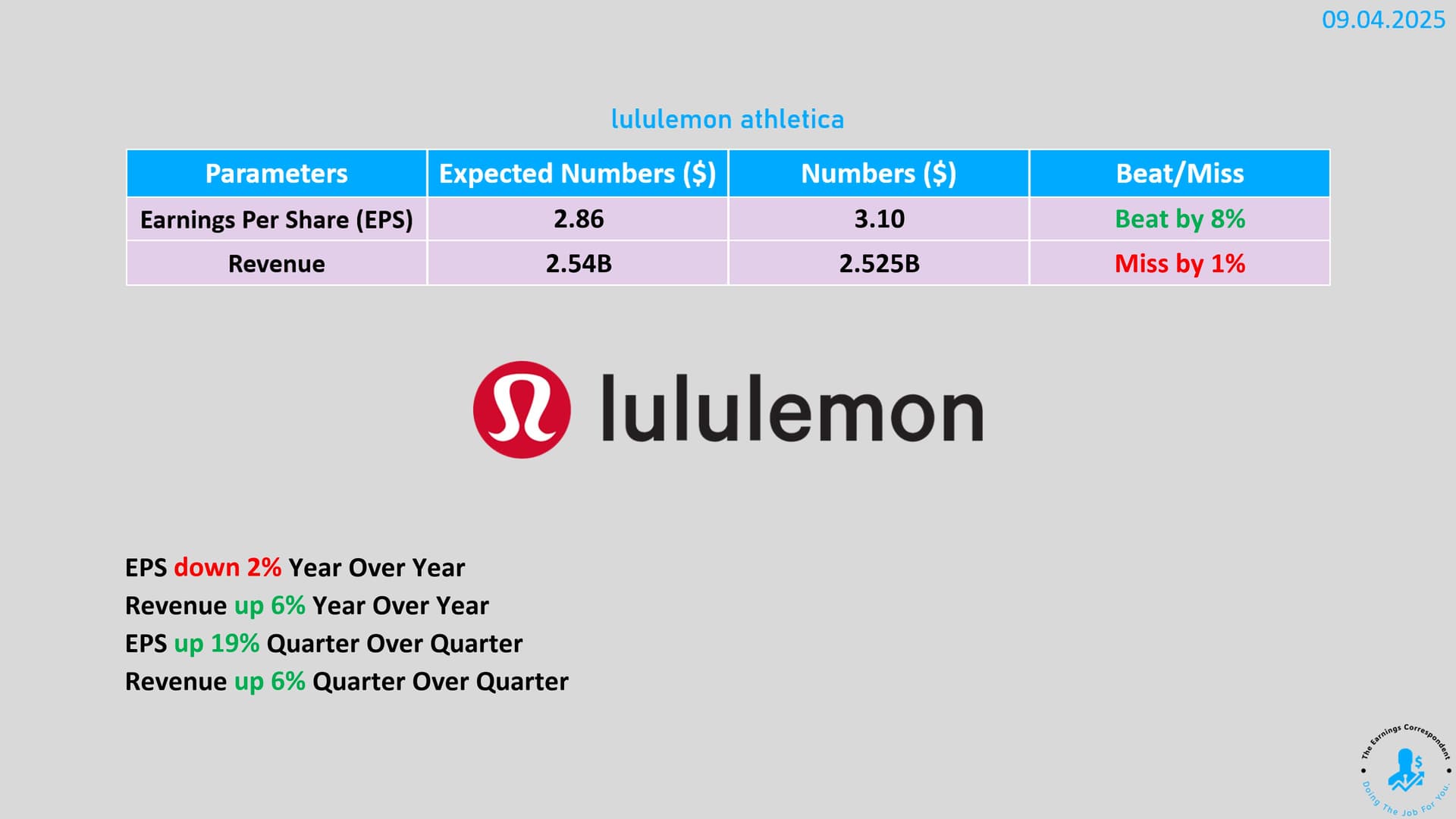
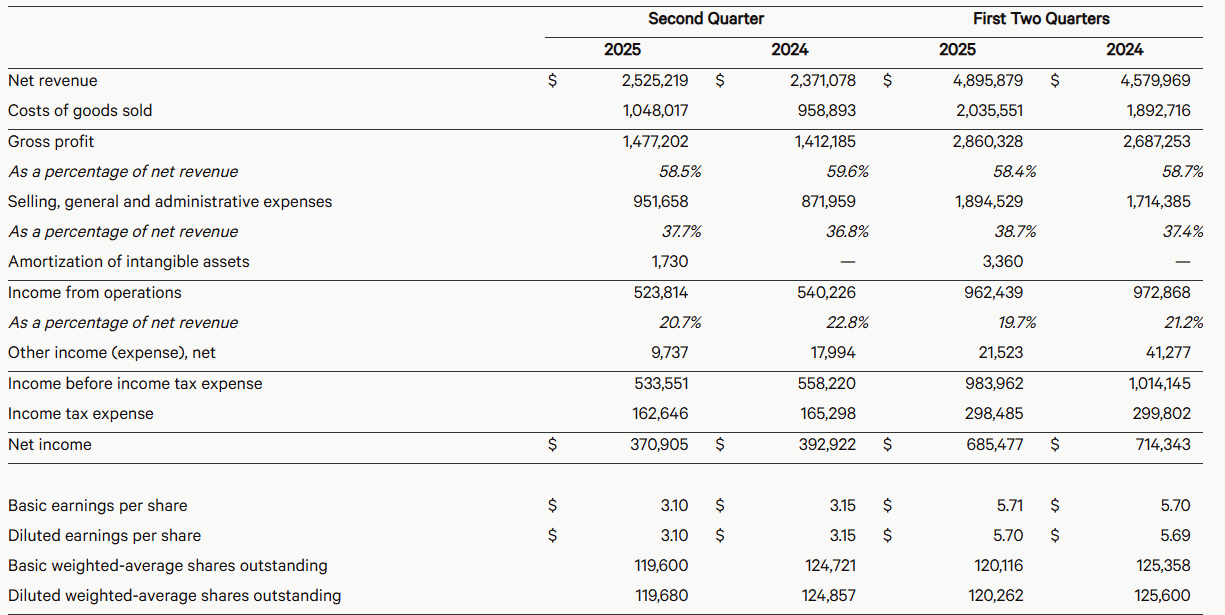
Lululemon Athletica (NASDAQ: LULU) reported second quarter EPS of $3.10, $0.23 better than the analyst estimate of $2.87. Revenue for the quarter came in at $2.53B versus the consensus estimate of $2.54B.
Guidance
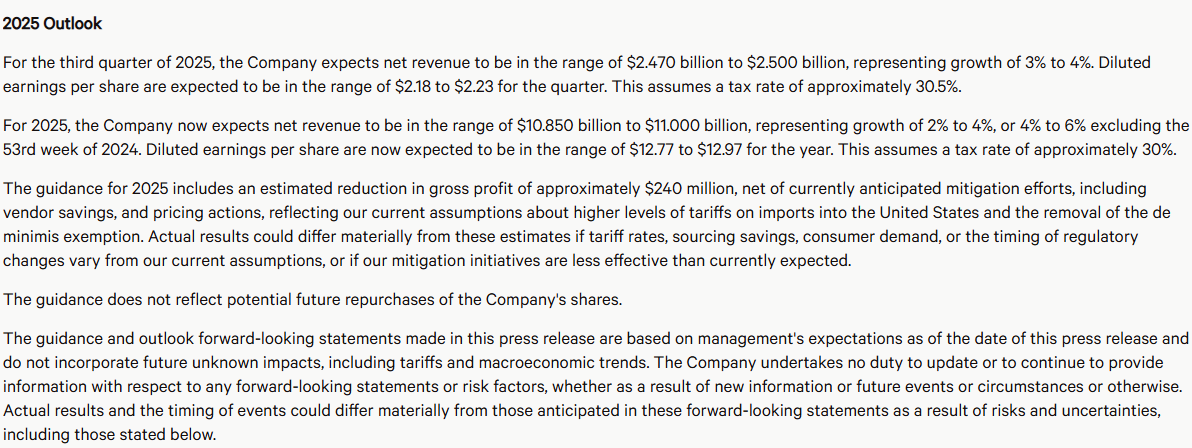
Lululemon Athletica sees Q3 2026 EPS of $2.18-$2.23 versus the analyst consensus of $2.90.
Lululemon Athletica sees Q3 2026 revenue of $2.47B-$2.50B versus the analyst consensus of $2.56B.
Lululemon Athletica sees FY 2026 EPS of $12.77-$12.97 versus the analyst consensus of $14.61.
Lululemon Athletica sees FY 2026 revenue of $10.85B-$11.00B versus the analyst consensus of $11.20B.
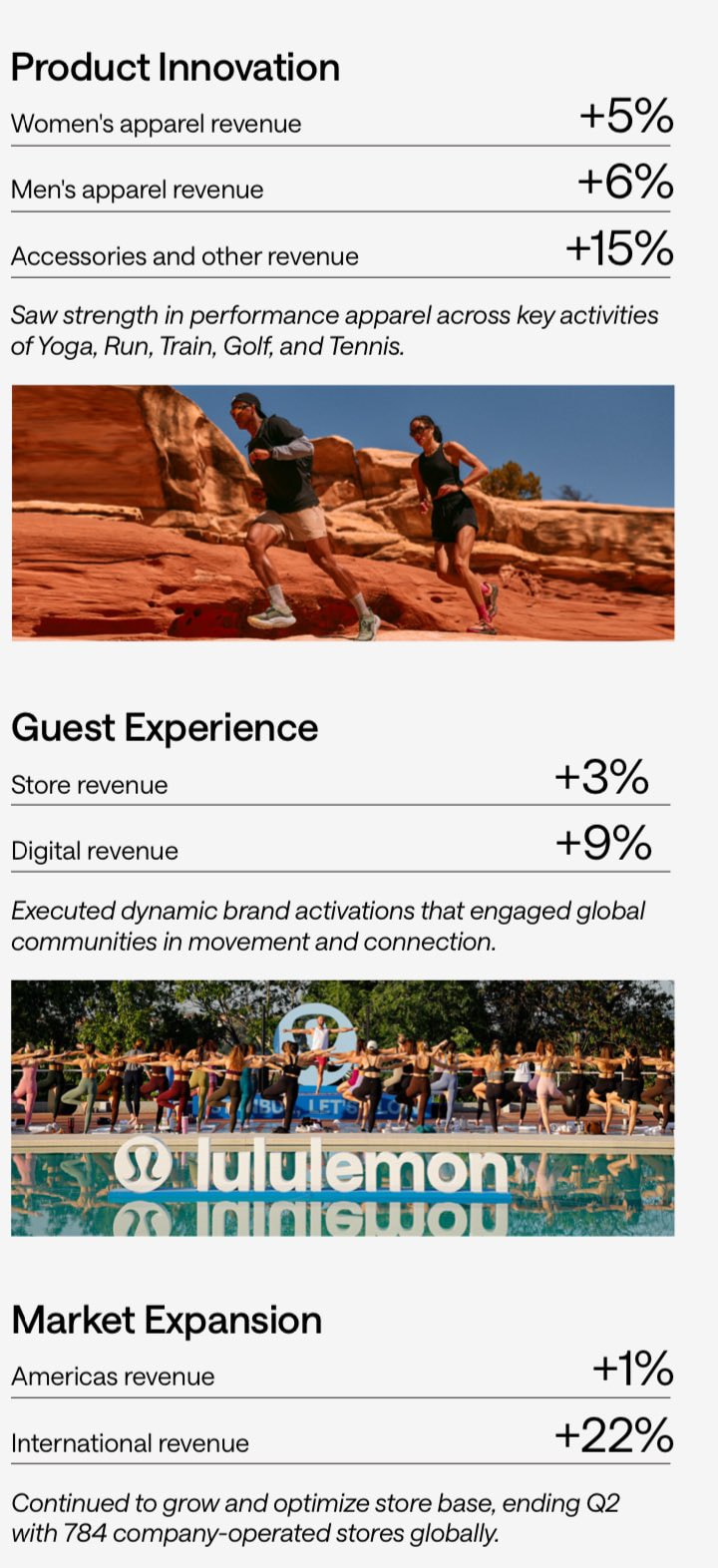
Lululemon’s revenue grew and profitability improved, but the US market and overall product assortment execution fell short of expectations. Management stated they are taking corrective actions to strengthen their offerings and accelerate growth, and the company also emphasized its belief in the company’s long-term potential.
Earnings per share exceeded expectations, but revenue fell short of forecasts, particularly due to weakness in the US. The company also mentioned industry challenges, such as increased tariffs, and refined its full-year outlook. Management highlighted the strength of the brand and balance sheet, as well as a commitment to disciplined financial management and strategic investments.
After processing the results overnight, one can be happy that their investment thesis hit at least in some parts, but unfortunately, I was just too quick with this one – is that a shame?
Naturally, a negative outlook is the predominant feeling from this, even though the result itself was okay and inventory growth was curbed. However, inventory levels still weigh on cash flow, and in the US, the real economy’s situation and the consumer’s position there seem to be surprisingly sluggish. At the same time, international growth and a strong brand support long-term potential, and despite inventories, the balance sheet is quite good and there’s a fair amount of cash.
The question here is likely whether the negative outlook now given is sufficient to cover the challenges for the rest of the fiscal year, and when US revenue will recover, as well as when inventories will be normalized. There is urgency to achieve international growth, which the situation in China might help. Hopefully, interest rate cuts etc. in the US will stabilize the real economy’s outlook. Of course, consumer confidence is also low here in Europe, even though there are record amounts of money in accounts.
Still, it doesn’t help; these have been the biggest lessons learned in my investing career during these three months of ownership. It’s probably too late to jump off the ride now, and we’ll stay to observe the realization or non-realization of the long-term potential. If it drops significantly, down to around $150, then I’ll buy a bit more.
You can blame me for the poor result. Even at the office, I noted that now that I’d bought shares just before the results, a soft report was sure to follow
I’ll return to this point from my previous message.
Now, the guidance for next year was trimmed, and the trend of estimates for the coming years is still under pressure. If we bracket from the 12.77-12.97 2026 EPS guidance, then with a 12x-15x P/E multiple, the stock would be around 153-195 dollars. So, in the short term, we might see some sluggishness. In the longer game, I do see potential for Lulu to still catch onto earnings growth. I’ll have to keep an eye on how the stock starts to develop here and consider possible average price reductions.
At the same time, I ordered the company’s chinos when I bought the stock, and these are certainly comfortable to walk in, both at work and during leisure. Let’s see how expensive these pants turn out to be when the losses from the stock are finally taken into account. My wardrobe already contains Lohilo sweatpants that cost a couple of grand from the compound interest era
Iso kysymys on myös miten tullit tulevat jatkossa menemään.
Toivotaan että korkein oikeus ei asettuisi Trumpin puolelle. Lulu hyötyisi paljon jos Trumpin extra tullit todetaan lopulta laittomiksi.
However, a new federal court ruling has found that most of the tariffs are illegal, and Trump just announced that he’s asking the United States Supreme Court (SCOTUS) for an emergency appeal.
A federal appeals court ruled most of Trump’s ‘emergency’ tariffs illegal
Most of Trump’s controversial tariffs were imposed under the International Emergency Economic Powers Act (IEEPA). The law allows the president to declare national emergencies and take economic measures in response to them.
Trump declared that the U.S. trade deficit is a national emergency and invoked IEEPA to impose sweeping “reciprocal tariffs.” Initially, that meant a minimum 10% tariff on most imports and much higher tariffs on select countries.
However, last week, the U.S. Court of Appeals for the Federal Circuit struck down most of those tariffs. In a 7-4 decision, the court ruled that IEEPA doesn’t authorize the president to impose taxes or tariffs.
“We agree that IEEPA’s grant of presidential authority to ‘regulate’ imports does not authorize the tariffs imposed by [Trump’s] Executive Order,” the majority wrote.
In ruling against the Trump administration, the federal appeals court emphasized that the power to levy tariffs is constitutionally vested in Congress, not the president. In doing so, the court went on to point out that, “Notably, every Congressional delegation to the President of the core legislative power to impose tariffs includes well-defined procedural and substantive limitations.”
That August 29 decision largely affirmed a U.S. Court of International Trade finding from May 2025, that Trump’s tariffs were “invalid as contrary to the law.”
Interesting commentary on the earnings report from ex-analyst, retail consultant Matt McClintock:
The entire athletic apparel sector is weak, but Lulu is still performing better than listed peers, meaning it has gained market share (the CEO reiterated this in the call and also in this CNBC interview; on the other hand, he also repeatedly stated that competition is tougher than 2-3 years ago)
“The CEO said they gained market share in performance apparel, and everything I see and hear from the industry supports this claim”
Difficult to understand the weakness of the athletic trend vs. the strength of footwear brands like On
Sales problems in the Social & Lounge segment sound like they are competing with regular (non-sportswear) clothing manufacturers in those areas
Lulu allegedly has lower pressure to discount products, expected change in markdowns only 0.15% → 0.50%
Regarding tariffs, Lulu benefited from the de minimis rule, meaning shipments under $800 were tax-free, and 2/3 of Lulu’s e-commerce shipments were from Canada (tax exemption ended at the end of August and, according to the CEO, was partly a reason for the guidance reduction)
Speculates that inventory cannot be adjusted quickly enough for spring 2026 for products that are selling well, as manufacturing technical products takes longer than basic clothing
However, the 13% inventory growth is not concerning, it is in line with the company’s expectations and was due to tariffs and exchange rates
One question, of course, is what proportion of consumers will forever buy a certain product at a 50-100% premium compared to a competitor (e.g., Gymshark). Somehow, on a smaller scale, it brings to mind Marimekko’s Unikko boom about 15 years ago.
The company’s key figures are certainly attractive. A quick poll with young people revealed that yes, it’s a good product but expensive. So, nothing new there.
One question, of course, is what portion of consumers will forever buy a certain product at a 50-100% premium compared to a competitor (e.g., Gymshark). Somehow, on a smaller scale, it reminds me of Marimekko’s Unikko boom some 15 years ago.
That crowd earning over 100k USD/year - hopefully. For Lulu, this group has high retention, a high average purchase, and forms a large part of the customer base. I did the so-called Riikola move and bought before earnings… now showing -40k EUR loss I did buy more on that dip, but perhaps I should have made this decision a bit less impulsively.
Is the knife still falling, or were all the so-called loose ends and even extras taken out of the forecast? What if the Supreme Court declares those tariffs illegal? Overall, my investments have gone very well, so I guess you have to take a hit sometimes.
@Atte_Riikola What’s your gut feeling: has that negative outlook been played completely safe, or are there more negatives to come? However, having somewhat explored this “rag trade,” the medium- and long-term prospects don’t seem bad to me, and the multiples are quite beaten down concerning future expectations?
My gut feeling would say that things can always get worse Often, with these falling knives, the trend continues to be worse for longer than we investors would hope.
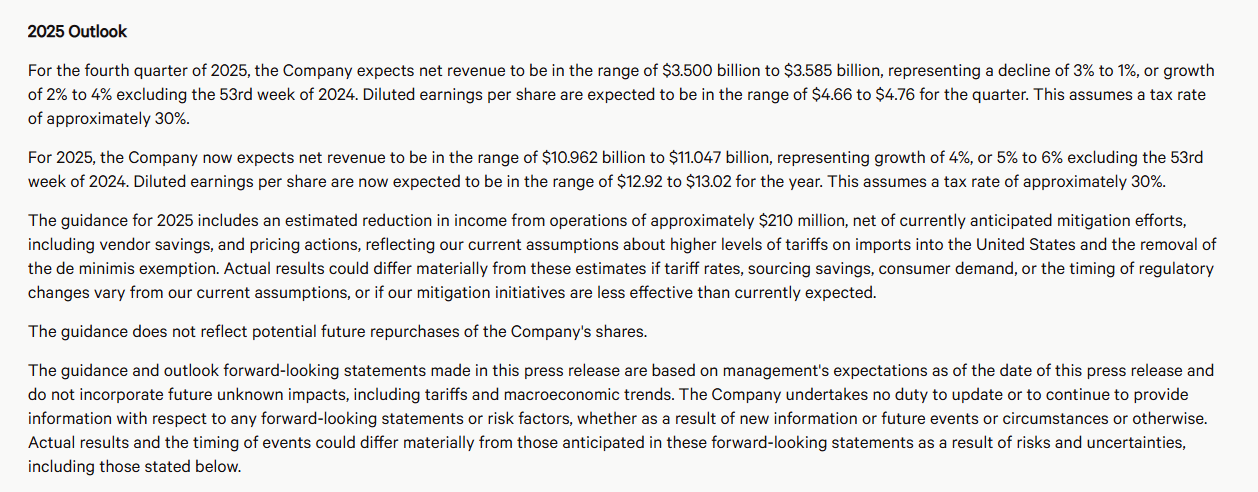
As can be seen from the consensus estimates below, for the fiscal year ending January 2026, moderate revenue growth is still expected, but the operating margin is now weakening somewhat. In absolute terms, profitability is still at a very good level, and in a bad scenario, for example, tariffs or intensifying competition could cause even more pressure on it. A slowdown in demand could also push the top line further down. But when looking at the matter with current forecasts, expectations are not particularly high when the valuation is around P/E 12x. Let’s hope that the forecasts will nevertheless return to an upward trend in the coming years, and the trend will no longer be downwards
Lululemon Athletica announced its collaboration with the NFL and will launch a collection featuring men’s and women’s apparel as well as accessories for all 32 NFL teams.
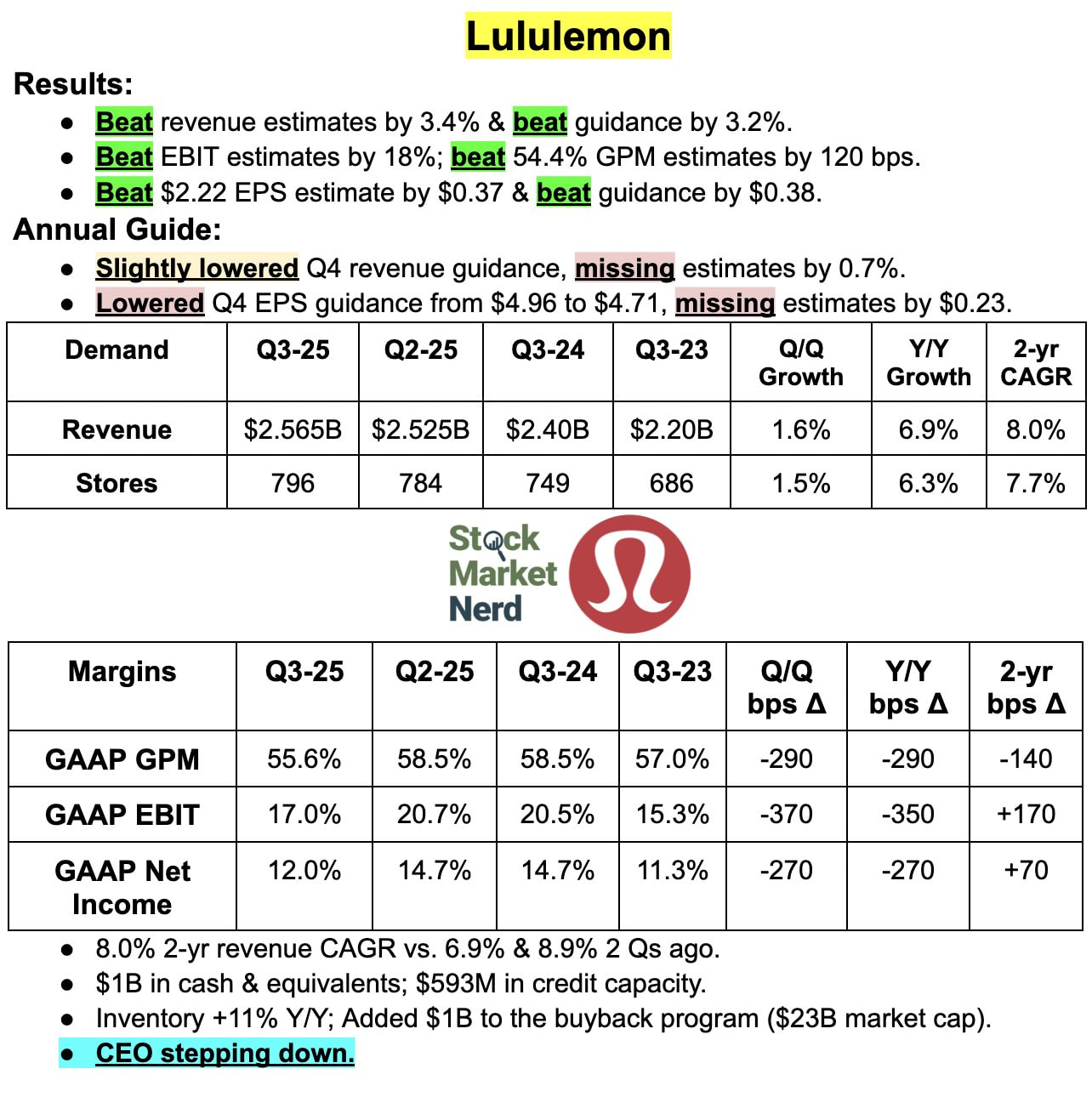
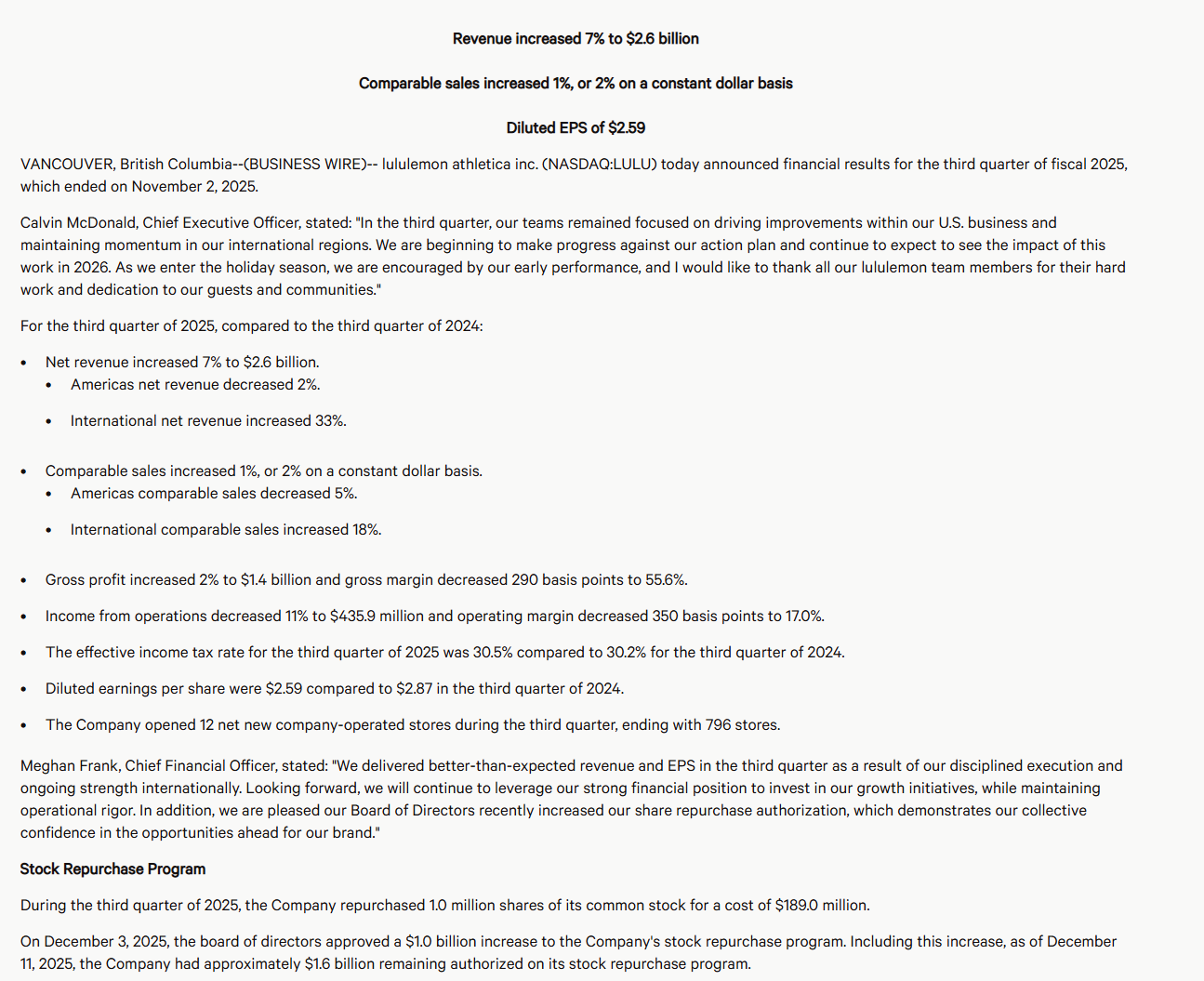
Lululemon’s revenue improved slightly, but profitability, on the other hand, weakened a bit.
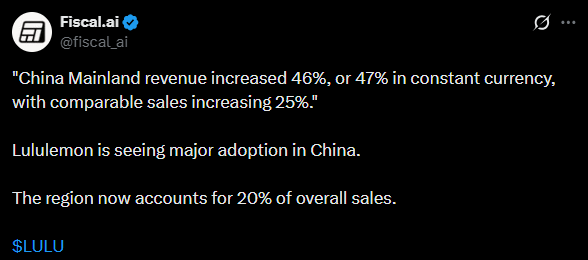
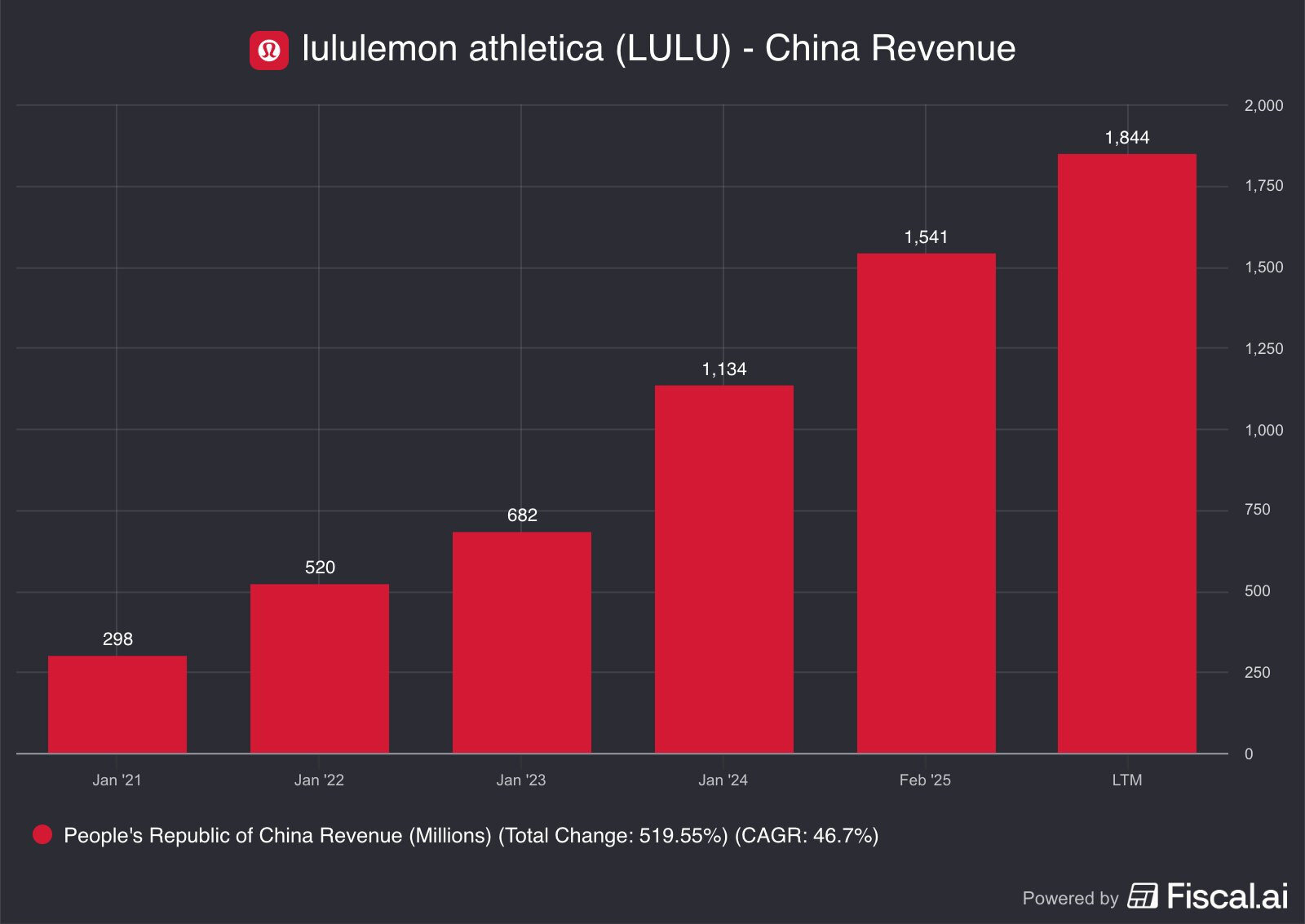
Sales grew especially in international markets, while in the United States, things didn’t go quite as well, and the company reportedly worked to sharpen its business operations. On the other hand, management believes that the ongoing measures will start to show more clearly next year.
Well, the company at least exceeded its own expectations for both profit and revenue. In addition, the share buyback program was increased, which likely signals management’s confidence in the brand’s future and growth.
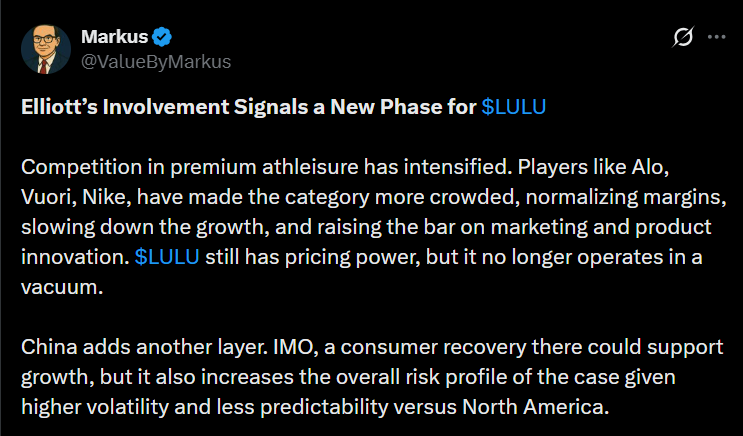
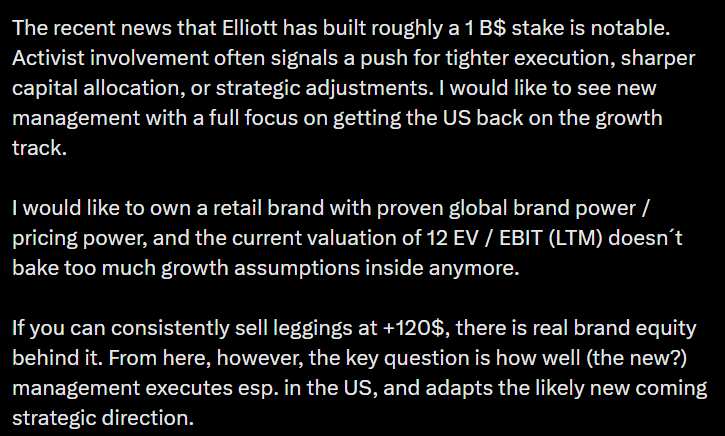
Elliott has invested over a billion in Lululemon, and the news below states that it plans to drive changes due to the company’s weak performance.
The fund is also supporting a potential new CEO as the current one steps down.
Activist investor Elliott Management has amassed a stake of more than $1 billion in Lululemon Athletica (LULU.O), opens new tab and is lining up a potential CEO candidate as it pushes to revive the struggling athletic apparel retailer, a source told Reuters on Wednesday.
Elliott has been working closely for months with veteran retail executive Jane Nielsen, former chief financial officer and chief operations officer at Ralph Lauren (RL.N), opens new tab, and views her as a potential CEO candidate, the source added.





 I did buy more on that dip, but perhaps I should have made this decision a bit less impulsively.
 Often, with these falling knives, the trend continues to be worse for longer than we investors would hope.