Transportation powertrain solutions: electricity, hydrogen, fuel cells

Not much in the way of pictures and videos from the ACT Expo.

During the test drive, the most interesting fuel cell vehicles for my taste were the Hino and Kenworth/Toyota.

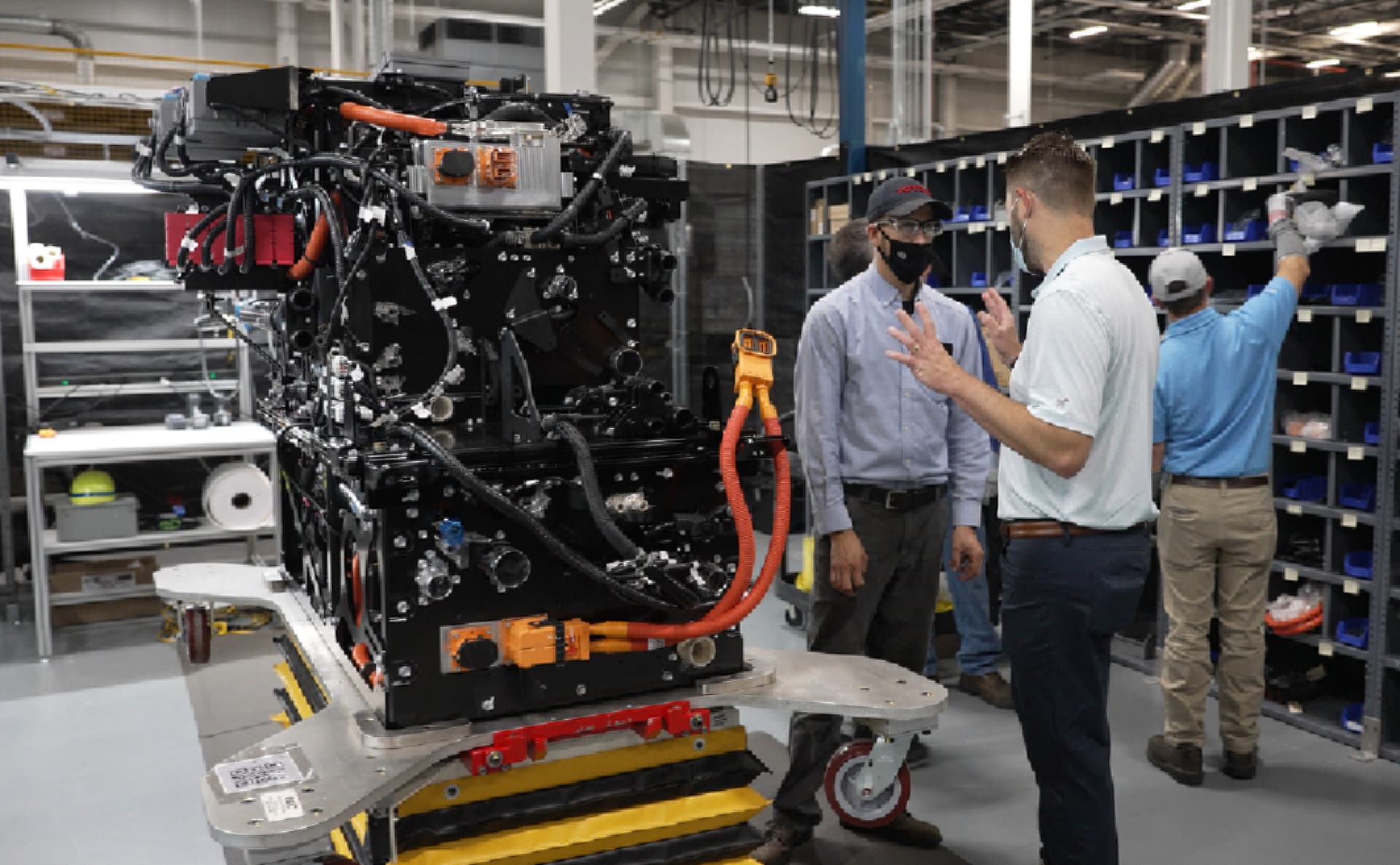
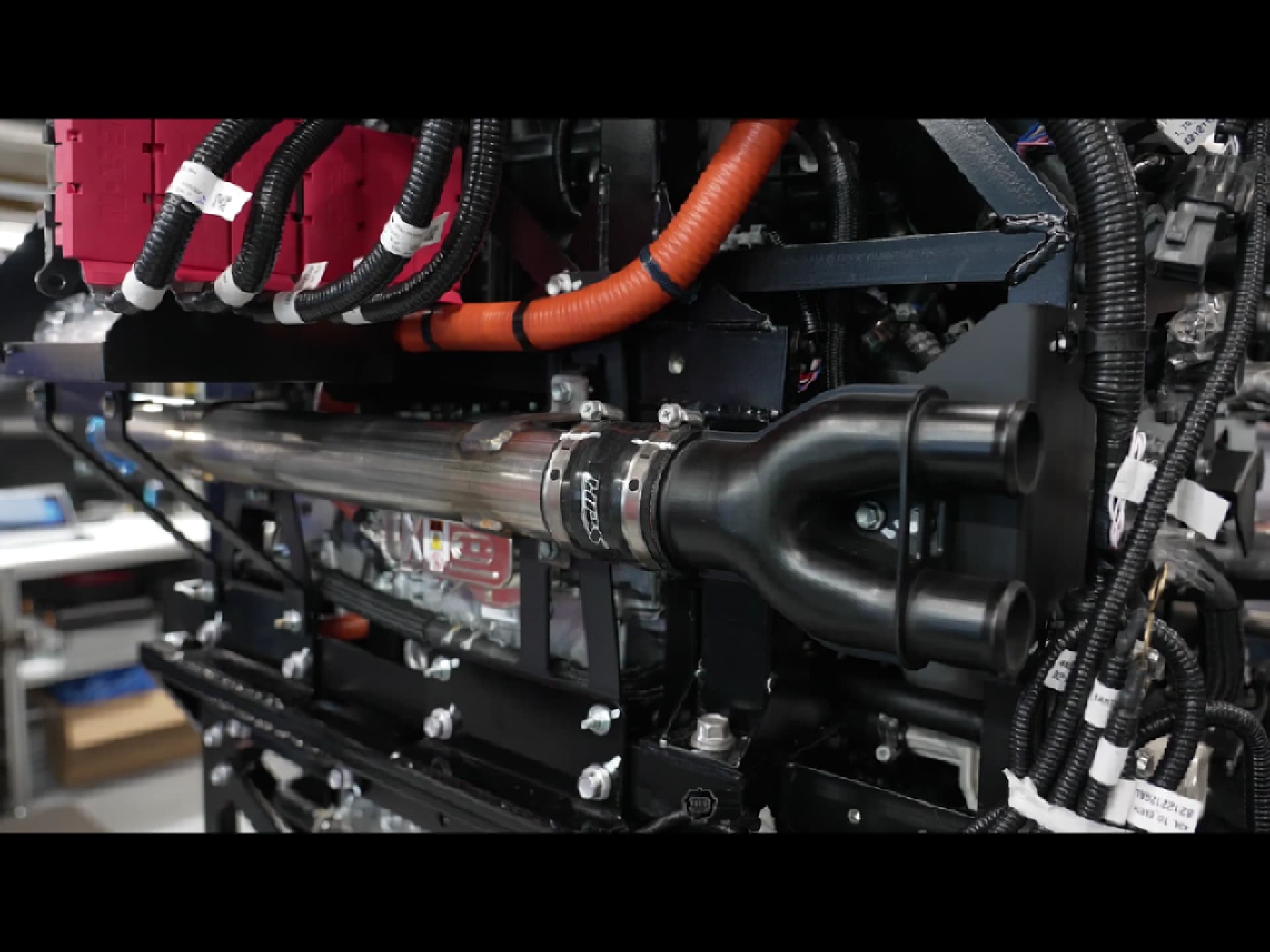
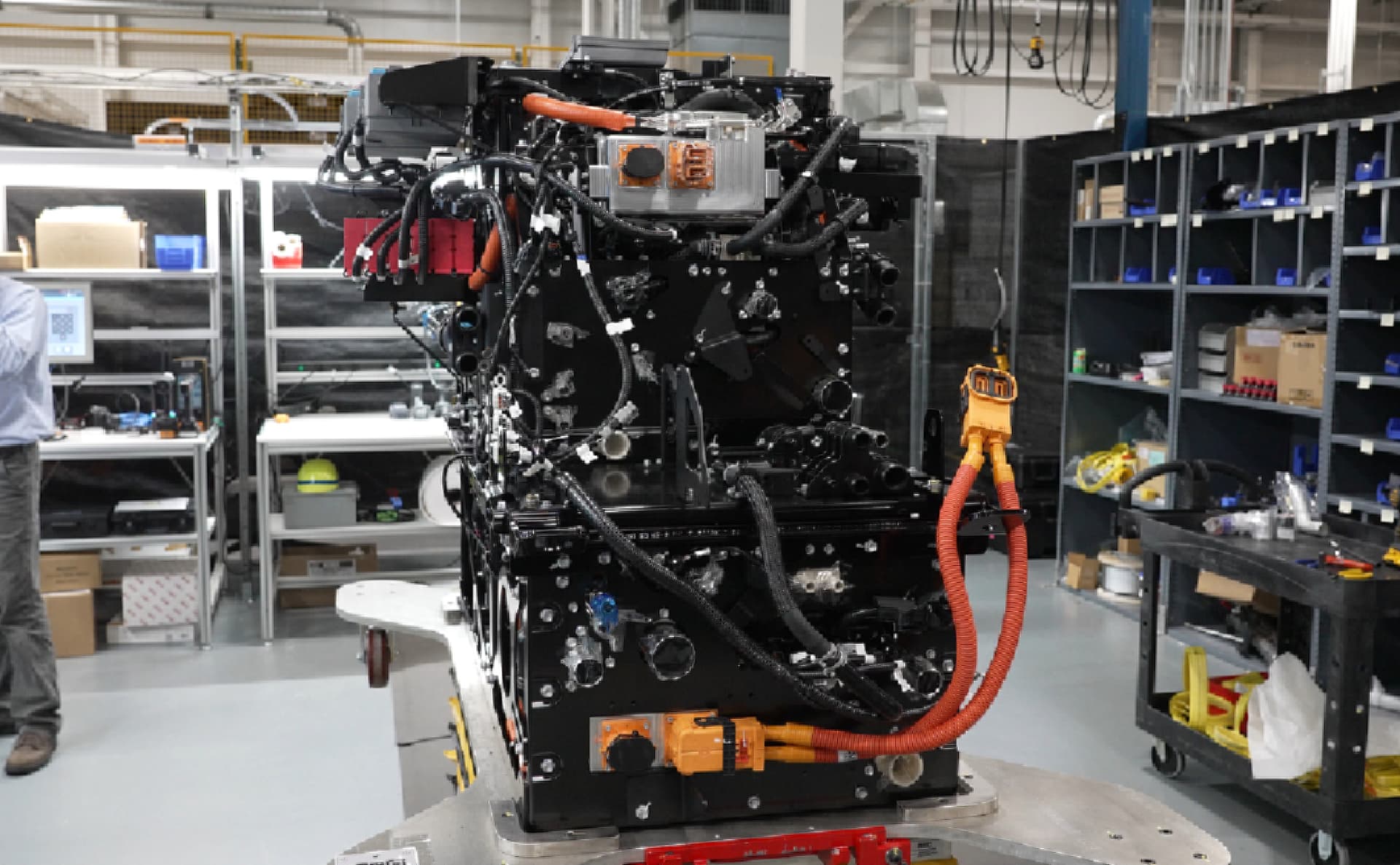
Found a few good pictures of the Kenworth setup!

It’s frustrating when you can’t get proper specs to compare.

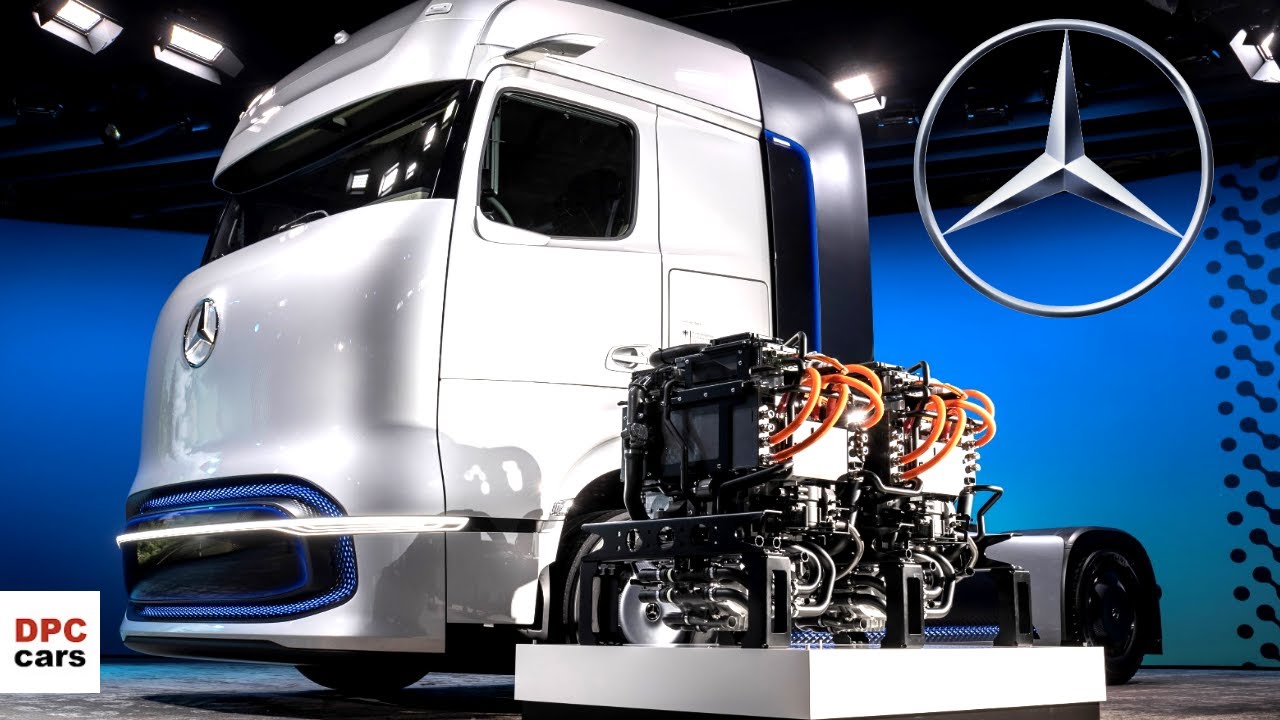
It seems that 2x Toyota FuelCell stacks are installed in both.

The Kenworth’s own peak power was apparently previously reported as 560hp.

The text states the following:

The dual fuel cell modules, which are a key component of an overall FC kit, weigh approximately 1,400 pounds and can deliver up to 160kW of continuous power. The FC kit also includes a high voltage battery, electric motors, transmission and hydrogen storage assembly from top-tier suppliers. Toyota will also offer its powertrain integration expertise that will help truck manufacturers adapt these emissions-free drivetrain systems to a wide variety of applications in the heavy-duty trucking sector.

So, the fuel cell output is continuously 160kW. This doesn’t say how much power is used while driving; it seems to be just the cell’s output, not including the electric motor? For example, Hyzon states a continuous power of 320kW (electric motor) in its catalog, with a cell output of 120kW. It’s hard to make sense of these figures.

Source: Toyota to Assemble Fuel Cell Modules at Kentucky Plant in 2023 - Toyota USA Newsroom

Video from the scene:

The entire kit includes a high-voltage battery that acts as an energy buffer, electric motors, a transmission, and hydrogen storage tanks, and the fuel-cell modules themselves weigh about 1,400 pounds, according to Toyota.

From the source: Toyota will make hydrogen fuel-cell modules in the US starting in 2023

The fuel-cell stacks, in modular form, will be part of a kit that will essentially replace a traditional heavy-duty diesel engine in big Class 8 semi trucks. The system is capable of delivering up to 160 kw (214 hp) of continuous power

From this, one might again understand that the power available in the entire system is 214hp, which certainly won’t move a Class 8 combination anywhere.

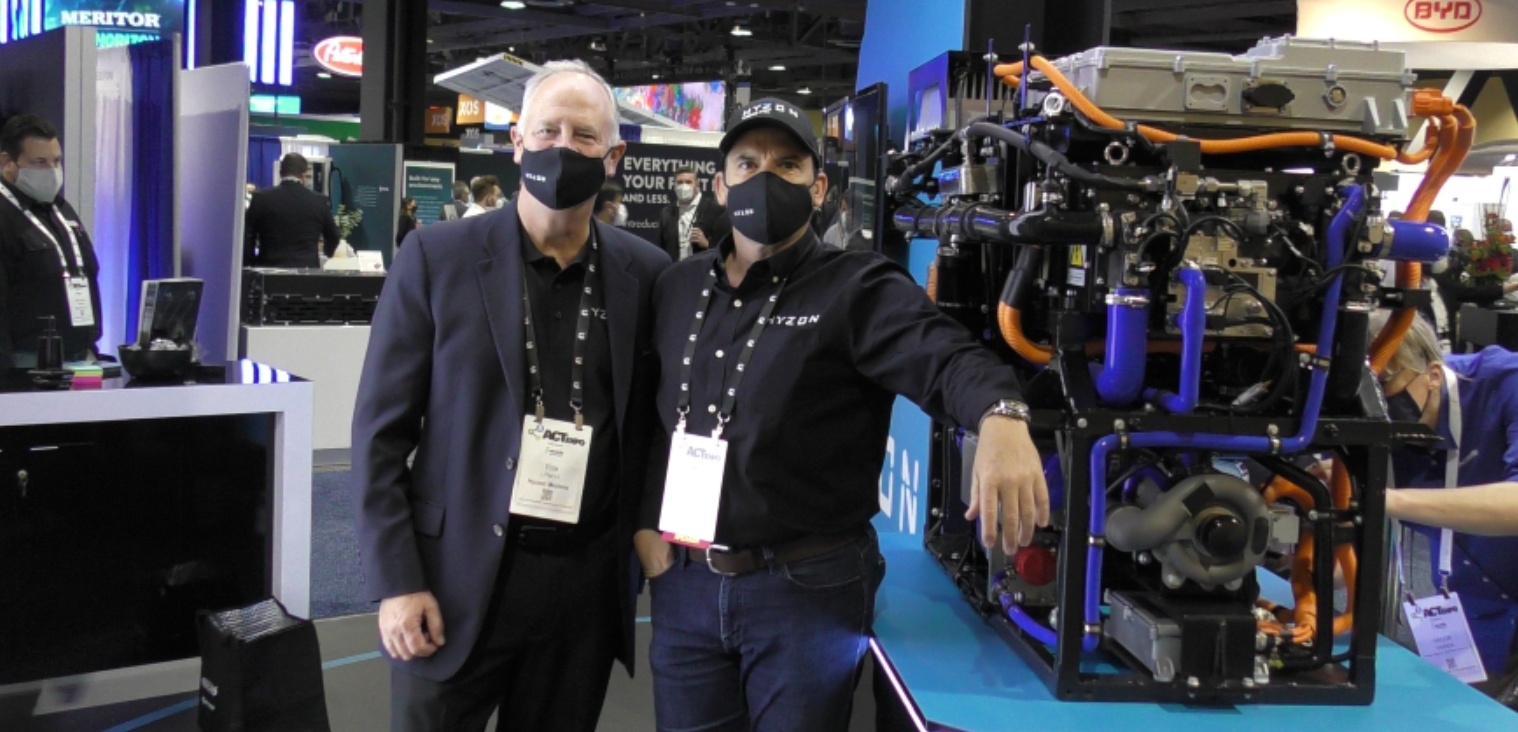
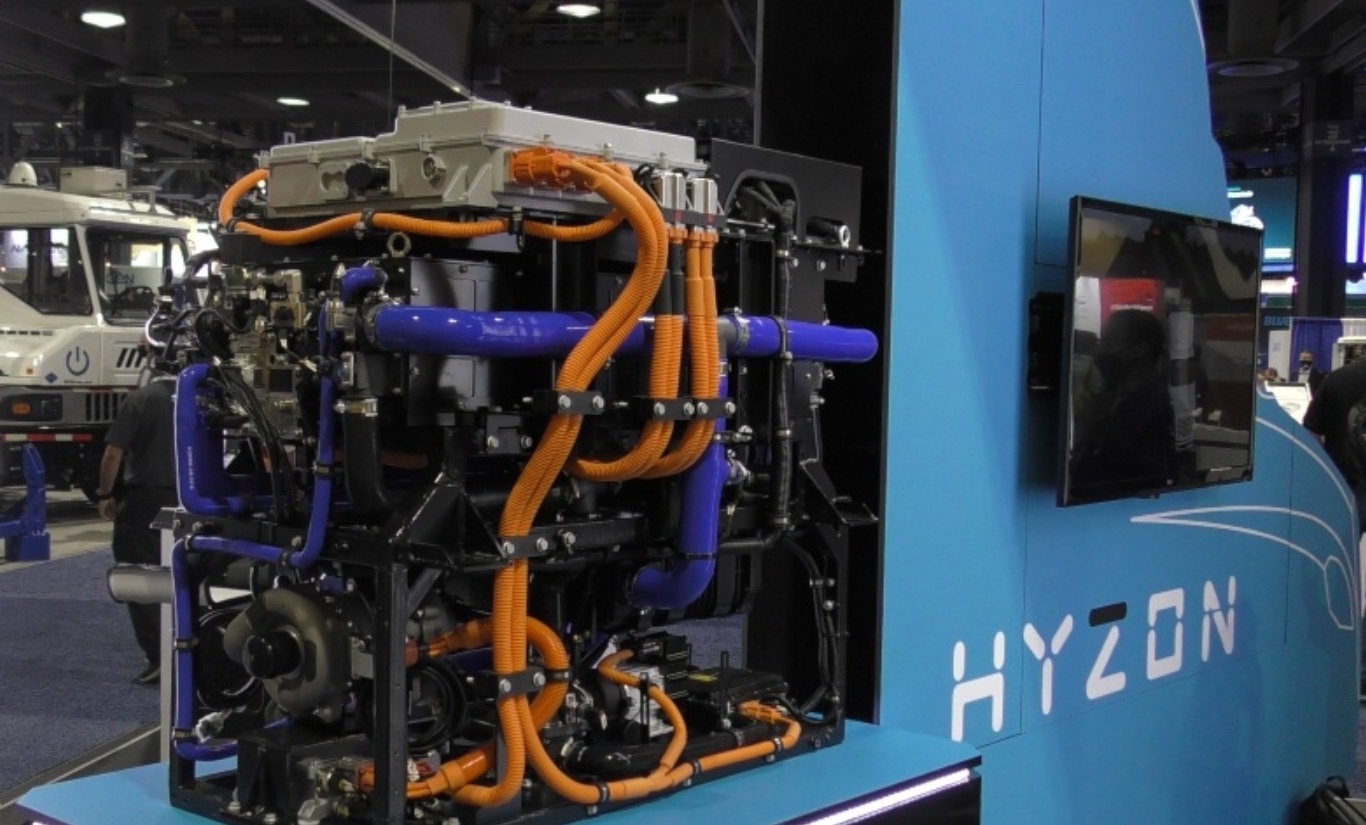
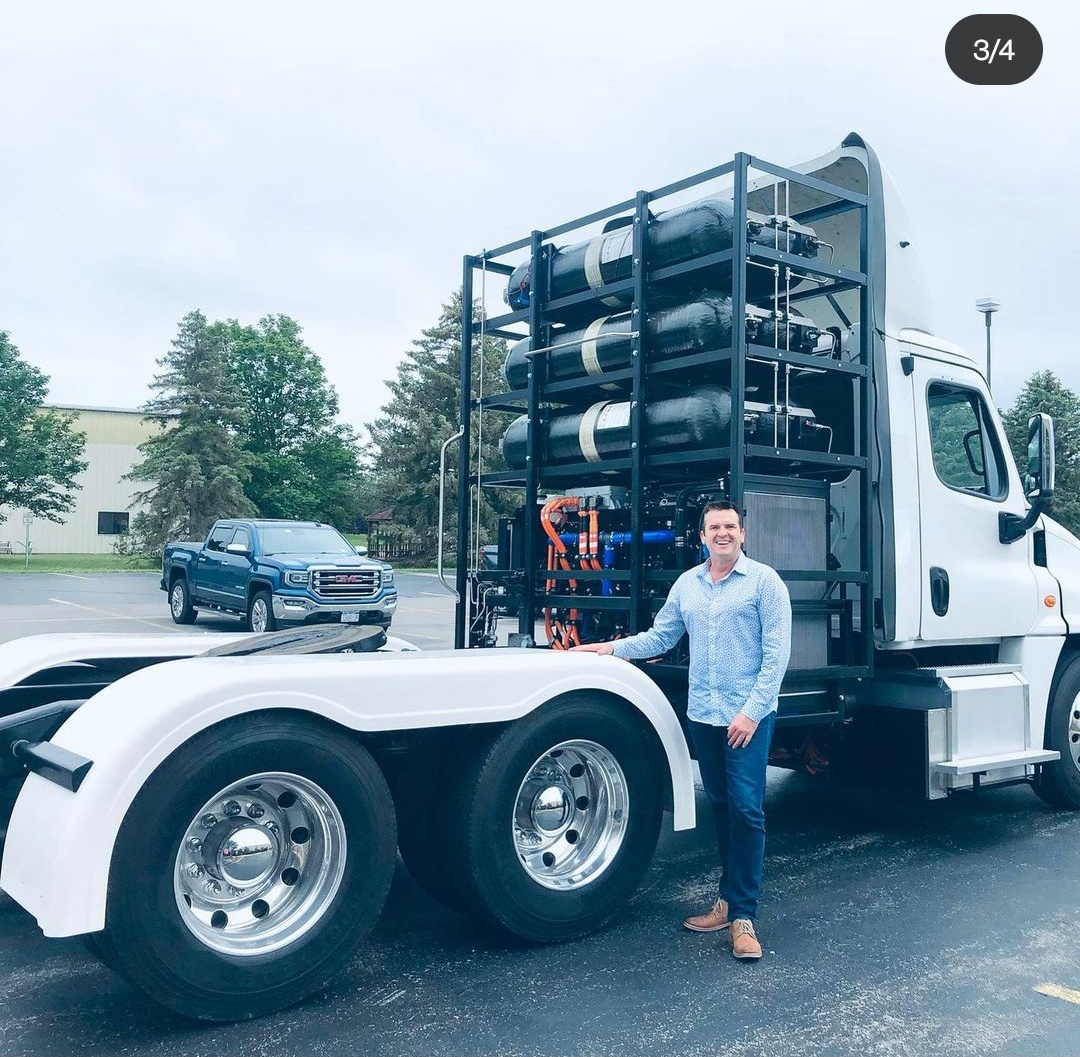
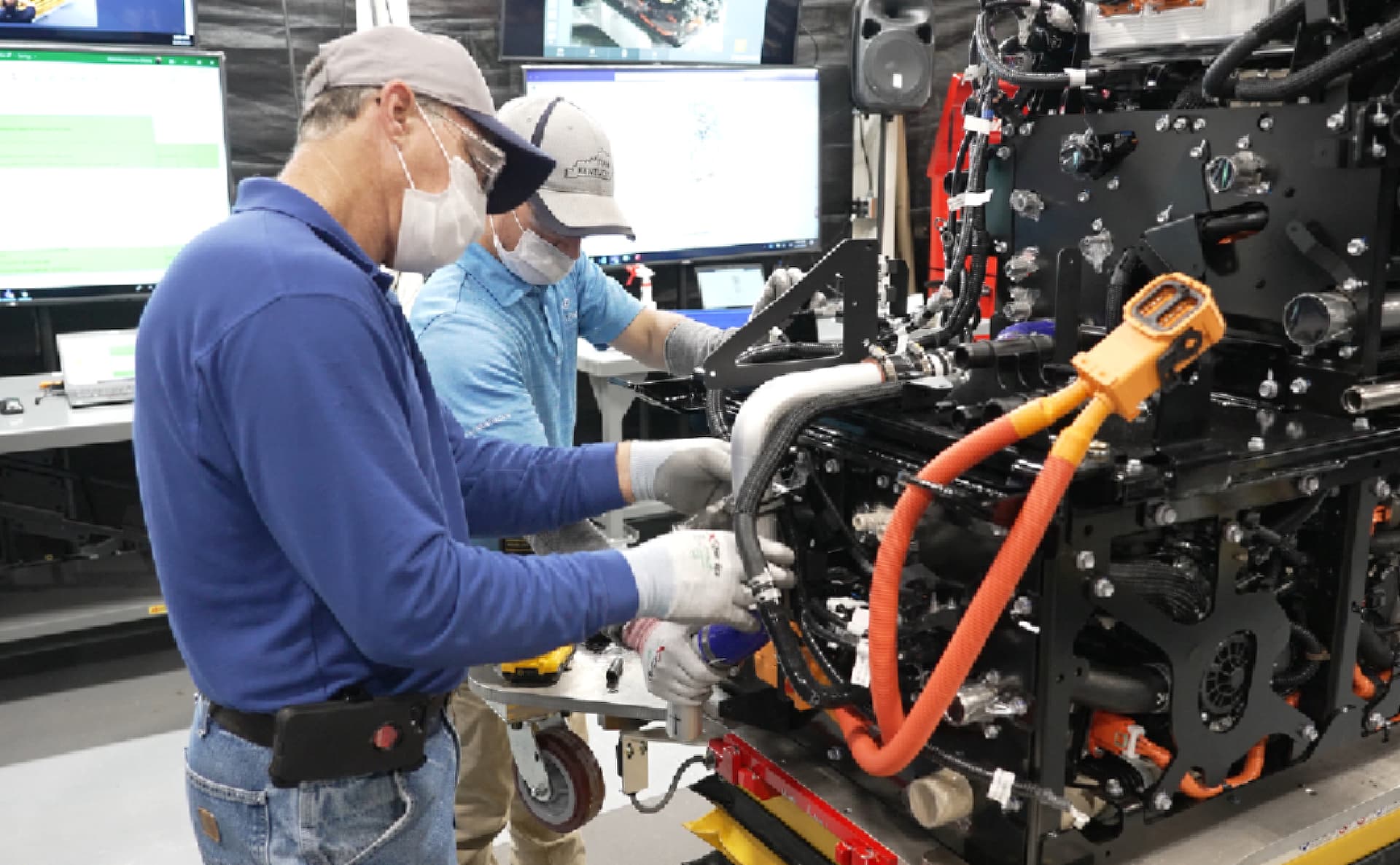
Then, pictures at the end. Bad pictures of the Hyzon, but you can still see something.

Toyota:


And Hyzon:

Screenshot_20211031-214626__01__01


Here’s a picture of the old cell setup
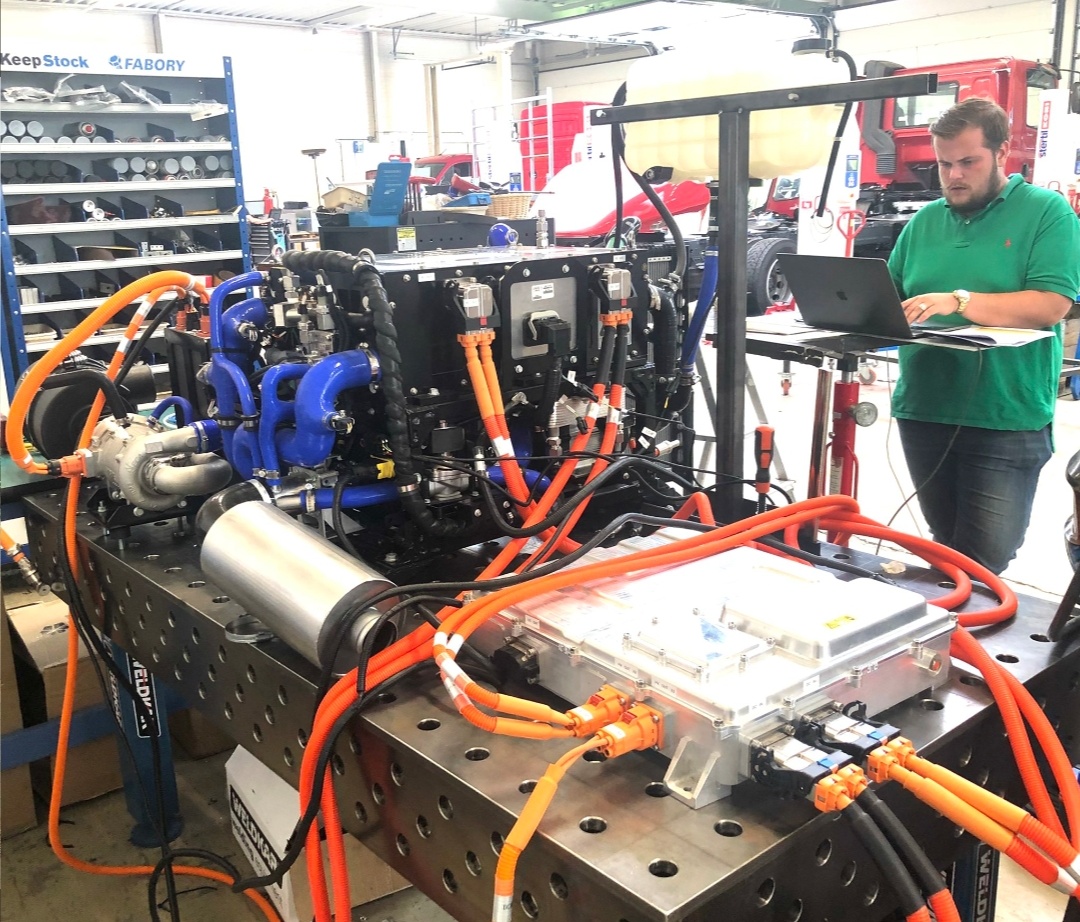
In this new setup, there seems to be a new compressor model (pipes are different from previous pictures, and the compressor is configured differently). It’s a shame the type plate and manufacturer are covered.

Toyota’s package fits in the engine bay and under the driver, and Hyzon’s package is behind the cabin, under the tanks. I can’t say what all equipment is crammed under the hood.

Edit:
From Daimler in the video at 4:30-> good info related to this.
So, when the cell output exceeds the need, energy is stored in the battery and assisted by the electric motor, e.g., on an uphill climb.
2 Likes

https://twitter.com/SecGranholm/status/1455240472964710400?t=oE13kmaRpenoO5lQ0ZB92w&s=19

SuperTruck 3 will fund five heavy vehicles manufacturers with a combined $127 million to pioneer electrified medium- and heavy-duty trucks and freight system concepts to achieve higher efficiency and zero emissions. Projects will be funded over five years, subject to appropriations, and recipients will match federal funding, dollar-for-dollar:

  • PACCAR Inc (Bellevue, WA) will develop eighteen Class-8 battery electric and fuel cell vehicles with advanced batteries and a megawatt charging station will also be developed and demonstrated. (Award amount: $32,971,041)
  • Volvo Group North America, LLC (Greensboro, NC) will develop a 400-mile-range Class-8 battery electric tractor-trailer with advanced aerodynamics, electric braking, EV optimized tires, automation and route planning. A megawatt charging station will be developed and demonstrated. (Award amount: $18,070,333)
  • Daimler Trucks North America, LLC (Portland, OR) will develop and demonstrate two 2 Class-8 fuel cell trucks with 600-mile range, 25,000-hour durability, equivalent payload capacity and range to diesel. (Award amount: $25,791,669)
  • Ford Motor Company (Dearborn, MI) will develop and demonstrate five hydrogen fuel cell electric Class-6 Super Duty trucks targeting cost, payload, towing, and refueling times that are equivalent to conventional gasoline trucks. (Award amount: $24,952,314)
  • General Motors, LLC (Pontiac, MI) will develop and demonstrate four hydrogen fuel cell and four battery electric Class 4-6 trucks. The project will also focus on development of clean hydrogen via electrolysis and clean power for fast charging. (Award amount: $26,061,726)
2 Likes

A peculiar solution to support the product development of a few manufacturers for solutions that are already available. The motive is probably something other than getting heavy BEV (Battery Electric Vehicle) and FCEV (Fuel Cell Electric Vehicle) equipment into traffic as quickly as possible. Acquisition subsidies would be the best way to achieve that.

Yours, A sour Hyzon owner

4 Likes

@buy_high_sell_low
@anon34312866

https://twitter.com/DKurac/status/1452907315552608257?t=EiUxFCrIJaR-zllI4g&s=19

https://twitter.com/DKurac/status/1453259150914359302?t=BNqSiqF-FaT37WaDi4abCg&s=19

https://twitter.com/DKurac/status/1453181717708034054?t=dy7mfXPXpofCKTC_LtDqdg&s=19

I’ll reply here.

Here are the two biggest reasons why Toyota is not producing electric battery cars in very large quantities. The price of batteries is too high and is only threatening to rise. In addition, the amount of materials is limited. A battery is material-intensive to make, so the majority of the battery’s cost is material prices. Mass production will no longer lower battery prices, but may even raise them because demand for materials exceeds supply. And these trends mentioned above are long-term.

Toyota has a wide range of different powertrains that do not require a large battery. With the battery material of one LR Tesla, dozens of HEV, PHEV and FCEV cars can be made. That is an unbeatable competitive advantage in the near future.

Toyota’s fuel cell expertise is at the forefront of the automotive world, and that technology allows for the creation of cars with excellent operating characteristics. For example, the range of upcoming SUV models will likely be in the 600-800km class. BEV SUVs cannot achieve that. This is even a threat to Toyota’s own BEV models, as the price of fuel cell cars is also rapidly falling.

Predicting is difficult, especially the future. But there are certainly signs in the air.

2 Likes

https://twitter.com/sdmoores/status/1457332359485874178?s=19

Dizzying rise in battery material prices. In addition, there will be a direct shortage of materials starting in 2022. These are thus long-term and permanent trends.

A car with a small battery has two advantages compared to a BEV: price and the small amount of battery material required for manufacturing. Could it be that big T has played its cards right… Toyota has been saying for years that there are not enough battery materials and has therefore developed powertrains extensively. Hyundai has done the same.

The same problem is, of course, faced by heavy transport. Good luck to Scania. Greetings to the Hyzon chain.

4 Likes

Interesting aluminum-air batteries… or rather, aluminum fuel cells.

“Wright calls it a fuel cell, rather than an aluminum-air battery, to save on confusion. It can’t be recharged like a battery; instead it’ll need to be refueled more like a fuel cell, with the added task of taking the aluminum oxide sludge off for recycling at a smelting plant.”

2 Likes
  • Initial delivery of QUANTRON fuel cell electric trucks is scheduled for the second half of 2022 in Germany
2 Likes

“Recently, Rystad Energy projected a “serious lithium supply deficit” in 2027 as mining capacity lags behind the EV boom. The mismatch could effectively delay the production of around 3.3 million battery-powered passenger cars that year, according to the research firm. Without new mining projects, delays could swell to the equivalent of 20 million cars in 2030. Battery-powered buses, trucks, ships, and grid storage systems will also feel the squeeze.”

3 Likes
3 Likes

https://twitter.com/sdmoores/status/1458077089979158541?t=jX4YC4ijIw421LYYqH1oUg&s=19

This increase in battery prices is truly a bear case for BEV (Battery Electric Vehicle) manufacturers. There’s nothing they can do about it. In fact, I would classify this as an uncontrollable risk.

4 Likes

@Roija
@M111

I’ll reply here, if that’s alright with you.

Good question. The answer is long and complicated.

“I myself wouldn’t want to buy a car where the fuel costs are three times higher”

It is true that a hydrogen car will likely have higher running costs than a BEV in certain situations. The difference may not be large and also depends partly on the driving profile. This is based on the decreasing price of green hydrogen and the improving efficiency of FCEV vehicles. In fact, even now, the Nexo and Mirai travel such distances with such low consumption that BEVs have difficulty beating them in costs if battery cars are charged at paid charging stations.

On the other hand, FCEV cars will be cheaper to purchase. So, it’s a bit of a give and take.

“maintenance interval three times more frequent”

Maintenance ensures the car’s proper functioning, that’s true. This ensures that even an older fuel cell car performs its tasks as well as a new one. Maintenance involves changing a couple of filters and inspections.

A battery is a bad component in the sense that maintenance cannot make it as good as new. If it has lost xx% of its capacity, you can’t get that back. Do you understand what I mean? :thinking:

“much less space in a car of the same size”

Well, not necessarily. For example, the Nexo is as spacious as petrol-powered SUVs of the same size class. Fuel cell cars do not need to be as streamlined as BEVs, so they can have a proper boot.

“complex fuel cell technology”

Fuel cell technology undeniably has its advantages. It enables the same operating characteristics as an internal combustion engine car. With mass production, the price decreases, and it is a very long-lasting component.

“How does the hydrogen car’s small battery withstand continuous heavy strain if it’s suspected that even electric cars’ large batteries wouldn’t last?”

Batteries are used differently. At least the Mirai uses the battery in the same way as Toyota’s self-charging hybrids. That is, the battery is never charged from empty to full, but it operates at a certain state of charge, and thus the battery’s lifespan can be maximized. However, if the battery breaks, the prices of small batteries are significantly lower.

“In addition, an absurdly expensive hydrogen distribution infrastructure would have to be built from scratch.”

The hydrogen distribution infrastructure will be built regardless. There are many kinds of users and thus also payers.

What complicates matters is that battery material and battery prices are rising, and their availability will be limited in the future. In addition, I myself suspect that the FCEV’s lifespan is almost in the league of ICE vehicles. So, in the end, quite a few things speak in favor of the hydrogen car.

These are, of course, just one person’s thoughts. But that’s how Toyota thinks too, so it depends on how much weight you give to that.

16 Likes

I concluded that this belongs in this thread, @Simo_Sijoittaja.
It’s great that we’re getting concrete action and some support from the government. Interest will certainly be generated by supporting acquisitions.

I think I saw an article about this somewhere, but not in this thread.

3 Likes

Here’s some political atmosphere from elsewhere: Norway is planning a state-owned hydrogen company:

Additionally, Denmark is challenging Norway by asking when oil drilling and production will finally end:

The Beyond Oil & Gas Alliance (BOGA: https://beyondoilandgasalliance.com/) aims to end fossil fuel production, led by Denmark and Costa Rica. The UK, at least, didn’t warm to the idea:
https://www.bloomberg.com/news/articles/2021-11-09/u-k-rejects-alliance-seeking-fixed-date-on-fossil-fuel-phaseout

Oh, and for example, the Saudis are indeed striving to reduce CO2 emissions… though only within their own borders. Oil can certainly be produced and exported elsewhere, but those emissions are then others’ problem. This is an older news item, but as far as I understand, their intentions haven’t changed during COP26:
https://www.climatechangenews.com/2021/10/25/saudi-pledges-net-zero-2060-no-oil-exit-plan/

3 Likes

Toyota Motor Corp said on Saturday it will partner with four other Japanese vehicle makers to explore the viability of alternative green fuels for internal combustion engine cars, including hydrogen and synthetic fuels derived from biomass.

The companies, which in addition to Toyota include Mazda Motor Corp, Subaru Corp, Yamaha Motor and Kawasaki Heavy Industries, made the announcement at a racetrack in Okayama, western Japan, where Toyota is racing a hydrogen car.

3 Likes

Is there a comparison of the total mass of heavy vehicle combinations based on hydrogen and battery technology? Which one has more potential to reduce mass in the future?

1 Like

https://twitter.com/H2Carlsberger/status/1271543527714013185?t=pM9-a6ETtGl04htpq4MGkw&s=19

That’s Kenworth’s math.

Speaking of which. Regarding the durability of batteries in electric cars:

“Based on the data, a fully electric car that is about ten years old may have lost about a quarter of its original battery capacity. Discharging the battery completely empty and charging it completely full are things that happen during the vehicle’s use and negatively affect battery life.”

So the batteries are already due for replacement. As good as a chlamydia infection.

5 Likes

Finland lagging behind the rest of Europe.

5 Likes

Nexon’s price was certainly a surprise.

The price is dropping. The hydrogen car brought to Oulu cost 83,990 euros. Hyundai predicts that by 2030, fuel cell cars will be available at the price of battery electric cars.

Even in the US, the starting price is $58k. Prices really need to come down before they can become mainstream, which will surely happen with volume. That 2030 estimate for them to be similarly priced just feels conservative.

It’s a good publicity stunt for Skarta Group, though.

5 Likes

Interesting - but that’s missing the significance of the engine and drivetrain.
I don’t know what the weight difference is between, for example, a diesel truck and an electric truck’s engine/drivetrain, meaning if there’s any essential difference between them.

There’s a difference, but whether it’s significant is another story. Roughly speaking, a diesel engine with its auxiliary equipment weighs around 1300kg. An electric motor itself is lighter, about ~500kg, but it also requires a drive and some auxiliary equipment. Let’s say there would be a saving of about 600kg. The key is to scale that to the weight of the batteries, 16800lbs (~7600kg), so it doesn’t really change the end result much. This is a very rough and quick analysis, assuming roughly similar torque from the motors, meaning the transmission would be approximately the same weight.

That’s a rough comparison between Diesel vs. BEV. In the case of FCEV, the weight of the fuel cell must be added, and I’m afraid that in that case, the difference to diesel only increases (compared to the figure given by Kenworth).

Indeed, it would be better to compare the entire system level rather than oversimplifying it as Kenworth’s calculation did. And they probably have calculated it, but a very simplified message was chosen for communication. And that’s the point: with current batteries, the weight of energy transport is the biggest challenge in vehicles.

Hydrogen then has its own challenges. And fossil diesel produces emissions. Difficult challenges.

1 Like