Hyzon’s history dates back to the early 2000s when Horizon Fuel Cell started its operations in Singapore. The company thus has a background of almost 20 years in fuel cell technology (mainly for transportation and backup power) and primarily in Asia. In practice, Hyzon was spun off from Horizon in 2020 to conquer the world beyond Asia, especially North America. Its headquarters moved to the US, to former GM facilities where GM once developed its own fuel cell technology.
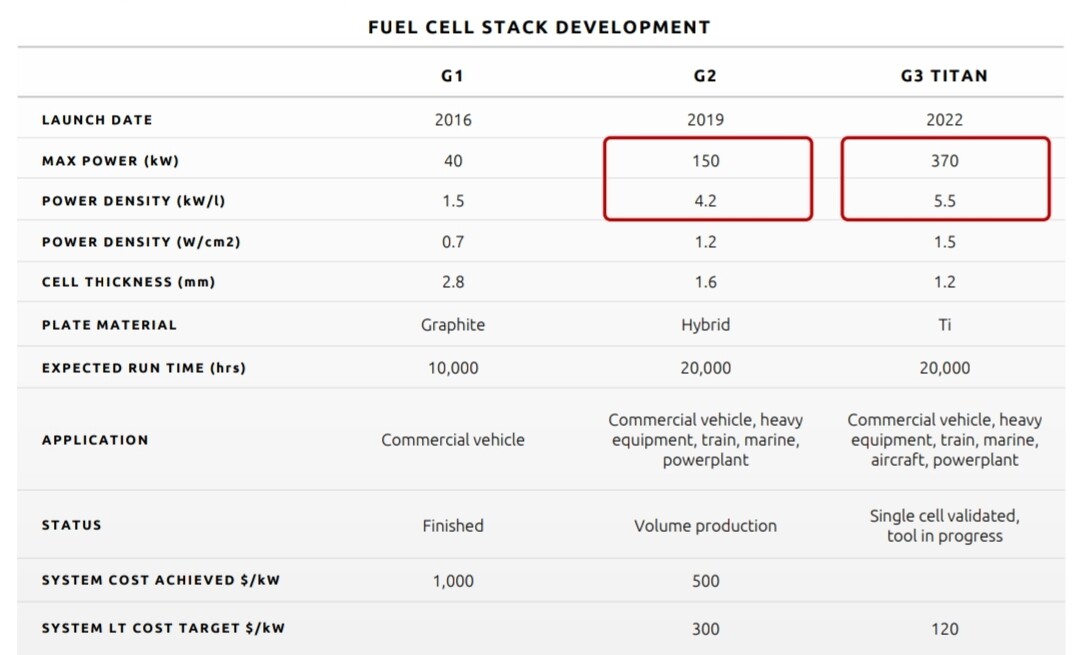
Hyzon specifically focuses on “hydrogenizing” transportation, offering solutions for city buses, long-distance buses (coaches), and other heavy-duty vehicles (especially trucks in various forms). In addition to these, there are also backup power solutions. Hyzon makes its own cells; for example, 150kW cells are available, and a large 370kW cell (PEM) for heavy-duty vehicles is coming. The target is a range of 400-600km on a single refueling.
Over 500 vehicles have already been delivered to the market during Horizon’s time.
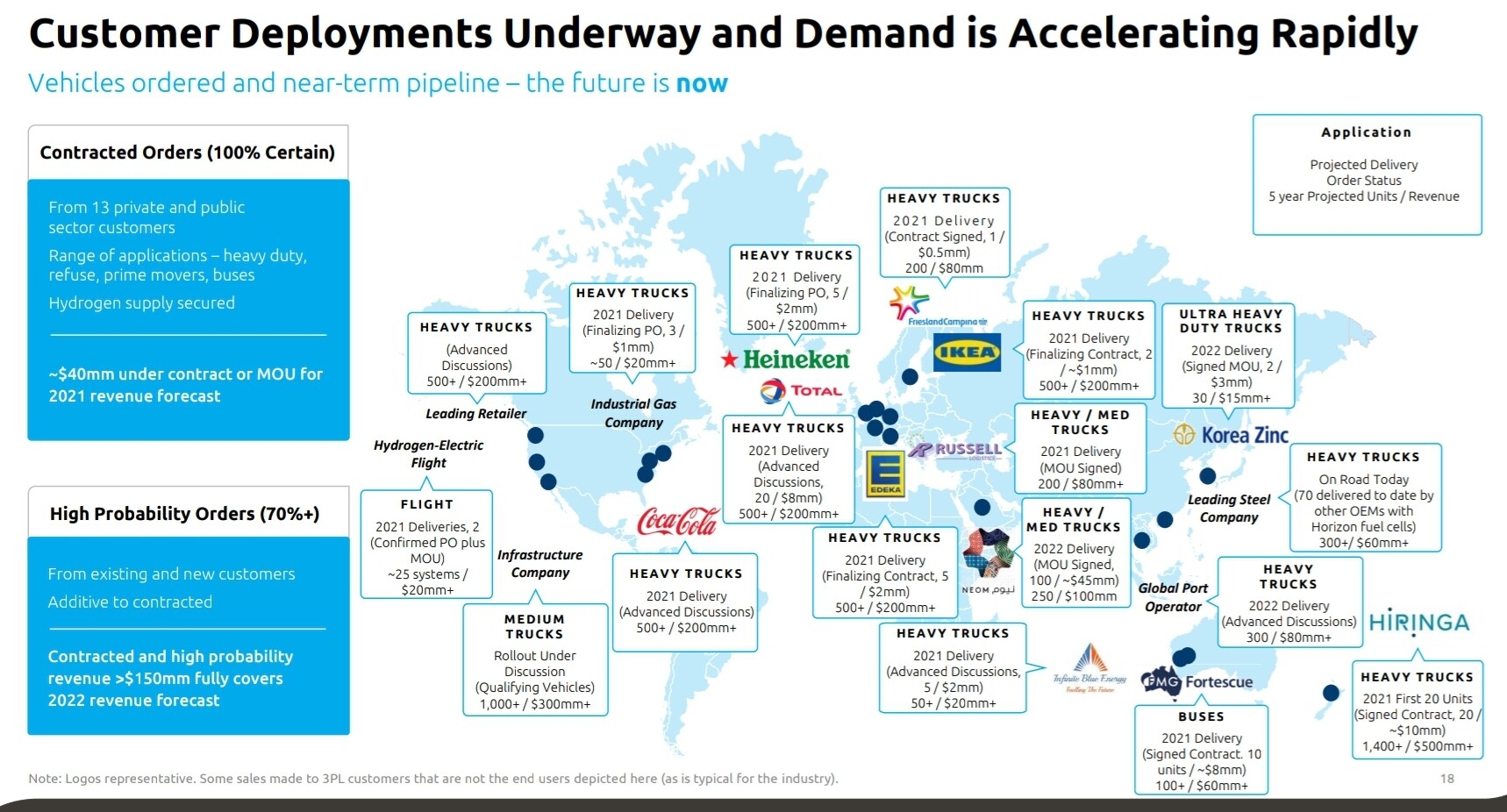
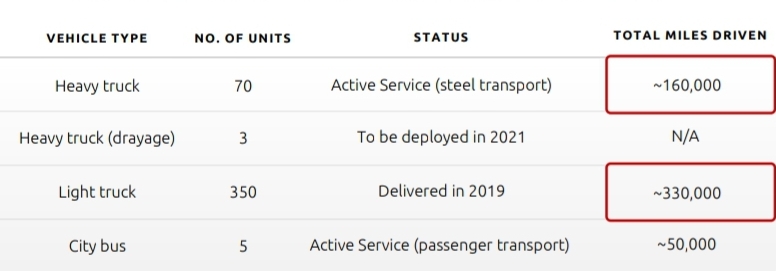
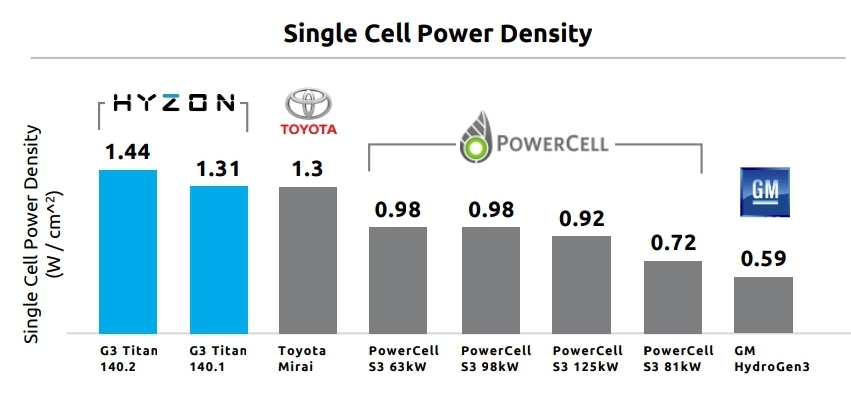
Hyzon thus manufactures its own cells. Their G3 titanium-based cells are planned to be the most energy-dense on the market, and apparently, according to independent tests, they are (TÜV Rheinland, and benchmarked through independent consultant research). There are a bunch of patents (20+ >40 partial ones through Horizon).
Hyzon therefore focuses heavily on fuel cells and leaves other areas to partners, which it aims to acquire more of.
Other developments are also underway, e.g., its own chassis, compressor…
In the future, however, the intention is to start building more of a hub/filling network, initially with partners (e.g., Total, which has strategically invested in Hyzon), perhaps eventually more on its own. Below are a few excerpts from the material:
Alliances with energy and industrial gas
companies expected to enable Hyzon to offer
a partnership approach to hydrogen supply.
In collaboration with its partners, Hyzon is currently building its first Hydrogen Hub in Australia. Hyzon’s partner, NRG Global, has multiple waste to electricity
sites, and is planning to build Hydrogen Hubs.
Hyzon is working with Infinite Blue Energy in Western Australia to source hydrogen
produced from solar and then distributed to fuel stations
HYZON PROVIDES THE FUEL CELL AND KEY RELATED COMPONENTS FOR A FCEV
WITH EXISTING AND ESTABLISHED SUPPLIERS PROVIDING ADDITIONAL ENABLING TECHNOLOGY
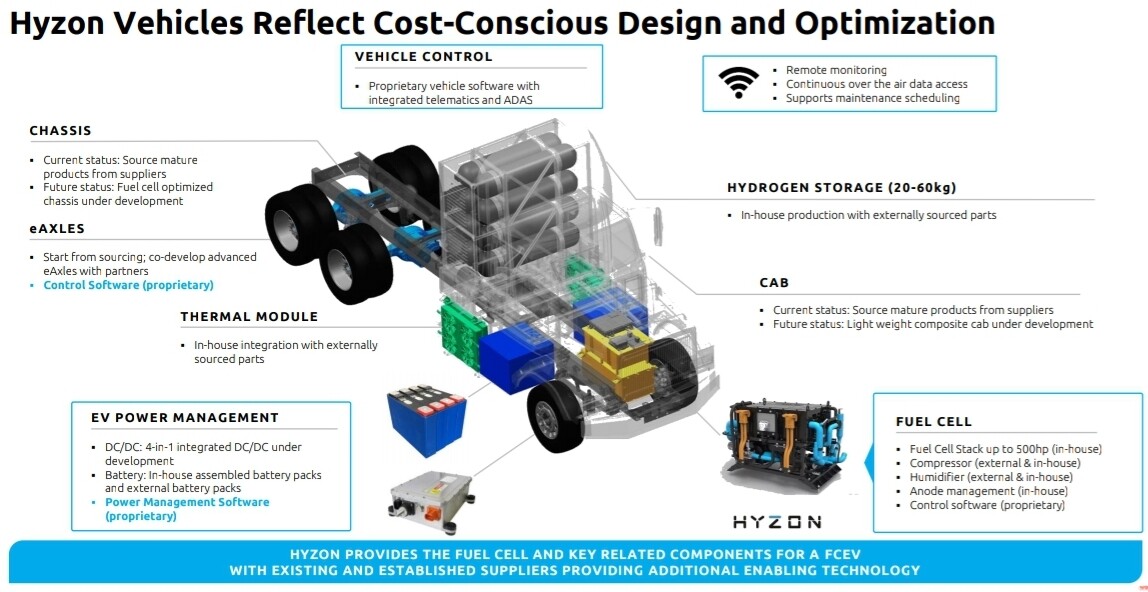
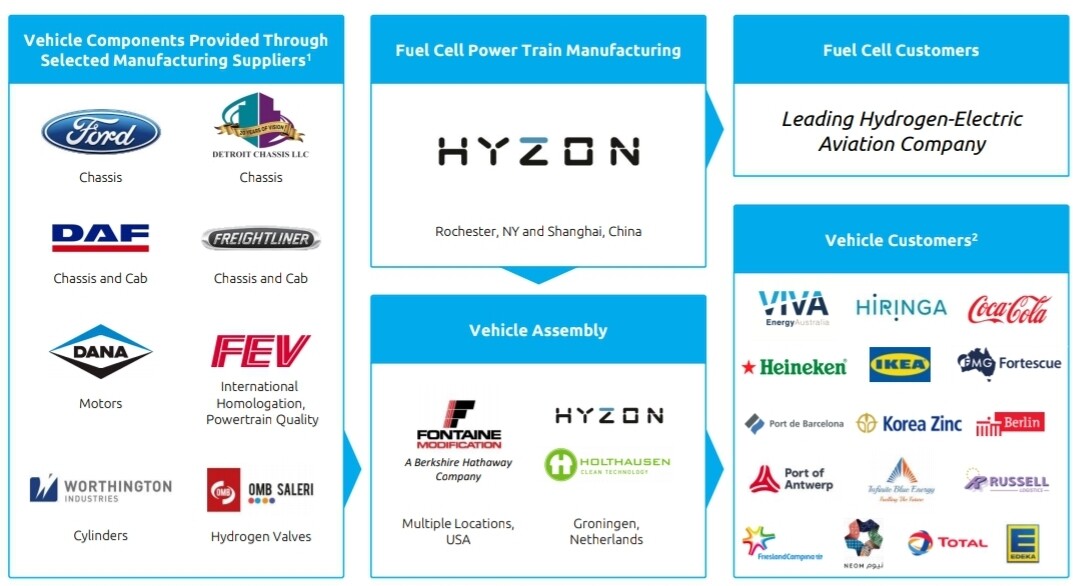
Hyzon thus has roots in Singapore through Horizon, now with its headquarters in the USA (where there is also a manufacturing plant and development), and its European headquarters and assembly plant are located in the Netherlands. In Australia, Hyzon started office operations in 2020 to serve the Australian and New Zealand markets. In the future, perhaps some factory, initially partners will handle it.
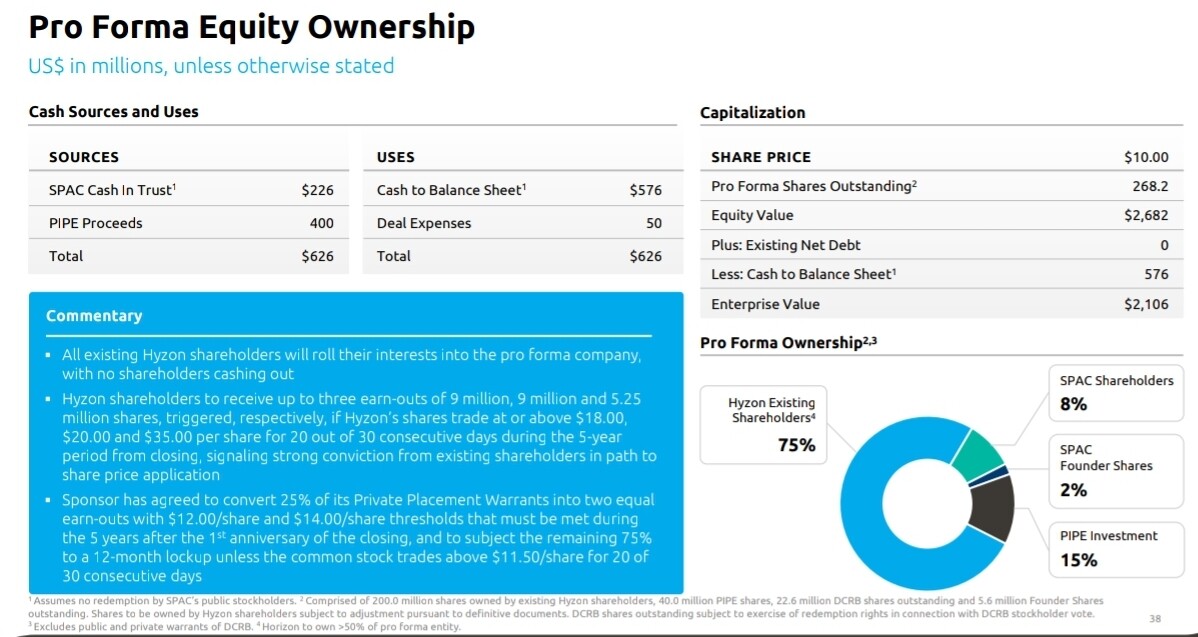
Hyzon is merging with DCRB SPAC, through which it will be listed on the NASDAQ stock exchange in the US. The future Ticker is HYZN.
After the merger, Horizon will own over 50% of Hyzon. 75% of the shares are held by Hyzon’s current owners, 15% by PIPE, and 10% by SPAC. It is worth reading the texts in the blue box below.
Edit. This is quite interestingly written:
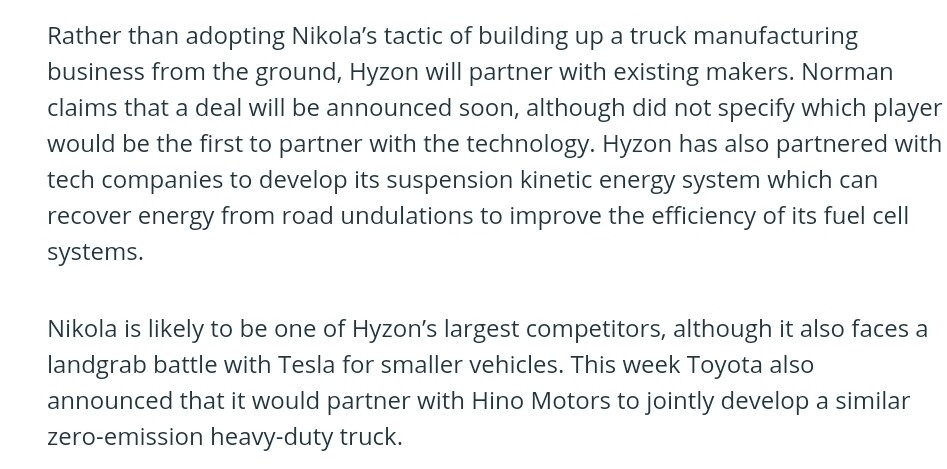
Source: https://fuelcellsworks.com/asia/hyzon-aims-for-tesla-style-rush-to-market-for-hydrogen-trucks/
Competitors in the market are presented in the attached slide.
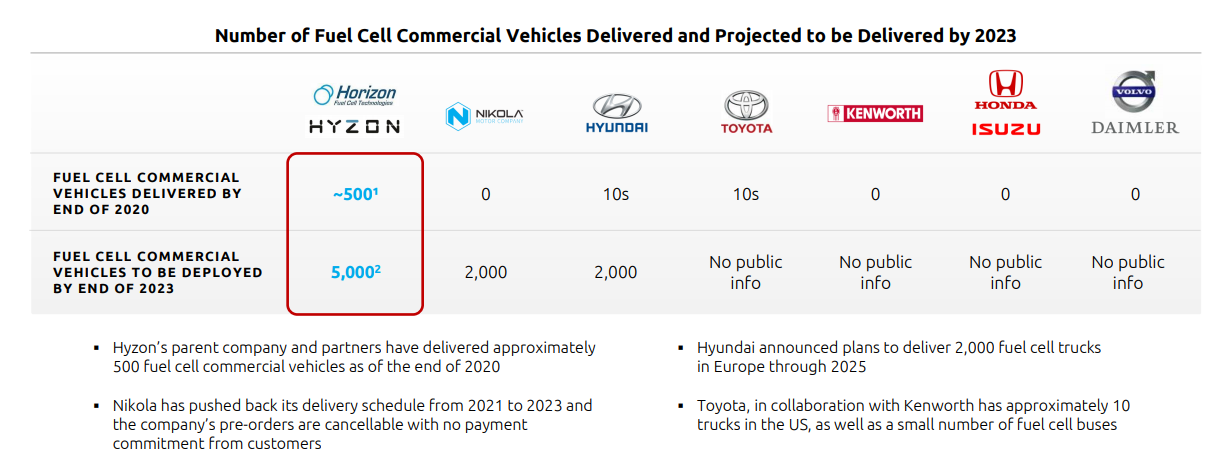
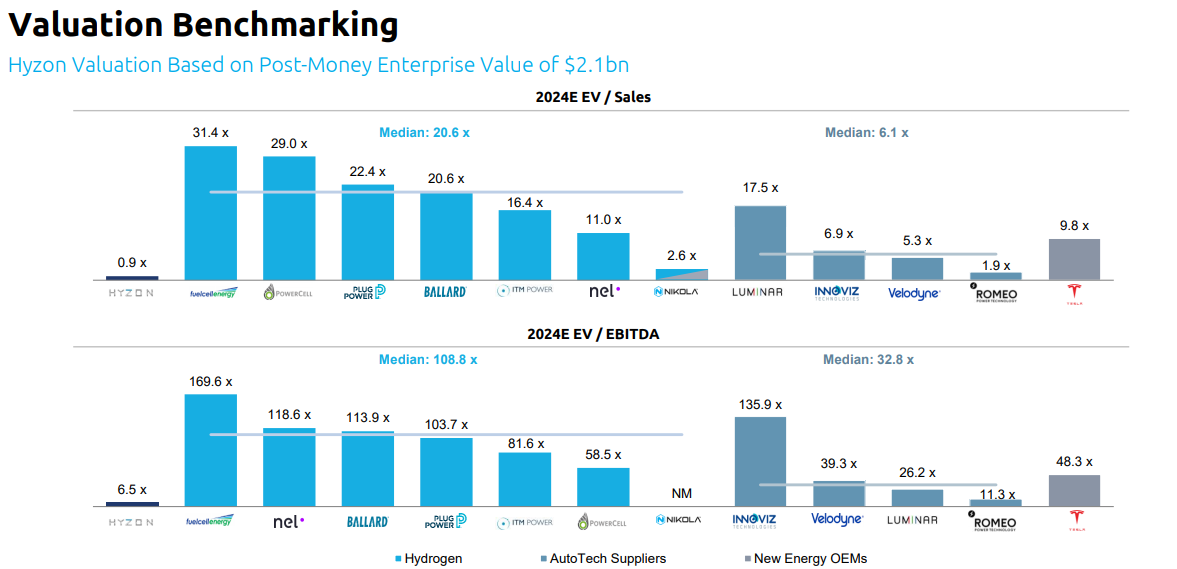
edit. 18.2.2021:
Cooperation agreements
- Hiringa NZ: hydrogen refueling station network (8 units in 2021/2022, 24 units by 2025). Hyzon will supply 1500 heavy-duty vehicles by 2026
- Fortescue Metals Group: Hyzon will convert the company’s buses into hydrogen buses
- Viva Energy Australia: hydrogen refueling stations, Viva will convert the Geelong oil refinery into a hydrogen and solar energy hub
- Pure Hydrogen (Real Energy Australia): cooperation with Hyzon on hydrogen refueling stations and hydrogen truck leasing
- WarpForge: joint “SuperBus” development for ATG
Clarification on certain points:

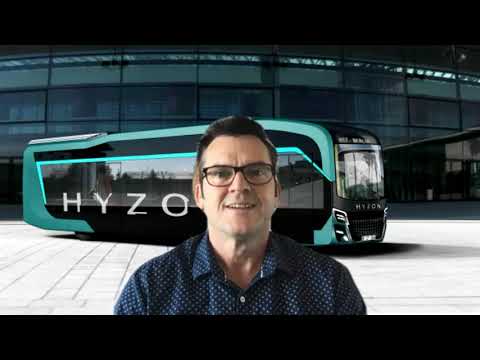


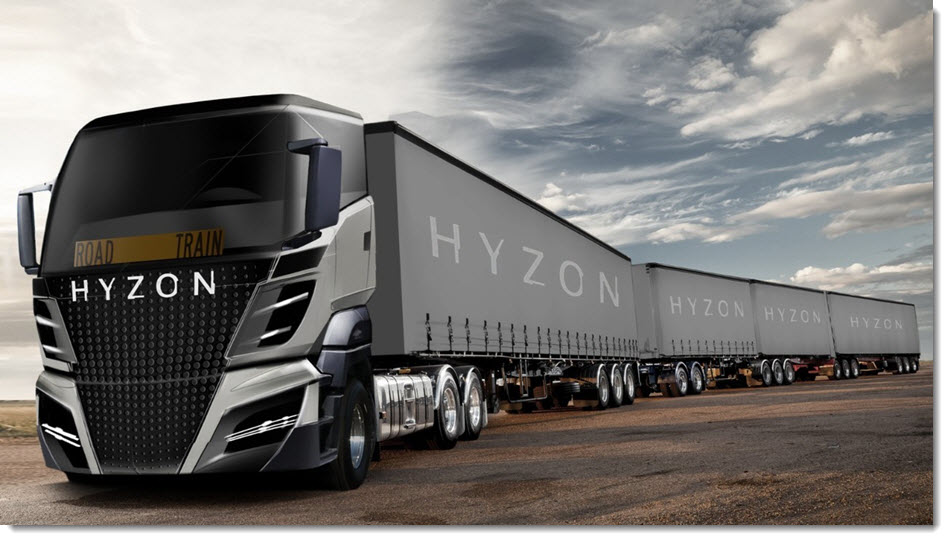
 The CEO has the same image in the banner of their LinkedIn profile.