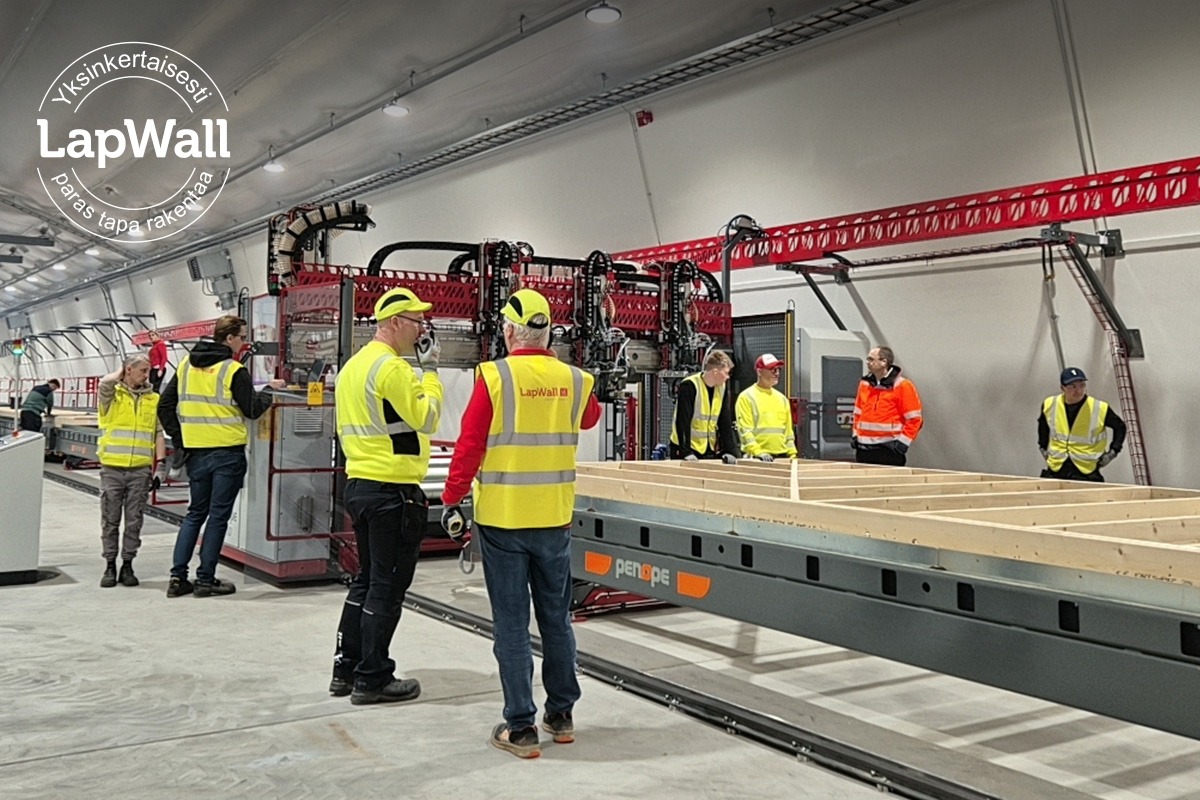
LapWall - Pioneer in Wood Element Construction

There has been some talk about the cooperation between Lapwall and Tekova. Lapwall has presumably not commented on its customers, but it is likely clear that Tekova is one of the significant customers. Or to put it this way, who else would supply those roof elements to Tekova with the required volume and delivery reliability?

Here it is stated that Tekova is building its twelfth Puuilo, this time in Hollola. Ready in spring 2026 Tekova toteuttaa Puuilon uuden liiketilan Hollolaan - Tekova

This article features an interview with Lapwall’s new Product and Development Manager Sauli YlistĂ€. Puurakentamisen puhemies palasi bisneksen puolelle | Rakennuslehti

![Screenshot_20250918_195732|472x278](upload://lapNdq34hHLERNQvfAbDJIA9M7N.

34 Likes

21 Likes

Antti and Tommi have provided their preliminary comments as LapWall publishes its Q3 business review on Tuesday. :slight_smile:
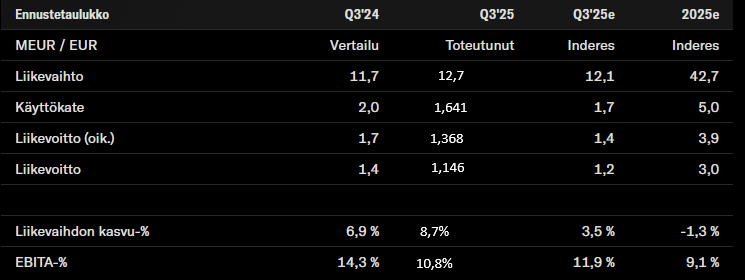
We expect Q3 revenue to have grown slightly, supported by the strengthened order book in H1. However, we estimate that the order book’s margin structure is weaker than in the comparison period due to market-based reasons, so we forecast the company’s operating profit and profitability to have decreased from the comparison period. Construction market activity appears to have remained at its lowest point in Q3, despite which we expect LapWall to have kept its order book growing thanks to the first data center project. In addition to the main figures of the report, our attention will focus on the progress of the PyhĂ€ntĂ€ factory investment, which is nearing completion.

6 Likes

Q3 report published: Vahva vuosineljĂ€nnes – PyhĂ€nnĂ€n investointi luo pohjaa tulevalle kasvulle - Inderes

January-September in brief and key events

  • Revenue was 31,507 (32,807) thousand euros, change -4%.

  • Operating profit excluding depreciation of goodwill was 2,484 (3,797), change -35%.

  • Operating profit was 1,817 (3,130) thousand euros, change -42%.

  • The order book grew by 7.9 million euros from the year-end situation and was 20.2 million euros at the end of September.

  • The cost-based completion rate of the PyhĂ€ntĂ€ investment was approximately 75% at the end of September. Production in the new facilities on the roof line will start at the turn of October-November, and the wall line will start at the turn of the year.

  • On 15.8.2025, LapWall announced that it had signed a supply agreement with YIT for the delivery of a roof solution to the Kajaani data center project. This is a significant opening into a growing market.

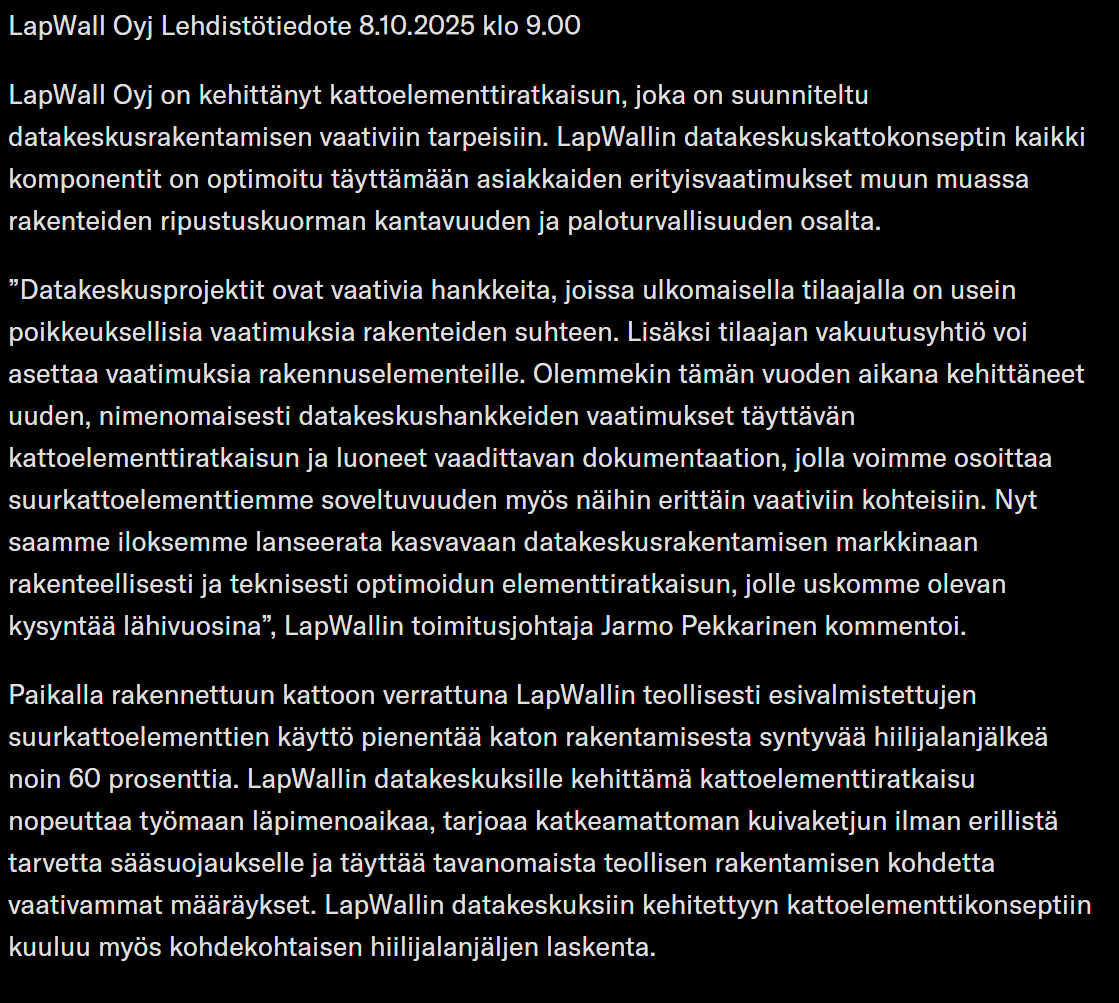
  • The company launched a roof element solution for demanding data center projects.

Revenue appeared to exceed analyst forecasts, but the result was largely in line with forecasts:

39 Likes

Here is a new company report on LapWall from Tommi and Antti. :slight_smile:

LapWall’s Q3 report closely met our expectations. Revenue and profitability turned to growth in Q3 from the weak level of the beginning of the year, supported by a slightly improved market situation. New sales also showed strong momentum, but we made slight forecast reductions for the coming years, reflecting a different order book structure than our expectations. LapWall, which has performed commendably in a difficult construction market, is priced high according to our estimate, which means the return-risk ratio remains subdued over a one-year horizon. Thus, we reiterate our Reduce recommendation and a target price of 4.00 euros.

Quoted from the report:

The company commented on the development of the market situation quite optimistically, which suggests that the extremely tight price competition also seems to be easing. Therefore, we estimate that the margin profile of received orders is at a significantly better level than the comparison period, which provides good prerequisites for profitability to recover from the subdued level of 2025 when looking towards next year.

13 Likes

OP raises its target price from €4.10 to €4.40 and maintains its ADD recommendation.

They also forecast significantly high revenue growth and a double-digit operating profit margin for LapWall. Revenue in 2026 and 2027 would be €58 million and €73 million, respectively, with an approximate ~12% profit margin.

17 Likes

CEO’s Q3 interview.

Highlights:

  1. On the competitive and pricing situation regarding the profitability of some competitors.
    “There comes a guy starting with ‘k’
”

It remained a bit of a mystery to me, who or what this guy starting with ‘k’ is?

Addition: I’m ashamed


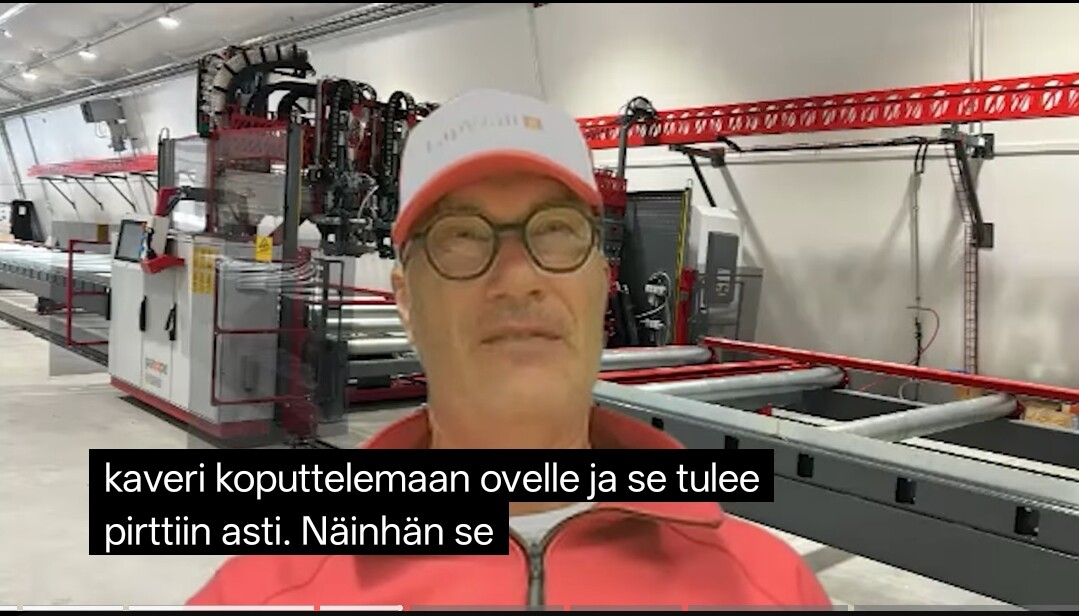
  1. The factory completion schedule was confirmed. This week, the management will put on overalls and start conducting test runs
30 Likes

You might be joking a bit now, but Kurssin Koni is not to be trifled with.

10 Likes

LapWall’s Q3 report has now been published.

If you have any thoughts or questions regarding the results, outlook, or LapWall’s operations in general, please feel free to post your questions in this thread. I will gladly answer them once I’ve finished my hands-on work — likely during the weekend.

– Jarmo Pekkarinen, LapWall Plc

![JPe tehdas 2|69

107 Likes

Welcome @jarmot.pekkarinen to the forum! A place where a small investor takes off their hat and wipes their feet upon entering. It’s great that you’re dedicating your time and are ready to answer questions.

I’d be interested to ask about your longer-term thoughts regarding wall elements. In the Q3 report, you write:

We are also investing heavily in the product development of wall elements to expand their use in construction. We focus on improving the suitability and cost-effectiveness of the products and conduct extensive testing to ensure the high quality and competitiveness of our solutions. Through this, we will significantly increase the demand for wall elements in construction and strengthen our position as a market leader.

Could you elaborate a bit more on what this practically means? Significantly increasing the demand for wall elements sounds very promising. Of course, I also understand if you don’t want to open up the topic any further yet.

I’m speculating myself and assume that you’re challenging alternative ways of building. Wooden apartment buildings haven’t gained a significant position, so I don’t believe it’s in that direction. What about a hybrid? A concrete frame, but wooden wall elements instead of concrete sandwich panels? I believe some of these have already been made.

Or will there soon be a truly competitive product available that aims to challenge, for example, the metal-wool-metal wall solution for hall-like buildings?

In any case, I like Lapwall’s idea of actively creating a market and developing new ways of building.

35 Likes

Lapwall is Kastelli’s element supplier. Kastelli sees signs of recovery in low-rise construction.

According to MykrĂ€, Kastelli is currently also exploring the launch of its own development project, which would be the first in a long time. According to him, the industry situation finally looks more positive: “The situation is more pleasant than it has been in a long time.”

Although demand for detached houses has been at a record low, new sales have turned upwards. For Kastelli, sales in the early part of the year have been about 15 percent higher than a year ago. However, 2025 will still be challenging in terms of revenue, as the recovery in demand will be seen with a delay.

22 Likes

Thank you for your excellent and insightful question. It’s great that LapWall’s wall element development work and future potential are generating interest – this is precisely what our long-term strategy is about.

The new wall element assembly line being completed at the PyhĂ€ntĂ€ factory is a significant step for us towards the next growth phase. The line will replace the current wall element assembly line, which will be repurposed as applicable. Production will begin at the turn of 2025–2026, and the line’s cycle time will be approximately 20 minutes – this is a planned and achievable goal. The line enables an annual capacity of approximately 15 million euros in one shift and approximately 30 million in two shifts. The new line can produce elements up to 13 x 4.5 meters in size, which is a significant advantage, especially in the facade markets, where large element sizes improve cost-effectiveness, installation speed, and reduce logistics costs.

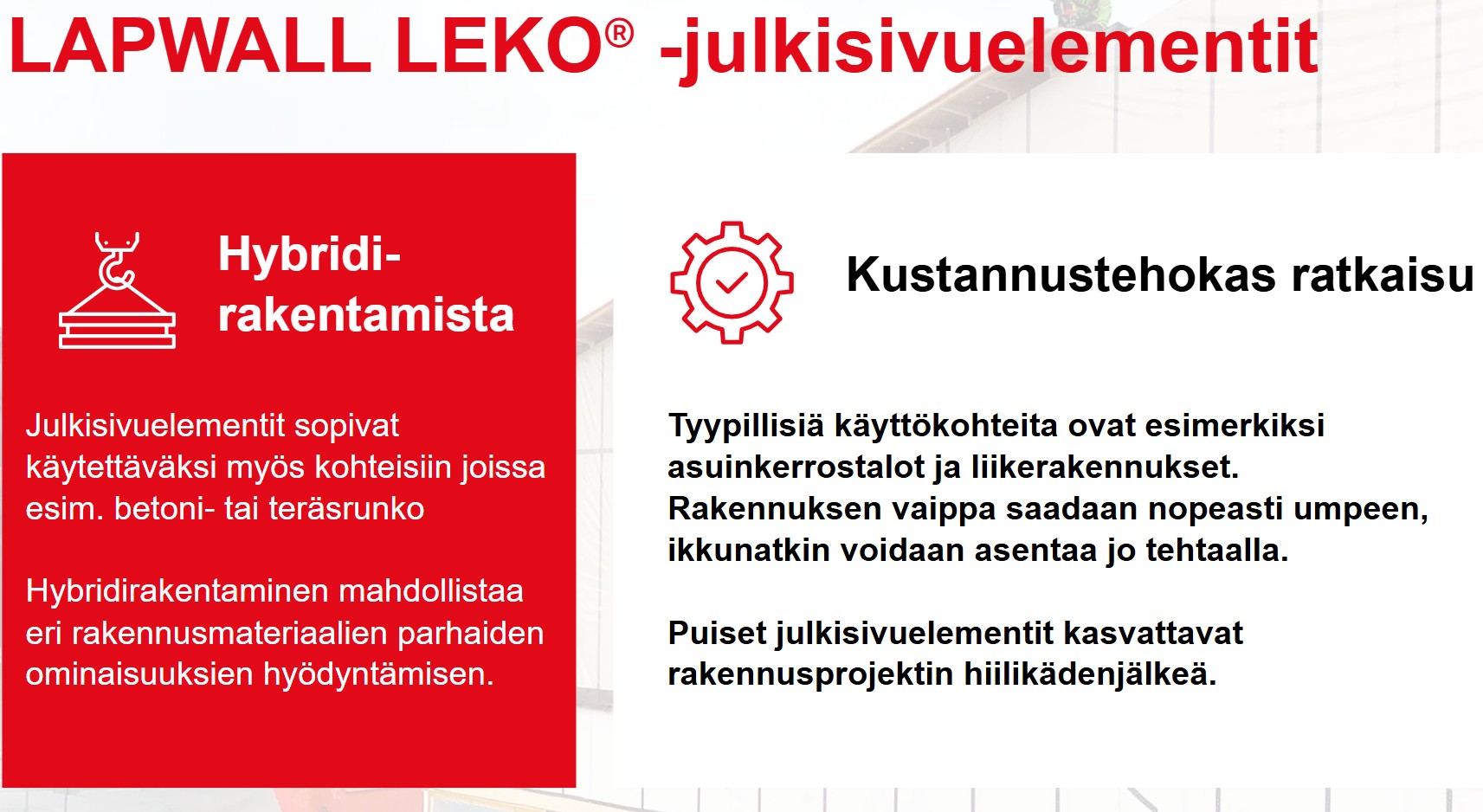
Our wall elements are divided into two main product groups: load-bearing and non-load-bearing, i.e., facade elements. Load-bearing elements are primarily used in low-rise construction, such as residential and public buildings. Non-load-bearing elements are supplied to buildings with a separate frame – made of steel, concrete, or wood – such as apartment buildings, offices, and halls. Currently, non-load-bearing elements account for about 30%, but that is where we see the greatest growth potential. Our goal is to strengthen our position in facade elements and expand into the PVP market (metal–insulation–metal), which is a segment worth several hundred million euros in Finland. In addition, our co-delivery concept – roof and wall elements from the same place – offers customers significant cost and logistics advantages.

We have invested heavily in product standardization. We have unified the joints, structural layers, and components of wall elements, which enables error-free and cost-effective production. Our product development focuses on optimizing structures so that raw material consumption decreases, but performance and quality are maintained. At the same time, we ensure that products can be processed and produced more efficiently. Fire and joint tests are underway, and we have applied for a patent for a new facade element structure. Optimizing wood raw materials, boards, and insulation are key development areas.

LapWall’s goal is to strengthen its position as a market leader in non-load-bearing wall elements and offer a competitive alternative to traditional PVP and concrete solutions. The new assembly line, larger element sizes, and standardized structures form the basis for industrial, efficient, and sustainable construction.

58 Likes

Yes, LapWall’s elements will also be delivered to this Kastelli rental apartment complex in Tuusula. The process between Kastelli and LapWall has been refined to be extremely efficient – orders arrive to us electronically in a form that they are almost automatically converted into elements in our production system. This model is a significant competitive advantage for LapWall’s partnership customers.

61 Likes

As a shareholder, I would first like to thank @jarmot.pekkarinen for allowing me to be part of such a great company as Lapwall.

In a 2023 article in Construction Journal titled “Why Some Companies Succeed and Others Don’t,” you highlighted that the differentiating good feeling between a successful and an unsuccessful company arises from cooperation, a shared goal, and the opportunity to influence. This raised a few questions in me, to which it would be interesting to hear your views:

How does Lapwall practically ensure that these three key elements are realized in everyday life at all organizational levels? What concrete metrics or feedback channels do you use to assess that employees truly feel pride in their workplace? A good feeling is, as stated in the article, impossible to copy, so how does Lapwall ensure that this culture is maintained and strengthened even amidst growth and potential changes? Do you also see that a good feeling and a strong company culture could serve as a competitive advantage for Lapwall in a market where efficiency and costs are often the sole focus?

As an additional question: does Lapwall’s staff still have Teslas at their disposal?

18 Likes

Thank you for your excellent and thought-provoking question!

It’s a pleasure to hear that LapWall is perceived as a community where investors also feel good about being involved.

In the articles in Rakennuslehti and Kauppalehti (Rakennuslehti and Kauppalehti), I highlighted three key aspects that differentiate successful and unsuccessful companies: cooperation, a common goal, and the opportunity to influence. These create that famous “good feeling” that cannot be copied – it must be built every day through actions and leadership.

At LapWall, these aspects are practically reflected in a culture of continuous improvement at the core of our leadership. We have brought a lot of learning from the automotive industry’s operating philosophy to the traditional construction sector:

The task of leadership is to serve – to ensure that every employee has the best conditions for success.

Development is done every day – small daily improvements, ideas, and experiments build great results in the long run.

The role of a supervisor is to go on-site, listen, and see for themselves what is happening in the field.
This creates a true cycle of continuous improvement, where the development potential is practically limitless.

This way of thinking is well described by the Japanese quality philosophy “Hinshitsu” (Hinshitsu):

  1. The product is made as it should be made.
  2. The product functions as it should function.
  3. The product looks as it should look.

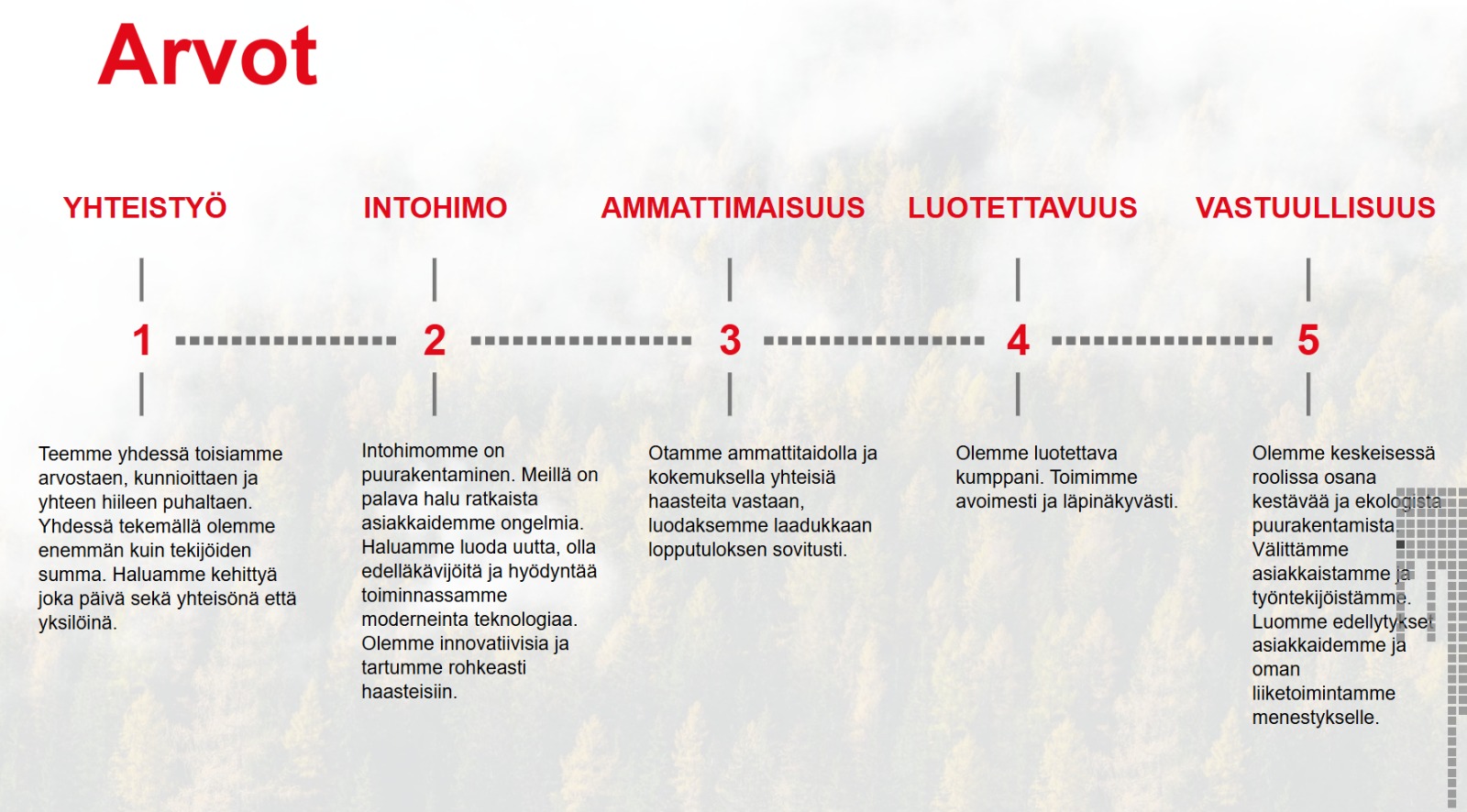
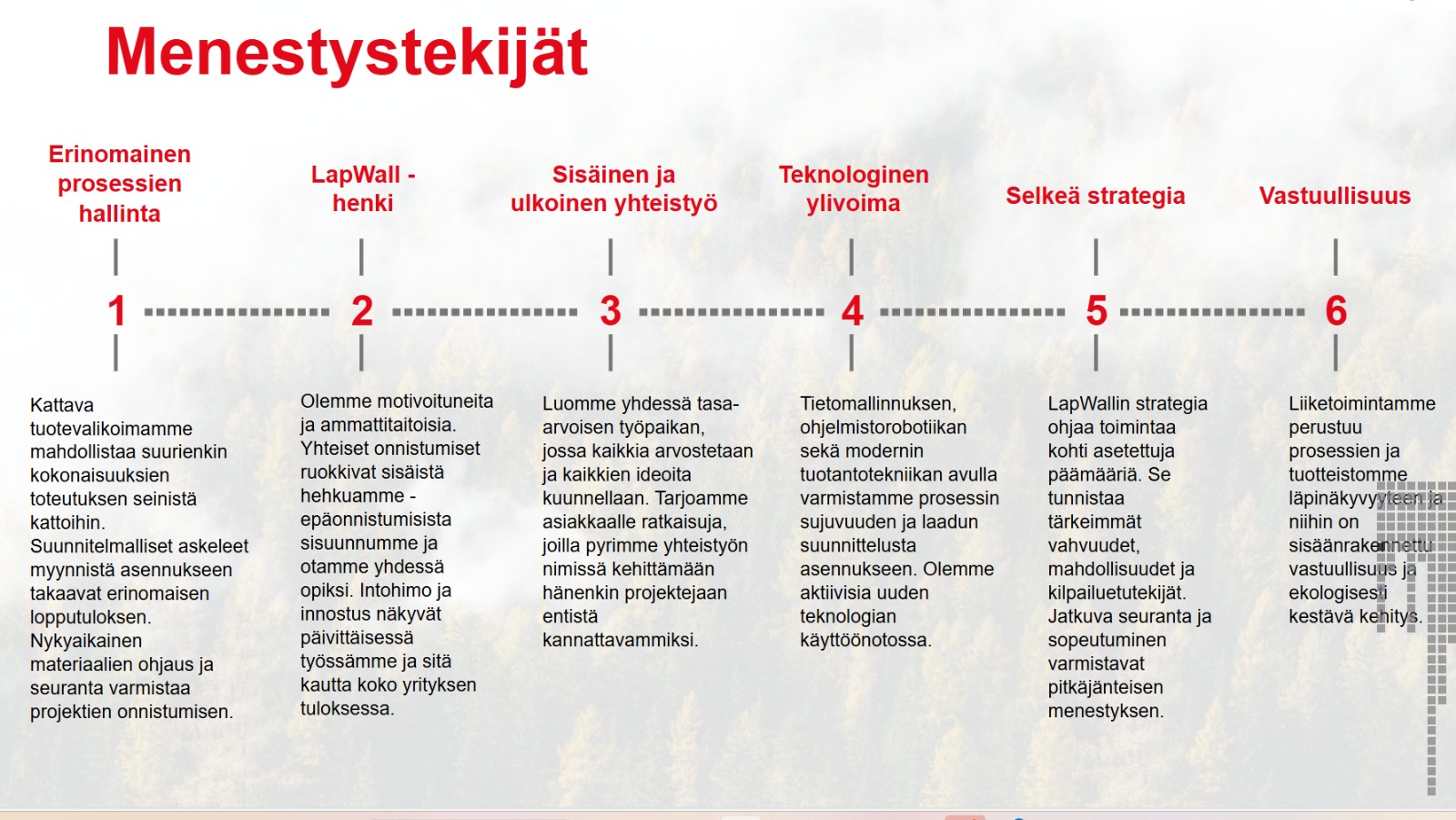
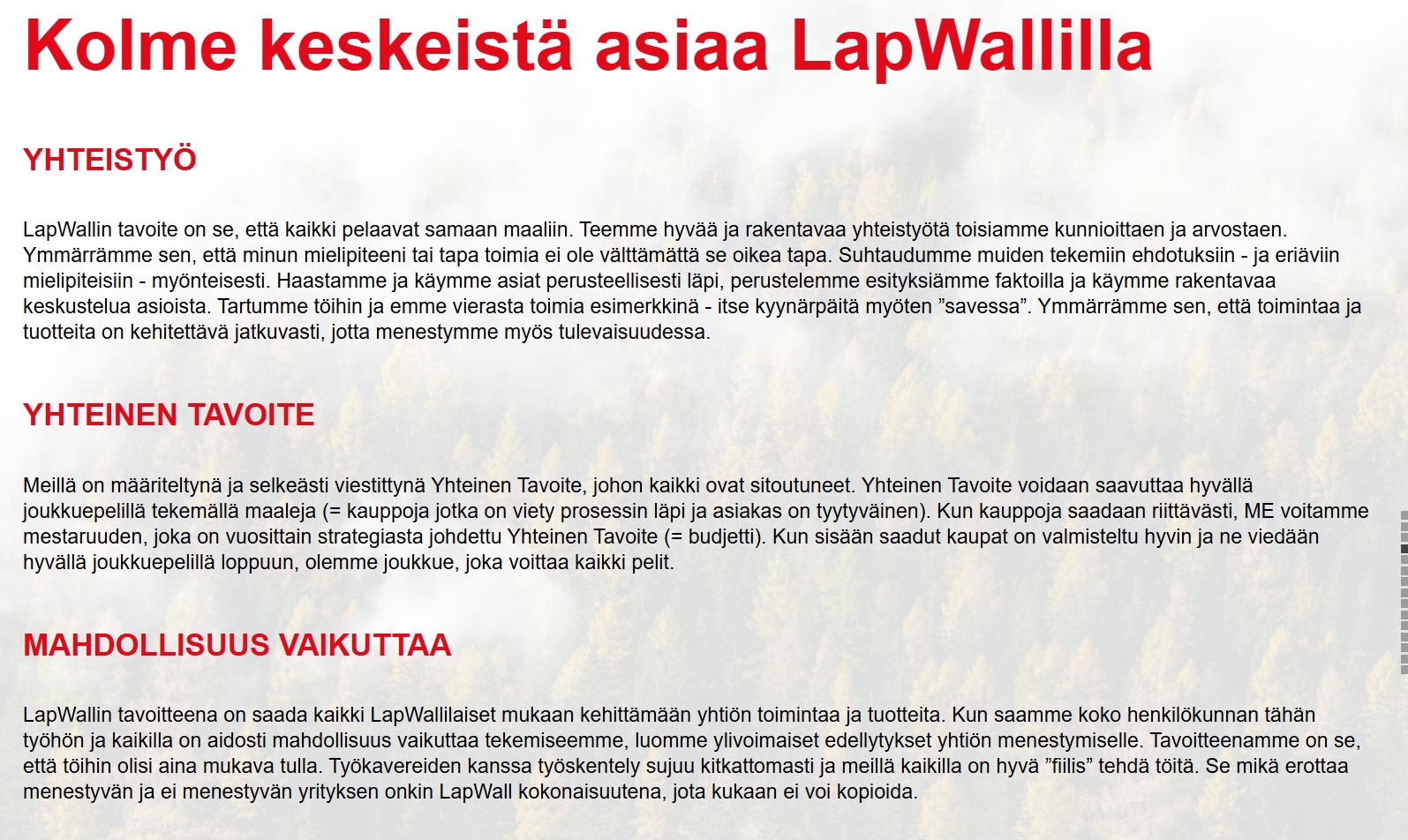
At LapWall, these principles are strongly alive in our daily operations. Together with our personnel, we have defined the company’s values – cooperation, passion, professionalism, reliability, and responsibility – as well as success factors, which include the LapWall spirit, internal and external cooperation, technological superiority, and a clear strategy.
(Values and success factors images below)

In addition, we have condensed three key aspects at LapWall – cooperation, a common goal, and the opportunity to influence – into a document that serves as a compass for management and daily operations.

A positive atmosphere and a strong company culture are one of our most significant competitive advantages at LapWall.
When people are well and find their work meaningful, the organization solves all problems that arise. This cannot be copied – it must be built every day.

And finally, in response to your additional question:
:backhand_index_pointing_right: Tesla is no longer available for LapWall staff. It was a great idea at the time and worked well in the early stages of the company’s growth when we were still a small team. Now we have moved forward in time and stage, but the idea of pioneering and courage remains strong in everything we do.
51 Likes

Hi everyone!

The Investor 2025 event is approaching! As a friendly reminder and invitation: welcome to hear Jarmo Pekkarinen’s speech on the Arvopaperi Stage at 13:00.
We will also be present all day at our own stand (1c21), and we hope that as many of you as possible will come to chat with us!

We revamped our investor website earlier this year and recently added an investor blog to it. Our goal is to produce content that helps understand our business, our operating environment, and the general development trends in the construction industry.
The site also includes an English section where we publish unofficial translations of our financial reports. We gladly welcome your wishes for blog content!

Best regards, Sanna / HR and Communications Director / LapWall

27 Likes

Thanks for the insightful answer @jarmot.pekkarinen! Sounds interesting.

I’ll continue by asking, what do you see as the most significant challenges in gaining market share from PVP walls? Where must one succeed?

Is the wooden wall element competitive in terms of cost? Or is the challenge in technical properties? Or perhaps in attitudes and awareness?

I’ll also comment as a more general point that Lapwall’s neighbor Neco Elements seems to have published its first figures.

The first financial year was successful and proceeded quite well as planned. Revenue amounted to 4.2 million euros and operating profit was just under 100,000 euros.

Target of over 10 M€ revenue in the second financial year

10 Likes

Thank you again for the good and pertinent questions.

PVP elements have established their position as wall solutions for large-span buildings, and the market in Finland is approximately 300 million euros annually. The biggest challenges relate to making the price of the wood element sufficiently competitive while minimizing post-installation work on site. A new, highly efficient wall element assembly line further enhances our competitiveness – the element size increases to 13 x 4.5 meters, which improves cost-effectiveness, installation speed, and logistics.

Technical solutions already exist, and our products meet all requirements. The acquisition cost does not yet fully reach the level of PVP, but overall – considering installability, logistics, and finishing – the wood element is a very competitive option. Furthermore, windows and doors can be pre-installed at the factory, which speeds up the on-site phase and reduces errors.


We are already strongly involved in the facade element markets, for commercial and public buildings, and our goal is to increase our share in these segments and also expand into industrial construction, where our products provide significant added value through cost-effectiveness, speed, and a low-carbon footprint. There is a clear group of customers in the market who want an alternative to the traditional PVP solution – we will offer a complete and finished element solution for this.

Our goal is to capture our share of the market and serve the same customers to whom we already supply roof structures. When a customer receives a roof and walls from LapWall from a single source, pre-installed, significant cost and schedule advantages arise.

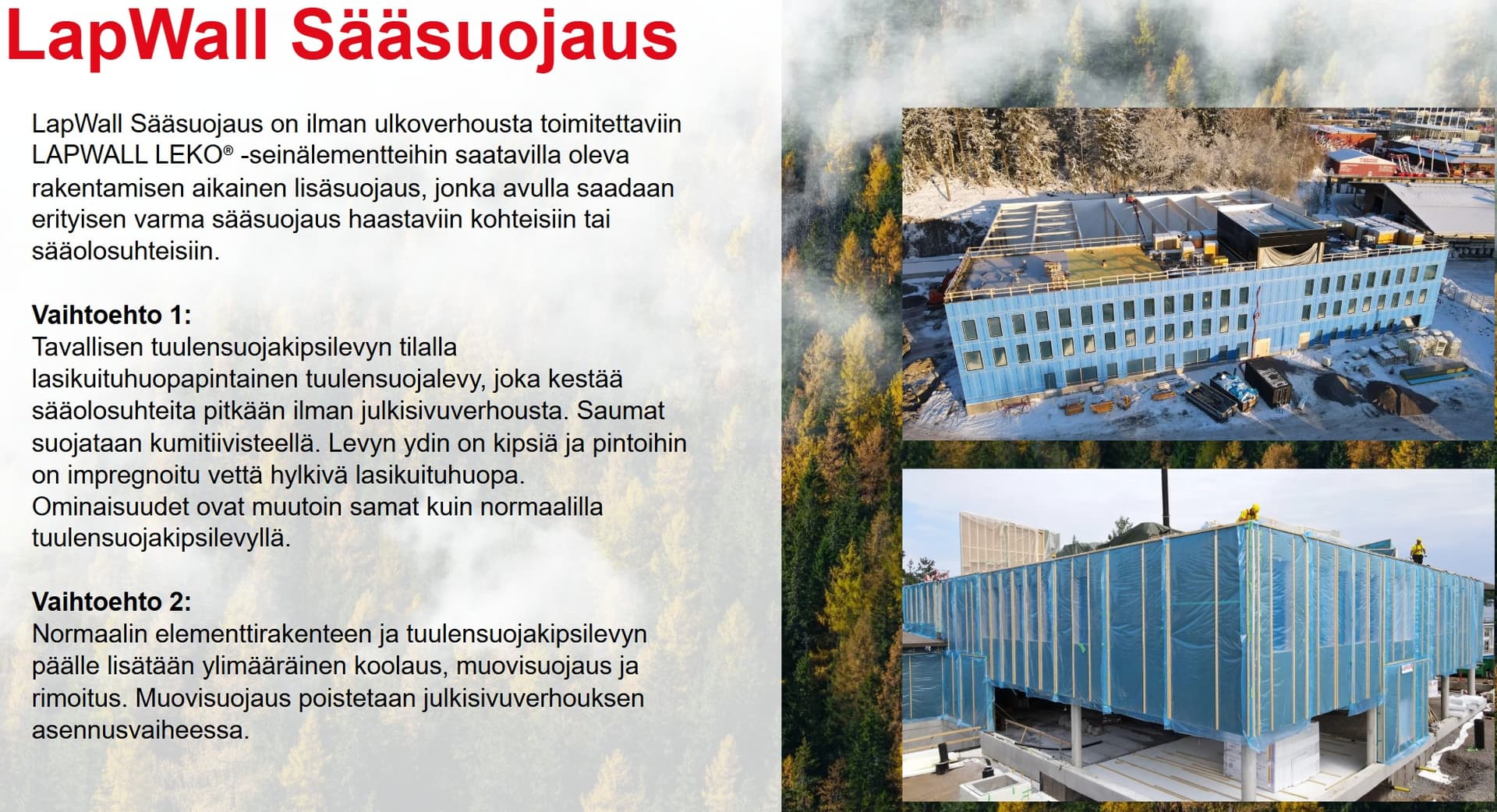
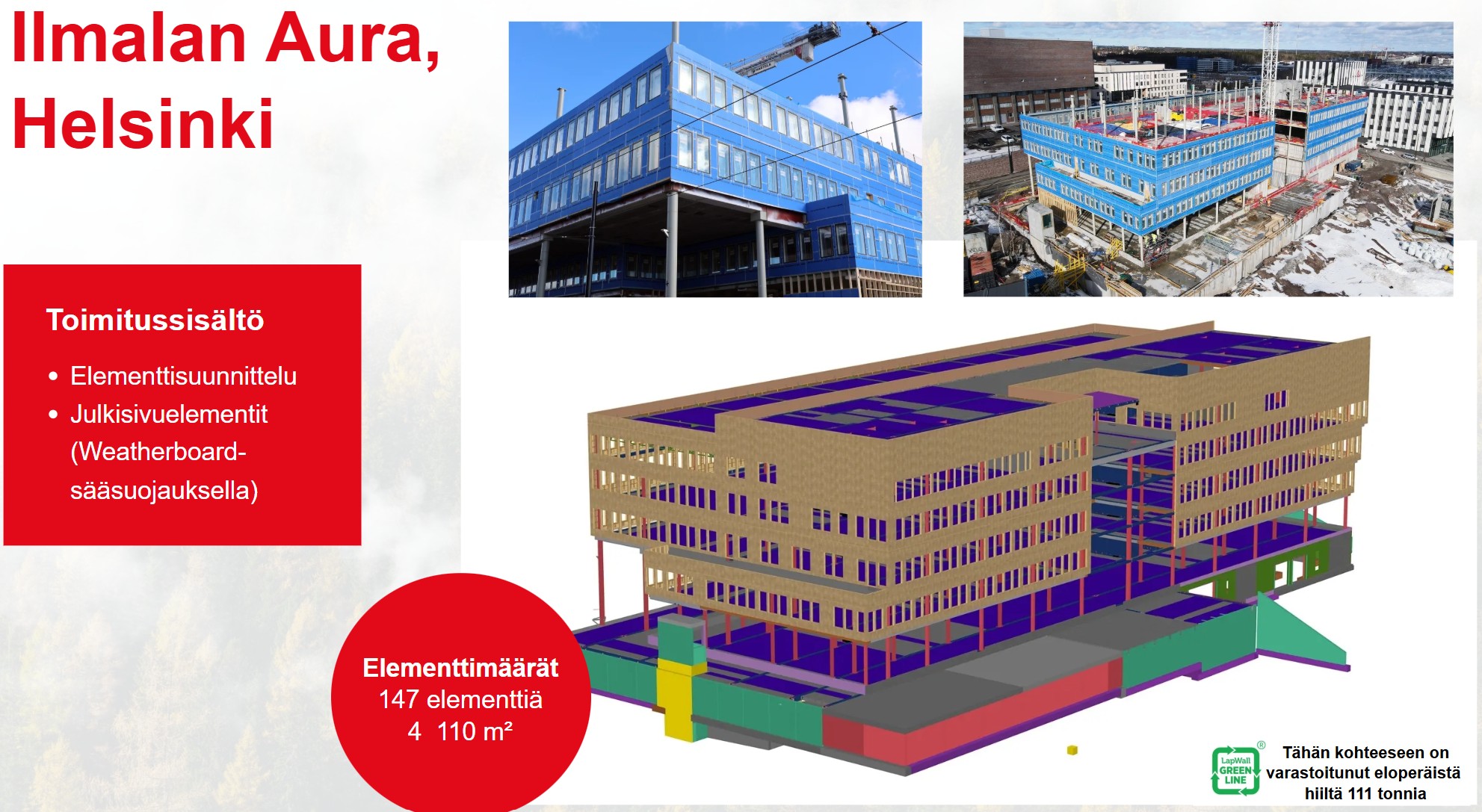
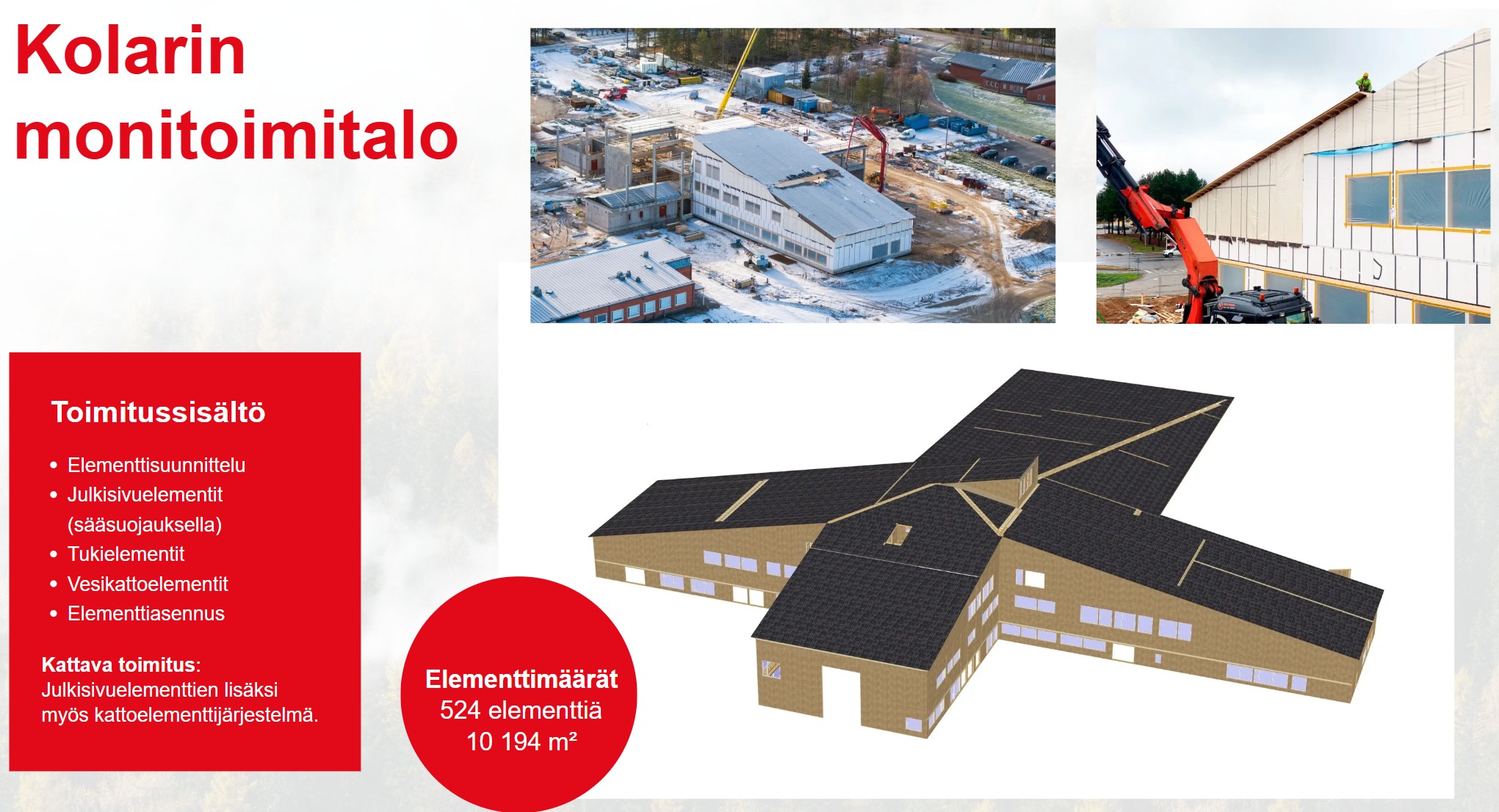
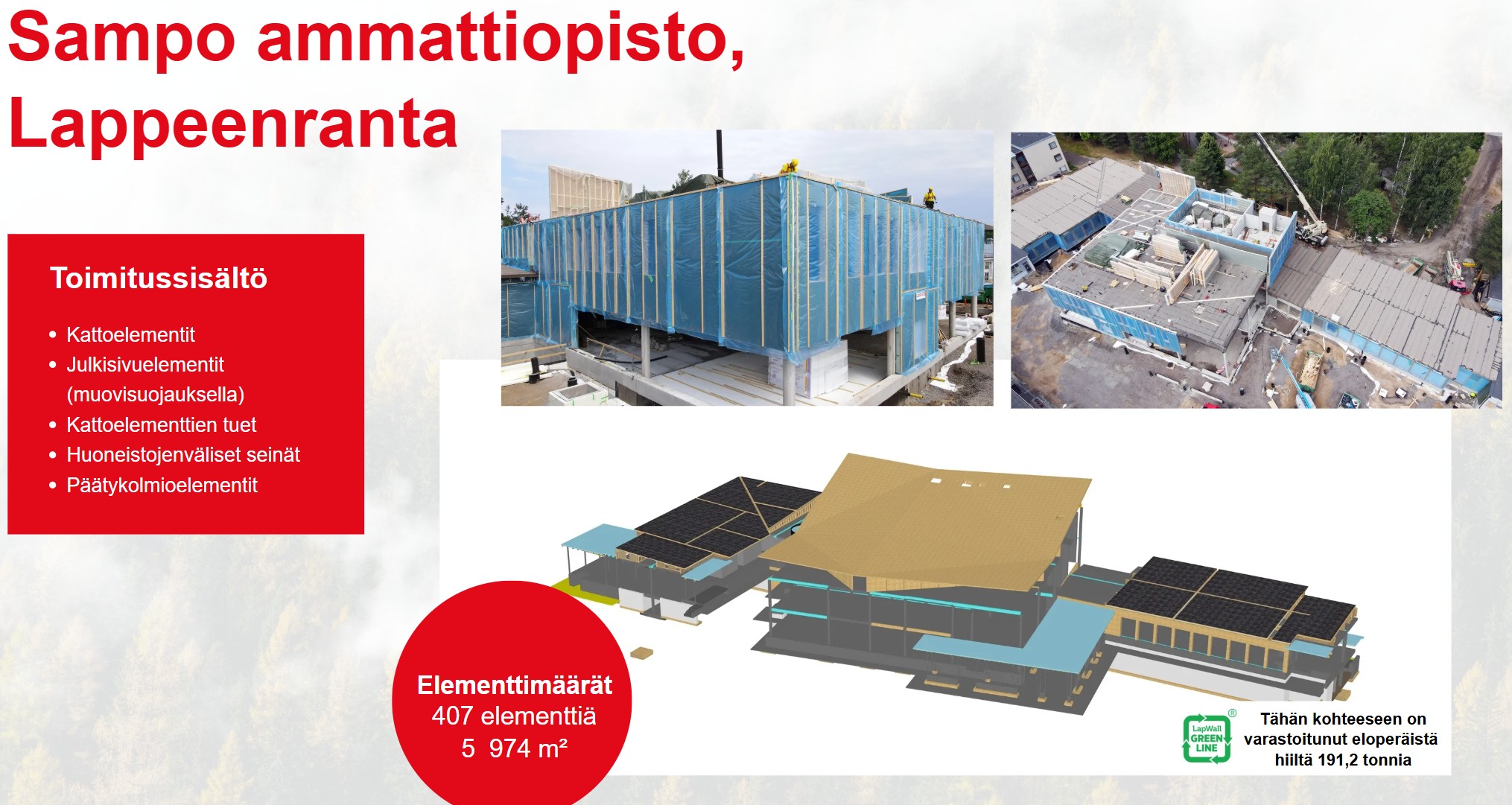
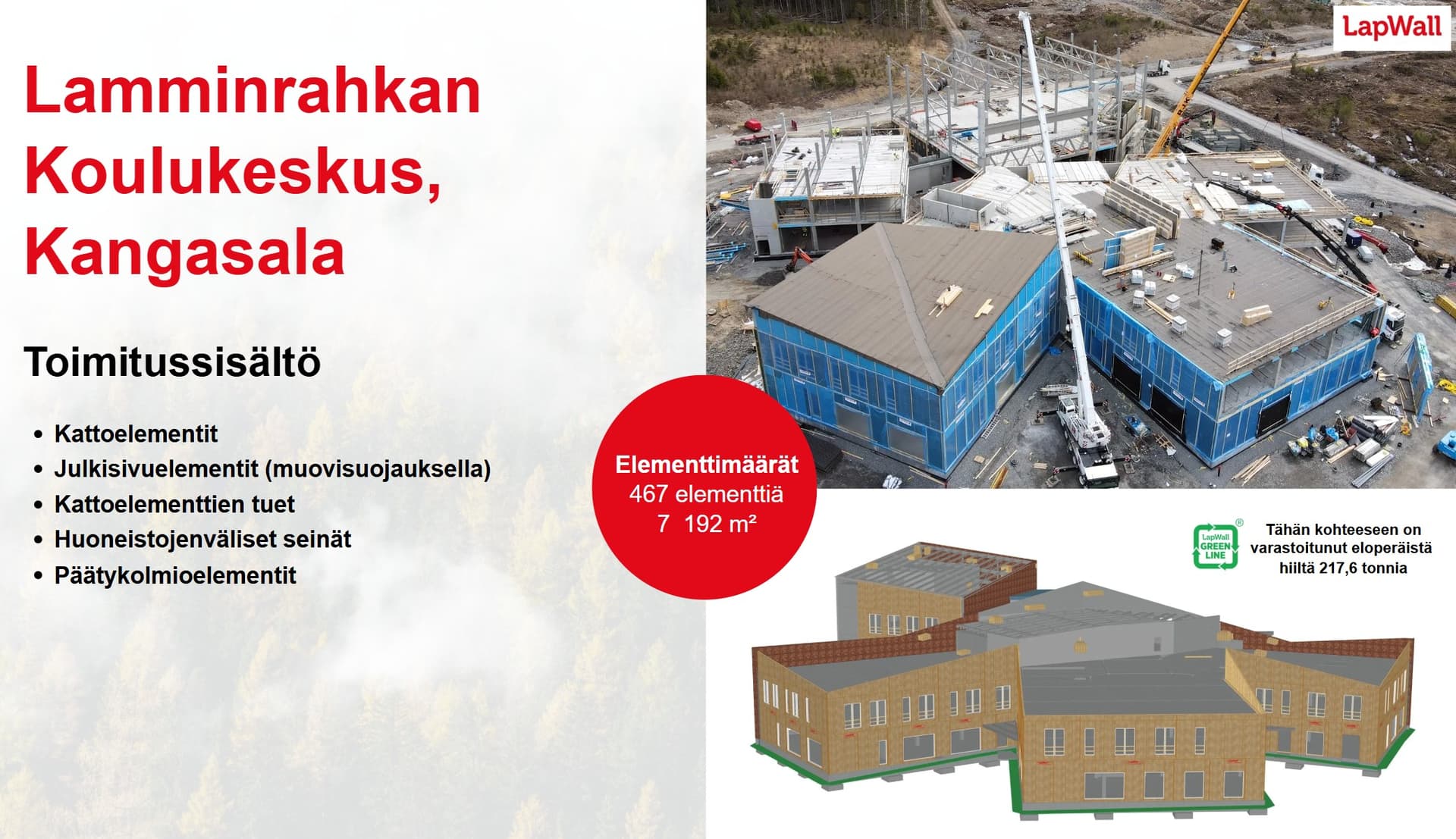
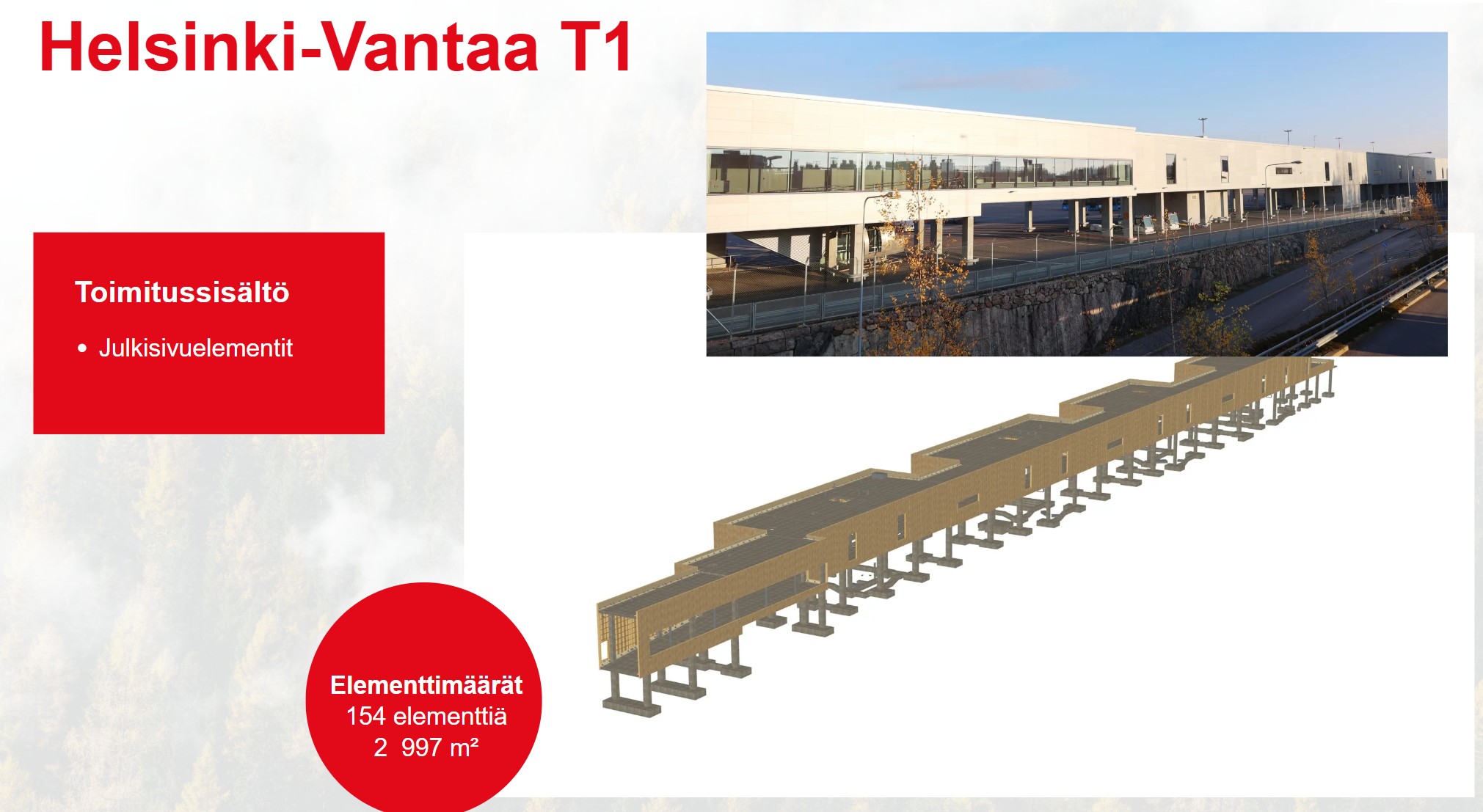
Below are a few references from projects we have supplied.


37 Likes

Additionally, here’s a general comment on the industry players:

We know the market and its players well. To understand the industry more deeply, it’s worth visiting LapWall’s factories and getting acquainted with the production in practice. Concurrently, one can visit other industry players – this provides a comparison and shows what

31 Likes

I wrote an article on LinkedIn about why growth doesn’t stop at the market but at thinking – and how the industrialization of construction, prefabrication, and continuous improvement are shaping the entire industry. I thought I’d share it here too, as the theme broadly touches on construction, industry, and productivity development.

Link to the article: (1) Kasvu ei pysĂ€hdy markkinaan – se pysĂ€htyy ajatteluun | LinkedIn

31 Likes