My guess is that it won’t affect it “at all”, but,
If Tesla started selling its equipment branded according to the customer’s wishes, and assuming the price level is at least at Kempower’s level, if not well below, then it might be a different story.
I don’t believe Tesla is offering this, but I can’t immediately think of what would prevent it in the longer term..? Everyone knows they are at a Tesla post when everything “just works”.
There is still plenty of order backlog for products with a good price/quality ratio, and for example, Tesla chargers are not coming to depot use according to strategy.
Here is an interesting piece by analyst Lohi about Kempower and, among other things, its opportunities in the USA.
In this piece, we examine the competitive landscape of the DC fast charging market for electric passenger vehicles in the United States. In our assessment, Tesla’s dominant market position and the small number of charging operators utilizing third-party equipment manufacturers pose challenges for Kempower and other manufacturers seeking to enter the market.
Subheadings of the article:
The US DC charging market is concentrated among a few strong operators
The DC charging value chain in the US is more closed than in Europe
Tesla’s dominance is a challenge for Kempower
Substantial public subsidies could change the competitive landscape
Kempower’s technical competitive advantages help it stand out from the competition
North America’s share of revenue could grow to a fifth next year
The race for markets and customers is heating up. Kempower and Tesla in the same sentence are a bit like David versus Goliath.
“Supercharger stations are also being expanded in the north. Tesla mentions that at least the Kajaani and Inari locations are among the seven new stations in the 2023 expansion plan. The eight-charger station in Kempele is currently being expanded to 16 chargers.”
I’ve been reflecting on Kempower’s strengths and weaknesses on a general level.
The Bulls :
Kemppi has a strong international reputation as a manufacturer of high-quality welding machines. This, combined with its Finnish heritage, can bolster the image of high quality associated with Kempower.
Kempower has specifically focused on DC fast charging, whereas some competitors have focused on slow charging.
Kempower’s dynamic, adaptive power distribution system for charging points is a clear advantage over competitors, even though the market is catching up.
The rapid electrification of transport (a megatrend) strongly supports Kempower’s growth.
Kempower is capturing market share early enough. Once a device is sold, the customer will almost certainly buy their next device from Kempower as well. Maintenance business?
Customers can brand Kempower devices with their own brand (unlike Tesla Superchargers).
The usability of Kempower chargers is top-notch in the industry.
Bearish arguments bringing dark clouds :
Ultimately, there is nothing unique in Kempower’s technology that couldn’t be copied. In my understanding, charging technology is, after all, reasonably simple.
There are large international companies as competitors (ABB, Tesla, Enersense) that have the resources to invest in things like marketing.
US protectionist policies are a threat, even though Kempower is starting to manufacture chargers in the US for local use.
China (the world’s largest EV market) already has strong local players and different charging standards. At some point, companies from there will also enter the European/US markets.
DC chargers are unlikely to be the choice for many households or housing associations; instead, they choose slower AC solutions that are easier on the battery. Thus, the DC charger market will saturate quickly.
Summary: It has been a pleasant ride on this rocket, and the ascent is likely to continue strong for the next few years. However, the lack of moats is the reason why many skip this investment case, and it is also the reason why jumping off will become increasingly attractive as the market saturates. Of course, Kempower has the potential to develop into a major player in its field, much like Kone, where new equipment is always ordered to replace aging units.
I have also recently compared Kempower to Kone in my own investment analysis.
Personally, I see charging infrastructure as a form of critical infrastructure, which is why I am somewhat skeptical about Chinese charger manufacturers conquering the European market. I recognize that China has the capability to enter the market very quickly if needed as demand intensifies, but how many charging operators are willing to buy a Chinese product for their customers? It may be that many will in the future, but for now at least, Kempower gains some competitive advantage from being a European player. That competitive advantage is certainly very short-lived, but it protects against the worst turbulence for a while.
Compared to Tesla, another difference with Kempower is that with a Kempower charger, for example, the S Group can sell power to customers. With Tesla chargers, it is always Tesla selling it.
Of course, that competition can have an impact, but there is enough market to go around, and Kelmeela also made a good point that “the difference with Kempower compared to Tesla is that with a Kempower charger, for example, S-Group can sell power to customers. With Tesla chargers, it’s always Tesla selling it.” So Tesla doesn’t seem to sell to other distributors?
Heavy-duty transport looks like it will be a major market in the future, and Kempower has already managed to get a good foothold there right from the start. Below are a couple of links:
Kempower’s advantages. Heavy vehicles and heavy transport are electrifying faster than the private sector. It is easier to sell an electric motor to a mine than to a Texas SUV driver, because emotions and perceptions guide decisions, whereas business usually prioritizes economics. Decisions are driven by what is most profitable, and sustainability must also be taken into account.
Kempower charger: “For us, a charger is a complete package, a combination of technology and service.”
Services mean: “What information the end-user wants on the screen or how ergonomically the charger is designed, as well as the software running in the background. A Kempower customer can, for example, integrate charging systems into their own control systems or optimize their charging for the cheapest hours according to electricity prices.”
In my opinion, software, AI, data collection, and analysis are areas where Kempower has the opportunity to gain a competitive advantage and stand out from other competitors.
So, these charging stations are not just “dumb boxes,” and in the future, charging station software could be a significant advantage for the best players
What does yesterday’s announcement from GM to commit to Tesla’s chargers and Ford’s previous similar decision mean in terms of business risk in the US?
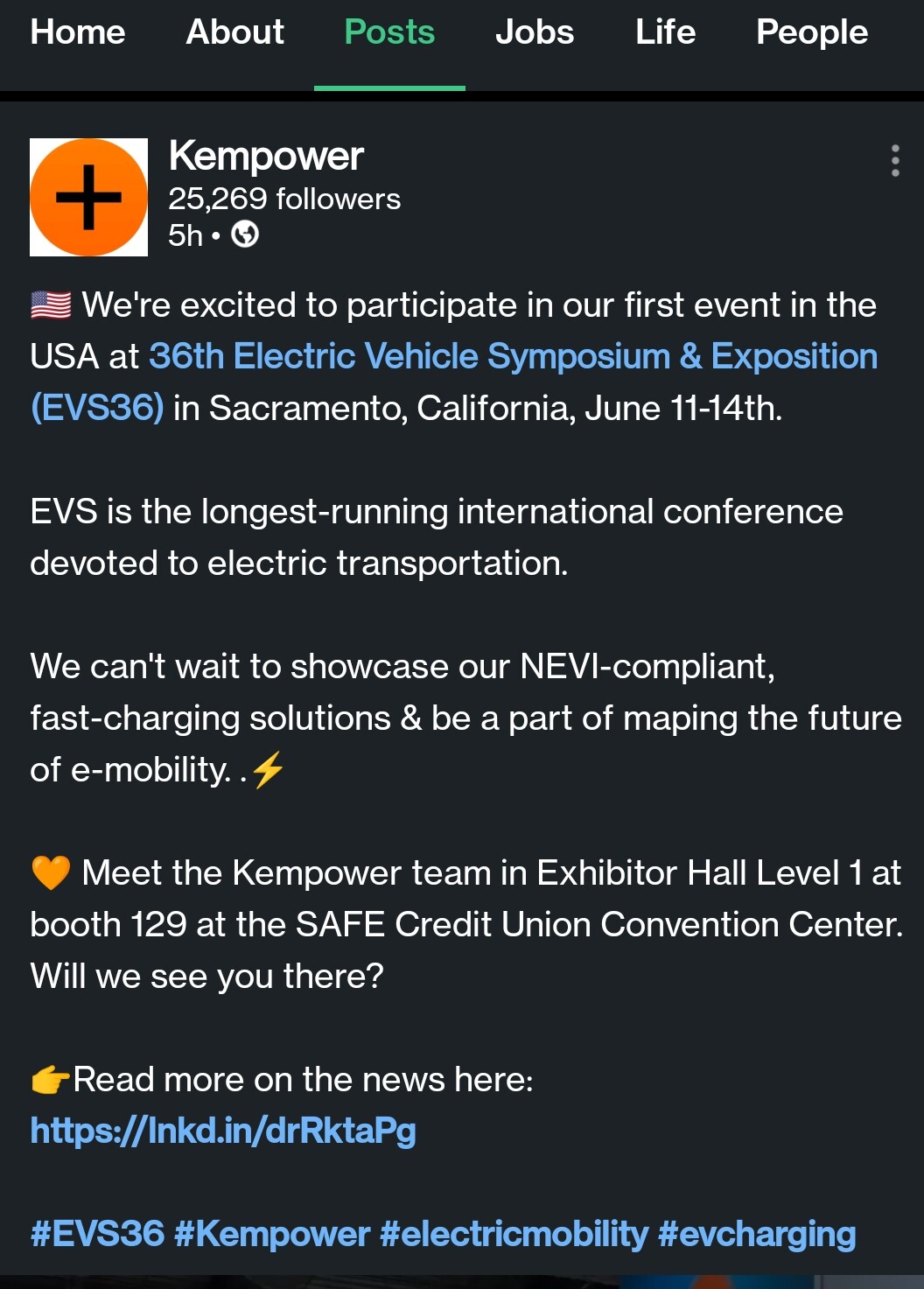
Does the timing relate to the EVS36 trade show this weekend? What’s left of the market, what happens next, and can third-party service providers join that consortium?
Just questions from someone who doesn’t know, then…
From Tesla’s perspective, that’s obviously good.
However, it’s worth keeping the big picture in mind. Annual new car sales are around 67-70 million. GM, Ford, and Tesla account for 12 million of that. GM’s and Ford’s BEV sales are relatively small.
Asian and European automakers are unlikely to jump on Tesla’s bandwagon.
In summary, there will certainly be plenty of market for Kempower well into the future, as long as the products are solid It should also be added that operators like the S Group, K Group, plus all similar ones globally, want this to be their own business, not Tesla’s, so they certainly won’t be using Tesla stations.
I don’t know how K procures its chargers, but around here they seem to be Siemens units. Tesla, after all, offers its charger to others too, as mentioned in a tweet a few posts up.
Yeah, I don’t have extensive knowledge about where everyone got their charging equipment from. I just wanted to point out that others are in the charging business too and want their share of the profits. I’d also add that there are plenty of players in this space globally.
I’ve been wondering if this will play out like it did in the telecom sector, where operators practically dictate the pace of investment and prices, unless you’re a car brand with its own network or both a manufacturer and an operator. I doubt this pie will be enough for n+1 manufacturers forever?
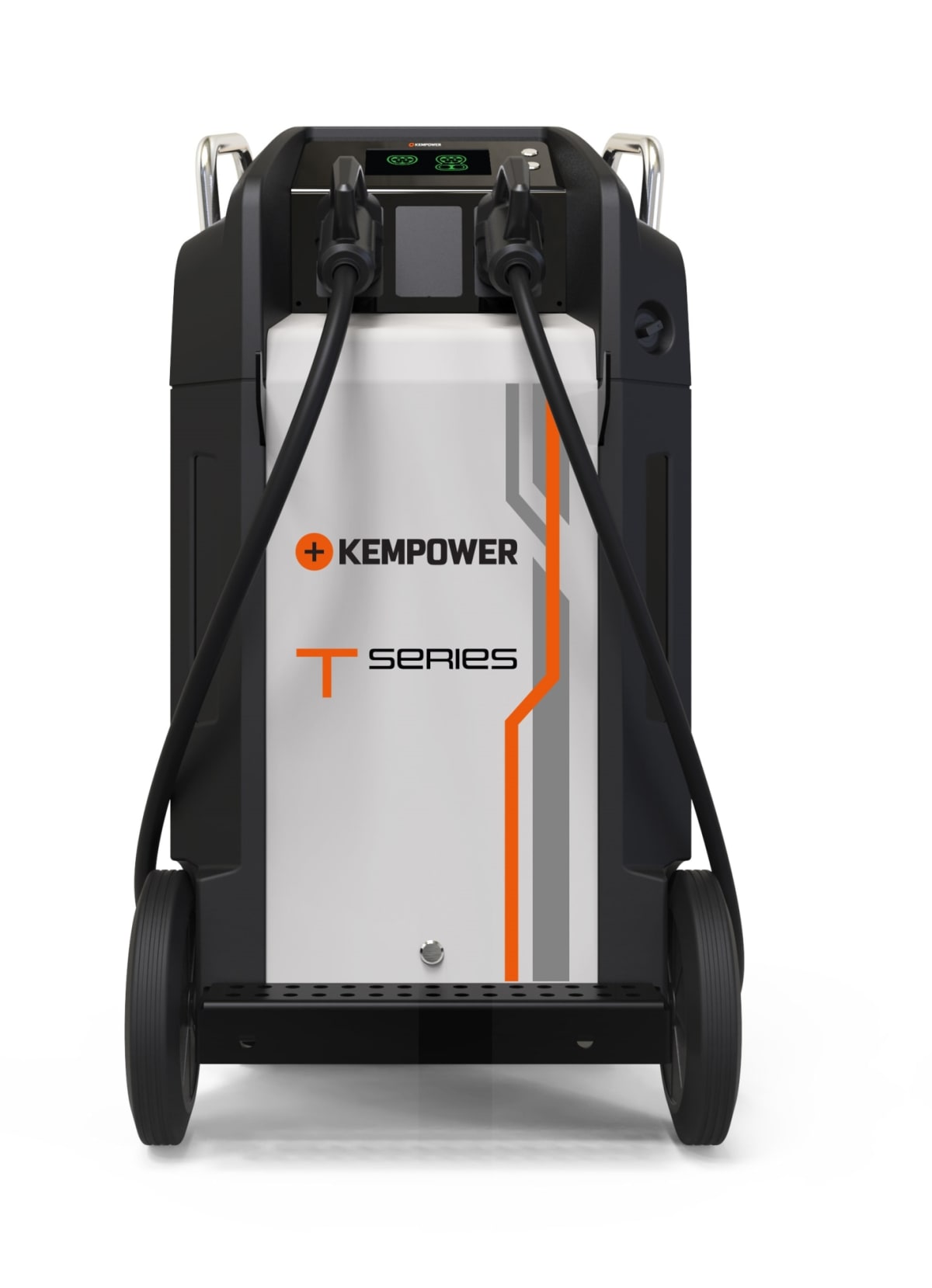
 Not exactly a small deal.

 :
: :
:
 It should also be added that operators like the S Group, K Group, plus all similar ones globally, want this to be their own business, not Tesla’s, so they certainly won’t be using Tesla stations.