Excellent search tip! I had to go check immediately, and now it’s 10,892 units. Shrinking before my eyes.
7 Likes
Why is that a risk? A tender offer can be made for any company at any time, and usually, the offer includes a relatively significant premium to the current share price.
5 Likes
The most likely scenario is that the Kempes themselves will buy the company out of the stock exchange.
This scenario is supported by the fact that the main owner (the Kempes) holds over 60% of the company’s shares, making it practically impossible to sell the shares without the stock price taking a significant dive.
3 Likes
Joachim Hennig has written a long and comprehensive review of Alpitronic’s competitors on LinkedIn.
Briefly, my reading between the lines:
-Kempower is easily the most viable and will dominate with Alpitronic by 2030.
-Ekoenergetyka is good, but has financing problems.
-ABB is slowly dying out.
-Siemens, and other small players will disappear. They can’t compete in technology, production, or maintenance.
-Chinese companies will never be allowed into anything other than niche projects due to various risks.
Long Kempower Analysis
First League
Kempower — The Strongest Challenger. With a real Achilles’ heel.
The Finns are the only company I would classify as a full-fledged competitor at Tier 1 level. Not in the HPC (high-power charging) highway network for passenger cars — there, the market share is far from the top tier. But in the segment that will dominate the next five years: depot and fleet charging, commercial traffic, electric buses, logistics.
Kempower’s dynamic load management Satellite technology is considered the industry benchmark for fleet applications. The company invested early in commercial vehicles — city buses, trucks, school buses — and has established a foundation of trust there that cannot be surpassed by merely a better product brochure. In North America, Kempower is growing against the trend: +84% revenue growth in 2024 in a market that collapsed in Europe.
But: The numbers are public. And they tell a different story.
2024: Revenue €223.7 million — a 21% decrease compared to 2023. Operating profit (EBIT): -€26.4 million. Staff reductions from 907 to 786 people. Only in the last quarter of 2024 was a positive operational profit of €0.8 million seen again — with a quarterly revenue of €71.7 million. That’s a thin margin at the peak.
And then there’s the price question. Kempower consciously positions itself at the higher end of the market. That’s a strategy — not a weakness. But in a market currently under significant price pressure, as investment decisions are calculated more precisely and new competitors enter with technologically comparable products at lower prices, a high price level is an open flank. One that Ekoenergetyka and others are now very deliberately exploiting.
A structural problem remains: Kempower is a listed company. That means transparency — but also quarterly pressure, analyst communication, and capital market expectations, which in weak market conditions narrow the room for maneuver. The medium-term target of a 10–15% operating profit margin (EBIT) by 2026–28 is ambitious. It is achievable — if the market is favorable and the price premium holds. No one knows if both will materialize.
Where will Kempower be in five years?
It will likely have established itself as one of Europe’s leading providers of depot charging solutions — where reliability and load management are decisive rather than brand. In high-power charging (HPC) for passenger cars on highways: a marginal position. In the commercial vehicle segment: one of two or three survivors. But only if the price positioning holds or is actively adjusted.
In my opinion, Kempower will also be stronger in the passenger car sector in the coming years, and the losses will also be behind us this year. For some reason, Joachim also used 2024 numbers instead of 2025.
21 Likes
An interesting review of the depot introduced last autumn in Australia, which is now experiencing a diesel shortage and much talk about electrifying buses and trucks:
The depot is designed to serve a total of 229 electric buses. Currently, 13–16 charging points have been installed as part of the first phase.
- Full Electrification: Brookvale’s entire 229-bus diesel fleet is planned to be replaced with electric buses by 2028.
- Expansion Elsewhere: Similar technology is currently being installed in other Sydney depots, such as Leichhardt and Kingsgrove, which are scheduled for completion during 2026.
- New Depot: A completely new, purpose-built electric bus depot is being planned for Macquarie Park.
As the cherry on top, toilet paper is being transported in Australia by Windrose faster and more affordably than by diesel, thanks to a new logistics company that operates 100% on electricity. (480km, 36t, 12% faster because diesel slows down on inclines, 87% battery remained.)
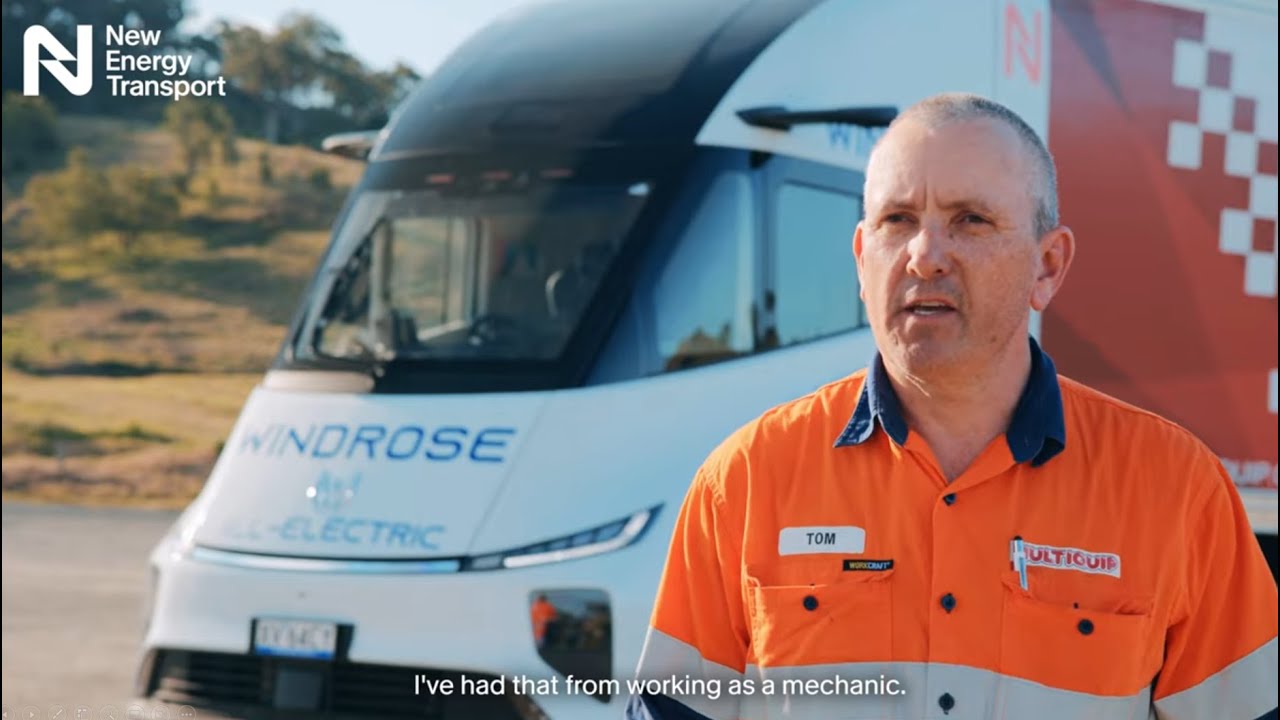
Not directly related to Kempower, but it gives an idea of how the industry is shifting to electric.
16 Likes
A few weeks ago, the Higher Regional Court in Düsseldorf issued a ruling stating that the expansion of EV charging on the premises of Tank&Rast, which dominates Germany’s manned fuel distribution and service stations on motorways, was illegal because T&R, which held a near-monopoly position, had selected charging operators without proper competitive tendering.
Due to the failure to tender, the expansion and improvement of EV charging facilities at T&R service areas were almost stalled for years. In the summer of 2024, Alpitronic cited the ongoing legal dispute as the reason for the decline in sales of its high-power chargers and the cut in its production.
Autobahn GmbH should now arrange an EU-wide tender, or perhaps dozens or hundreds of tenders, for EV charging in T&R’s areas. In my opinion, the tenders should be organized and resolved in a decentralized manner to prevent regional monopolies from forming and to ensure that bidders can install the equipment within the required timeframe. To ensure continuity of competition and security of supply, it would also be justified to select two operators and/or chargers from two different equipment manufacturers for the large T&R service areas within the motorway network. A condition could be set that each T&R service station area should have chargers from at least two equipment manufacturers.
Kempower could have a good opportunity to improve its market share in Germany in cooperation with some charging operators. The products have differentiating factors that Kempower should emphasize to operators intending to participate in the tenders. These include Kempower’s satellite system, modularity and dynamic power management, design, suitability for various parking areas, operational reliability, and maintainability.
24 Likes
This is excellent news and worth asking about in connection with the Q1 results if it’s not specifically mentioned in the call!
This is certainly not a bad thing for Kempower in any way. 
9 Likes
Partially a recap of old news, but worth sharing because it’s on Ekoenergetyka’s turf. Especially if all of these are implemented with Kempower chargers. In which case, an operator using Kempower instead of Eko would be Poland’s largest independent operator. The same as if Neste installed Ekoenergetyka chargers instead of Kempower.
 Decathlon has chosen Powerdot as a strategic partner for EV charging solutions in Poland! There will be 28 stores to be equipped with more than 250 charging points by the end of 2027 and that will contribute to the consolidation of our position as the largest independent operator in the country.
As with Carrefour, Intermarché, Action or CBRE (and many other partners), this is another example in which the initial success of a partnership in a given country leads us to accompany the brand in cross-border projects - in Portugal there are already 18 Decathlon stores with which we work today!
Q1 2026 ends as one of the most active and important quarters in our history!
5 Likes
France is also joining the MCS group.
At this stage, seven charging stations for trucks will be opened, with power outputs of 400-1200 kW. Each station will offer at least 4 charging points that can be expanded as needed. In the illustrative image, Kempower and several Kempower employees have liked the post, and Kempower’s account has commented.
17 Likes
The Q1 results will be interesting, as March sales will still be included. If the situation remains uncertain, the global push to switch to electric power could be a relatively strong catalyst for Kempower. It’s great that you’re digging these up.
12 Likes
Tom Moloughney’s Alpitronic is out and there’s some sweet news. The HYC1000 isn’t even in production yet. Pilots this year and production won’t start until 2027!  Less power, worse power distribution accuracy, fewer charging points, and production at the earliest in 8 months. I’m enjoying it!
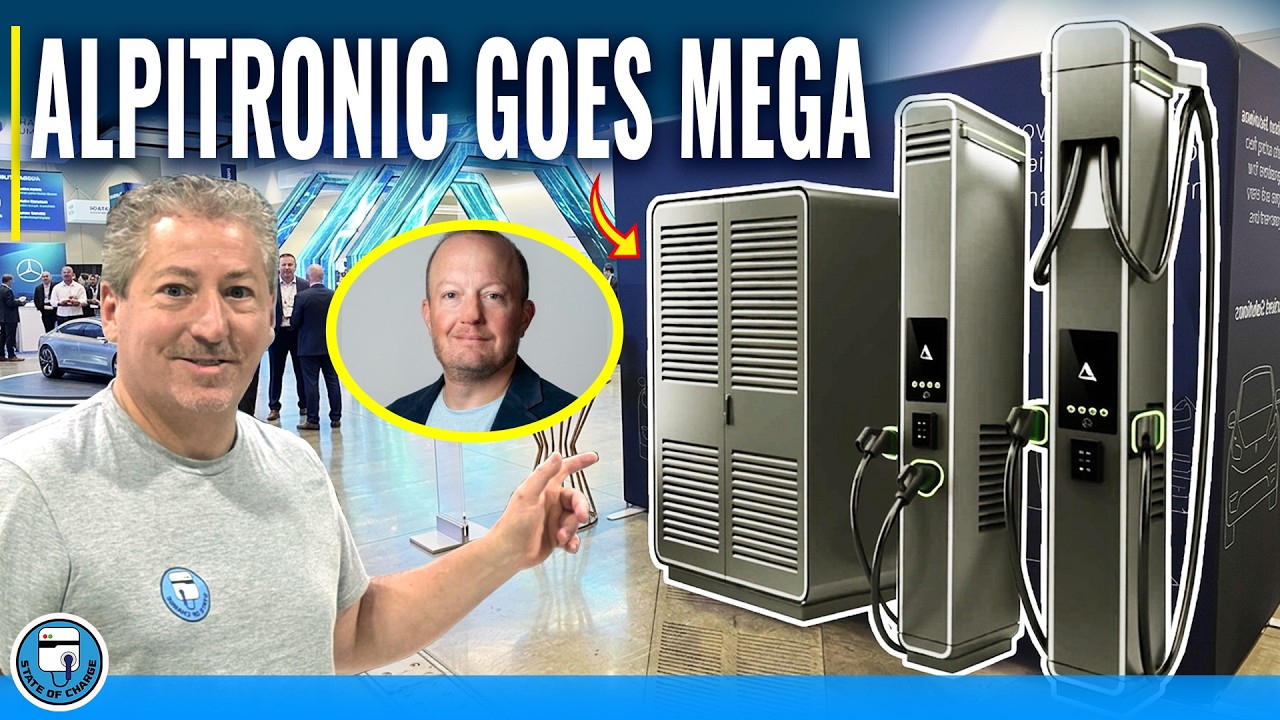
Regarding the price vs. HYC400, he said that after 5 plugs, the HYC1000 is CapEx sensible. So, practically 2.5 HYC400 chargers. Which I somewhat doubt. And since the HYC1000 system only supports 8 cables, there won’t be much adjustment anyway.
Mike Doucleff, Alpitronic America’s director, also seemed a bit nervous and wasn’t very confident in the HYC1000’s success. 
13 Likes
1
Excellent search tip! I had to go check it right away, and now it’s 10,892 units. Decreasing before my eyes.
Update: Now 10,293….
4 Likes
Here are Pauli’s comments, as Kempower is about to release a new strategy. 
Kempower will publish its new strategy in the spring and will hold a Capital Markets Day (CMD) on the subject in Oslo on May 26. We estimate that the new strategy will focus more on heavy-duty transport and increasing service revenue, among other things. In addition to pursuing growth, we estimate that the company will invest significantly in improving operations. We see significant scalability potential in profitability, as the fastest growth phase of the organization and fixed cost base is already over.
11 Likes
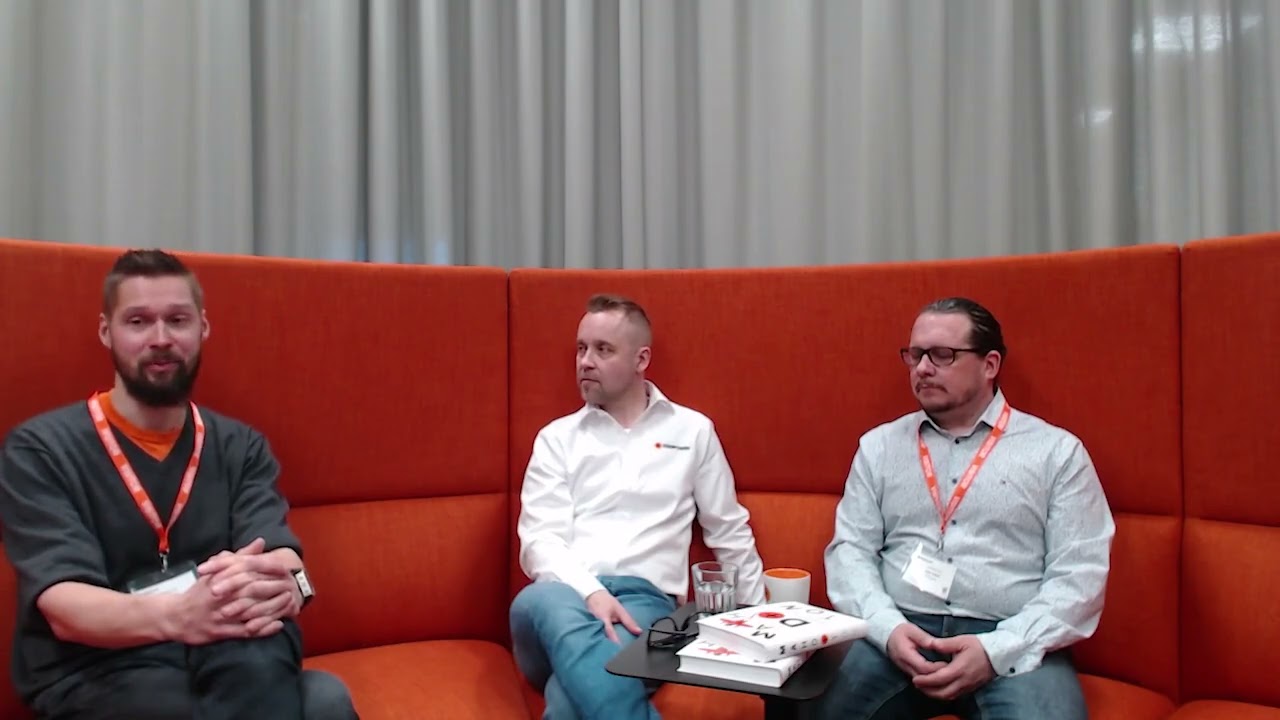
For the biggest fanatics, here’s a 50-minute clip on how Kempower has developed product assembly and what’s next in development.
Even though it’s a Palkkataito promo, it was a very interesting and in-depth look at Kempower’s operations for me! It’s nice to see that work is being developed not just in “Excel,” but also on the factory floor, listening to employees. The video presents several case examples of how production efficiency has been studied and improved.
Summary of Production Development
1. From Craftsmanship to Mass Production In its early days, Kempower’s production was flexible “workshop-style,” where every employee was a multiskilled professional. When order backlogs exploded and the installed base exceeded 33,000 points, it became necessary to move to strict method development. Scaling up is impossible without every movement being planned down to the second.
2. Hunting for “Waste” Kempower has focused on eliminating all non-value-adding activities (waste) from the process. The video goes through how the assembly of charging cabinets has been optimized:
- Ergonomics first: When unnecessary reaching and searching for parts are eliminated, efficiency increases “as a bonus.”
- Standardization: The goal is for every device to be assembled in exactly the same way, whether the factory is in Lahti or North Carolina.
3. Personnel as Part of Change One of the most important messages of the video is that development is not done from an “ivory tower.” Method developers go to the production line, and changes are experimented with together with employees. This is key to breaking resistance to change – when work becomes easier, employees commit to new methods.
4. Why is this important for investors/followers?
- Margin improvement: Even small-second savings in thousands of components mean a direct improvement in gross margin.
- Faster ramp-up: Standardized processes enable the onboarding of new factories and employees significantly faster than before.
- Quality assurance: When methods are standardized, the number of human errors decreases, which reduces warranty costs.
In summary: Based on the video, Kempower has moved from growing pains towards “industrial maturity,” where growth is not based solely on increasing the number of employees, but on the intelligence of processes.
6 Likes