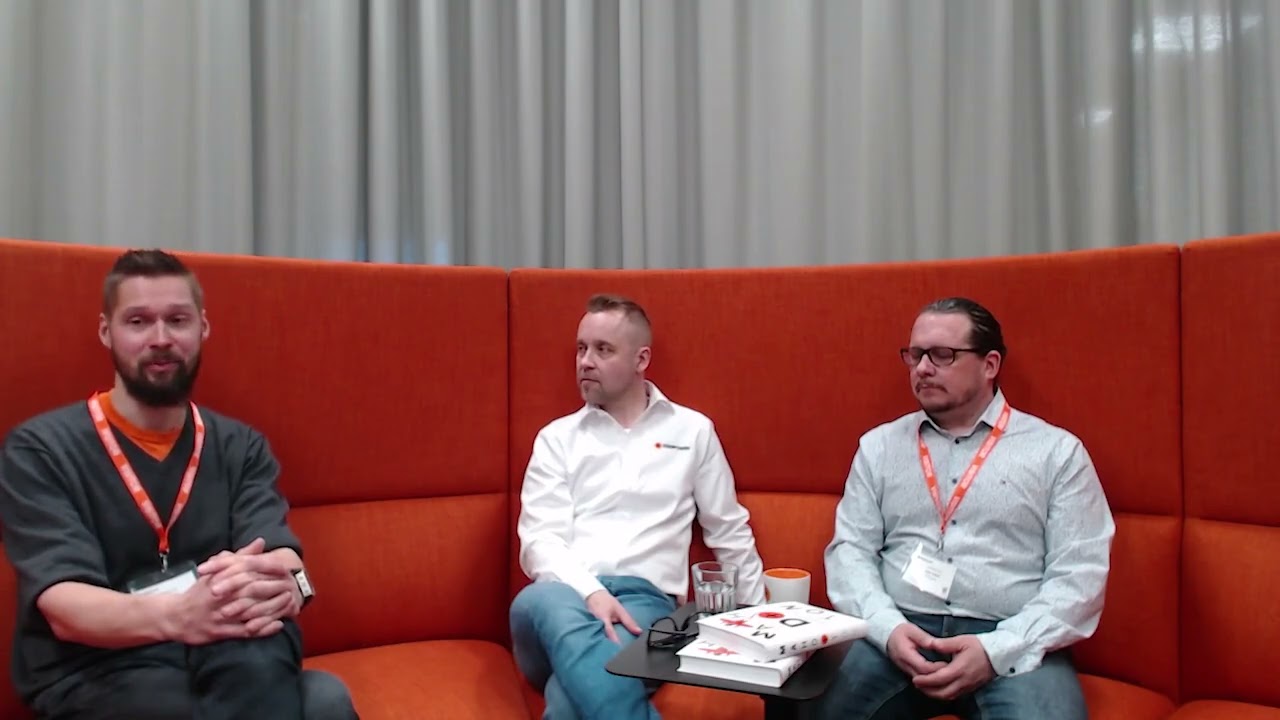
For the biggest fanatics, here’s a 50-minute clip on how Kempower has developed product assembly and what’s next in development.
Even though it’s a Palkkataito promo, it was a very interesting and in-depth look at Kempower’s operations for me! It’s nice to see that work is being developed not just in “Excel,” but also on the factory floor, listening to employees. The video presents several case examples of how production efficiency has been studied and improved.
Summary of Production Development
1. From Craftsmanship to Mass Production In its early days, Kempower’s production was flexible “workshop-style,” where every employee was a multiskilled professional. When order backlogs exploded and the installed base exceeded 33,000 points, it became necessary to move to strict method development. Scaling up is impossible without every movement being planned down to the second.
2. Hunting for “Waste” Kempower has focused on eliminating all non-value-adding activities (waste) from the process. The video goes through how the assembly of charging cabinets has been optimized:
- Ergonomics first: When unnecessary reaching and searching for parts are eliminated, efficiency increases “as a bonus.”
- Standardization: The goal is for every device to be assembled in exactly the same way, whether the factory is in Lahti or North Carolina.
3. Personnel as Part of Change One of the most important messages of the video is that development is not done from an “ivory tower.” Method developers go to the production line, and changes are experimented with together with employees. This is key to breaking resistance to change – when work becomes easier, employees commit to new methods.
4. Why is this important for investors/followers?
- Margin improvement: Even small-second savings in thousands of components mean a direct improvement in gross margin.
- Faster ramp-up: Standardized processes enable the onboarding of new factories and employees significantly faster than before.
- Quality assurance: When methods are standardized, the number of human errors decreases, which reduces warranty costs.
In summary: Based on the video, Kempower has moved from growing pains towards “industrial maturity,” where growth is not based solely on increasing the number of employees, but on the intelligence of processes.