Norja on huono paikka tuoda koska ei ole EU-maa, tulee alvit ja tullit yms. päälle mitä ei tule Saksasta tai Ruotsista.
EDIT: tulleista en ole ihan satavarma koska Pohjoismailla on tullivapaus, Suomen valtiolla on vaan aina ollut “pehmeä kohta” sydämessä auton verotukselle eli en tiedä miten käytetyt autot menee tässä suhteessa. Mutta kuitenkin menee enemmän veroja kuin EU-maasta.
Totta, ajattelin yksityistuojan näkökulmasta, eli jos Norjasta ei mene autoista tullia niin sitten voi olla hyvinkin potentiaalinen paikka hakea autoa.
Paljon pohditaan käytettyjen autojen kysynnän suuntaa. Tottakai. Mutta isolla pensselillä ja pitkällä tähtäimellä: kamuxin tavoite on olla Euroopan ykkönen. Vaikka koko Euroopassa käytettyjen autojen myynti laskisi pysyvästi jonkun verran, mutta kamux onnistuu tavoitteessaan, on siinä aika mukavasti kasvua jäljellä. Lyhyellä tähtäimellä toki Suomen kysynnällä iso vaikutus kamuxiin.
Eiköhän se suurin haitta ole ns. paperisota. ALVit voi vähentää ja tulleja ei pitäisi mielestäni tulla, tosin voin olla väärässä. Toisaalta etuna se että sähköautot on Norjassa “halpaa kuin saippua”, joten myös käytettyjen hinnat ovat alemmat kuin monessa muussa maassa. Alkup. ostaja on saanut kaiken maailman subventiot ja koska uusien hinta on näiden vuoksi naapurimaita alempi, myös käytettyjen hintataso näille on alempi.
“ei EU-maa” tosin voi olla peruste olla pistämättä käytettyjen myymälää pystyyn, mutta voihan niitä käytettyjä haalia ja rahdata ilman paikallista myymälääkin. Lähinnä avoin kysymys on että missä vaiheessa sähkövempaimpien kysyntä kasvaa niin kovaksi että niitä kannattaa erityisesti alkaa “saalistamaan”.
Katselin tuossa Chelsean ottelun aikana Euroopan karttaa. En kuitenkaan lomakohteita, vaan Kamuxin mahdollisia laajentumisia. Jos Saksan laajennus todetaan menestykseksi, niin miksei sen jälkeen voi laajentua esim. Puolaan, Belgiaan tai Hollantiin? Tämä siis pitkän aikavälin pohdintaa.
Tätä Kauppalehden aamun uutista ei vissiin kerennyt vielä kukaan laittamaan jakoon. Artikkelissa siis tilastoja autokaupan kiistoista. Oma mielipide on se, että markkinajohtajana myös näitä keissejä tulee eniten.
Olin juuri linkkaamassa artikkeliin, mutta olitkin nopeampi
Tämä pisti valitettavasti silmään jutussa:
Selvästi eniten, 82 tapausta koski Kamuxilta hankittua käytettyä autoa. Kamux johti myös tänä vuonna 76 tapauksella kyseenalaista tilastoa, kun Sakaa koskevia juttuja tuli viime vuonna kaksi, kun tänä vuonna niitä on pantu vireille 14 kappaletta.
Suhdelukunahan tuo ei ole paha kun tarkastellaan volyymia, viime vuoden myynneistä n. kaksi promillea päätyi kuluttajariitalautakuntaan. Saka kuitenkin pystyy selkeästi parempaan suoritukseen tällä saralla.
Joo luulisi että toimittajatkin sen verran osaisivat laskea, että käyttäisivät suhdelukua.
Tässä saa Kamux nyt ansiotonta arvonlaskua.
MUTTA kaikki autoliikeet saisivat ryhdistäytyä ja tarkastaa&koeajaa vaihdokkinsa paremmin.
Sen kuulin, että Käyttöauto Oy on erikoistunut maksattamaan piilevät virheet auton edellisellä omnistajalla. Kaupan yhteydessä ottavat nimen paffiin, että auto on kondiksessa, ja sitten kun piilevä vika löytyy , niin laittavat vahingon kiertämään. Tamperelainen puolituttu saanut yllärinä laskun vanhan autonsa piilevästä viasta, mitä hän ei olellut itse huomannut koskaan.
Ehkä tapaus on juuri vaikea siksi, että ehkä auto oli vikaantunut vastaa eteenpäin myynnin jälkeen.
Tai sitten autokaupassa hangessa talven yli seisoessaan…
Varmasti osaavat käyttää suhdelukua, mutta tuossahan on tarkoituksella otettu suhteellisesti pieni asia ja esitetty se absoluuttisena (82 kpl, 1. sija valitustilastoissa).
Median tehtävänä on myydä juttuja ja tehdä raflaavia otsikoita. Suotakoot sei heille
Olisihan se silti kiva että nuo määrät saataisiin laskuun, vaikka ne kuuluvat jossain määrin käytettyjen kauppaan.
Laskuja voi kuka tahansa lähettää mutta mitään arvoa niillä ei ole sellaisenaan. Ensiksi pitää käydä läpi mistä vioista on kysymys, ovatko ns. normaalista käytöstä johtuvia “odotettavia” vikoja, antaa myyjälle mahdollisuus korjata itse jne.
Harva tietää että yksityiselläkin on vastuu kun myy käytetyn auton firmalle, tässä toki tulee vastaan myös se että ostajaa pidetään ammattilaisena ja siten firmalla on enemmän vastuuta autoa ostaessaan tarkastaa kohde kuin tilanteessa jossa firma myy ja yksityinen ostaa.
Ei pidä laittaa käytetyn myyjänä nimeä mihinkään paffiin Paitsi, että kauppakirjaan voi laittaa huutokauppakeisarin huudahduksen ennen kaupan alkua: “Tavara myydään siinä kunnossa kuin se on kaupantekohetkellä eikä sillä ole palautusoikeutta”
Tämä “paffi” on käytössä monella muullakin isolla toimijalla, kuten mm tässäkin keskustelussa mainitut Kamux ja Rinta-Jouppi.
Tässähän ei ole kyse siitä, että piilevästä viasta edellistä omistajaa laskutetaan jos joskus joten löytyy, vaan esimerkiksi nykyään jo tosi yleiset öljynsyönti ongelmat, tai kylmällä moottorilla ilmi tulevat venyneet jakoketjut, isolla vaihteella vollottavat vaihteistot ym, joita ei voi kaupantekohetkellä myyjä havaita, mutta jotka taatusti asiakas tietää autoa vaihtamaan tullessa. Kamuxillahan on hyvät näytöt vuosien ajalta tästä toimintamallista.
Niin nuo VAG-autojen mainitsemasi tyyppiviat on harmittavia.
Noista on monta vääntöä syntynyt ja kaikki yrittää pissiä kuluttajan silmään, niin maahantuoja, kuin virallinen merkkiliike ja lopuksi vaihtoautoliike.
Nyt sitten kun saadaan amerikkalaisia sähköautoja ajettua vanhoiksi, niin todennäköisesti riemulla ei ole rajaa…
Kamux saanut kyllä turhaa negatiivista julkisuutta, eivät erotu massasta
Indeksit yleisesti ovat olleet loivassa alamäessä viime päivinä. Pienivaihtoiset usein ylireagoivat kun alkaa sopulimainen voittojen kotiuttelu ja sitten alkaa napsumaan stoplosseja jne…
No ja uutisissa oli tuo juttu jossa Kamuxia dissattiin isoista määristä kuluttajavalituscaseja.
Tosin nuo määrät ovat ns. pyöristysvirhe kun ajattelee paljonko kauppaa Kamux käy ja juttu sopivasti ei ottanut huomioon paljonko näitä on suhteessa myytyihin autoihin eri firmojen välillä. Mutta joo tietty olisihan se kiva ettei niitä olisi.
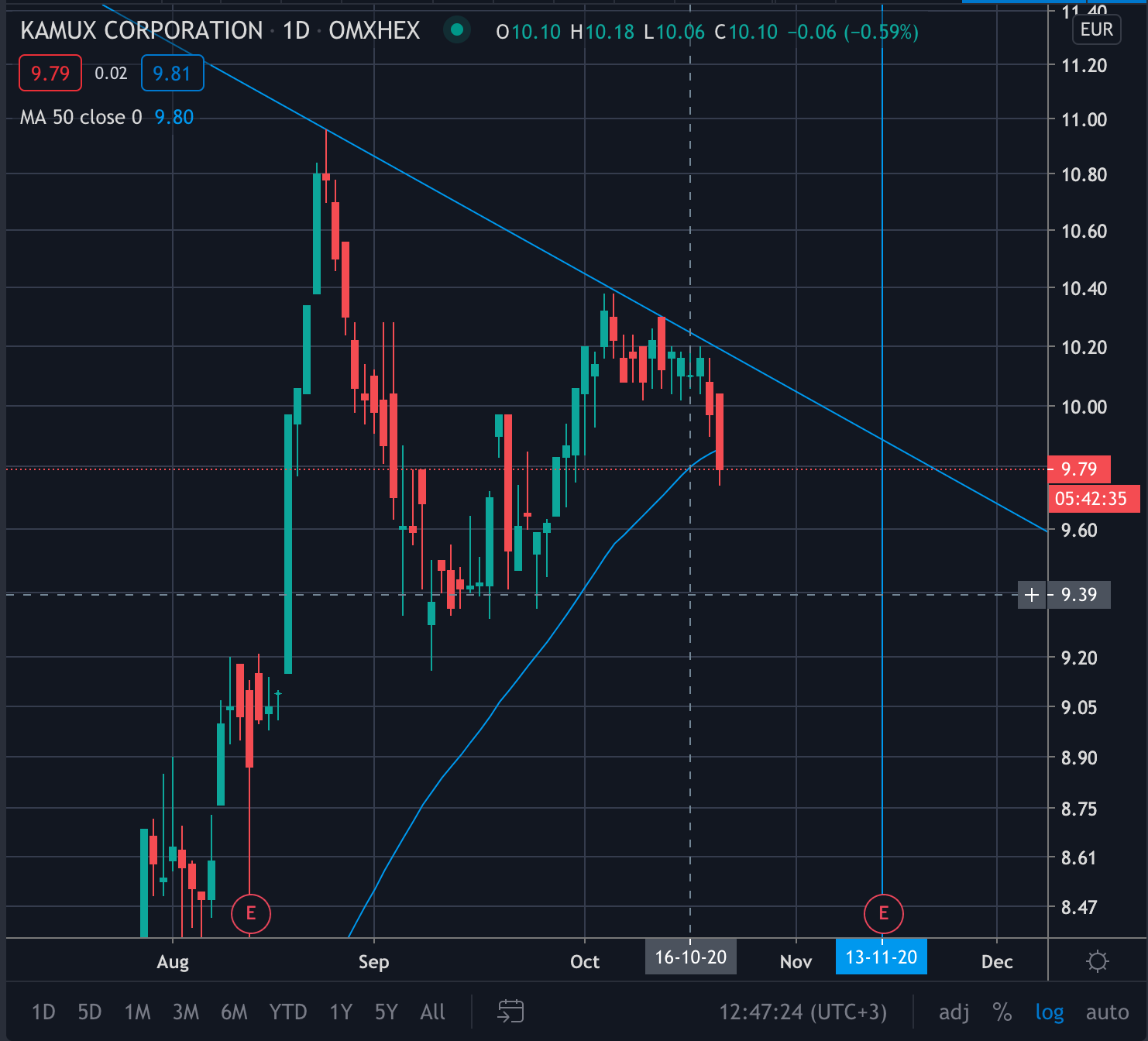
Teknisesti tuo laskevien huippujen trendi pitänyt aika hyvin viimeiset pari kuukautta. Lisäksi nyt näytetään tippuvan päivägraafilla 50 MA alapuolelle. Alapuolelta tuo Interan viimeinen myyntitaso eli suunnilleen 9,20 - 9,40 toiminee aika hyvänä tukitasona.
Osarista saadaan sitten uusia fundauutisia jotka toivottavasti siivittävät taas kurssia ylöspäin.
Isommassa kuvassa kuitenkin osake on ollut nousutrendissä Q2 tuloksen jälkeen. Koronan ja Q2 tuloksen jälkeinen vahva nousu varsinkin yhdistettynä Interan myynteihin aiheuttavat mielestäni sen, että pieni hengähdystauko on ihan kohdallaan. Monella kuitenkin on iso kasa Kamuxin osakkeita ostettu Interalta ehkä pikavoitot silmissä. Pieni myyntipaine sieltä heijastuu helposti pari kuukautta. Taisin muistaakseni itsekin hieman keventää Interalta ostettuka lappuja tässä johonkin valiin.