IT Service Sector as an Investment

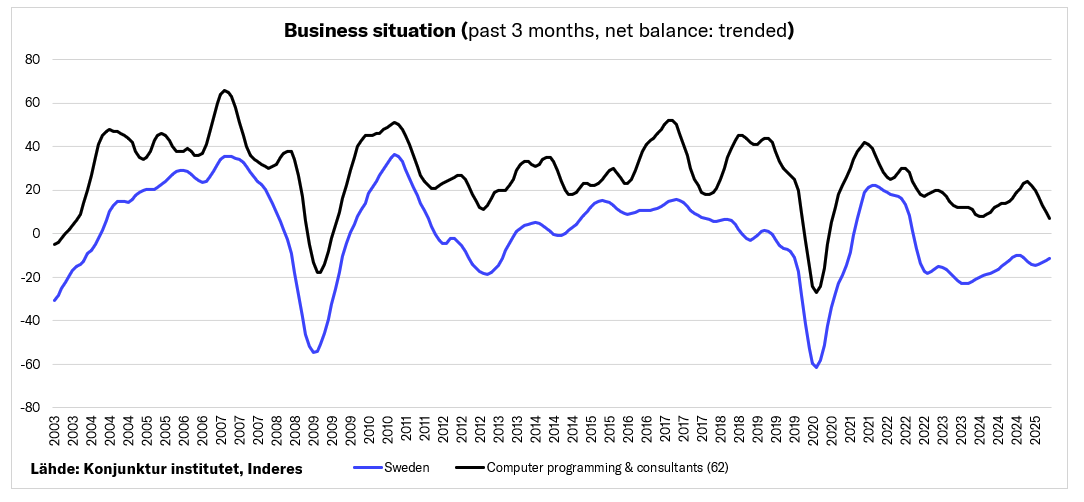
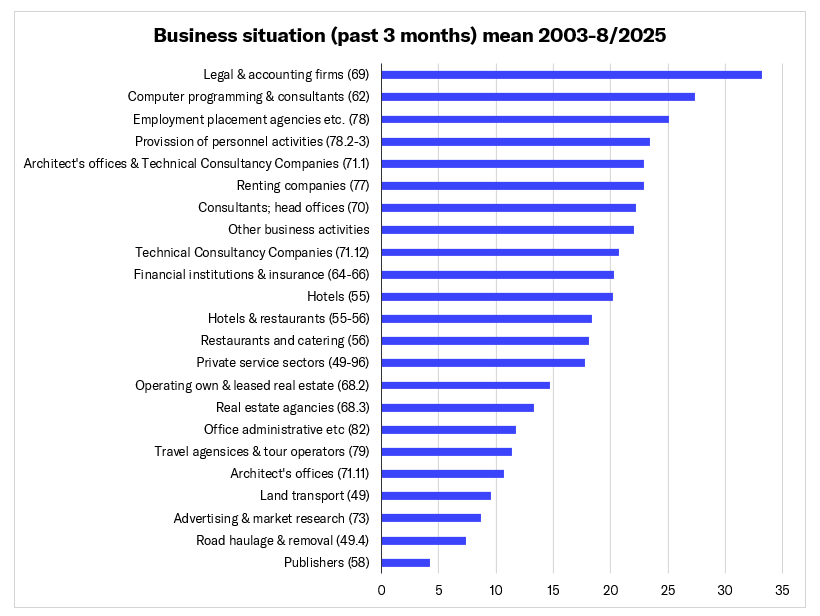
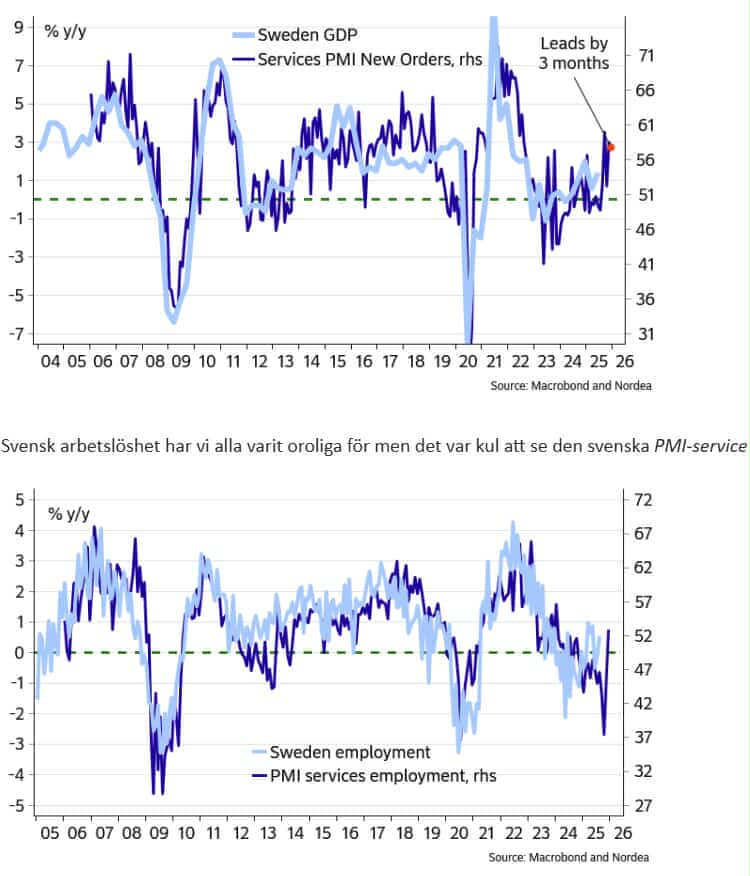
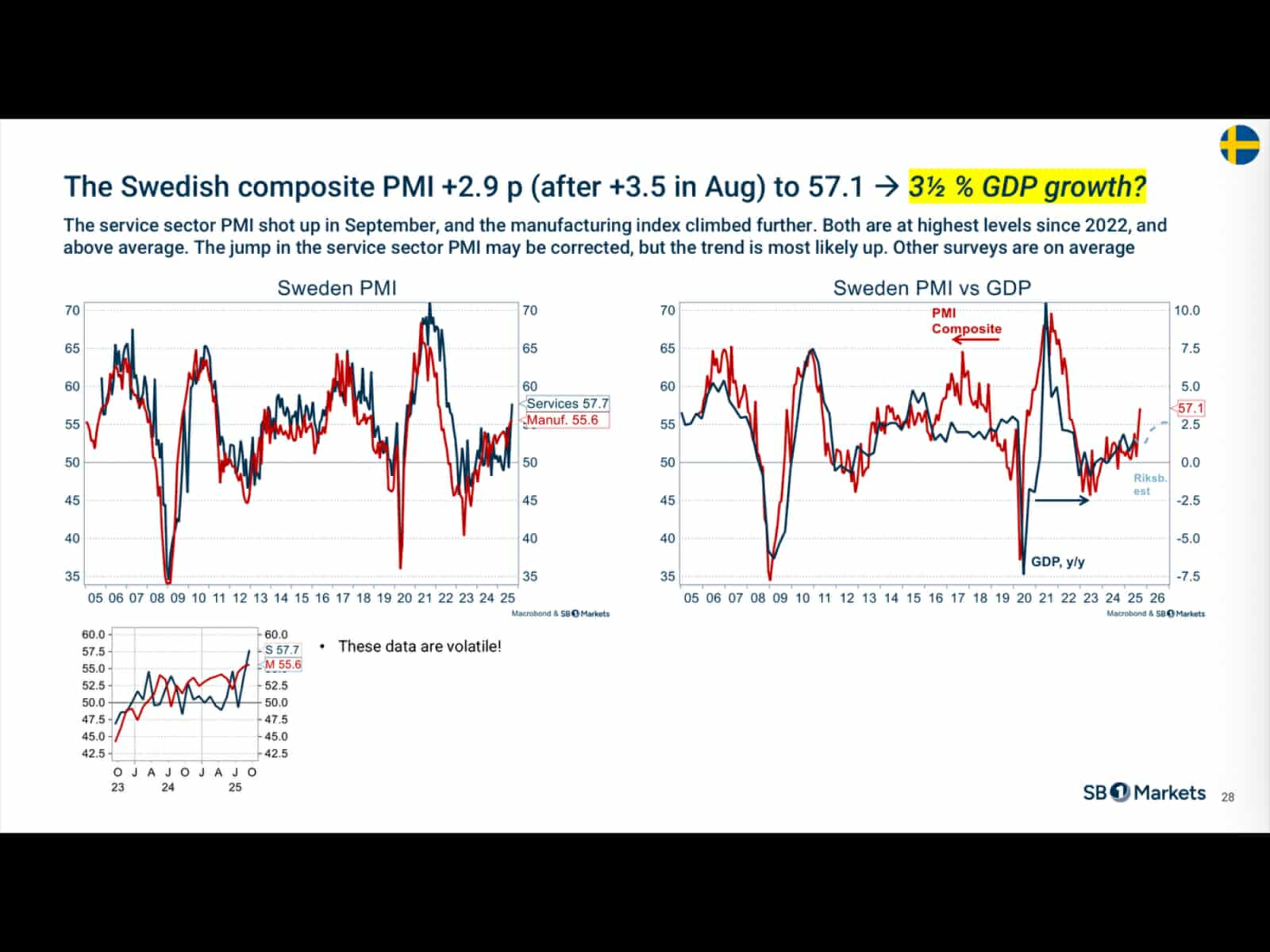
Finnish statistics pages do not have these equivalent indicators from Sweden. The ones you mentioned are also the ones I follow myself.

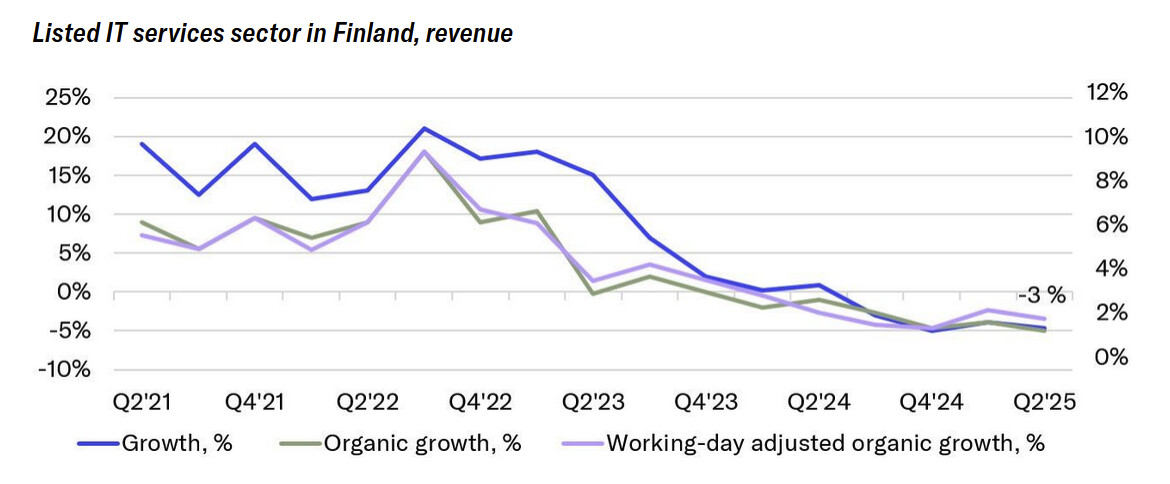
Perhaps you already knew this, but below is our own Q2 summary for the IT service sector, which also includes data on 2020s growth, organic growth, profitability, and personnel changes. The sample consists of the listed IT service sector companies we follow (10-12 companies depending on the year).

Here is also the full Nordic Q2 review:

4 Likes

Hi @thomas.kismul,

Thanks for the question! Actually, the source you referred to is really interesting. Frans-Mikael already managed to answer this, so we don’t have similar data available for the Finnish market. That’s precisely one key reason why we at Witted started creating and publishing data ourselves in the Witted Insights report.

Analysts and the stock market follow the past, i.e., realized revenue and profitability. These are good metrics, but they tell you what’s in the rearview mirror. Some companies publish monthly bulletins, which are a really good snapshot closer to the present. One of the published metrics is also the development of personnel numbers, which is very interesting because, unlike the previous metrics, it tells more about what companies are doing right now and what the possible future might look like (capacity growth vs. reduction). Recruitments are realized strategy, actions that are not taken unless there is a fairly certain understanding that the business will develop as expected.

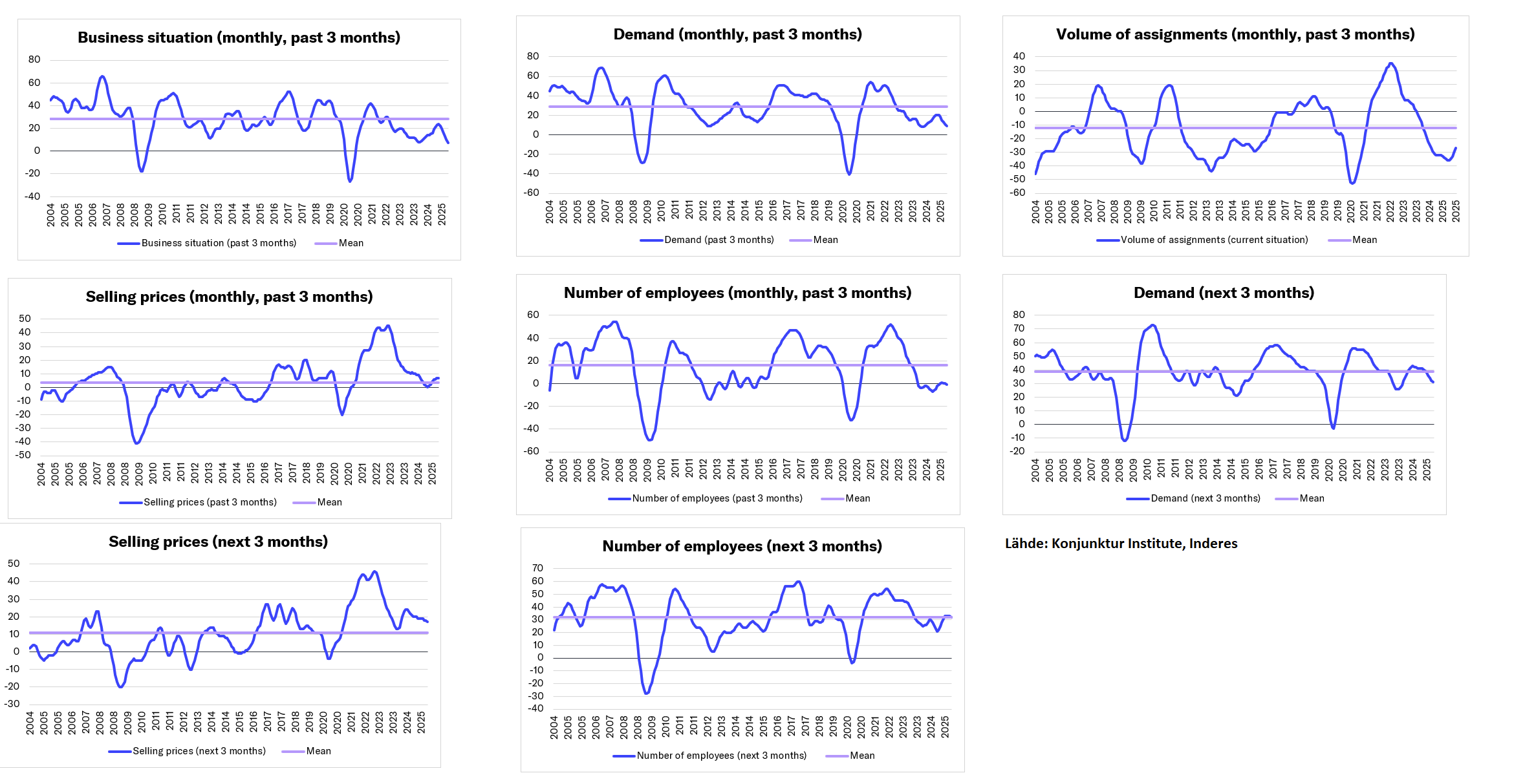
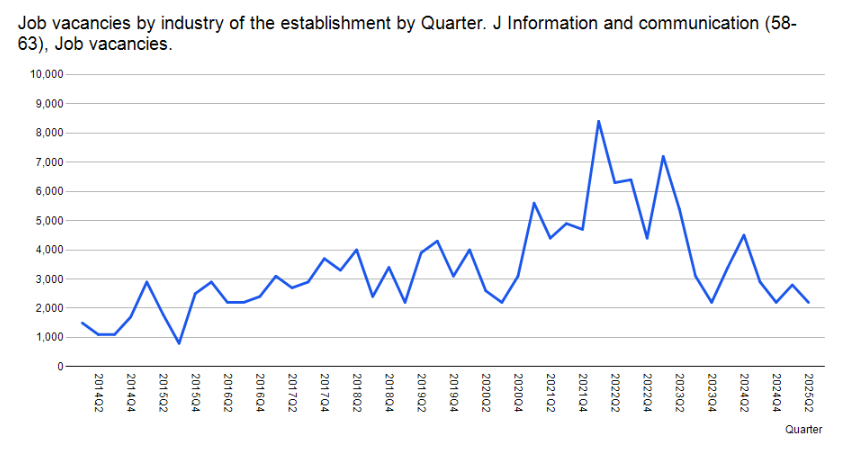
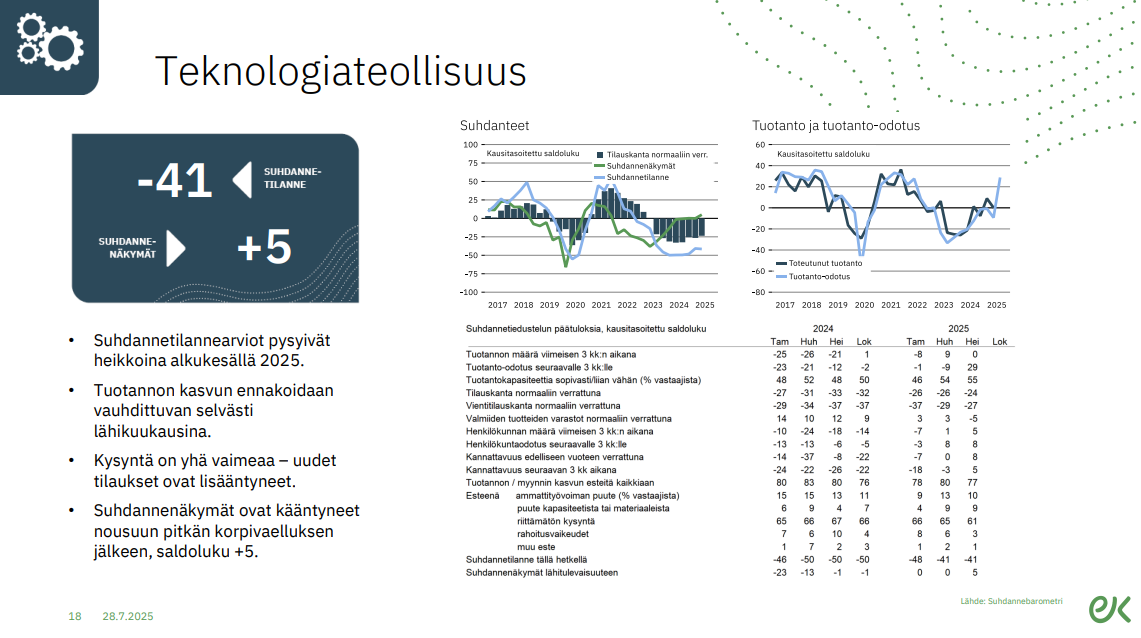
When you asked what I follow myself, all of those are metrics I’ve been reporting on – they aren’t really interesting within the company itself. They are just things that have already been done/have happened. Of course, regarding other companies, they have always been a point of interest for me to understand how different companies are doing and at what stage they are. What I have really followed regularly are forward-looking economic indicators, for example: employment development, GDP forecasts, new industrial orders, real wage development, champagne sales (lol), consumer confidence, IT sector job openings and their trends… metrics that tell about the market, its various sub-sectors, and provide information on where things are going well and where there are challenges. General market indicators are very closely linked to companies’ willingness to invest. IT acquisitions, on the other hand, are fundamentally always multi-year investments, so they go hand in hand with market development and investment willingness. Specific industry-specific data, in turn, has provided good guidance on where sales efforts should be directed. I still follow these same metrics, even though my current duties as a domestic advisor don’t necessarily require it.

It would be great if Finland had similar market metrics as Sweden :slight_smile: – it would have been easier, and I wouldn’t have had to start creating my own reports.

@KohtiVapautta → you asked about pricing methods in those other markets. The markets where I have operated myself: Finland, Sweden, Norway, and the USA have all been similar – customers buy expertise and experts. Note: At the same time, this has also been what has been offered, so it is quite possible that the picture is subjective through that, and some demand just hasn’t happened to fall into this net. Everyone who has been in the industry for a longer time is accustomed to the fact that pricing methods and ways of buying have been constantly changing. Companies have then adapted to these operating environments and will adapt again if the market changes.

H

19 Likes

Thank you very much for the feedback, it is very appreciated :slight_smile:

Hello, sir Rostedt!

Do you perhaps know which it consulting firms in Finland, and or nordics, are more senior-consultant heavy and which ones are more on juniors?

Looking at the clear disruption of repetitive tasks of work, it will be very important for the future

2 Likes

@Iikka_Numminen and @Joni_Gronqvist discussed the IT service sector & its mood. :slight_smile:

Topics:

00:00 Introduction
00:20 IT Service Sector’s Super Week
01:25 Expectations for Q3
03:30 Public Sector Debt Brake
05:02 Profit Levels Have Decreased
07:27 Is AI a Threat or an Opportunity?
09:24 Sector Favorites
12:30 Vincit
13:22 Concluding Remarks

5 Likes

Hi,

Really good analysis from Inderes again. They are absolutely right – this quarter is truly interesting. Today we got Witted and Siili, and we are still waiting for other results.

The decline in revenue seems to have stabilized for both companies, which is a really good thing.

Unfortunately, Siili’s earnings release had hardly any comments on market development or sales. AI and its growing importance were mentioned, but that’s a fairly common theme for all companies in the sector. There is demand there, of course. Witted, on the other hand, provided good information on sales, for example, in the Morning earnings release. Sales are a leading indicator for revenue, while revenue, in turn, indicates the direction of profitability – and certainly, for many companies, profitability levels are now being tested. At the same time, however, one should invest in growth and curb costs.

If the decline in revenue indeed seems to have turned, development now largely depends on the companies’ own actions and decisions: how to get the cost level in order and how quickly, i.e., with what measures to proceed.

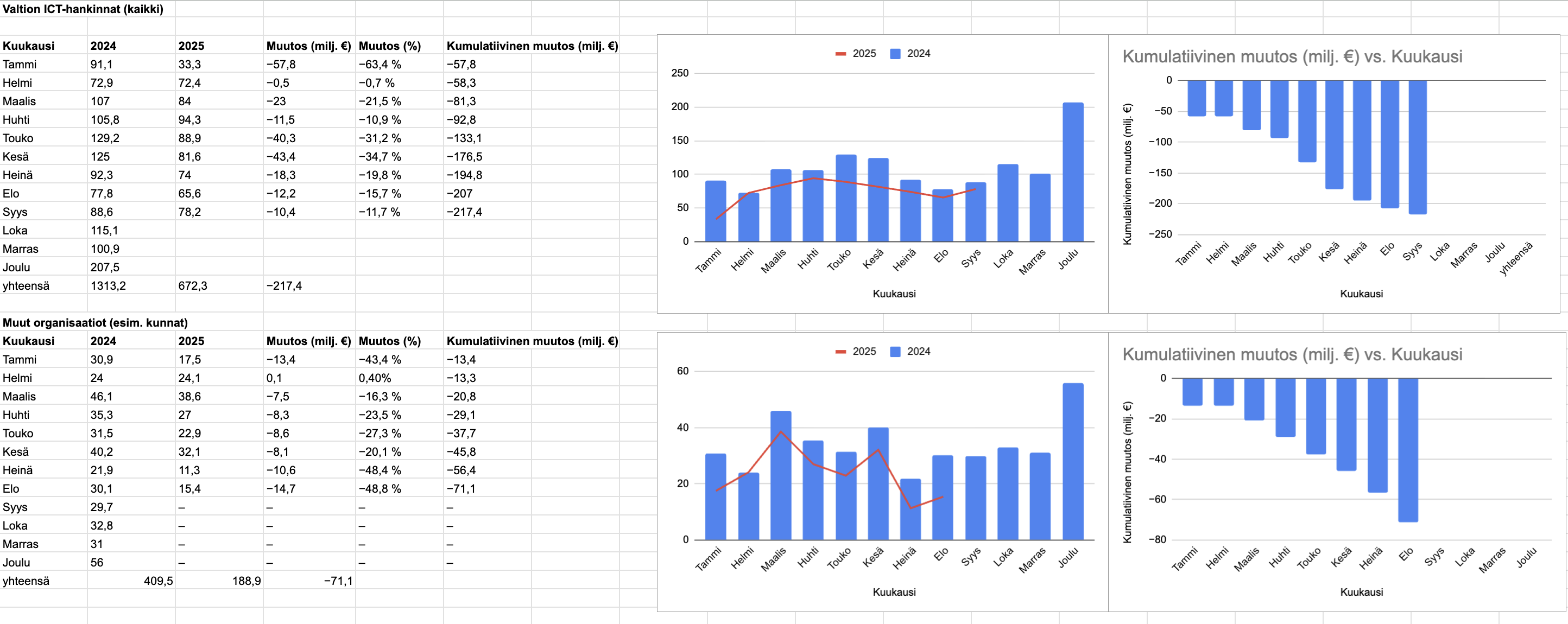
Joni also talked about the public sector. To my eyes, there are hardly any positive signs there. The public sector is saving – and will continue to save for a long time and a lot. If my own Excel is to be believed, about 300 million euros in IT purchases have disappeared compared to last year. The price level is really tight, and the situation in municipalities is even weaker. Well, perhaps a small glimmer of light can be seen on the state side: the negative sign has decreased in Q3 compared to summer. But Q4’s comparative figures are quite large. It’s a really challenging sector if one has focused on it – although, of course, someone always wins new projects there, meaning things aren’t distributed evenly.


(tutkihankintoja.fi)

The private sector in Finland now looks better in my eyes than before. After the spring’s customs confusion, demand appears to be at least at a reasonable level – better than a year ago, perhaps even better than in spring. This week, it’s especially worth paying attention to what companies say about their sales.

30 Likes

I don’t know if it’s just me, but having read the quarterly reports of these IT service companies and listened to their CEOs, several of them had a good September and generally some positive momentum towards the end of the quarter? Is it picking up now? How have others interpreted this?

8 Likes

Yes, I’m with you on this one @Karhu_Hylje - private demand is improving.

I’ve been part of Inderes’ review sessions many times and have closely followed what everyone says about their own business and the market. In my opinion, almost without exception, we now heard comments like “our own business is doing quite well, but the market is still challenging.” In the CEO role, that sentence is expected. It keeps expectations modest. At the same time, when the message repeats again and again, it also tells a story about the market itself. We also saw that for several companies, the decline in revenue (organic) seems to have either slowed down or turned around. Without that turnaround, profitability levels cannot be fixed. Now, companies genuinely have the opportunity for that - it’s in their own hands.

However, a caveat to this: I still don’t see any turnaround in the earnings release, and I don’t expect to see it during 2025. It lives from annual budgets, so planning is currently focused on 2026 projects. Cost-saving pressures will certainly also be directed there - because this planning is now being done amidst economic hardship.

Today, Witted Insights’ September figures were also released. They tell a very similar story. New projects have been coming in at an accelerating pace since the summer. A small positive trend is also visible in hourly rates, which could suggest that the oversupply in the market is decreasing.


Now, just more of the same! The direction is good.

29 Likes

New long-term targets from Netcompany:

The Group’s long-term organic revenue growth through any business cycle of 5–10% per year.
The Group’s adjusted EBITDA to over 20% by 2029.
Dynamic cash redistribution through share buyback programs and dividends from all free cash flows, prior to acquisitions and adhering to the leverage target.
The DKK 2 billion share buyback program originally introduced in 2023 will be completed by 2026.
Leverage ratio below 1x.

Conversely, those operational targets, measured by the rule of 20, expect at least a ~25% level in 2029. Netcompany’s tangible depreciation is approximately 3% of revenue. In H1’25, organic growth was 7% and EBITDA was 15%. Historically, performance has been even stronger. Thus, the target levels do not seem impossible at all.

An interesting Netcompany Capital Markets Day is scheduled for Friday, which we plan to follow with @Frans-Mikael_Rostedt. For years, Netcompany has been at the forefront of the European IT services sector. The company has traditionally done many things contrary to what has been customary in Finland, which adds to the interest in following the company. Additionally, we will hear more about the company’s latest SDC acquisition, which is a Nordic IT service provider for the banking sector.

10 Likes

We’ve opened our own thread for Netcompany, where @Frans-Mikael_Rostedt and I will be following tomorrow’s capital markets day. Come join us and share your own observations!

11 Likes

Kas, @Frans-Mikael_Rostedt and a new video/pod on a topic discussed in this thread as well! Duration 1h 22min.

Topics:
00:00 Start
01:08 Lauri Euren
05:49 Operating
12:08 Global perspective
15:10 Consulting firms as clients
21:58 Challenges of internationalization
27:18 Funding
31:33 Impact of AI on consulting firms
58:46 AI in SaaS and consulting firms’ business
01:14:05 Summary

12 Likes

In addition to the AI discussion, the podcast also featured many other interesting themes for those investing in IT service companies (at least in my opinion). Lauri was involved with Columbia Road (one of Futurice’s most successful ecosystem companies) almost from its inception, also led the company’s operations in Sweden, and now sells software to consulting firms. Good perspectives on the sector.

9 Likes

An excellent podcast with an articulate guest.

An interesting observation was also about the public sector’s role as a massive client for years in Finland, until in recent years it suddenly slammed on the brakes. When the entire ecosystem had become accustomed to “easy” public money, the shock has been considerable, and competition has since intensified everywhere.

11 Likes

Thanks for this. It was a really good ninety minutes, where on the one hand the agenda was good and the guest had good views that are easy to share. And the glass is generally half full, meaning the guest highlighted the opportunities well - whereas Inderes has fundamentally drifted “a bit” into gloom?
A great point, in my opinion, was the mention of the crazy years 20/21: it was visible, for example, in everyone’s recruitments and the valuations of product companies. So, this hangover is still being digested.

Quite intuitively, I would share many of LA’s views.

In my own thinking, the change phase itself means work. The bigger the change, the more work. Similarly, performance differences grow, and thus the potential billing range also widens.

Generically, I believe that in this change phase, the performance difference between a well-managed service company and its customers’ own IT staff grows in favor of the IT company. Because they can adopt things more centrally and faster, and because there is so much contact surface with the customers’ change processes. There is always an opportunity to go - and actually, a real pull to go - deeper into customer processes. Even to the extent that you actually already own a large part of these processes.

What then is most important in the leadership of an IT service company right now? In my opinion, systematic and strategic renewal together with (but actually even faster than) customers, internal Training with a capital T, and company culture.

A culture where there is no internal elimination game, but everyone is given the opportunity to develop. Where we learn and change together, share information and expertise.

And think big.

7 Likes

Glad you liked it!

“Has Inderes fundamentally drifted “a bit” into gloom?”

In the podcast, my intention was to bring different perspectives to light, to provoke thoughts in the listener, and also to play devil’s advocate, rather than just being gloomy. Simply put, I could comment that I see this pretty much the same way you commented.

So what’s most important in the leadership of an IT service company right now? In my opinion, systematic and strategic renewal together with (but actually even faster than) customers, internal Training with a capital T, and corporate culture.

A culture where there’s no internal elimination game, but everyone is given the opportunity to develop. Where we learn and change together, sharing knowledge and expertise.

*And thinking big.
*
In my opinion, this will be very crucial. I personally see significant opportunities for IT service companies here, and also a chance for a rapid redistribution of market shares in the industry. Assessing the winners, however, is very difficult at this point.

In my opinion, an interesting theme related to AI for IT service companies has been the willingness of many players to compete in the product and platform world in a completely different way. Or at least to start making a change in this direction. A good example is Netcompany, which practically only spoke about its platform businesses, largely started in recent years, at its CMD on Friday. The “traditional” service business was barely mentioned in passing.

The challenge for many IT service companies, in my opinion, will again be their “legacy” business, which makes it difficult to transform for the AI era.

This same theme will also quite likely apply across all consulting firms and many other industries (e.g., stock analysis :smiley: ).

4 Likes

We have many examples of this in Finland, where otherwise very successful service businesses have become financiers for such experiments. I would not invest in any IT service company that finances some platform / SaaS start-up venture within the company. For that, a separate company could be founded, and one could stay involved with an initial investment, for example, but not so that the cash flow from consulting flows into a completely different business.

Or, perhaps someone will succeed this time. However, I strongly doubt it, because the personnel structure and needs in such a venture are completely different compared to the lean back office and sales of a consulting firm.

10 Likes

This was indeed a general observation from the recent IT service discussion. The podcast was very balanced overall, and it’s good that these “always so optimistic” men and women in the field are challenged a bit in these interviews to create some tension.

Sometimes, however, I’ve gotten the impression that conclusions are often drawn a bit slowly. So when the sled is sliding fastest, they’d still be holding back: “disperse, there’s nothing to see,” and at the turning point, they’d be reading the harshest doomsaying.

As a layman, I largely see this as a competence race. As ways of working, tools for working (offered by large technology partners), customer processes, and especially artificial intelligence and the opportunities it provides for both oneself and the customer base develop at an ever-accelerating pace, competence is certainly key.

What are these phrases again: constantly doing the right things and doing things right.

An IT consulting firm is at the heart of the potential disruption of both its own industry and its customer base. Certainly a very volatile position where anything is possible.

But at least in my opinion, there are good opportunities here not only to quickly disappear from the map but also to “break the bank.” In which case, investing in IT consultants also makes sense – perhaps more sense than in a long time.

4 Likes

I agree. There are very few successful examples from history, and precisely because of this, it’s interesting that many companies in the sector are now moving in this direction. The shift to a product/platform business model requires a very clear strategic change. However, I believe the AI disruption is now creating new opportunities to some extent compared to history.

Among Finnish companies, Digia, for example, seems to me to have succeeded reasonably well in running product business alongside service business.

Regarding the theme, for instance, these Gofore AI initiatives are quite interesting. Fundamentally, I would see that strong customer relationships and larger client accounts can enable the launch of such service packages, provided that their value to the customer can be proven. Especially if Gofore’s own experts manage the platforms well.

8 Likes

At a quick glance, these Gofore AI concepts / service offerings seem more like clever productization of the expertise found within the company, rather than actually building a new platform. I am definitely in favor of such things myself, but I think we are talking about different matters.

12 Likes

Building one’s own software and platforms, and succeeding in it, would bring such significant economic benefits that attempting it is attractive for IT service companies. The classic model for the entire industry has been to build custom software for a large client, retain the IP, and sell the same to other clients at the original price, but with a larger margin once the development costs have been amortized at the original client’s expense. A more modern version of this is a SaaS-based solution. Many global IT service providers do excellent business with their own software, which has been created to solve problems in different industries.

Of course, in global companies, industry solutions scale significantly better than in Finnish IT service companies operating mainly locally, but I wouldn’t immediately dismiss the development of proprietary products. The product built just needs to be sufficiently competitive, and there must be a clear model for scaling it to the widest possible use. If these are not present, the results of the development effort are easily wasted.

9 Likes