Thanks for defending me! 
confirmation=buy order
I feel like people have started to follow my lead. I bought Sievi today, and it has gone on a wild rally immediately after my purchases!
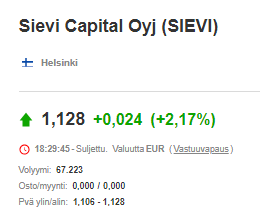
Soon they’ll be begging, “Rookie, buy Bumtsibumiremedy,” etc. 
Thanks for defending me!
confirmation=buy order
I feel like people have started to follow my lead. I bought Sievi today, and it has gone on a wild rally immediately after my purchases!
Soon they’ll be begging, “Rookie, buy Bumtsibumiremedy,” etc.
I wonder why the Inderes logo keeps shrinking in the button that opens the forum. Is it following my shrinking investment portfolio or is it suffering because I press it too often?
That’s because the end of the world is approaching.
According to an old saying, the Inderes logo shrinks on a smartphone screen before the end of the world.
This is probably true, as I have Jesus’s old phone. Luckily, there’s still time to fulfill my dreams, so I’m becoming a Hyzon shareholder.
We’ll see, I’ll probably add something else next.  I already have the next addition target in mind.
It might be that this rumor is my own invention, but the model portfolio trio is afraid that I will continue buying “model portfolio stocks”. Well… they are now afraid that the model portfolio will start to be seen as a “relative” of Nordnet’s Smartti (Smartti) and Ark Invest, which it is slowly leaning towards. 
Smarts were a bit unsuccessful, but now even better products have emerged from the same partners (JP Morgan and Nordnet):
REI, or Research Enhanced Index Equity (ESG) ETFs, combine the best aspects of active and passive investing, which in turn allows them to track an index while also having the potential to outperform it! It can only be a good thingamajig.
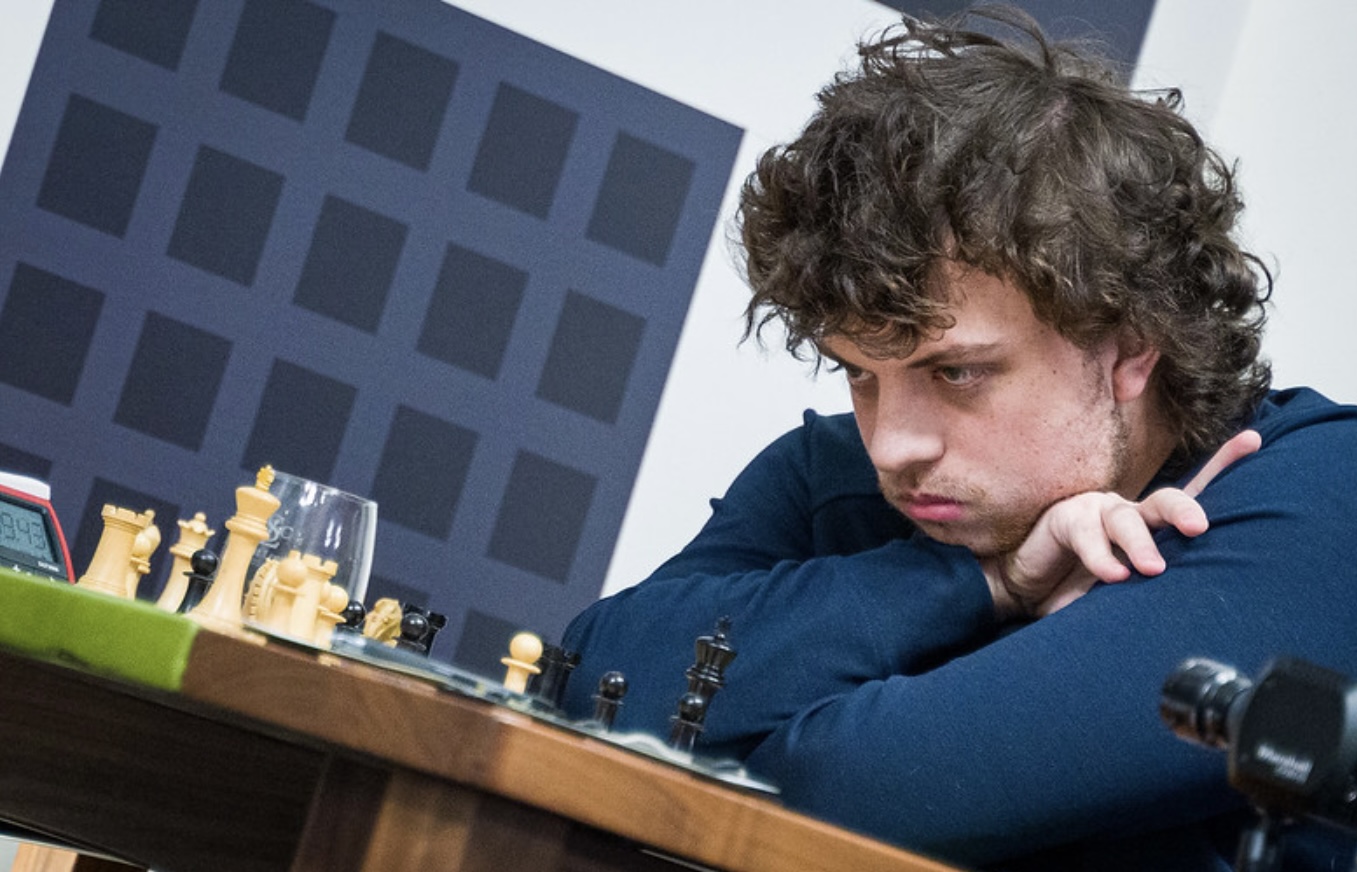
The chess world is experiencing its biggest scandal in decades. The Sinquefield Cup, the most lucrative tournament of the year, is currently being played in the United States. Ten of the strongest possible players are invited to play each other once over 1.5 weeks in games with long time controls. The prize pool is $350k. Most often, all players are in the world’s top 15. This was supposed to be the case this year too. However, one top player had to cancel at the last minute due to coronavirus issues, so 19-year-old American player Hans Niemann, whose world ranking was about 50, was brought in on short notice. Just 1.5 years ago, it was around 700. Such a rise is not unheard of, but remarkably rare.
Niemann is a socially awkward guy, quite arrogant, and, in his own words, totally dedicated to chess. He was naturally considered the underdog of the tournament, whom everyone would try to beat. Among top players, about 2/3 of games end in a draw, so the margins are small.
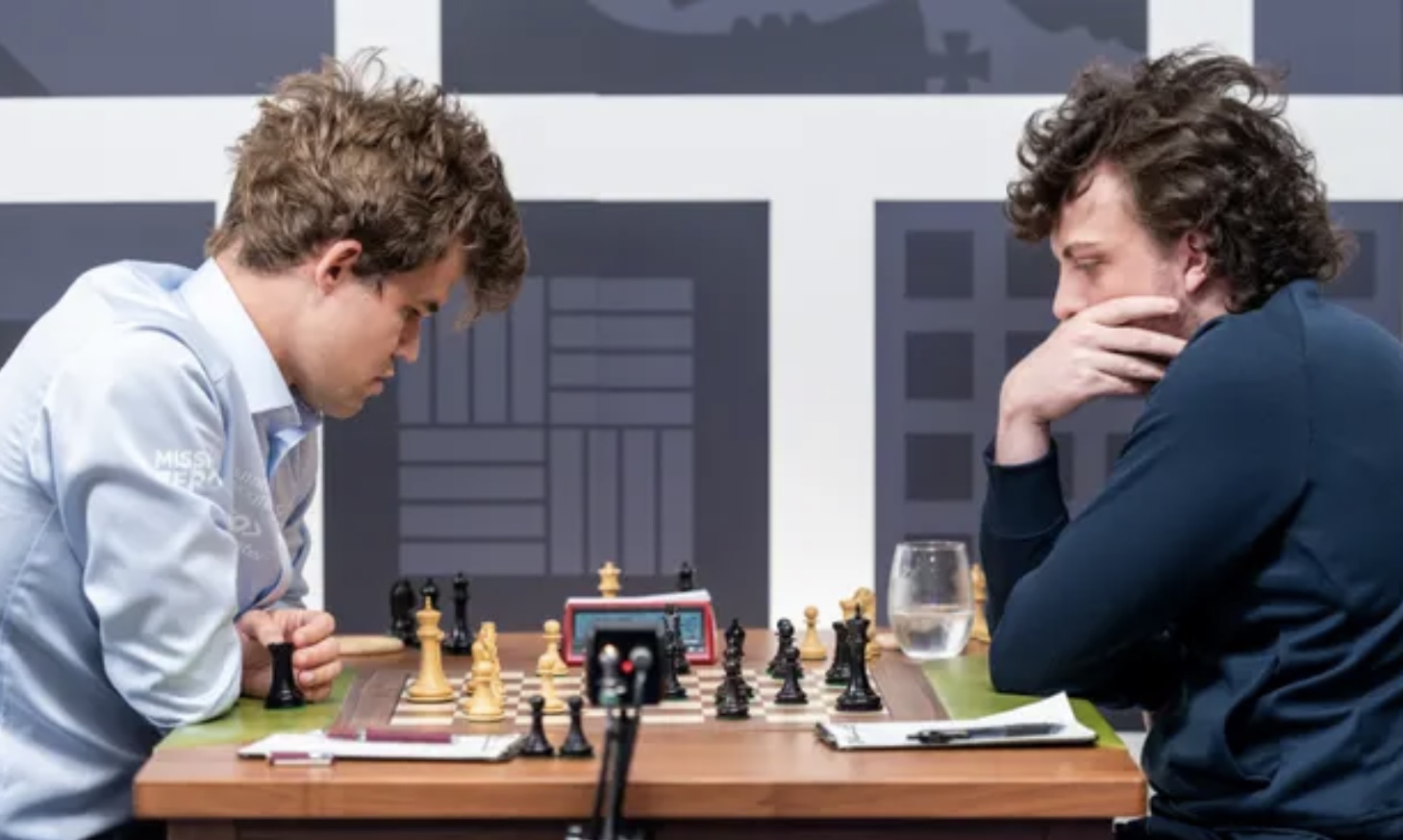
Surprisingly, Niemann achieved a win and a draw in his first games. In the third game, he had the black pieces against world champion Magnus Carlsen. Carlsen is widely considered the greatest player of all time, roughly on par with Garry Kasparov. A typical scenario for Carlsen is to play, say, 80 long time control games a year and lose only 1-2 of them. A typical loss scenario is when Carlsen has black against another top player who executes everything perfectly from the opening preparations. Before the Niemann game, Carlsen had a 53-game unbeaten streak, most games against other top players. At his best, he played over a hundred games in a row without losing once.
In the game, Carlsen played a rather rare variation in the opening, aiming to take Niemann out of his theoretical preparation. However, Niemann played the most precise moves and gained a slight advantage after the opening phase, even though the player with black pieces is usually at a slight disadvantage when moving into the middlegame, as white always starts in chess. Carlsen played somewhat toothlessly, and Niemann slowly increased his advantage, eventually winning elegantly in the endgame. Carlsen stormed out, and Niemann stayed to give a passionately long and quite arrogant interview and game analysis, where he stated that he had been incredibly lucky to have looked at precisely this very rare sub-variation of the Nimzo-Indian Defense that morning before the game.
The next day, just as the round was about to begin, a bomb dropped: Carlsen wrote on Twitter that he was withdrawing from the tournament. He linked a clip from a Jose Mourinho interview in which Mourinho says after a game that he cannot speak now because he would otherwise be in “big trouble.” It is almost unheard of for a top player to withdraw from a tournament for reasons other than health. It was Carlsen’s first time; Kasparov never withdrew during his long career.
At the same time, everyone saw that the anti-cheating measures in the tournament had become stricter than usual. In chess, cheating practically means that a player can access computer analyses during the game. As late as the 90s, Kasparov competed evenly against the world’s best computer, but since then, machines have developed overwhelmingly. Now, anyone can download a chess program for free from Google or Apple’s app store that would crush Carlsen. Machines with powerful engines would beat Carlsen a hundred out of a hundred times. In recent years, neural networks have made chess engines not only powerful but also monsters that play very beautiful chess.
When players enter the hall at a professional tournament, they are scanned from head to toe with a device that detects electronic devices. The environment where players can move during games is completely sanitized. Cheating in such a live tournament has not been considered possible. Online, the problem is of a different magnitude.
With Carlsen not showing up, hinting that he didn’t dare speak for fear of a lawsuit, and security arrangements simultaneously tightening, the conclusion seemed rather clear: Carlsen believes Niemann has found some way to cheat in this tournament. It was quickly unearthed that Niemann had previously been caught cheating in online chess. The world’s biggest chess streamer, American Hikaru Nakamura, commented that Niemann’s post-game analyses showed a weaker understanding than the moves played in the actual games. Neither Nakamura nor anyone else had any evidence or even a theory as to how Niemann could have cheated.
The next day, Niemann gave a very emotional interview in which he stated that he had lived his dream as a world champion slayer for one day until he was crucified without any evidence. He admitted to cheating twice in online chess during his career, expressing deep regret and having learned from his mistakes. He vehemently denied ever cheating in over-the-board chess during his career. He also revealed that chess.com, the world’s largest chess website, has now completely banned him due to this controversy, based solely on speculation.
Niemann’s powerfully strong defense speech instantly turned chess social media to his side. Chess.com, Nakamura, and Carlsen—who remained silent—began to receive backlash. Any news or tweet from chess.com was filled with #freehans hashtags and sarcastic comments. This continued for about 24 hours, after which the site had enough and published an exceptional Tweet stating that, according to its investigations, Niemann’s cheating on the site had been much more extensive than Niemann implied in the interview, and that the site had requested clarification from Niemann. This shifted the wind somewhat on social media.
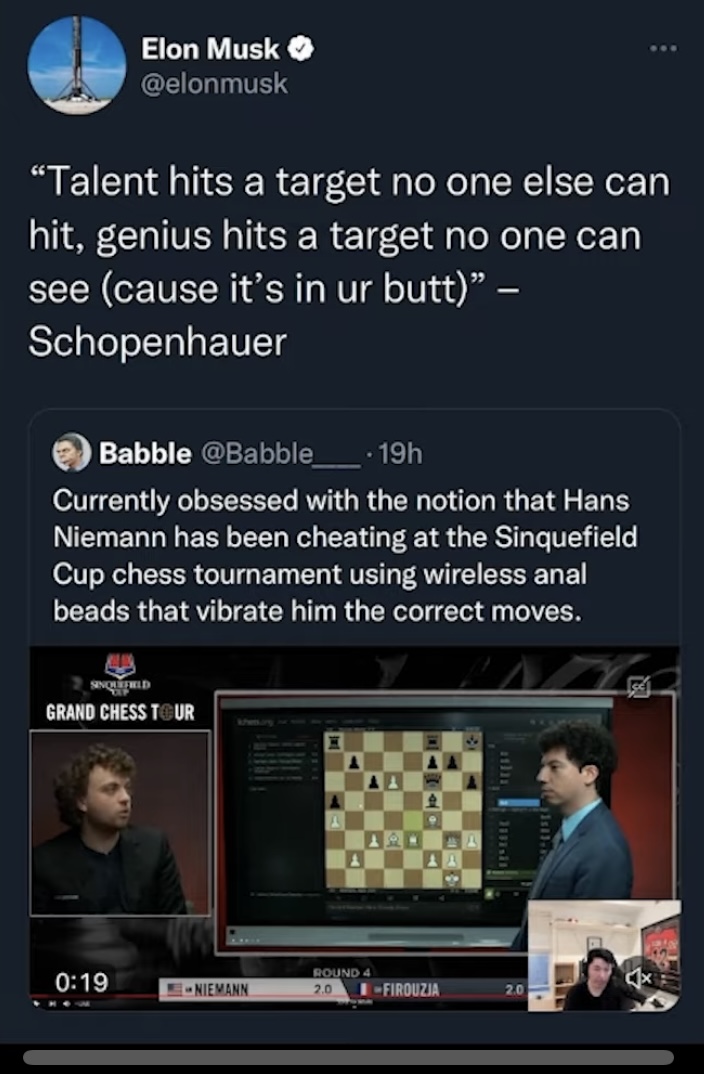
Then, on the channel of another big Twitch streamer, Grandmaster Eric Hansen, a fan asked Hansen how one could cheat in live chess. Hansen said he had no idea how it could succeed in such a top tournament. The fan asked, probably jokingly, if a computer could be hidden in the rectum. Hansen quipped that, indeed, a small ball placed in the rectum might bypass security arrangements, and it might still have a sensor that could indicate chess moves by vibrating. Any information can be transmitted with ones and zeros, Morse code, and who knows what else, naturally including chess moves. The vibrations would be based on communication from an assistant following the game with a computer via the internet.
This went viral, and currently, five days after Carlsen’s withdrawal, Elon Musk is debating on Twitter whether Niemann cheated with “anal beads” (anuskuulat). Carlsen is still silent, and therefore, it is still not known for certain why he even withdrew.
Chess is an easy game when you can just win against the toughest players of all time by gut feeling. 
Saw some Nordet Smart stuff in a meme thread.

For me, they could launch a “Not So Smart” service. I’ve been doing this kind of thing for a while now.
It’s annoying when my own main portfolio is +1.4% and the S&P500 is +1.6%.
First, I was happy… But then I took a couple of small short positions that will probably lose money.
Thanks for the excellent summary! Here’s a relatively recent interview with Magnus Carlsen that provides good insight into his mindset (done before the “crisis”):
Apparently, point 7 of my crypto risk thoughts came true for Shiba Inu:
That was an interesting commotion, even though I don’t play chess. Thank you, keep us updated on how this progresses! 
edit: if an anal bead-cheating were revealed, we would have already gone to the next level
edit edit: imagine if it turns out he hasn’t cheated, the guy played the game of his life and now everyone is saying you can’t be that good, you had a sensor in your ass
This year, 13 out of the 20 fastest-rising SP500 stocks are OIL COMPANIES.
On top of those price increases, the dollar has strengthened by +13% against the euro. The rally started more than two years ago from the corona dip.
Due to ESG and perhaps other reasons, probably not many forum members have these in their portfolios. At least they haven’t been hyped much. I sold mine and my forecast is that their peaks are already behind us and they will be poor investments for the next few years. At least the TA (technical analysis) looks bad, e.g., double tops, RSI divergence.
https://twitter.com/charliebilello/status/1568315957256265731
The problem is that chess isn’t exactly known for random noise. I’m not saying it couldn’t have been a completely clean match that Magnus just lost, but the odds of such an upset are minimal.
Well, one could get a sensor in their butt that would vibrate whenever a certain stock was about to rocket or crash a day in advance, as long as it didn’t otherwise bother their life.
Thank you very much for the excellent summary and analysis.
A couple of tweets about the challenges in the US housing market. How do housing prices correlate with stock prices?
https://twitter.com/unusual_whales/status/1568448679404605441?t=VK41VQQexjca1MjlmcPlcA&s=19
“Finland will be self-sufficient in electricity within two years. We can thank investments in domestic electricity production for that.”
That’s an ambitious goal for Lintilä. I’ve personally understood that there’s still a long way to go, especially in winter.
“Within a year” has been a very popular prediction among experts.
Of course, it’s another matter how “electricity self-sufficient” is defined. The general definition is that domestic production is sufficient to cover consumption in all circumstances. In the electricity market, electricity is bought from where it is cheapest, so imports will not stop as long as Sweden supplies cheap hydropower to Finland. Similarly, Finland exports electricity to Estonia every day with a capacity of just under a gigawatt.
Finland already has enough electricity production capacity, with the exception of possible consumption peaks in winter. The amount of wind power will grow in gigawatts next year, and OL3 will start up in December (hopefully). I think Finland can already be called electricity self-sufficient next year.
Well-told story, @Kale-possu, as some forum members may not necessarily have experience moving wooden blocks around For me, this “storm in a teacup” also came as completely new information, as I no longer follow the daily news stream regarding the latest developments in the chess world.
Carlsen may not always have been the best loser, and he might have been aware of Niemann’s online cheating history before the game, which further fueled his emotions when he was having a bad day at the chessboard and his opponent was playing strong chess. Many top players are quite egocentric, at least when it comes to what happens on the board during a game, and a loss to a lower-ranked player can especially cause strong emotional reactions. The aforementioned also applies, perhaps less surprisingly, to many competitive chess players at lower levels.
With current methods, it is indeed possible to determine whether a game was played entirely with computer assistance. However, an experienced, sufficiently strong player can resort to illicit means only at a few critical points in the game, which he can identify during the game itself. How this could be implemented under the extremely strict surveillance conditions of a top tournament is another matter entirely.
Although I have been “cooling down” regarding this sport in recent years, I can still consider myself something of an ex-Pertti (). I watched the Carlsen - Niemann game on fast forward just now without computer analysis. Niemann played the opening well enough to survive into the middlegame, where the queens (the most valuable pieces) had already been exchanged off the board. Niemann handled the endgame inventively; this part of the game requires extremely precise calculation and anticipation of moves despite the scarcity of pieces, often 10-15 moves ahead, and variations of over 20 moves are not uncommon. Carlsen (b. 1990) is certainly not least known for his phenomenal calculating ability, but as a top chess player, he may already be approaching the end of his career, and Niemann (b. 2003) is only just rising towards his full potential.
In online chess discussions, the topic generates passion, and other top players are also stirring the pot, adding to the confusion. There simply appears to be no concrete evidence at present that Niemann cheated. I myself am more inclined to believe Carlsen’s overreaction. Time will tell (hopefully) who is right.
This was my contribution to the topic, as chess has been at least a beloved hobby for me, sometimes more, for decades